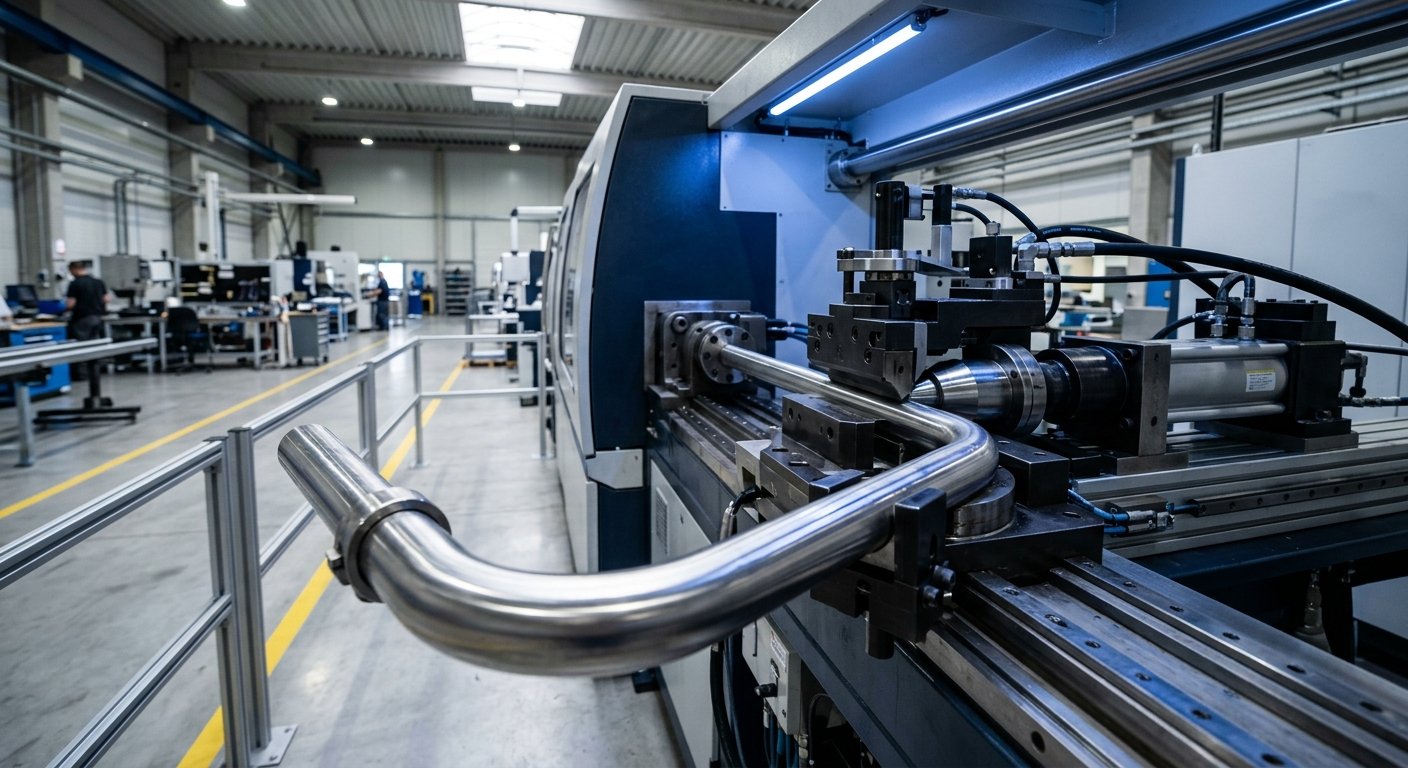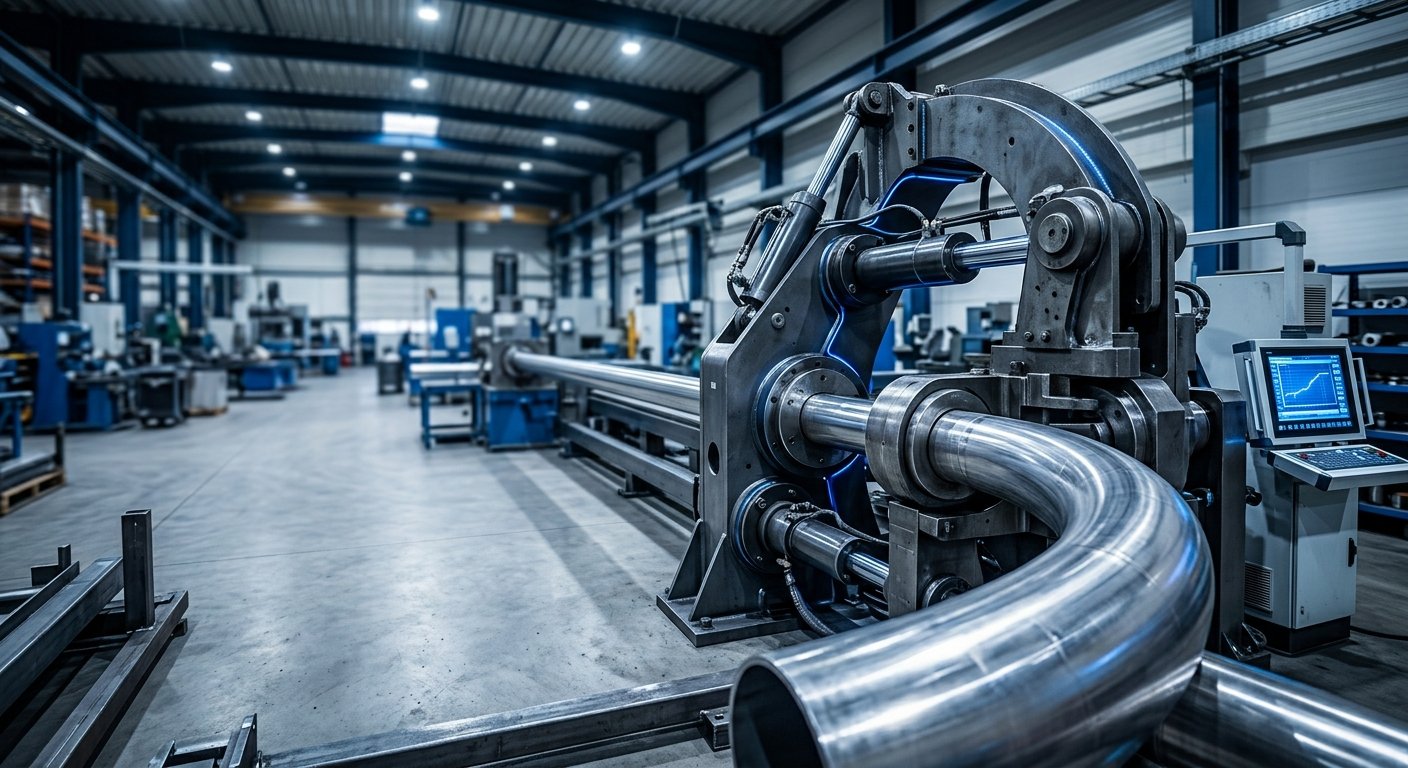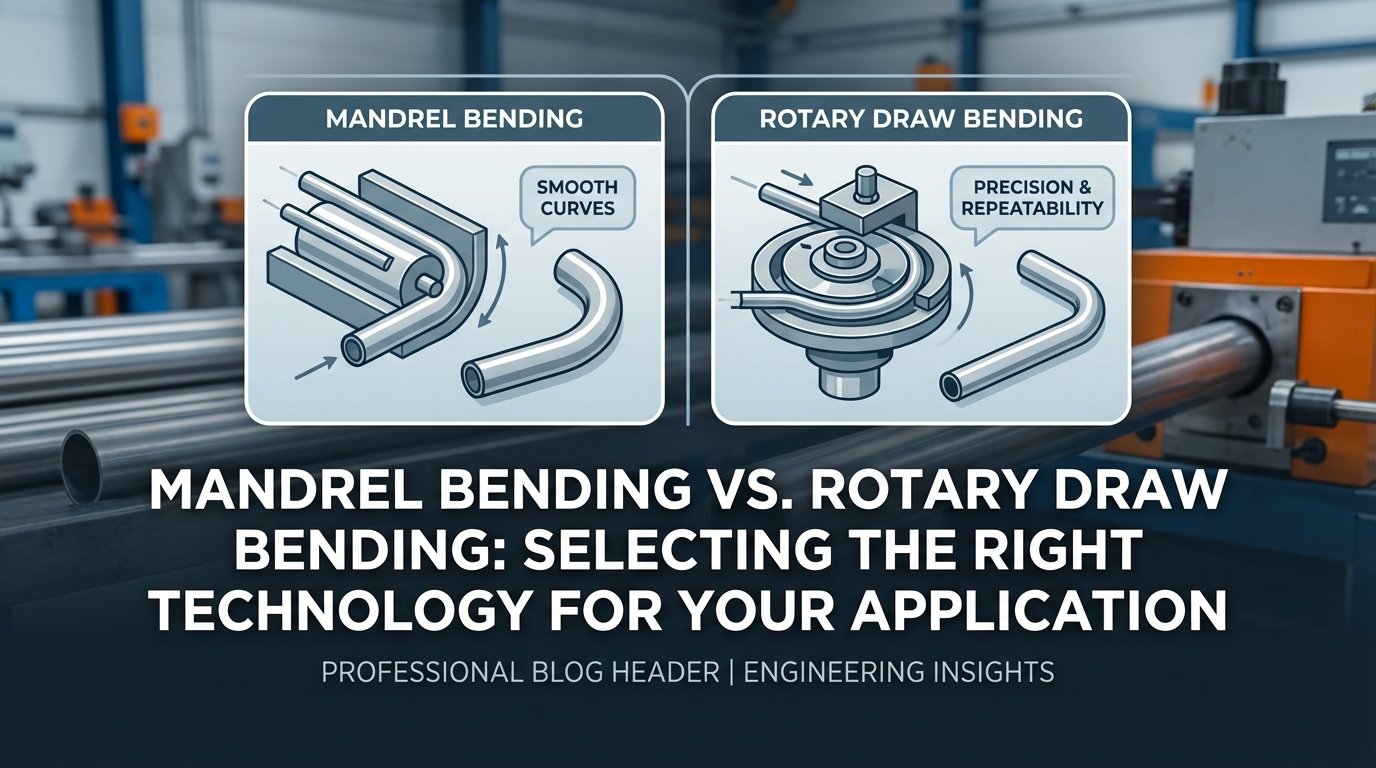
When specifying tube bending equipment for precision applications, the choice between mandrel bending and rotary draw bending significantly impacts part quality, production efficiency, and total project cost. While these terms are often used interchangeably—and indeed, rotary draw bending frequently employs mandrels—understanding the nuanced differences between mandrel-based approaches and pure rotary draw methods determines whether your components meet critical tolerances or become scrap.
This technical comparison examines both bending technologies from an application-specific perspective, helping engineering managers and production planners select optimal solutions for aerospace tube bending, petrochemical installations, and other demanding industrial environments.
Understanding Rotary Draw Bending Fundamentals
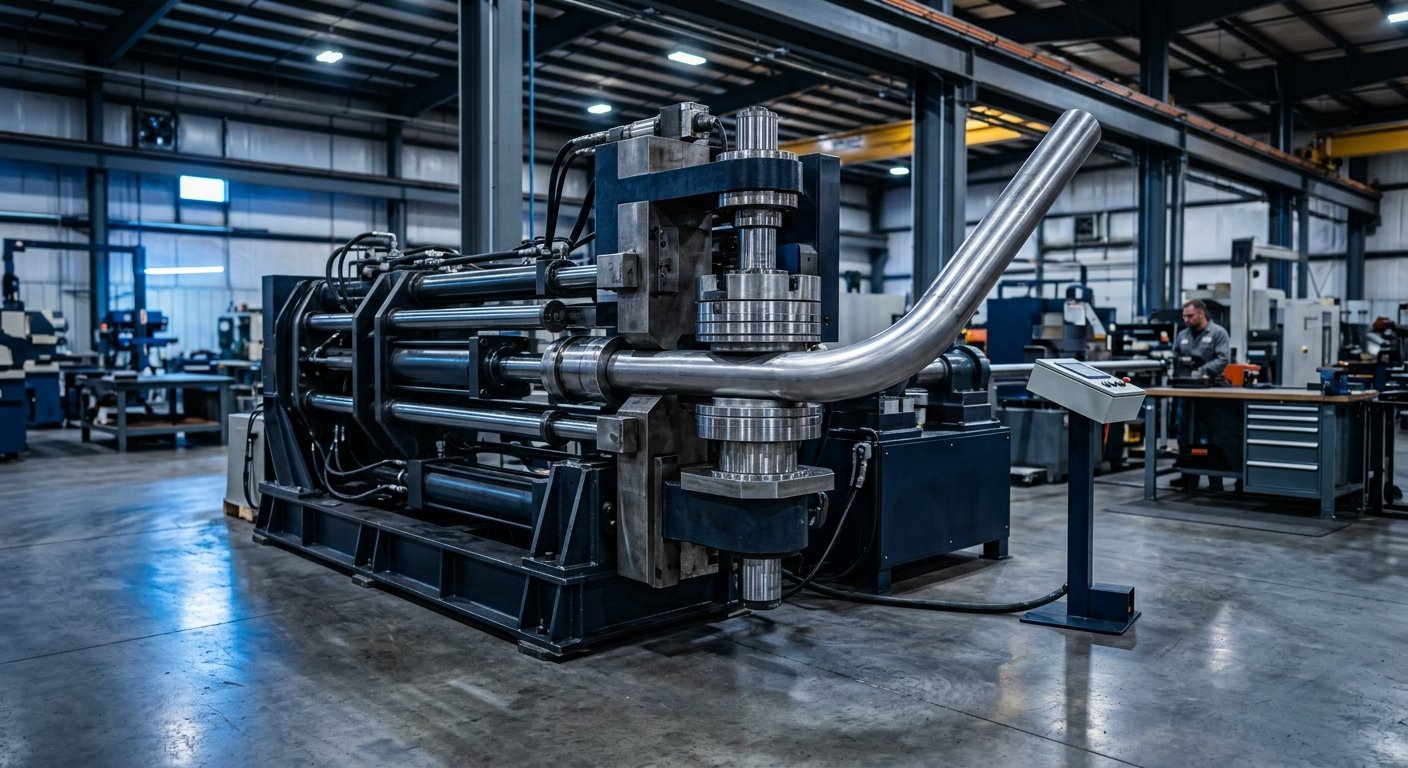
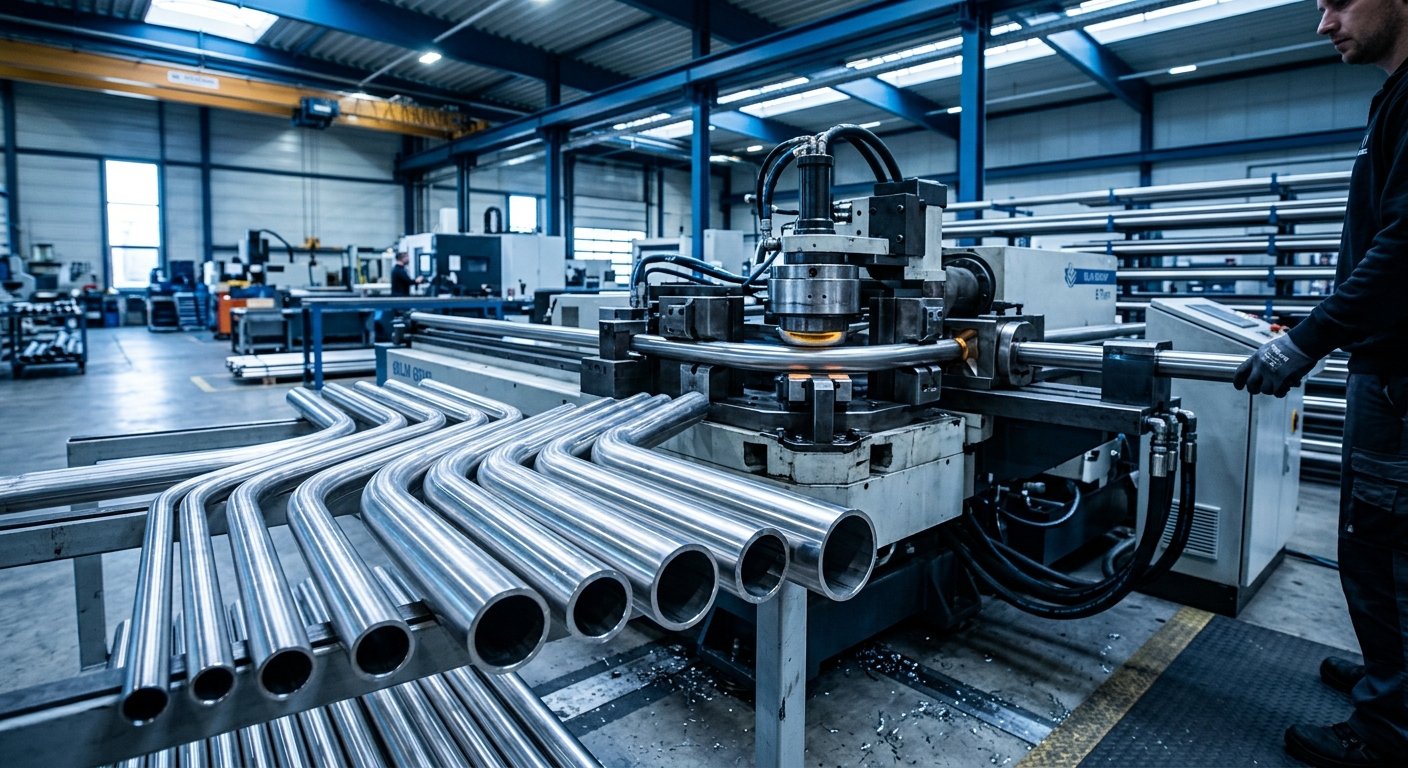
Rotary draw bending represents the most common precision tube bending method in industrial manufacturing. The process clamps the tube against a rotating bend die while a pressure die holds the tube in place. As the bend die rotates, the tube forms around the die’s radius, creating precise, repeatable bends.
Modern CNC tube benders using rotary draw technology offer exceptional control over multiple parameters:
- Bend angle accuracy to ±0.1 degrees
- Centerline radius (CLR) consistency across production runs
- Programmable multi-axis positioning for complex geometries
- Repeatable springback compensation algorithms
- Integration with automated feeding and unloading systems
The rotary draw method can bend tubes and pipes from 0.125″ to over 6″ OD, depending on equipment configuration. Wall thickness ratios, material properties, and required bend radii determine whether additional tooling components become necessary.
The Critical Role of Mandrels in Precision Tube Bending
Mandrel bending introduces an internal support mechanism—the mandrel—inserted into the tube during the bending operation. This seemingly simple addition fundamentally changes the physics of tube deformation, enabling bends that would otherwise be impossible.
Without mandrel support, tubes subjected to tight-radius bends experience several failure modes:
- Ovality: The cross-section deforms from circular to elliptical, compromising flow characteristics and structural integrity
- Wrinkling: The inner bend radius compresses, creating accordion-like wrinkles that create stress concentrators and flow restrictions
- Wall thinning: The outer radius stretches excessively, reducing wall thickness below acceptable limits
- Collapse: Severe deformation causes complete tube failure
Mandrel bending machines address these issues through precisely engineered mandrel designs. Ball mandrels, plug mandrels, and formed mandrels each offer specific advantages depending on tube diameter, wall thickness, bend radius, and material characteristics.
Ball Mandrels vs. Plug Mandrels
Ball mandrels consist of multiple spherical segments connected by a flexible cable or rod. This articulated design provides excellent support while accommodating the differential movement between inner and outer bend radii. Ball mandrels excel with thin-wall tubing where wrinkling prevention is critical.
Plug mandrels feature a solid, shaped element matching the tube’s internal diameter. These mandrels offer superior support for larger diameter tubes and applications requiring maximum ovality control. Aerospace tube bending frequently specifies plug mandrels when dimensional tolerances leave no margin for cross-sectional deformation.
Application-Specific Technology Selection
The decision matrix between mandrel-equipped rotary draw bending and standard rotary draw bending centers on the D/t ratio—the relationship between tube diameter and wall thickness—and the CLR to diameter ratio.
When Standard Rotary Draw Bending Suffices
Non-mandrel rotary draw bending provides cost-effective solutions when:
- D/t ratios remain below 20:1 with thick-wall tubing
- Bend radii exceed 3 times the tube diameter
- Moderate ovality (typically 5-8%) is acceptable for the application
- Production volumes justify dedicated tooling but not mandrel complexity
- Materials exhibit high formability (soft copper, aluminum alloys)
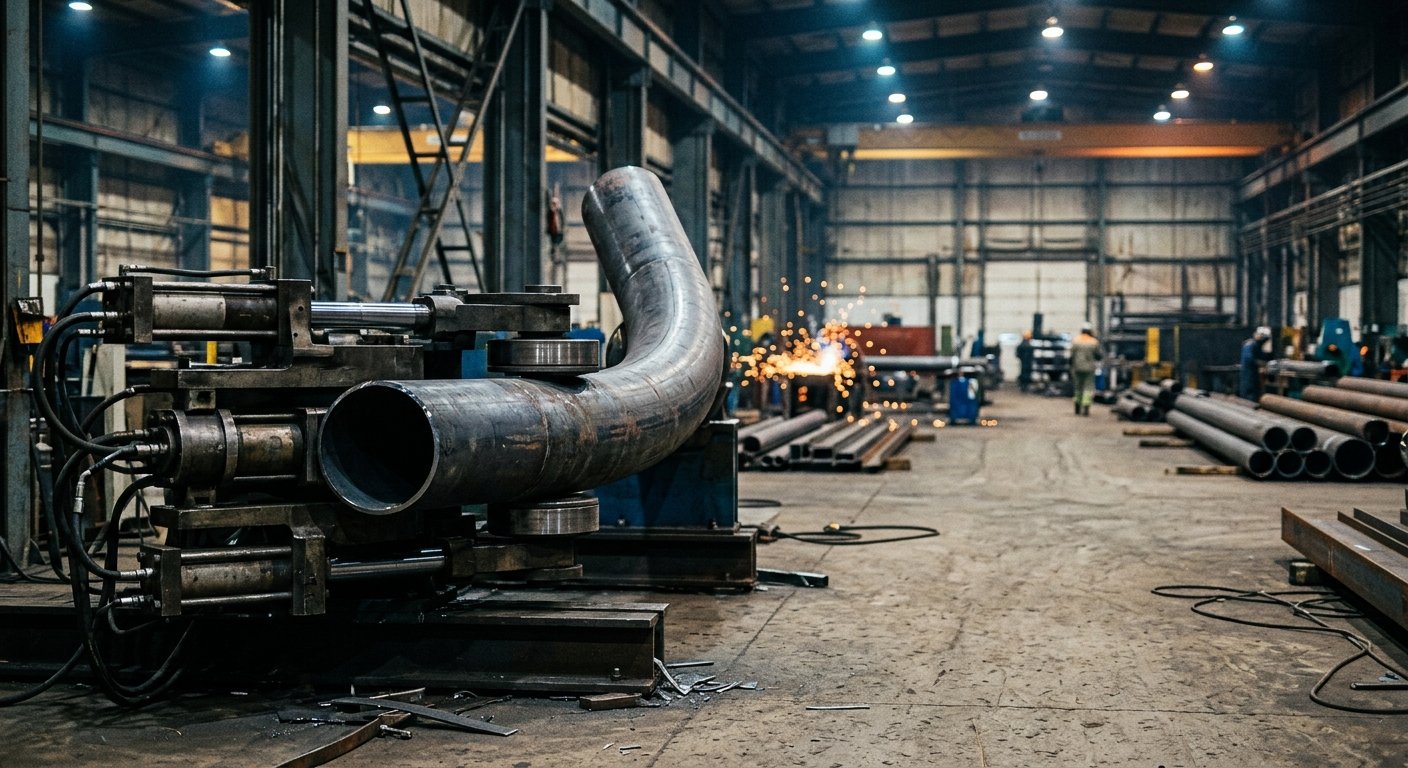
Industrial pipe benders for structural applications, handrail fabrication, and non-critical fluid systems frequently operate without mandrels, achieving acceptable results at lower tooling costs and faster cycle times.
When Mandrel Bending Becomes Essential
Precision tube bending requiring mandrel support includes:
- Aerospace hydraulic lines where flow restriction cannot exceed 2% cross-sectional change
- High-pressure petrochemical piping demanding structural integrity
- Thin-wall stainless steel tubing (D/t ratios exceeding 25:1)
- Tight-radius bends approaching 1.5 times diameter CLR
- Titanium, Inconel, and other difficult-to-form materials
- Applications with stringent ovality specifications (typically <3%)
NASA and military specifications for fluid transfer systems routinely require mandrel bending to ensure reliability in extreme operating environments. The investment in mandrel tooling and the slightly longer cycle times become insignificant compared to component failure costs.
Material Considerations in Technology Selection
Tube bending technology selection depends heavily on material characteristics. The yield strength, work hardening rate, and elastic modulus of your material directly influence whether mandrel support becomes necessary.
Stainless Steel and High-Strength Alloys
Stainless steel grades (304, 316, 321) exhibit significant work hardening during cold forming. CNC tube benders configured for stainless require mandrel support for D/t ratios above 20:1 or CLR values below 2.5D. The mandrel prevents wrinkling on the compression side while managing springback through controlled support.
Aerospace alloys including Inconel 625, titanium 3Al-2.5V, and Hastelloy demand mandrel bending for virtually all precision applications. These materials’ high strength and limited ductility make unsupported bending impractical for quality parts.
Aluminum and Copper Alloys
Aluminum tubing (6061-T6, 2024-T3) offers excellent formability but remains prone to wrinkling in thin-wall configurations. Mandrel bending machines maintain cross-sectional integrity even with aggressive bend geometries common in aerospace fuel systems.
Copper and brass tubes bend readily without mandrels in many applications, though precision requirements for HVAC, refrigeration, and hydraulic systems increasingly specify mandrel support to guarantee flow characteristics.
Economic Analysis: Total Cost of Ownership
The decision between mandrel and non-mandrel rotary draw bending extends beyond initial equipment costs. A comprehensive analysis includes:
Tooling investment: Mandrel tooling adds $3,000-$15,000 per tube size depending on complexity. However, this expense amortizes across production volumes and prevents scrap costs from defective bends.
Cycle time: Mandrel insertion and extraction add 5-15 seconds per bend. For high-volume production, this impacts throughput. However, the alternative—scrapping parts due to quality issues—creates far greater inefficiency.
Setup complexity: Mandrel bending requires more sophisticated setup and operator training. Organizations without in-house expertise benefit from partnerships with manufacturers offering comprehensive training programs.
Scrap reduction: Mandrel bending typically reduces scrap rates from 8-15% to under 3% for challenging applications. This improvement alone often justifies the technology investment within months.
Integration with CNC Technology
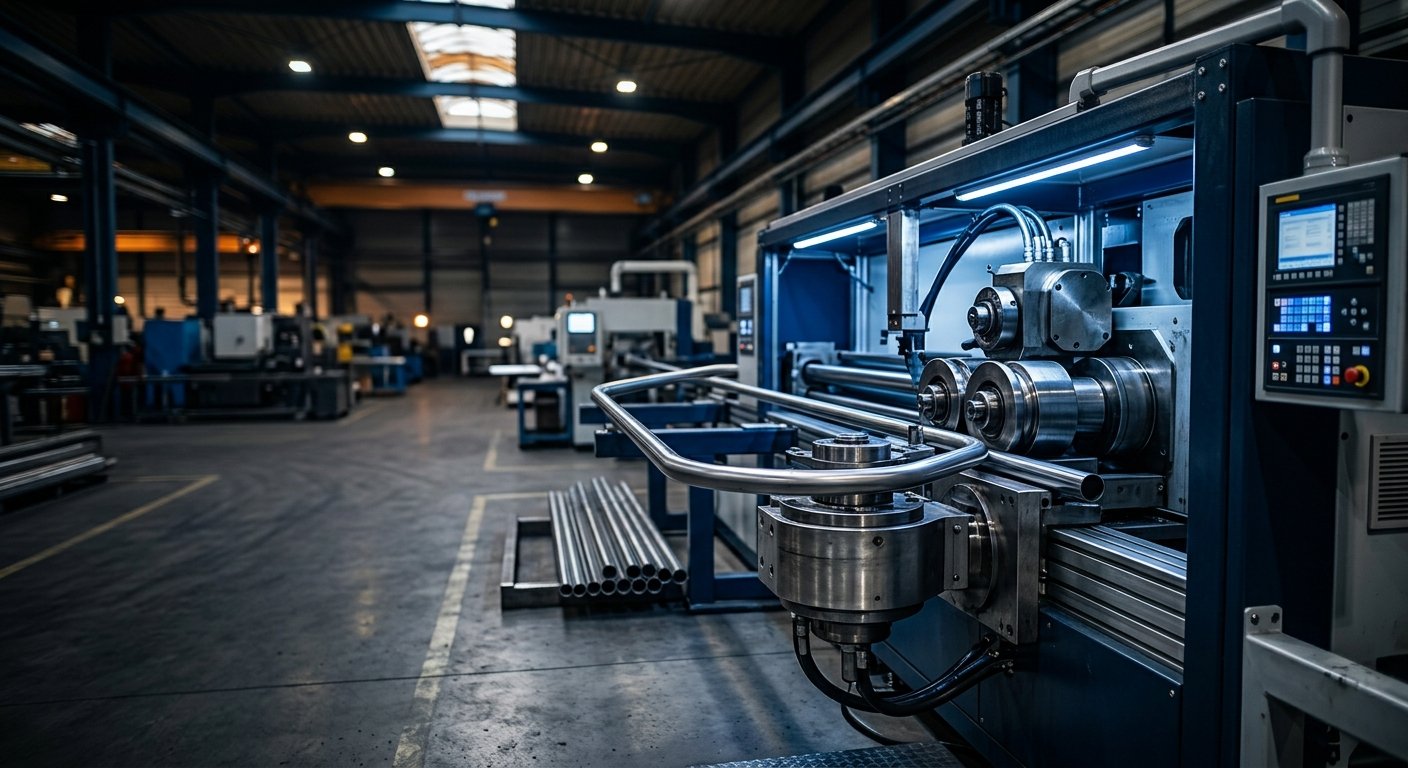
Modern precision tube bending leverages CNC control systems that optimize both mandrel and rotary draw processes. Advanced CNC tube benders offer:
- Automatic mandrel positioning based on material properties and bend geometry
- Real-time pressure monitoring to prevent wrinkling or collapse
- Multi-stack bending capabilities for complex assemblies
- Springback compensation algorithms refined through machine learning
- Digital twin simulation for first-part-correct production
The integration of mandrel controls within CNC platforms eliminates the historical complexity of mandrel bending, making the technology accessible for production environments previously limited to simpler methods.
Industry-Specific Requirements
Aerospace Applications
Aerospace tube bending demands maximum precision with zero-defect quality standards. Hydraulic systems operating at 3,000+ PSI cannot tolerate cross-sectional deformation or wall thinning. Mandrel bending technology meets AS9100 quality requirements while maintaining the tight tolerances necessary for modern aircraft systems.
Oil & Gas and Petrochemical
High-pressure process piping in refinery environments requires structural integrity that only mandrel-supported bending can guarantee. Industrial pipe benders serving these sectors incorporate heavy-duty mandrel systems capable of handling large-diameter tubes while maintaining ASME B31.3 compliance.
Medical and Pharmaceutical
Sanitary tubing for pharmaceutical processing demands smooth internal surfaces without wrinkles or deformation that could harbor contamination. Mandrel bending produces the surface finish required for FDA-regulated applications.
Making the Right Choice for Your Application
Selecting between mandrel bending machines and standard rotary draw equipment requires evaluating your specific application against clear criteria:
- Calculate your D/t ratio and compare against material-specific guidelines
- Determine acceptable ovality and cross-sectional change limits
- Assess whether your CLR to diameter ratio falls in the critical range
- Consider downstream operations affected by bend quality
- Evaluate total cost including scrap, rework, and quality holds
For organizations pushing the boundaries of tube bending technology—whether producing titanium assemblies for hypersonic aircraft or high-purity pharmaceutical systems—mandrel bending delivers the precision modern applications demand.
Working with experienced American manufacturers who understand both the engineering fundamentals and practical application requirements ensures you specify the right tube bending technology from the start. The difference between adequate bends and exceptional precision often determines competitive advantage in demanding industrial markets.
Need help determining the optimal bending technology for your specific application? Contact our engineering team to discuss your requirements, material specifications, and quality standards. With decades of experience supporting aerospace, energy, and industrial manufacturers, we provide the technical expertise and American-made equipment reliability that critical applications demand.