
Qualifying CNC Tube Benders for Aerospace
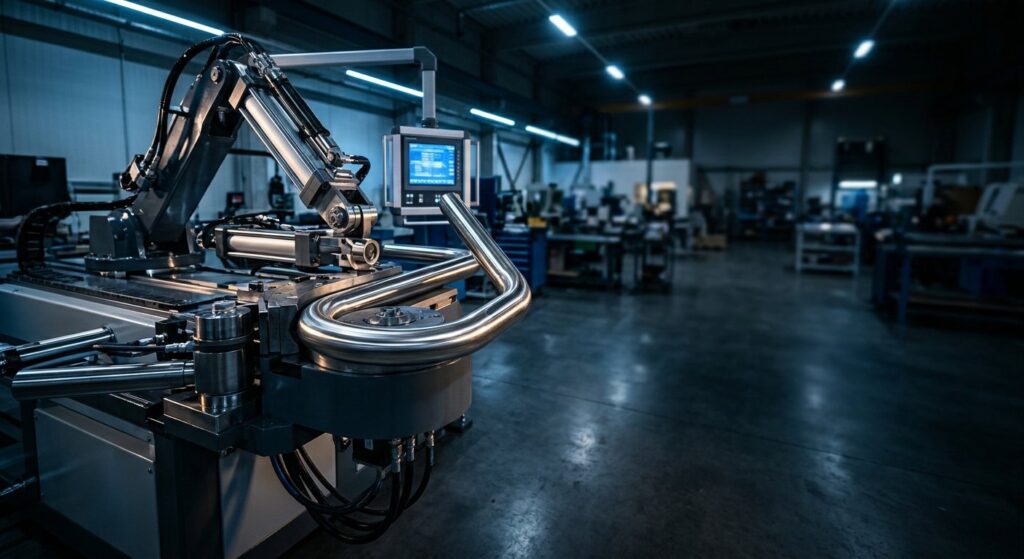
Qualifying a CNC tube bending machine for aerospace applications requires a structured process covering equipment capability assessment, process validation, …
Oil & Gas Pipe Bending: Process Selection
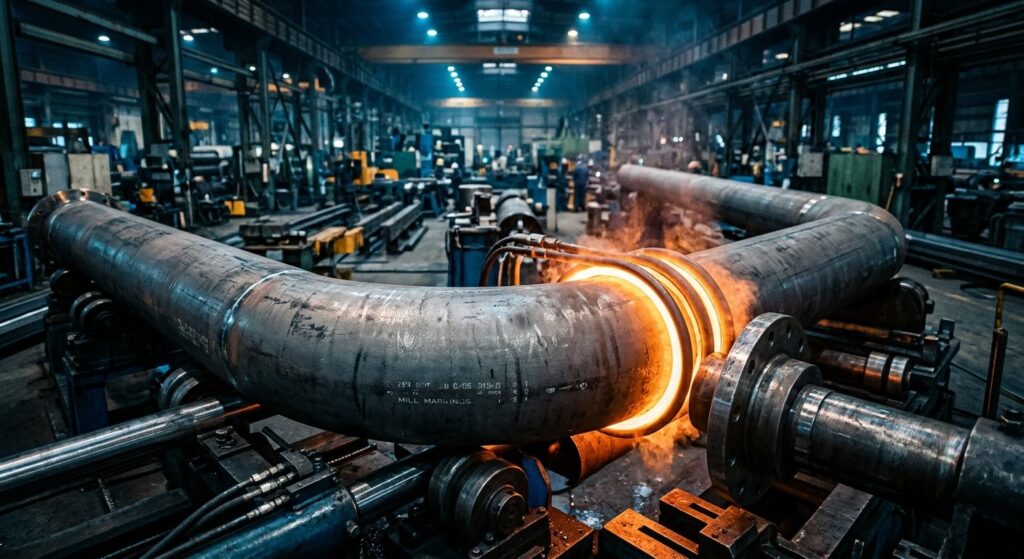
Choosing the right pipe bending process for oil and gas applications depends on four primary variables: wall thickness, alloy type, required bend radius, and…
Pipe Bending Equipment Maintenance Checklist
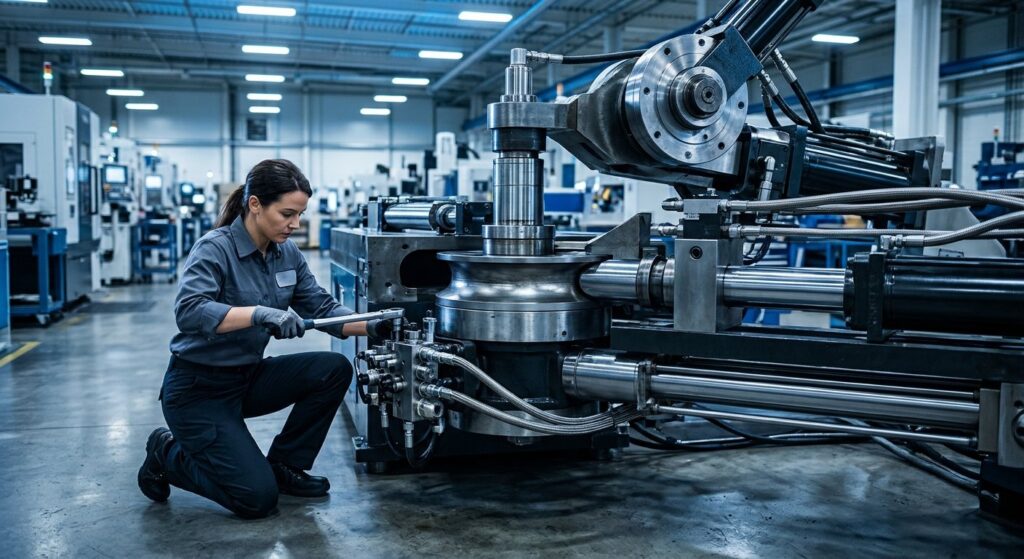
A structured preventive maintenance program for pipe bending equipment protects bend quality, extends machine service life, and prevents costly unplanned dow…
Procurement Checklist: Specifying Industrial Pipe Benders
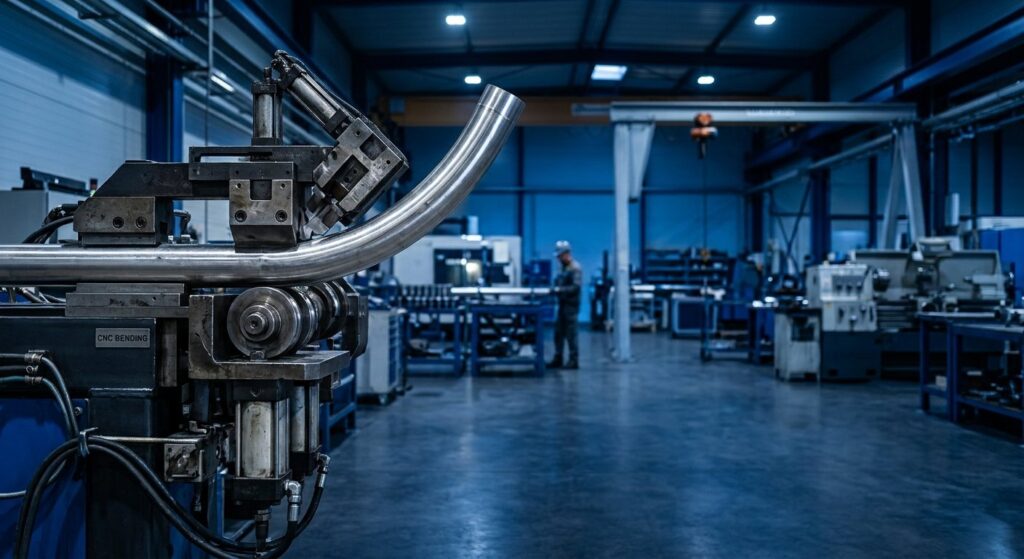
Specifying industrial pipe benders correctly requires evaluating bend radius-to-diameter ratios, tooling compatibility, material certifications, and total co…
NC vs. CNC Tube Benders: Which to Specify?
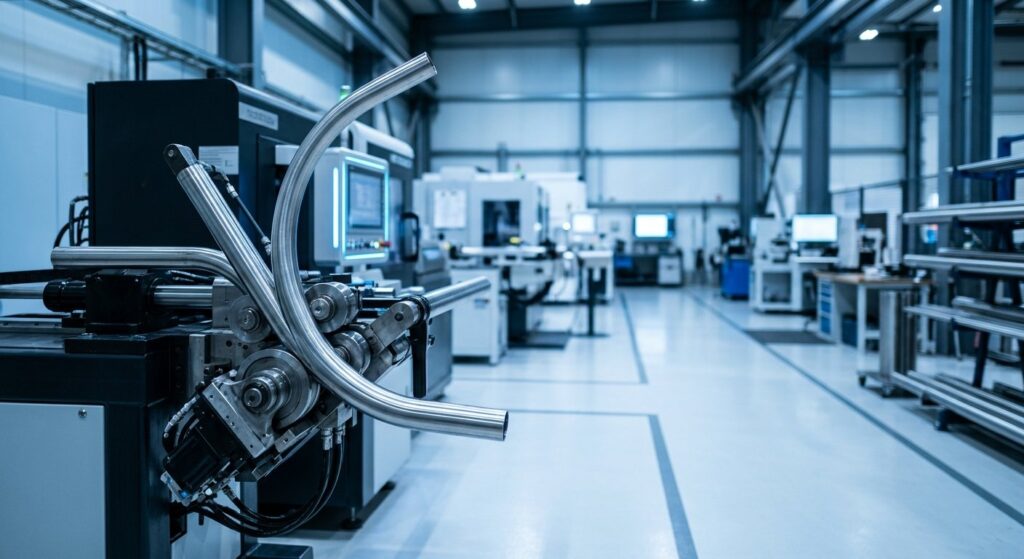
NC (numerical control) tube benders are the right choice for straightforward, repetitive bends where part geometry stays consistent and budgets are constrained.
Tube Bending Training for Your Shop Floor
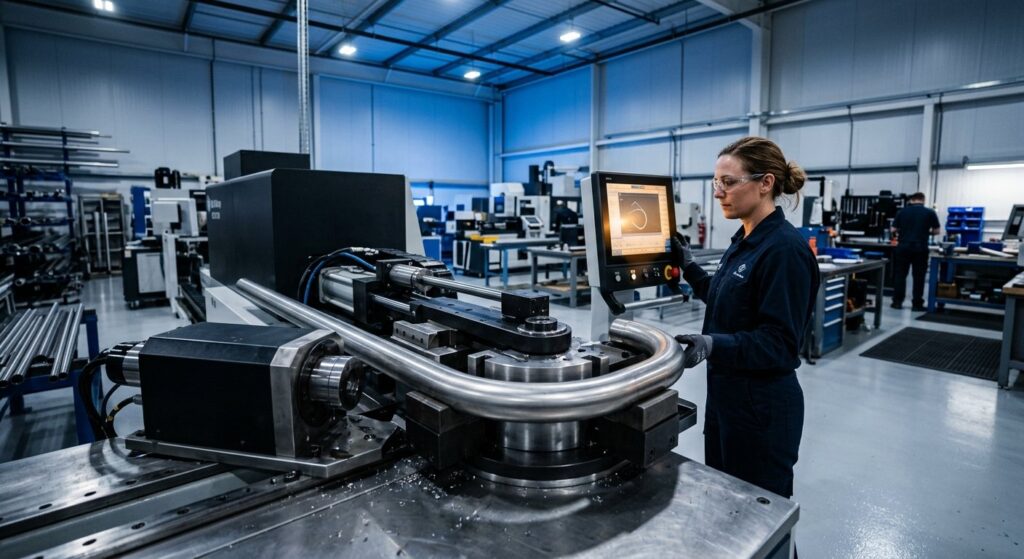
An effective tube bending training program starts with defining clear operator skill tiers, establishing machine-specific certification paths for both CNC an…
Mandrel Bending Machines: How They Work
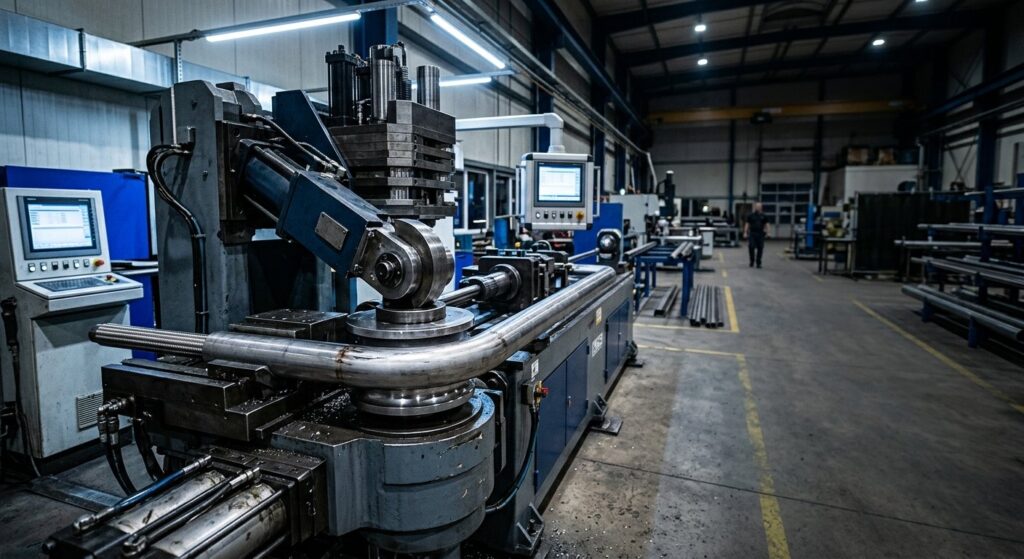
Mandrel bending machines produce tight-radius, wrinkle-free bends in tube and pipe by inserting a flexible internal support—called a mandrel—into the wor…
Specifying Pipe Benders for Petrochemical Plants
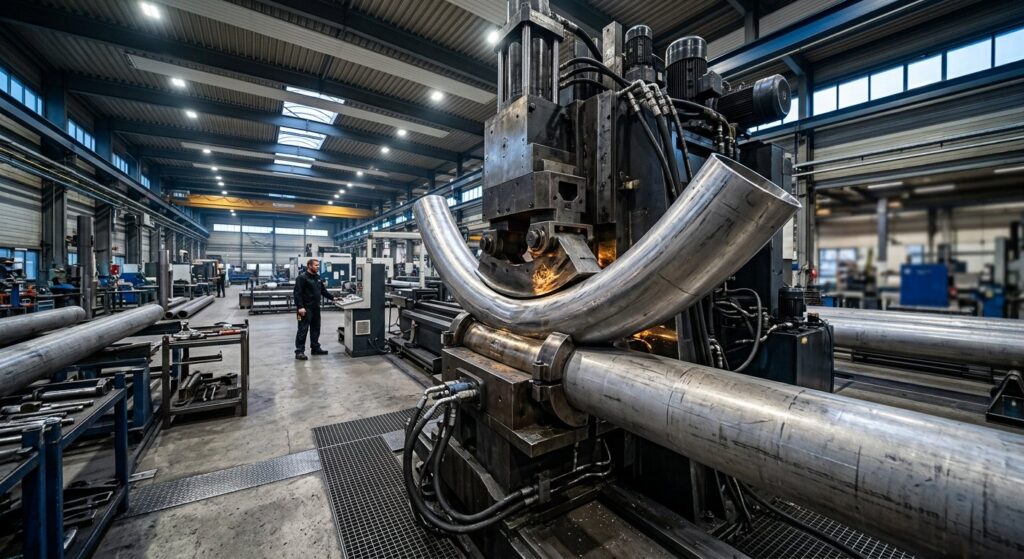
Specifying industrial pipe benders for petrochemical plants requires matching machine capability to process fluid demands, wall thickness, material hardness,…
CNC Tube Benders and Tight-Radius Bends
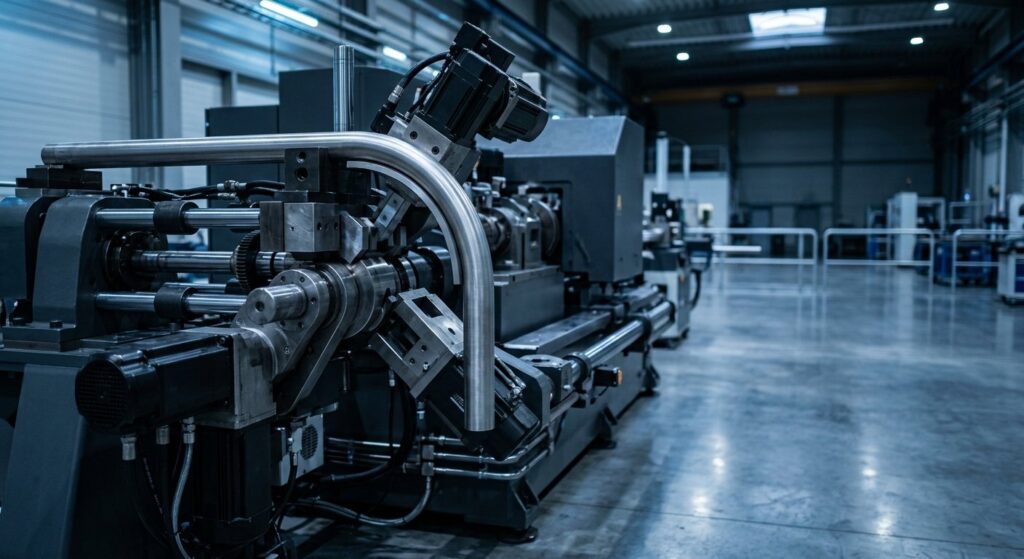
CNC tube benders handle tight-radius bends by combining precise servo-controlled motion with specialized tooling—primarily mandrels, wiper dies, and pressu…
Heavy Wall Pipe Bending: Process & Equipment
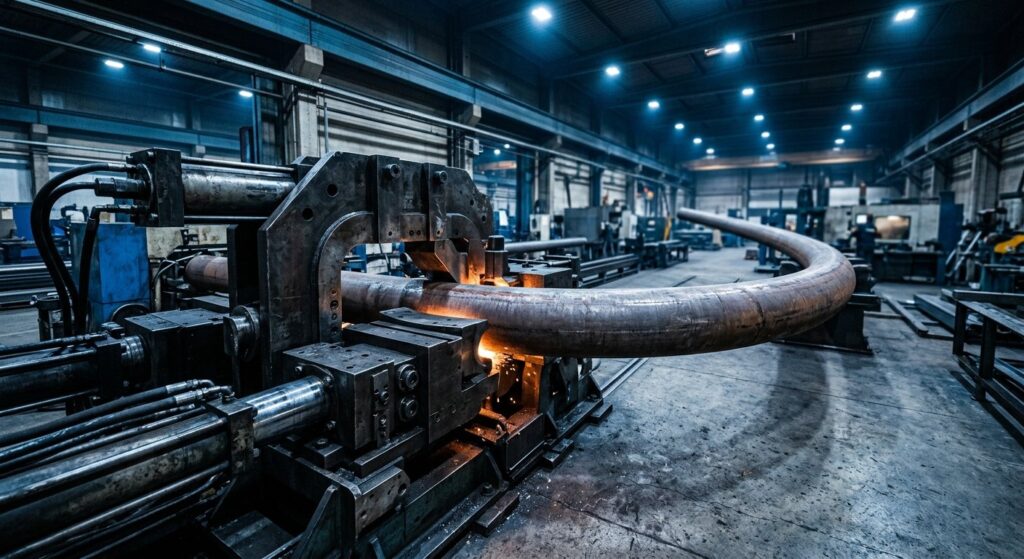
Heavy wall pipe bending requires specialized equipment and technique because standard bending methods generate wall thinning, wrinkling, and ovality that thi…