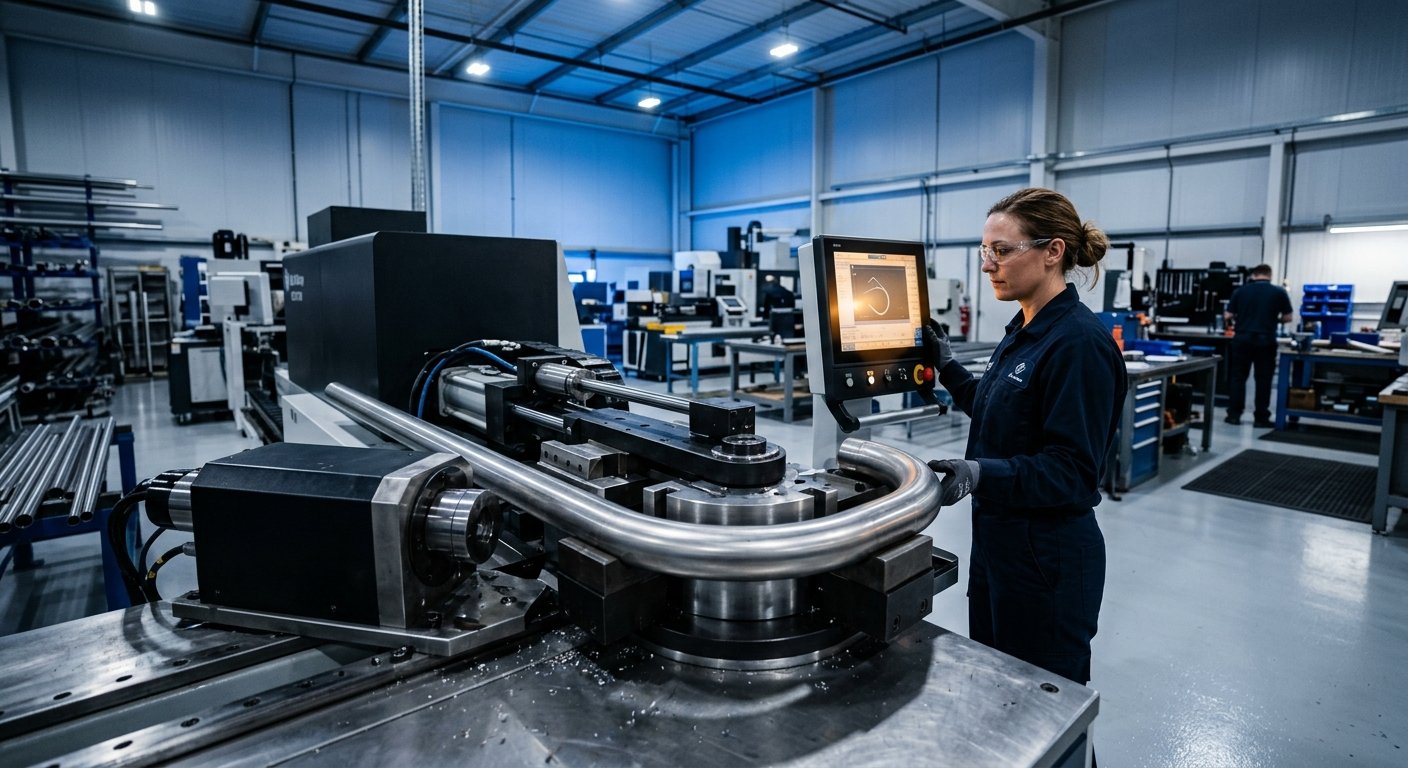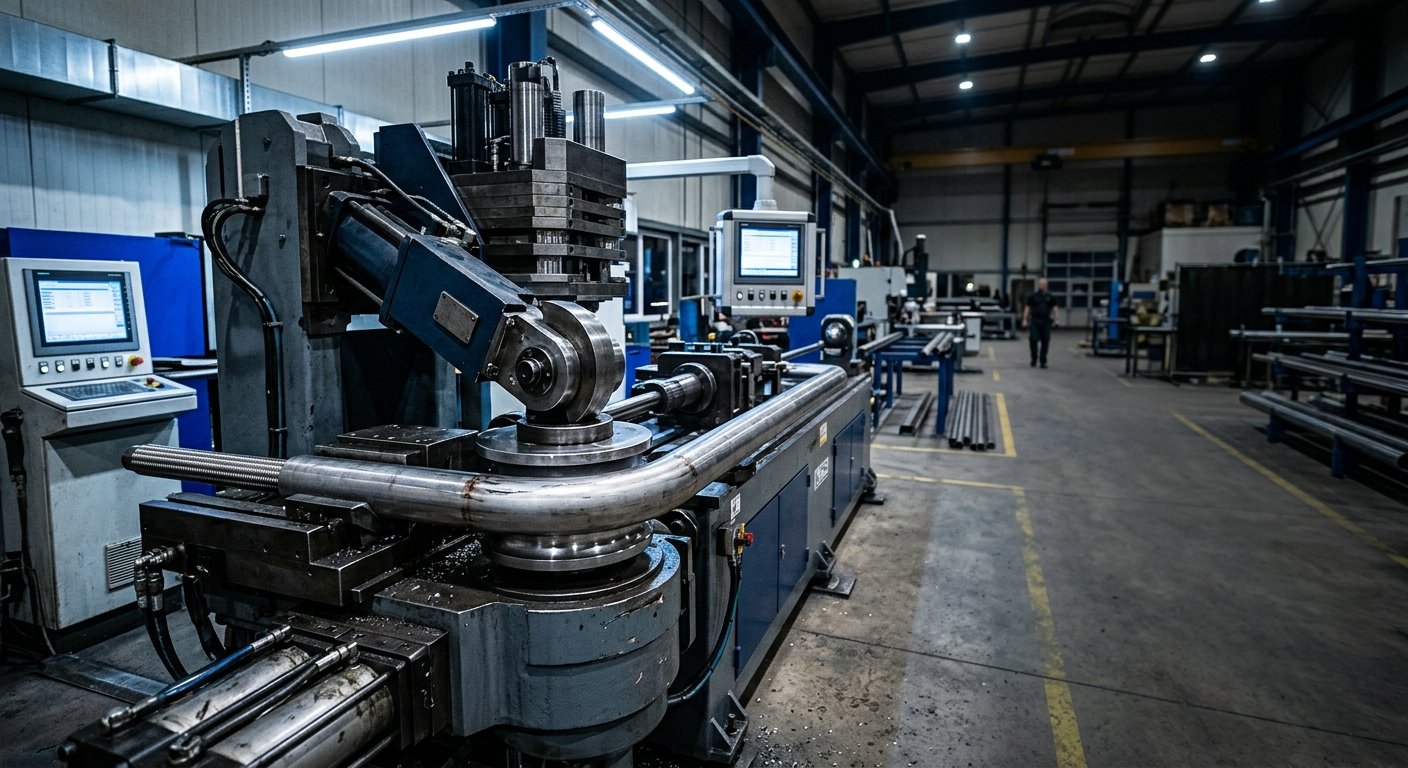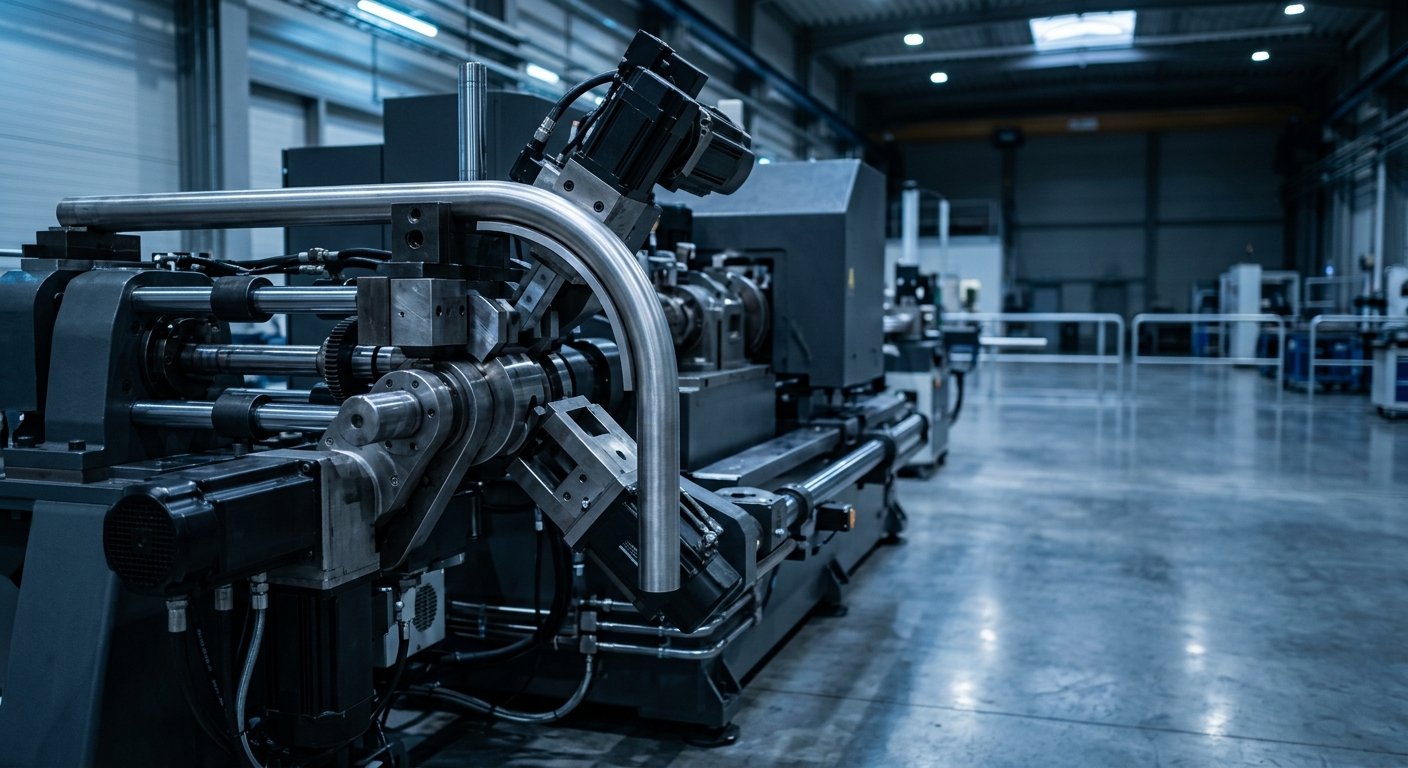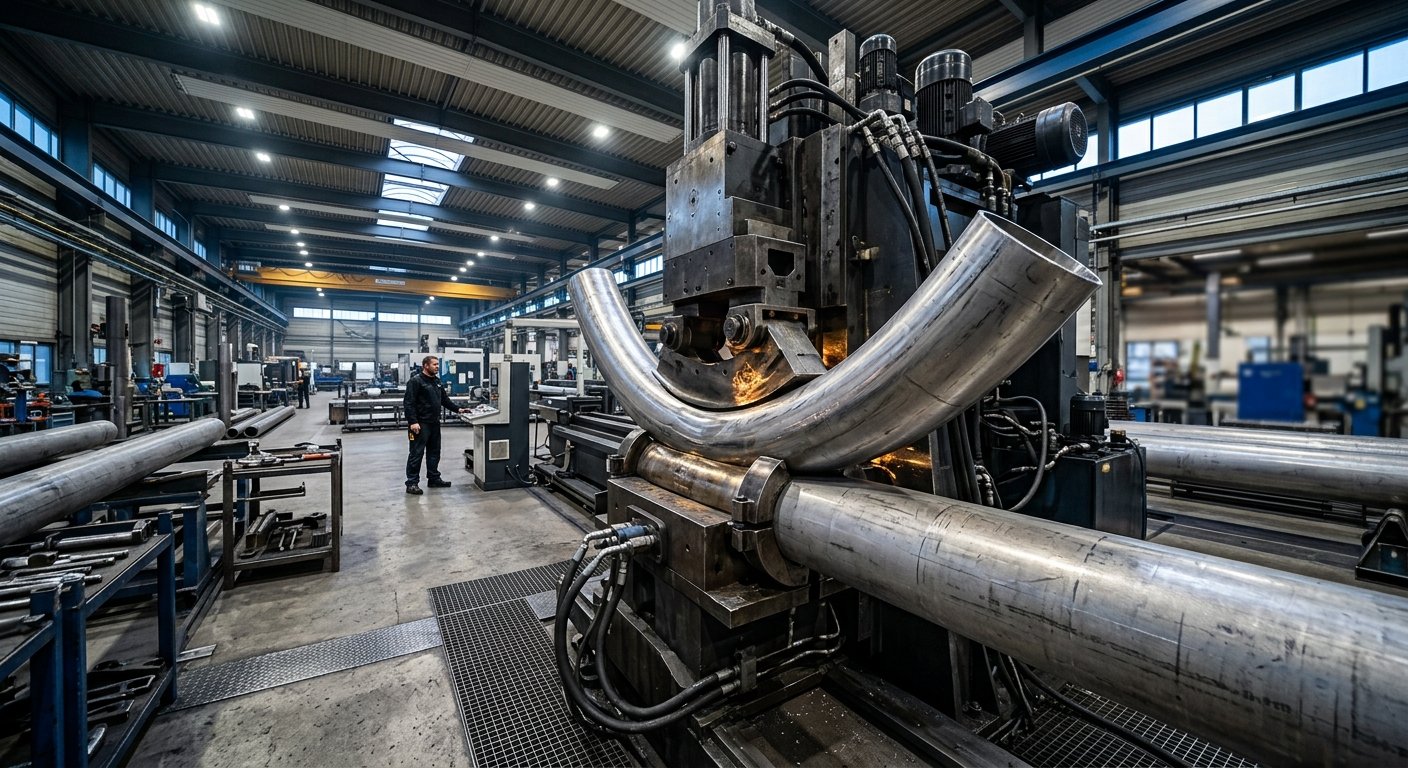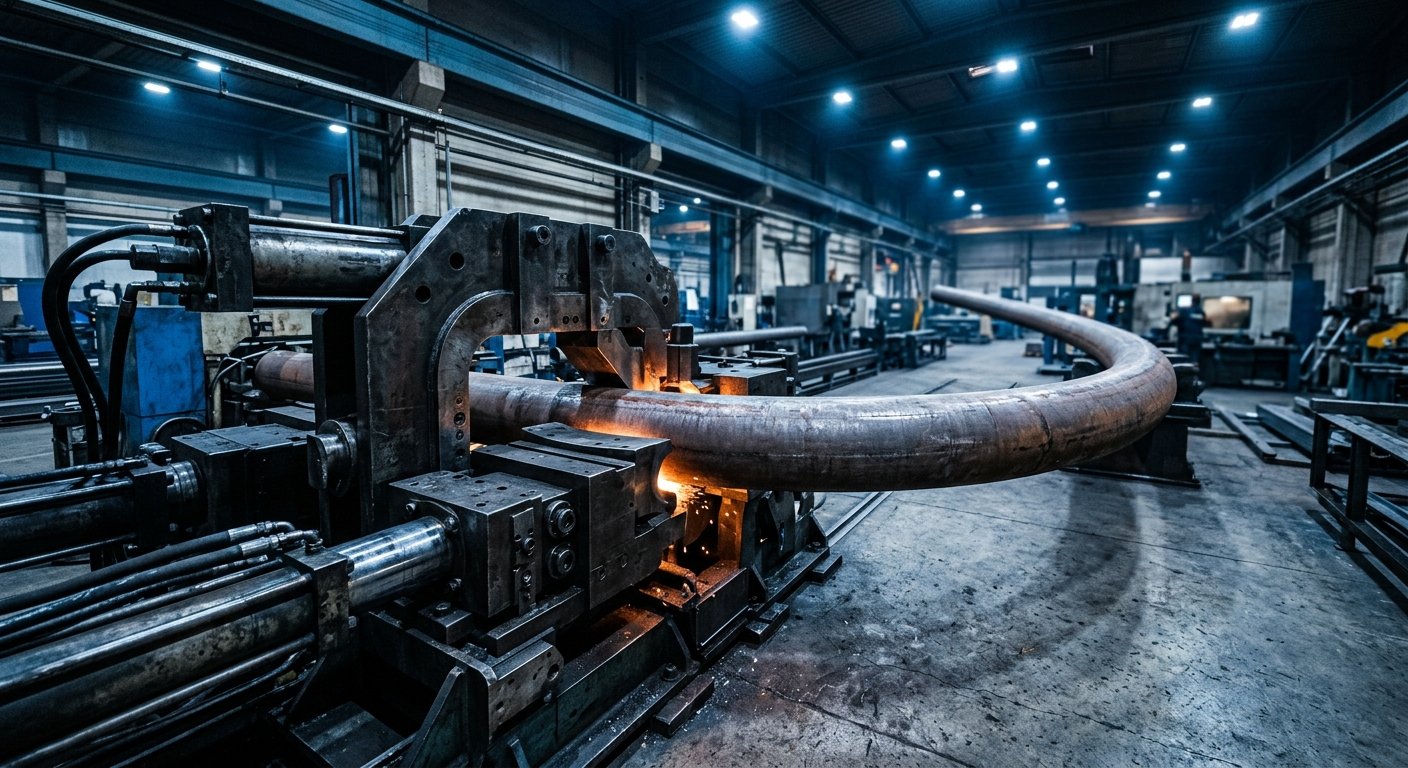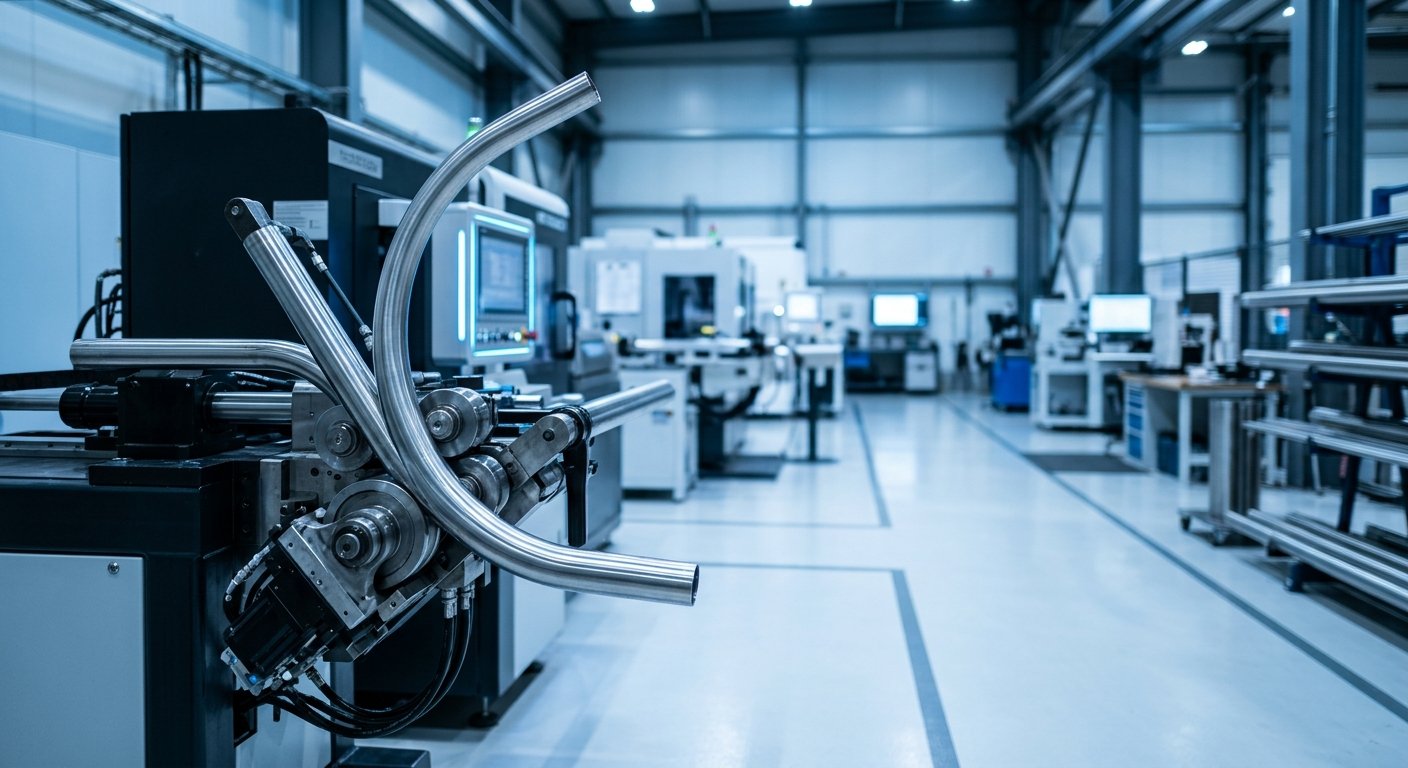
NC (numerical control) tube benders are the right choice for straightforward, repetitive bends where part geometry stays consistent and budgets are constrained. CNC (computer numerical control) benders deliver superior value when part complexity, multi-stack bend sequences, tight tolerances, or traceability requirements enter the picture. Understanding where each control type genuinely earns its cost is the core of any sound equipment specification.
- NC benders suit high-volume, single-geometry production with minimal changeover—lower acquisition cost, simpler operation.
- CNC benders handle multi-bend, multi-plane geometries with closed-loop feedback, real-time correction, and full data logging.
- Aerospace, defense, and oil & gas applications increasingly demand the traceability and repeatability that only CNC platforms deliver.
- Total cost of ownership—not sticker price—should drive the NC vs. CNC decision; programming efficiency and scrap reduction often tip the math toward CNC.
- Hines Bending Systems offers both control types as American-manufactured, custom-configurable platforms with 50 years of proven expertise behind each design.
Defining the Control Types
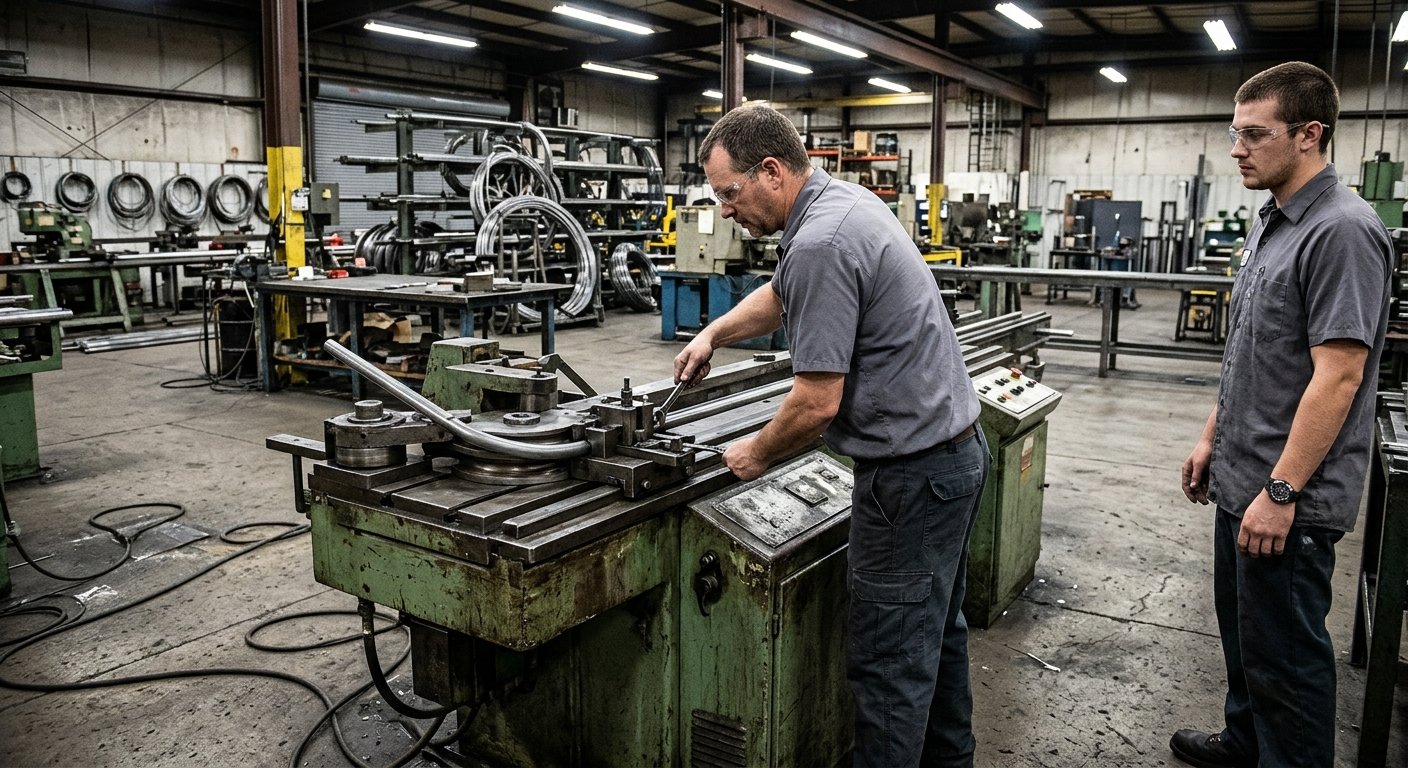
The distinction between NC and CNC tube bending machines is meaningful and practical, not merely a marketing classification. An NC bender stores a fixed set of axis positions—typically bend angle, feed length, and tube rotation—and executes them in sequence. The operator sets up the machine mechanically, runs a part, and the controller replays that sequence. Changes require physical adjustment or re-entering parameters manually.
A CNC bender replaces that fixed-sequence logic with a programmable processor that continuously monitors axis feedback, compares actual position to commanded position, and corrects in real time. Modern CNC platforms can store hundreds of part programs, integrate springback compensation algorithms, and export process data for quality records. The underlying mechanics of both machine types—rotary draw, pressure die, wiper die, mandrel—can be identical. The control architecture is what separates them.
Springback—the elastic recovery of tube material after a bend is formed—varies by alloy, wall thickness, and bend radius. CNC systems can apply pre-programmed overbend compensation values and adjust them automatically from part to part. NC machines require the operator to dial in correction manually, which introduces human variability.
When NC Benders Deliver the Right Value
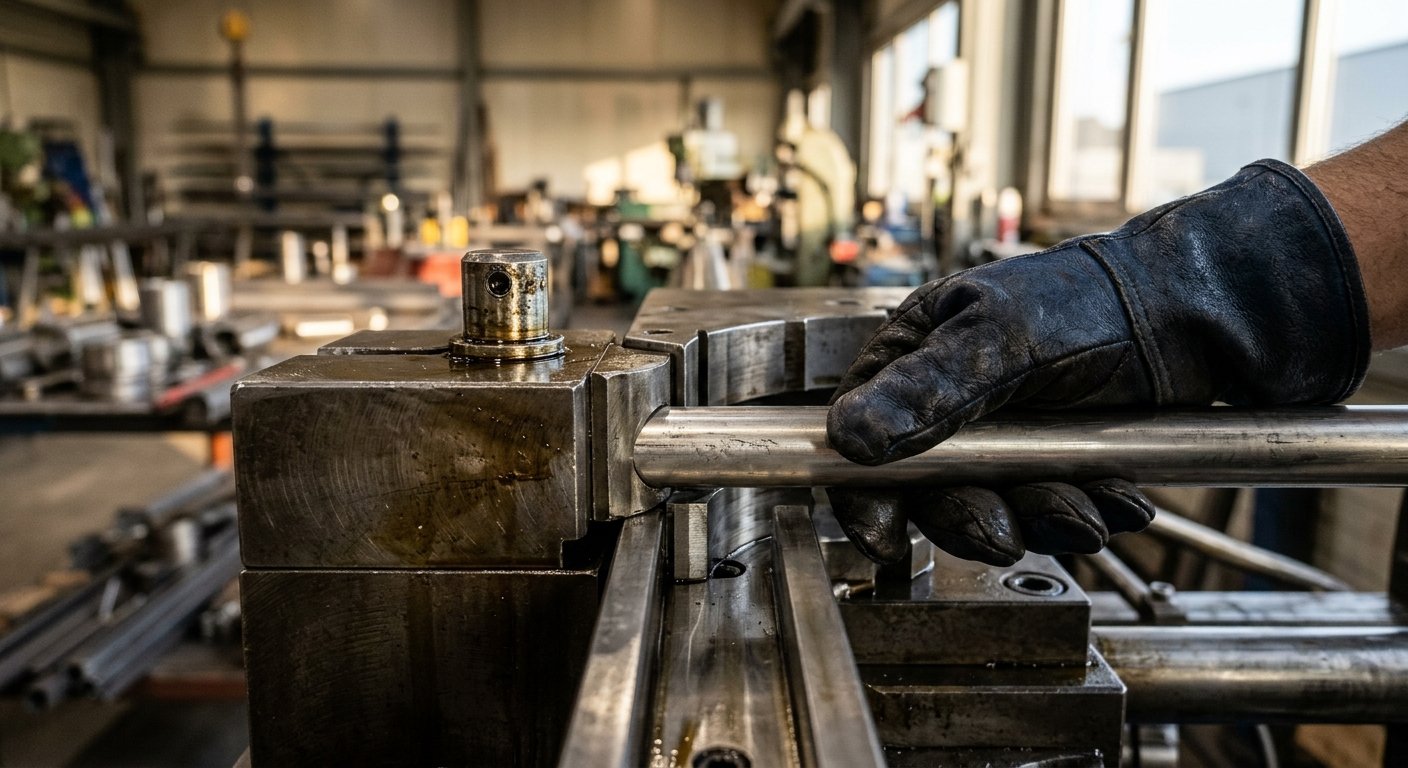
NC tube benders remain a well-engineered, cost-effective solution for a specific class of work. If your production runs involve a single bend angle repeated thousands of times—think hydraulic line bundles for commercial vehicles or simple structural frames—NC control is often adequate. Setup is fast, operator training is minimal, and there are fewer electronic components that require maintenance.
The cases where NC performs at its best share several characteristics:
- One or two bends per part, consistent material lot to lot
- Tolerances in the ±1° to ±2° range, where manual fine-tuning is acceptable
- Production environments where digital traceability is not a contractual requirement
- Facilities with experienced operators who can compensate for springback through skill and repetition
For procurement specialists working within tight capital budgets on straightforward applications, an NC platform sourced from a reputable American manufacturer can be the rational choice. However, it is worth reading through the critical mistakes engineers make when specifying tube bending machines before finalizing any equipment decision—several of those errors involve underspecifying control capability for the application at hand.
When CNC Is the Right Specification
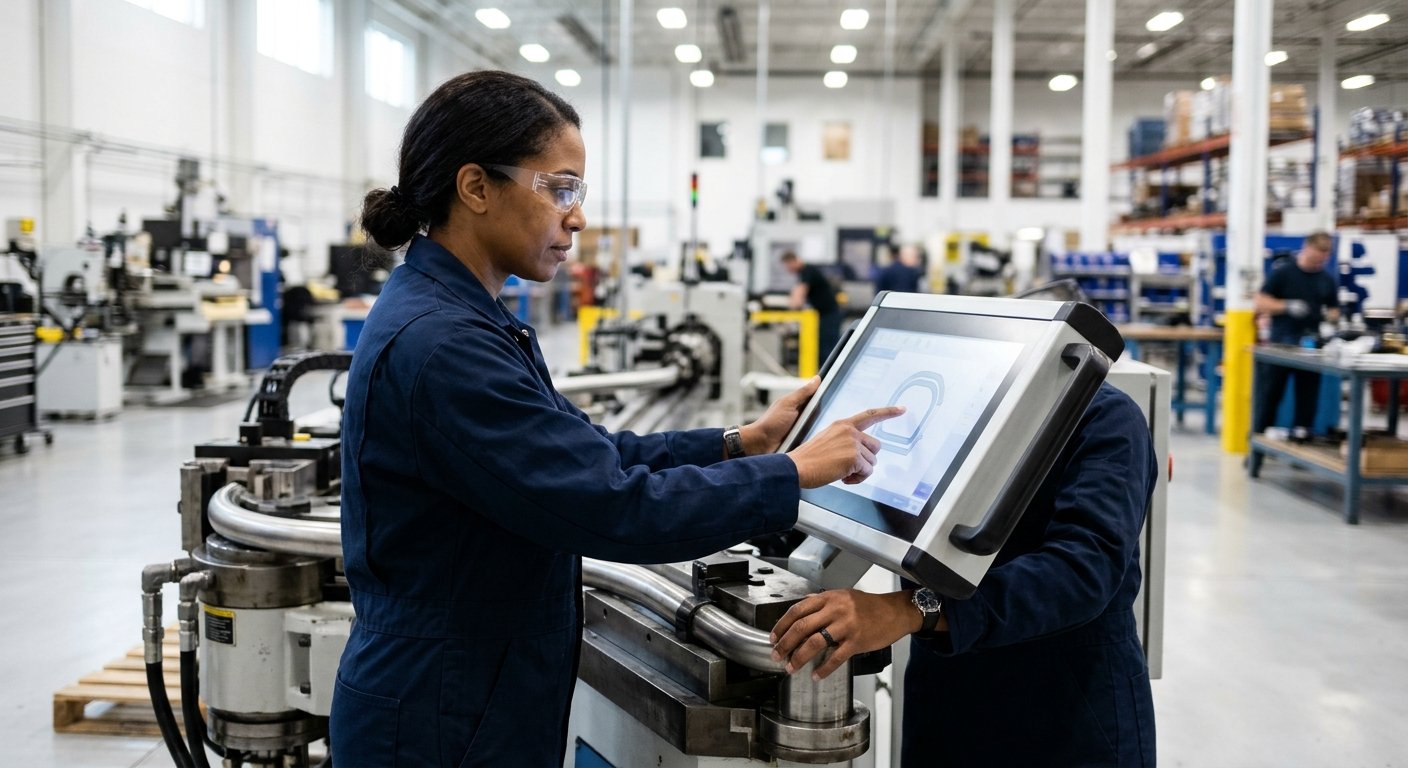
The majority of precision tube bending work in aerospace, energy, oil & gas, petrochemical, and defense has migrated toward CNC platforms—and the reasons are structural, not stylistic. These industries operate under quality management frameworks such as AS9100 and API standards that require documented process control. An NC bender cannot produce the electronic bend records those standards demand.
CNC benders are the correct specification when any of the following conditions apply:
- Multi-plane, multi-stack geometries: Hydraulic manifold lines, aircraft fuel and bleed-air tubing, and subsea umbilicals all require precise angular relationships between bends in three-dimensional space. CNC axis control makes those relationships repeatable.
- Tight tolerance requirements: Aerospace tube assemblies routinely call for angular tolerances of ±0.25° or tighter. CNC closed-loop feedback achieves this; NC cannot do so reliably across shift changes and material variability.
- Rapid changeover: Pulling up a stored part program takes seconds. Re-setting an NC machine for a new geometry takes considerably longer—a real throughput penalty in job-shop or low-to-medium volume environments with diverse part families.
- Traceability and audit readiness: CNC systems log bend parameters, operator IDs, timestamps, and deviation data. That output is directly importable into quality management systems.
- Exotic alloys: Titanium, Inconel, duplex stainless, and other high-strength alloys used in aerospace and subsea applications have springback behavior that changes with heat and material batch. CNC platforms handle dynamic compensation in ways NC systems structurally cannot.
For a deeper look at how CNC technology supports aerospace certification requirements, the article on meeting AS9100 standards with advanced CNC technology covers the compliance specifics in detail.
| Specification Criterion | NC Tube Bender | CNC Tube Bender |
|---|---|---|
| Bend complexity | Single or dual bend, one plane | Multi-bend, multi-plane geometries |
| Angular tolerance | ±1°–2° typical | ±0.25° or tighter achievable |
| Springback compensation | Manual operator adjustment | Programmed, automatic correction |
| Part program storage | Limited or none | Hundreds of programs on-board |
| Process data logging | Not available | Full electronic traceability |
| Changeover time | Longer (mechanical re-setup) | Rapid (program recall) |
| Operator skill dependency | High | Moderate (programming skill replaces setup skill) |
| Capital cost | Lower | Higher |
| Typical applications | Commercial, automotive, structural | Aerospace, defense, oil & gas, petrochemical |
Total Cost of Ownership: The Deciding Calculation
Purchase price is the most visible number in an equipment budget, but it rarely determines which control type is the better investment. The real calculation involves scrap rate, rework labor, changeover time, and the cost of non-conformance in your specific production environment.
Consider a hypothetical example: a facility bending titanium hydraulic lines for a defense contractor processes 40 distinct part numbers across a single shift. With an NC bender, every changeover involves mechanical re-setup, a trial bend, measurement, and correction. Over a year, that time accumulates significantly. A CNC platform with stored programs eliminates most of that setup loop. Add in the scrap reduction from automated springback compensation on a material as expensive as aerospace-grade titanium, and the CNC cost premium becomes easier to justify in the capital appropriation process.
For those evaluating the full financial picture, the article on CNC tube bending machine pricing in 2026 provides a grounded framework for understanding what drives cost at the equipment level.
The right control type is not the one with the lowest purchase price—it is the one that keeps your scrap rate, rework hours, and quality escapes closest to zero across the life of the machine.
Industry Standards and Why They Favor CNC
Regulatory and quality frameworks increasingly embed requirements that NC control cannot satisfy. The AS9100 quality management standard for aviation, space, and defense manufacturing requires documented evidence of process control and product conformance—electronic bend records generated by CNC systems satisfy this requirement directly. Similarly, API standards governing oil and gas piping systems include dimensional and traceability requirements that favor CNC-produced documentation.
This regulatory trajectory matters for capital planning. Specifying an NC bender for a product line that currently lacks formal traceability requirements, but is likely to be brought under an aerospace or energy quality program within its useful life, can result in a premature equipment replacement cycle.
When specifying equipment for a production cell that may supply both commercial and defense or aerospace customers, always specify to the most demanding quality tier your business is likely to encounter. Upgrading control architecture mid-production is significantly more expensive than specifying correctly at the outset.
Custom CNC and NC Configurations from Hines
Hines Bending Systems has designed and manufactured tube and pipe bending equipment since 1975, supplying NASA, U.S. military organizations, and demanding industrial customers across the country. The practical reality is that neither NC nor CNC is inherently superior—the correct specification depends entirely on the application, the production environment, and the quality requirements of the end customer.
What distinguishes a Hines solution from a catalog purchase is that both control types are available as custom-configured, American-manufactured platforms matched to the specific material, tube diameter, wall thickness, bend radius, and production volume of each application. The company’s CNC bending solutions span from compact, single-stack machines to complex multi-stack systems capable of producing aerospace-grade tube assemblies in a single setup. The full range of tube and pipe bending machines covers both control types with the same underlying commitment to precision and durability.
Comprehensive installation, operator training, and ongoing service support are part of every Hines equipment delivery—not an add-on. For facilities evaluating whether a pre-owned machine might bridge a near-term capacity gap, the used equipment inventory includes machines that have been evaluated against the same quality standards applied to new builds.
Frequently Asked Questions
What is the practical difference between NC and CNC tube bending for production use?
NC benders use fixed stored sequences with manual setup; operators adjust for springback and material variation by hand. CNC benders use closed-loop axis control with programmable springback compensation, real-time position feedback, and electronic data logging. For production with varied part geometries or strict quality documentation requirements, CNC provides repeatable results that NC systems cannot match consistently.
Can an NC tube bender meet aerospace or defense quality requirements?
Generally, no. AS9100 and most defense quality frameworks require documented, traceable process records for each part. NC benders do not produce electronic bend data. Unless a facility can demonstrate conformance through downstream inspection alone—which adds cost and doesn’t prevent defects—CNC control is the appropriate specification for regulated aerospace and defense work.
Is CNC always worth the higher upfront cost?
Not for every application. For high-volume, single-geometry work with consistent material and relaxed tolerances, the added capability of CNC may not return its cost premium within the machine’s useful life. The correct answer depends on part diversity, tolerance requirements, changeover frequency, and whether the application falls under a quality management standard that mandates data traceability.
How does material type influence the NC vs. CNC choice?
High-strength alloys—titanium, Inconel, duplex stainless—exhibit significant springback variability that changes with material batch, wall thickness, and temperature. CNC systems can store and apply material-specific compensation values automatically. NC operators must compensate manually, which becomes increasingly difficult to manage repeatably as alloy complexity and dimensional tolerance requirements increase.
What support does Hines provide after equipment delivery?
Hines Bending Systems provides on-site installation, operator and programming training, and ongoing technical service support for all equipment deliveries—both NC and CNC platforms. This includes application-specific training tailored to the materials and part geometries each customer actually produces, not generic machine operation instruction.
Specify the Right Bending Platform for Your Application
Hines engineers will review your part geometry, material specifications, tolerance requirements, and production volume to recommend the control type and machine configuration that best fits your operation—contact us to start that conversation.

About Hines Bending Systems
Hines Bending Systems is a leading American manufacturer of precision tube and pipe bending equipment serving aerospace, energy, oil & gas, petrochemical, and defense industries. With 50 years of proven expertise and a track record of supplying NASA and military clients, Hines delivers custom bending solutions for demanding applications ranging from high-volume production to specialized one-off projects. The company combines deep technical knowledge with comprehensive support including training and service, positioning itself as a partner in customer success rather than just an equipment supplier. Visit hinesbending.com →