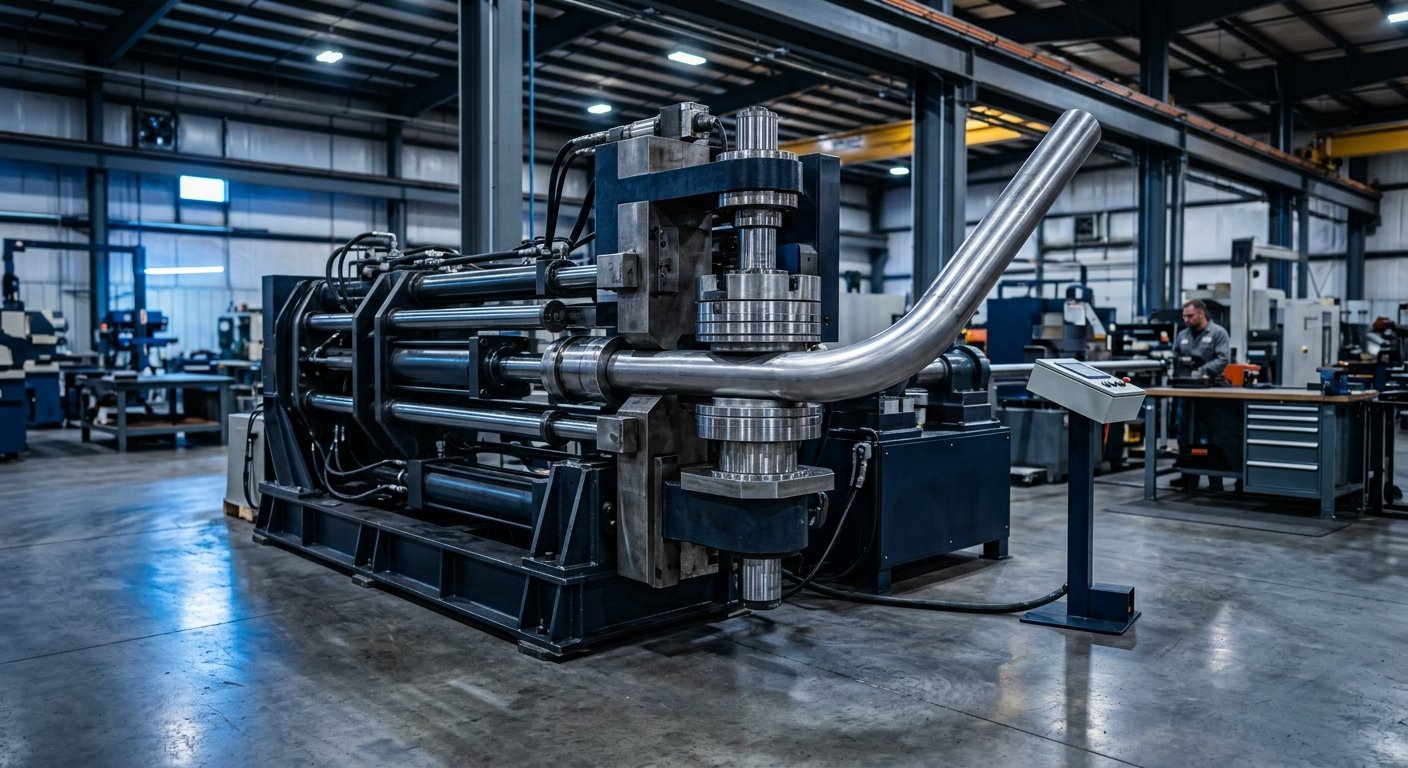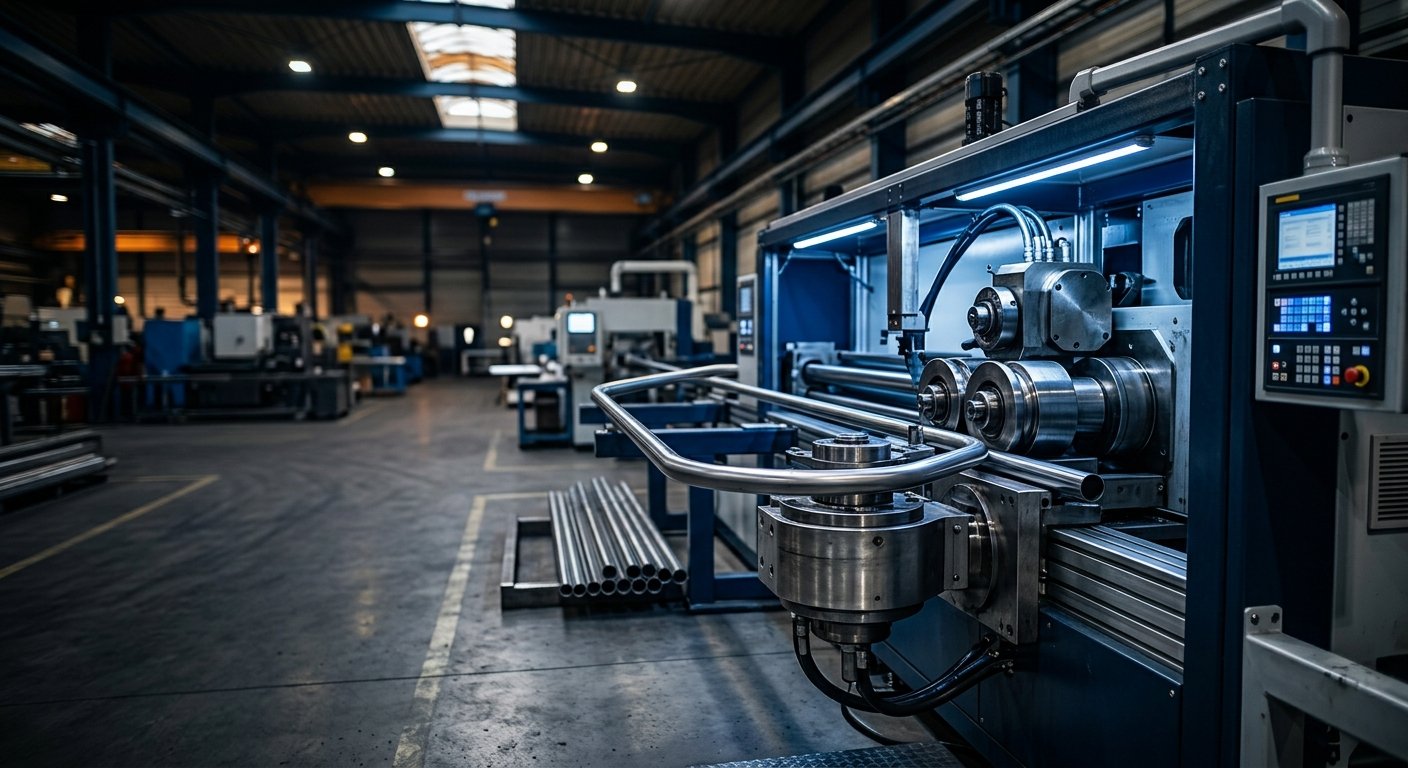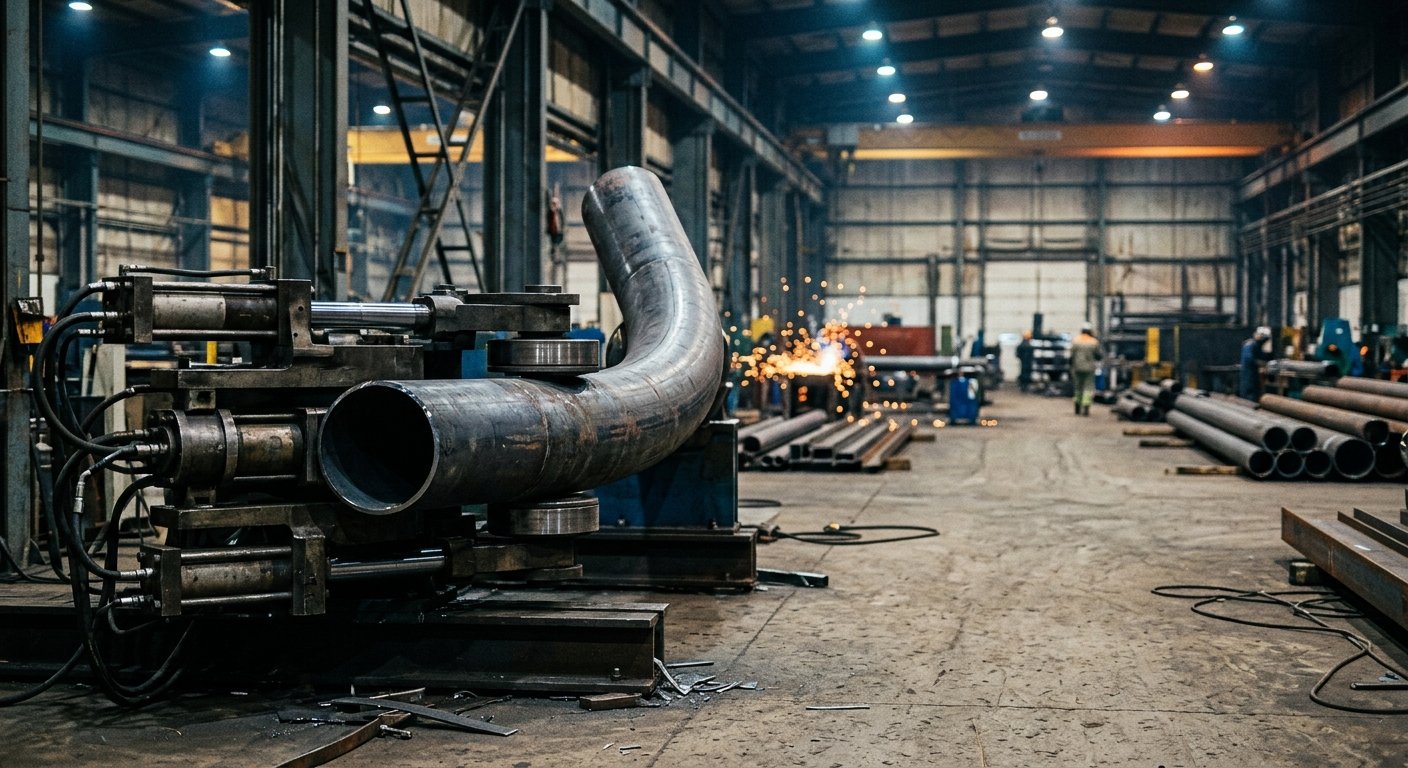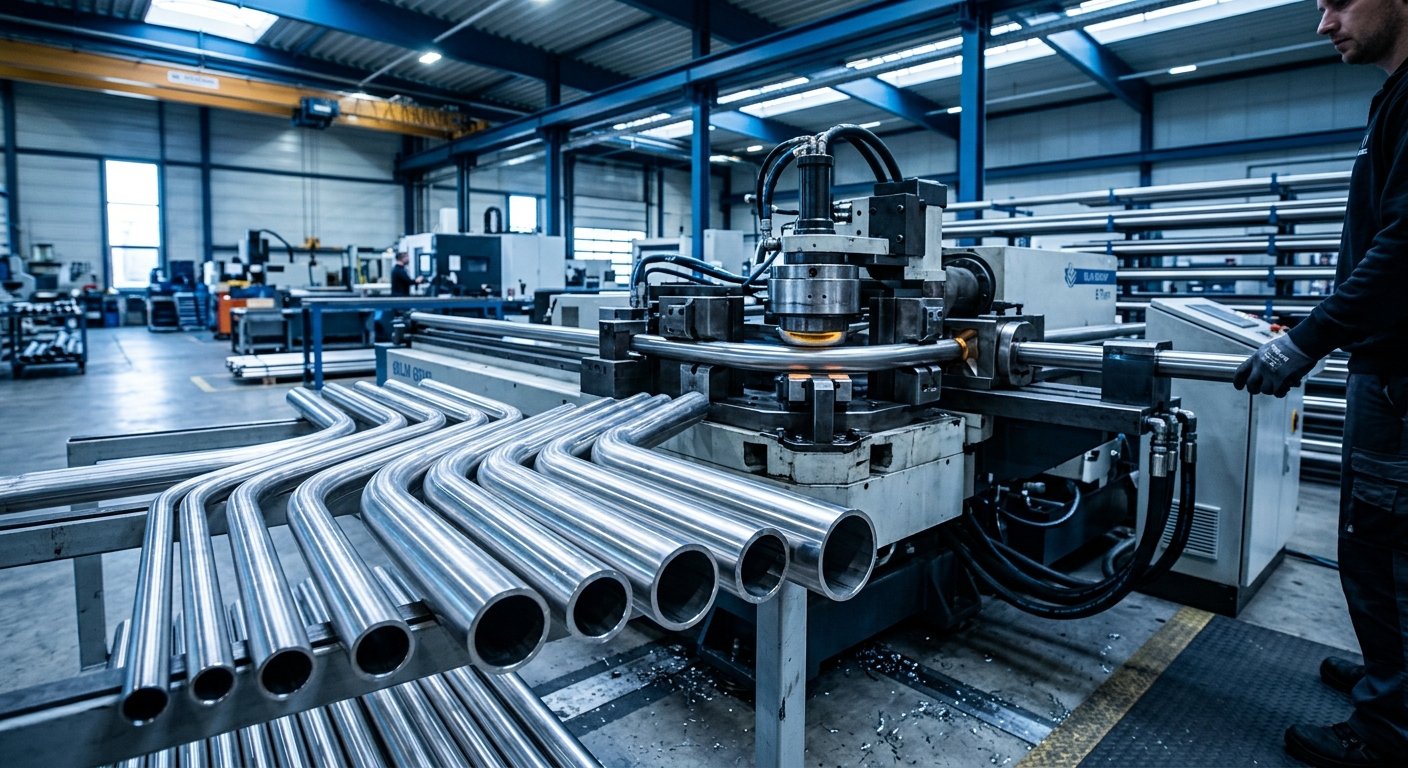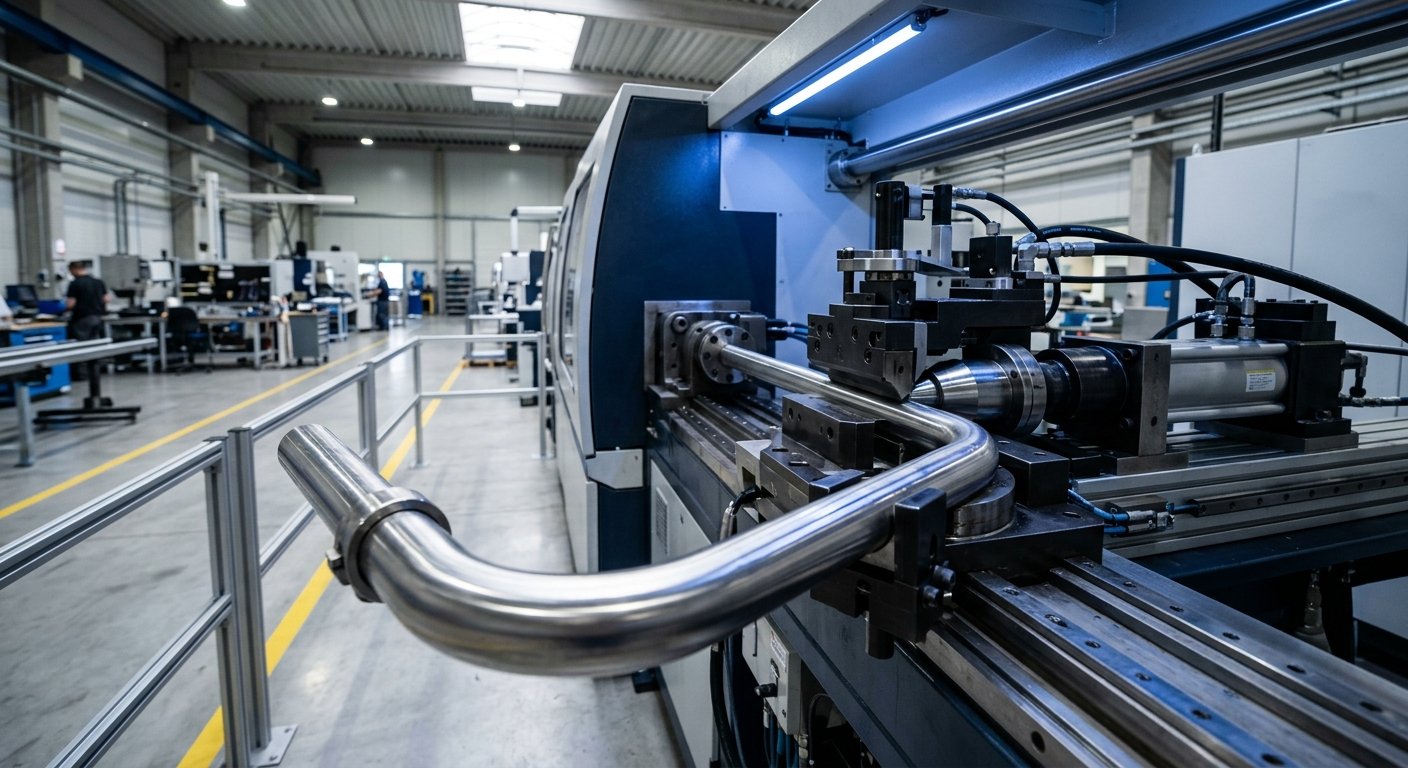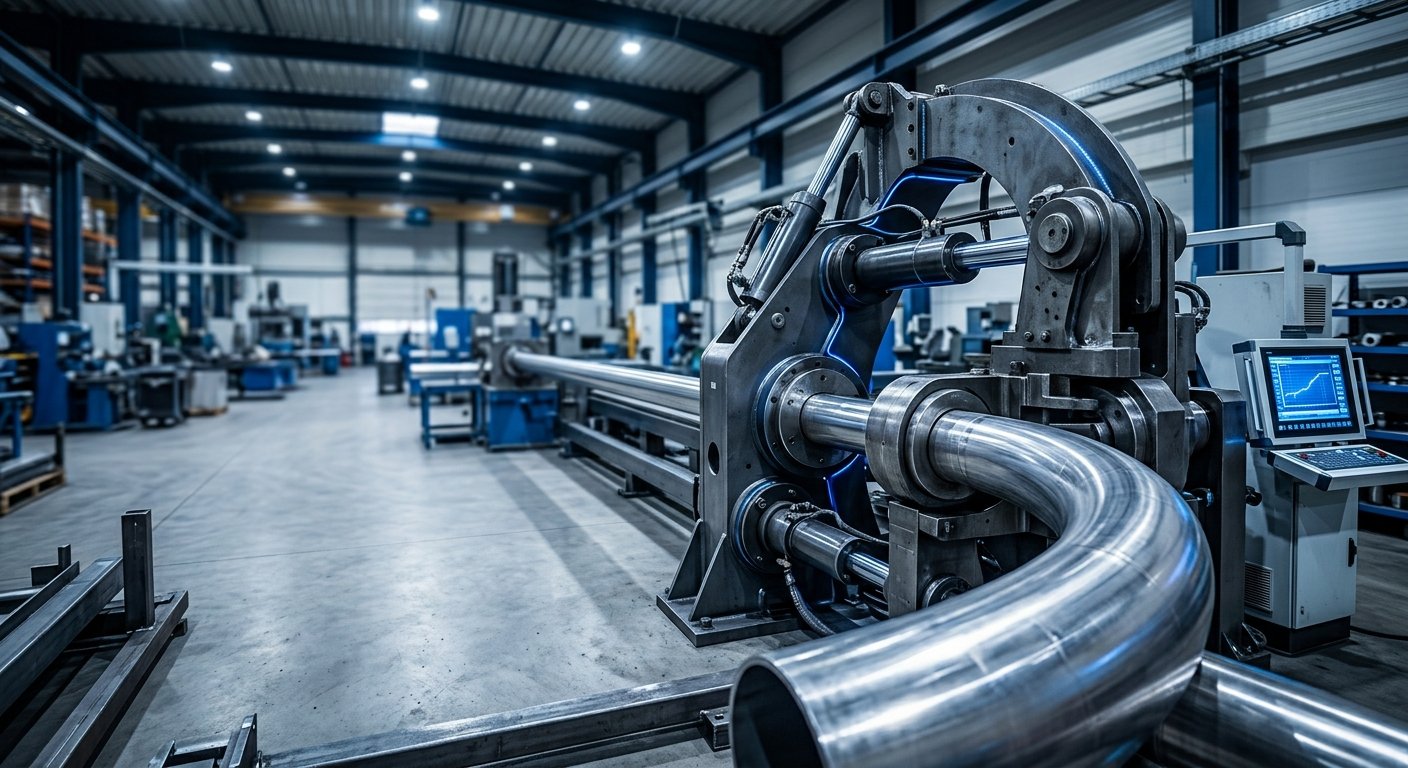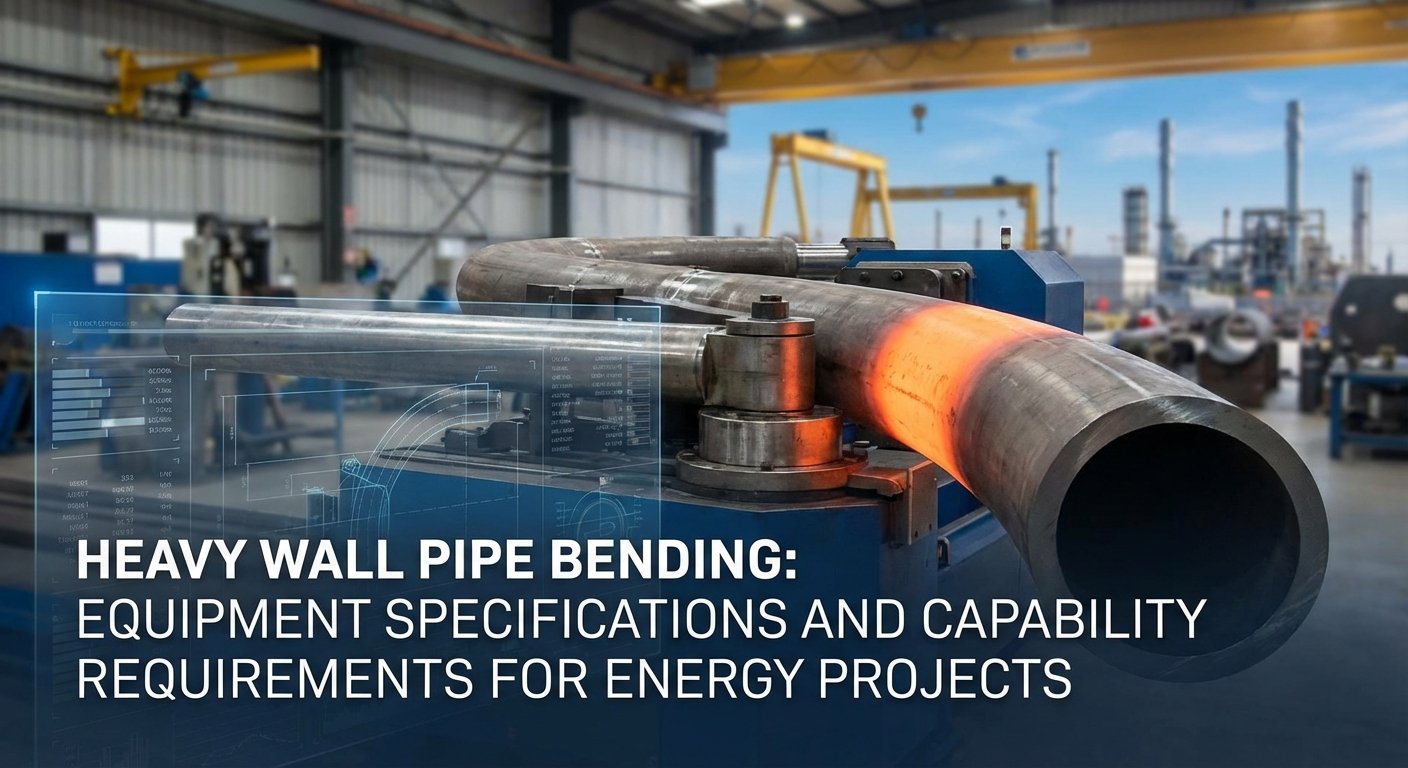
The energy sector’s demand for heavy wall pipe bending continues to accelerate in 2026, driven by new pipeline infrastructure, refinery upgrades, and renewable energy integration projects. When pipe wall thickness exceeds schedule 80—often reaching dimensions of 3 inches or more—standard bending equipment simply cannot deliver the precision and consistency these critical applications require. Understanding the specific capabilities and specifications needed for heavy wall pipe bending separates successful energy projects from costly failures and delays.
Defining Heavy Wall Pipe Bending Requirements
Heavy wall pipe bending involves manipulating pipes with substantial wall thickness, typically above 0.500 inches, though many energy applications demand working with materials exceeding 2 inches in wall thickness. These pipes commonly range from 4 to 48 inches in outer diameter, with some specialized applications extending beyond these parameters. The challenge intensifies as the wall thickness to diameter ratio increases, requiring exponentially greater forming force and sophisticated control systems.
Oil and gas pipe bending for transmission lines, offshore platforms, and processing facilities represents the most demanding sector for heavy wall applications. These projects cannot tolerate the dimensional inconsistencies, wall thinning, or internal surface defects that inadequate equipment produces. A single failed bend can compromise an entire pipeline segment, resulting in six-figure replacement costs and project delays measured in weeks or months.
Critical Equipment Specifications for Heavy Wall Applications
Tonnage and Force Capacity
The primary specification for any industrial pipe bender handling heavy wall material is its force capacity, typically measured in tons. While a standard rotary draw bender might operate effectively at 50-100 tons for light to medium wall pipes, heavy wall pipe bending equipment must deliver 200 to 400+ tons of forming force. This capacity directly correlates to the maximum wall thickness and material grade the machine can successfully bend without exceeding structural limits.
Manufacturers often underestimate the force requirements for high-strength alloys commonly specified in energy projects. Chrome-moly, duplex stainless, and other high-tensile materials demand 30-50% more force than mild steel equivalents. A pipe bending machine manufacturer must design equipment with adequate safety margin beyond theoretical minimums to account for material variations, work hardening, and long-term reliability.
Mandrel and Tooling Systems
Heavy wall bending places extreme demands on mandrel systems that prevent collapse and maintain internal diameter consistency. Articulated mandrels with multiple spherical segments provide superior support, but the ball count, diameter, and material composition must match the specific application. Energy sector specifications frequently require maintaining the internal diameter within ±1% across the entire bend, achievable only with properly engineered mandrel assemblies.
Tooling wear represents a significant operational consideration. The clamp die, pressure die, and bend die experience tremendous stress during heavy wall operations. Premium tool steels with surface hardening treatments extend service life, but replacement intervals remain considerably shorter than light wall applications. Progressive facilities maintain complete spare tooling sets to eliminate production interruptions.
Induction Bending for Extreme Heavy Wall Applications
When wall thickness exceeds practical limits for rotary draw bending—generally above 3 inches depending on diameter—induction bending becomes the preferred or only viable method. This process heats a narrow band of the pipe to approximately 1,600-2,200°F while simultaneously applying bending force, allowing the material to form with dramatically reduced tonnage requirements.
Induction bending equipment specifications differ fundamentally from rotary draw systems. Power supply capacity, measured in kilowatts, determines heating capability and production speed. Modern systems range from 200 to 800 kW depending on pipe diameter and wall thickness. The induction coil design, cooling system capacity, and automated control algorithms collectively determine bend quality and repeatability.
Oil and gas pipe bending for offshore platforms and subsea applications frequently specifies induction bending for heavy wall, large diameter pipes where material integrity and precise dimensional control are non-negotiable. The process produces minimal wall thinning—typically less than 3%—and maintains consistent metallurgical properties when properly controlled, critical factors for pressure vessel code compliance.
Material Considerations in Equipment Selection
The material palette for energy projects extends far beyond carbon steel. Pipe bending equipment must accommodate Chrome-Moly grades (P11, P22, P91), stainless alloys (304L, 316L, duplex 2205, super duplex 2507), nickel alloys (Inconel, Hastelloy), and titanium for specialized applications. Each material presents distinct challenges affecting equipment requirements.
High-strength, low-alloy steels work harden rapidly during cold bending, potentially requiring intermediate stress relief operations or mandating hot bending methods. Austenitic stainless steels exhibit high ductility but require greater forming force than carbon steel due to higher yield strength. Duplex stainless grades combine these challenges while demanding careful temperature control to prevent detrimental phase transformations.
A comprehensive pipe bending machine manufacturer provides material-specific process parameters developed through extensive testing. These specifications include bending speeds, mandrel configurations, lubrication requirements, and post-bend heat treatment recommendations. Energy projects cannot afford the trial-and-error approach; equipment must deliver first-time success across the specified material range.
Dimensional Accuracy and Quality Control Integration
Energy infrastructure projects enforce tolerances that challenge even premium pipe bending equipment. Centerline radius accuracy within ±0.5%, ovality not exceeding 3%, and wall thinning limited to 10-15% represent common specifications. Meeting these requirements demands equipment with advanced control systems, precision servo drives, and integrated measurement capabilities.
Modern industrial pipe benders incorporate CNC control with multi-axis interpolation, enabling complex bending sequences without operator intervention. Position feedback systems using absolute encoders ensure repeatability within 0.1 degrees on bend angles and 0.010 inches on tangent lengths. For critical applications, in-process measurement systems verify dimensions during bending, allowing real-time corrections before the part exits the machine.
Traceability requirements in oil and gas applications necessitate equipment capable of data logging and reporting. Every bend must document material heat numbers, process parameters, quality measurements, and operator identification. Integration with enterprise MES systems allows seamless compliance with project quality plans and regulatory requirements.
Production Volume and Flexibility Considerations
Energy projects span the spectrum from high-volume pipeline production requiring hundreds of identical bends to custom refinery piping with unique configurations throughout. Equipment selection must align with production volume expectations while maintaining flexibility for inevitable variations and change orders.
High-volume pipeline applications justify dedicated, highly automated systems optimized for specific pipe sizes and bend configurations. These installations might produce 50-100 bends per shift with minimal changeover time, emphasizing throughput and consistency over flexibility. Conversely, custom fabrication facilities require versatile equipment handling broad size ranges with reasonable changeover procedures.
The tooling investment for heavy wall pipe bending represents substantial capital beyond the machine itself. A complete tooling set for a single pipe size and radius might cost $75,000 to $200,000 depending on complexity. Facilities serving diverse energy sector clients must carefully balance inventory investment against opportunity costs of turning away projects.
American Manufacturing and Quality Standards
Energy infrastructure represents critical national assets where equipment reliability, support responsiveness, and supply chain security carry significant weight in procurement decisions. American-manufactured pipe bending equipment offers distinct advantages for domestic energy projects, including simplified compliance with Buy American provisions, reduced lead times, and accessible technical support.
Domestic manufacturers with proven track records in demanding applications—including aerospace and defense sectors—bring engineering depth and quality standards that match energy sector requirements. Facilities holding ISO 9001 certification, ASME accreditations, and security clearances for sensitive projects provide assurance levels difficult to replicate with offshore suppliers.
Training and Technical Support Requirements
Heavy wall pipe bending equipment represents a significant investment in operator knowledge beyond the capital expenditure. Energy projects cannot afford learning curves that consume expensive material in trial bends and rework. Comprehensive training programs covering setup procedures, tooling selection, process optimization, and troubleshooting are essential for realizing equipment capabilities.
Ongoing technical support separates premium equipment suppliers from commodity providers. When a critical energy project deadline looms and a bending issue emerges, response time matters. Domestic manufacturers offering 24/7 support, remote diagnostics, and rapid parts availability minimize downtime costs that quickly dwarf any initial equipment savings from cheaper alternatives.
Frequently Asked Questions
What wall thickness defines heavy wall pipe bending?
Heavy wall pipe bending generally refers to pipes with wall thickness exceeding schedule 80, typically 0.500 inches or greater. Many energy applications involve walls of 1-3 inches or more, requiring specialized equipment and processes beyond standard bending capabilities.
When should induction bending be specified instead of rotary draw bending?
Induction bending becomes preferable when wall thickness exceeds approximately 3 inches, when the diameter-to-wall thickness ratio is low, or when minimal wall thinning is critical. Large diameter pipes (above 24 inches) with heavy walls almost always require induction bending due to force limitations of rotary equipment.
How does material grade affect equipment requirements for heavy wall bending?
High-strength alloys require 30-50% more bending force than mild steel equivalents. Materials like duplex stainless, chrome-moly, and nickel alloys also demand specific mandrel configurations, lubrication systems, and sometimes temperature control that must be factored into equipment specifications.
Selecting the Right Equipment Partner
Success in heavy wall pipe bending for energy projects depends on matching equipment capabilities precisely to application requirements. The investment in premium pipe bending equipment pays dividends through reduced scrap, faster production cycles, and eliminated rework costs. Selecting a pipe bending machine manufacturer with deep engineering expertise, proven energy sector experience, and comprehensive support capabilities transforms a capital purchase into a competitive advantage.
For over six decades, Hines Bending Systems has engineered precision pipe bending solutions for the most demanding applications in aerospace, defense, and energy sectors. Our American-manufactured equipment delivers the reliability, accuracy, and support that critical infrastructure projects require. Contact our engineering team to discuss your heavy wall pipe bending requirements and discover how our custom solutions can optimize your energy project success.