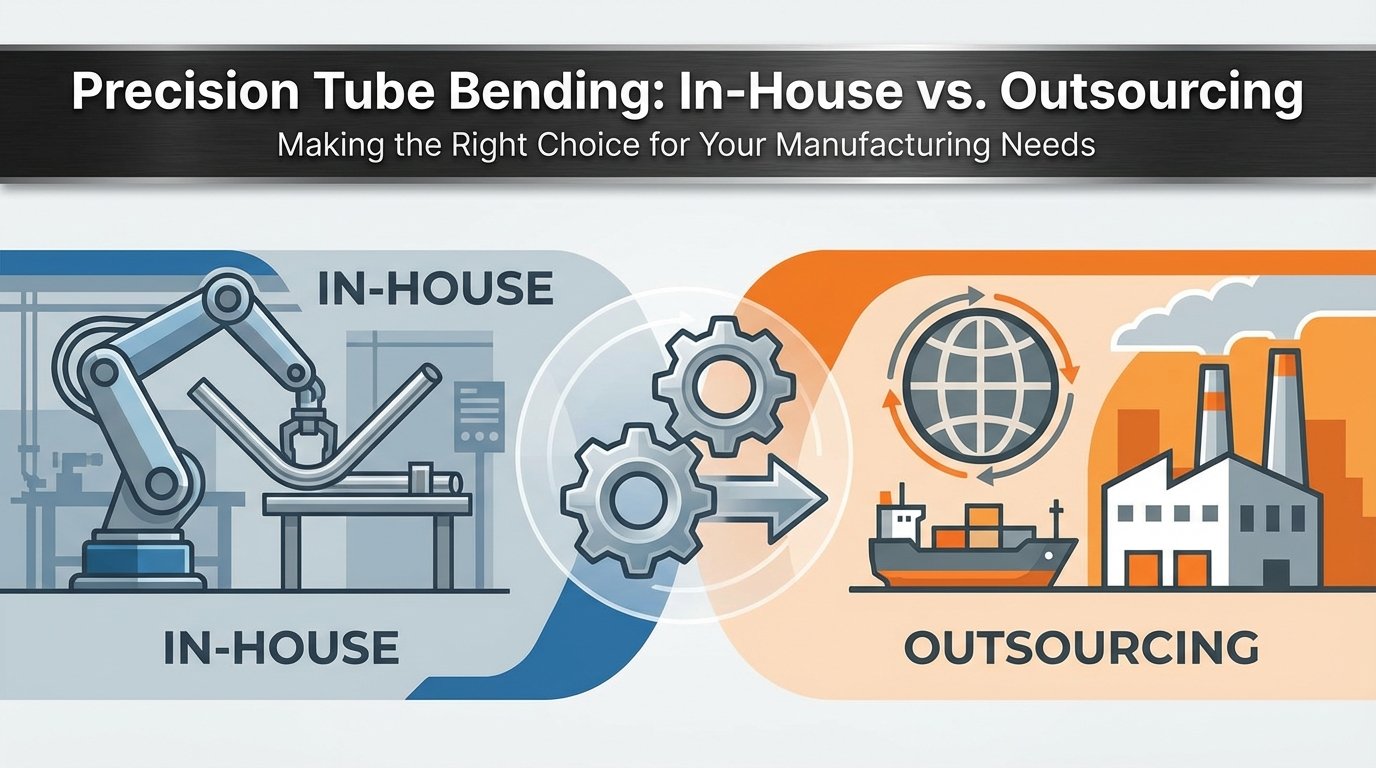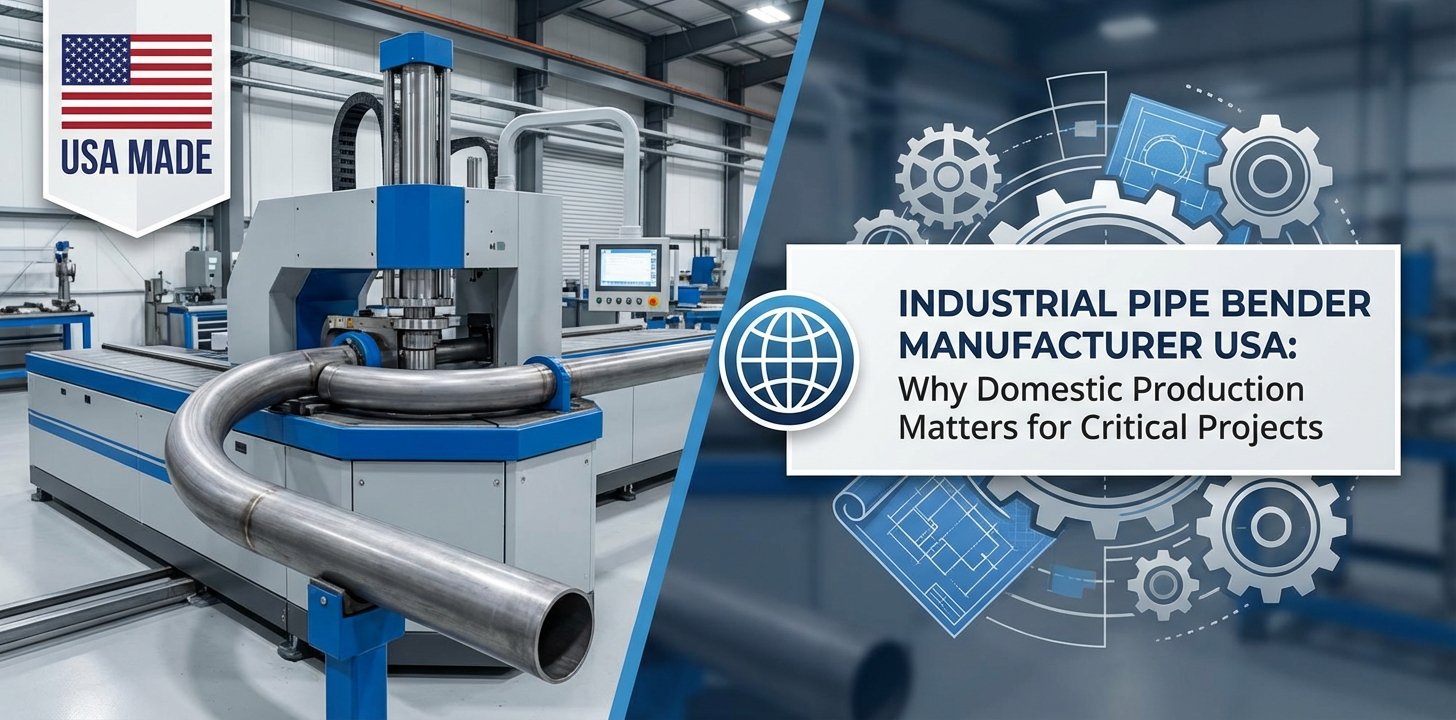
Global supply chain disruptions between 2020 and 2025 forced manufacturing leaders to reconsider equipment sourcing strategies. Companies depending on overseas pipe bending equipment faced delivery delays stretching 18-24 months, spare parts shortages that idled production lines, and technical support challenges across multiple time zones. The result? A decisive shift toward domestic manufacturing partnerships for critical infrastructure projects.
American made pipe benders now represent more than patriotic preference—they deliver measurable advantages in supply chain resilience, technical support responsiveness, and customization capabilities that directly impact production efficiency and project timelines.
Supply Chain Vulnerabilities Exposed
The semiconductor shortage and global shipping congestion revealed critical weaknesses in extended international supply chains. Manufacturing facilities discovered that equipment sourced from overseas manufacturers created dependencies that threatened production continuity:
- Extended lead times: Standard pipe bending machines from international suppliers required 12-18 month lead times, with custom configurations pushing beyond two years
- Spare parts delays: Critical wear components like bending dies, mandrels, and hydraulic system parts faced 8-12 week shipping windows
- Technical support gaps: Time zone differences and language barriers complicated troubleshooting, extending downtime from hours to days
- Quality control distance: Factory acceptance testing required international travel or reliance on third-party inspectors
For critical infrastructure projects in aerospace, defense, and energy sectors, these vulnerabilities translated into unacceptable risk. A delayed pipe bending machine manufacturer delivery could cascade into missed project milestones worth millions in penalty clauses.
Technical Advantages of Domestic Manufacturing
Industrial pipe bender manufacturer USA facilities offer distinct technical benefits beyond proximity. American manufacturing standards, engineering collaboration, and customization capabilities create performance advantages that offshore alternatives struggle to match.
Engineering Collaboration and Custom Solutions
Complex bending applications require close collaboration between equipment manufacturer and end-user engineering teams. Domestic manufacturers enable real-time engineering discussions, rapid prototyping, and iterative design refinement impossible with overseas suppliers.
Custom pipe bending machines for aerospace applications exemplify this advantage. When a defense contractor needed to bend Inconel 625 tubing with 2D bend radii while maintaining strict ovality tolerances below 5%, American engineers worked directly with the manufacturing team through multiple design iterations. The project timeline from specification to delivery: seven months. An overseas manufacturer quoted 22 months for the same capability.
This collaborative approach extends to specialized tooling design, material testing, and process validation. Engineers can visit the manufacturing facility for hands-on tooling trials, observe machine assembly, and conduct acceptance testing without international travel complications.
Material Expertise and Testing Capabilities
Precision pipe bending manufacturer facilities in the United States maintain extensive material testing capabilities and application knowledge accumulated across decades of aerospace, petrochemical, and defense work. This expertise proves critical when bending exotic alloys, duplex stainless steels, or titanium tubing where material behavior under stress requires deep understanding.
American manufacturers typically maintain relationships with domestic material suppliers, creating integrated supply chains for both equipment and consumables. This integration streamlines material qualification testing and ensures bending parameters match actual material properties rather than generic specifications.
Critical Infrastructure Applications
Several sectors prioritize American made pipe benders for applications where reliability, precision, and supply chain security cannot be compromised.
Aerospace and Defense
NASA, military aircraft manufacturers, and defense contractors maintain strict requirements for equipment provenance and supply chain transparency. Pipe bending equipment used for hydraulic systems, fuel lines, and environmental control systems must meet rigorous quality standards with complete traceability.
American manufacturers provide documentation meeting ITAR (International Traffic in Arms Regulations) requirements, AS9100 quality management standards, and government source inspection protocols. For defense applications involving classified projects, domestic manufacturing eliminates security concerns inherent in offshore equipment sourcing.
Typical aerospace applications include:
- Hydraulic tubing from 0.25″ to 2″ diameter in titanium, stainless steel, and Inconel alloys
- Fuel system tubing requiring contamination-free bending processes
- Environmental control system ducting with complex three-dimensional geometries
- Landing gear hydraulic lines with precise bend angles and minimal wall thinning
Oil, Gas, and Petrochemical
Refinery maintenance, offshore platform construction, and petrochemical facility expansions demand pipe bending equipment capable of handling large-diameter, heavy-wall pipe in corrosion-resistant alloys. Equipment downtime in these environments costs $50,000-$200,000 per hour, making reliability and rapid support access paramount.
Domestic pipe bending machine manufacturers provide service technicians who can reach most U.S. facilities within 24-48 hours. This responsiveness proves critical during scheduled turnarounds where every hour of delay multiplies costs exponentially.
Applications include bending 316L stainless steel process piping, duplex and super duplex alloys for corrosive service, and carbon steel pipe up to 12″ diameter for structural and process applications.
Power Generation and Utilities
Nuclear power plants, combined-cycle facilities, and renewable energy infrastructure require pipe bending equipment meeting ASME codes and nuclear quality assurance standards. American manufacturers maintain the quality systems, documentation rigor, and inspection capabilities these applications demand.
Quality Standards and Certifications
Industrial pipe bender manufacturer USA facilities typically maintain certifications that overseas competitors find challenging to achieve:
- ISO 9001:2015: Quality management system certification providing consistent manufacturing processes
- AS9100D: Aerospace quality management standard required for aviation and defense work
- ASME conformance: Pressure vessel and piping code compliance for energy sector applications
- Military specifications: Equipment designed to meet MIL-STD requirements for defense applications
These certifications represent more than paperwork—they reflect manufacturing discipline, traceability systems, and quality culture that directly impact equipment reliability and performance consistency.
Total Cost of Ownership Analysis
Purchase price represents only one component of equipment cost. Comprehensive total cost of ownership analysis reveals advantages of American made pipe benders that offset any initial price premium.
Downtime and Support Costs
When a critical production machine fails, response time determines financial impact. Domestic manufacturers provide:
- Phone support during U.S. business hours with engineers who understand your application
- Field service technicians available within 24-48 hours for most locations
- Spare parts shipping via overnight delivery rather than international freight
- Remote diagnostic support without time zone complications
A single avoided 48-hour downtime incident can justify thousands in equipment cost differences.
Training and Operator Development
Precision pipe bending manufacturer facilities offer comprehensive operator training at their U.S. locations. Training programs spanning 3-5 days cover machine operation, tooling setup, troubleshooting, and preventive maintenance. This hands-on instruction develops operator competency that reduces scrap rates, improves production efficiency, and extends equipment life.
Follow-up training for new applications or operators costs substantially less when travel remains domestic rather than international.
Customization and Upgrades
Production requirements evolve. American manufacturers provide retrofit capabilities, capacity upgrades, and automation integration with lead times measured in weeks rather than months. This flexibility protects equipment investment as production needs change.
Technology and Innovation Pipeline
U.S. pipe bending equipment manufacturers continue advancing bending technology through servo-electric drive systems, advanced CNC controls, and Industry 4.0 integration. Recent innovations include:
- All-electric bending systems: Eliminating hydraulic components for cleaner operation and reduced maintenance in cleanroom environments
- Advanced mandrel technologies: Multi-ball and articulated mandrels maintaining wall thickness in tight-radius bends
- Integrated measurement systems: Real-time bend angle verification and automatic correction for consistent quality
- Data connectivity: Machine monitoring, predictive maintenance alerts, and production data integration with enterprise systems
Domestic manufacturers incorporate customer feedback into product development faster than international competitors navigating language barriers and cultural differences.
Regulatory Compliance and Documentation
Government infrastructure projects and defense contracts increasingly include domestic content requirements and Buy American provisions. American made pipe benders simplify compliance documentation for projects subject to:
- Buy American Act requirements for federally funded infrastructure projects
- ITAR restrictions on defense and military applications
- Berry Amendment compliance for Department of Defense contracts
- State and local government procurement preferences for domestic equipment
Documentation proving equipment origin, component sourcing, and manufacturing location becomes straightforward with domestic manufacturers.
Building Resilient Manufacturing Operations
Supply chain resilience requires strategic equipment sourcing decisions prioritizing long-term operational reliability over short-term cost optimization. Critical infrastructure manufacturers increasingly recognize that custom pipe bending machines from American manufacturers provide:
- Predictable delivery schedules without international shipping variables
- Responsive technical support matching operational time zones
- Engineering collaboration enabling application-specific optimization
- Spare parts availability measured in days rather than months
- Quality standards meeting the most demanding industry requirements
For facilities where bending equipment represents a production bottleneck, these advantages translate directly into reduced operational risk and improved production reliability.
Partner With Proven American Manufacturing
Hines Bending Systems has manufactured precision pipe and tube bending equipment in the United States for over 70 years. Our custom pipe bending machines serve NASA, military contractors, aerospace manufacturers, and critical infrastructure projects requiring uncompromising quality and reliability.
We engineer and build rotary draw benders, compression benders, and specialized bending systems for applications from 0.125″ to 12″ diameter in materials ranging from aluminum to Inconel. Our Lake City, Florida manufacturing facility maintains ISO 9001:2015 and AS9100D certifications, and our engineering team provides application support from initial concept through production optimization.
Contact our engineering team to discuss your pipe bending requirements and discover how American manufacturing delivers supply chain resilience and technical advantages for your critical applications.