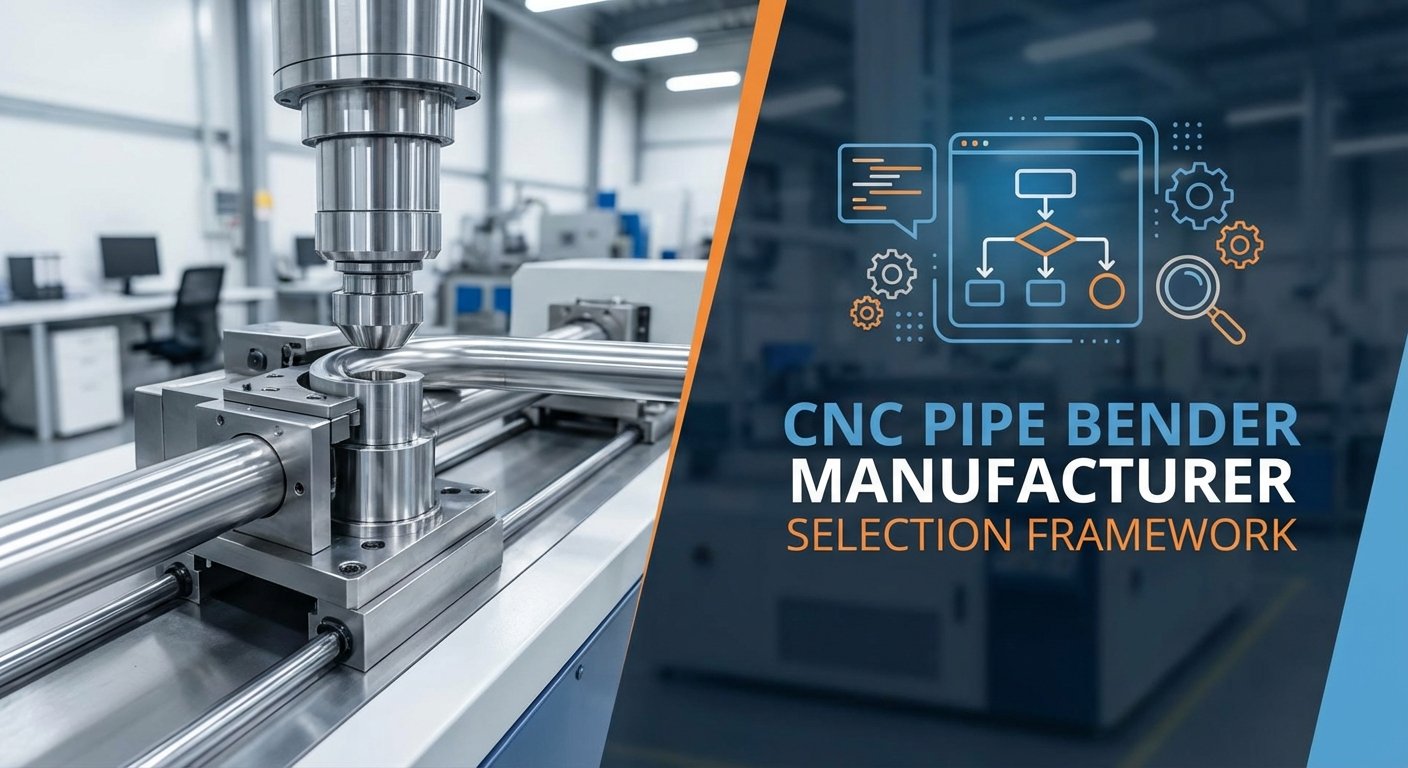
Selecting the right CNC pipe bender manufacturer represents a critical infrastructure decision that impacts production capability, quality consistency, and operational costs for years. With industrial pipe bending equipment representing capital investments often exceeding $500,000, engineering managers need a systematic assessment framework that goes beyond price comparison to evaluate technical capabilities, support infrastructure, and long-term partnership potential.
The precision pipe bending manufacturer landscape has evolved significantly as aerospace tolerances tighten, oil and gas projects demand exotic materials, and automotive electrification creates new tube routing challenges. A structured evaluation methodology separates manufacturers who deliver production-grade solutions from those offering equipment that struggles under real-world demands.
Technical Capability Assessment Criteria
The foundation of manufacturer evaluation starts with technical capabilities that match your application requirements. A cnc pipe bender manufacturer must demonstrate proven competence across multiple dimensions that directly affect your production outcomes.
Machine Architecture and Construction Quality
Frame rigidity determines repeatable accuracy under production loads. Manufacturers using fabricated steel construction typically achieve structural stability superior to cast iron alternatives, particularly important for high-torque bending operations on large-diameter pipe or heavy-wall tubing. Examine whether the manufacturer employs finite element analysis during machine design to optimize structural performance rather than over-engineering with excessive mass.
Servo control systems represent another critical specification. All-electric servo bending delivers positioning accuracy within ±0.1 degrees on quality machines, essential for aerospace hydraulic systems and exhaust assemblies where mating components demand precise angles. Verify the manufacturer integrates industrial-grade servo drives from established suppliers rather than consumer-grade components prone to failure in production environments.
Bending Capacity and Flexibility Range
Match the manufacturer’s equipment specifications against your current and anticipated requirements. Consider these capacity parameters:
- Maximum tube outside diameter and wall thickness across material types
- Minimum centerline radius capabilities for tight-radius applications
- Maximum number of programmable bends per cycle
- Rotation capability for spatial bending (multi-plane configurations)
- Tool changeover time for multi-product production schedules
Custom pipe bending machines become necessary when standard configurations cannot accommodate your specific tube profiles, material combinations, or production volume requirements. Manufacturers offering engineering customization demonstrate flexibility that proves valuable as project requirements evolve.
Material Expertise and Application Experience
A pipe bending machine manufacturer’s experience with your specific materials directly correlates with successful implementation. Different materials present distinct bending challenges that require specialized knowledge.
Exotic Alloy Capabilities
Aerospace and petrochemical applications frequently specify Inconel, titanium, duplex stainless steel, and other high-strength alloys that exhibit springback characteristics and work-hardening behavior dramatically different from mild steel or aluminum. Manufacturers with documented experience bending these materials understand the tooling geometries, mandrel configurations, and process parameters necessary to achieve dimensional accuracy without surface defects.
Request case studies or customer references involving materials matching your specifications. A manufacturer claiming “we can bend anything” without supporting documentation likely lacks the empirical data necessary for first-time-right process development.
Industry-Specific Knowledge
Oil and gas projects demand compliance with ASME B31.3 and API standards, while aerospace components must meet AS9100 quality management requirements. An industrial pipe bending equipment manufacturer serving these sectors understands the documentation, traceability, and quality control protocols beyond basic machine operation.
Manufacturers supporting NASA programs, military aircraft systems, or nuclear power applications have demonstrated capabilities meeting the most stringent specifications. This experience translates to robust processes even for less demanding applications.
Software and Programming Environment
Modern CNC bending machines succeed or fail based on software usability and programming efficiency. Evaluate the manufacturer’s control system against these criteria:
Programming interface complexity affects operator training time and error rates. Systems requiring extensive G-code programming increase setup time and introduce error opportunities compared to graphical interfaces where operators input bend sequences visually. Simulation capabilities should display the complete bend sequence in 3D, identifying potential collisions between tube and machine components before running the first part.
XYZ coordinate import functionality allows direct transfer of tube designs from CAD systems to bending programs, eliminating manual data entry. This capability becomes essential for complex aerospace assemblies or automotive exhaust systems with dozens of bends in spatial configurations.
Springback compensation algorithms integrated into the control system reduce trial-and-error process development. Advanced manufacturers incorporate material-specific databases that automatically adjust bend angles based on tube material, diameter, wall thickness, and bend radius—knowledge accumulated across thousands of production runs.
Manufacturing Location and Supply Chain Considerations
Geographic manufacturing location impacts lead times, support responsiveness, parts availability, and long-term service. American-manufactured bending equipment offers distinct advantages for domestic production operations.
Machines built in the United States ensure compliance with domestic content requirements for government contracts and defense applications. More importantly, domestic manufacturing enables responsive engineering support during installation commissioning and ongoing production optimization. When process issues arise, having engineering resources in compatible time zones accelerates problem resolution compared to waiting for overseas responses.
Supply chain resilience has emerged as a critical consideration following recent global disruptions. Manufacturers sourcing components domestically or from stable supply regions demonstrate lower vulnerability to international shipping delays or geopolitical complications affecting parts availability.
Support Infrastructure and Technical Resources
The relationship with a precision pipe bending manufacturer extends decades beyond initial installation. Evaluate support capabilities that determine long-term success:
Training Programs
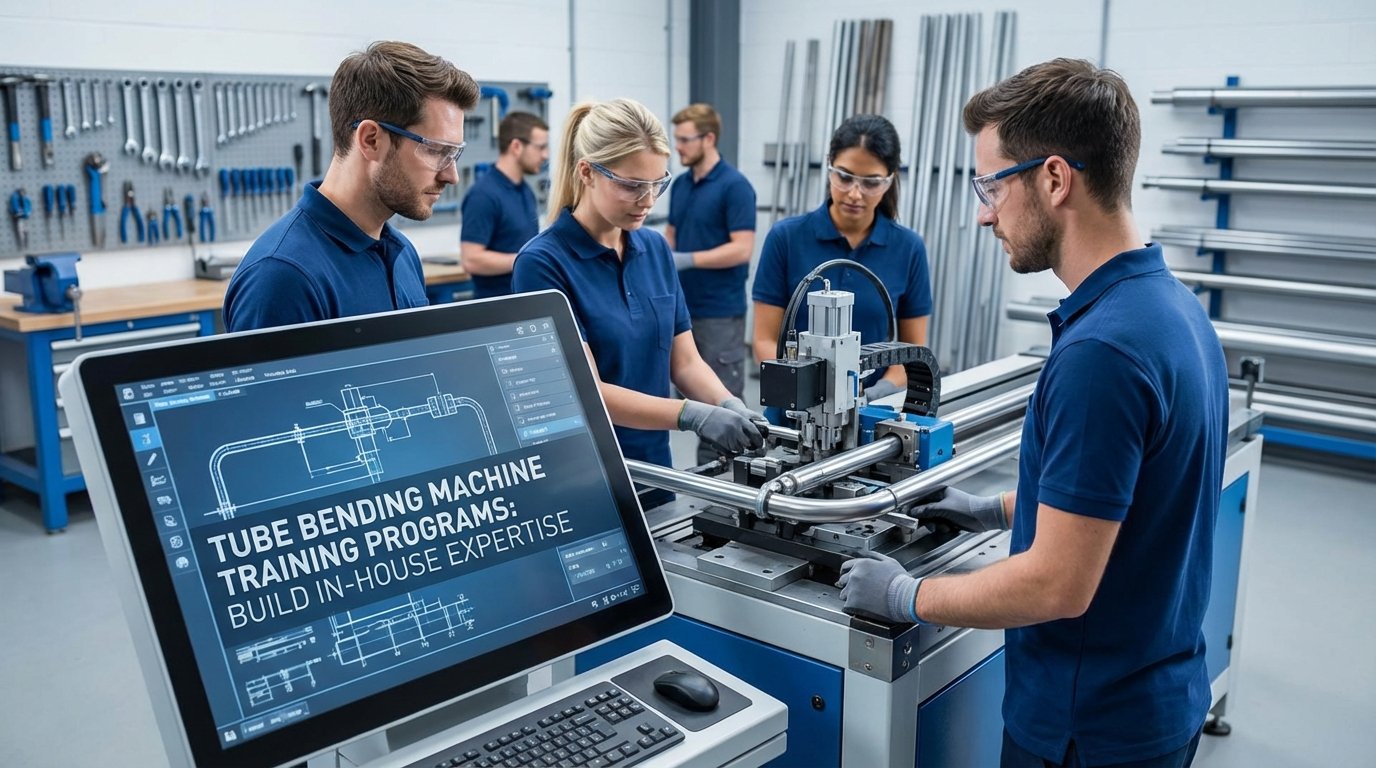
Comprehensive operator training should cover machine operation, programming techniques, tooling setup, and troubleshooting procedures. Manufacturers offering hands-on training at their facility provide operators exposure to multiple machine configurations and experienced instructors who understand common challenges.
Advanced training for process engineers should address springback prediction, mandrel selection for different applications, and lubrication strategies for difficult materials. This knowledge transfer accelerates your team’s capability development beyond basic operation to sophisticated process optimization.
Field Service Capabilities
Response time for field service directly affects production uptime. Manufacturers maintaining service technicians regionally positioned throughout major manufacturing centers provide faster emergency response than those dispatching technicians from a single central location. Verify whether the manufacturer stocks critical spare parts domestically or requires international shipping for replacement components.
Remote diagnostic capabilities allow manufacturers to troubleshoot control system issues and programming questions without site visits, reducing downtime for software-related problems. Modern machines should include secure remote access for manufacturer technical support.
Quality Management and Validation Processes
Manufacturing quality systems indicate the consistency you can expect from production equipment. Review the manufacturer’s certifications and quality protocols:
ISO 9001 certification represents baseline quality management, while AS9100 certification demonstrates aerospace-grade quality systems including configuration control, traceability, and continual improvement processes. Manufacturers holding these certifications maintain documented procedures ensuring consistent machine assembly and testing.
Request documentation of machine acceptance testing procedures. Comprehensive protocols should verify geometric accuracy, repeatability, and performance specifications across the machine’s operating envelope before shipment. Manufacturers willing to provide test reports demonstrate transparency and confidence in their quality standards.
Financial Stability and Market Position
The manufacturer’s business stability affects parts availability, software updates, and support continuity throughout your machine’s operational life. Research the company’s market tenure, customer base breadth, and financial indicators.
Companies serving diverse industries demonstrate adaptability and market resilience compared to those dependent on single sectors vulnerable to cyclical downturns. A manufacturer with installations across aerospace, energy, automotive, and construction sectors shows sustained market confidence.
Customer longevity provides insight into satisfaction levels. Manufacturers retaining customers across multiple equipment purchases and demonstrating installed base growth indicate successful long-term partnerships rather than transactional relationships.
Customization Capabilities and Engineering Support
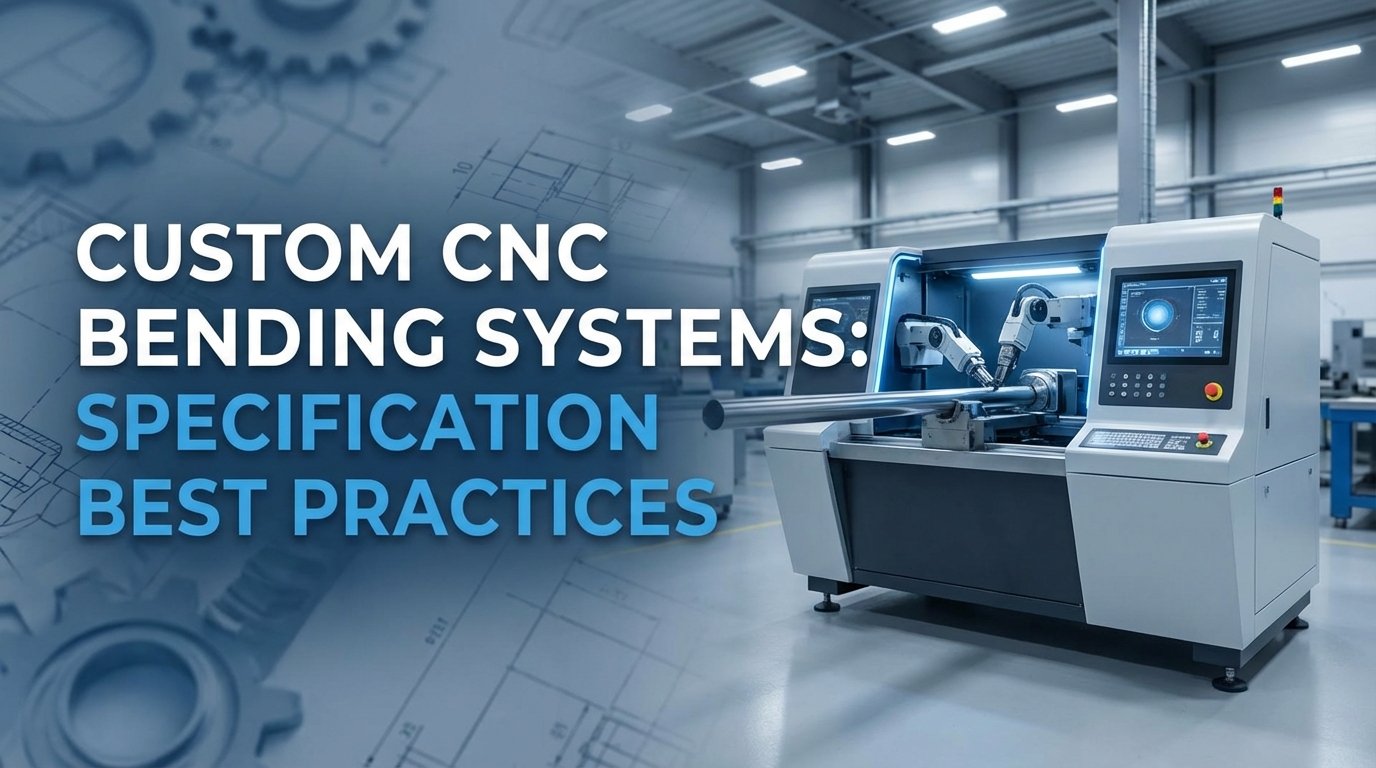
Standard machines address common applications effectively, but specialized requirements demand manufacturers capable of custom engineering. Evaluate whether the manufacturer maintains in-house engineering resources to modify machine configurations, develop specialized tooling, or integrate auxiliary equipment for unique applications.
Custom pipe bending machines for nuclear power piping, shipboard systems, or specialized aerospace assemblies require engineering collaboration from concept through commissioning. Manufacturers offering applications engineering support can model your specific parts, recommend optimal machine configurations, and validate feasibility before purchase commitment.
Reference Validation and Site Visits
Direct customer feedback provides unfiltered perspective on manufacturer performance. Request references from companies operating in similar applications, producing comparable parts, or running similar production volumes. Specific questions should address:
- Machine reliability and unplanned downtime frequency
- Accuracy consistency across production runs and over time
- Support responsiveness for technical questions and service needs
- Software usability and programming efficiency
- Hidden costs or unexpected requirements during implementation
Site visits to reference installations allow observation of machines operating in production environments, revealing performance characteristics beyond specifications. Watching operators program parts and observing cycle times provides practical insight unavailable from sales presentations.
Making the Selection Decision
Synthesize technical capabilities, support infrastructure, and business factors into a comprehensive evaluation matrix weighted according to your priorities. Price represents one factor among many, and lowest initial cost rarely correlates with lowest total cost of ownership when factoring productivity, quality consistency, and support requirements.
The optimal cnc pipe bender manufacturer demonstrates technical expertise matching your application requirements, maintains support infrastructure ensuring long-term success, and shows commitment to customer partnership beyond equipment sale. Manufacturers with decades of experience serving demanding industries, American manufacturing heritage, and proven installations in critical applications offer risk mitigation for significant capital investments.
Engineering managers who systematically evaluate manufacturers using this framework make informed decisions supporting production goals, quality objectives, and competitive positioning. The selection process requires diligence, but choosing the right manufacturing partner delivers returns measured across equipment lifecycles spanning decades.
Need guidance evaluating precision pipe bending manufacturers for your specific application? Contact our engineering team to discuss your requirements, review relevant case studies, and explore whether our American-manufactured CNC bending solutions align with your technical specifications and production objectives. Our experience supporting aerospace, energy, and defense customers provides the technical depth and proven performance your critical applications demand.