ROI Analysis: When to Upgrade from NC to CNC Tube Bending Systems
The decision to upgrade from numerical control (NC) to computer numerical control (CNC) tube bending systems represents a significant capital investment that can fundamentally transform your production capabilities. For manufacturing operations producing precision-bent tubing, this transition isn’t merely about newer technology—it’s about measurable improvements in throughput, quality consistency, labor efficiency, and competitive positioning. Understanding the financial and operational break-even point determines whether your operation should maintain existing NC equipment or commit to advanced CNC tube benders.
Understanding the Fundamental Differences
NC tube benders operate through hardwired logic and mechanical positioning systems, requiring manual input for each bending sequence. Operators adjust parameters through physical controls, with limited data storage capacity typically restricted to punched tape or basic memory modules. These systems excel at repetitive runs where setup time is amortized across large production batches.
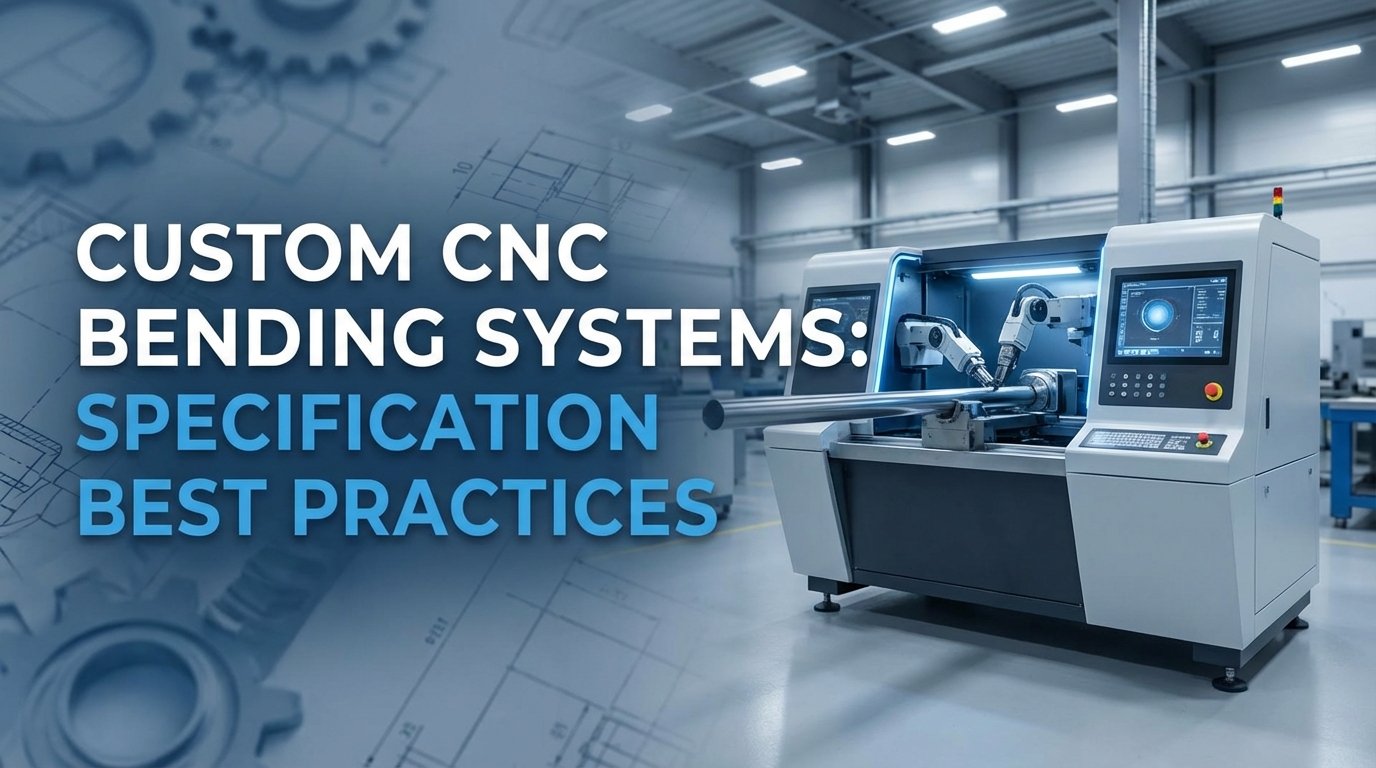
CNC tube bending machines utilize computer-based control systems with sophisticated software that stores unlimited bend sequences, enables rapid program changes, and provides real-time feedback on bending operations. Modern CNC systems integrate sensors, servo motors, and multi-axis coordination that NC systems cannot replicate. This technological foundation creates distinct operational advantages that translate directly into ROI calculations.
Quantifying the Cost-Benefit Equation
Setup Time Reduction
Setup time differences between NC and CNC systems create the most immediate ROI impact for operations running varied part geometries. NC tube benders typically require 45-90 minutes for complex setup changes, including manual adjustments to bending dies, pressure dies, and mandrels. Operators must physically verify each setting through trial bends and iterative corrections.
CNC systems reduce this timeline to 10-20 minutes for the same changeover. Stored programs eliminate manual parameter entry, while automatic tool positioning systems minimize physical adjustments. For operations running five or more different part numbers daily, this time savings compounds rapidly. A facility performing three setups per shift recovers approximately 2-4 hours of productive bending time daily—equivalent to adding half a production shift without additional labor costs.
Scrap Rate Improvements
NC systems depend heavily on operator skill and consistency. Even experienced technicians produce 3-7% scrap rates on complex bends due to manual parameter adjustments and the absence of real-time feedback mechanisms. Material costs in aerospace-grade stainless steel, titanium, or specialty alloys make this waste financially significant.
CNC tube bending technology delivers consistent 1-2% scrap rates through closed-loop control systems that monitor bend angle, rotation, and material springback. For operations processing $50,000 monthly in raw materials, reducing scrap from 5% to 1.5% recovers $1,750 per month—$21,000 annually. This figure alone can justify equipment upgrades within a 3-5 year depreciation schedule.
Labor Efficiency and Skill Requirements
NC tube benders require highly skilled operators with years of experience interpreting engineering drawings, calculating bend sequences, and making real-time adjustments. These specialists command premium wages, and their expertise becomes institutional knowledge that’s difficult to transfer or scale.
CNC systems democratize tube bending operations. Once programmed, CNC tube benders enable operators with moderate training to produce precision parts consistently. This workforce flexibility reduces dependency on specialized personnel and accelerates new employee onboarding. Organizations transitioning to CNC typically reduce operator training time from 6-12 months to 4-8 weeks while maintaining or improving quality standards.
Production Volume Thresholds
Volume analysis determines upgrade timing more precisely than any single factor. Low-volume operations producing fewer than 500 bends monthly across limited part variations may not justify CNC investment. The break-even calculation shifts dramatically as complexity and volume increase.
Operations producing 2,000-5,000 bends monthly with moderate part variety typically reach CNC ROI within 24-36 months. High-mix environments running 15+ different part numbers weekly achieve payback in 18-24 months due to setup time savings alone. Ultra-high volume facilities bending 10,000+ parts monthly see ROI within 12-18 months when factoring scrap reduction, labor efficiency, and throughput gains.
Custom bending solutions require careful analysis beyond pure volume metrics. Aerospace applications demanding complex compound bends, tight tolerances (±0.5 degrees), and full traceability documentation benefit from CNC capabilities regardless of volume. The precision and repeatability of industrial tube bending machine systems prove essential for meeting AS9100 quality requirements and customer specifications.
Hidden Cost Factors in ROI Calculations
Quality Documentation and Traceability
NC systems provide minimal automated documentation. Operators manually record bend parameters, creating opportunities for transcription errors and incomplete records. Industries requiring rigorous traceability—aerospace, defense, medical devices—invest significant labor hours in quality documentation.
CNC tube bending machines automatically generate comprehensive production records including bend angles, pressures, material lot numbers, and operator identification. This data integration eliminates manual documentation labor while providing superior traceability for audits and quality investigations. Organizations subject to AS9100, ISO 9001, or API certifications realize substantial compliance cost reductions.
Maintenance and Downtime
NC systems utilize electromechanical components with higher wear rates and more frequent adjustment requirements. Annual maintenance costs typically range from 4-7% of equipment value, with unplanned downtime averaging 3-5% of available production time.
Modern CNC systems incorporate predictive maintenance capabilities, monitoring component wear and alerting operators before failures occur. Servo-driven systems reduce mechanical wear compared to hydraulic NC mechanisms. Maintenance costs average 2-4% of equipment value annually, with unplanned downtime reduced to 1-2%. For operations where tube bending represents a production bottleneck, minimizing downtime directly protects revenue streams.
Energy Consumption
Older NC systems often utilize continuous-run hydraulic pumps consuming 15-25 kW regardless of bending activity. CNC systems with variable-speed drives and optimized power management reduce energy consumption by 20-40%, delivering $3,000-$8,000 annual savings depending on utility rates and production schedules.
Technology Capabilities Driving Competitive Advantage
Beyond direct cost savings, CNC tube benders enable capabilities impossible with NC technology. Multi-stack bending, where machines process multiple bends simultaneously across different axes, increases throughput by 40-60% on suitable applications. Automatic radius correction compensates for material springback variations, eliminating the trial-and-error approach required with NC systems.
Software integration represents perhaps the most strategic advantage. CNC systems import CAD files directly, automatically generating bend sequences and collision detection. This capability compresses quote-to-production timelines from days to hours, creating competitive advantages in industries where responsiveness differentiates suppliers. Organizations pursuing oil and gas, petrochemical, or construction projects with compressed schedules leverage this speed-to-market capability to capture premium pricing opportunities.
Assessing Your Operation’s Readiness
Several indicators signal optimal timing for CNC upgrade investments:
- Declining setup efficiency: When setup time approaches or exceeds run time for average jobs, NC limitations constrain capacity expansion.
- Quality escapes: Increasing customer returns or internal scrap rates indicate operator-dependent NC processes can’t maintain required consistency.
- Capacity constraints: When adding shifts or overtime fails to meet demand, CNC efficiency gains provide capacity expansion without facility enlargement.
- Skilled labor shortages: Difficulty recruiting or retaining experienced NC operators threatens production continuity that CNC systems mitigate.
- New market opportunities: Customer requirements for complex geometries, tighter tolerances, or enhanced documentation exceed NC capabilities.
Implementation Considerations
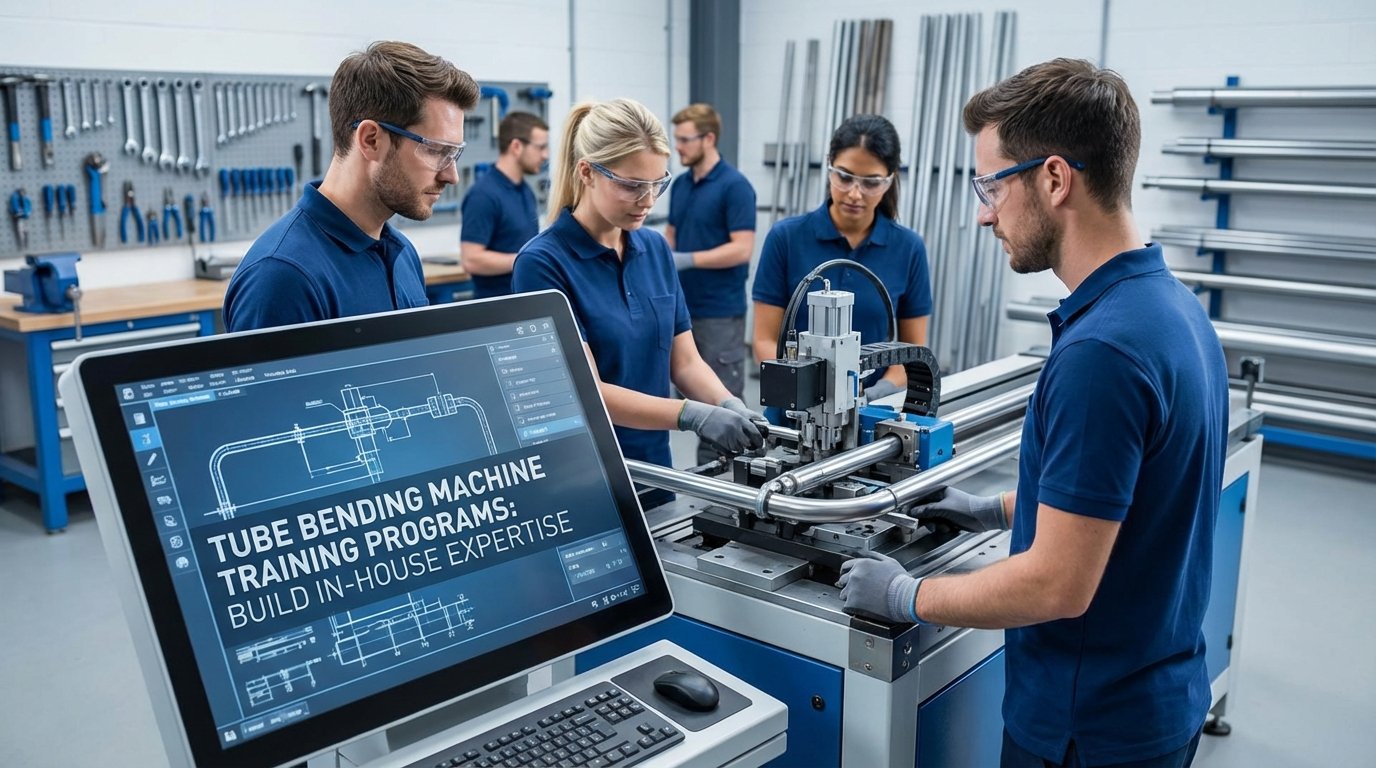
Successful CNC transitions require planning beyond equipment purchase. Operator training investments typically range from $5,000-$15,000 depending on workforce size and baseline skill levels. American manufacturers offering comprehensive training programs reduce learning curves and accelerate productivity gains.
Programming expertise becomes critical. Organizations should either develop internal programming capabilities or partner with equipment suppliers providing ongoing application engineering support. The initial 90-day period following installation determines whether projected ROI materializes or equipment underperforms due to utilization challenges.
Process documentation and standardization deliver multiplied CNC benefits. Establishing bend sequence libraries, material specifications, and tooling standards creates institutional knowledge that survives employee turnover and enables continuous improvement initiatives impossible with NC technology.
Financial Structuring Options
Capital equipment investments ranging from $150,000-$500,000 for industrial tube bending machine purchases require financial planning. Direct purchase, operating leases, and capital leases each offer distinct tax and cash flow implications. Section 179 deductions and bonus depreciation provisions available in 2026 allow qualifying businesses to expense significant equipment portions immediately rather than depreciating over seven years.
Organizations should model cash flow impacts across 5-7 year horizons, incorporating productivity gains, scrap reductions, labor savings, and maintenance cost differences. Conservative ROI models using 70-80% of projected savings provide cushion for implementation challenges while still demonstrating compelling business cases for most medium-to-high volume operations.
Making the Strategic Decision
The NC-to-CNC upgrade decision ultimately balances quantifiable financial returns against strategic positioning requirements. Operations where tube bending represents core competency and competitive differentiation should weight technology leadership more heavily than pure payback calculations. Conversely, facilities where bending serves as incidental supporting process may justify maintaining NC equipment longer.
The most successful transitions occur when organizations view CNC adoption as operational transformation rather than simple equipment replacement. Companies that reengineer workflows, invest in operator development, and leverage advanced capabilities capture ROI exceeding initial projections. Those treating CNC as drop-in NC replacements often underutilize capabilities and extend payback periods.
For organizations seeking to strengthen domestic manufacturing capabilities, partnering with American tube bending equipment manufacturers provides advantages beyond equipment acquisition. Proven track records supporting aerospace, defense, and energy sector customers—including NASA and military applications—ensure vendors understand demanding application requirements and regulatory environments.
The transition from NC to CNC tube bending systems represents more than technology modernization—it’s strategic investment in production flexibility, quality consistency, and competitive positioning. Organizations that carefully analyze their specific operational metrics, production volumes, and market positioning can confidently determine whether upgrade timing aligns with business objectives and financial returns.
Is your operation ready to evaluate CNC tube bending technology? Contact Hines Bending Systems to discuss your specific application requirements and receive customized ROI analysis based on your production volumes, part complexity, and quality standards. Our engineering team brings decades of experience helping manufacturers transition to advanced bending solutions that deliver measurable performance improvements and financial returns.