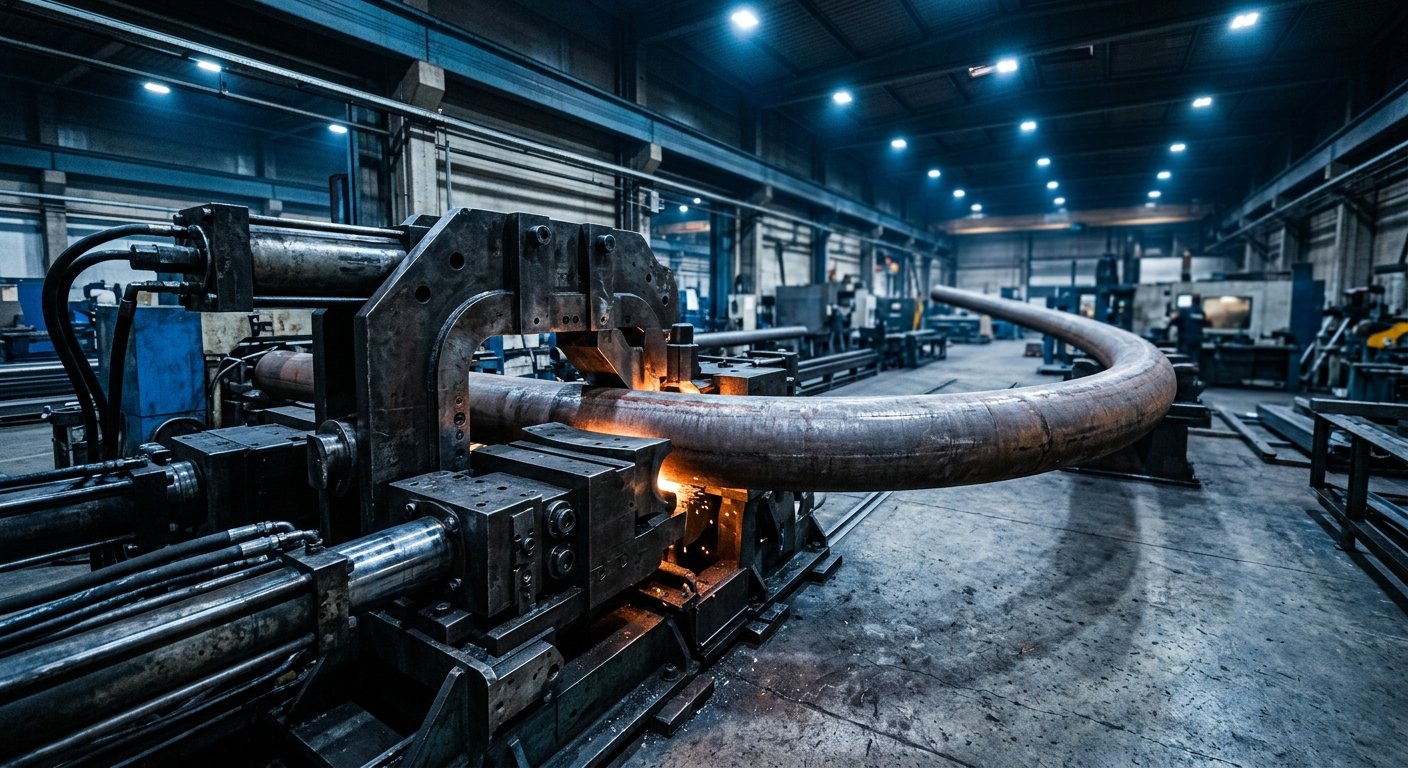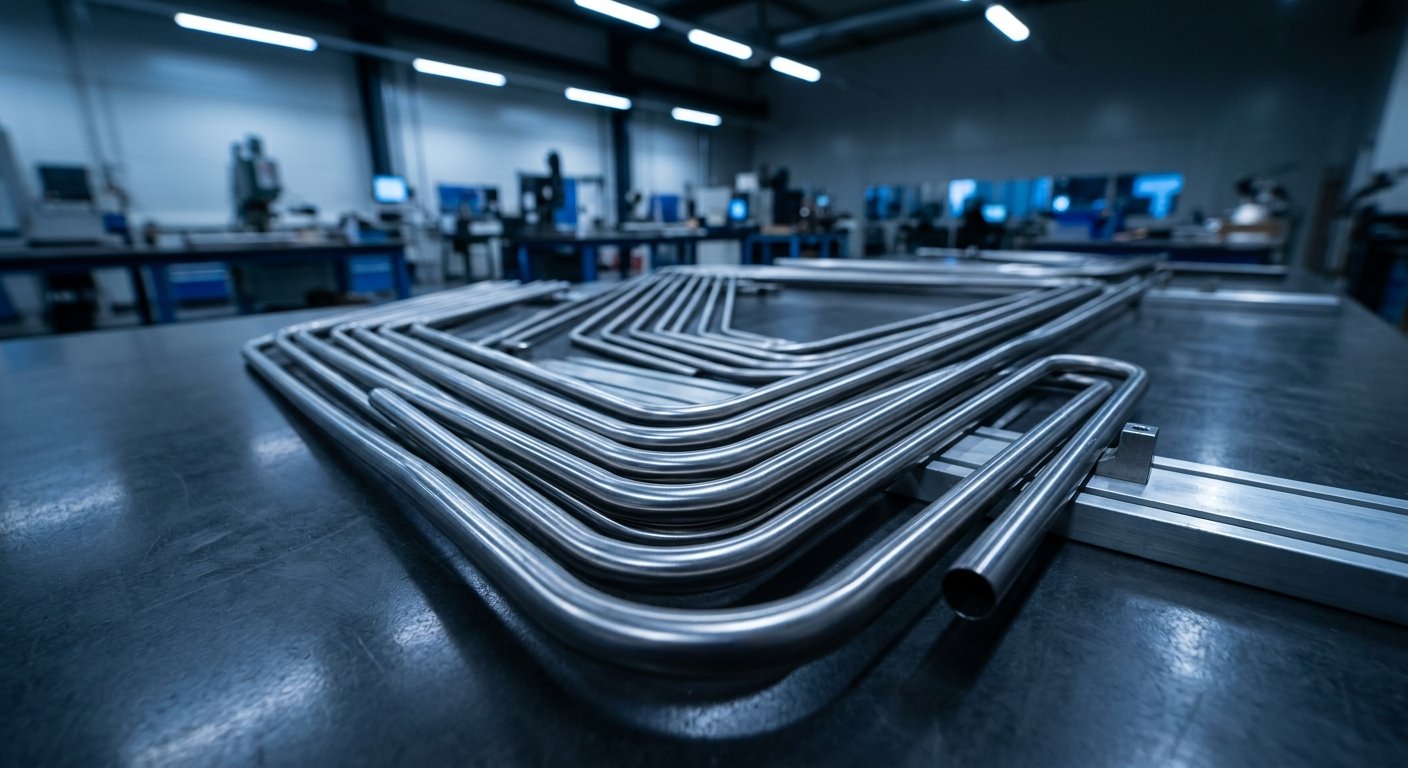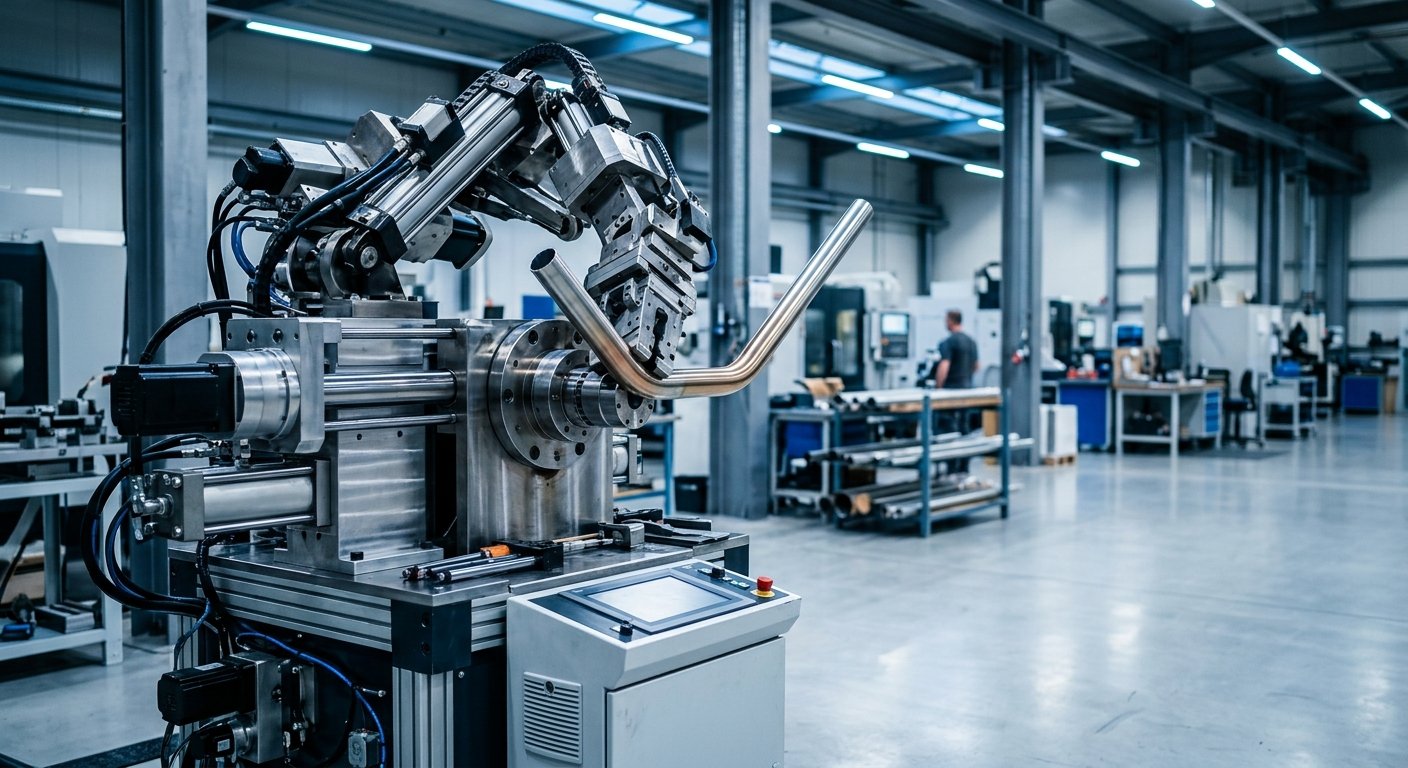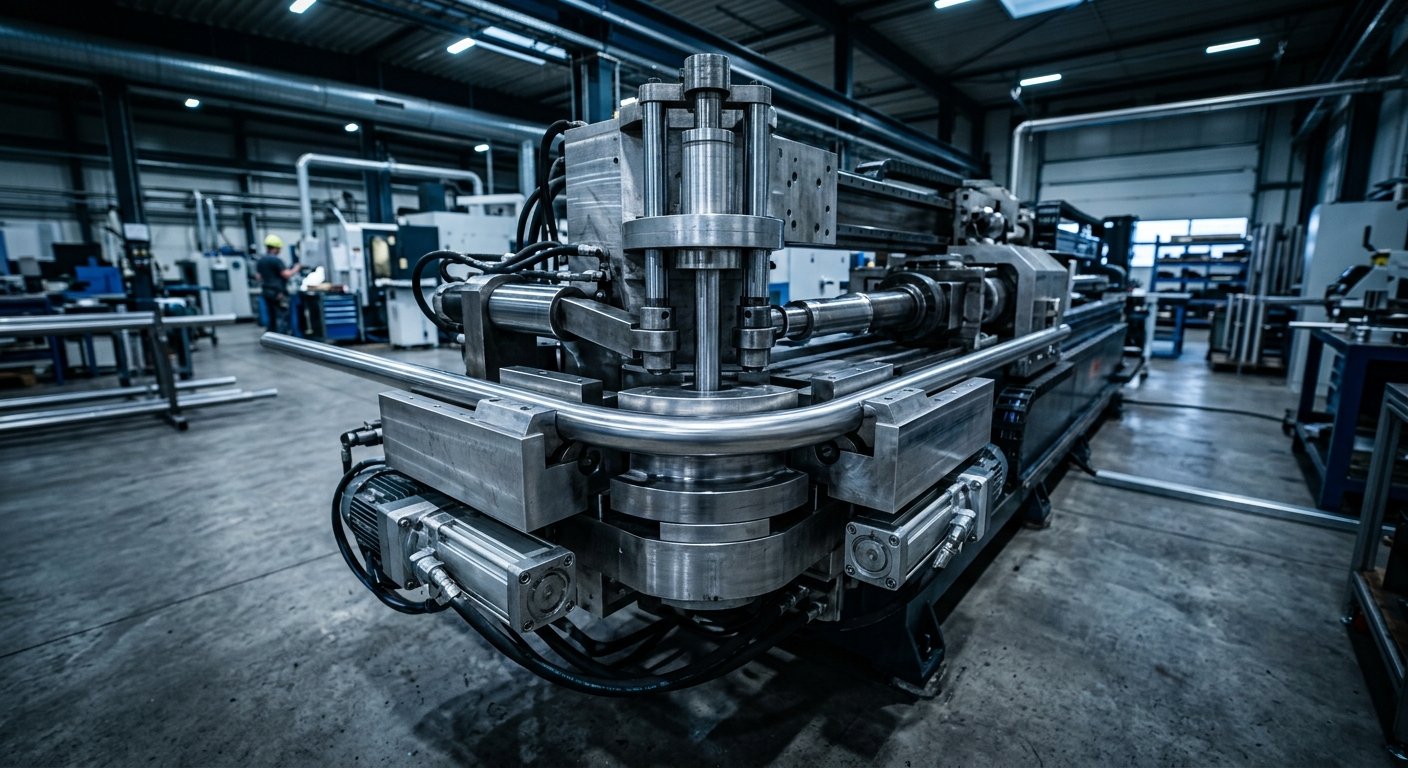
Skilled CNC tube bender operators are increasingly hard to find. As experienced machinists retire and production demands grow more complex across aerospace, defense, and energy sectors, the skills gap in precision tube bending is widening. The solution isn’t just hiring—it’s investing in structured tube bending training that builds competency from the ground up and keeps your operation running at peak performance.
Whether you’re onboarding new operators, cross-training existing staff, or seeking tube bending certification in 2026 for quality compliance purposes, understanding what a rigorous training program looks like will help you make smarter workforce and equipment investments.
Why Structured Training Matters More Than Ever
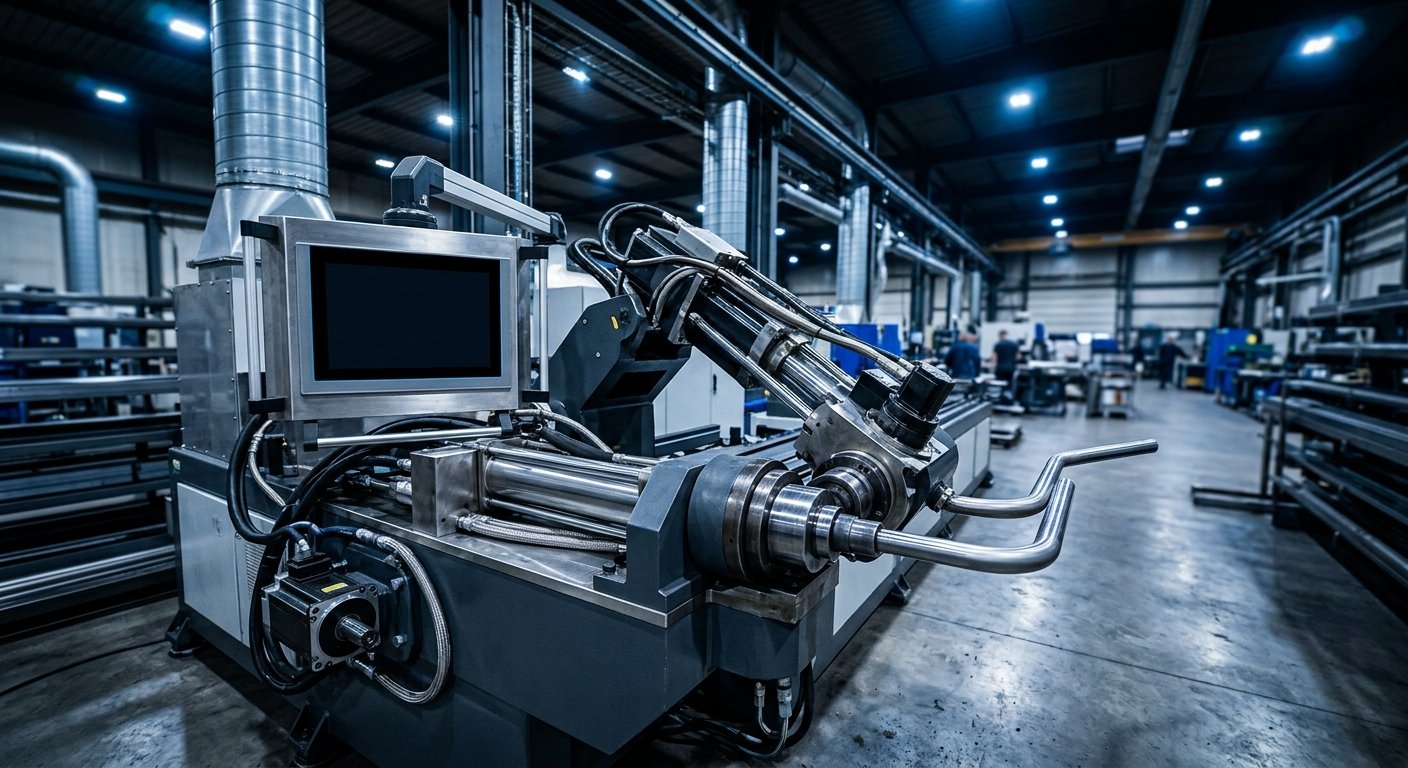
Modern pipe bending equipment is significantly more sophisticated than machines from even a decade ago. Today’s CNC tube benders incorporate multi-axis motion control, laser-guided springback compensation, and real-time bend angle verification. An operator who learned on older mechanical equipment may struggle to extract full value from current-generation machinery—and a poorly trained operator on high-precision equipment can cause costly material waste, tooling damage, and production delays.
Industries like aerospace and oil & gas don’t tolerate dimensional errors. A tube assembly routed through a hydraulic system on a military aircraft or a subsea pipeline manifold must meet tight tolerances. The NASA Office of Space Technology and defense procurement standards consistently emphasize traceability and process control—both of which depend on operator competency at the machine level.
Structured tube bending training closes the gap between equipment capability and actual production output.
Core Components of a Quality Training Program
Fundamentals of Tube and Pipe Bending
Every effective program starts with the underlying physics. Trainees need to understand what actually happens to material during a bend: wall thinning on the outside of the bend radius, compression and potential wrinkling on the inside, and elongation behavior that affects cut-to-length measurements. Without this foundational knowledge, operators make reactive adjustments rather than informed ones.
Core topics typically include:
- Bend terminology: CLR (centerline radius), degree of bend, tangent points, and deduction calculations
- Material properties and their effect on bending: stainless steel, Inconel, titanium, carbon steel, aluminum
- Wall factor (D/t ratio) and its role in determining tooling selection
- Springback concepts and how CNC machines compensate for them automatically or manually
CNC Tube Bender Operator Training
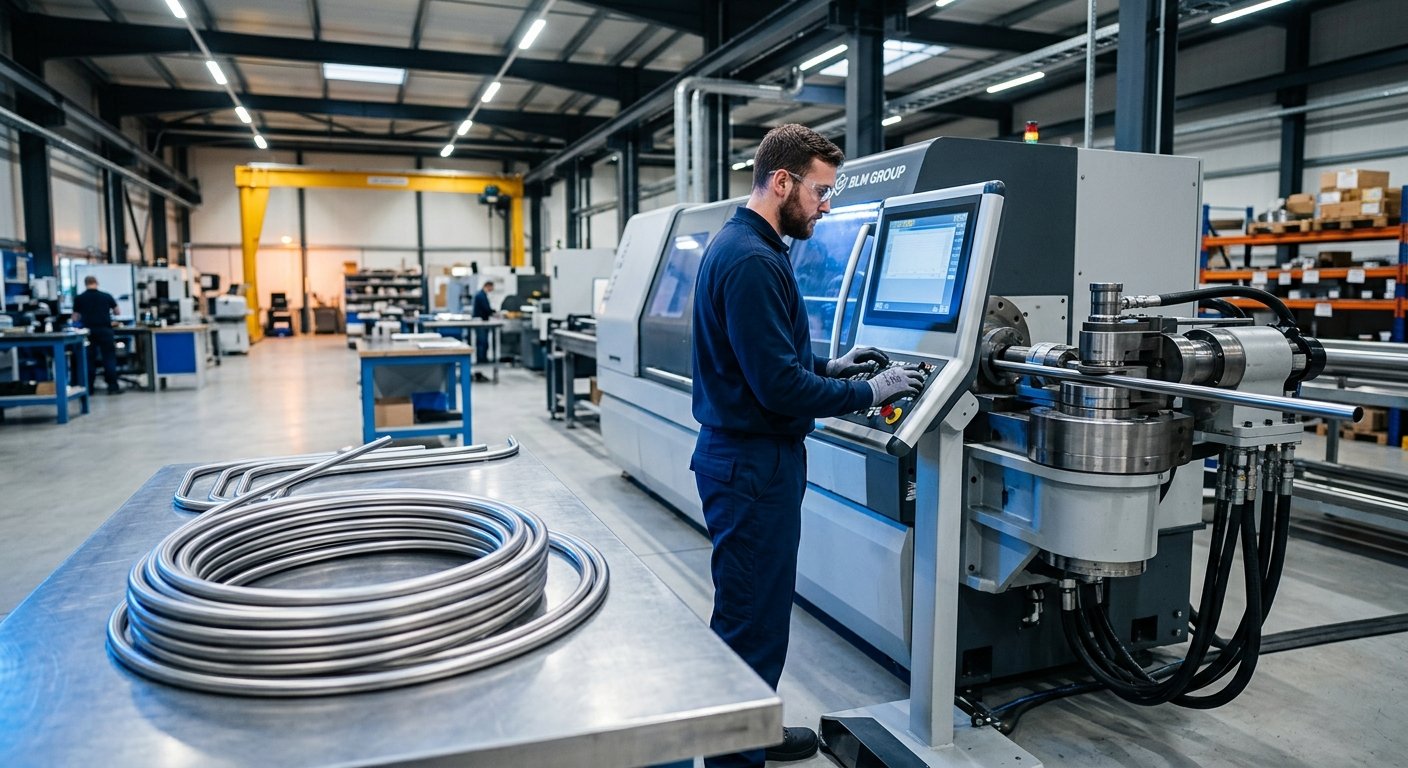
CNC tube bender operator training is the technical heart of any modern program. This is where trainees move from theory to machine-level proficiency. Instruction covers the control interface, program loading, axis calibration, and interpreting bend data files—often generated from 3D CAD or bending simulation software.
Key skill areas include:
- Navigating the CNC control panel and loading bend programs
- Setting up collets, clamp dies, pressure dies, and wiper dies correctly
- Mandrel positioning and mandrel nose placement for wall support
- Running dry cycles to verify tooling alignment before live production
- Interpreting bend angle verification readings and adjusting overbend values
- Basic machine diagnostics and recognizing fault codes
Mandrel Bending Training
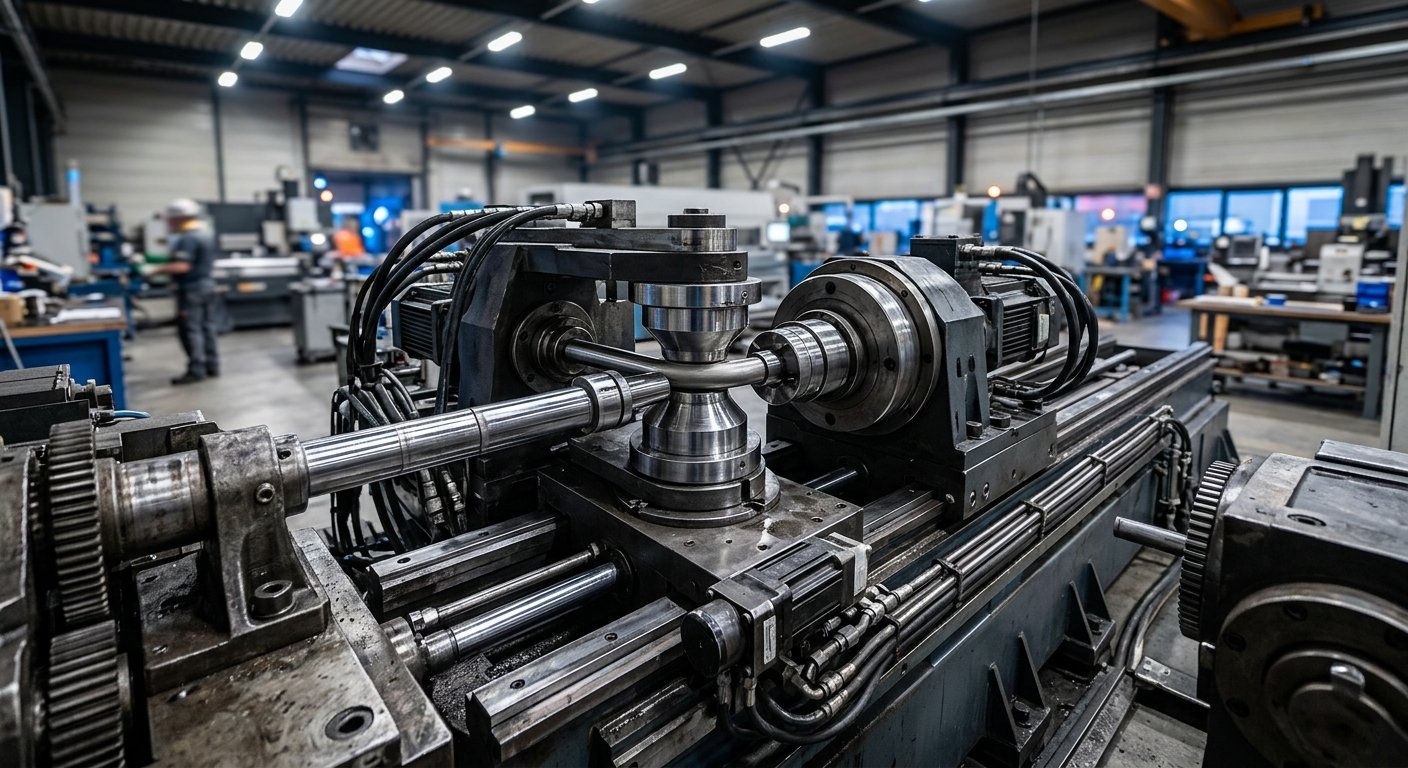
Mandrel bending is one of the more demanding skills in the trade. Used primarily for thin-wall tubing in aerospace, petrochemical, and defense applications, proper mandrel technique is what separates a competent operator from a highly skilled one.
Mandrel bending training programs focus on:
- Selecting the correct mandrel type: plug, form, ball, and linked ball mandrels
- Calculating mandrel nose forward position based on tubing OD and wall thickness
- Lubricant selection and application—critical for surface finish and mandrel life
- Troubleshooting rippling, wrinkling, and ovality issues
- Extracting mandrels cleanly to avoid internal tubing damage
This level of training is especially important for operators working with high-value materials like titanium or Inconel, where a single rejected part can represent significant material cost.
Precision Tube Bending Setup Training
Machine operation and machine setup are different skill sets. An operator who can run a program competently may not yet have the experience to set up a job from scratch—loading fresh tooling, establishing datum points, qualifying first-article bends, and documenting setup parameters for repeatability.
Precision tube bending setup training bridges this gap. It emphasizes process thinking: not just how to produce one good bend, but how to establish a repeatable, documentable process that holds tolerance across a full production run. This is particularly important in regulated environments where AS9100 aerospace quality management standards require process control documentation and first-article inspection records.
Setup training typically covers:
- Reading and interpreting engineering drawings and bend data sheets
- Tooling inventory, inspection, and wear identification
- First-article bend qualification and dimensional inspection
- Creating and storing job setup files in the CNC control
- Shift handoff documentation practices
Industrial Tube Bending Skills for Specialized Industries
Generic tube bending training programs work for general fabrication. But aerospace, energy, oil & gas, and defense environments have application-specific requirements that demand more targeted instruction.
For aerospace applications, training must address tight-tolerance work, material traceability, and inspection protocols compatible with first-article inspection requirements. Operators need to understand why their work feeds directly into flight-critical assemblies.
For oil & gas and petrochemical applications, training often emphasizes pipe bending equipment training on larger-diameter, heavier-wall material. Operators must understand the relationship between bend radius, pipe schedule, and structural integrity under pressure—a factor recognized in standards published by organizations like the American Society of Mechanical Engineers (ASME), whose B31 piping codes govern many industrial installations.
For defense applications, traceability and documentation are paramount. Every bend, every setup, every operator action may need to be recorded as part of a broader quality management system.
What to Look for in a Tube Bending Training Provider
Not all training programs are created equal. When evaluating providers, manufacturing managers and procurement specialists should ask specific questions:
- Is training conducted on the actual equipment your operators will use? Machine-specific training is far more effective than generic instruction on unrelated equipment.
- Does the curriculum cover both operation and setup? Many programs emphasize one at the expense of the other.
- Are instructors active practitioners or retired operators? Current expertise matters when training for 2026 CNC systems.
- Is there a structured assessment or tube bending certification component? Certification creates accountability and a documented record of competency.
- Does the provider offer ongoing support after training? Access to technical resources after the initial program accelerates on-the-job skill development.
At Hines Bending Systems, our training and service support is built into the customer relationship—not treated as an afterthought. With 50 years of tube and pipe bending expertise and a track record of supporting demanding clients including NASA and military organizations, we understand what production-ready operator competency actually looks like in the field.
Our American-manufactured tube bending machines are supported by training that reflects real-world application requirements—not just classroom theory. For teams working in aerospace environments, our aerospace tube bending resources provide additional application-specific guidance. Those operating in heavier-duty pipeline environments will also find value in our pipe bending machines support resources.
Building a Training Roadmap for Your Team
A practical training roadmap for 2026 should include three phases:
- Foundation Phase (Weeks 1–2): Classroom and hands-on instruction covering terminology, material behavior, machine safety, and basic CNC operation.
- Application Phase (Weeks 3–6): Supervised production runs with progressively reduced oversight. Focus on mandrel bending, setup qualification, and first-article documentation.
- Proficiency Certification (Week 7+): Independent operation with quality metrics tracked. Formal certification assessment where applicable.
This phased approach reduces risk during onboarding, builds operator confidence, and creates a clear progression path that supports retention.
Frequently Asked Questions
How long does CNC tube bender operator training typically take?
Basic operational proficiency typically develops over four to six weeks of supervised hands-on practice following initial instruction. Full setup proficiency—including independent first-article qualification—generally requires three to six months of production experience beyond initial training. Complexity varies by machine type and application.
Is tube bending certification recognized across industries?
There is no single universal tube bending certification standard in 2026, but many aerospace and defense operations tie operator qualification to their internal quality management systems (such as AS9100 or NADCAP requirements). Certification issued by equipment manufacturers or verified training programs is widely used as documented proof of operator competency.
What’s the difference between mandrel bending training and general pipe bending equipment training?
Mandrel bending training specifically addresses the techniques, tooling selection, and troubleshooting required when an internal support mandrel is used to prevent wall collapse—critical for thin-wall tubing in aerospace and high-pressure applications. General pipe bending equipment training covers a broader range of methods including compression, rotary draw, and roll bending across varied wall thicknesses and materials.
Can training be conducted on-site at our facility?
Yes. On-site training conducted on your specific machines and with your actual production materials is generally more effective than off-site programs. It ensures operators learn the precise setup, tooling, and workflow relevant to your environment rather than adapting generic instruction to unfamiliar conditions.
How does precision tube bending setup training differ from operator training?
Operator training focuses on running established programs and producing parts within a set process. Setup training develops the higher-level skill of establishing that process from scratch—interpreting engineering drawings, selecting and loading tooling, qualifying the first part, and documenting parameters for repeatability. Both skill levels are essential for a fully capable bending operation.
Invest in Training Before You Need It
The best time to build operator competency is before a production deadline creates pressure. Structured tube bending training—from CNC operation through mandrel technique and precision setup—transforms equipment investment into consistent, measurable output.
If your team is preparing to operate new bending equipment, scaling production capacity, or seeking to meet industrial tube bending skills requirements for aerospace or defense contracts, Hines Bending Systems can help you define the right training approach for your application. Contact us to discuss how our equipment and support programs can be tailored to your operational goals.