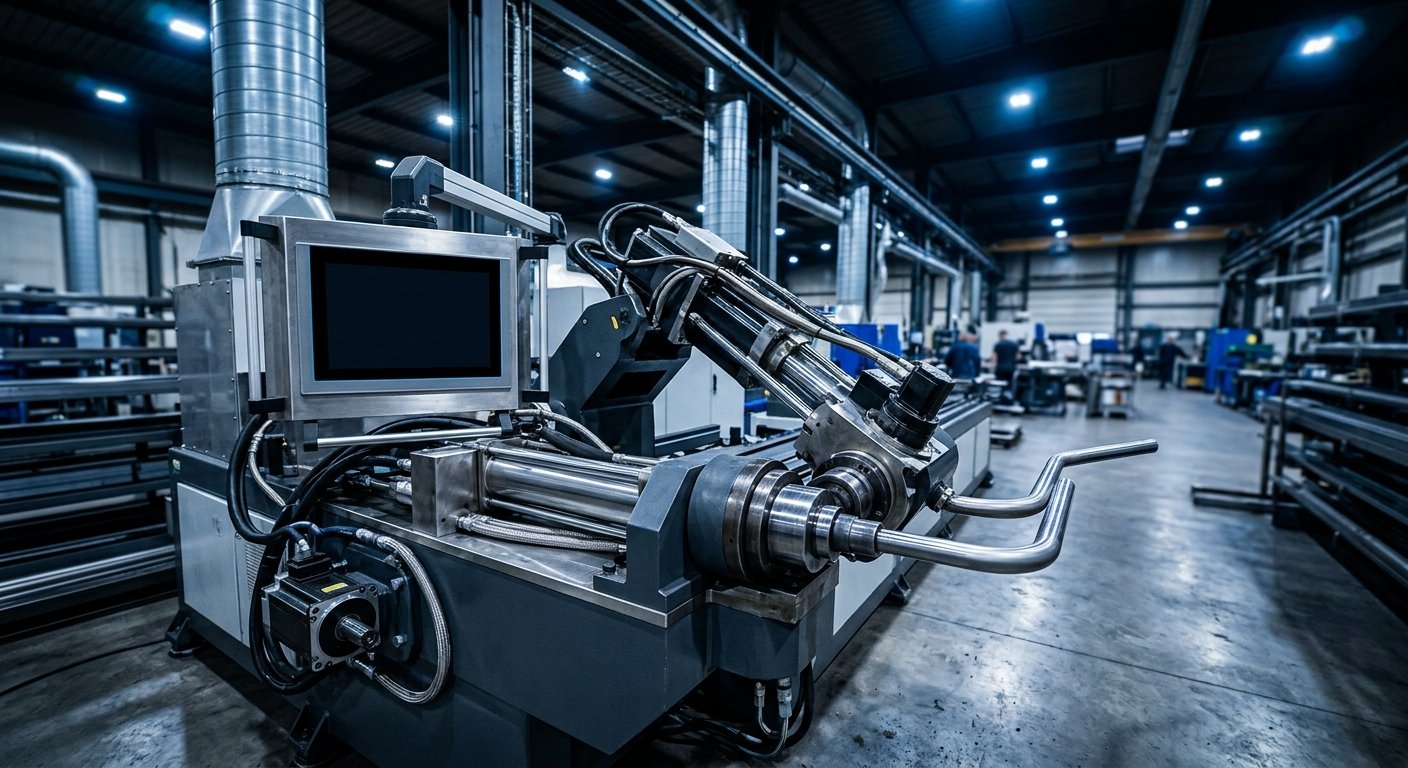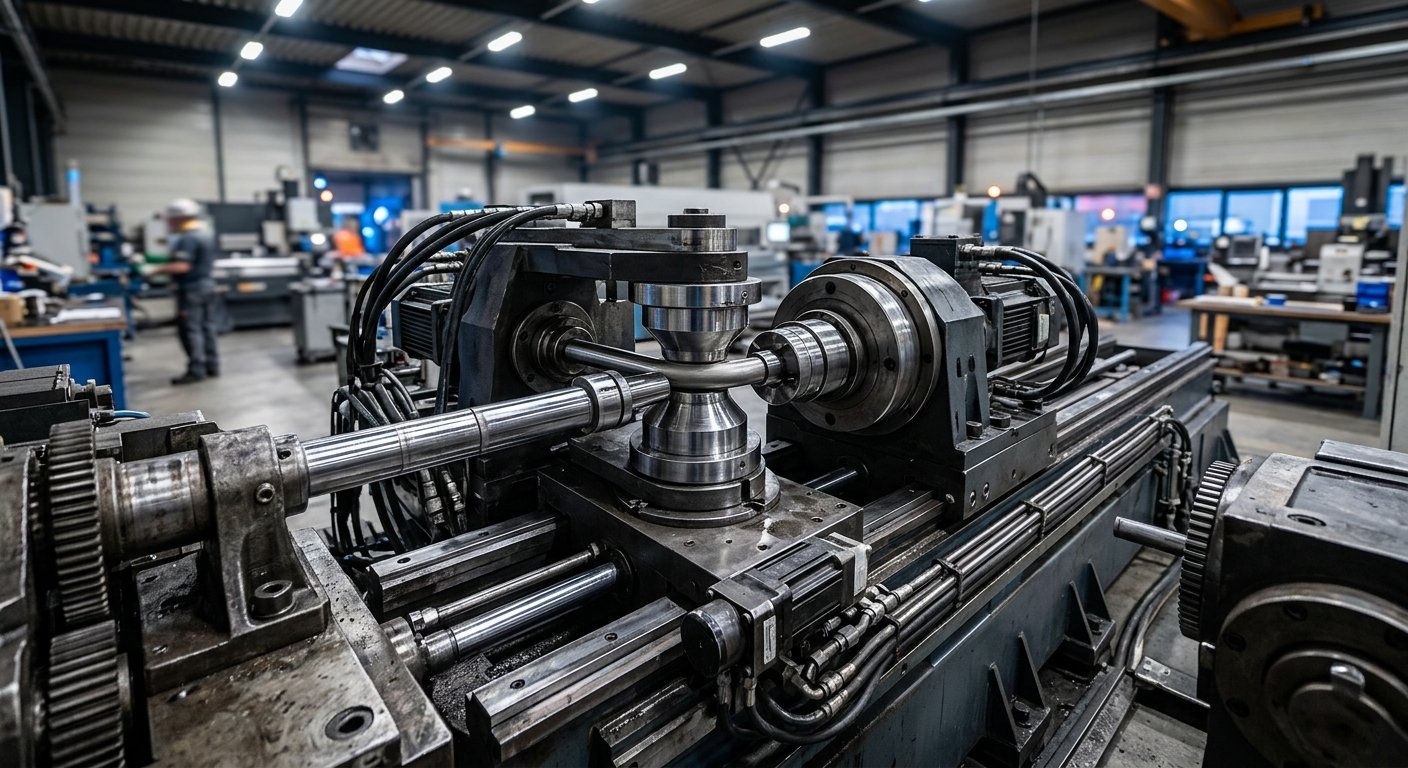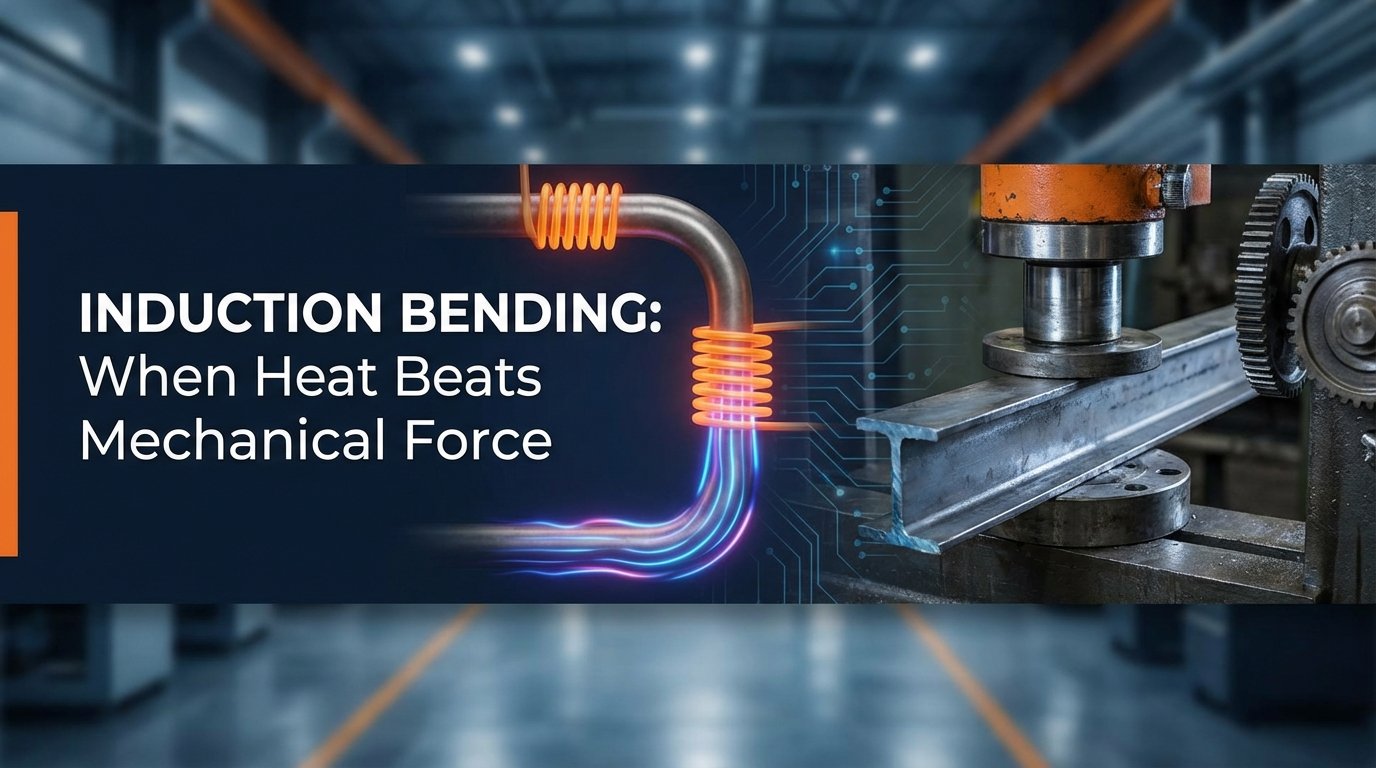
In precision pipe fabrication, choosing between induction bending and mechanical methods isn’t just about equipment preference—it’s about understanding which technology delivers optimal results for your specific application. For heavy wall pipe bending, large diameter tubing, and projects demanding exceptional material integrity, induction bending machines represent a fundamentally different approach that solves problems mechanical methods can’t address.
The distinction matters most when dealing with challenging specifications: thick-walled pipe over Schedule 80, diameters exceeding 4 inches, materials prone to work hardening, or applications where internal surface quality is non-negotiable. Understanding when induction pipe bending machines outperform traditional mechanical approaches can mean the difference between meeting aerospace tolerances and scrapping expensive material.
The Core Technology Difference
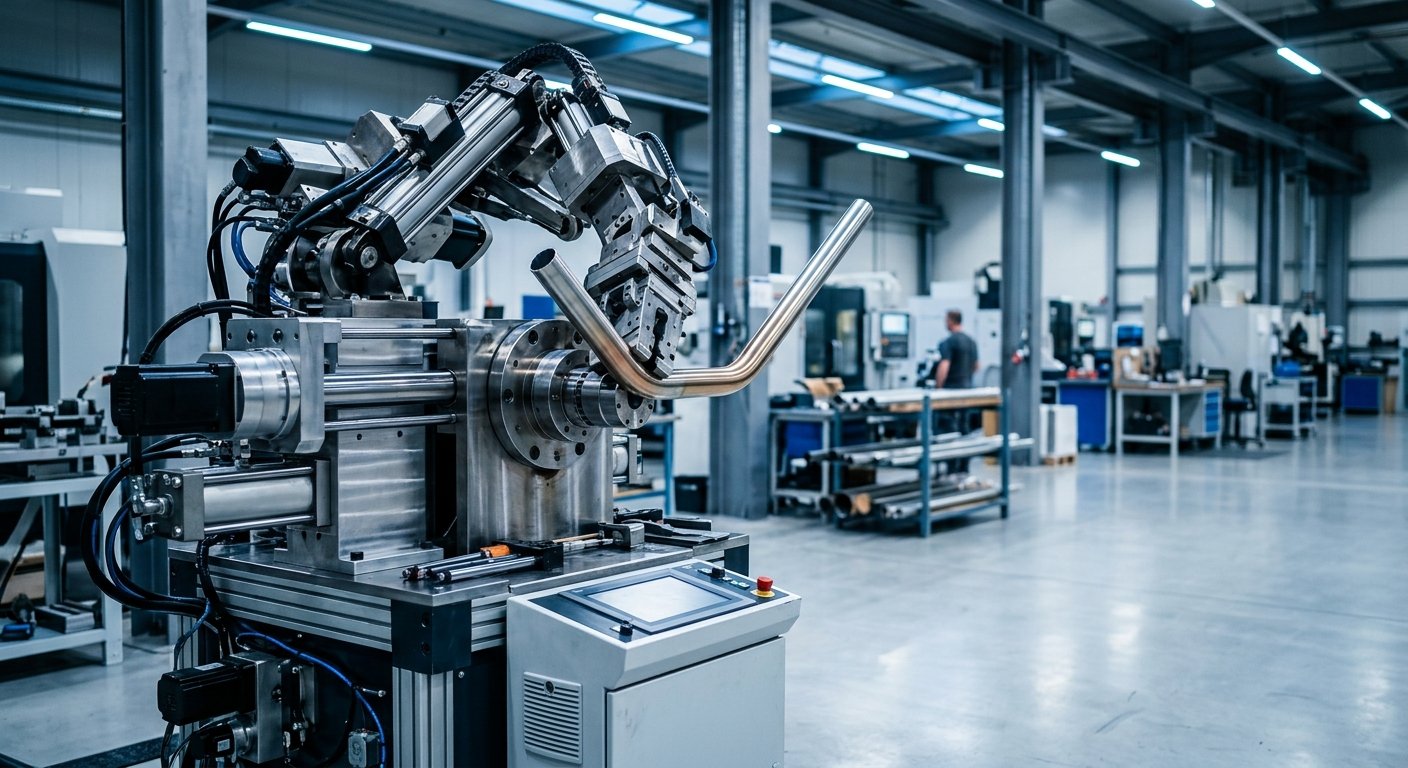
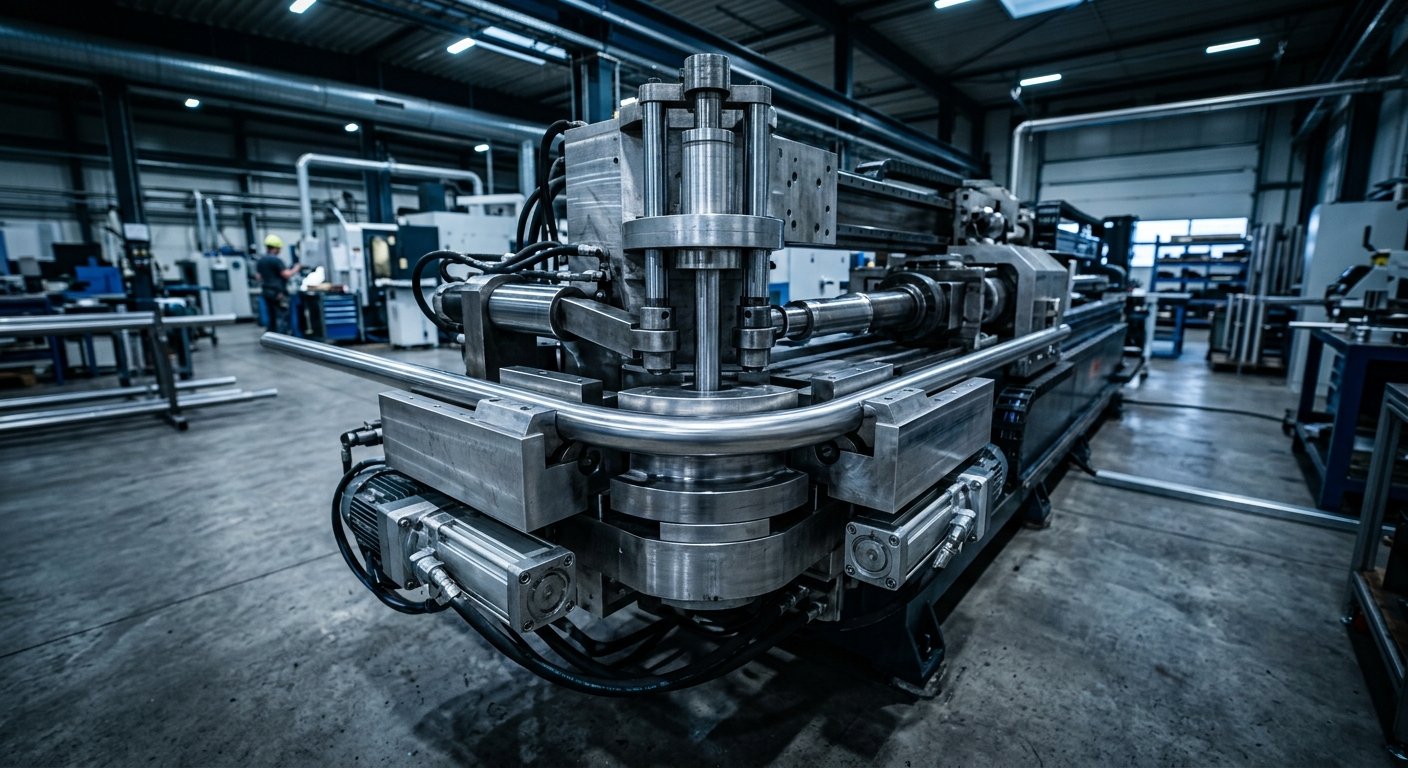
Mechanical bending methods—rotary draw, roll bending, compression bending—apply external force to deform pipe around a fixed radius. This physical manipulation works well for thin-wall tubing and smaller diameters but introduces inherent limitations as wall thickness and diameter increase.
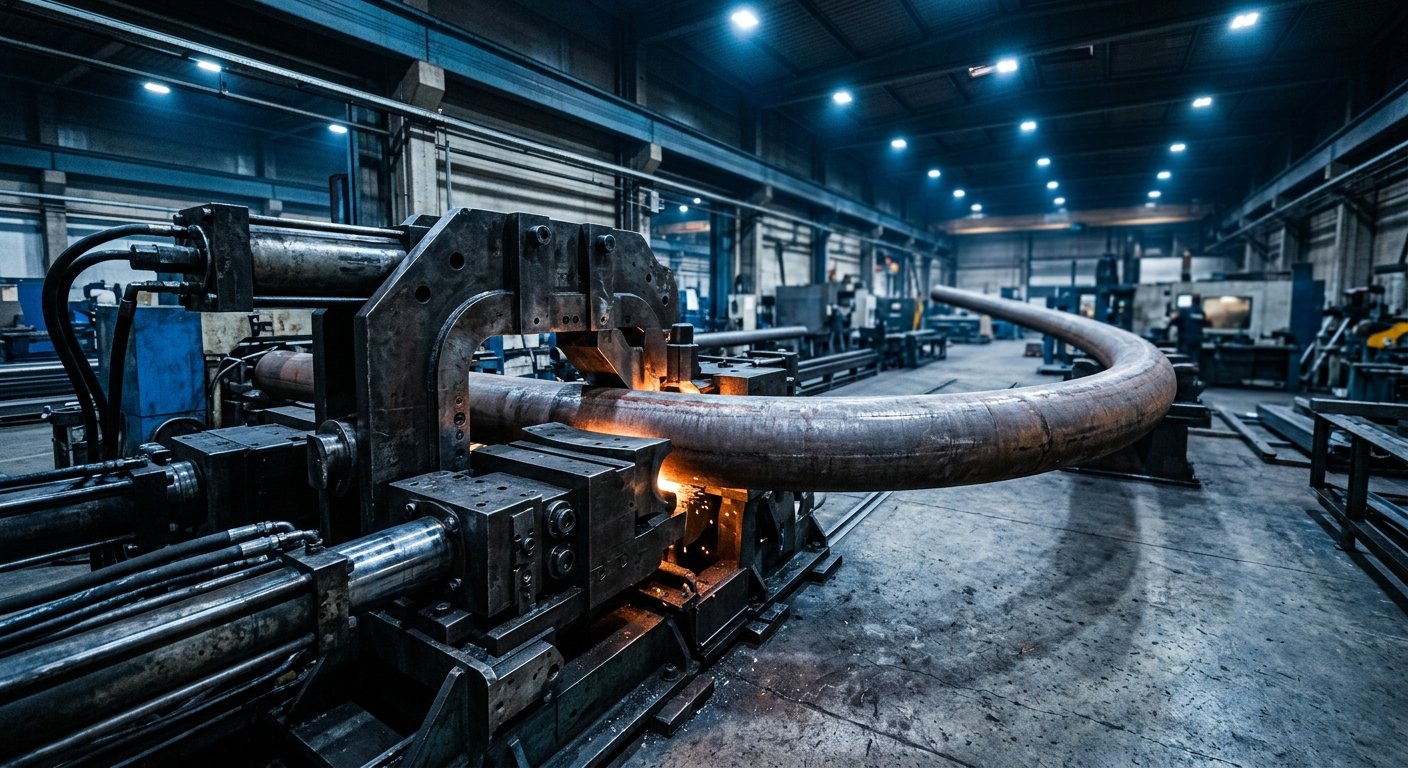
Induction bending operates on a completely different principle. High-frequency electromagnetic induction heats a narrow band of pipe material to approximately 1600-2200°F (depending on material composition), making it temporarily plastic. As this heated zone moves through computer-controlled mechanisms, the pipe gradually curves while maintaining constant support. The result: bends achieved through controlled thermal transformation rather than brute force.
This distinction becomes critical when specifications demand heavy wall pipe bending without compromising material properties or dimensional accuracy.
When Induction Bending Becomes the Superior Choice
Heavy Wall and Large Diameter Applications
Once pipe wall thickness exceeds certain thresholds, mechanical bending machines struggle with fundamental physics. The force required to bend Schedule 120 or Schedule 160 pipe mechanically demands massive equipment and often produces unacceptable wall thinning on the extrados (outer radius) and thickening on the intrados (inner radius).
Induction pipe bending machines handle wall thicknesses up to 3 inches and diameters ranging from 1.5 inches to 48 inches or more. Because the material is transformed thermally rather than mechanically deformed, wall thickness variation remains minimal—typically within 5-8% rather than the 15-25% common in aggressive mechanical bends.
For oil and gas pipelines, petrochemical processing systems, and power generation facilities requiring large-bore piping, this capability isn’t just convenient—it’s often the only practical method.
Material Integrity Requirements
Mechanical bending cold-works the material, altering its metallurgical structure. For many applications, this poses no problems. But aerospace components, military systems, and critical petrochemical infrastructure often require that material properties remain consistent throughout the bend.
Induction bending allows controlled heating and cooling cycles that can be engineered to maintain—or even enhance—material properties. With proper temperature control and post-bend heat treatment, induction bent pipe can meet stringent ASME, ASTM, and military specifications including stress relief requirements.
NASA and defense applications frequently specify induction bending precisely because the process preserves material certifications and traceability while meeting demanding dimensional tolerances.
Complex Geometries and Compound Bends
Single-plane bends represent the simplest scenario. Real-world installations often require compound bends, multiple-plane curves, or varying radii within a single component.
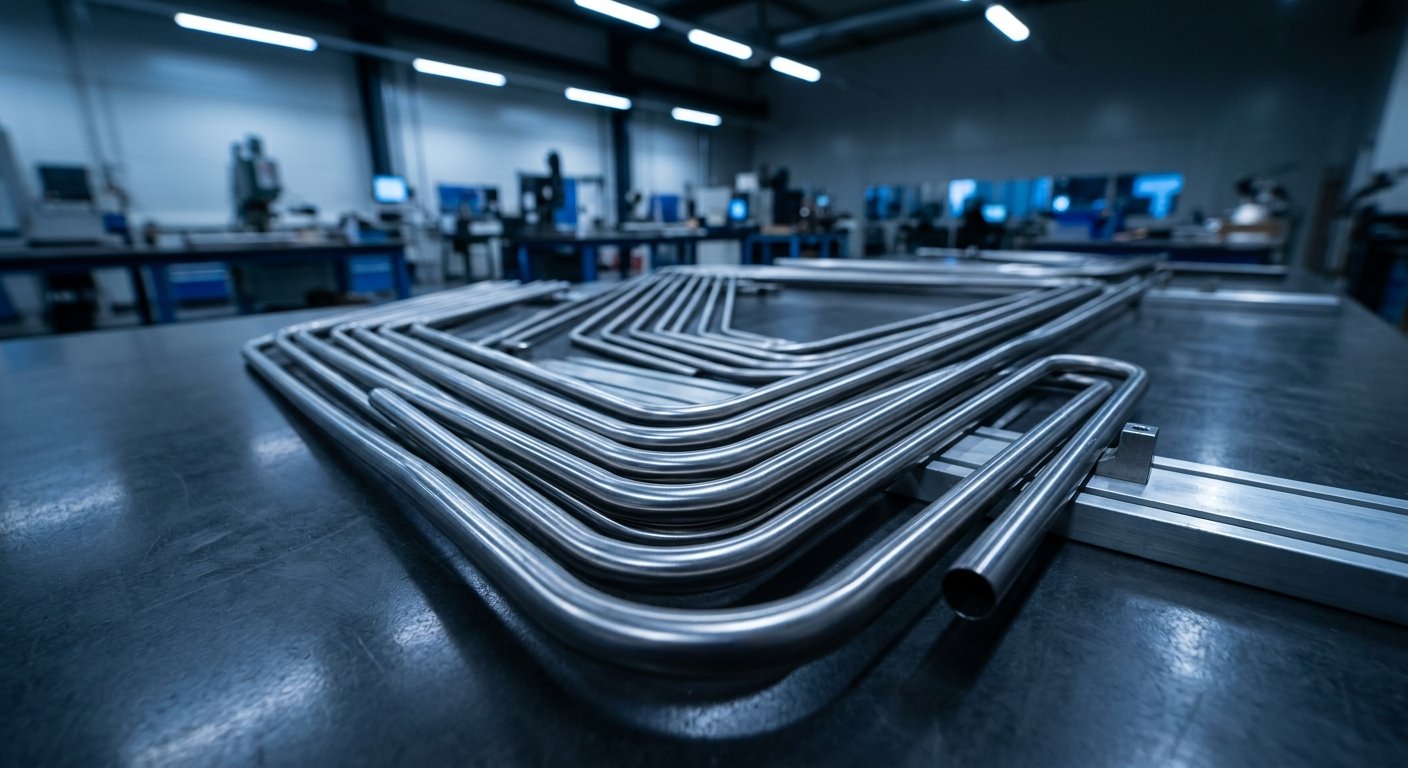
Advanced industrial pipe bending equipment manufacturers have developed CNC-controlled induction systems capable of producing three-dimensional curves that would require multiple setups and fixtures with mechanical methods. The heated zone moves through programmable paths, creating complex geometries in continuous operations.
For offshore oil platforms, chemical processing facilities with confined routing requirements, and aerospace exhaust systems, this capability eliminates welded joints—each potential leak point removed improves system reliability.
Internal Surface Quality
Mechanical bending methods that use internal mandrels contact the pipe interior, potentially scratching or marking surfaces. For sanitary pharmaceutical tubing, high-purity gas distribution systems, or any application where internal contamination risks are unacceptable, this presents problems.
Induction bending requires no internal tooling. The pipe interior remains untouched throughout the process, maintaining original surface finish and eliminating contamination risks. This makes induction the preferred method for precision pipe bending manufacturer projects in cleanroom environments, food processing, and semiconductor fabrication.
Technical Advantages Beyond Basic Capability
Reduced Tooling Costs and Setup Time
Mechanical bending requires specific dies, mandrels, and tooling for each combination of pipe diameter, wall thickness, and bend radius. For job shops handling diverse projects or facilities producing custom configurations, tooling inventory represents significant capital investment.
Induction pipe bending machines use universal support systems adaptable to wide dimensional ranges. A single induction bender can handle multiple diameters and radii without costly tooling changes. For low-volume, high-mix production environments, this flexibility delivers substantial economic advantages.
Changeover time between different specifications measured in minutes rather than hours improves production scheduling flexibility—critical when supporting aerospace prototyping or emergency infrastructure repairs.
Minimal Springback and Predictable Results
Mechanical bending always produces springback—the tendency of elastically deformed material to partially return toward its original shape after tooling removal. Compensating for springback requires experience, testing, and often multiple attempts to achieve target geometry.
Because induction bending transforms material while it’s thermally plastic, springback is virtually eliminated. Computer-controlled processes produce highly repeatable results from the first piece, reducing scrap rates and development time for new specifications.
For pipe bending machine manufacturer operations supporting high-reliability industries, this predictability translates directly to quality assurance efficiency and customer confidence.
Application-Specific Scenarios Where Induction Excels
Petrochemical Processing Systems
Refineries and chemical plants route high-pressure, high-temperature fluids through heavy-wall alloy pipe. Specifications typically demand Schedule 80 or heavier in materials like Inconel, Hastelloy, or chrome-moly steel—precisely the combinations where mechanical bending becomes problematic.
Induction bending produces the required geometries while meeting ASME B31.3 process piping code requirements. Post-bend heat treatment can be integrated into the manufacturing sequence, delivering finished components ready for installation without additional processing.
Offshore Oil and Gas Infrastructure
Platform construction and subsea pipeline installation demand large-diameter, heavy-wall bends capable of withstanding extreme pressures and corrosive environments. The consequences of premature failure—environmental damage, production loss, safety risks—make material integrity paramount.
Induction bending’s ability to maintain consistent wall thickness throughout the bend radius directly addresses these reliability requirements. The process is widely specified for offshore projects where each component must perform flawlessly in inaccessible locations for decades.
Aerospace Propulsion and Exhaust Systems
Aircraft and spacecraft exhaust ducting combines challenging requirements: thin-wall exotic alloys, complex three-dimensional geometry, tight dimensional tolerances, and absolute material traceability. Few fabrication processes can address all these demands simultaneously.
Precision pipe bending manufacturers serving aerospace clients rely on induction technology to produce these critical components. The combination of geometric capability, material property control, and documented process parameters meets aerospace quality system requirements that mechanical methods often cannot satisfy.
Understanding the Limitations
Induction bending isn’t universally superior—understanding its limitations ensures appropriate technology selection.
Small diameter tubing under 1.5 inches typically bends more economically using mechanical methods. The minimum bend radius achievable with induction (generally 3-5 times diameter) exceeds what rotary draw bending can accomplish for tight-radius applications. Setup and programming time makes induction less economical for very high volume production of simple geometries.
The ideal application profile for induction pipe bending machines includes challenging specifications where the technology’s advantages justify equipment investment: heavy walls, large diameters, demanding material requirements, complex geometries, or critical quality standards.
Selecting the Right Industrial Pipe Bending Equipment Manufacturer
Induction bending equipment represents significant capital investment. The manufacturer’s experience, technical support capabilities, and understanding of application-specific requirements directly impact long-term success.
Look for manufacturers with proven track records in your specific industry. NASA, military, and major energy companies don’t award contracts based on price alone—they evaluate technical capability, quality systems, and demonstrated performance.
American manufacturing heritage matters when equipment downtime costs thousands per hour and technical support requires genuine engineering expertise rather than scripted responses. Manufacturers who design, build, and support their equipment domestically provide faster response, better parts availability, and deeper technical knowledge.
Training and process development support separate capable suppliers from equipment vendors. Induction bending involves material science, thermal management, and process control—successful implementation requires knowledge transfer, not just equipment delivery.
The Decision Framework
When evaluating bending methods, consider these critical factors:
- Wall thickness and diameter: Above Schedule 80 or 4-inch diameter, advantage shifts toward induction
- Material composition: Exotic alloys, work-hardening materials, and high-strength steels favor induction
- Quality requirements: Aerospace, military, and high-reliability applications benefit from induction’s material property control
- Geometric complexity: Compound bends and three-dimensional curves justify induction’s capabilities
- Production volume: Low-to-medium volume with high specification variety suits induction’s flexibility
Neither technology universally outperforms the other—the question is which better addresses your specific requirements.
Partner With Proven Precision Pipe Bending Expertise
Selecting pipe bending technology and equipment represents strategic decisions affecting product quality, production efficiency, and competitive positioning. Whether induction bending suits your application requirements deserves thorough engineering evaluation—not sales pressure.
Hines Bending Systems has manufactured precision tube and pipe bending equipment in the United States for over six decades, supporting aerospace, defense, energy, and industrial customers with demanding specifications. Our engineering team provides application analysis, process development support, and technical guidance to help you select the right bending solution—whether induction, mechanical, or hybrid approaches.
Contact our engineering team to discuss your specific bending challenges. We’ll provide honest assessment of which technology best serves your requirements and detailed technical specifications to support your decision-making process.