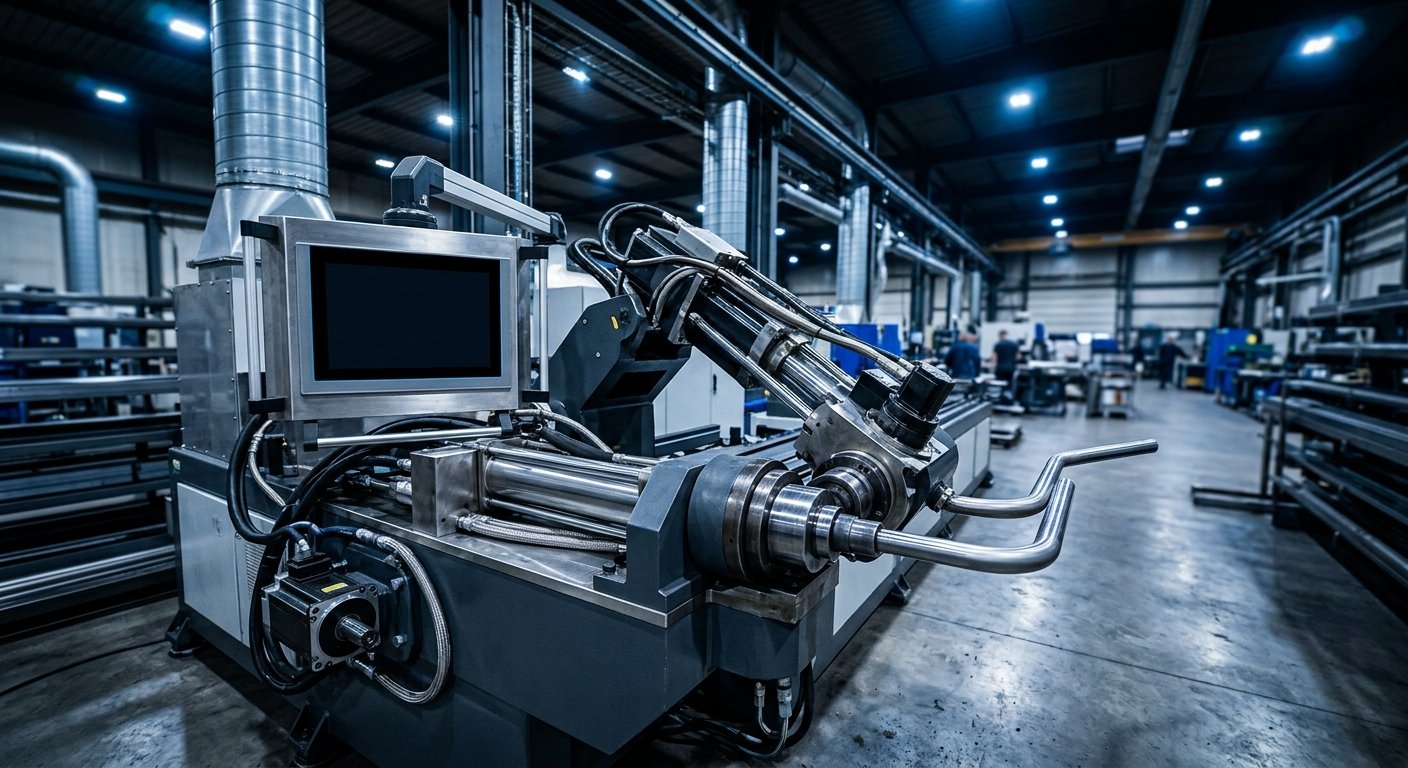
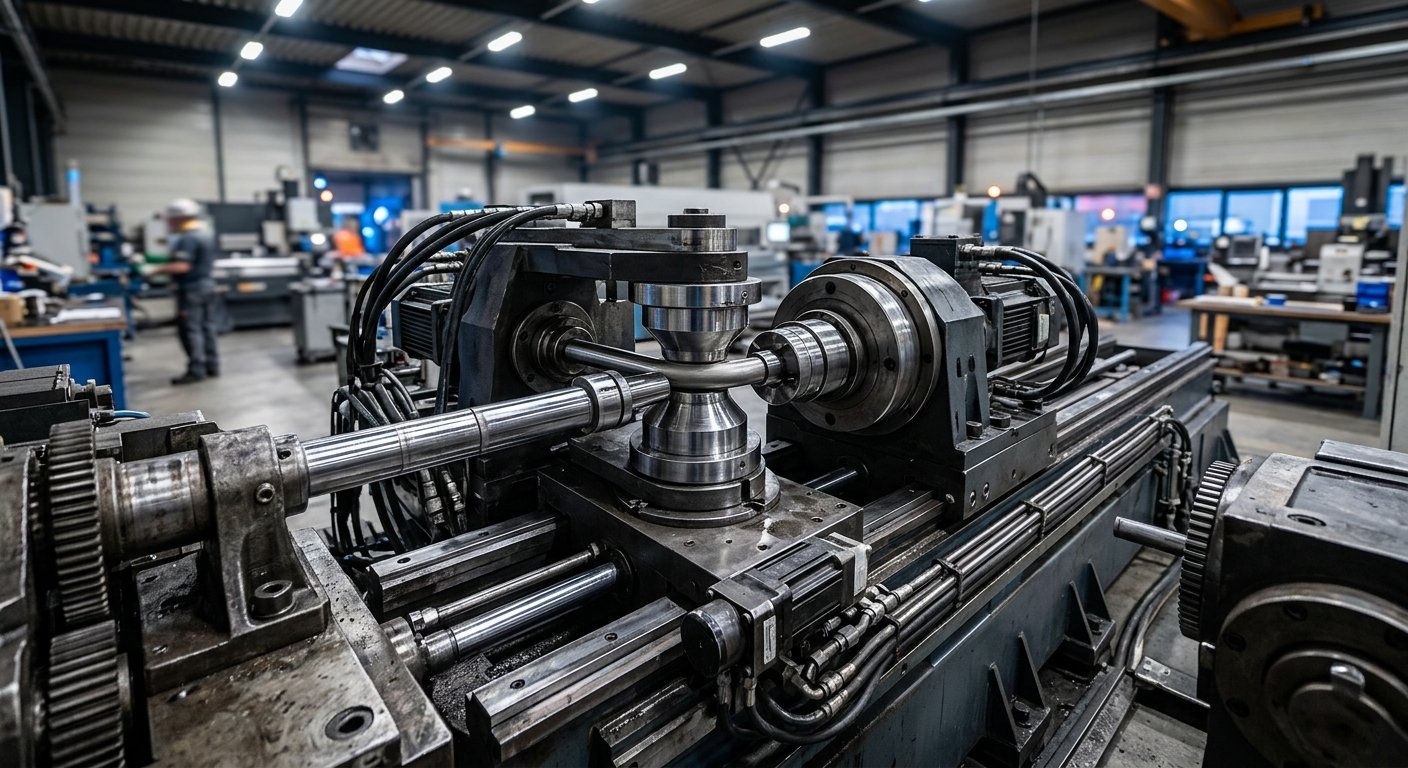
When production budgets tighten but quality requirements remain uncompromising, manufacturing engineers face a critical decision: invest in new equipment or consider rebuilt alternatives. For pipe and tube bending operations, this choice carries significant implications for both immediate capital expenditure and long-term operational performance. Understanding the true cost-benefit equation of rebuilt pipe bending machines requires examining factors beyond the purchase price—including reliability, precision retention, support availability, and total cost of ownership.
The Rebuilt Equipment Market: What You’re Actually Buying
The term “rebuilt” covers a wide spectrum of refurbishment quality in the pipe bending equipment market. At the lower end, some used pipe benders for sale receive minimal intervention—basic cleaning, cosmetic touch-ups, and cursory functional testing. These machines often retain worn components, outdated control systems, and accumulated mechanical tolerances that compromise precision.
Professionally remanufactured equipment represents a fundamentally different proposition. Legitimate rebuilding involves complete disassembly, inspection of all components against original engineering specifications, replacement of worn or outdated parts, precision re-machining of critical surfaces, and comprehensive testing under load conditions. The distinction matters significantly when evaluating performance expectations and true value.
Key factors distinguishing quality rebuilds include:
- Documentation of the rebuild process with inspection reports and replaced component lists
- Calibration certificates for precision measurements and bend accuracy testing
- Updated control systems that support current programming standards
- Structural integrity verification including frame alignment and foundation requirements
- Hydraulic and electrical system upgrades to current safety and performance standards
Initial Cost Savings: The Obvious Advantage
Refurbished tube bending machines typically cost 40-60% less than equivalent new equipment, creating immediate capital expenditure advantages. For a precision rotary draw bender capable of handling 2-inch diameter tubing with programmable control, the difference might represent $75,000-$150,000 in savings. These numbers make rebuilt equipment particularly attractive for:
Expanding existing capabilities: Shops adding capacity for similar work can duplicate proven processes at reduced investment, maintaining production continuity while managing growth costs.
Entering new markets: Manufacturers testing demand in new application areas can minimize risk by deploying rebuilt equipment before committing to full-scale new machinery purchases.
Backup and redundancy: Critical production environments requiring failover capacity often justify rebuilt machines as insurance against downtime on primary equipment.
Budget-constrained projects: Government contracts, academic institutions, and development programs with fixed capital budgets may find rebuilt equipment enables projects that new machinery pricing would prohibit.
However, initial purchase price represents only one component of the total cost equation. The financial advantage of rebuilt pipe bending machines depends heavily on performance sustainability over the ownership period.
Performance Considerations: Where Rebuilds May Compromise
Precision pipe bending applications in aerospace, petrochemical, and defense sectors often specify tolerances measured in thousandths of an inch. New equipment from established precision pipe bending manufacturers typically guarantees these specifications through virgin components, optimized assembly, and comprehensive quality validation.
Rebuilt machines face inherent challenges maintaining equivalent performance:
Accumulated wear patterns: Even after rebuild, structural components may retain stress patterns from previous use. Frame members subjected to repeated bending cycles develop micro-deformations that professional rebuilding can minimize but not entirely eliminate. These subtle changes affect repeatability in high-precision applications.
Component availability limitations: Older machine models may require obsolete components. Rebuilders sometimes substitute modern equivalents, which can introduce compatibility issues or require control system modifications that create new failure points.
Control system constraints: Retrofitting current CNC controls onto older mechanical platforms sometimes results in compromises. Sensor integration, feedback loop timing, and motion control algorithms optimized for newer machine designs may not perform identically on rebuilt frames.
Tooling compatibility: Rebuilt equipment may limit access to current tooling innovations. New bending machines increasingly incorporate quick-change tooling systems, automated setup verification, and integrated measurement capabilities that older platforms cannot support even after control upgrades.
For applications where these factors matter—aerospace tube assemblies, high-pressure petrochemical piping, or mission-critical defense components—the performance gap between rebuilt and new equipment justifies premium pricing for virgin machinery.
Total Cost of Ownership: The Hidden Variables
Sophisticated financial analysis extends beyond purchase price to examine operational costs throughout the equipment lifecycle. Several factors significantly impact the total cost equation:
Maintenance and Repair Frequency
Rebuilt pipe bending equipment typically requires more frequent maintenance intervention than new machinery. Components not replaced during rebuilding—bearings, seals, wear surfaces—continue aging and approach failure thresholds earlier in the ownership period. Production managers should budget 15-25% higher annual maintenance costs for rebuilt equipment compared to new machines.
Parts availability presents another consideration. New equipment from active manufacturers ensures component availability and engineering support for 15-20 years. Rebuilt machines, especially older models, may face parts sourcing challenges that extend downtime during failures.
Production Efficiency and Scrap Rates
Precision degradation in rebuilt equipment directly impacts material costs and production efficiency. A machine producing parts within specification but at the looser end of tolerance bands may increase scrap rates by 3-8% compared to equipment delivering consistent mid-tolerance performance. For operations processing expensive materials—titanium aerospace tubing, high-nickel alloy piping, or specialty stainless grades—this difference compounds significantly over thousands of bending cycles.
Setup time differences also affect cost structures. New pipe bending equipment with current control systems, automated setup features, and integrated measurement capabilities can reduce changeover times by 20-40% compared to older platforms, even after rebuild. For job shops running diverse small-batch work, this efficiency gap substantially impacts hourly production costs.
Energy Consumption
Hydraulic system efficiency improvements in contemporary bending machines deliver measurable energy savings. Newer servo-hydraulic systems and variable-speed pump drives reduce power consumption by 25-35% compared to conventional hydraulic designs common in older equipment. Over a 10-year operating period, energy cost differences can approach $15,000-$30,000 depending on machine size and utilization rates.
Application-Specific Decision Framework
The rebuilt versus new equipment decision depends heavily on application requirements and operational context. Different manufacturing scenarios shift the cost-benefit balance:
High-volume production environments running continuous operations benefit most from new equipment. Maximized uptime, minimized scrap rates, and optimized cycle times quickly recover premium pricing through operational efficiency. Aerospace manufacturers producing landing gear hydraulic tubes or automotive suppliers bending exhaust components typically justify new machinery investments.
Custom fabrication shops handling diverse low-volume work may find rebuilt equipment adequate for many applications. When precision requirements allow broader tolerances and material costs remain modest, the capital savings of refurbished tube bending machines improve project economics without compromising quality standards.
Maintenance and repair operations supporting existing infrastructure often work with mature pipe specifications and established processes. Rebuilt equipment matching the capabilities of existing machinery provides cost-effective capacity expansion without requiring process revalidation or operator retraining.
Research and development environments benefit from rebuilt equipment when exploring new processes or validating concepts before production commitment. The reduced investment supports experimentation while preserving capital for scaling successful developments.
Risk Mitigation Strategies
Organizations considering used pipe benders for sale can reduce performance and reliability risks through careful due diligence:
- Demand comprehensive rebuild documentation including replaced components, inspection reports, and test results
- Verify warranty terms that protect against premature component failures and performance shortfalls
- Assess rebuilder qualifications including original manufacturer certifications or documented rebuild processes
- Request witness testing demonstrating precision capabilities with representative parts
- Evaluate ongoing support availability including parts sourcing, technical assistance, and training resources
- Calculate total cost of ownership scenarios incorporating realistic maintenance, efficiency, and longevity assumptions
Working with established precision manufacturers who offer professionally remanufactured equipment provides additional assurance. Companies with original engineering knowledge, access to genuine components, and reputation stakes in equipment performance typically deliver superior rebuild quality compared to third-party refurbishers.
When New Equipment Justifies Premium Investment
Certain applications and operational requirements make new pipe bending equipment the clearly superior choice despite higher initial costs:
Mission-critical applications where failure consequences extend beyond replacement costs—including aerospace safety systems, petrochemical pressure vessels, and defense applications—demand the reliability assurance and performance guarantees available only with new machinery. The risk profile simply doesn’t support compromise.
Specifications requiring cutting-edge capabilities—multi-stack bending, advanced springback compensation algorithms, or integration with automated material handling systems—often exceed the capabilities of rebuilt equipment regardless of refurbishment quality.
Long-term strategic investments in core competencies benefit from new equipment’s extended service life and comprehensive support. Building competitive advantages around bending capabilities requires the foundation that current-generation machinery provides.
Customer qualification requirements increasingly specify equipment age, calibration currency, and traceability documentation that rebuilt machines may not satisfy. Aerospace, medical device, and nuclear industry suppliers often face contractual requirements effectively mandating new equipment for qualified processes.
Making the Strategic Decision
The rebuilt versus new equipment decision ultimately balances financial constraints against performance requirements, risk tolerance, and strategic objectives. No universal answer exists—the optimal choice depends on specific operational contexts and business priorities.
Organizations maximizing value from rebuilt pipe bending machines typically apply them strategically rather than universally. Deploying refurbished equipment for suitable applications while investing in new machinery where performance demands justify premium costs creates balanced capability portfolios optimizing both capital efficiency and operational excellence.
The analysis requires honest assessment of true requirements versus aspirational specifications. Many applications genuinely don’t require the ultimate precision capabilities of new equipment. Conversely, attempting to force rebuilt machinery into applications exceeding its realistic capabilities creates false economy through elevated scrap, rework, and opportunity costs.
Understanding your specific bending requirements, precision tolerances, production volumes, and quality system demands provides the foundation for sound equipment investment decisions. Whether rebuilt equipment delivers appropriate value or new machinery represents necessary investment depends entirely on matching capabilities to genuine operational needs.
Hines Bending Systems brings over five decades of precision pipe bending expertise to help manufacturers navigate these equipment decisions. Our engineering team provides objective capability assessments, application-specific recommendations, and comprehensive support whether your needs align with new machinery investment or strategic refurbished equipment deployment. Contact our technical specialists to discuss your specific bending challenges and explore solutions optimized for your operational requirements and business objectives.