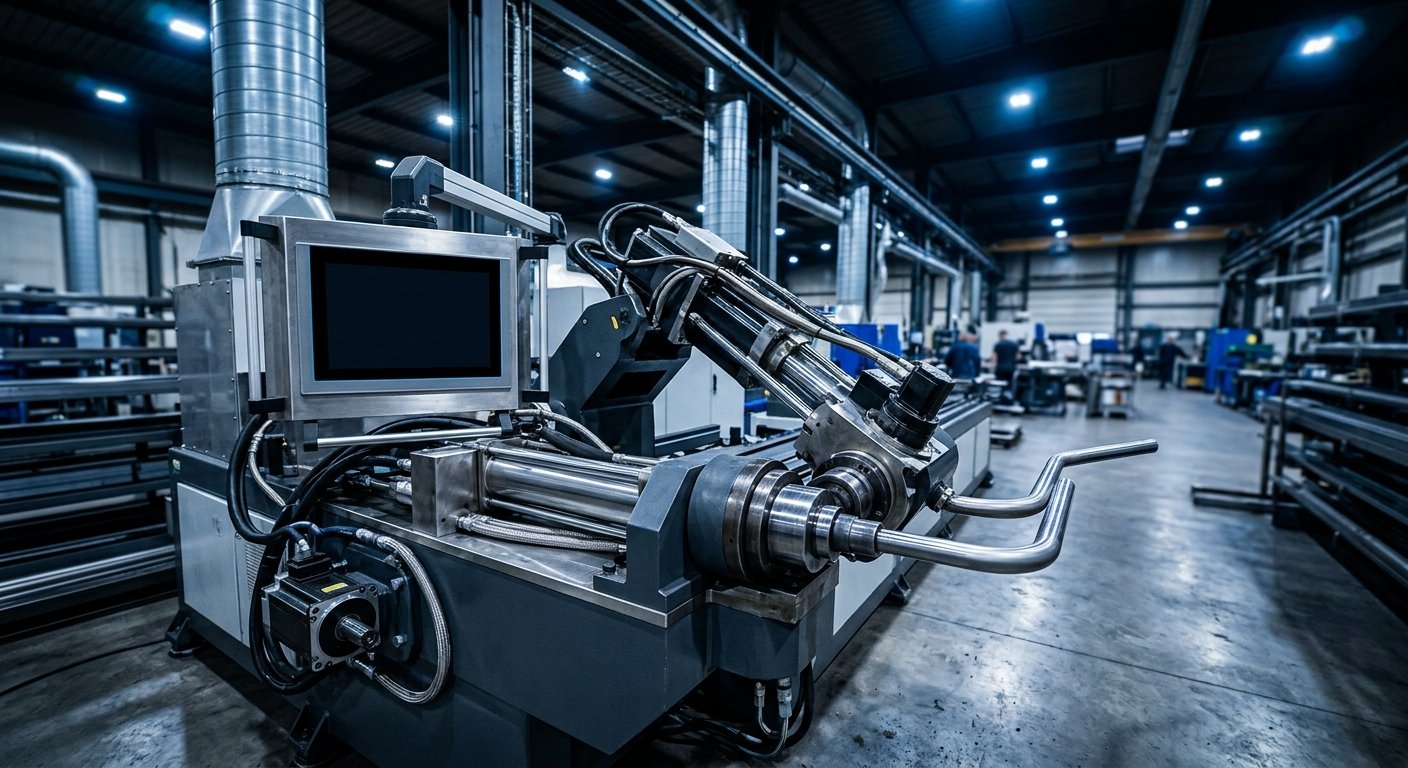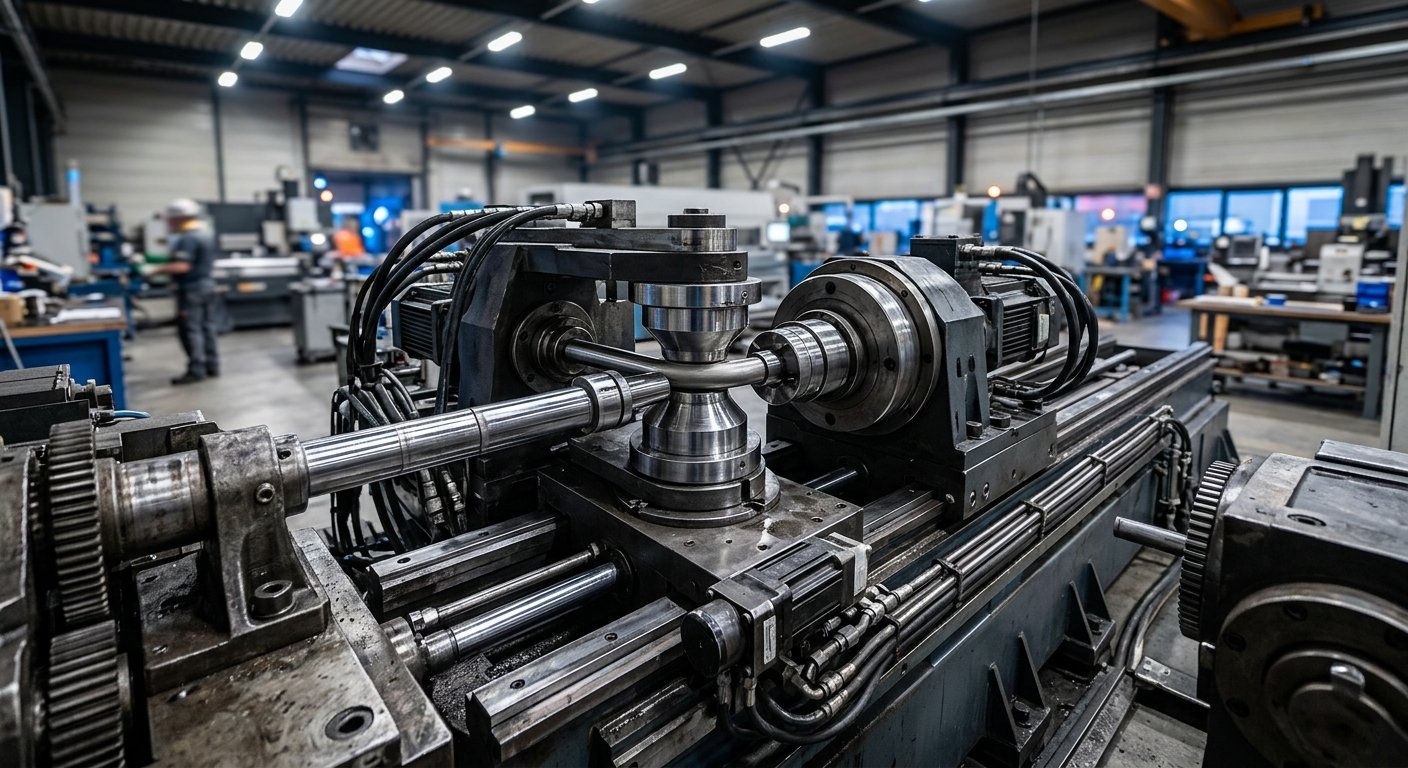
The aerospace tube bending industry faces unprecedented regulatory scrutiny in 2026, with manufacturers required to navigate a complex landscape of certifications, quality standards, and compliance requirements. For engineering managers sourcing equipment from an aerospace tube bending machine dealer, understanding these requirements isn’t optional—it’s critical to avoiding costly production delays and ensuring parts meet stringent aerospace specifications.
Whether you’re establishing a new production line or upgrading existing capabilities, selecting a tube bending machine dealer who understands aerospace compliance can mean the difference between seamless certification and expensive rework.
AS9100 Revision E: The Foundation of Aerospace Compliance
AS9100 Rev E remains the cornerstone quality management standard for aerospace manufacturing in 2026. This standard, built upon ISO 9001 but with aerospace-specific requirements, mandates rigorous documentation, traceability, and process control throughout the manufacturing chain.
When evaluating an authorized tube bender dealer, verify their AS9100 certification status. Dealers who maintain this certification understand the documentation requirements aerospace manufacturers face. They can provide the material certifications, calibration records, and equipment validation data needed for your quality management system.
Key AS9100 requirements affecting tube bending operations include:
- Complete traceability from raw material to finished component
- Documented process controls with established parameters
- Regular equipment calibration with certified standards
- First article inspection protocols for new production runs
- Nonconformance tracking and corrective action systems
A qualified precision tube bender sales representative should discuss how their equipment supports these requirements, including software capabilities for data logging and process documentation.
NADCAP Accreditation and Special Process Requirements
The National Aerospace and Defense Contractors Accreditation Program (NADCAP) governs special processes in aerospace manufacturing. While tube bending itself may not require NADCAP accreditation, downstream processes often do—and your bending operations directly impact their success.
Heat treatment, welding, and surface finishing processes following tube bending frequently require NADCAP certification. The precision and consistency of your bending operations affect whether these subsequent processes can meet specification. Working with an industrial tube bending machine sales team that understands this relationship ensures you specify equipment capable of supporting the entire manufacturing chain.
Consider these NADCAP-related factors when selecting bending equipment:
- Repeatability tolerances that accommodate downstream process variations
- Consistent wall thickness maintenance to prevent issues during heat treatment
- Minimal surface marking that could compromise coating adhesion
- Documentation systems that integrate with your quality records
Material Certification and Traceability Standards
Aerospace applications demand complete material traceability from mill certification through final assembly. In 2026, this requirement has intensified with enhanced digital tracking capabilities becoming the industry standard.
A reputable tube bending machine dealer should provide equipment with integrated tracking systems. Modern CNC tube benders include serialization capabilities, barcode readers, and database integration that links each bent part to its source material heat number and processing parameters.
Critical materials used in aerospace tube bending require specific handling:
Titanium Alloys
Ti-3Al-2.5V and Ti-6Al-4V tubing used in hydraulic systems and structural applications require contamination-free bending environments. Equipment must prevent surface damage that could initiate fatigue cracks. Your cnc tube bender dealer should specify tooling materials and surface treatments that prevent galling while maintaining material integrity.
Inconel and High-Temperature Alloys
Nickel-based superalloys used in engine systems present unique bending challenges. These materials work-harden rapidly and require precise control of bending forces and temperatures. Equipment must maintain consistent parameters across production runs to ensure uniform material properties.
Aluminum Aerospace Alloys
6061-T6 and 2024-T3 aluminum remain workhorses of aerospace construction. While easier to form than exotic alloys, they require careful spring-back compensation and protection from surface contamination. Tooling must be maintained scrupulously clean to prevent embedded particles that could compromise fatigue life.
Measurement and Inspection Compliance
The 2026 aerospace quality landscape demands measurement systems capable of verifying increasingly tight tolerances. First article inspections now routinely require dimensional reports documenting dozens of measurements per part, with total uncertainty budgets calculated for each measurement point.
When specifying equipment through a precision tube bender sales channel, consider how the machine’s inherent accuracy affects your inspection burden. High-precision equipment with proven repeatability reduces inspection requirements and accelerates production qualification.
Modern aerospace tube bending equipment should support:
- Automated measurement systems integrated with bending cycles
- Statistical process control with real-time monitoring
- Coordinate measuring machine (CMM) compatibility for complex geometries
- Digital twin capabilities for virtual inspection and simulation
The measurement uncertainty introduced by manual inspection can easily exceed the tolerance band on critical dimensions. Automated in-process measurement eliminates this source of variation while providing immediate feedback for process adjustment.
Software Validation and Cybersecurity Requirements
A significant development in 2026 aerospace compliance involves software validation requirements. CNC tube benders run on sophisticated control systems with integrated CAD/CAM capabilities. These systems must be validated, version-controlled, and protected against cybersecurity threats.
The Defense Federal Acquisition Regulation Supplement (DFARS) and Cybersecurity Maturity Model Certification (CMMC) requirements now extend to equipment control systems handling technical data. Your authorized tube bender dealer must demonstrate that equipment software includes:
- Secure data handling with encrypted storage and transmission
- Access controls and user authentication systems
- Audit trails documenting program changes and operator actions
- Isolated networks preventing unauthorized external access
Equipment purchased from overseas manufacturers may present compliance challenges if software documentation and source code access are limited. American-manufactured systems from established aerospace suppliers provide transparency and support needed for regulatory compliance.
Environmental and Safety Compliance
Occupational Safety and Health Administration (OSHA) requirements and environmental regulations continue evolving. Tube bending equipment must incorporate safety systems meeting current standards while minimizing environmental impact.
Machine guarding, emergency stop systems, and operator protection features are baseline requirements. Advanced systems include predictive safety features that monitor operation and alert operators to abnormal conditions before incidents occur.
Environmental considerations include hydraulic fluid selection, noise levels, and energy consumption. Equipment designed for aerospace applications should specify biodegradable hydraulic fluids compatible with aerospace environmental requirements and incorporate sound dampening for noise reduction.
Supplier Approval and Source Inspection
Major aerospace primes maintain approved supplier lists with rigorous qualification requirements. Selecting an industrial tube bending machine sales partner already approved by key customers streamlines your own qualification process.
Hines Bending Systems’ established relationships with NASA, military contractors, and commercial aerospace manufacturers provide valuable precedent. Equipment that has successfully supported certified production elsewhere reduces technical risk in your qualification process.
When aerospace customers conduct source inspections of your facility, they evaluate not just your processes but your equipment capabilities and supplier relationships. Demonstrating that your tube bending machine dealer maintains appropriate certifications and quality systems strengthens your overall compliance posture.
Training and Documentation Requirements
AS9100 mandates documented training for personnel performing work affecting product quality. Your equipment supplier should provide comprehensive training programs with documentation meeting aerospace requirements.
Effective training programs include:
- Equipment operation with emphasis on quality-critical parameters
- Setup and tooling procedures with documented work instructions
- Preventive maintenance training ensuring long-term accuracy
- Troubleshooting procedures minimizing unplanned downtime
A cnc tube bender dealer committed to aerospace markets provides training materials formatted for integration into your quality management system, including lesson plans, competency assessments, and refresher training schedules.
Forward-Looking Compliance: Digital Thread and Industry 4.0
The aerospace industry’s movement toward digital thread—comprehensive digital connectivity from design through manufacturing to maintenance—shapes equipment requirements in 2026. Modern tube bending systems must integrate with product lifecycle management systems and provide data in standardized formats.
Equipment selection should consider compatibility with emerging standards for digital manufacturing. Application programming interfaces (APIs) allowing integration with enterprise resource planning and manufacturing execution systems enable the connected factories aerospace primes increasingly require from their supply chains.
Predictive maintenance capabilities leveraging machine learning algorithms represent another frontier. Systems that monitor their own performance and predict maintenance needs before failures occur reduce unplanned downtime while providing documentation of equipment reliability valued in aerospace quality audits.
Working with a Compliance-Focused Dealer
The complexity of aerospace compliance makes dealer selection critical. An experienced aerospace tube bending machine dealer brings more than equipment—they provide expertise navigating regulatory requirements and supporting your certification processes.
Evaluate potential dealers on these compliance-related criteria:
- Experience supporting aerospace manufacturers through certification audits
- Understanding of applicable standards and regulatory requirements
- Technical support capabilities for process development and troubleshooting
- Documentation systems providing records meeting aerospace requirements
- Long-term parts and service support ensuring continued compliance
American manufacturers with heritage in aerospace applications understand these requirements inherently. Decades of experience supporting demanding applications create institutional knowledge that benefits customers navigating similar challenges.
Partner with an Aerospace-Qualified Tube Bending Specialist
Meeting 2026 aerospace compliance requirements demands more than capable equipment—it requires partnership with suppliers who understand the regulatory landscape and can support your certification journey. Hines Bending Systems brings over 70 years of American manufacturing excellence serving aerospace, defense, and other critical industries.
Our tube bending systems are designed and built to support the most demanding applications, with the documentation, traceability, and quality systems aerospace manufacturers require. Whether you’re establishing new capabilities or upgrading existing equipment, our team provides the technical expertise and application knowledge to ensure your investment meets current and future compliance requirements.
Contact Hines Bending Systems to discuss your aerospace tube bending requirements. Our engineering team can evaluate your specifications, recommend appropriate equipment, and explain how our systems support your compliance objectives. With domestic manufacturing, comprehensive support, and proven aerospace heritage, we’re equipped to be your long-term partner in precision tube bending.