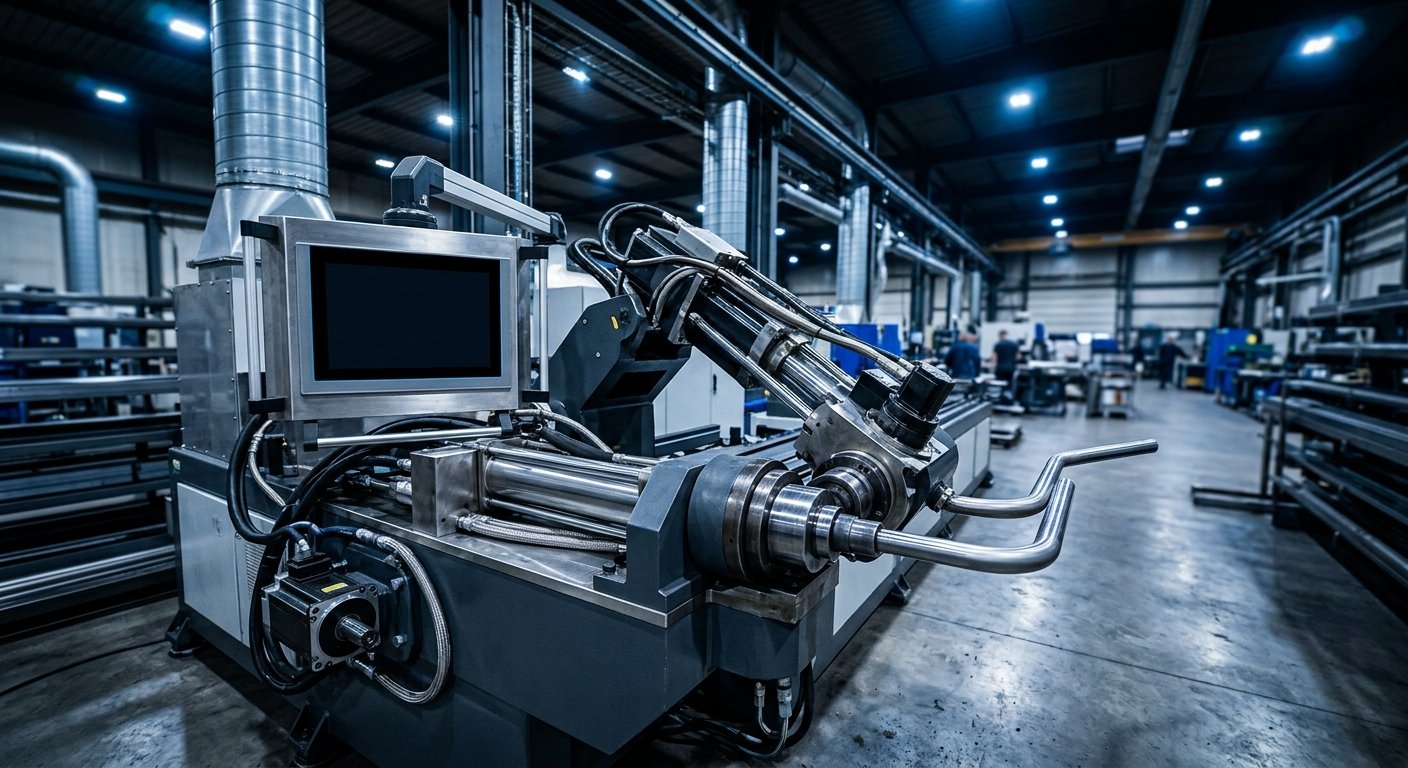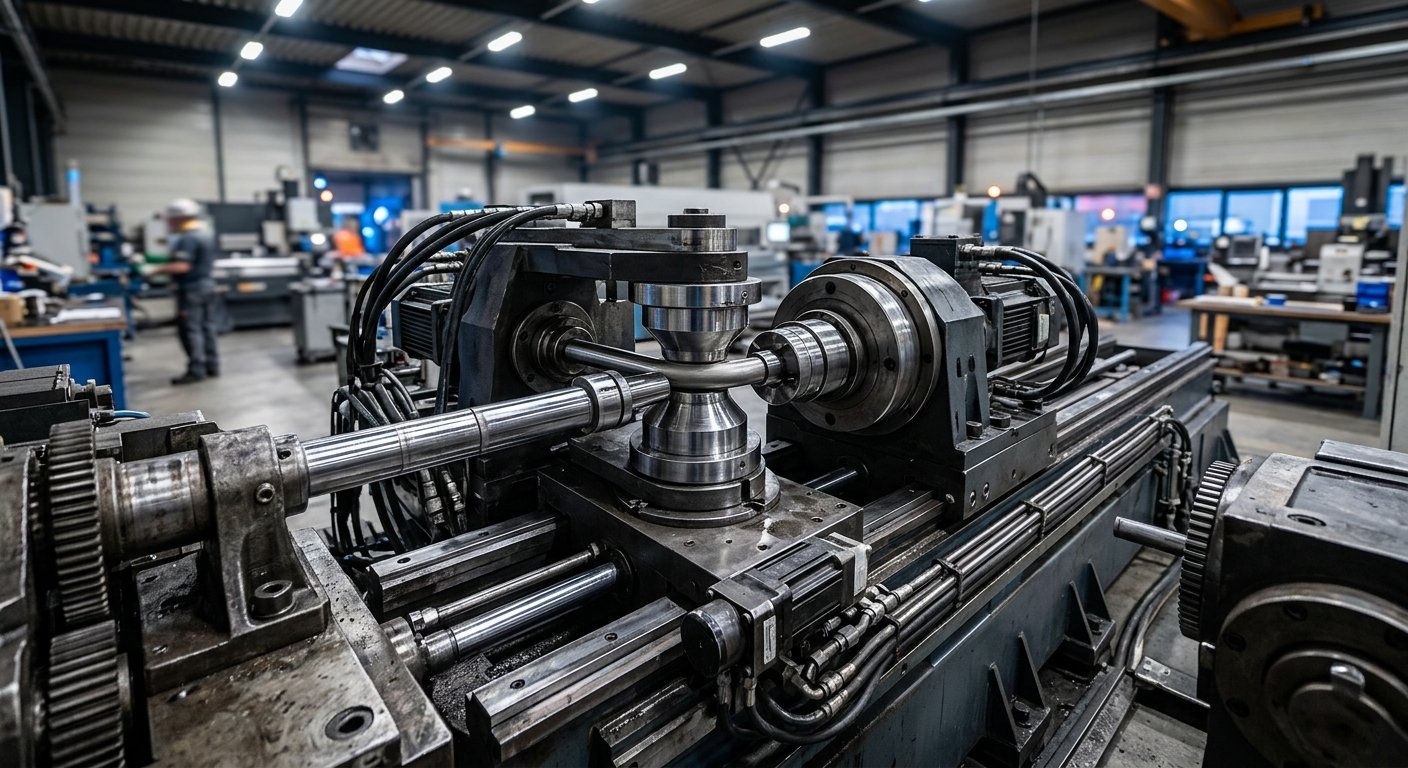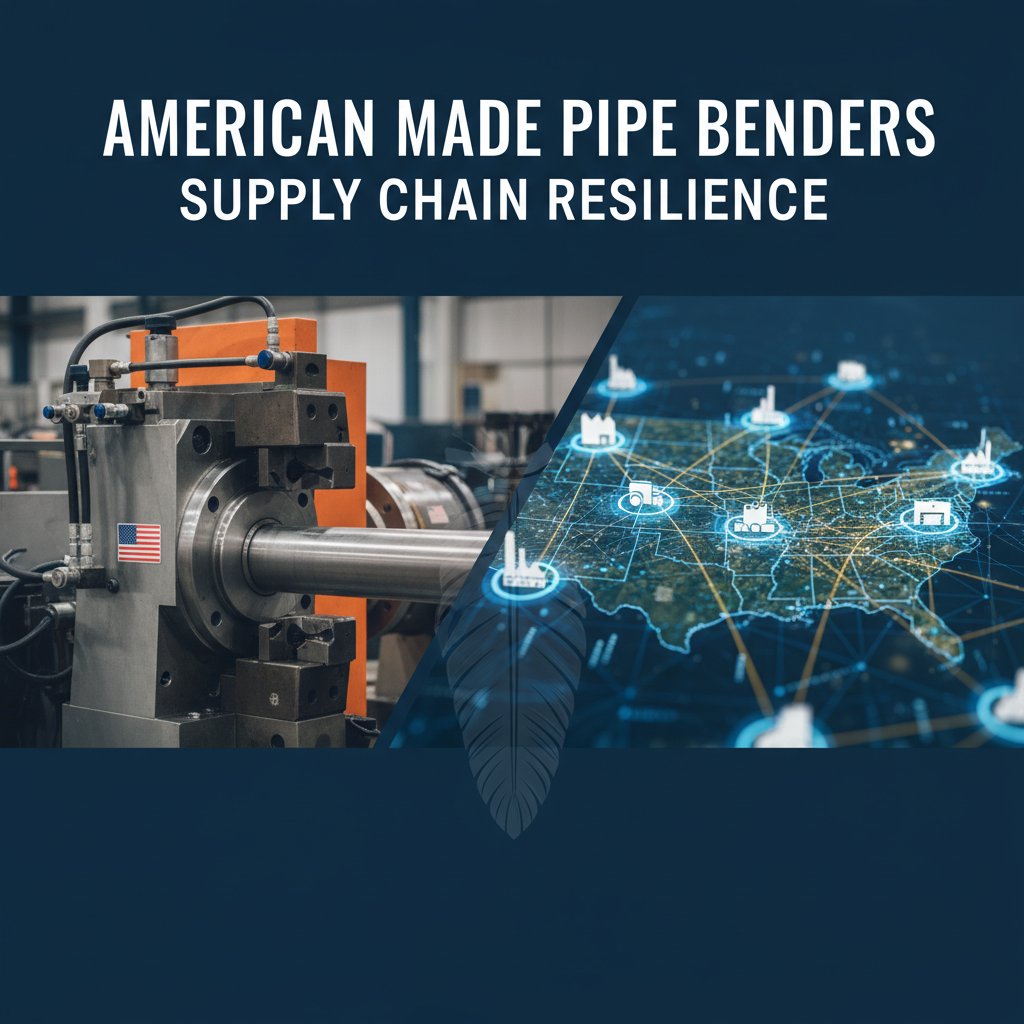
Global supply chain disruptions over the past six years have fundamentally reshaped how manufacturers approach capital equipment procurement. Component shortages, shipping delays, and quality control issues with offshore equipment have cost American manufacturers an estimated $1.3 trillion since 2020. For critical operations in aerospace, energy, and defense sectors, these vulnerabilities aren’t just inconvenient—they represent operational risks that can halt production and jeopardize contracts.
The answer lies closer to home. American made pipe benders offer manufacturing operations more than just equipment—they provide supply chain resilience, technical support proximity, and alignment with increasingly stringent domestic content requirements. As federal infrastructure spending and reshoring initiatives accelerate in 2026, the competitive advantages of partnering with an industrial pipe bender manufacturer USA have never been clearer.
The Hidden Costs of Offshore Equipment Dependencies
Purchasing decisions based solely on initial equipment cost often mask substantial long-term expenses. When a critical production machine goes down, every hour counts. Offshore pipe bending machine suppliers typically require 8-12 weeks for replacement parts to arrive, assuming customs clearance proceeds smoothly. During that downtime, production stops, delivery commitments slip, and customers look elsewhere.
Technical support presents another challenge. Time zone differences mean emergency troubleshooting calls happen during off-hours for manufacturer support teams. Language barriers can complicate precise technical communication about tolerances, material specifications, and machine parameters. When bending Inconel 625 tubing for aerospace applications with tolerances measured in thousandths of an inch, miscommunication isn’t acceptable.
Quality consistency represents perhaps the most significant risk. Offshore manufacturers often change component suppliers without notification, leading to unexpected variations in machine performance. Hydraulic systems, CNC controllers, and mandrel tooling may arrive with substituted parts that don’t meet the original specifications your engineering team approved.
Domestic Manufacturing Advantages in 2026
Choosing american made pipe benders delivers tangible operational benefits that extend far beyond equipment specifications. Proximity to your pipe bending machine manufacturer enables collaborative problem-solving that simply isn’t possible across oceans and continents.
Rapid Response and Support Infrastructure
When production issues arise, domestic manufacturers can deploy field service technicians within 24-48 hours to most continental U.S. locations. Parts ship via overnight delivery rather than ocean freight. Phone support happens in real-time, during your actual working hours, with technicians who understand American manufacturing standards and industry terminology.
This support infrastructure proves especially valuable during new equipment commissioning and operator training. Hands-on training at the manufacturer’s facility allows your team to work directly with the engineers who designed the equipment, asking detailed questions about specific applications and learning advanced techniques for challenging bends.
Customization and Engineering Collaboration
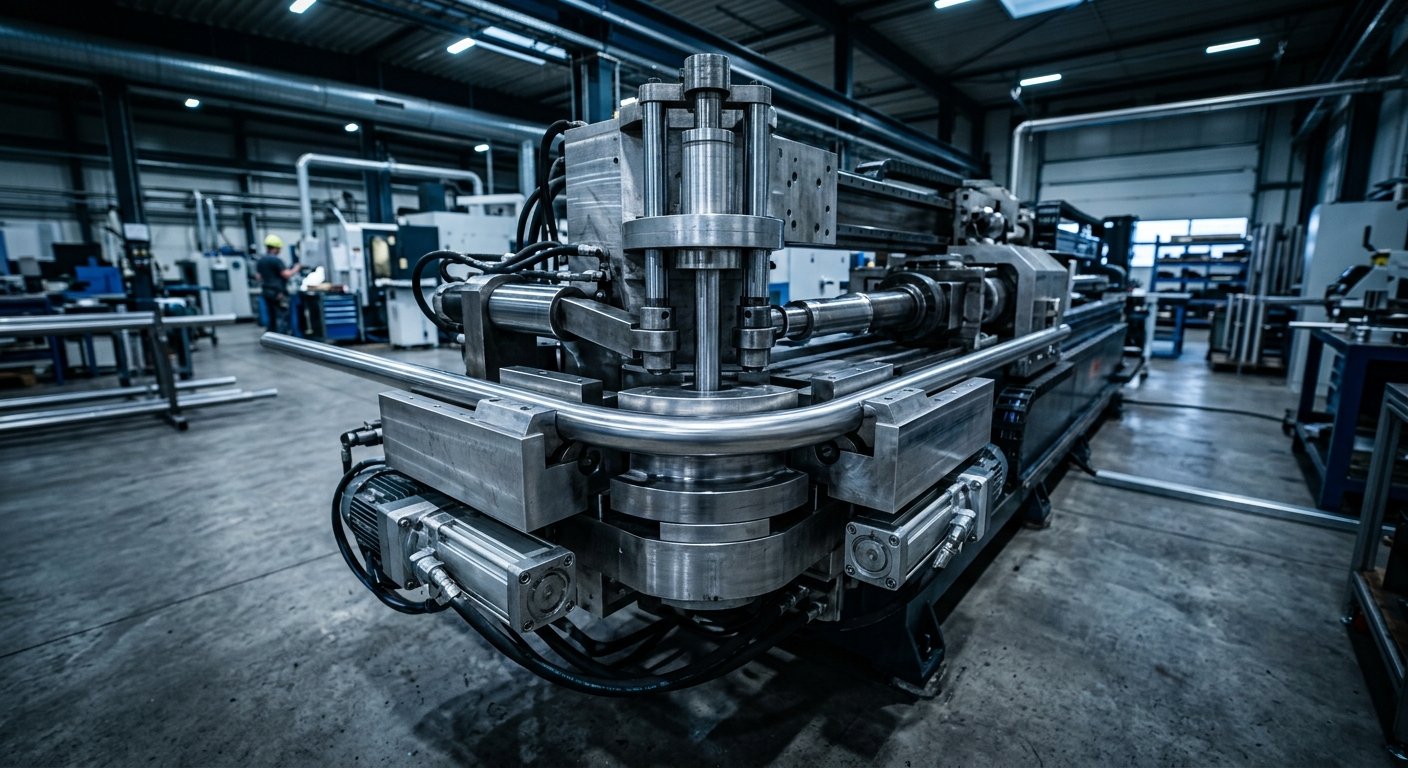
Standard catalog equipment rarely addresses every production requirement. American pipe bending machine suppliers excel at custom solutions because engineering collaboration happens efficiently. Instead of navigating international communication barriers, your team can schedule on-site visits, bring sample parts, and work through design challenges face-to-face.
For aerospace applications requiring specialized tooling for titanium tube bending, or petrochemical projects demanding exotic alloy capabilities, this collaborative engineering approach accelerates development timelines and ensures the final equipment precisely matches application requirements. Iterative design improvements happen in weeks rather than months.
Regulatory Compliance and Documentation
Manufacturers serving defense, nuclear, and aerospace sectors face stringent regulatory requirements. Domestic pipe bending machine manufacturers understand ITAR restrictions, maintain required security clearances, and provide documentation that meets federal acquisition regulations without extensive modification.
The Infrastructure Investment and Jobs Act and CHIPS Act both contain significant domestic content requirements. Equipment purchased from american made pipe benders helps manufacturers meet these thresholds, qualifying projects for federal funding and tax incentives that offset equipment investment costs.
Material Expertise and Application Knowledge
Superior equipment design starts with deep understanding of what happens during the bending process. Different materials respond dramatically differently to bending forces, and successful outcomes require matching machine capabilities to material characteristics.
Aerospace Alloys and Exotic Materials
Bending titanium 3Al-2.5V hydraulic tubing for aircraft systems demands precise control over bending speed, mandrel pressure, and wiper die geometry. Wall thinning on the outside radius and wrinkling on the inside radius must stay within aerospace specifications—typically ±10% wall thickness variation.
Inconel and Hastelloy alloys used in turbine engines and exhaust systems present their own challenges. These materials work-harden rapidly, requiring equipment with sufficient tonnage and properly designed tooling to achieve target radii without cracking. An industrial pipe bender manufacturer USA with aerospace experience understands these nuances and designs equipment accordingly.
Stainless Steel for Sanitary Applications
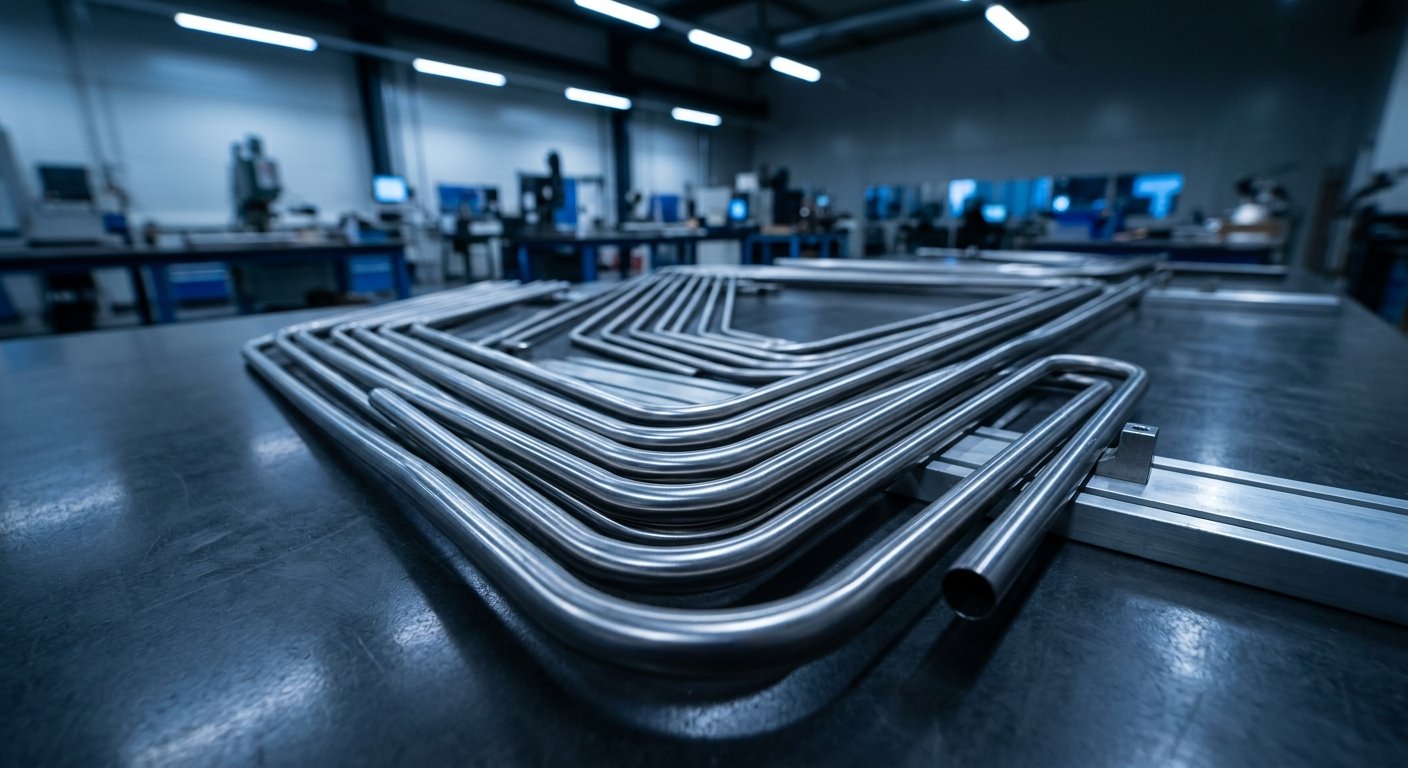
Pharmaceutical, food processing, and biotechnology applications require bends that maintain smooth interior surfaces without scratching, scoring, or contamination. Achieving this requires mandrel designs that support the tube properly while avoiding surface contact that could compromise sanitary requirements.
Electropolished 316L stainless tubing represents significant material investment. Equipment that damages even one tube wastes hundreds or thousands of dollars in material costs. Custom pipe bending machines designed for sanitary applications incorporate features specifically addressing these concerns.
Carbon Steel for Structural Applications
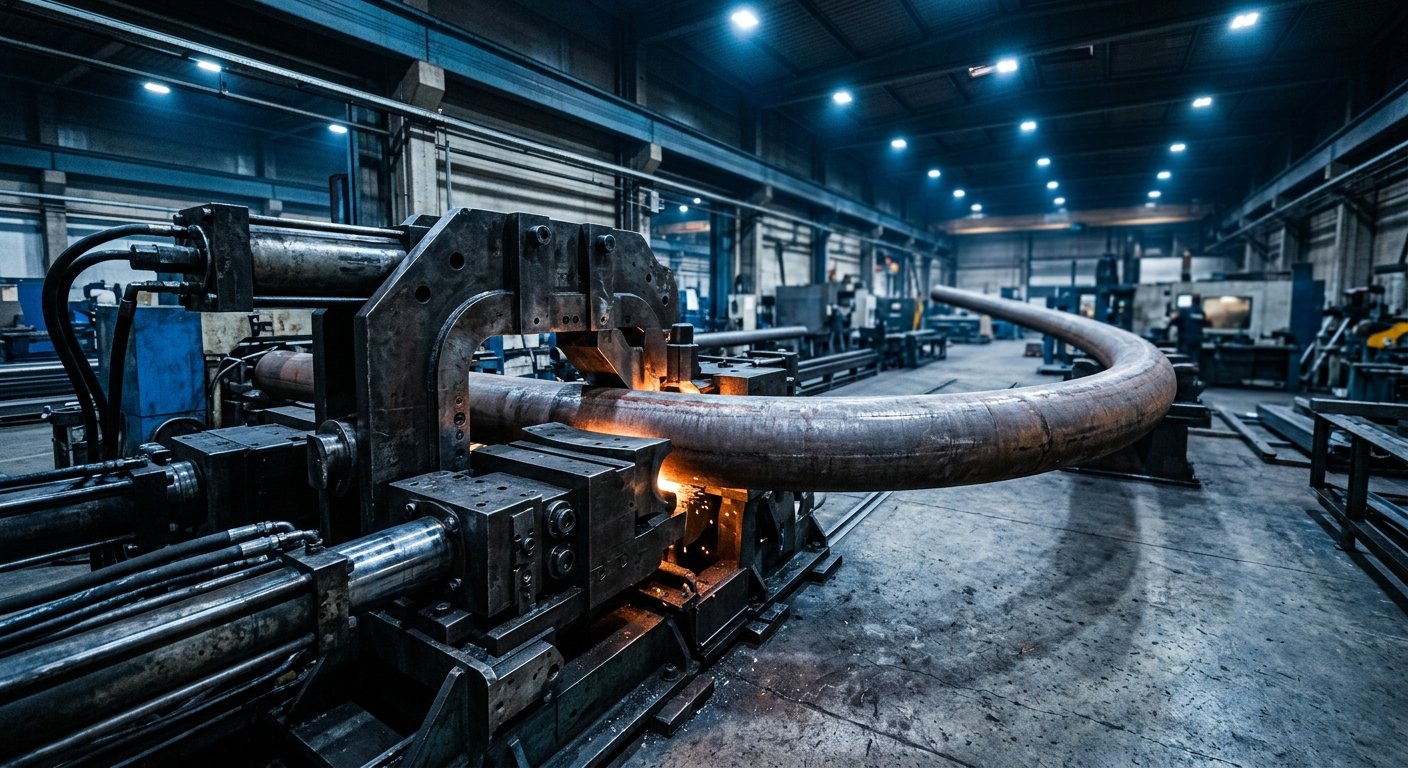
Construction and structural applications often involve larger diameter pipe with thicker walls. Bending 6-inch schedule 40 carbon steel pipe requires substantially different equipment than bending 1-inch aerospace tubing. Tonnage requirements, tooling strength, and machine frame rigidity all scale with pipe size and wall thickness.
American manufacturers serving construction and infrastructure markets design equipment capable of handling these demanding applications reliably. Frame construction, hydraulic system sizing, and component selection reflect understanding of the stresses involved in heavy structural pipe bending.
Technology Integration and Industry 4.0 Capabilities
Modern manufacturing environments demand equipment that integrates seamlessly with existing production systems. Leading pipe bending machine suppliers provide technology that extends beyond standalone operation.
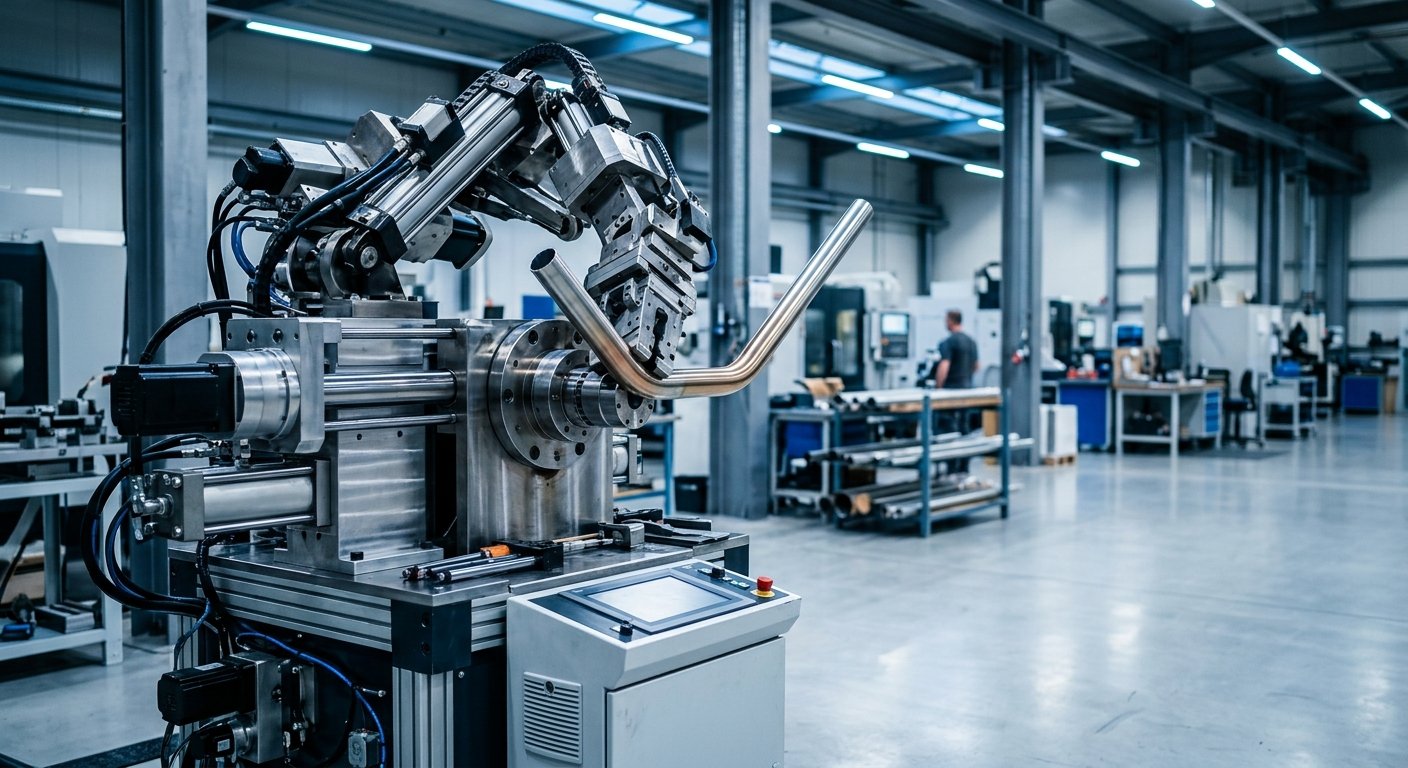
CNC controls with CAD/CAM integration allow operators to import bend geometry directly from engineering files, eliminating manual programming and reducing setup errors. Machine monitoring systems track cycle times, bend counts, and maintenance intervals, feeding data to plant-wide manufacturing execution systems.
Predictive maintenance capabilities analyze hydraulic pressure variations, servo motor performance, and tooling wear patterns to forecast maintenance requirements before failures occur. This proactive approach minimizes unplanned downtime and optimizes maintenance scheduling.
For high-mix, low-volume operations, quick-change tooling systems reduce changeover time from hours to minutes. Automated tool recognition confirms proper setup before the first bend, preventing costly errors and scrap.
Total Cost of Ownership Analysis
Sophisticated procurement teams evaluate capital equipment based on total cost of ownership rather than purchase price alone. This analysis reveals the true value proposition of american made pipe benders.
Factor in machine longevity—domestic manufacturers typically design equipment for 20+ year service lives with proper maintenance. Compare this to offshore equipment often designed for 10-year lifecycles. Include energy efficiency differences, as modern domestic equipment incorporates variable-speed drives and efficient hydraulic systems that reduce operating costs.
Calculate downtime costs based on realistic support response times. Add training effectiveness—better-trained operators produce more first-pass-quality parts. Include scrap reduction from equipment that maintains accuracy over time. Account for the value of engineering support when developing processes for new parts or materials.
This comprehensive analysis consistently demonstrates that equipment from an industrial pipe bender manufacturer USA delivers superior value despite higher initial investment.
Strategic Considerations for 2026 and Beyond
Manufacturing strategy increasingly emphasizes resilience alongside efficiency. Recent geopolitical events have highlighted risks in extended supply chains dependent on potentially unstable international relationships. Manufacturers serving critical infrastructure, defense, and energy sectors particularly recognize these vulnerabilities.
Reshoring initiatives continue gaining momentum. Companies bringing production back to North America need domestic equipment suppliers who can deliver quickly and support aggressive expansion timelines. Equipment lead times from american made pipe benders typically range from 12-20 weeks versus 26-40 weeks for offshore alternatives.
Workforce development represents another strategic consideration. As experienced operators and technicians retire, manufacturers need equipment suppliers who invest in comprehensive training programs. Domestic manufacturers provide ongoing education supporting both new operator training and advanced skill development for experienced personnel.
Selecting the Right Manufacturing Partner
Not all domestic pipe bending machine manufacturers offer equivalent capabilities. Evaluation should examine several key factors:
- Application experience: Does the manufacturer serve your industry with proven installations?
- Engineering capabilities: Can they provide custom solutions or only catalog equipment?
- Service infrastructure: What support network exists for training, maintenance, and emergency response?
- Quality systems: Are appropriate certifications maintained (ISO 9001, AS9100 for aerospace, etc.)?
- Financial stability: Will the company support equipment throughout its service life?
- Technology roadmap: Does the manufacturer continuously improve products based on industry needs?
Request facility tours when possible. Seeing equipment manufacturing processes firsthand reveals quality commitment and manufacturing capabilities. Discuss specific application challenges with engineering staff to assess technical depth.
Making the Business Case Internally
Procurement decisions often require justification to financial stakeholders focused on initial costs. Building a compelling business case for custom pipe bending machines from domestic suppliers requires documenting total cost of ownership, risk mitigation value, and strategic alignment.
Quantify downtime costs based on your production margins and capacity utilization. Calculate parts logistics expenses including freight, customs, and inventory carrying costs. Estimate training effectiveness improvements and resulting quality gains. Include regulatory compliance benefits when applicable.
Present the decision as risk management, not just equipment purchase. Supply chain resilience has direct financial value in preventing production disruptions that damage customer relationships and market position.
Partner with Proven American Manufacturing Excellence
Supply chain resilience starts with strategic sourcing decisions. Choosing american made pipe benders from an established industrial pipe bender manufacturer USA provides the foundation for reliable, efficient production that adapts to changing requirements and delivers consistent quality.
Hines Bending Systems has manufactured precision pipe and tube bending equipment in the United States for over five decades, serving aerospace, defense, energy, and industrial customers who demand uncompromising quality. Our engineering team collaborates with customers to develop solutions for the most challenging bending applications, backed by comprehensive support throughout equipment lifecycles.
Contact Hines Bending Systems today to discuss your specific pipe bending requirements and discover how American manufacturing excellence delivers competitive advantages that extend far beyond the equipment itself.