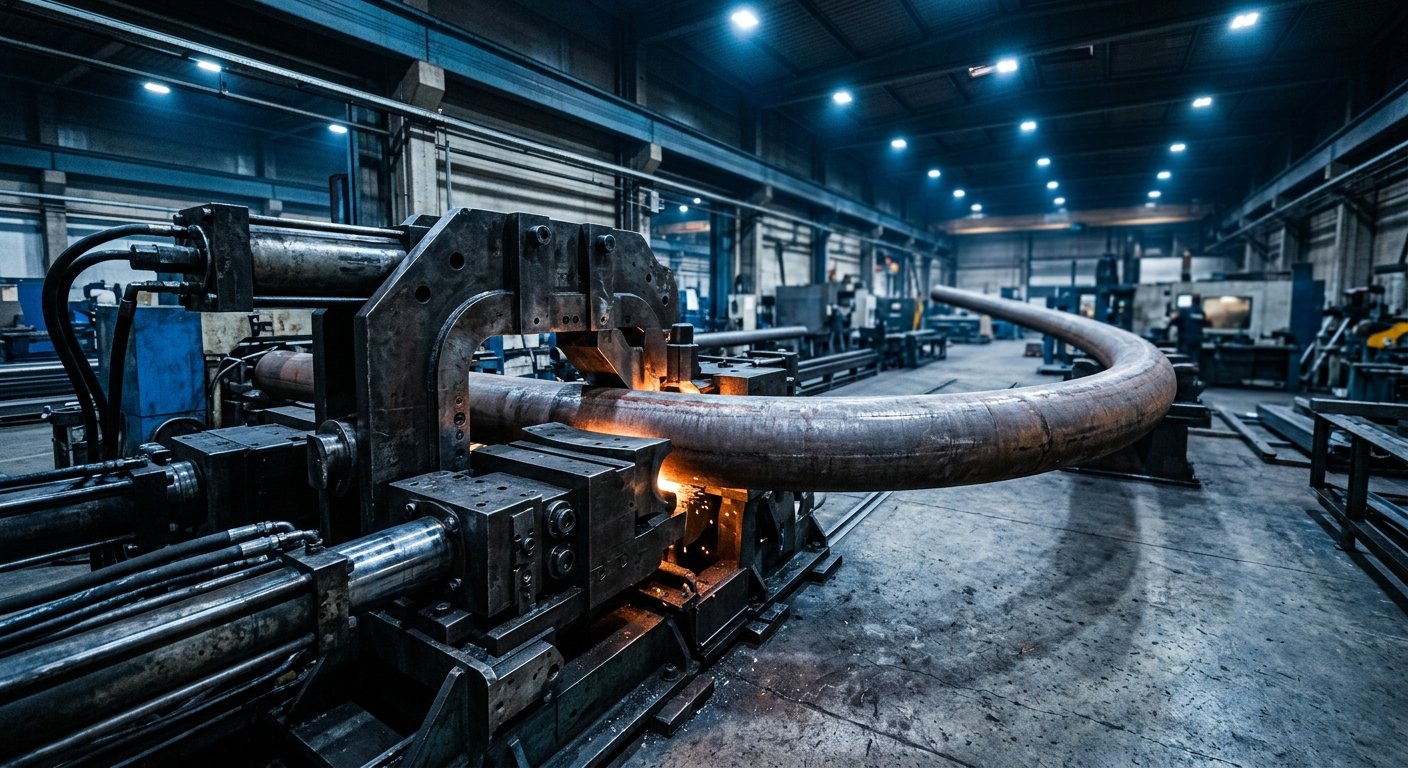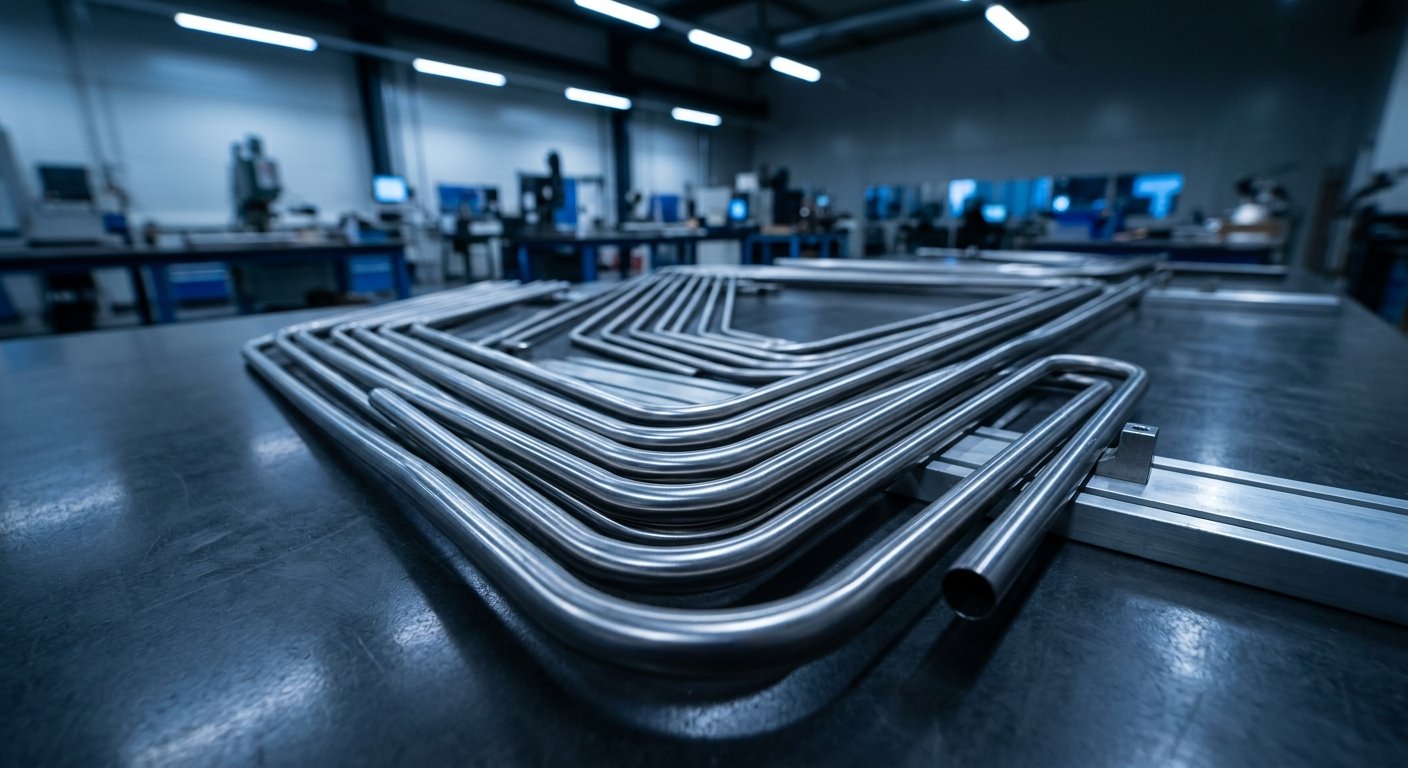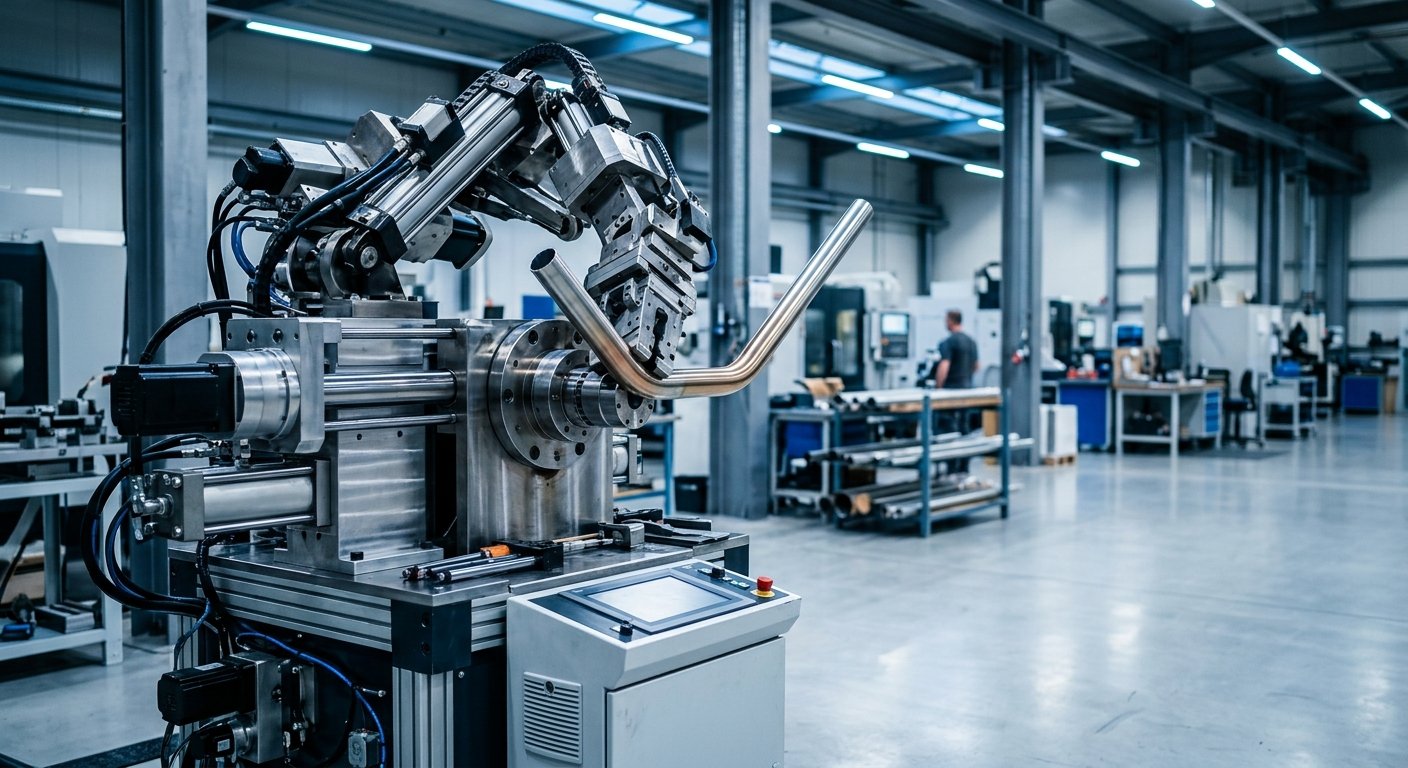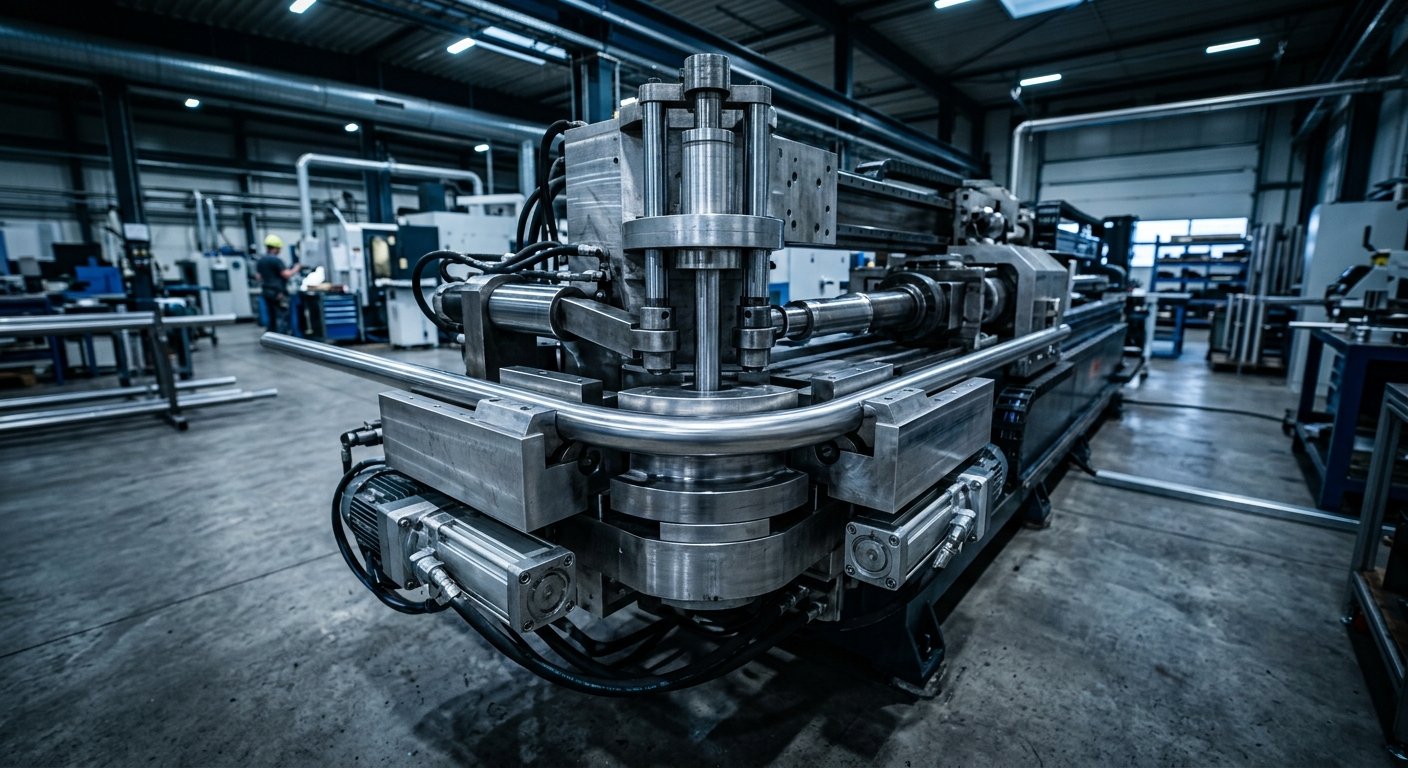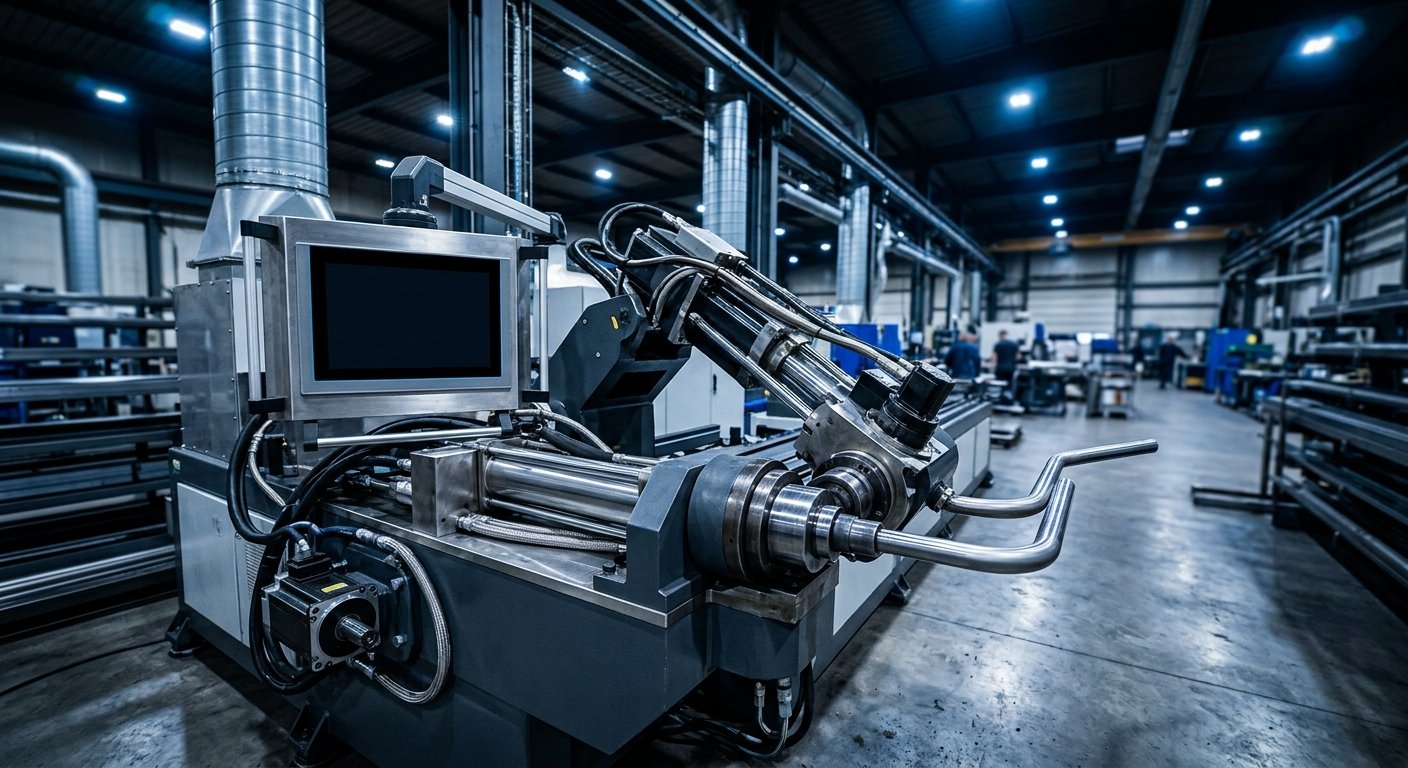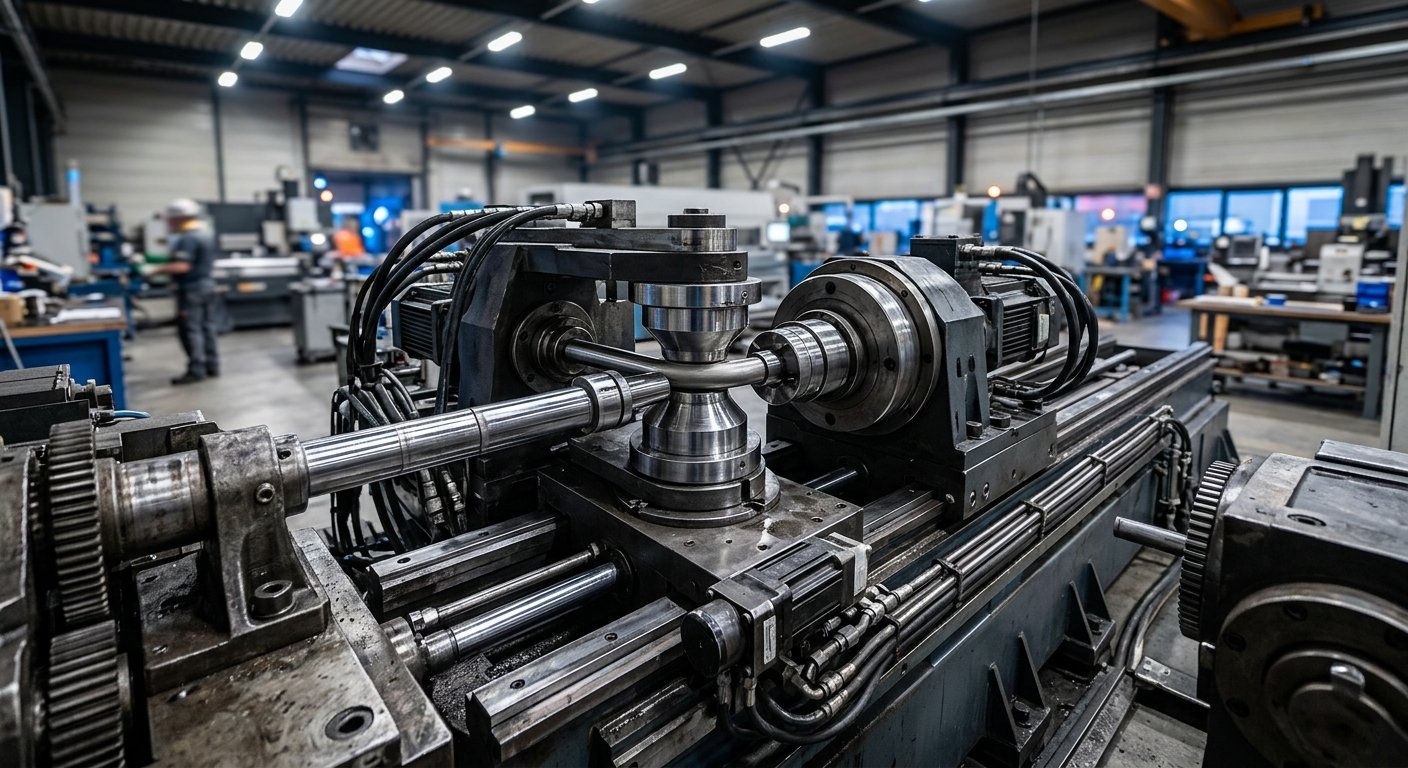
Induction pipe bending machines have become indispensable for heavy-wall applications in aerospace, energy, and petrochemical industries where traditional rotary draw bending reaches its physical limits. As manufacturing tolerances tighten and material costs escalate in 2026, production managers face mounting pressure to validate every bend before costly downstream processing begins. The question isn’t whether to implement quality control protocols—it’s whether your validation methods can catch defects early enough to prevent catastrophic project delays.
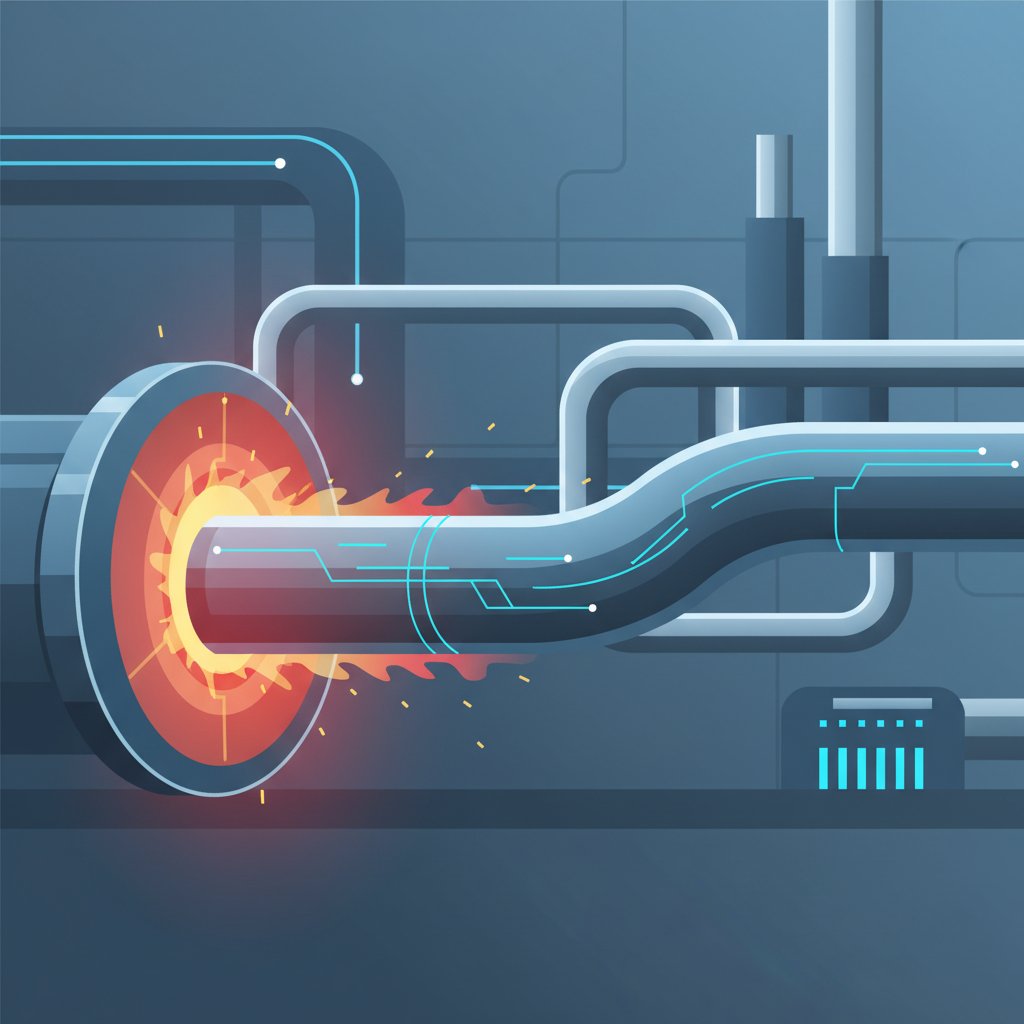
Modern induction bending technology applies localized heat through electromagnetic induction coils while simultaneously bending large-diameter, thick-wall pipe around a radius arm. This process enables bending operations that would be impossible with conventional methods, particularly for pipes exceeding 2-inch wall thickness or 24-inch outside diameter. The technique has proven essential for oil and gas transmission lines, nuclear power plant cooling systems, and aerospace ground support equipment where bend integrity directly impacts operational safety.
Understanding Induction Bending Process Variables
The induction bending process introduces complexity that demands rigorous performance validation. Unlike rotary draw bending where tooling geometry largely determines the bend outcome, induction pipe bending machines rely on precise control of multiple dynamic variables that interact throughout the bending cycle.
Heat application remains the most critical variable. Induction coils must maintain a narrow heating band—typically 1 to 3 inches wide—at the exact temperature required for the specific material grade. For carbon steel pipes, this typically ranges from 1600°F to 2100°F, while stainless alloys may require different thermal profiles. Temperature consistency directly affects wall thinning, ovality, and metallurgical properties in the finished bend.
Advancement speed controls how quickly the pipe moves through the heating zone. Too fast, and insufficient heat penetration results in cracking or incomplete plastic deformation. Too slow, and excessive heat spreads beyond the intended zone, creating uncontrolled distortion and potential grain growth that compromises mechanical properties. The ASME B31.3 Process Piping Code establishes acceptance criteria for piping used in petroleum refineries and chemical plants, making validation against these standards essential for many applications.
Bending force application must counteract the pipe’s natural resistance to deformation while preventing collapse of the cross-section. Modern pipe bending equipment incorporates servo-controlled hydraulic systems that adjust force in real-time based on feedback from position sensors and load cells. This adaptive control distinguishes current-generation systems from earlier fixed-parameter machines.
Critical Quality Metrics for 2026 Validation Protocols
Effective quality control for induction pipe bending machines centers on five measurable characteristics that determine whether a bend meets specification requirements. Each metric requires specific measurement techniques and acceptance criteria aligned with industry standards and application demands.
Wall Thickness Variation
Induction bending inherently produces wall thinning on the extrados (outside radius) and potential thickening on the intrados (inside radius). Acceptable variation depends on the original wall thickness, bend radius, and applicable code requirements. Most specifications limit thinning to 12.5% of nominal wall thickness for pressure-containing applications, though aerospace components may impose tighter restrictions.
Ultrasonic thickness gauges provide non-destructive measurement at multiple points around the bend circumference. Validation protocols should document thickness at the tangent points, 45-degree positions, and apex of each bend. Systematic tracking of these measurements across production runs reveals whether machine parameters require adjustment before parts fall outside tolerance bands.
Ovality and Cross-Section Distortion
Ovality measures how much the pipe cross-section deviates from true circular geometry during bending. The ASTM A53 specification for pipe provides baseline dimensional tolerances, but bent sections require additional consideration. Most applications limit ovality to 8% for structural components and 3% for fluid-handling systems where flow characteristics matter.
Inside diameter measurements taken at perpendicular axes using bore gauges or coordinate measuring machines (CMMs) establish actual ovality. For heavy wall pipe bending in oil and gas applications, maintaining roundness ensures proper fit-up during field welding and prevents stress concentrations that could initiate fatigue cracks.
Bend Angle and Radius Accuracy
Precision pipe bending manufacturers must verify that actual bend geometry matches design specifications within defined tolerances. Angular accuracy typically requires ±1 degree for most industrial applications, though aerospace and defense projects may specify ±0.5 degrees or tighter.
Digital inclinometers or laser measurement systems provide rapid angle verification without complex fixturing. Radius accuracy verification proves more challenging, often requiring CMM measurement of multiple points along the bend arc to calculate the true center point and radius dimension. Production validation should confirm that centerline radius remains within the specified tolerance, commonly ±1% for critical applications.
Surface Condition and Metallurgical Integrity
The intense localized heating inherent to induction bending creates surface oxidation and potential scale formation that must be assessed. Visual inspection identifies obvious surface defects, but validation protocols should include magnetic particle or dye penetrant testing to detect surface cracks invisible to the naked eye.
Metallurgical changes in the heat-affected zone require periodic validation through destructive testing of sample bends. Hardness testing across the bend section reveals whether thermal cycling has created unacceptable hardness gradients. Microstructure examination confirms grain size remains within acceptable limits, particularly for materials serving in high-temperature or corrosive environments.
Straightness and Alignment
Tangent lengths extending from the bend must maintain straightness and proper alignment with the bent section. Deviation in these areas causes fit-up problems during assembly and may indicate process control issues. Straightness measurement using precision straightedges or laser alignment tools should document deviation per unit length, typically limited to 0.125 inches per 10 feet for structural applications.
Implementing Statistical Process Control for Induction Bending
Quality control protocols evolve from simple inspection routines to predictive systems when manufacturers implement statistical process control (SPC) methodologies. For tube bending technology and pipe bending equipment, SPC enables early detection of parameter drift before parts fall outside specification limits.
Control charts tracking key metrics—wall thickness, ovality, bend angle—across sequential production runs reveal trends that indicate developing problems. When measurements approach control limits even while remaining within specification, operators can adjust machine parameters proactively rather than reacting to rejected parts.
Capability studies using Cpk analysis demonstrate whether the induction bending process consistently produces parts within required tolerances. A Cpk value above 1.33 indicates adequate process capability for most industrial applications, while aerospace and defense work typically requires Cpk exceeding 1.67. These metrics provide objective evidence of manufacturing capability that quality managers and customers can reference during qualification assessments.
Advanced Validation Technologies for 2026
Current precision pipe bending manufacturers increasingly adopt technologies that were cost-prohibitive just five years ago. These tools enhance validation accuracy while reducing inspection time, improving overall production efficiency.
Three-dimensional laser scanning captures complete bend geometry in minutes, generating point cloud data that computer software compares against CAD models. Deviation maps highlight areas exceeding tolerance, enabling rapid disposition decisions. This technology proves particularly valuable for complex multi-plane bends where traditional measurement methods struggle to establish reference datums.
In-process monitoring systems integrate sensors directly into induction pipe bending machines, collecting real-time data on temperature profiles, advancement speed, and bending force throughout each cycle. Machine learning algorithms analyze this data to predict final part quality before bending completes, allowing immediate intervention when parameters drift outside optimal ranges.
Portable X-ray fluorescence (XRF) analyzers verify material composition before bending begins, preventing costly errors when similar-appearing alloys get mixed in inventory. This validation step takes seconds but prevents catastrophic failures when incompatible materials undergo inappropriate thermal cycles.
Material-Specific Validation Considerations
Different pipe materials respond distinctly to the induction bending process, requiring tailored validation approaches. Carbon steel pipe remains the most forgiving, tolerating relatively wide process windows while maintaining acceptable quality. However, high-strength grades above 65 ksi yield strength demand careful thermal management to prevent brittle microstructures in the heat-affected zone.
Stainless steel alloys, particularly austenitic grades like 304 and 316, require validation of sensitization potential. The temperature range during induction bending can precipitate chromium carbides at grain boundaries, creating paths for intergranular corrosion in service. Corrosion testing on sample bends validates that thermal cycles haven’t compromised corrosion resistance critical for oil and gas pipe bending applications.
Nickel alloys used in high-temperature service—Inconel 625, Incoloy 825, Hastelloy C-276—present the most demanding validation requirements. These materials cost significantly more than carbon or stainless steel, making scrap prevention essential. Additionally, their application in critical aerospace and petrochemical systems demands documentation traceable to original mill certifications and validation that bending hasn’t degraded properties.
Documentation and Traceability Requirements
Comprehensive quality control extends beyond measurement to documentation systems that provide complete traceability from raw material receipt through final inspection. The NASA Technical Standards Program establishes rigorous documentation requirements that inform best practices across industries, even for non-NASA applications.
Each bend should receive unique identification marking that links to a quality record documenting material certifications, machine parameters used during production, inspection results, and operator identification. This traceability enables root cause analysis if field failures occur and provides evidence of manufacturing control during customer audits.
Digital quality management systems replace paper travelers in modern facilities, capturing data directly from measurement instruments and eliminating transcription errors. Cloud-based platforms enable real-time visibility into production status and quality metrics, supporting faster decision-making when issues arise.
Calibration and Maintenance Impact on Quality
Even the most sophisticated validation protocols prove worthless if measurement instruments drift out of calibration or machine components wear beyond acceptable limits. Effective quality control programs incorporate scheduled calibration of all measurement devices traceable to NIST standards, typically on annual cycles for most instruments and quarterly for high-use gauges.
Induction pipe bending machines themselves require preventive maintenance that directly affects quality outcomes. Induction coil condition impacts heating uniformity—degraded coils create hot spots that produce inconsistent bends. Hydraulic system maintenance ensures consistent force application throughout bending cycles. Control system calibration verifies that commanded parameters match actual machine operation.
Leading manufacturers maintain detailed maintenance logs correlating machine service history with quality data, identifying relationships between component wear and product defects. This predictive approach minimizes unexpected quality excursions that disrupt production schedules.
Frequently Asked Questions
What tolerances can induction pipe bending machines achieve for heavy-wall applications?
Modern induction bending equipment typically achieves bend angle tolerances of ±1 degree and radius accuracy within ±1% of the specified centerline radius for heavy-wall pipe. Wall thinning generally ranges from 8% to 12.5% depending on the bend radius-to-diameter ratio and material characteristics. These tolerances meet or exceed requirements for most oil and gas, petrochemical, and structural applications, though aerospace components may require tighter controls achieved through specialized tooling and process optimization.
How does quality control differ between small-diameter tube bending and large-diameter induction pipe bending?
Small-diameter tube bending typically uses rotary draw methods with tooling-defined geometry, making dimensional control more predictable. Induction bending for large-diameter, heavy-wall pipe involves dynamic thermal and mechanical processes requiring real-time parameter adjustment. Quality control for induction bending emphasizes temperature monitoring, wall thickness verification, and metallurgical validation that aren’t as critical for cold-formed tube bending. The measurement techniques also differ—CMM and laser scanning prove more practical for large pipe than the gauge pins and mandrels used for tube inspection.
What documentation should manufacturers provide for critical induction-bent pipe components?
Comprehensive documentation packages for critical applications should include original mill test reports certifying material chemistry and mechanical properties, procedure qualification records establishing that bending parameters produce acceptable results, individual bend inspection reports documenting all measured characteristics, heat numbers or unique identification linking each bend to source material, and certificates of conformance signed by authorized quality personnel. Aerospace and defense applications often require additional documentation including operator certifications, calibration records for measurement equipment, and detailed process parameter logs for each bend produced.
Partner with Proven Induction Bending Expertise
Quality validation protocols only deliver value when implemented by manufacturers with the technical depth to interpret results and optimize processes accordingly. Hines Bending Systems brings 50 years of precision pipe and tube bending experience to every project, combining American manufacturing excellence with the rigorous quality standards that have made us trusted suppliers to NASA and military organizations.
Our induction pipe bending machines incorporate advanced control systems and monitoring capabilities that support comprehensive quality validation from first article through high-volume production. Whether your application demands heavy wall pipe bending for oil and gas infrastructure or precision components for aerospace systems, our engineering team provides the technical guidance and custom solutions that ensure your bends meet specification requirements consistently.
Contact Hines Bending Systems today to discuss how our tube bending technology and quality control expertise can support your most demanding applications. Our comprehensive approach includes application engineering, operator training, and ongoing technical support that positions us as your partner in manufacturing success, not just an equipment supplier.