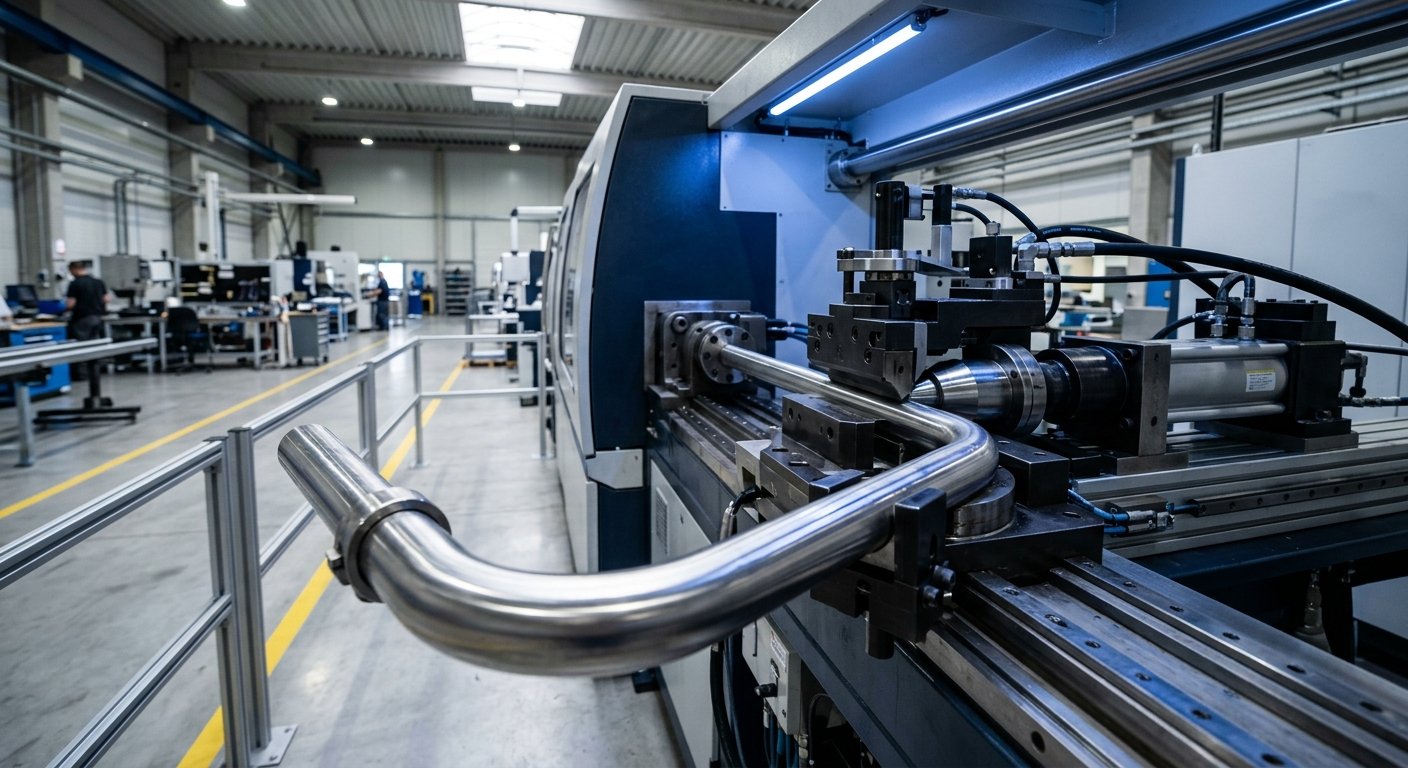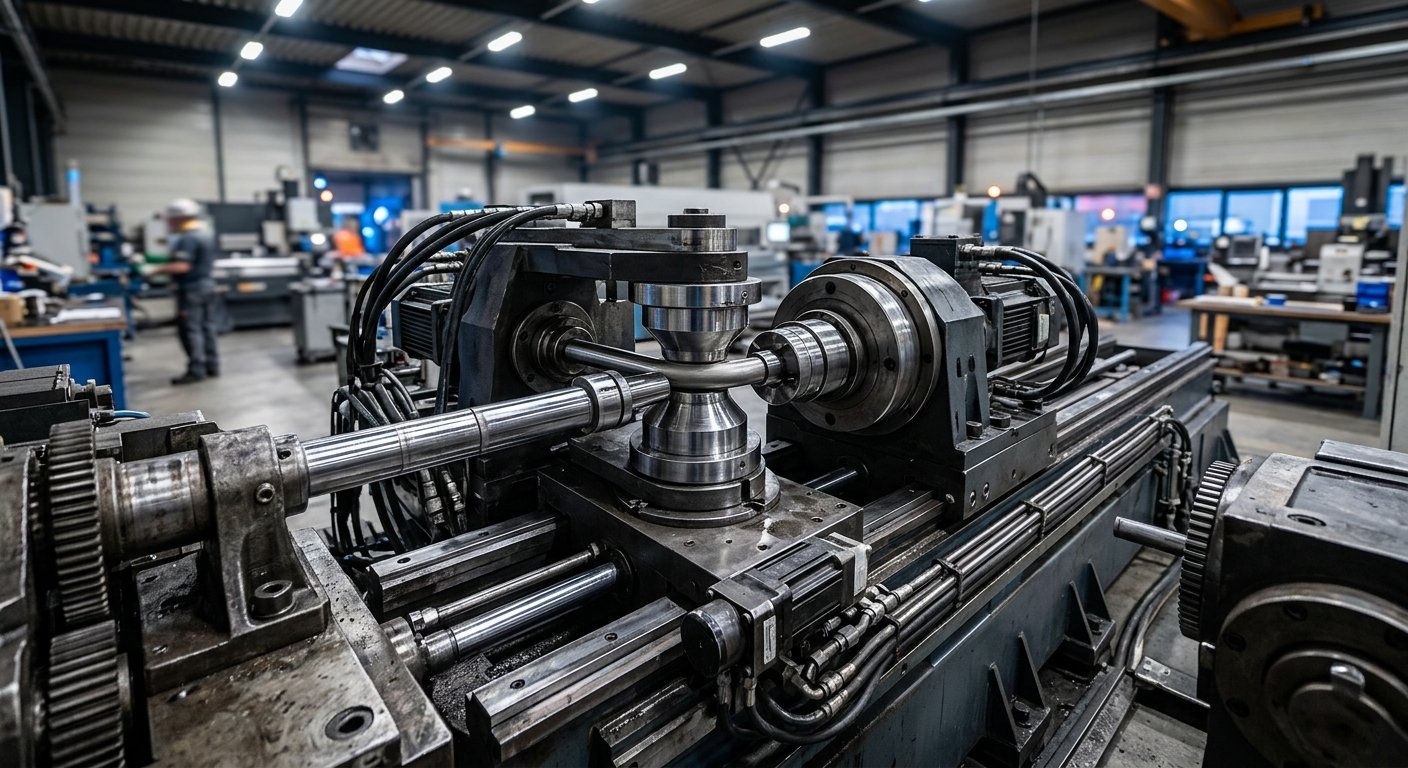
Before purchasing a refurbished tube bending machine, inspect the tooling condition, control system integrity, hydraulic and mechanical wear, and the seller’s reconditioning documentation. For engineering teams in aerospace, energy, or oil & gas applications, buying a pre-owned CNC tube bender without a structured inspection protocol risks costly downtime, scrapped product, and safety exposure on production lines.
- Mechanical wear in the bending head, carriage, and mandrel rod assembly is the most common cause of dimensional inaccuracy in reconditioned bending machines.
- Control system age and software supportability directly affect long-term uptime—verify firmware versions and parts availability before committing.
- Request full reconditioning documentation and test reports; reputable sellers provide measured bend data on known-geometry tubing after refurbishment.
- Tooling compatibility with your specific tube OD, wall thickness, and CLR requirements must be confirmed, not assumed, even on rebuilt pipe bending machines.
- Factor in post-purchase training and service support—a machine without accessible technical support is a hidden liability in demanding production environments.
Why the Refurbished Market Deserves Serious Scrutiny
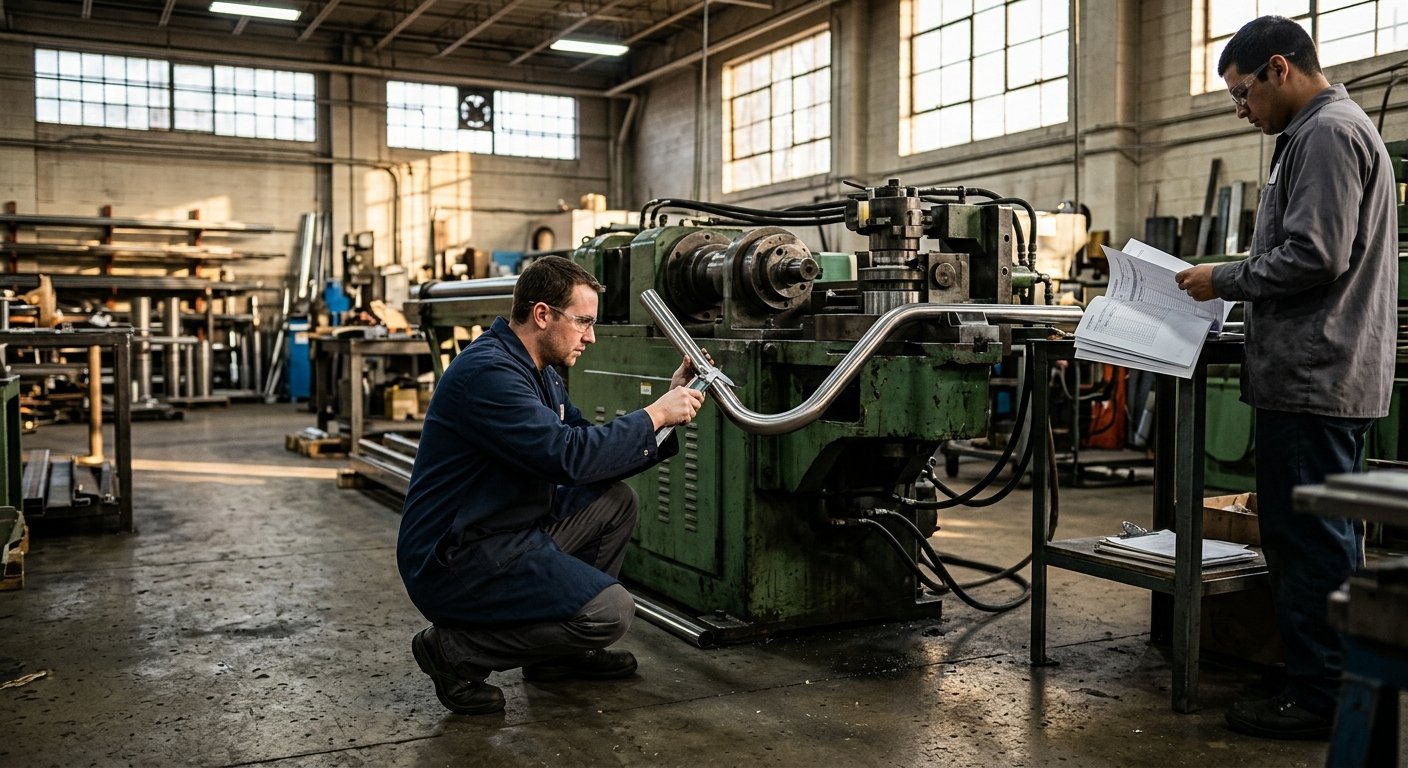
The market for pre-owned CNC tube benders and rebuilt pipe bending machines has expanded considerably as capital equipment budgets tighten across energy, petrochemical, and defense supply chains. A well-reconditioned machine can deliver strong performance at a fraction of new-equipment cost. A poorly refurbished one can introduce dimensional variation that doesn’t surface until a critical aerospace or pressure-rated assembly fails inspection.
The difference between a smart buy and an expensive mistake almost always comes down to what was actually done during refurbishment—and how thoroughly the buyer verified it before purchase. The inspection framework below is designed for engineers and procurement specialists who need to ask the right questions and know what the answers should look like.
Sellers often use “reconditioned,” “rebuilt,” and “refurbished” interchangeably, but these terms can mean anything from a full mechanical overhaul to a fresh coat of paint and a cleaned control panel. Always request a detailed scope of work describing exactly what was replaced, rebuilt, or adjusted during reconditioning.
Step-by-Step Inspection Protocol
Assess the Bending Head and Tooling Interface
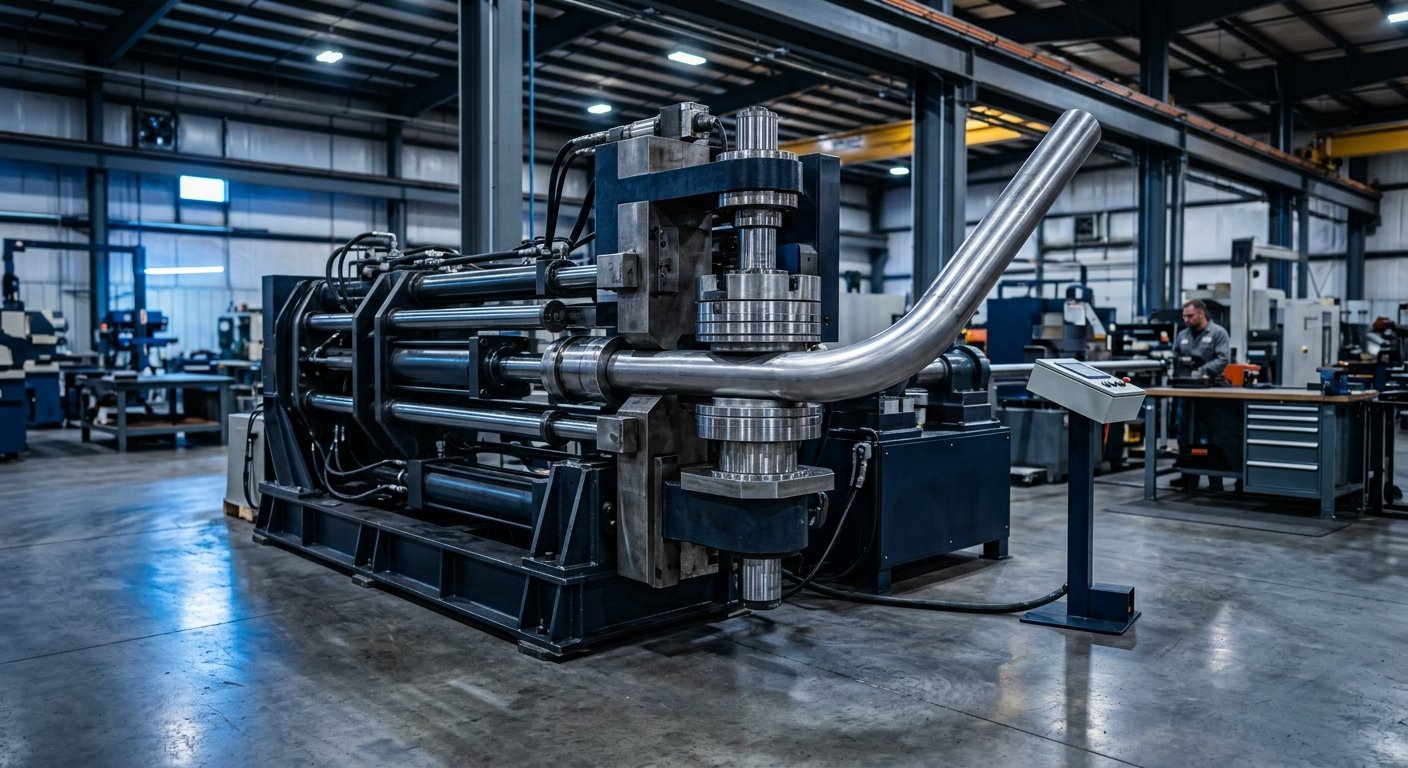
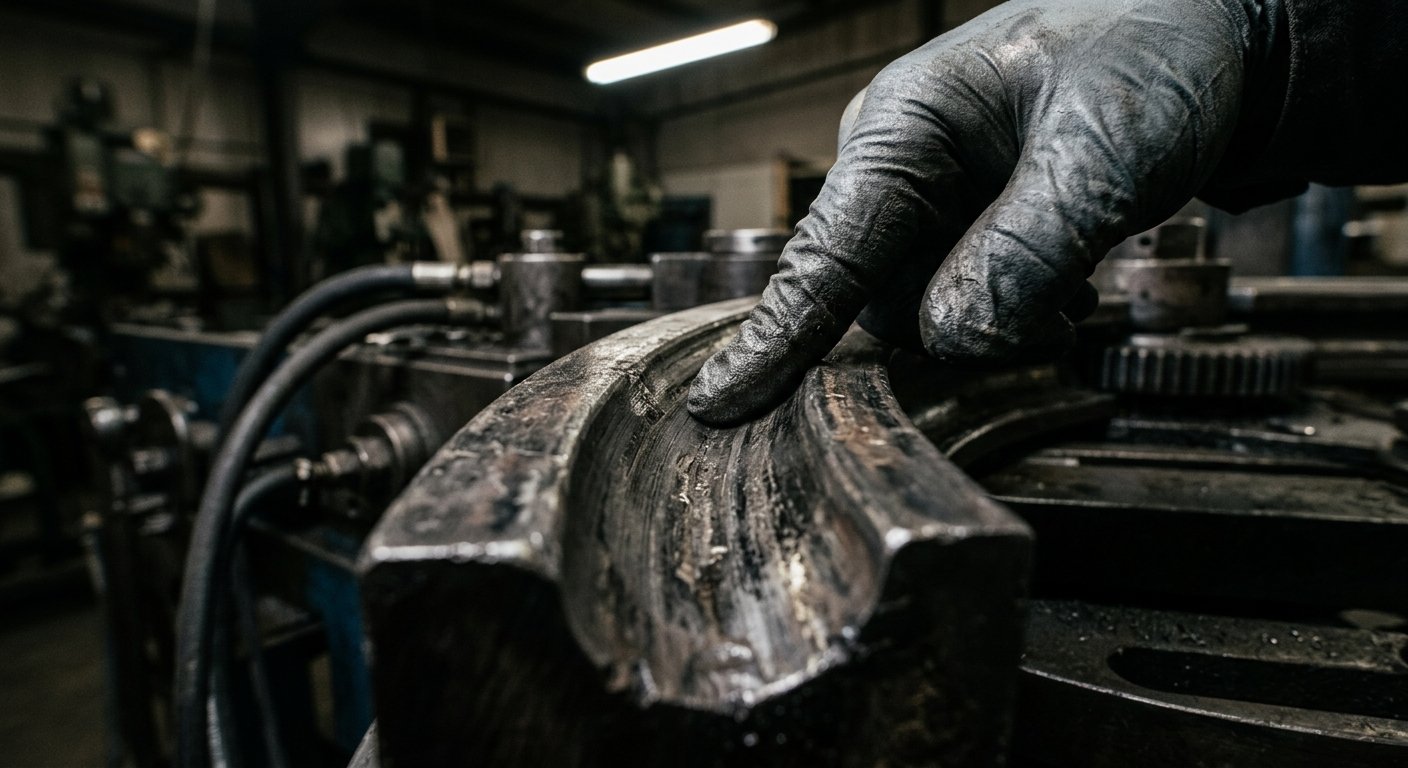
Begin at the bend die, clamp die, and pressure die interface. Check for wear on the die grooves—any visible galling, pitting, or radius deformation indicates the tooling has been run hard or improperly set up. Verify that the bend die radius matches your required centerline radius (CLR) and that the tube groove profile corresponds to the OD and wall thickness you intend to run. Mismatched tooling on used mandrel pipe benders is one of the most frequent sources of ovality and wall thinning beyond acceptable limits.
Inspect the Mandrel Rod, Ball, and Wiper Die
The mandrel assembly is the heart of precision bending on a mandrel tube bender. Check the mandrel rod for straightness and examine threaded connections for wear or damage. Ball-style mandrels should rotate freely with no detectable slop at the link joints. The wiper die tip—the component most prone to wear—should be inspected for heel erosion. Even minor wiper tip wear causes wrinkling on the inside of the bend, particularly on thin-wall tubing common in aerospace and hydraulic line applications.
Evaluate the Carriage and Linear Drive System
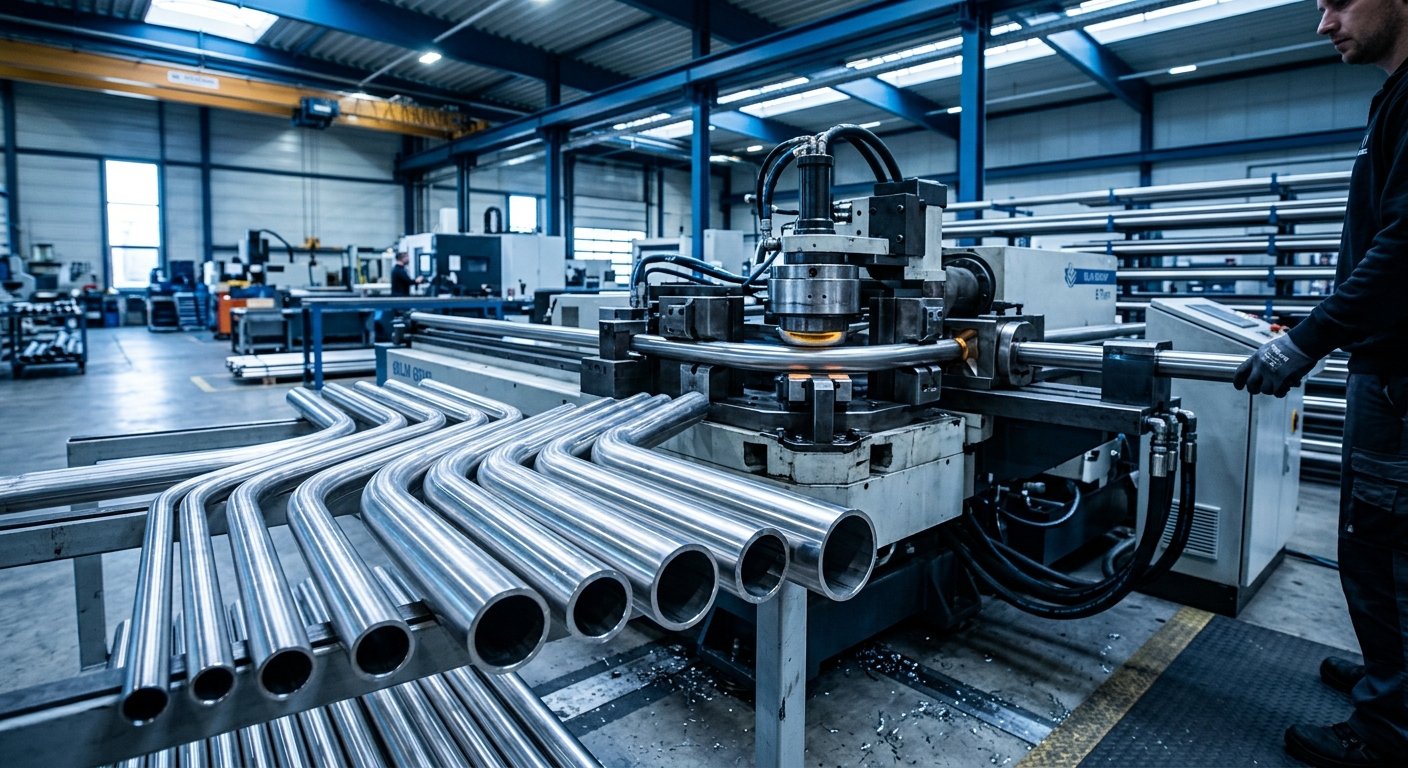
On CNC rotary draw benders, the tube carriage controls both linear feed distance and rotational position between bends. Worn ball screws, loose linear guides, or backlash in the rotation axis will directly translate into multiplane bend errors—a problem that compounds on complex tube assemblies with multiple bends. Request a backlash measurement report or perform a simple test: command a move and measure the actual position with a calibrated indicator.
Review the Hydraulic System
Hydraulic pressure consistency drives clamp and pressure die force. Check the pump for noise, heat generation, and pressure stability under load. Inspect cylinder seals for weeping—hydraulic oil contamination on a pressure die cylinder is a reliable indicator of seal age and the likely need for imminent replacement. Verify that the hydraulic fluid was changed as part of the reconditioning process; degraded fluid is an often-overlooked cause of inconsistent clamping force.
Audit the CNC Control System
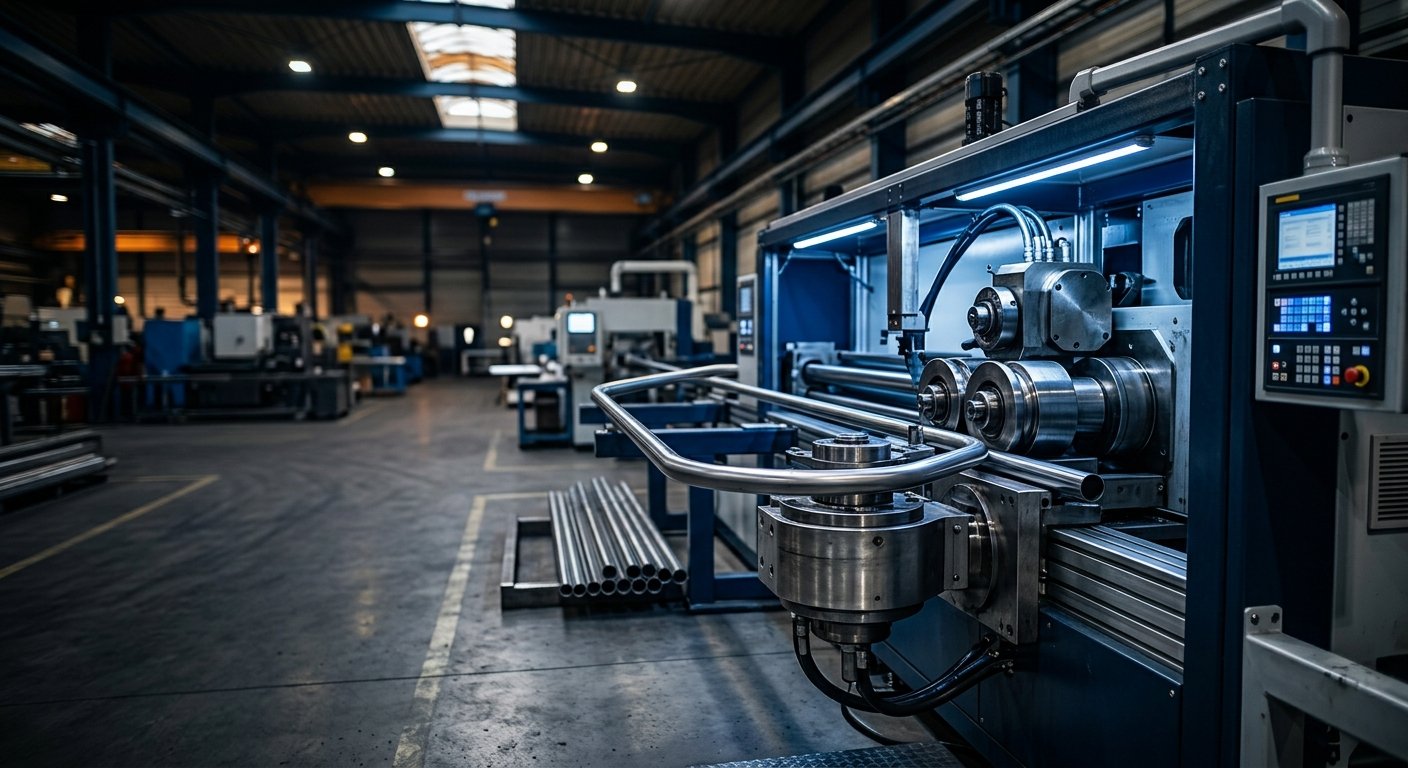
The control system on pre-owned CNC tube benders deserves specific attention. Identify the controller manufacturer, model, and firmware version. Research whether the OEM still supports that control generation—obsolete controls with no available replacement parts create a single point of failure that can sideline a machine indefinitely. Confirm that the programming interface is compatible with your existing CAD/CAM or tube bending software workflow, and that program storage, axis configuration, and springback correction parameters have been reset and documented.
Documentation You Should Require

A credible seller of reconditioned bending machines should provide a structured package of documentation before purchase. At minimum, this should include a scope-of-work detailing all replaced and refurbished components, calibration certificates for measurement instruments used during reconditioning, a dimensional verification report showing actual bend data from test pieces, and a hydraulic system service record. If the machine is intended for aerospace or defense production, traceability of any replaced structural components may also be required under your quality system.
Organizations like the American Society of Mechanical Engineers (ASME) publish standards governing dimensional tolerances for pressure-rated tube and pipe assemblies. If your application requires compliance with ASME B31.3 or similar codes, verify that the refurbished machine is capable of consistently producing bends within the required tolerance envelope before it touches production material.
New vs. Refurbished: Matching the Machine to the Application
| Consideration | Refurbished / Pre-Owned | New Equipment |
|---|---|---|
| Initial capital cost | Lower upfront investment | Higher upfront investment |
| Reconditioning transparency | Variable; requires due diligence | Full OEM documentation standard |
| Control system longevity | Depends on controller age/generation | Current generation, full support cycle |
| Custom configuration | Limited to existing machine architecture | Fully configurable to application specs |
| Training and support | May require third-party arrangement | OEM training and service available |
| Ideal for | Budget-constrained, lower-complexity runs | High-precision, critical-path production |
For high-volume production or critical aerospace and defense applications, new equipment built to your exact specifications often provides better total cost of ownership. The U.S. Manufacturing.gov initiative has emphasized the importance of process reliability and traceability in defense supply chains—factors that are inherently easier to guarantee with new, purpose-configured equipment.
A reconditioned machine is only as reliable as the documentation behind it—and only as capable as the tooling that comes with it.
Tooling: The Variable Most Buyers Underestimate
Tooling condition and compatibility account for a disproportionate share of quality problems on rebuilt pipe bending machines that appeared to function correctly during inspection. Tube bending tooling—bend dies, clamp dies, pressure dies, wiper dies, and mandrel assemblies—wears progressively and is specific to tube OD, wall thickness, material, and centerline radius.
When evaluating a pre-owned CNC tube bender, catalog the complete tooling package included. Confirm that the groove radii are dimensionally correct with actual measurement, not visual inspection. Assess wiper die tips for erosion at the critical tangent point. Budget for tooling replacement or new tooling fabrication as part of your total acquisition cost—this is frequently the step that makes a modestly priced refurbished purchase genuinely cost-effective, or reveals that it isn’t.
Hines Bending Systems supplies tooling designed and manufactured for precision bending applications, with decades of experience developing tooling solutions for demanding materials including stainless steel, titanium, Inconel, and duplex alloys. For engineers exploring both new and pre-owned tube bending machines or pipe bending machines, understanding tooling requirements is as important as evaluating the machine itself.
When requesting a live demonstration of a refurbished machine, bring your own tube material in the OD and wall thickness you intend to run. Observing bend quality on your actual production material is far more informative than watching the machine cycle on the seller’s demonstration stock.
The Support Question Is Not Optional
For aerospace, oil & gas, and petrochemical applications, a tube bending machine is rarely a standalone asset—it’s part of a production system with downstream inspection, documentation, and certification requirements. When that machine has a control fault, a hydraulic issue, or a tooling question, access to competent technical support is not a convenience; it’s a production-critical resource.
Before purchasing any refurbished tube bending machine, clarify exactly who provides service support, what the response commitment is, and whether spare parts for the specific machine generation are reliably available. The National Institute of Standards and Technology’s manufacturing resources consistently identify service and support infrastructure as a key factor in production equipment total cost of ownership. A machine without a clear support path is a risk that compound interest pays on every production shift.
Frequently Asked Questions
What is the difference between a refurbished and a rebuilt tube bending machine?
A rebuilt machine typically involves disassembly to component level, replacement of all worn parts, and reassembly to original specifications—essentially restoring the machine to like-new mechanical condition. A refurbished machine may involve a less comprehensive process: cleaning, adjustment, and replacement of only the most obviously worn items. Always request a detailed scope-of-work to understand exactly what was done before using either term to assess value.
How do I verify a reconditioned bending machine will meet my dimensional tolerances?
Request a dimensional verification report showing actual measured bend data—bend angle, springback correction accuracy, and plane-to-plane positioning—from test bends performed after reconditioning. If possible, perform a live acceptance test using your own tube material and tooling before finalizing the purchase. For critical applications, independent CMM verification of sample bends provides the most defensible documentation.
Are pre-owned CNC tube benders suitable for aerospace applications?
They can be, depending on the specific requirements and quality system in place. Aerospace applications typically require comprehensive process documentation, material traceability, and consistent dimensional repeatability. A pre-owned machine is viable if it has been thoroughly reconditioned, includes verified calibration records, and can be demonstrated to produce bends within the required tolerances on aerospace-grade materials under your quality controls. New equipment purpose-built to the application often provides a clearer compliance path.
What should I budget for tooling when buying a used mandrel pipe bender?
Tooling cost varies significantly based on tube OD, CLR, material type, and whether existing tooling can be refurbished or requires new fabrication. It is prudent to budget for at minimum a wiper die replacement and mandrel inspection as part of any pre-owned purchase. For machines where the included tooling doesn’t match your production requirements, new tooling fabrication can represent a meaningful additional investment that should be factored into total acquisition cost.
How does Hines Bending Systems support customers who need tube bending equipment?
Hines Bending Systems designs and manufactures precision tube and pipe bending equipment in America, with 50 years of expertise serving aerospace, energy, oil & gas, petrochemical, and defense industries—including NASA and military clients. The company provides comprehensive application consultation, tooling support, operator training, and after-sale service to help customers achieve consistent, reliable bending performance in demanding production environments.
Talk to a Tube Bending Specialist
Whether you’re evaluating a refurbished machine or specifying new precision bending equipment for a demanding application, Hines Bending Systems has the expertise to help you make the right decision.

About Hines Bending Systems
Hines Bending Systems is a leading American manufacturer of precision tube and pipe bending equipment serving aerospace, energy, oil & gas, petrochemical, and defense industries. With 50 years of proven expertise and a track record of supplying NASA and military clients, Hines delivers custom bending solutions for demanding applications ranging from high-volume production to specialized one-off projects. The company combines deep technical knowledge with comprehensive support including training and service, positioning itself as a partner in customer success rather than just an equipment supplier. Visit hinesbending.com →