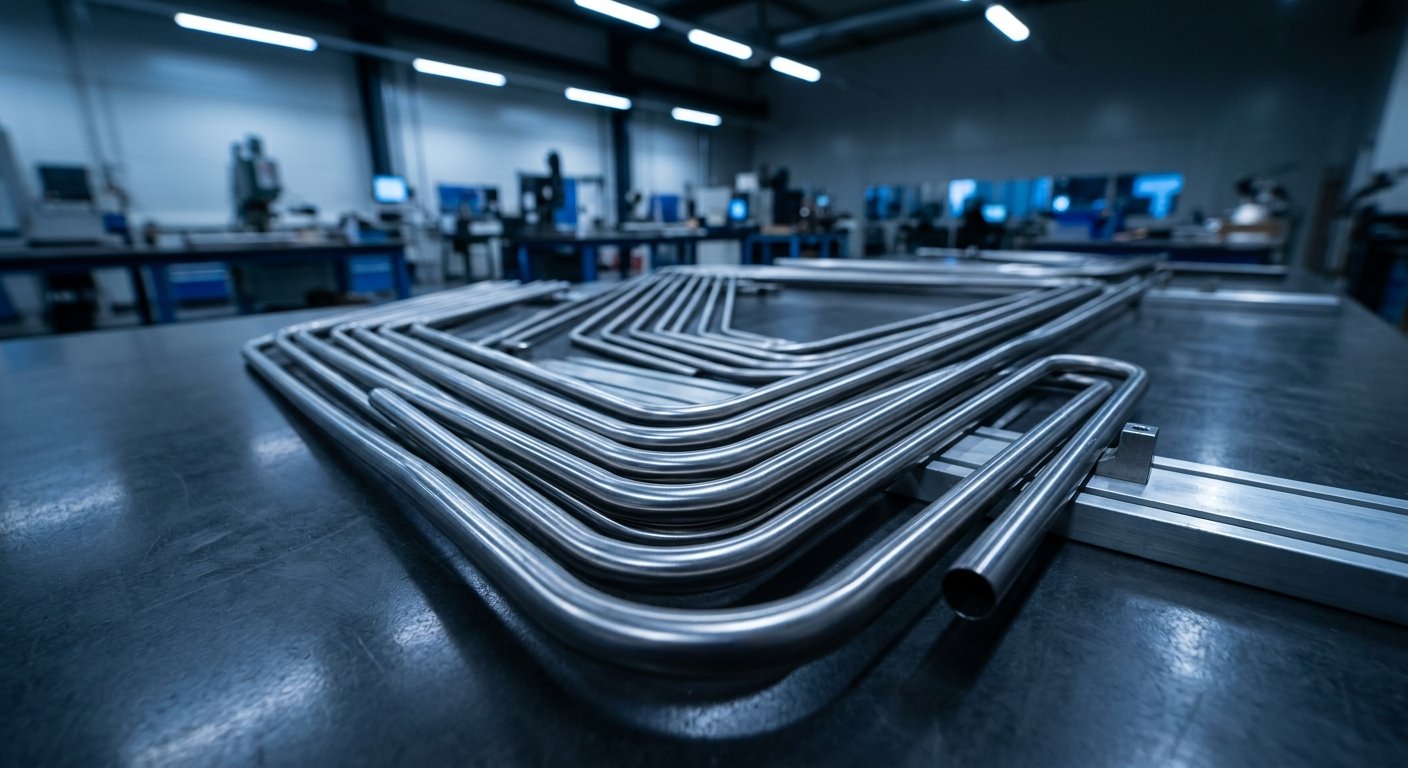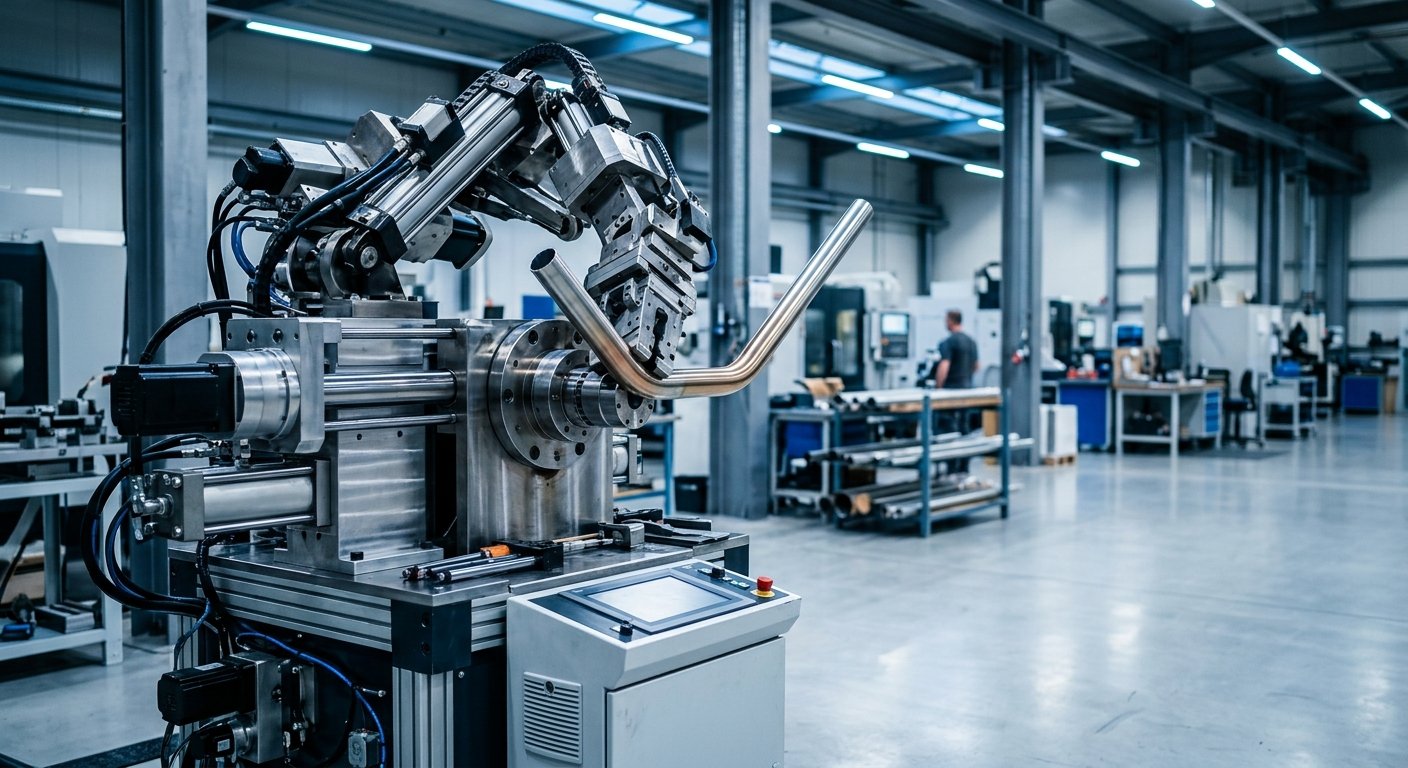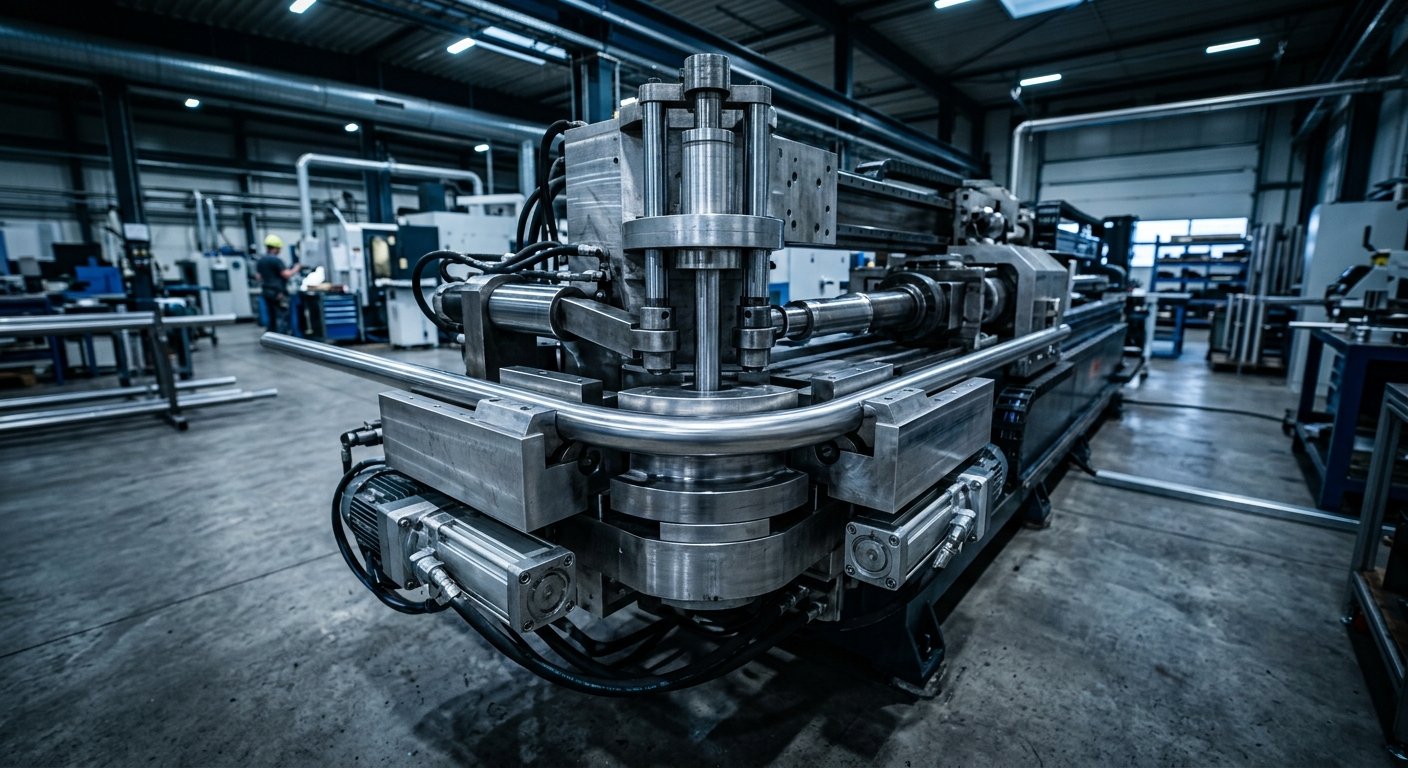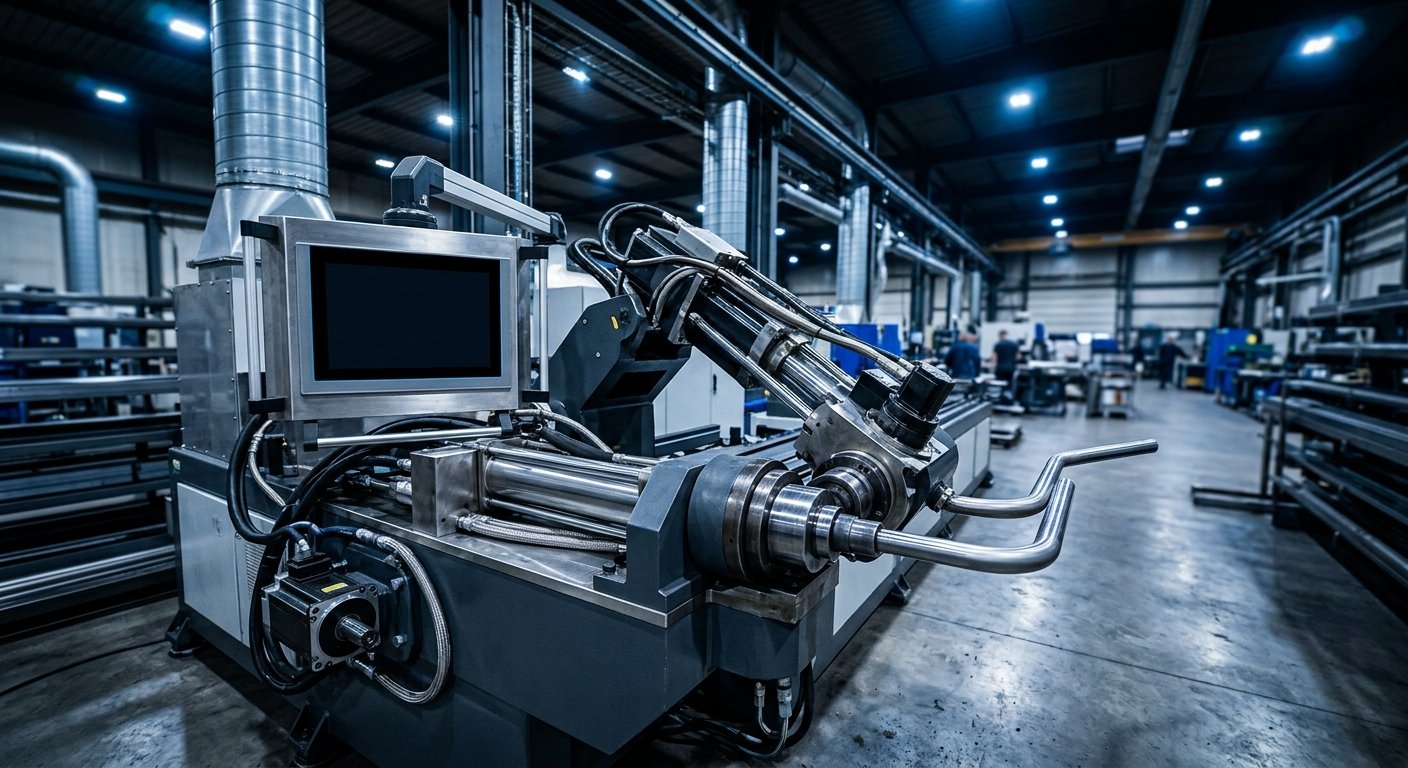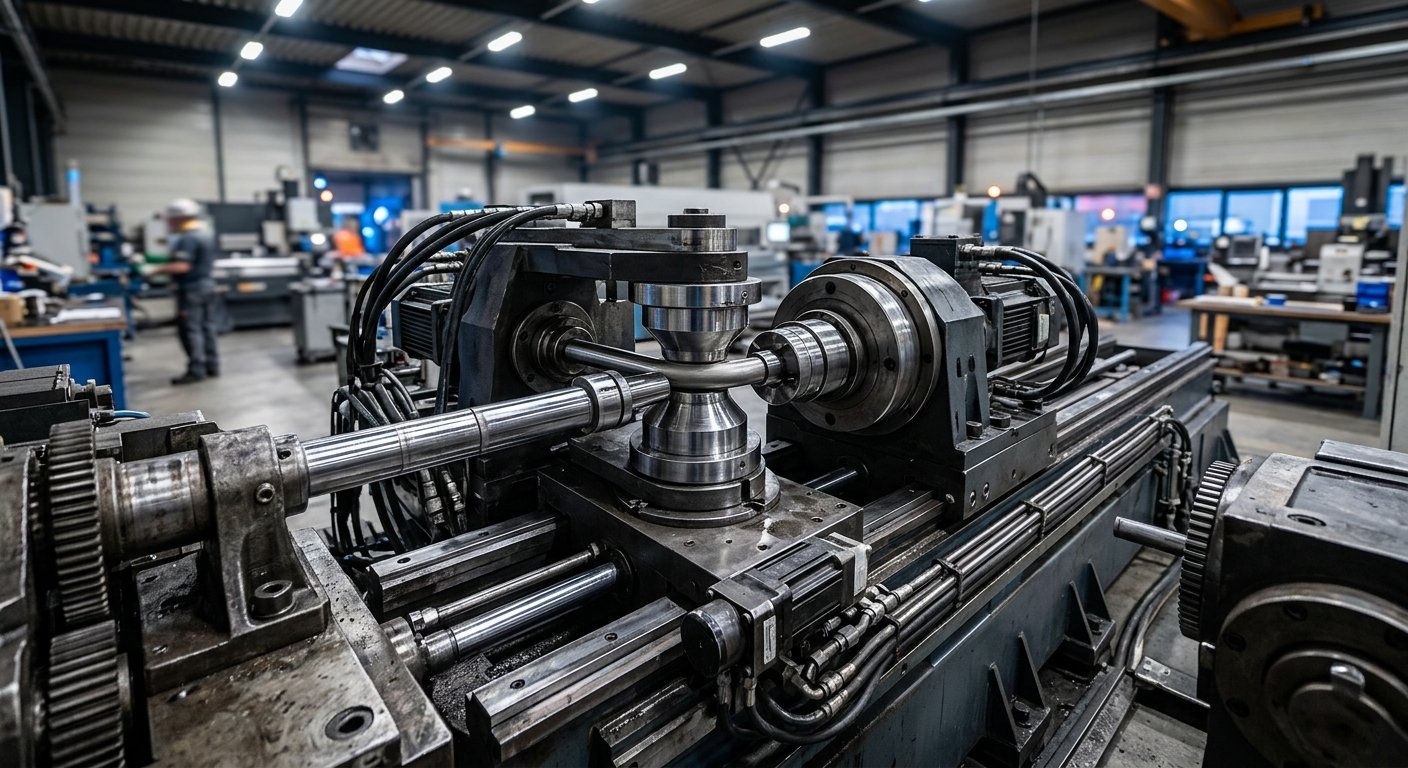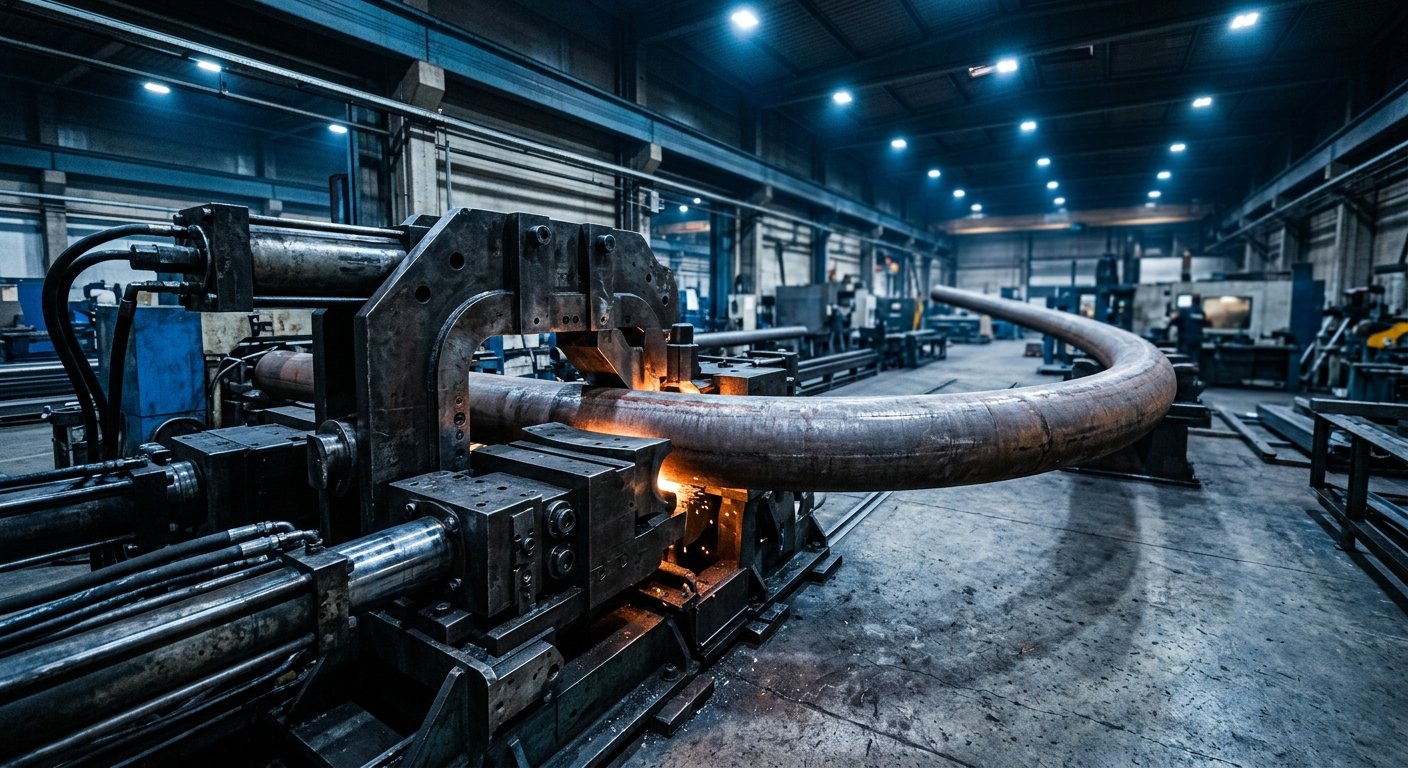
Heavy wall pipe bending requires specialized equipment and technique because standard bending methods generate wall thinning, wrinkling, and ovality that thin-wall pipe can tolerate but thick-wall pipe cannot. Success depends on matching the correct tooling, bend radius, and bending method to the pipe’s wall thickness-to-diameter ratio. This guide applies to engineers and production planners in oil & gas, petrochemical, aerospace, and defense applications.
- Wall thickness-to-diameter ratio (D/t) is the defining factor in selecting process and tooling for heavy wall applications.
- Mandrel bending is the primary method for maintaining dimensional integrity in thick-wall pipe.
- Material springback increases with wall thickness, requiring precise CNC compensation to hit tight tolerances.
- Tooling condition and lubrication have an outsized impact on quality when bending heavy wall sections.
- Custom-configured bending machines outperform off-the-shelf equipment for demanding heavy wall specifications.
What Defines Heavy Wall Pipe
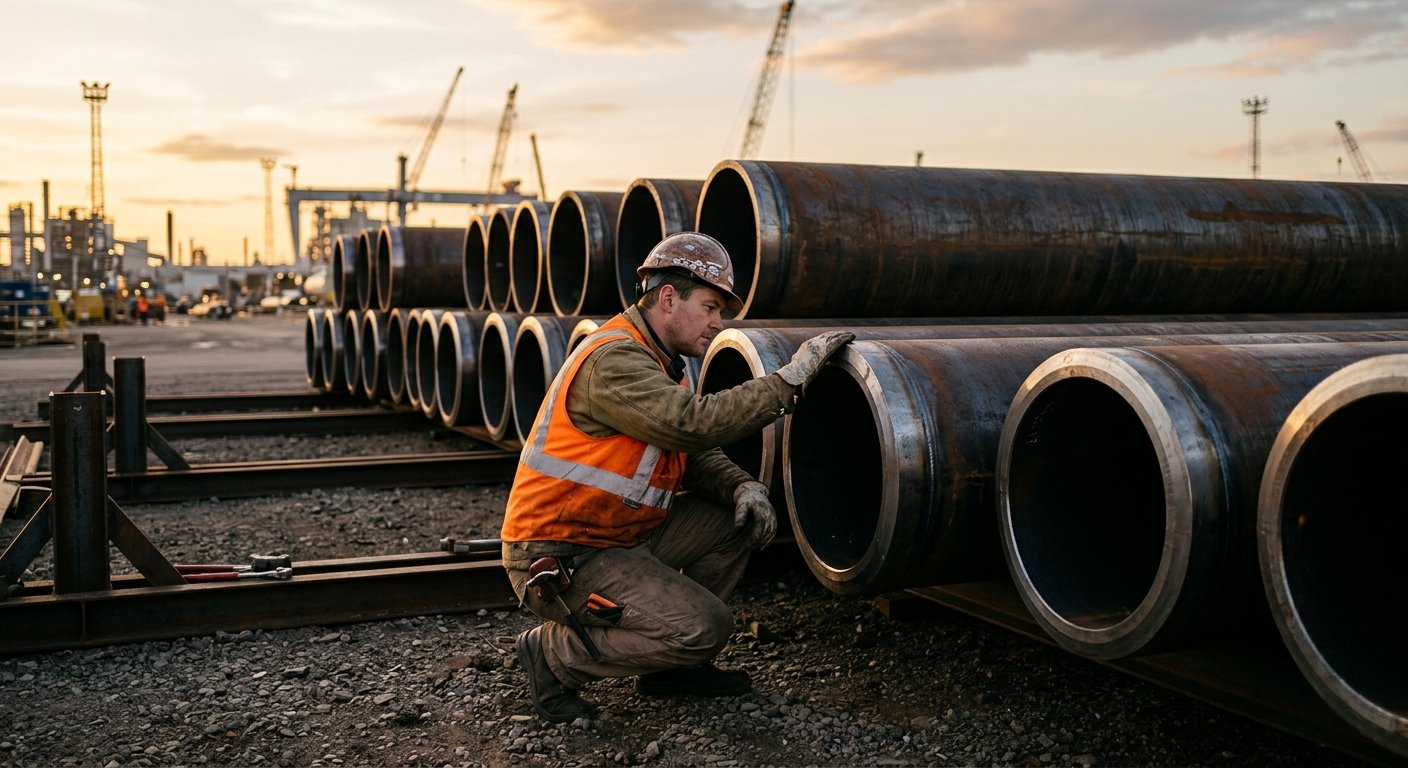
In industrial practice, “heavy wall” generally refers to pipe where the wall thickness-to-outside-diameter ratio (D/t) falls below 15—meaning the wall is thick relative to the pipe’s size. Common examples include Schedule 80, Schedule 160, and XXH (double extra heavy) pipe grades used throughout oil & gas transmission systems, pressure vessel piping, and high-temperature process lines. These pipes resist internal pressure and mechanical load, which is exactly why bending them introduces challenges that don’t exist with thin-wall tubing.
The ASME B31.3 Process Piping standard governs minimum wall thickness requirements and bend quality criteria for industrial process applications, including permissible thinning percentages on the extrados of a bend. Engineers specifying bent pipe assemblies for petrochemical or refinery applications should be familiar with these requirements before selecting bending parameters.
Exceeding permissible wall thinning on the extrados of a heavy wall bend can cause a rejection under quality audits or hydrostatic testing. Calculate your minimum post-bend wall thickness before finalizing your centerline radius.
Why Heavy Wall Bending Is Technically Demanding
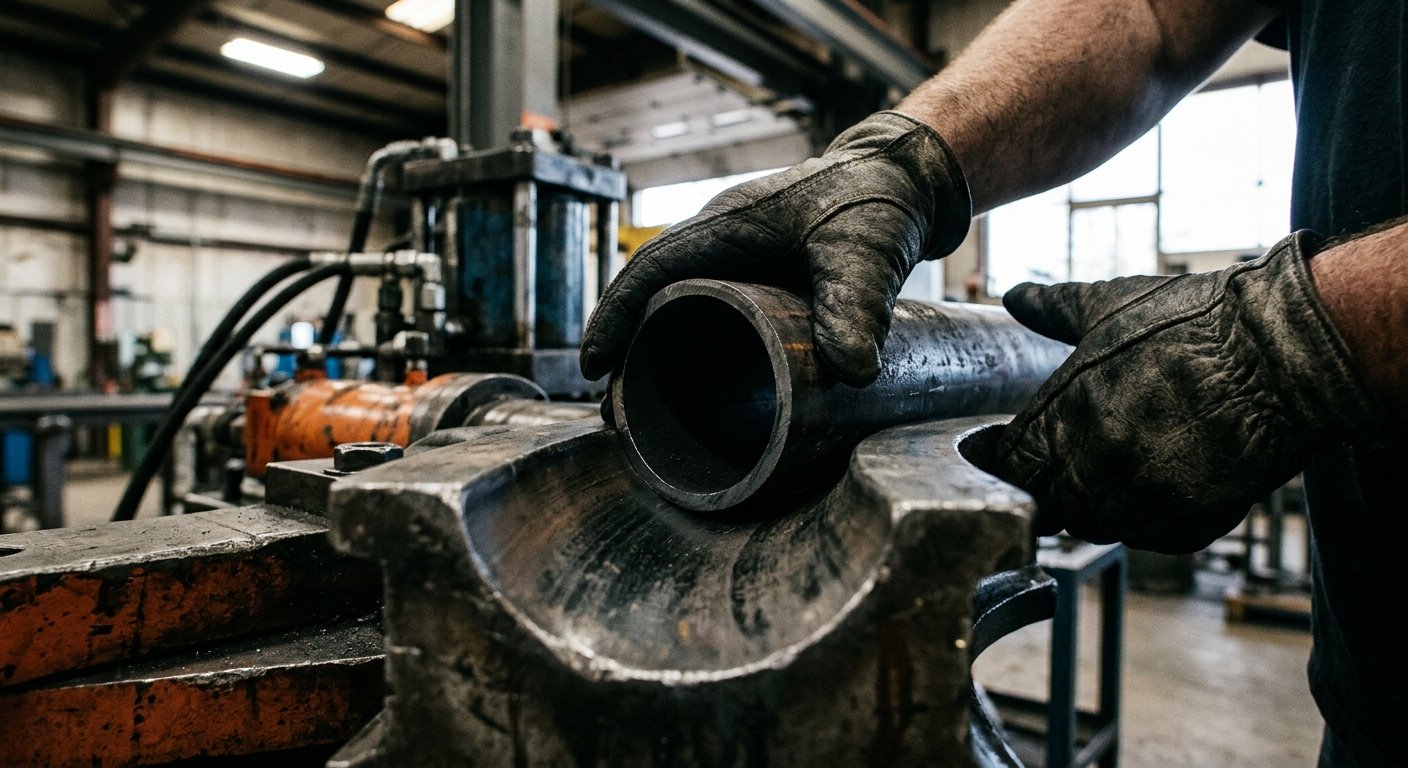
Three mechanical phenomena make heavy wall pipe bending fundamentally different from standard tube bending operations:
- Higher bending forces: Thick walls require substantially greater force to yield the material. Machines must deliver adequate tonnage without deflection in the tooling stack.
- Increased springback: Heavy wall pipe stores more elastic energy during the bend. The material springs back further after the bending force is released, requiring deliberate overbend compensation built into the CNC program.
- Ovality and wall thinning: Without internal support, the cross-section wants to collapse on the intrados and flatten on the extrados. In heavy wall pipe, ovality is harder to correct after the fact and may render the assembly non-conforming.
These factors combine to make tooling selection and machine capability the two most critical variables in a heavy wall bending operation. Attempting to bend heavy wall pipe on a machine that was sized for thinner material typically produces out-of-tolerance parts and premature tooling wear.
Core Bending Methods for Heavy Wall Applications
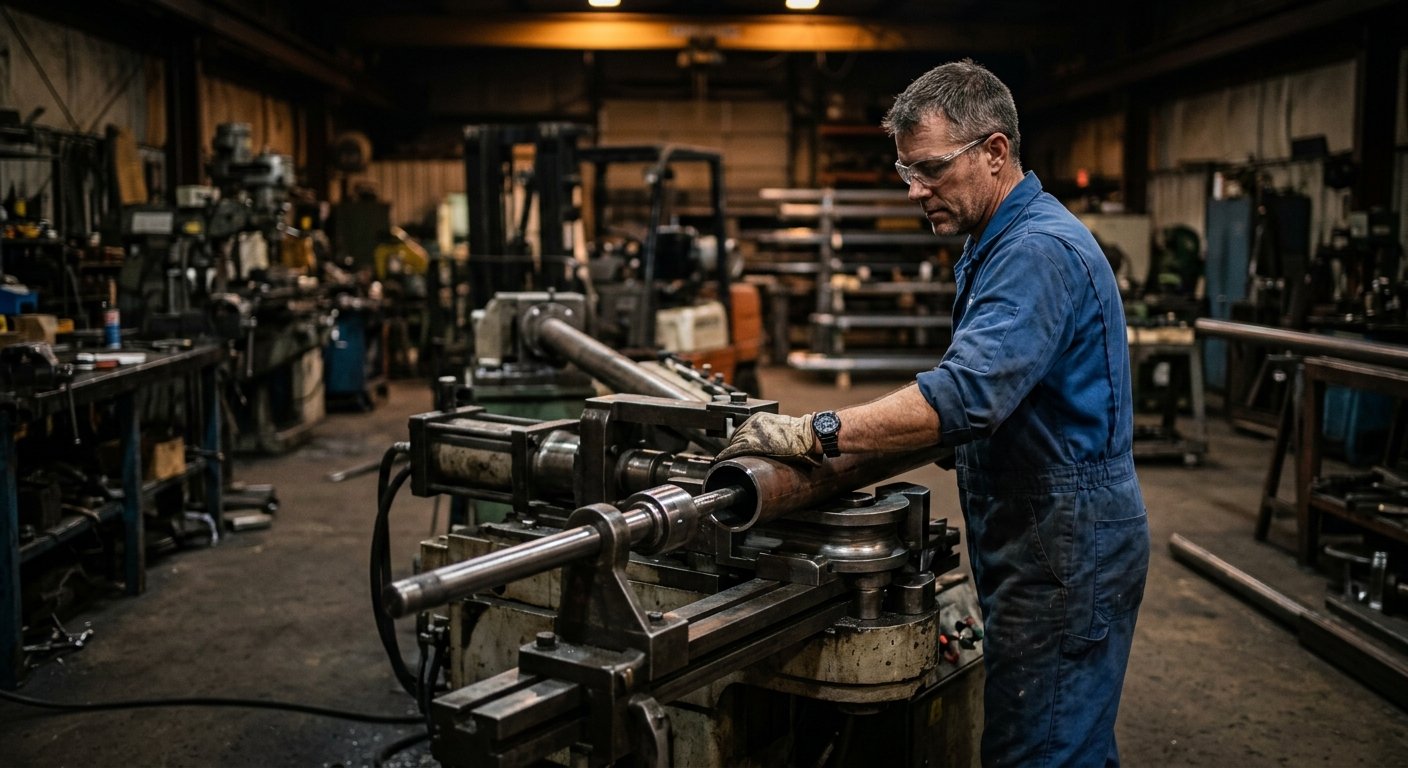
Mandrel Rotary Draw Bending
Mandrel rotary draw bending is the dominant process for precision heavy wall pipe bending in demanding industries. The pipe is drawn around a precision bend die while a mandrel—inserted inside the pipe—provides internal support at the point of bending. For heavy wall applications, a solid or ball mandrel positioned at the tangent point prevents ovality and controls wall thinning. A wiper die on the intrados prevents wrinkling.
This method supports tight centerline radii (as low as 1.5D in some applications), maintains dimensional consistency across production runs, and is compatible with CNC bending machines that log and repeat springback compensation automatically. It is the preferred method for aerospace structural tubing, defense hydraulic lines, and high-pressure process pipe.
Push Bending and Roll Bending
Push bending—where the pipe is pushed through a set of guides against a former—works for larger radius bends and is common in structural applications. Roll bending (three-roll pyramid) is used for large-diameter, large-radius pipe sections found in pressure vessel work and shipbuilding. Neither method provides the internal support of a mandrel, so they are generally limited to heavier wall ratios where the section is stiff enough to resist ovality without internal tooling. Neither is well-suited to tight radii or applications with strict ovality limits.
| Criteria | Mandrel Draw Bending | Roll / Push Bending |
|---|---|---|
| Tight radius capability | Yes (1.5D–3D) | Limited (typically >5D) |
| Ovality control | Excellent | Moderate |
| CNC repeatability | High | Moderate |
| Best application | Aerospace, oil & gas, defense | Structural, large-diameter |
| Tooling complexity | High | Low to moderate |
Equipment Requirements for Heavy Wall Pipe Bending
Selecting the right industrial pipe bender for heavy wall work begins with understanding the force requirements. The machine must deliver enough clamping force to hold the pipe without slip, enough bend force to yield the section, and enough boost force (if push-assist is used) to manage wall thinning on tight radii. Undersized machines flex under load, which introduces angular error and accelerates die wear.
For heavy wall work in demanding environments, CNC tube benders with closed-loop servo control provide the repeatability required to maintain angular accuracy across a production batch. Modern CNC bending machines store springback tables by material heat lot and can apply adaptive correction automatically—critical when bending alloy steels, stainless, and duplex grades that exhibit significant springback variation.
When specifying a bending machine for heavy wall stainless or duplex pipe, ask for a machine with pressure die assist. This feature applies a forward force on the pressure die during bending, which reduces extrados wall thinning and expands the range of achievable radii.
Tooling is equally important. For heavy wall applications, bend dies, clamp dies, and pressure dies should be machined to close tolerances from hardened tool steel. Tooling that fits the pipe outside diameter precisely—neither loose nor undersized—minimizes mark-off and controls ovality. Hines Bending Systems designs and manufactures tooling matched to specific pipe dimensions and materials, ensuring compatibility between machine and toolset for applications ranging from standard carbon steel to nickel alloys.
Those evaluating pipe bending machines for heavy wall duty should also review available tube bending machine configurations for smaller-diameter heavy wall tubing applications common in aerospace and defense hydraulic systems.
Material Considerations
The pipe material significantly affects bending parameters. Carbon steel is relatively forgiving; austenitic stainless steels work-harden during bending and require more force than their yield strength suggests; duplex and super-duplex grades are even more demanding; and chrome-moly alloys (such as P91 used in power generation) may require pre- and post-bend heat treatment per applicable codes.
Lubrication choice matters considerably for heavy wall bending. Inadequate lubrication between the mandrel and pipe bore generates heat and galling, which degrades the bore surface and shortens mandrel life. For stainless and alloy pipe, chloride-free mandrel lubricants should be specified to prevent stress corrosion cracking initiation in the bore.
The U.S. Department of Energy and industry codes such as ASME B31.1 (power piping) specify material and fabrication requirements for piping used in nuclear and high-energy applications—additional constraints that affect both bending process design and quality documentation requirements.
Quality and Inspection Standards
Heavy wall bent pipe assemblies in oil & gas, petrochemical, and defense applications are subject to dimensional inspection, visual examination, and in many cases non-destructive examination (NDE). Key inspection criteria include:
- Bend angle within specified tolerance (typically ±0.5° or tighter for aerospace)
- Ovality within allowable percentage of nominal outside diameter
- Minimum wall thickness on the extrados at or above the ASME or project specification limit
- Surface condition free of cracks, wrinkles, or die marks exceeding allowed depth
CNC bending machines simplify this process by generating digital records of each bend cycle, supporting first-article inspection documentation and ongoing process control. Hines Bending equipment, trusted by NASA and military organizations for precision-critical applications, is built to support the traceability requirements common in aerospace and government contract work.
Tooling precision and machine rigidity are not optional extras in heavy wall bending—they are the process.
When to Consider Used Equipment
Not every operation requires a new machine. For facilities expanding heavy wall capability on a defined budget, quality-certified used pipe bending equipment can offer a practical path, provided the machine has been inspected, reconditioned, and is confirmed capable of the required tonnage and throat dimensions. The key questions are whether the machine’s control system can manage springback compensation for your material grades and whether compatible tooling is available.
Frequently Asked Questions
What pipe schedules qualify as heavy wall?
While there is no single universal cutoff, Schedule 80 and heavier (including Schedule 120, 160, and XXH) are commonly treated as heavy wall in bending specifications. The practical test is the D/t ratio: when outside diameter divided by wall thickness falls below 15, the pipe requires heavy wall bending considerations in tooling and machine selection.
Do I always need a mandrel for heavy wall pipe bending?
Not always. At large centerline radii (typically above 5D), heavy wall pipe may be bent without internal mandrel support because the section is stiff enough to resist ovality. For tighter radii—particularly those required in process piping, aerospace, and defense hydraulic systems—a mandrel is essential to maintain dimensional integrity and meet ovality specifications.
How is springback managed in CNC heavy wall bending?
Modern CNC tube benders calculate springback compensation by overbending the pipe to a programmed angle beyond the target, then allowing the material to spring back to the intended angle. The compensation value is established during first-article setup and stored in the CNC program. For heavy wall alloy pipe with variable springback, adaptive control systems update this compensation automatically based on measured results.
What are the signs that a bending machine is undersized for heavy wall work?
Watch for angular inconsistency between bends (springback variation caused by machine deflection), slippage of the clamp die during bending, premature wear on the bend and pressure dies, and difficulty achieving tight radii without wrinkling. These are indications that the machine lacks sufficient clamping force or structural rigidity for the pipe size and wall thickness being processed.
Can the same machine bend both light and heavy wall pipe?
Yes, within limits. A machine sized for heavy wall duty will typically handle lighter wall pipe in the same diameter range with appropriate tooling changes. The inverse is not true—a machine sized for thin-wall work lacks the force capacity and structural rigidity for heavy wall bending. Specifying a machine to your heaviest anticipated application is the correct approach.
Get Expert Guidance on Your Heavy Wall Bending Application
Contact Hines Bending Systems to discuss your specific pipe dimensions, material grades, and production requirements with engineers who have supported demanding applications for NASA, military, and industrial clients for 50 years.

About Hines Bending Systems
Hines Bending Systems is a leading American manufacturer of precision tube and pipe bending equipment serving aerospace, energy, oil & gas, petrochemical, and defense industries. With 50 years of proven expertise and a track record of supplying NASA and military clients, Hines delivers custom bending solutions for demanding applications ranging from high-volume production to specialized one-off projects. The company combines deep technical knowledge with comprehensive support including training and service, positioning itself as a partner in customer success rather than just an equipment supplier. Visit hinesbending.com →