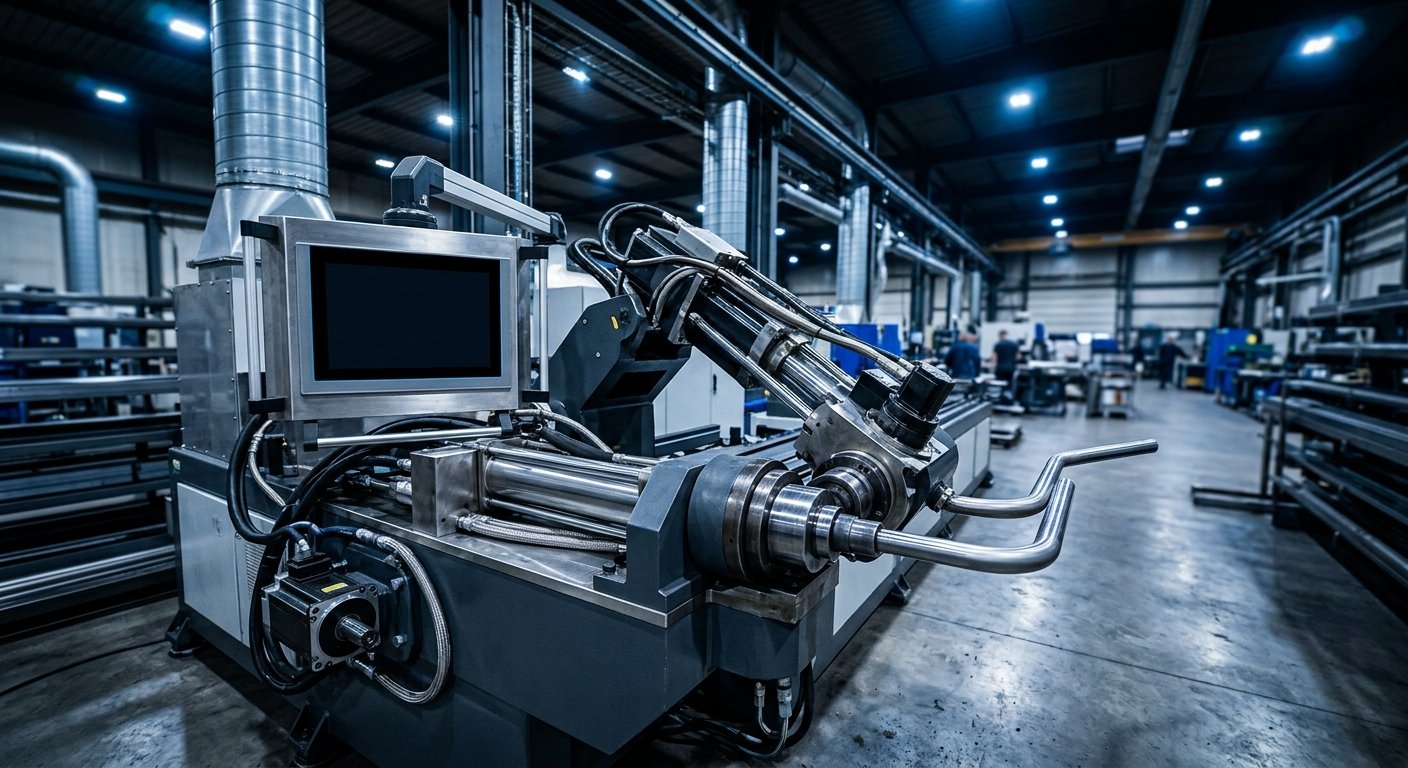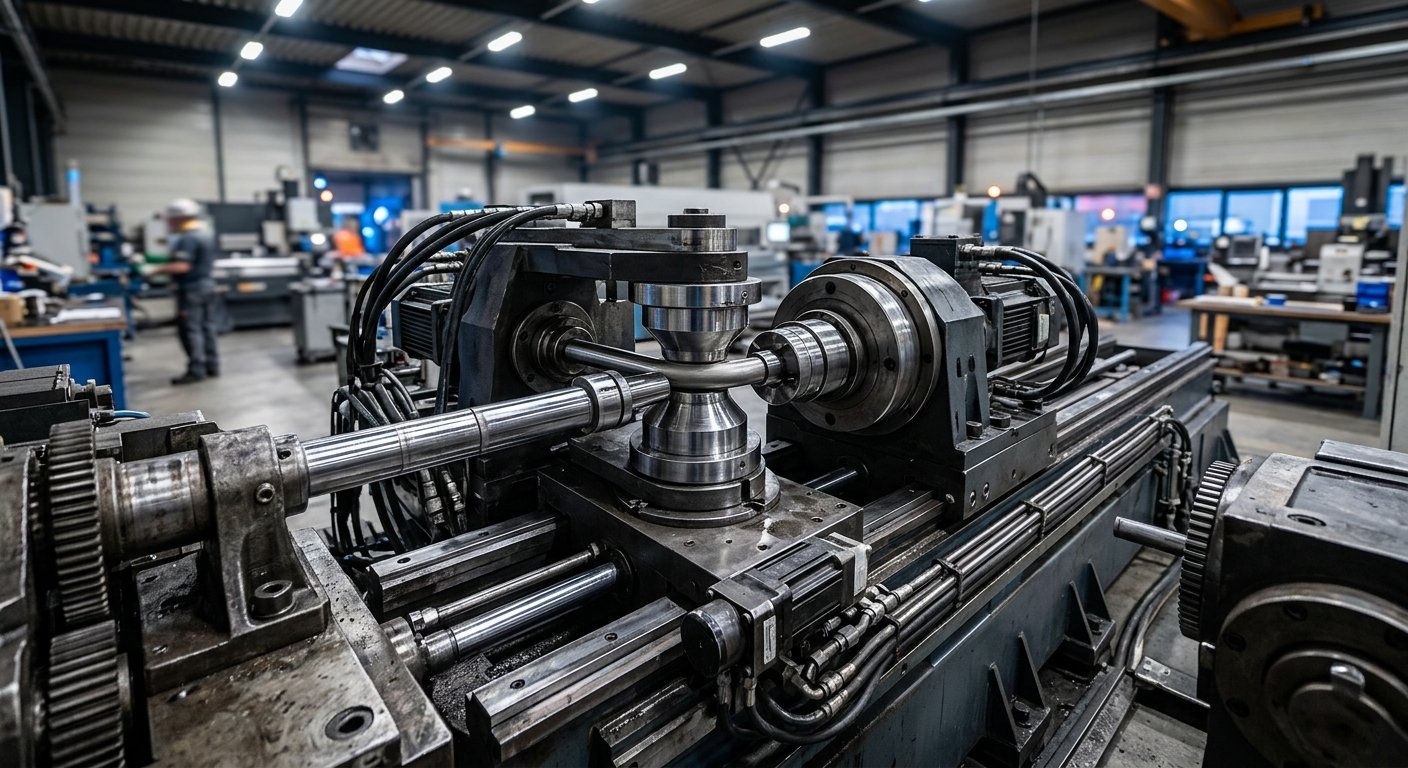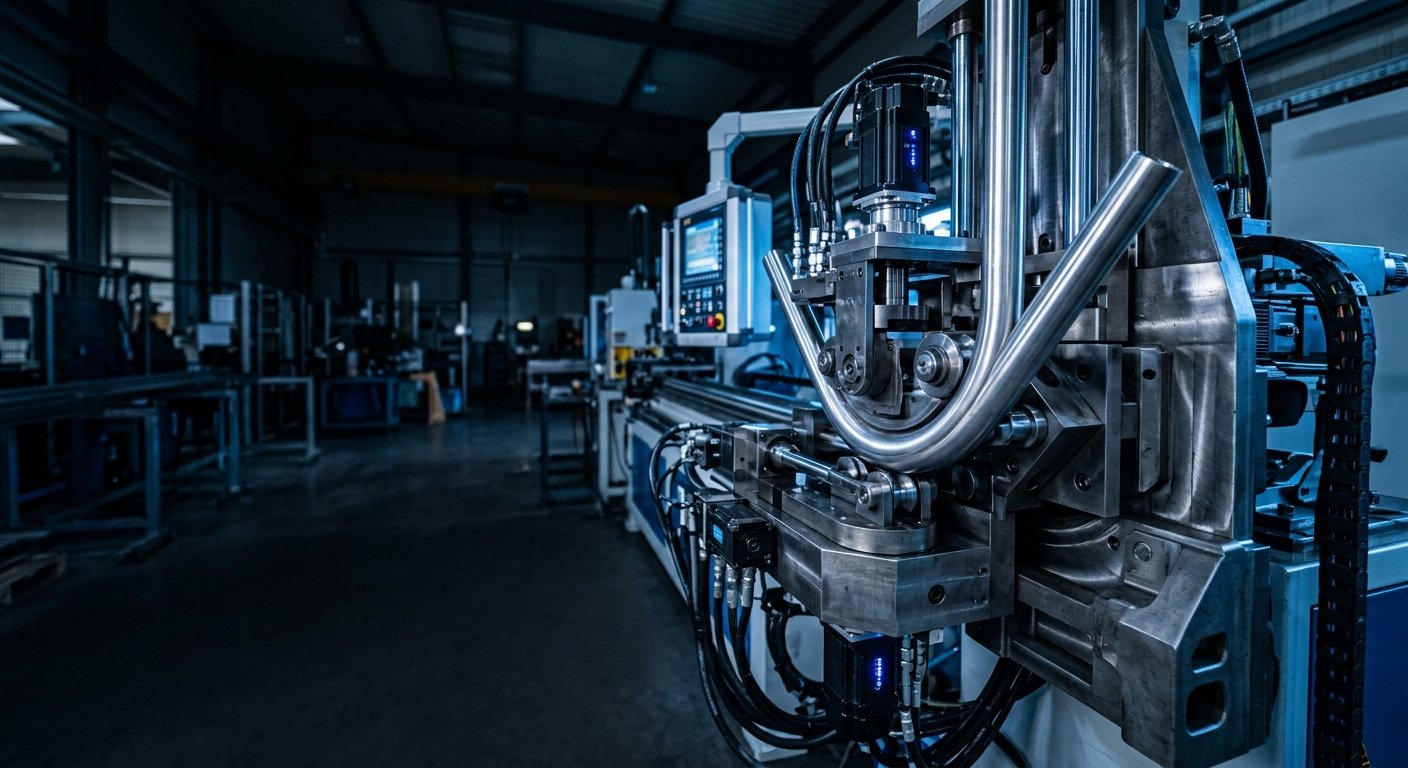
When a standard off-the-shelf bending machine simply cannot meet the requirements of your application, what are your options? For engineering teams working in aerospace, defense, oil & gas, or petrochemical manufacturing, the answer increasingly points to custom CNC bending systems—equipment engineered from the ground up to solve problems that general-purpose machines were never designed to handle.
Specialized manufacturing demands rarely fit neatly into catalog specifications. Tight-radius bends in titanium aerospace tubing, high-volume production of hydraulic lines for military vehicles, or complex multi-plane bending for subsea petrochemical assemblies all require machines built around the application rather than the other way around. Understanding what separates a truly engineered bending solution from a modified standard machine is essential for any technical decision-maker specifying precision bending equipment in 2026.
What Makes a Bending System Truly “Custom”?
The term “custom” is used loosely in industrial equipment—but in the context of CNC tube and pipe bending, it carries specific technical meaning. A genuinely custom CNC bending system is designed to match your material specifications, production volumes, part geometry, and downstream process requirements, rather than forcing you to adapt your process to the machine’s limitations.
Key engineering parameters that drive customization include:
- Material type and wall thickness: Stainless steel, Inconel, titanium, and carbon steel all behave differently under bending forces. Springback characteristics, bend radii, and tooling requirements vary significantly.
- Tube or pipe diameter range: A single machine may need to handle multiple diameters, requiring quick-change tooling systems and programmable clamp die configurations.
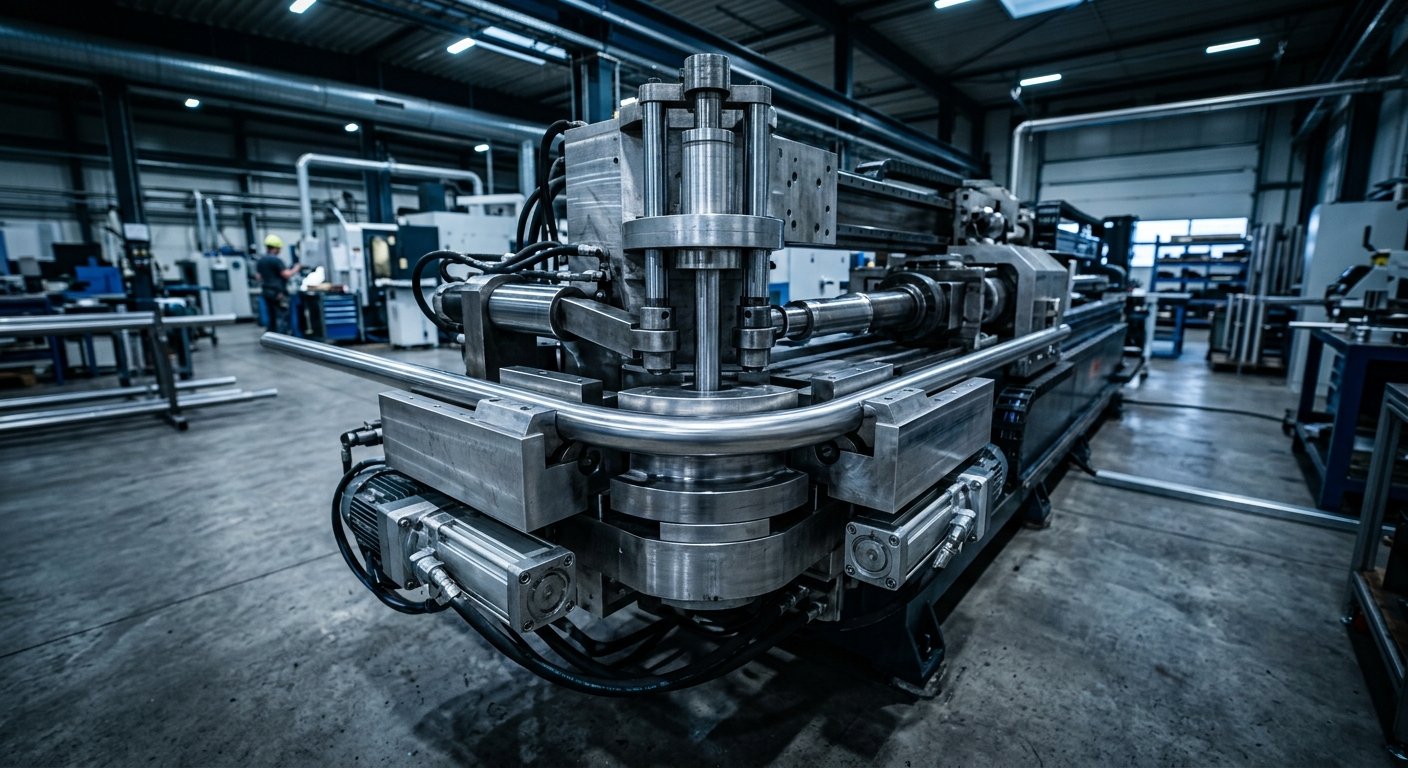
- Bend complexity: Multi-stack tooling, compound bend angles, and tight centerline radii demand custom carriage geometry and CNC programming architectures that off-the-shelf machines don’t provide.
- Production environment: Cleanroom compatibility for aerospace, explosion-proof electrical systems for oil & gas facilities, or space-constrained floor layouts all affect machine design at the structural level.
- Cycle time requirements: High-volume production lines serving automotive or defense contracts require servo-driven systems optimized for rapid, repeatable cycles without sacrificing dimensional accuracy.
These aren’t minor adjustments—they represent fundamental engineering choices that affect the entire machine architecture. That’s why partnering with a specialized bending machine manufacturer with deep application knowledge is critical to getting the right outcome.
Application-Specific Engineering: Industry by Industry
Aerospace and Defense
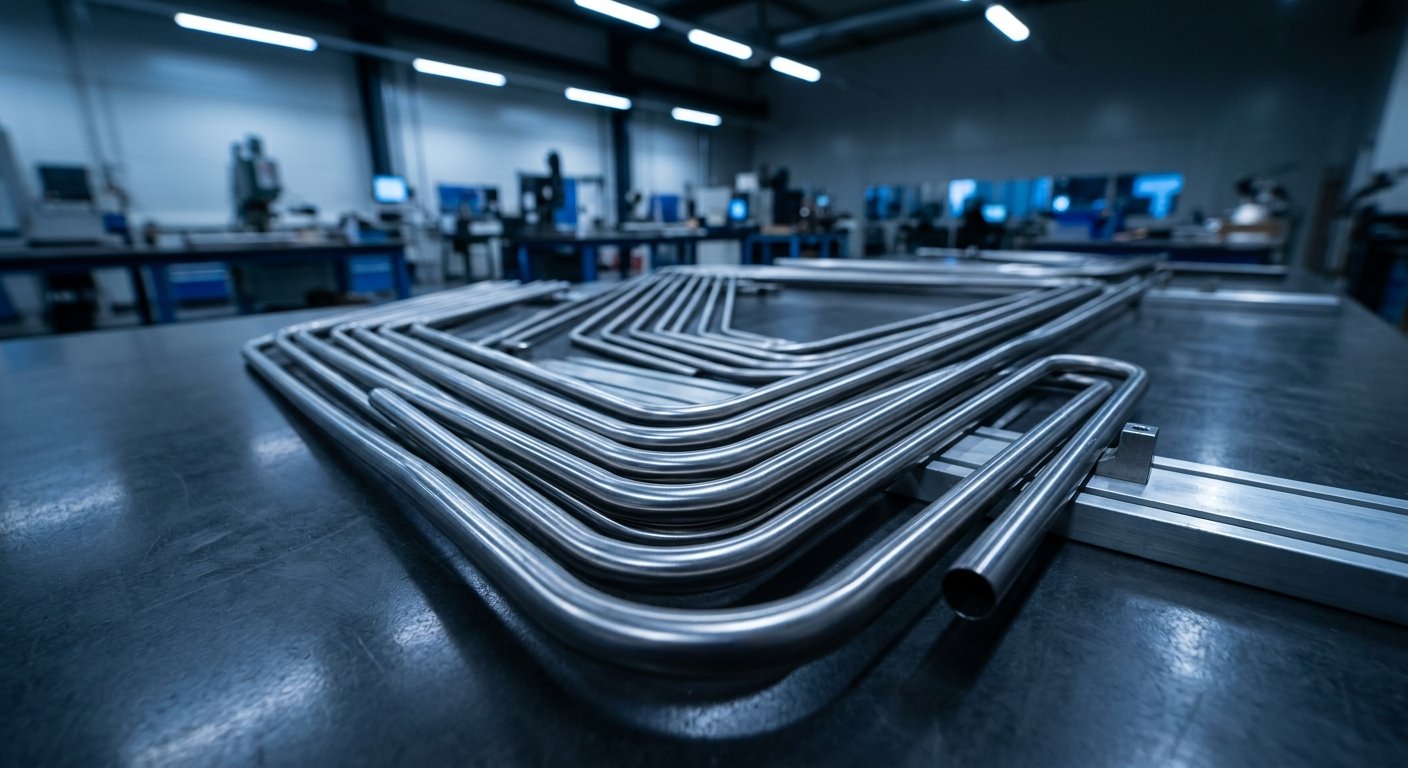
Aerospace tubing applications represent some of the most demanding requirements in precision manufacturing. Hydraulic, fuel, and pneumatic lines on aircraft and spacecraft must meet stringent dimensional tolerances defined by standards like SAE aerospace standards and military specifications. Wall thinning, ovality, and springback must be controlled to within fractions of a millimeter.
For these applications, engineered bending solutions typically incorporate:
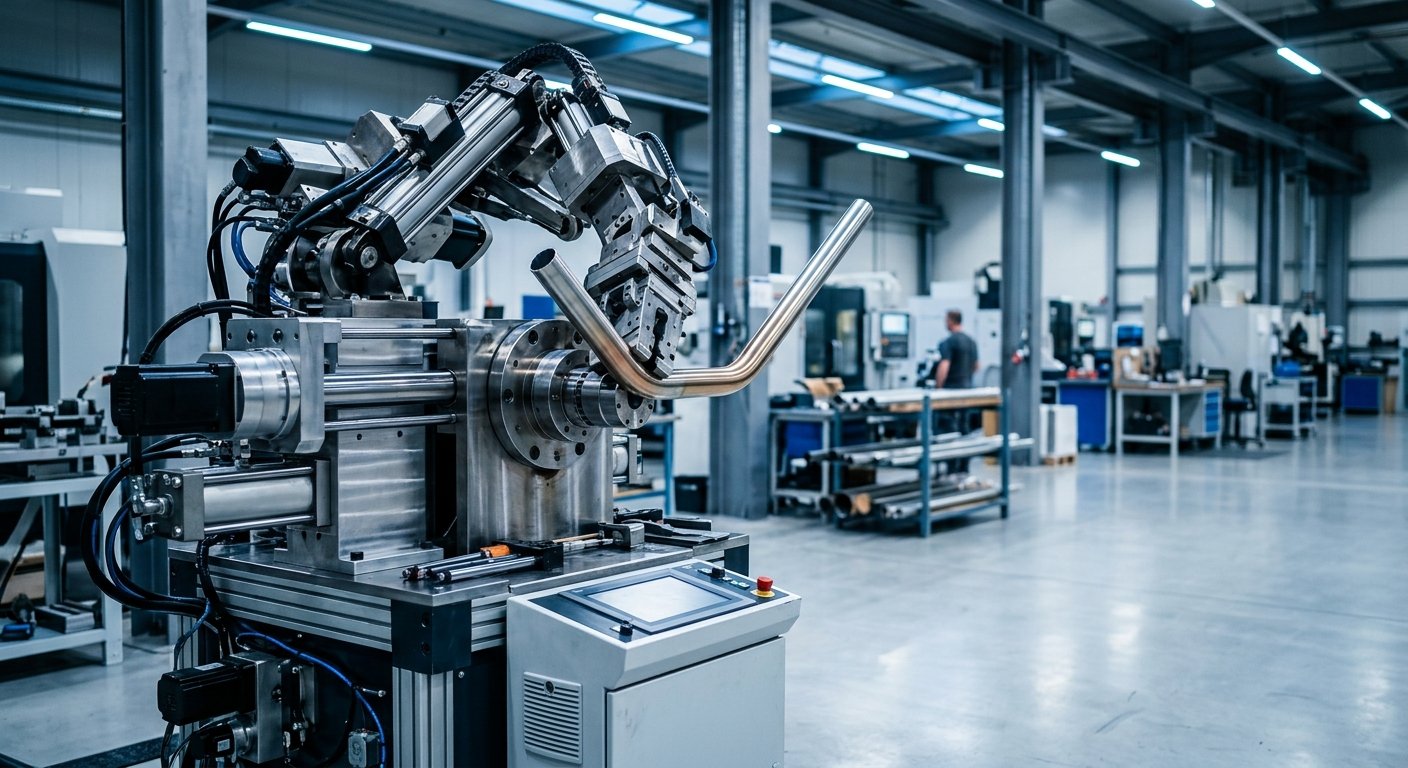
- Servo-electric drives for precise, repeatable torque control
- Mandrel bending capability to prevent internal collapse in thin-wall tubing
- Wiper die systems engineered to specific material and radius combinations
- Integrated part verification and data logging for AS9100 quality documentation
Hines Bending Systems has supplied precision bending equipment to NASA and military clients, which means our engineering team understands the documentation, traceability, and performance standards these environments demand. That experience directly informs how we design custom bending solutions for aerospace and defense applications today.
Oil & Gas and Petrochemical
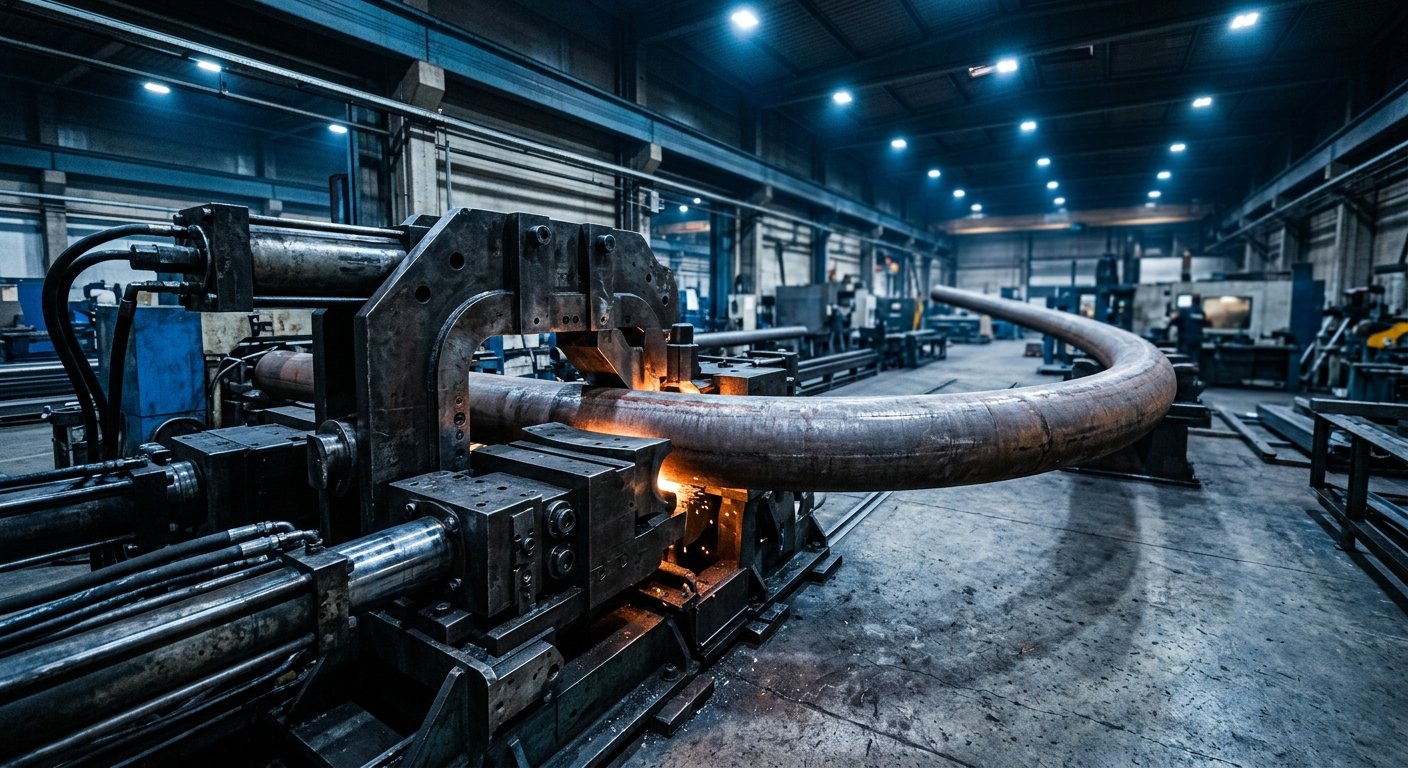
Subsea and surface installations in oil & gas present a different set of engineering challenges. Pipe dimensions can be large, materials are often exotic alloys resistant to corrosion and hydrogen embrittlement, and bend geometry must maintain pressure integrity under extreme service conditions. The ASME B31.3 Process Piping standard governs much of this work, requiring documented process control and traceability throughout fabrication.
Custom industrial bending equipment for these sectors often requires:
- Heavy-duty structural frames capable of handling large-diameter pipe without deflection
- Extended bend arm travel for long tangent lengths common in process piping
- Explosion-proof or ATEX-rated electrical enclosures for use in hazardous locations
- Custom tooling for duplex stainless, chrome-moly, and nickel alloy pipe
Energy and Power Generation
Whether it’s conventional power generation infrastructure or the growing renewable sector, energy applications demand bending equipment capable of handling pressure-rated tubing and structural pipe with consistent, auditable results. Application-specific bending machines in this sector are frequently built for integration into larger fabrication cells, requiring precise machine interfaces, PLC communication protocols, and compatibility with downstream inspection equipment.
The Engineering Design Process for Custom CNC Systems
Developing a custom CNC bending system isn’t a catalog exercise—it’s a structured engineering engagement. The process typically moves through several phases:
- Application analysis: Defining the full scope of materials, diameters, wall thicknesses, bend radii, production volumes, and quality requirements. This is where experienced application engineers ask the questions that prevent costly redesigns later.
- Concept development: Translating application requirements into machine architecture—drive type, bend arm configuration, carriage design, tooling systems, and control platform.
- Tooling engineering: Designing bend dies, clamp dies, pressure dies, mandrels, and wiper dies specific to your material and geometry. Tooling is often the difference between a successful process and a defective one.
- Controls and software integration: Modern CNC bending systems use sophisticated control software capable of storing hundreds of part programs, managing springback compensation automatically, and integrating with factory MES or ERP systems.
- Factory acceptance testing: Before shipment, the machine is validated against your actual parts or representative samples, verifying dimensional accuracy and cycle performance to agreed specifications.
- Installation, training, and commissioning: The machine performs to specification only when operators understand its capabilities. Comprehensive training ensures your team can leverage the full capability of the equipment from day one.
CNC Control Technology in 2026
CNC bending control platforms have advanced considerably, and today’s systems offer capabilities that directly improve part quality and production efficiency. Automatic springback angle correction, real-time bend force monitoring, and digital twin simulation of bend sequences allow engineers to validate programs before running production parts.
Modern custom CNC bending systems also support networked production environments. Integration with digital quality systems, barcode or RFID part tracking, and remote diagnostics capability reduces downtime and supports lean manufacturing objectives. For high-mix, lower-volume environments common in aerospace or defense contract manufacturing, intuitive part program management is essential—operators should be able to call up a new part configuration quickly and confidently.
Our tube bending machines and pipe bending machines are designed with these operational realities in mind, and custom configurations extend these capabilities to meet the most demanding production environments.
Why American Manufacturing Matters for Custom Equipment
Sourcing custom industrial bending equipment from an American manufacturer offers concrete practical advantages beyond supply chain resilience. Engineering collaboration is more effective when your team can visit the facility, review designs in person, and engage directly with the engineers building your machine. Lead time for modifications, replacement parts, and tooling support is significantly reduced when manufacturing and support operations are domestic.
With 50 years of tube and pipe bending expertise and American manufacturing at its core, Hines Bending Systems supports customers through the full lifecycle of their equipment—not just through the sale. That long-term partnership approach, backed by a track record trusted by NASA and the U.S. military, represents a different category of relationship than transactional equipment procurement.
Frequently Asked Questions
How long does it typically take to design and build a custom CNC bending system?
Timelines vary based on complexity, but most custom engineered bending solutions require between 16 and 36 weeks from design completion to factory acceptance testing. Complex multi-axis systems with specialized tooling or integration requirements may require longer lead times. Early engagement with the manufacturer during your project planning phase allows for realistic scheduling and design optimization.
What information do I need to provide to specify a custom bending machine?
At minimum, you should be prepared to share material specifications (type, diameter, wall thickness), required bend radii and angles, production volume expectations, part drawings or bend data, dimensional tolerances, and any environmental or regulatory constraints for the installation location. The more complete your application data, the more accurately the machine can be engineered to your requirements.
Can a custom CNC bending system handle multiple tube or pipe sizes?
Yes. Multi-stack tooling heads and quick-change die systems allow a single machine to accommodate a range of diameters and bend radii. The practical range depends on the machine’s structural design and the tooling configuration. Application-specific bending machines designed for high-mix production environments are specifically engineered to minimize changeover time while maintaining consistent accuracy across the part family.
What’s the difference between a custom bending machine and a modified standard machine?
A modified standard machine starts with an existing platform and adapts it—which can be cost-effective for applications that are close to standard requirements. A fully custom CNC bending system is engineered from the structural frame up around your specific application. For demanding materials, unusual geometries, or production environments that fall outside standard parameters, a purpose-engineered solution typically delivers better performance, longer service life, and lower total cost of ownership.
Does Hines Bending Systems provide operator training for custom equipment?
Yes. Comprehensive training is a standard part of our customer support commitment. Training covers machine operation, CNC programming, tooling setup and maintenance, and safety procedures. We also provide ongoing service support to keep your equipment performing at specification throughout its operational life.
Engineering the Right Solution Starts with the Right Partner
Selecting custom industrial bending equipment is a significant technical and business decision. The right machine—properly engineered for your materials, geometries, production volumes, and operating environment—delivers consistent quality, operational efficiency, and long service life. The wrong choice creates chronic quality problems, production bottlenecks, and costly modifications.
Hines Bending Systems brings 50 years of application-specific engineering expertise, American manufacturing quality, and a proven track record with the most demanding customers in aerospace, defense, and energy to every custom project. If you’re evaluating options for a specialized bending application, we’re ready to engage at the engineering level.
Contact Hines Bending Systems today to discuss your application requirements and learn how our custom CNC bending systems can be engineered to solve your most challenging production problems.