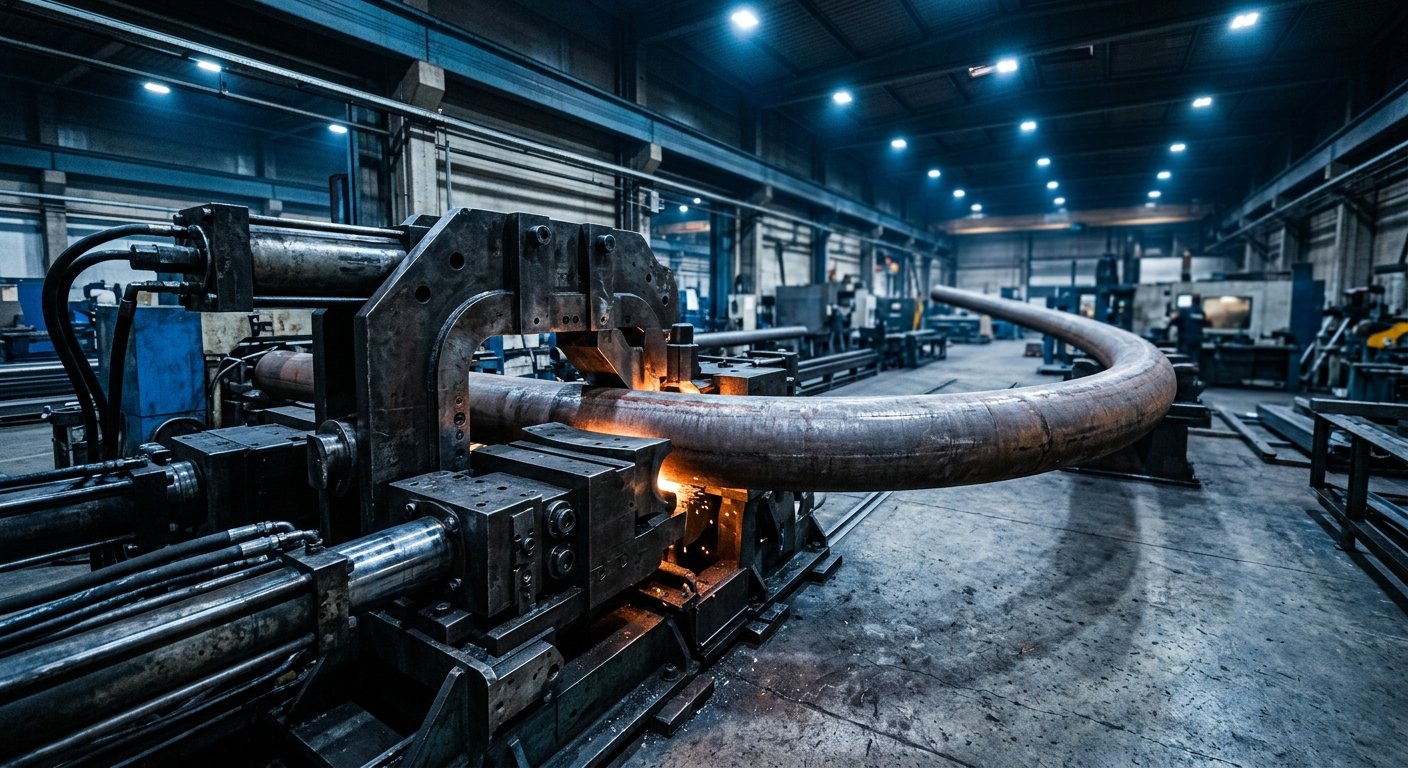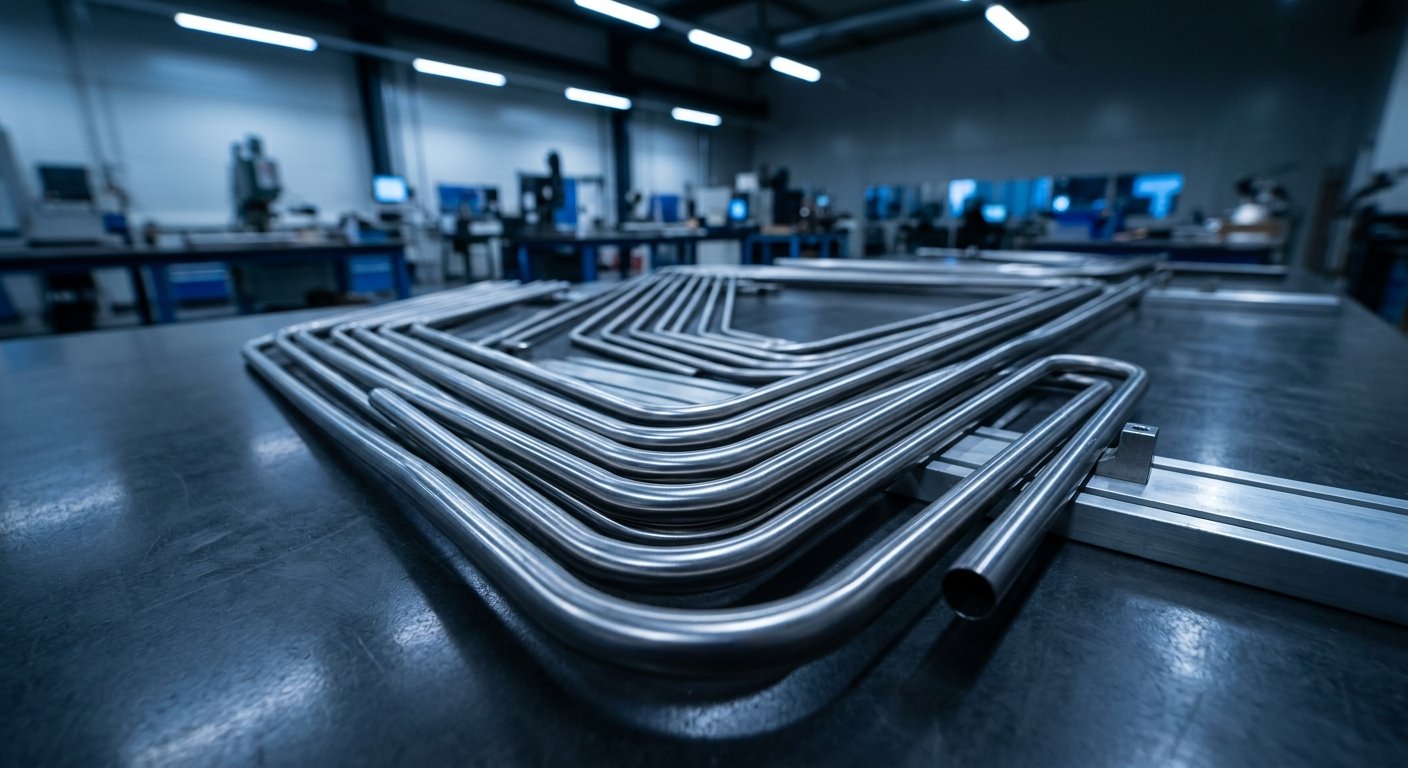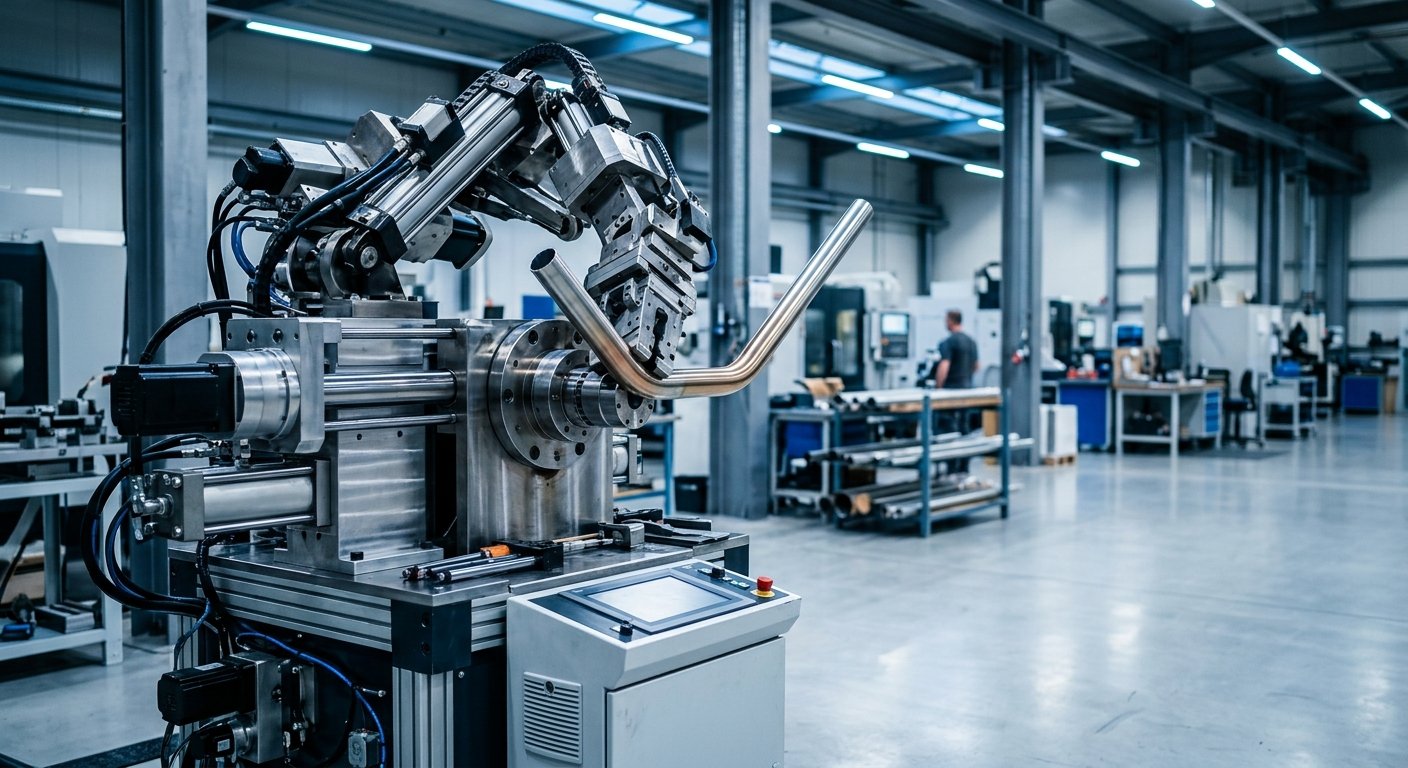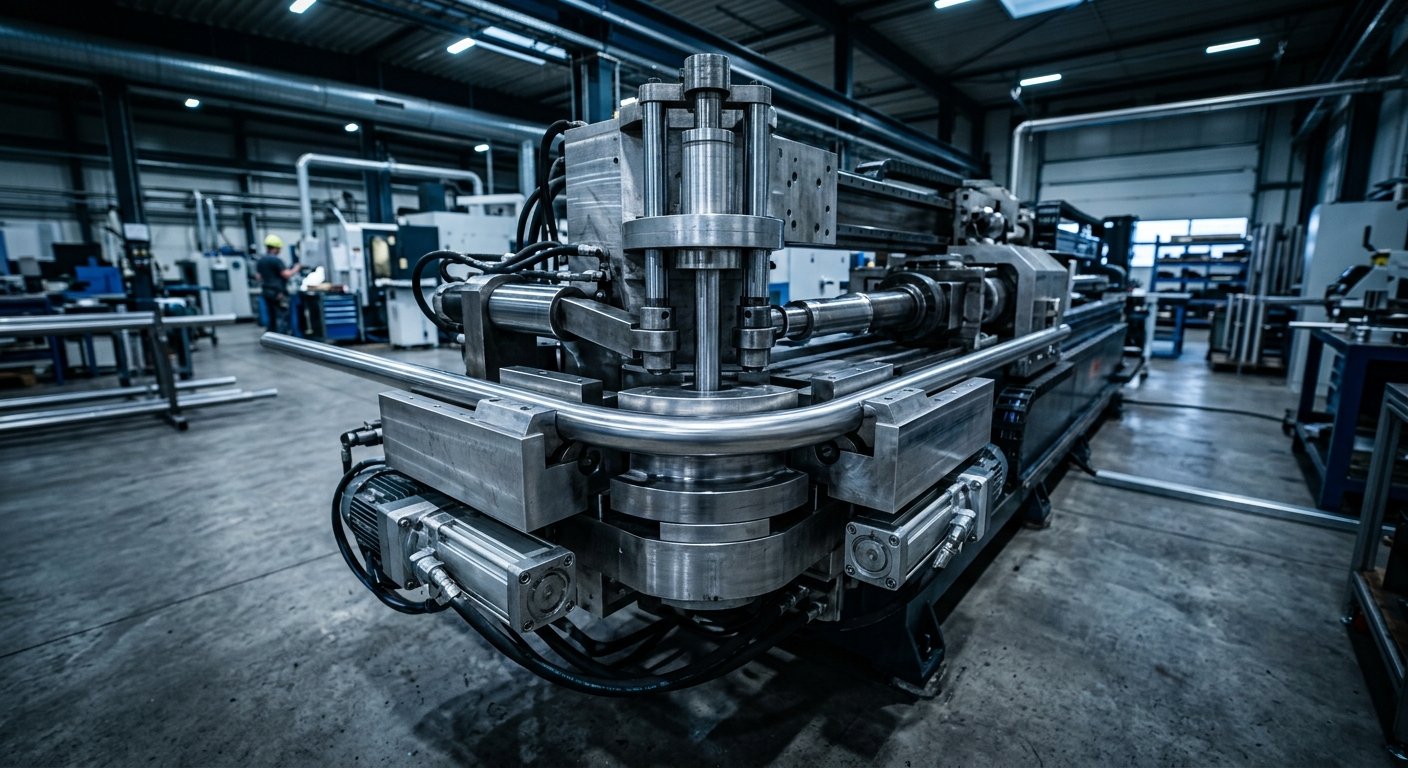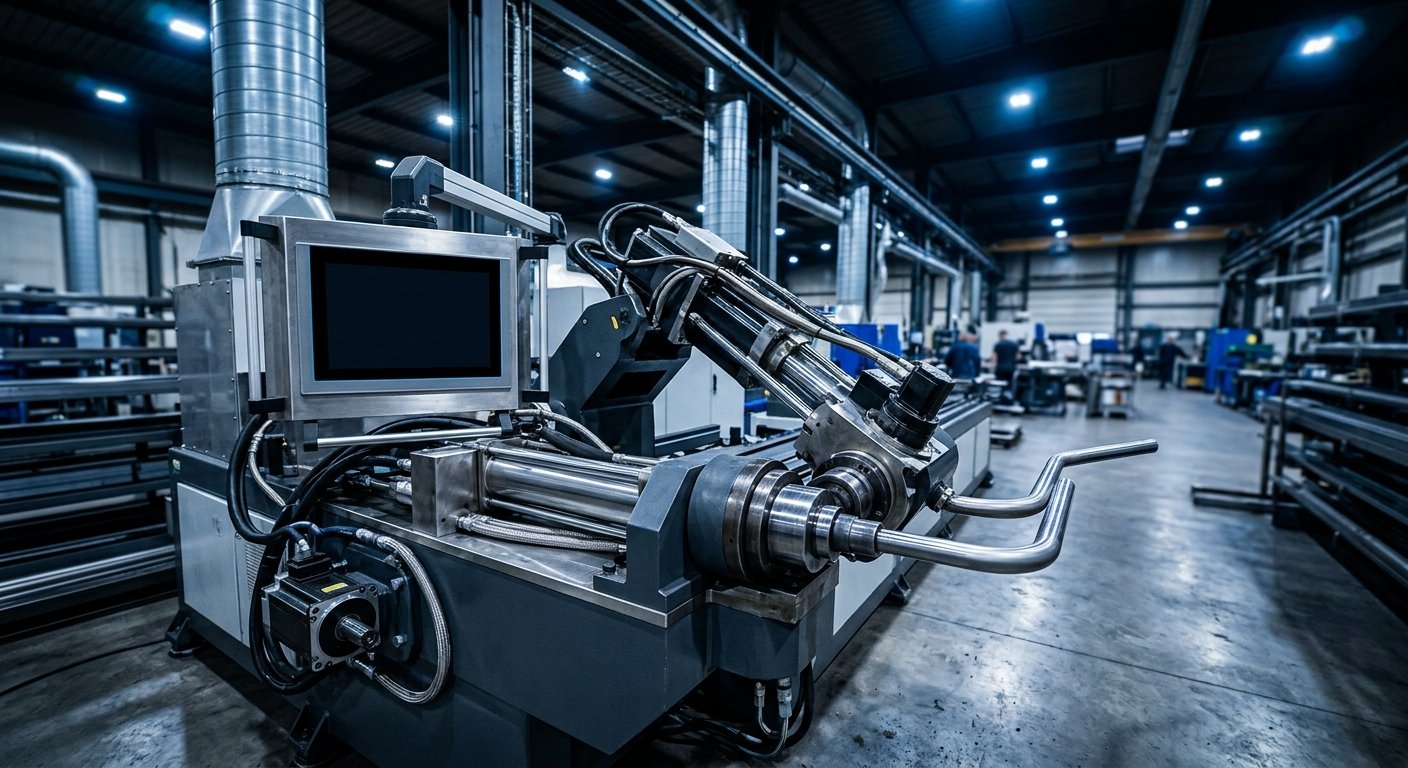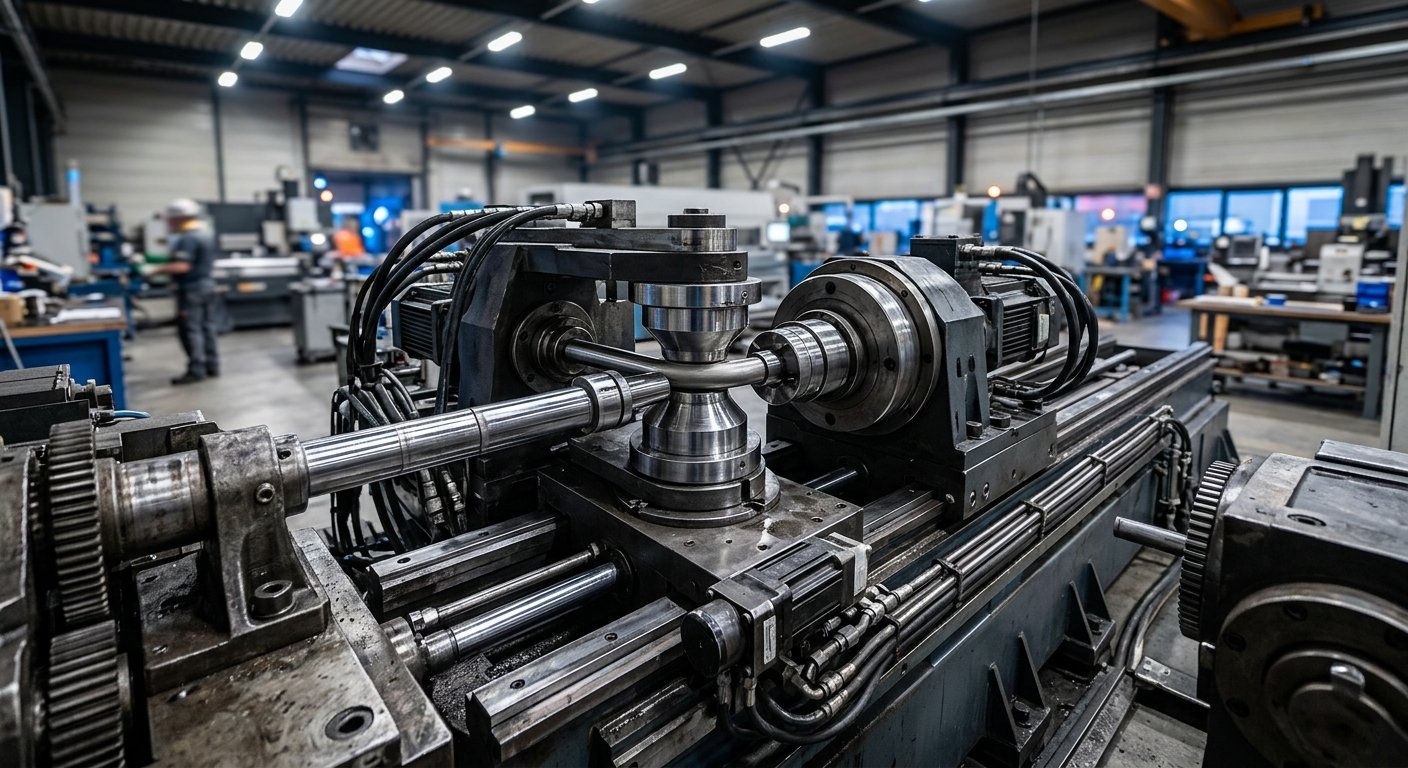
Selecting the right mandrel bending machine goes beyond horsepower and bend radius specifications. The critical factor determining whether you’ll achieve aerospace-grade precision or scrap expensive tubing lies in understanding material compatibility and tooling selection. In 2026, as manufacturing demands tighten tolerances while expanding material choices, engineering managers face increasingly complex decisions about mandrel pipe bending equipment that can deliver consistent results across diverse applications.
Material compatibility directly impacts production efficiency, part quality, and equipment longevity. The wrong tooling configuration can cause wrinkling, wall thinning, or catastrophic tube collapse—even on premium mandrel tube bending equipment. This guide addresses the technical considerations that separate successful high-precision tube bending operations from those struggling with rejection rates and equipment downtime.
Understanding Material Behavior in Mandrel Bending
Every material responds differently to the mechanical stresses of bending. Tube bending machines apply tension to the outer radius while compressing the inner radius, creating complex stress patterns that vary by material composition, heat treatment, and manufacturing process.
Stainless steel alloys like 304 and 316 exhibit work hardening characteristics that require specific mandrel designs and lubrication strategies. These materials resist deformation, demanding higher bend forces and precise mandrel support to prevent wrinkling on the compression side. The 300-series stainless grades commonly specified in petrochemical applications present moderate formability, but exotic alloys like Inconel 625 or Hastelloy require specialized tooling approaches.
Aluminum alloys demonstrate different challenges. The 6061-T6 material frequently specified in aerospace tube bending applications offers good bendability but shows sensitivity to surface scoring. Softer grades like 3003 bend more easily but require careful mandrel extraction to avoid marking. The 5000-series aluminum alloys used in marine and chemical processing equipment provide excellent corrosion resistance but limited formability, often restricting minimum bend radii.
Carbon steel tubing remains prevalent in industrial pipe benders for construction and general manufacturing. These materials typically bend predictably, but wall thickness variations and inconsistent material properties can create challenges. Mechanical tubing with DOM (drawn over mandrel) processing offers superior dimensional consistency compared to welded alternatives.
Titanium tubing, increasingly common in aerospace and medical applications, demands specialized expertise. This material’s spring-back characteristics and galling tendency require precision mandrel tube bending equipment with exact tooling clearances and appropriate surface treatments. Temperature considerations become critical, as titanium’s mechanical properties change significantly with heat exposure during bending operations.
Mandrel Selection for Optimal Results
The mandrel represents the heart of precision tube bending technology. This internal support prevents collapse and controls wall thinning during the bending process. Selecting appropriate mandrel configuration requires understanding the specific demands of your application.
Mandrel Types and Applications
Ball mandrels utilize a series of spherical links that provide flexible internal support through the bend radius. These versatile tools work effectively across a range of tube diameters and bend radii. The articulated design allows the mandrel to follow the bend curve while supporting the tube wall. Ball mandrels excel in applications requiring frequent size changes or when bending multiple radii with a single tooling set.
Plug mandrels feature a solid or slightly segmented design optimized for specific bend geometries. These mandrels deliver maximum support for tight-radius bends where wall integrity is critical. Aerospace applications demanding minimum wall thinning often specify plug mandrel configurations. The trade-off involves reduced flexibility—each plug mandrel typically serves a narrow range of tube sizes and bend radii.
Form mandrels provide the ultimate support for severe bending applications. These mandrels match the exact bend radius and provide continuous support throughout the compression zone. Form mandrels achieve the tightest radii and best wall uniformity but require dedicated tooling for each specific bend configuration. High-volume production runs justify the tooling investment when part geometry remains consistent.
Mandrel Sizing and Clearance
Proper mandrel fit determines bending success. Too tight, and the mandrel creates excessive friction, causing scoring or extraction difficulties. Too loose, and the tube walls collapse inward, creating wrinkles and dimensional variations.
Standard practice establishes mandrel clearance at 3-5% of tube inside diameter for most materials. Thin-wall tubing—generally defined as tube diameter-to-wall thickness ratios exceeding 30:1—requires tighter clearances approaching 2-3%. Heavy-wall tubing tolerates slightly larger clearances without compromising quality.
Material hardness influences optimal clearance. Softer materials like annealed copper or aluminum benefit from tighter mandrel fit to prevent compression-side wrinkling. Harder materials including stainless steel and titanium require slightly more clearance to facilitate mandrel movement and reduce surface damage risk.
Tooling Components Beyond the Mandrel
Complete mandrel bending machines require coordinated tooling systems where each component contributes to bend quality. Understanding these elements helps specify equipment capable of meeting your application requirements.
Bend Dies and Radius Considerations
The bend die determines the formed radius and significantly impacts achievable quality. Die material selection ranges from aluminum for soft materials and prototype work to hardened tool steel for high-volume production. Urethane dies offer advantages for certain applications where surface protection is paramount.
Centerline bend radius (CLR) specifications drive die selection. Aerospace tube bending typically requires tight radii, often 1.5 to 3 times tube diameter. Oil and gas applications may specify looser radii of 5 to 10 times diameter where space permits, reducing forming stresses and simplifying production. Industrial standards generally recommend minimum CLR of twice the tube outside diameter for most materials, though modern precision tube bending equipment can achieve tighter radii with proper technique.
Clamp Dies and Pressure Blocks
The clamp die secures the tube against the bend die, providing the anchor point for the bending operation. Adequate clamping pressure prevents tube slippage while avoiding deformation. Adjustable clamp designs accommodate slight tube diameter variations within production tolerances.
Pressure dies (or wiper dies) support the tangent point where the tube leaves the bend die. This component prevents wrinkling by applying controlled pressure to the compression zone. Pressure die geometry requires precise matching to tube diameter and bend die radius. The clearance between pressure die and tube typically ranges from 0.005 to 0.020 inches depending on material and application.
Lubrication Systems
Proper lubrication reduces friction between mandrel and tube interior, facilitating mandrel extraction and preventing surface damage. Different materials require different lubrication strategies. Water-soluble synthetic lubricants work well for steel tubing, while aluminum often benefits from specialized compounds that prevent galling. Stainless steel demands lubricants that can handle work-hardening characteristics without leaving residues that might contaminate process streams in food-grade or pharmaceutical applications.
Material-Specific Tooling Recommendations
Translating material properties into tooling selections requires considering both the base material and the specific application demands.
Stainless Steel (304/316): Specify hardened steel mandrels with chrome or nitride coating to resist wear. Use tighter clearances (3-4% of ID) with ball or plug mandrel configurations. Ensure adequate lubrication delivery systems. Plan for higher bend forces requiring robust machine construction. These workhorse alloys dominate petrochemical and food processing applications where corrosion resistance meets structural requirements.
Aluminum Alloys: Select polished mandrels to prevent surface marking. Consider plug mandrels for critical aerospace applications where wall uniformity is paramount. Slightly larger clearances (4-5% of ID) accommodate aluminum’s tendency to gall. Use aluminum or bronze pressure dies to prevent bimetallic corrosion. Aerospace tube bending operations demand documentation and traceability for these critical components.
Carbon Steel: Standard tooling configurations work effectively. Chrome-plated mandrels extend service life in high-volume production. Ball mandrels provide versatility for job shops handling varied specifications. These industrial pipe benders represent the backbone of construction and general manufacturing sectors.
Exotic Alloys (Titanium, Inconel): Invest in specialized tooling with precise tolerances. Surface treatments preventing galling become critical. Consider dedicated mandrels for consistent production. Temperature monitoring ensures material properties remain within specifications. Military and aerospace applications justify the premium tooling investment these materials demand.
Tooling Maintenance and Quality Assurance
The best mandrel tube bending equipment dealer provides not just machines but comprehensive support for maintaining tooling performance. Regular inspection protocols identify wear patterns before they compromise part quality.
Mandrels require periodic measurement to verify dimensional accuracy. Ball mandrels need individual ball replacement when wear exceeds specifications. Proper storage prevents corrosion and accidental damage. Cleaning procedures remove manufacturing residues without damaging precision surfaces.
Bend dies show wear patterns at the entry and exit points. Regular inspection detects surface irregularities that might transfer to bent parts. Refinishing or replacement maintains consistent quality. Documentation tracking tooling service life helps predict replacement intervals and budget accordingly.
Selecting Equipment for Your Application
Material compatibility extends beyond tooling to the fundamental machine design. Tube bending machines vary in capability, from entry-level equipment suited to carbon steel fabrication through precision systems meeting aerospace specifications.
Servo-electric machines offer superior repeatability and energy efficiency compared to hydraulic alternatives. The precise motion control benefits applications requiring tight tolerances across multiple bends. CNC integration enables complex part geometries with minimal setup time.
All-electric mandrel bending machines have gained market share in 2026 as manufacturers prioritize sustainability and operating cost reduction. These systems eliminate hydraulic fluid maintenance while delivering consistent performance. The technology particularly suits high-volume production environments where repeatability drives profitability.
Machine capacity must match material requirements. Bending stainless steel or exotic alloys demands higher tonnage than aluminum of equivalent size. Undersized equipment leads to poor quality and premature wear, while oversized machines waste capital and floor space.
Working with American Manufacturing Expertise
Specifying mandrel pipe bending equipment represents a significant capital investment. Partnering with manufacturers offering proven track records in demanding industries provides confidence that equipment will perform as specified. Companies serving NASA, military, and aerospace clients demonstrate the engineering rigor necessary for mission-critical applications.
American manufacturing heritage ensures compliance with domestic content requirements increasingly important in defense and infrastructure projects. Local support capabilities—including training, service, and replacement parts—minimize downtime when production schedules are tight.
Custom solution capabilities separate equipment suppliers from true manufacturing partners. Standard machines serve many applications, but complex projects benefit from engineering teams capable of developing specialized tooling and process parameters for unique requirements.
Making the Right Investment Decision
Selecting mandrel bending machines that match your material requirements and production objectives requires balancing multiple technical factors. Understanding how different materials respond to bending stresses, specifying appropriate mandrel configurations, and coordinating complete tooling systems separate successful operations from those struggling with quality issues.
The precision tube bending technology landscape continues evolving. Modern equipment offers capabilities unimaginable a decade ago, enabling tighter tolerances, more complex geometries, and expanded material options. Taking advantage of these advancements requires working with suppliers who understand both the technology and your specific application demands.
Whether you’re establishing new production capabilities or upgrading existing equipment, investing time in proper specification pays dividends in part quality, production efficiency, and equipment longevity. The right mandrel tube bending equipment dealer brings expertise that extends beyond equipment sales to genuine partnership in manufacturing success.
Ready to specify mandrel bending equipment optimized for your materials and applications? Contact the tube bending experts at Hines Bending Systems to discuss your specific requirements. With decades of experience supporting aerospace, energy, and defense manufacturers, Hines delivers American-made precision equipment backed by comprehensive technical support. Request a consultation today to explore how the right tooling selection and machine configuration can elevate your tube bending capabilities.