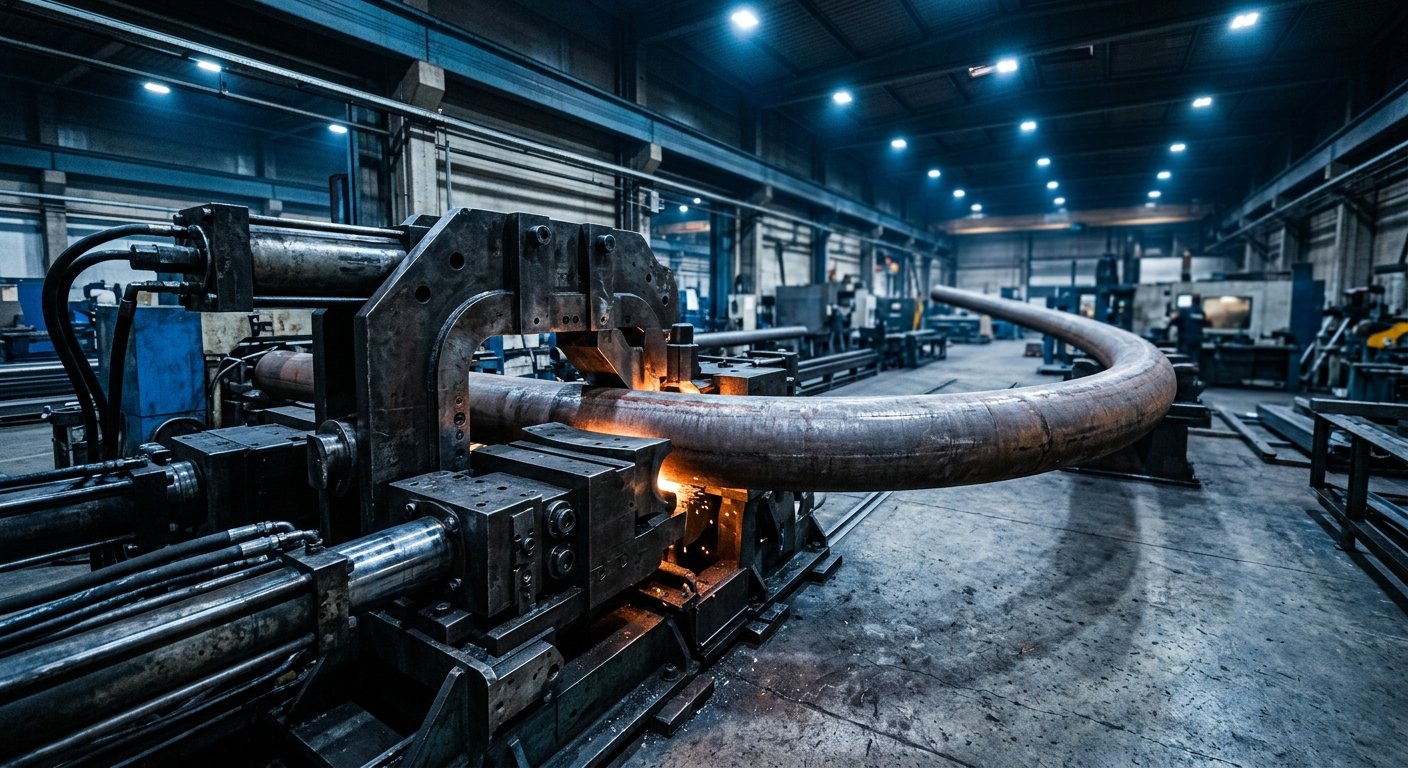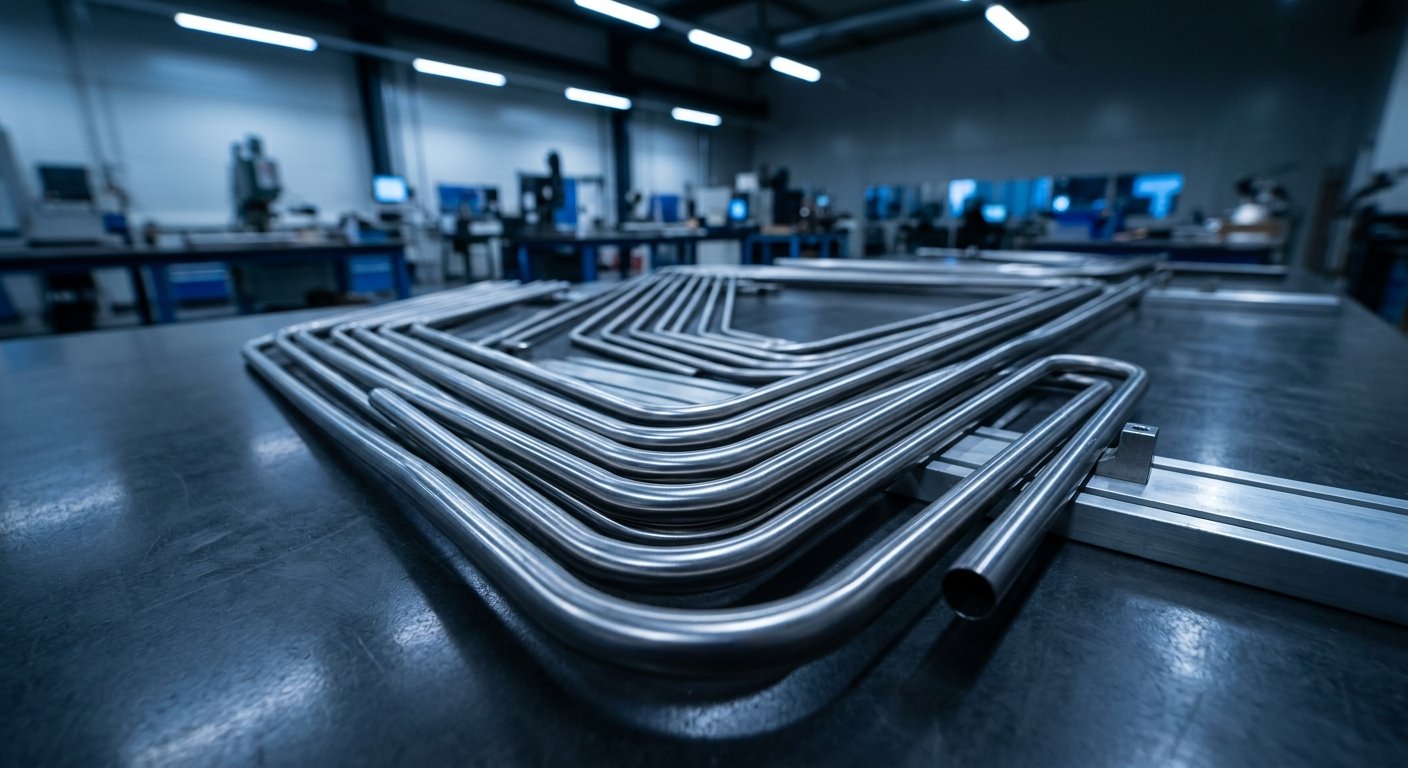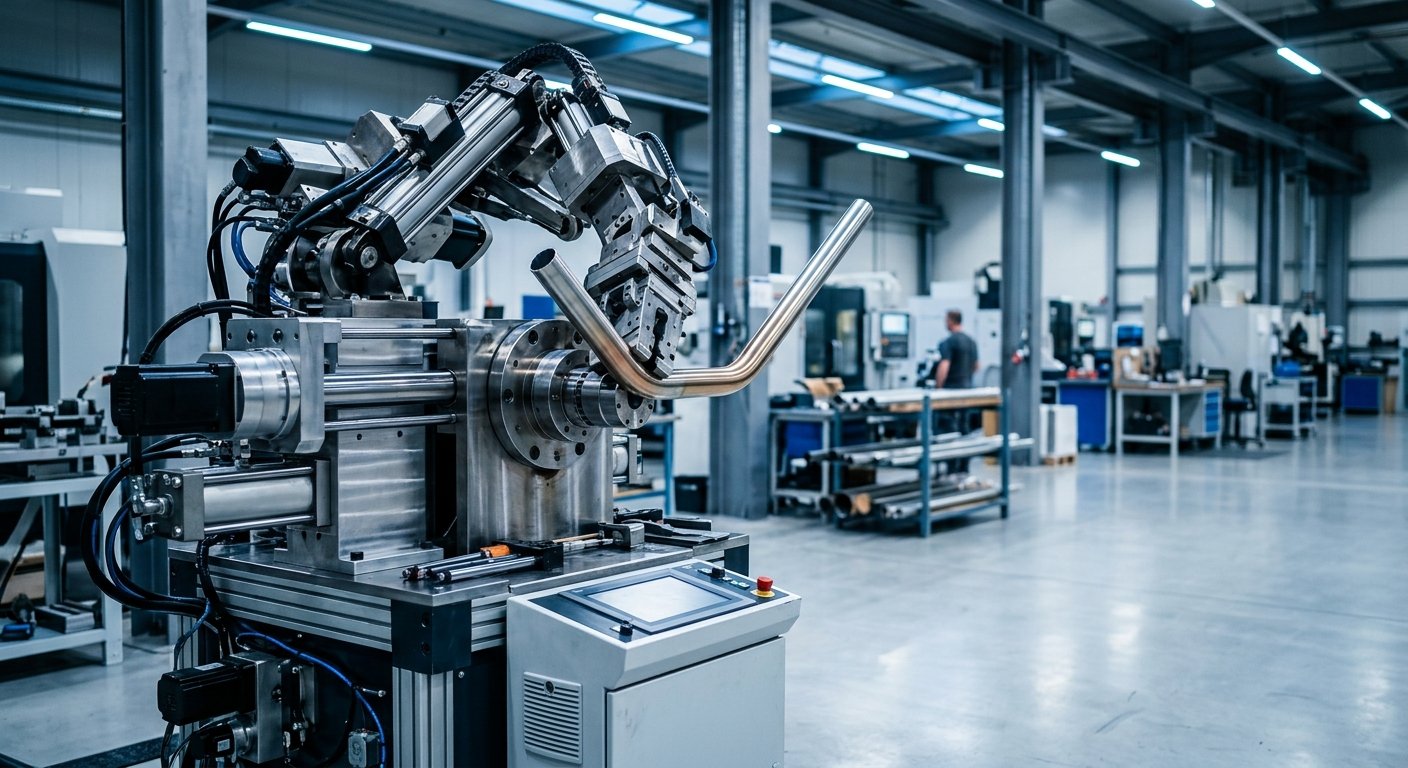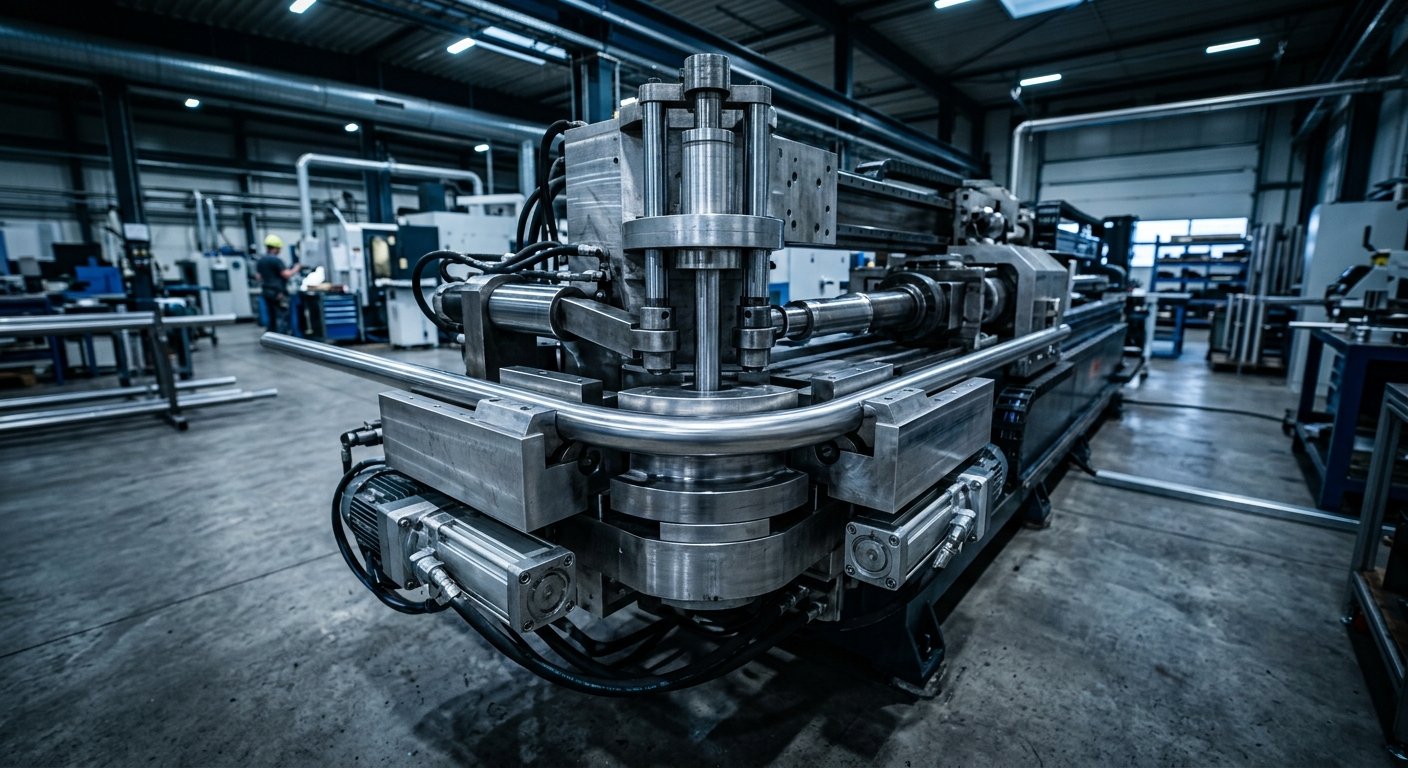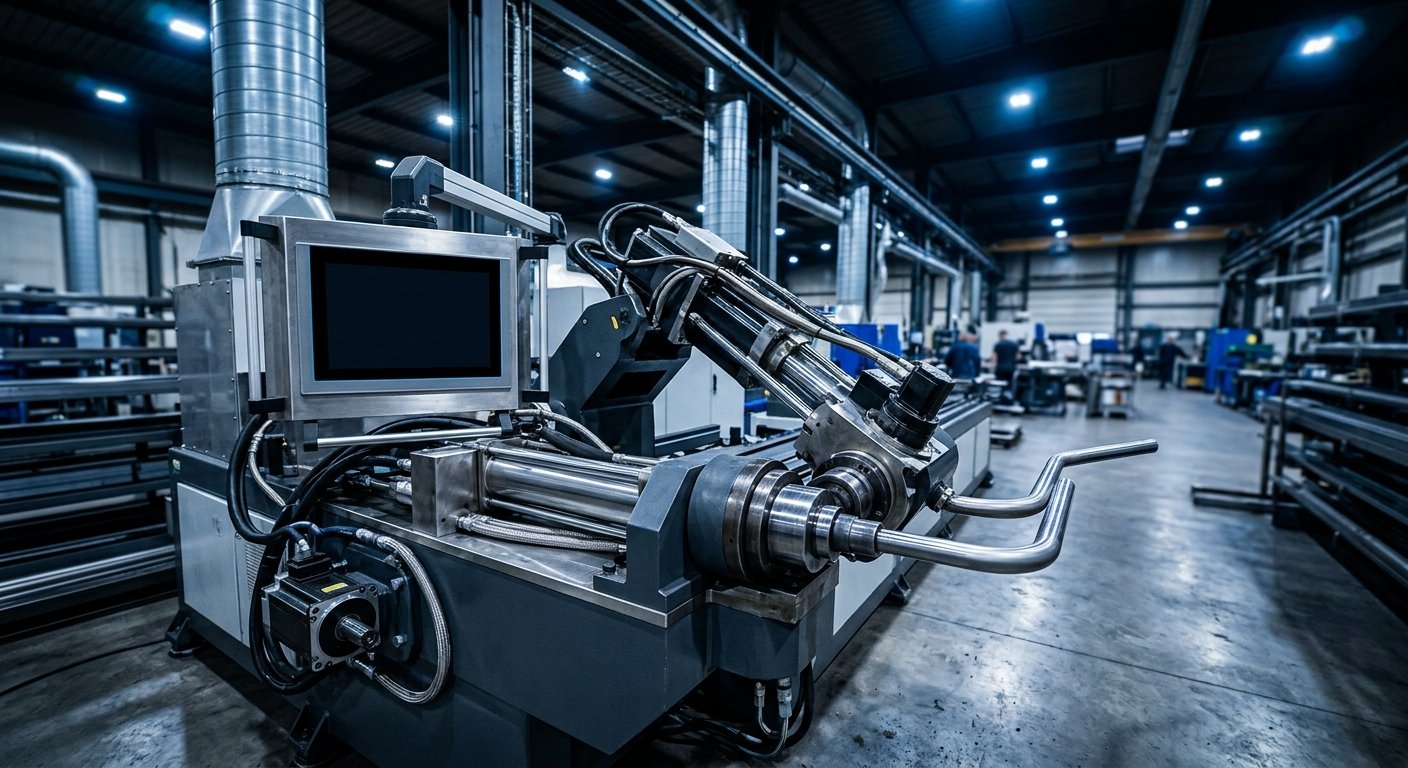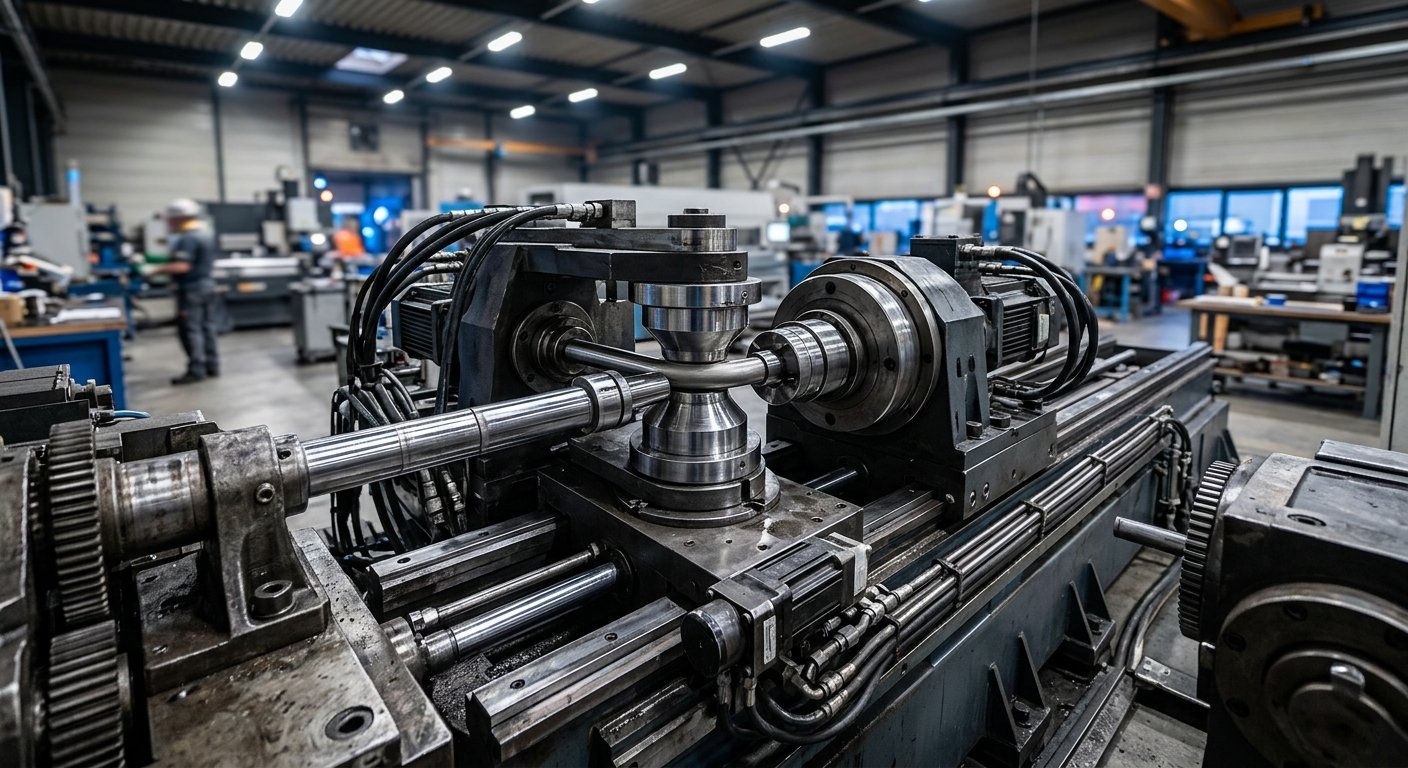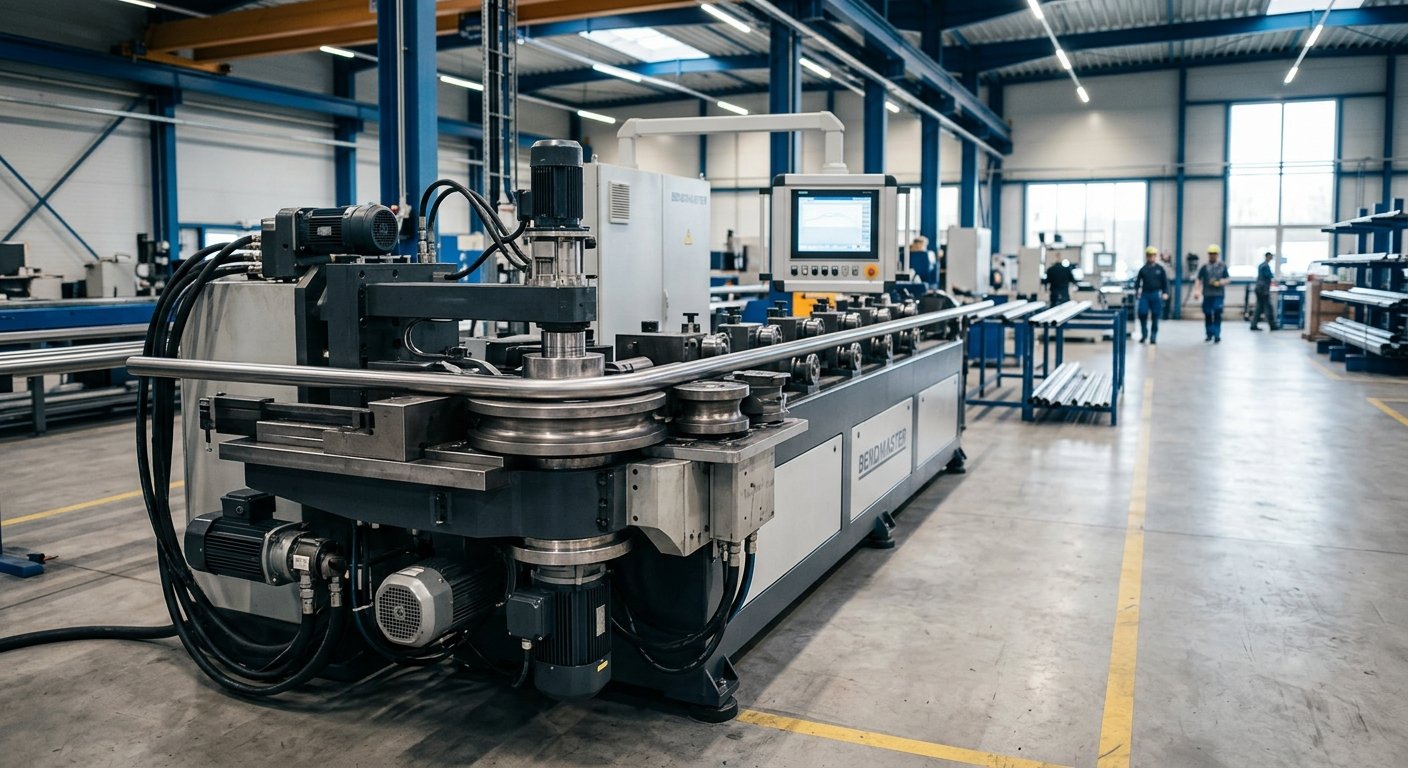
Capital equipment budgets are tighter than ever in 2026. With new precision CNC tube benders ranging from $80,000 to well over $500,000 depending on capability, many engineering managers and procurement specialists are taking a serious look at refurbished tube bending machines—and for good reason. A properly reconditioned machine can deliver 70–80% of new-machine capability at 40–60% of the cost, provided you know what to look for and what to avoid.
This guide cuts through the noise. Whether you’re evaluating used pipe benders for sale, comparing pre-owned CNC tube benders, or trying to determine whether reconditioned bending machines meet the tolerances your aerospace or oil & gas application demands, the following sections will help you make a confident, well-informed decision.
Why the Refurbished Market Has Matured in 2026
The industrial bending equipment market has changed significantly over the past decade. CNC controls, servo-driven bend heads, and multi-stack tooling systems that were once exclusive to new machines are now increasingly available in the refurbished market as earlier-generation equipment cycles out of high-volume production facilities.
At the same time, demand from aerospace, defense, and petrochemical sectors has pushed manufacturers to extend equipment lifecycles and extract maximum value from proven platforms. This has created a more structured, better-documented secondary market for used industrial pipe benders—one where buyers can find machines with verifiable service histories and remaining useful life measured in decades rather than years.
According to the Society of Manufacturing Engineers, capital equipment reconditioning has become a recognized strategy for maintaining production capacity while managing cash flow in capital-intensive manufacturing environments. The key is applying the same engineering rigor to buying refurbished that you would apply to specifying new equipment.
Refurbished vs. Reconditioned vs. Used: Know the Difference
These terms are often used interchangeably, but they represent meaningfully different levels of restoration—and different risk profiles.
- Used / As-Is: The machine is sold in its current condition with no restoration work. Buyer assumes full risk. May have worn tooling, degraded hydraulics, or outdated controls.
- Refurbished: The machine has been inspected, worn components replaced, and tested to confirm functional operation. Typically includes mechanical and hydraulic servicing, control system updates, and documented test runs.
- Reconditioned / Remanufactured: The highest tier. The machine is disassembled to major subassemblies, worn and failed components are replaced with new or like-new parts, and the machine is rebuilt and tested to specified performance standards. Often includes new control systems, new tooling interfaces, and calibration documentation.
For demanding applications—tight-tolerance aerospace tubing, high-pressure oil & gas lines, defense hydraulic systems—reconditioned bending machines are the appropriate benchmark. A machine that merely “runs” is not sufficient when wall thinning tolerances, ovality requirements, and springback consistency are critical to part qualification.
Critical Technical Evaluation Criteria
1. Control System Generation
The control system is often the first thing to evaluate on pre-owned CNC tube benders. Legacy controls from the early 2000s may lack modern network connectivity, DXF import capability, or multi-stack memory—all of which affect production efficiency. Ask whether the control system has been updated or replaced, and verify software support availability. A machine with a freshly integrated modern CNC controller is substantially more valuable than one running obsolete proprietary software.
2. Hydraulic and Servo System Condition
Hydraulic systems are the heart of most rotary draw tube benders. Key indicators of hydraulic health include cylinder seal condition, pump flow rate consistency, and valve response time. Servo-driven machines should be evaluated for motor condition, encoder accuracy, and drive amplifier status. Request hydraulic test data from the seller—any reputable refurbisher should be able to provide pressure and flow test results.
3. Tooling Compatibility and Availability
This is frequently overlooked. Even a perfectly reconditioned machine is limited in value if tooling for your specific CLR (centerline radius) and tube OD is unavailable or cost-prohibitive. Verify that the machine’s tooling interface is standard and that replacement bend dies, clamp dies, pressure dies, and mandrels are readily available from multiple suppliers.
4. Structural Integrity
Inspect the machine frame and bend head for cracks, wear, and alignment. Tube benders absorb significant cyclical loading, and fatigue damage in the frame structure can compromise bend repeatability over time. A proper inspection should include verification of the bend arm’s rotational accuracy and the collet or carriage mechanism’s linear precision.
5. Documentation and Traceability
For aerospace and defense applications, documentation matters as much as condition. You’ll need maintenance records, component replacement history, and ideally original test data to support any qualification activities. Used industrial pipe benders without documentation create downstream risk—especially if your quality system requires equipment validation.
Application-Specific Considerations
Aerospace and Defense
These sectors demand the highest precision and process control. Pre-owned CNC tube benders intended for aerospace applications should meet or exceed the tolerances specified in ASTM material and dimensional standards for aerospace tubing. Springback compensation, multi-stack bending capability, and precise mandrel control are non-negotiable. If the machine will be used for flight-critical components, factor in the cost of process requalification before finalizing acquisition cost comparisons.
Oil & Gas and Petrochemical
High-pressure tubing applications require consistent wall integrity across every bend. Ovality and wall thinning must stay within API or ASME specifications. Evaluate whether the refurbished machine can run wiper dies effectively at your required CLR-to-OD ratios, and confirm that the hydraulic clamping force is consistent and adjustable for varying wall thicknesses.
Energy and Industrial Production
High-volume production environments place different demands on a refurbished machine than low-volume precision work. Cycle time, tooling change speed, and control memory capacity become primary concerns. Evaluate the machine’s rated cycles-per-hour and compare it against your production targets, factoring in any efficiency losses from older control systems.
What a Thorough Refurbishment Should Include
When evaluating sellers of reconditioned bending machines, use this checklist as a baseline:
- Complete disassembly and inspection of all major subassemblies
- Replacement of all hydraulic seals, hoses, and filters
- Inspection and replacement of wear components in the bend head and carriage
- CNC control system verification or upgrade with current software
- Electrical system inspection including contactors, relays, and safety circuits
- Lubrication system service and verification
- Full machine test run with documented results across multiple bend radii
- Calibration verification and adjustment as needed
- Provision of updated maintenance manuals and parts documentation
Sellers who cannot provide evidence of these steps are selling used equipment, not truly refurbished or reconditioned machines—regardless of how they describe it.
Total Cost of Ownership: The Right Way to Compare
Acquisition price is only one component of total cost of ownership. Before finalizing a purchasing decision on any used industrial pipe bender, calculate:
- Refurbishment or repair costs needed to bring the machine to your required specification
- Control system upgrade costs if the existing controls are outdated
- Tooling costs for your specific application
- Training costs for operators unfamiliar with the platform
- Installation and commissioning costs, including rigging and utilities
- Expected maintenance costs over a 5–10 year horizon based on machine condition and age
When all these factors are included, the gap between a properly refurbished machine and a new machine may narrow—or in some cases, reverse. The decision should always be based on lifecycle economics, not sticker price alone. The NIST Manufacturing programs offer useful frameworks for capital equipment lifecycle cost analysis that can support this evaluation.
Frequently Asked Questions
What is the typical lifespan of a refurbished tube bending machine?
A properly reconditioned tube bending machine can provide 15–25 additional years of productive service, depending on the original build quality, the scope of refurbishment, and the duty cycle of its new application. Heavy-duty American-manufactured platforms built on robust mechanical foundations are particularly well-suited to reconditioning.
Can a refurbished machine meet aerospace tolerance requirements?
Yes, provided the machine is genuinely reconditioned to documented specifications and the control system supports the precision routines required for aerospace work. Machines used for flight-critical components will typically require process requalification, but a well-reconditioned CNC tube bender is capable of meeting tight aerospace tolerances.
What’s the difference between a used pipe bender and a reconditioned one?
A used pipe bender is sold in as-found condition with no restoration work. A reconditioned machine has been rebuilt to a defined standard, with worn and failed components replaced, systems tested, and performance verified. For industrial production applications, reconditioned is the appropriate standard.
Should I buy from an equipment dealer or directly from a manufacturer?
Buying reconditioned equipment directly from a manufacturer—or through a manufacturer-backed refurbishment program—provides the highest confidence in the restoration quality, parts sourcing, and post-sale support. Manufacturers have access to original specifications, genuine parts, and the technical knowledge to restore equipment to proper performance standards.
What support should I expect after purchasing a refurbished tube bender?
At minimum, you should receive updated documentation, a warranty on refurbished components, and access to technical support. Training for operators and maintenance personnel is critical—particularly when transitioning to a platform the team hasn’t previously run. Comprehensive training and ongoing service access are indicators of a serious, capable seller.
Making the Right Decision for Your Operation
The refurbished tube bending machine market in 2026 offers real value—but only for buyers who apply engineering discipline to the purchasing process. Evaluate documentation, demand transparency on the scope of refurbishment, calculate total lifecycle costs, and match the machine’s proven capability to your application’s actual requirements.
With 50 years of tube and pipe bending expertise and a track record serving NASA, military, and industrial clients across demanding applications, Hines Bending Systems has the technical depth to help you evaluate whether a refurbished, reconditioned, or new machine is the right solution for your specific production needs. Explore our full range of tube bending machines and pipe bending machines, or contact our engineering team directly to discuss your application requirements.
Have a specific application or machine evaluation question? Contact Hines Bending Systems to speak with an engineer who can provide application-specific guidance—no sales pressure, just technically grounded answers.