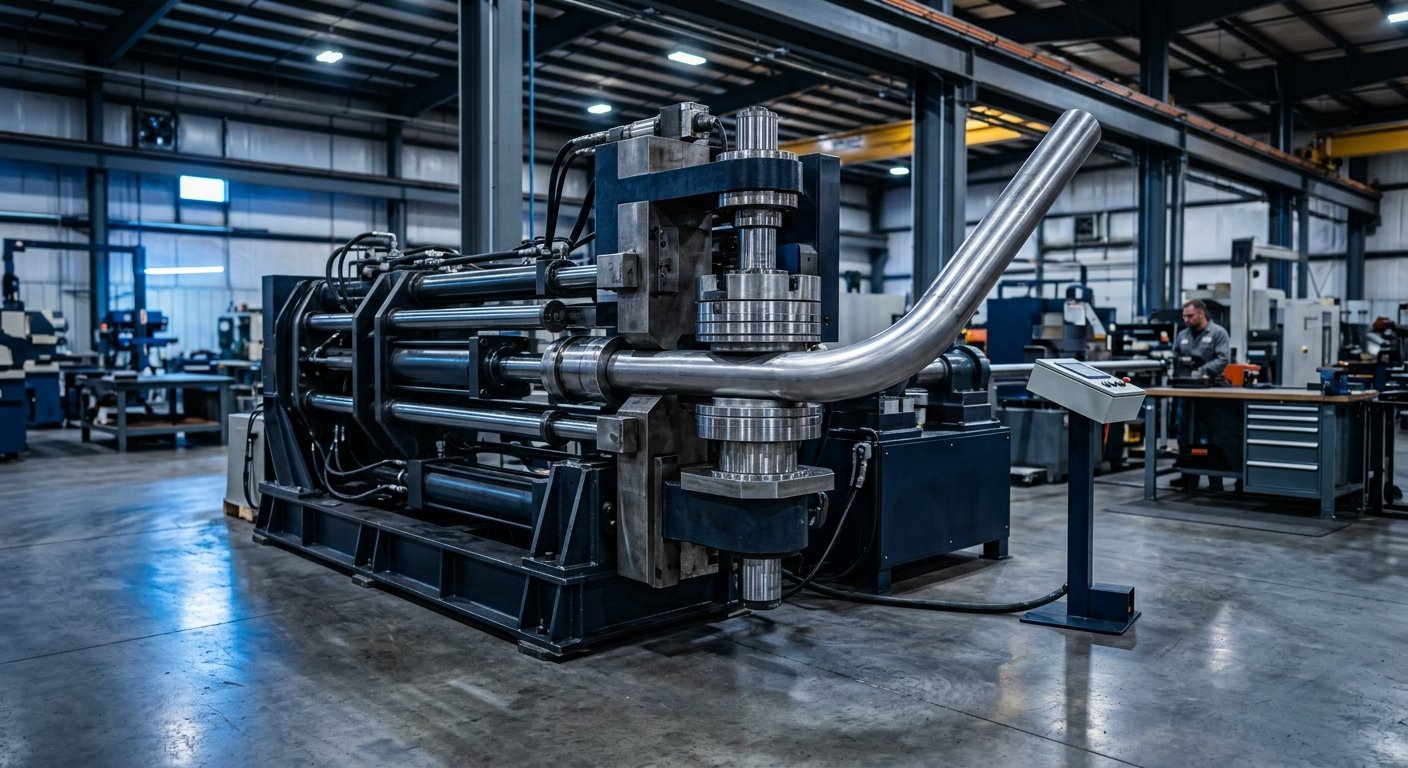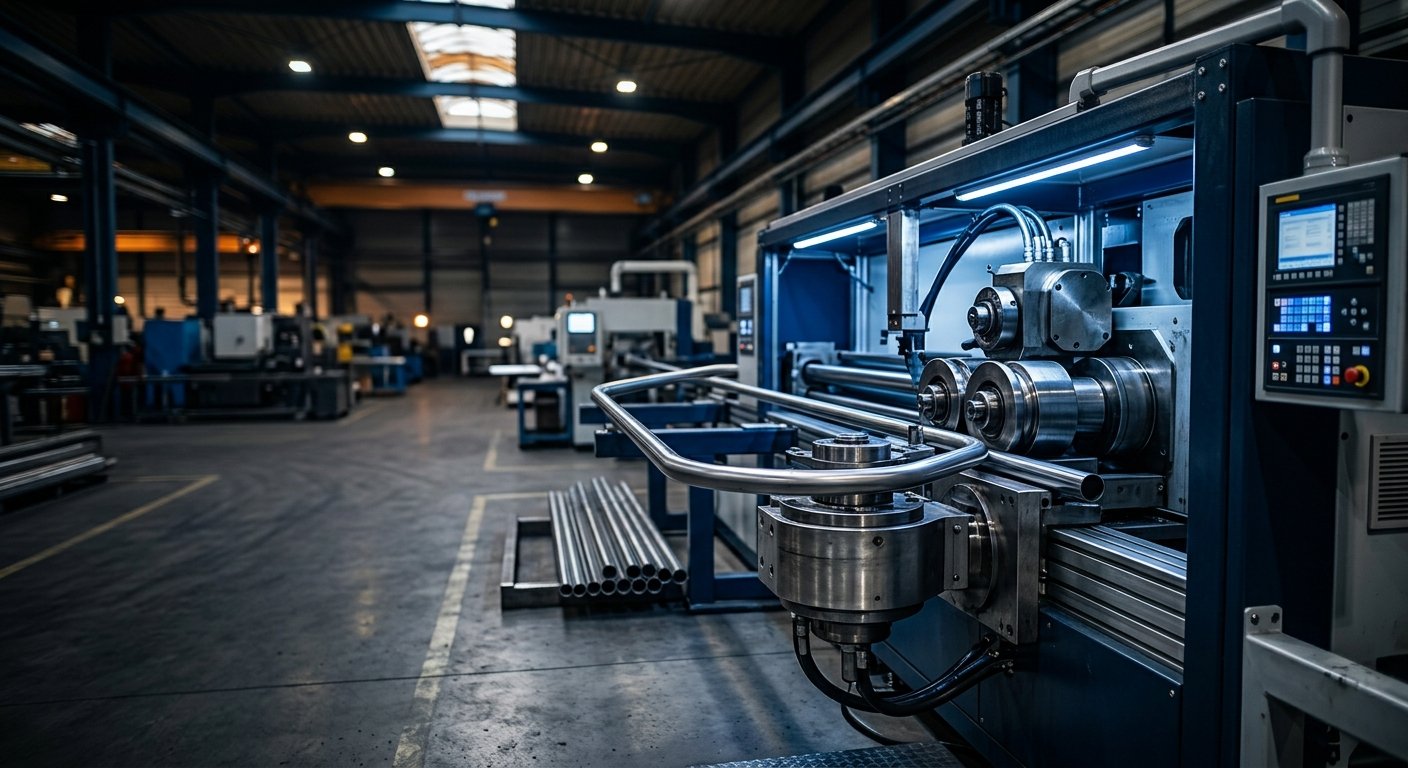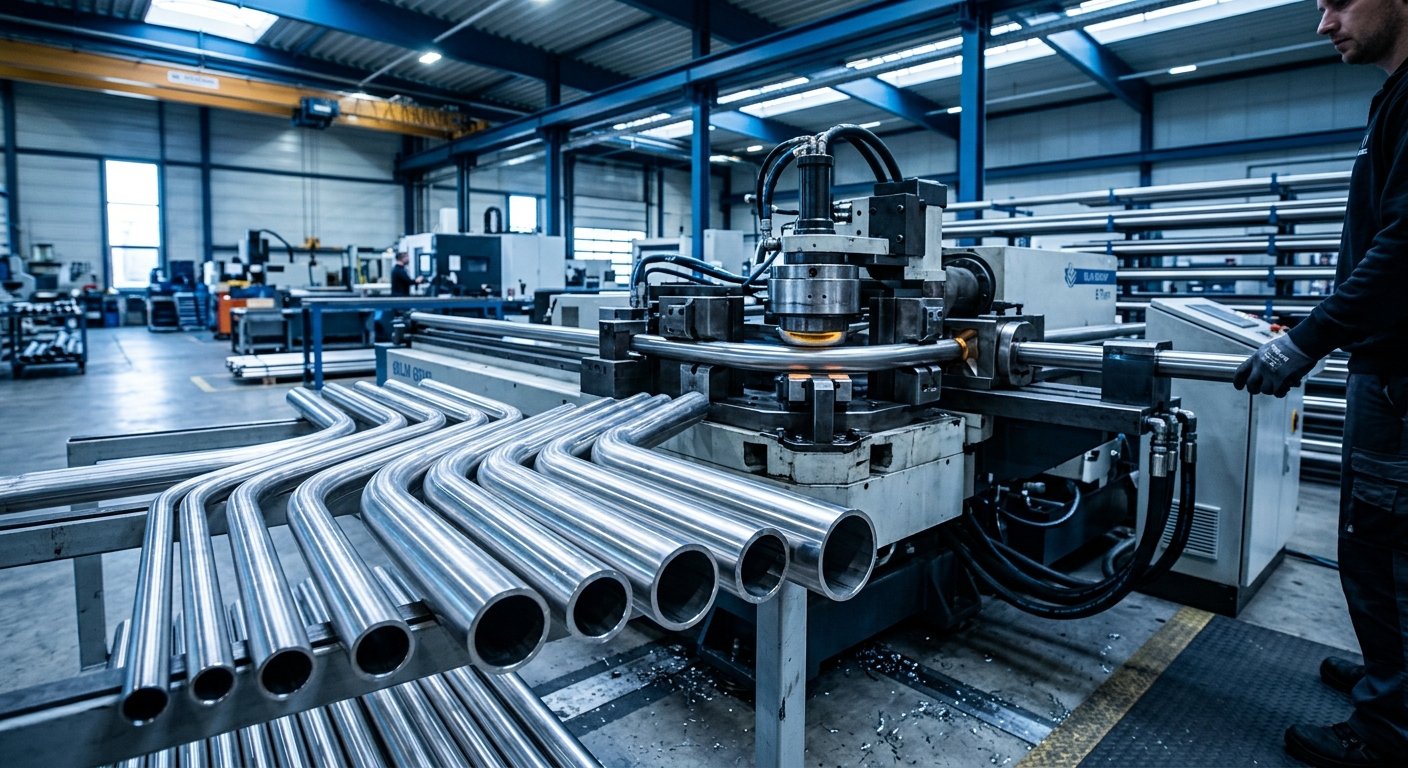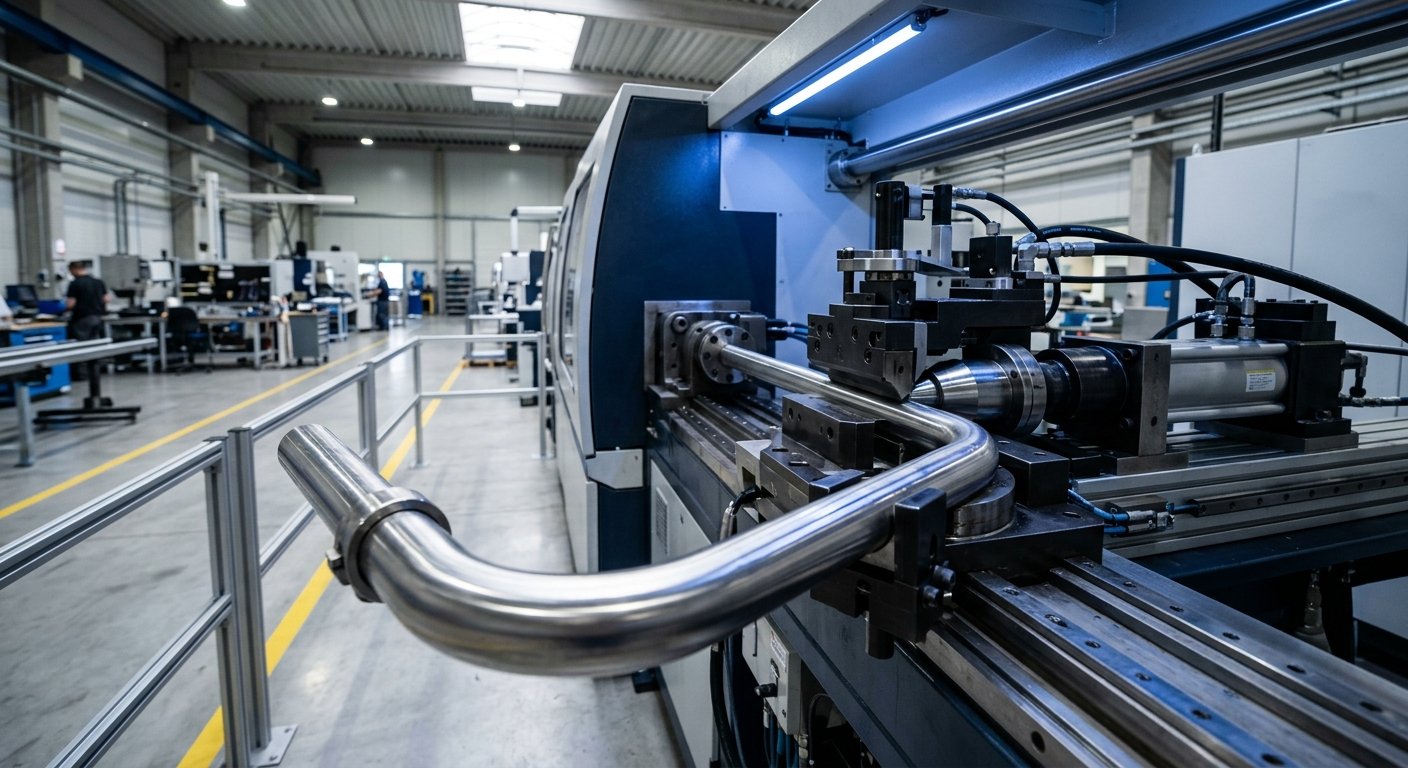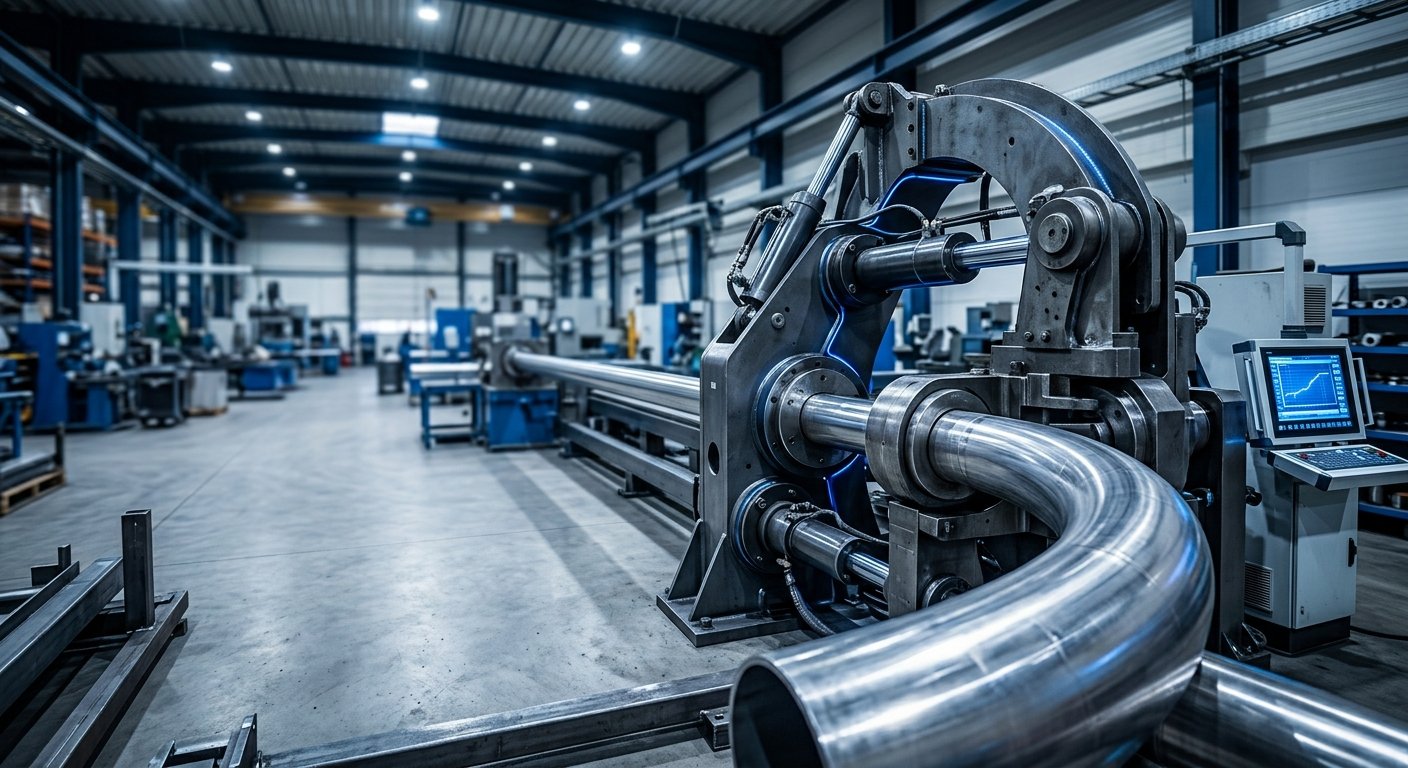
When standard pipe bending equipment can’t deliver the precision, capacity, or unique capabilities your application demands, custom-engineered solutions become essential. Industries like aerospace, petrochemical processing, and defense often face bending challenges that fall outside the parameters of off-the-shelf machinery—exotic materials, extreme geometries, tight tolerance requirements, or integration with existing production systems. Custom pipe bending machines address these complex manufacturing challenges by delivering application-specific performance that directly impacts product quality, production efficiency, and ultimately, profitability.
Understanding When Custom Bending Solutions Make Sense
Not every pipe bending application requires a custom machine. Standard CNC bending equipment handles the majority of industrial tube and pipe fabrication needs efficiently and cost-effectively. However, several scenarios justify the engineering investment in bespoke pipe bending machines:
- Material constraints: Working with exotic alloys like Inconel, titanium, or high-strength stainless steels that require specialized tooling, heating systems, or pressure control
- Geometric complexity: Multiple bends in multiple planes, compound radius requirements, or three-dimensional configurations that exceed standard machine capabilities
- Dimensional extremes: Tube diameters, wall thickness ratios, or bend radii that fall outside conventional equipment specifications
- Production integration: Seamless integration with robotic cells, automated inspection systems, or existing manufacturing workflows
- Industry certification requirements: NASA, military, nuclear, or other regulatory standards demanding documented process control and repeatability
- Volume considerations: High-volume production requiring dedicated tooling, automated loading, and inline quality verification
Engineering managers considering custom cnc bending systems should conduct thorough analysis of total cost of ownership, production volume projections, and the strategic value of in-house capabilities versus outsourcing specialized bends.
Core Engineering Considerations for Custom Bending Machines
Material Behavior and Forming Requirements
Material selection drives fundamental machine design parameters. Different alloys exhibit distinct forming characteristics that influence everything from mandrel design to bend sequence programming. Aerospace-grade titanium, for instance, requires precise temperature control during bending to prevent springback and maintain grain structure integrity. Custom solutions for titanium tube bending often incorporate induction heating systems with closed-loop temperature monitoring.
Stainless steel variants present their own challenges. Austenitic stainless steels work-harden during forming, requiring machines with sufficient bending force and proper mandrel support to prevent wall thinning or collapse. Custom pipe bending machines designed for these materials typically feature enhanced hydraulic systems and specialized tooling geometries.
For petrochemical applications involving high-nickel alloys like Inconel or Hastelloy, custom solutions must address both the mechanical properties of these materials and the critical nature of the final application. A single defect in a process heat exchanger tube can result in catastrophic facility failures, making precision and repeatability non-negotiable.
Tolerance Specifications and Quality Control
Precision requirements directly impact machine design complexity. Aerospace hydraulic systems might demand bend angle tolerances of ±0.25 degrees with dimensional accuracy within 0.010 inches. Achieving these specifications consistently requires specialized bending machine manufacturers to integrate advanced features:
- Servo-electric actuators for precise bend angle control
- Real-time measurement systems with automatic correction
- Temperature-compensated tooling to account for thermal expansion
- Automated inspection integration with statistical process control
- Machine learning algorithms that adjust parameters based on material lot variations
Custom machines for high-precision applications often incorporate inline measurement systems that verify critical dimensions during the bending process, enabling immediate corrective action rather than discovering issues during post-process inspection.
Production Volume and Cycle Time Optimization
High-volume manufacturing environments require engineered bending solutions that minimize non-productive time. Custom automation integration transforms bending operations from manual, labor-intensive processes to streamlined production cells. A specialized automotive exhaust system manufacturer, for example, might require a custom solution featuring:
- Automated tube loading from bundled stock
- Robotic tube orientation and feeding
- Multi-stack tooling for rapid changeover between part variants
- Automated unloading with integrated part marking
- Continuous operation capability with minimal operator intervention
The return on investment for such application specific bending machines comes from dramatically reduced cycle times, eliminated setup errors, and the ability to run lights-out production shifts.
Industry-Specific Custom Solutions
Aerospace Applications
Aerospace tubing systems demand uncompromising precision and complete traceability. Custom cnc bending systems for aerospace manufacturers typically include digital documentation capabilities that record every process parameter for each serial-numbered component. These systems integrate with enterprise quality management systems, automatically generating certificates of conformance and maintaining permanent records for regulatory compliance.
NASA-qualified applications require even more stringent controls. Custom machines serving these markets incorporate redundant measurement systems, automated non-destructive testing integration, and process validation protocols that demonstrate capability studies meeting Six Sigma standards. American manufacturing facilities with heritage serving space programs understand these requirements intimately and design custom solutions accordingly.
Oil and Gas Industry Requirements
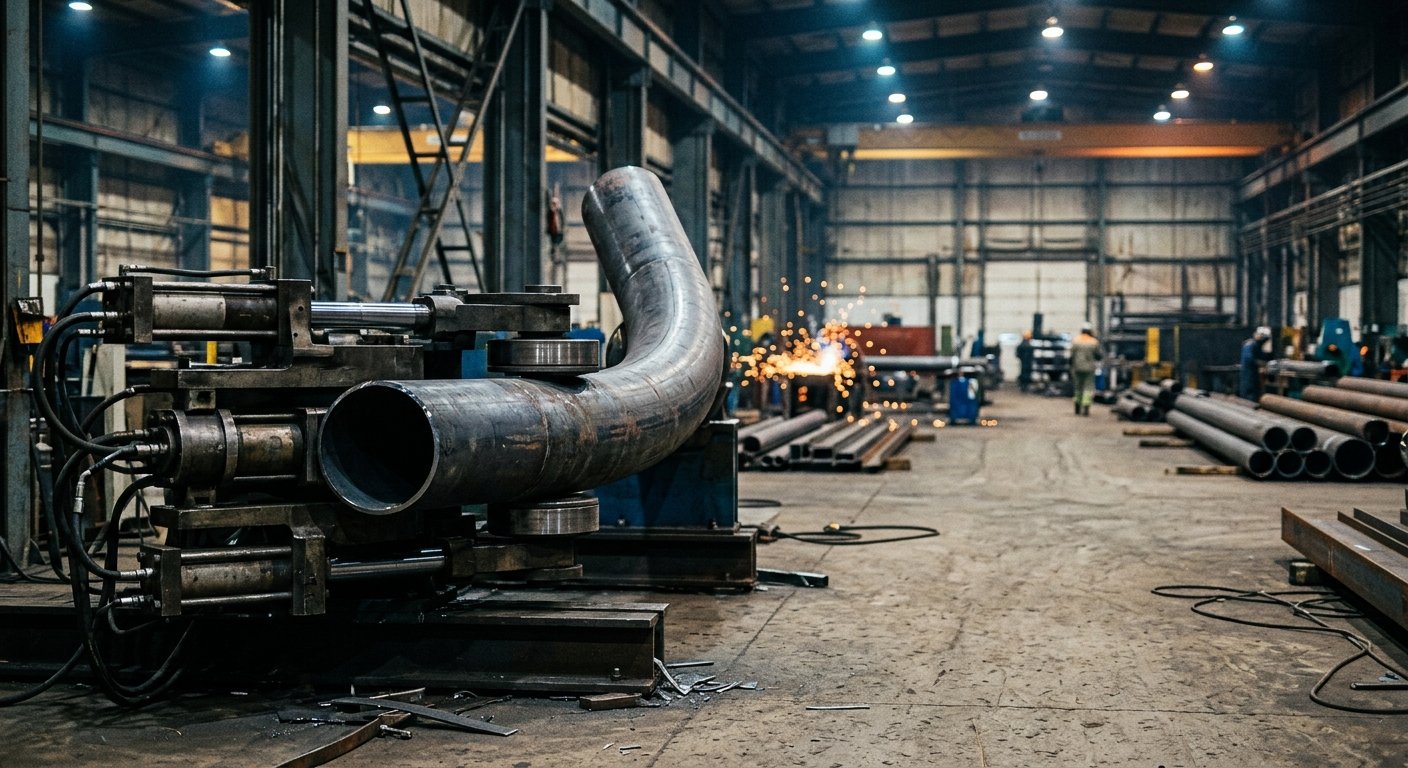
Offshore platform construction and petrochemical processing facilities require large-diameter pipe bending capabilities that standard equipment can’t accommodate. Custom pipe bending machines for these industries often handle pipes from 6 to 24 inches in diameter with wall thicknesses exceeding schedule 80. These machines feature:
- High-tonnage hydraulic systems generating forces exceeding 200 tons
- Specialized mandrels and wiper dies engineered for specific pipe specifications
- Heating systems for hot bending of heavy-wall pipe
- Automated weld seam orientation to position welds in optimal stress locations
- Integration with pipe end preparation equipment for complete fabrication cells
Corrosion-resistant alloy piping for sour gas service presents additional challenges. Bespoke pipe bending machines for these applications prevent surface contamination during forming and incorporate post-bend cleaning systems to maintain material integrity.
Defense and Military Equipment
Military vehicle hydraulic systems, naval applications, and defense infrastructure projects often require custom bending solutions that meet rigorous military specifications. These applications demand machines capable of producing components that perform reliably under extreme conditions—from Arctic temperatures to desert heat, from shock loads to sustained vibration.
Custom solutions for defense applications emphasize reliability, repeatability, and domestic manufacturing. Supply chain security concerns make American-manufactured equipment with domestic component sourcing particularly valuable for defense contractors.
Key Features of Engineered Custom Bending Systems
Advanced Control Systems
Modern custom cnc bending systems incorporate sophisticated control platforms that go beyond simple bend angle programming. These systems feature:
- 3D graphical programming interfaces that simulate the entire bend sequence
- Collision detection algorithms preventing tooling or machine interference
- Adaptive control that adjusts parameters based on real-time feedback
- Recipe management for storing thousands of part programs
- Network integration for remote monitoring and predictive maintenance
The control system represents the intellectual core of custom pipe bending machines, transforming mechanical capability into production performance.
Modular Tooling Architecture
Custom machines designed for diverse part portfolios benefit from modular tooling systems that enable rapid changeover between different tube sizes and bend configurations. Quick-change tooling packages reduce setup time from hours to minutes, maximizing productive capacity. Specialized bending machine manufacturers design tooling systems with precision locating features ensuring absolute repeatability after tool changes.
Process Monitoring and Data Analytics
Industry 4.0 connectivity transforms custom bending equipment into intelligent manufacturing assets. Integrated sensors monitor critical process variables—bending force, rotation angle, pressure die position, mandrel extension—generating data streams that feed predictive maintenance algorithms and process optimization models. This capability proves particularly valuable in high-reliability industries where unplanned downtime carries severe consequences.
The Custom Machine Development Process
Successful custom bending projects follow a structured engineering approach. Initial consultation focuses on understanding the complete application context—not just the tube specifications, but the broader production environment, quality requirements, volume projections, and future flexibility needs.
Feasibility analysis determines whether proposed specifications can be achieved and identifies potential technical challenges. This phase often includes material testing, prototype bending trials, and finite element analysis of stress distributions in complex geometries.
Detailed design incorporates customer input throughout the engineering process. Specialized bending machine manufacturers with deep application expertise guide customers through design trade-offs, balancing performance, cost, and schedule considerations.
Factory acceptance testing validates machine performance before shipment. Customers verify that custom machines meet all specified capabilities under controlled conditions, documenting baseline performance for future reference.
Installation, operator training, and production validation complete the process. Comprehensive training ensures operators understand not just how to run the machine, but why certain parameters matter and how to optimize performance for their specific applications.
Selecting the Right Custom Bending Partner
Choosing a specialized bending machine manufacturer for custom solutions requires evaluating several critical factors beyond initial purchase price. Engineering depth matters—can the manufacturer analyze your application from first principles, or simply modify existing designs? Manufacturing capability is equally important—do they control critical component production, or rely entirely on external suppliers?
Application experience in your specific industry provides invaluable insight. A manufacturer with proven aerospace heritage understands certification requirements, testing protocols, and documentation standards without extensive education. Similarly, experience with petrochemical applications brings knowledge of material selection, corrosion considerations, and safety-critical design practices.
Long-term support capability distinguishes quality manufacturers. Custom machines represent multi-decade investments. Parts availability, technical support, and upgrade paths ensure your equipment remains productive throughout its service life. American manufacturers with stable operations provide supply chain security and responsive support that overseas sources struggle to match.
Maximizing Return on Custom Equipment Investment
Custom pipe bending machines represent significant capital investments justified by strategic advantages. Maximizing return requires treating these assets as production systems rather than standalone machines. Integration with upstream and downstream processes eliminates bottlenecks and reduces handling. Operator skill development through comprehensive training programs ensures the machine’s capabilities translate into actual production performance.
Preventive maintenance programs based on manufacturer recommendations protect your investment and prevent costly unplanned downtime. Regular tooling inspection and replacement before wear affects part quality maintains consistent output. Performance monitoring identifies optimization opportunities—perhaps adjustments to bend sequences reduce cycle time, or modified tooling improves surface finish.
Future-Proofing Custom Bending Solutions
Technology evolution in manufacturing continues accelerating. Custom bending equipment designed with upgrade paths maintains relevance as capabilities advance. Modular control systems accept software updates adding new features. Mechanical platforms accommodate tooling improvements and automation integration. This flexibility extends equipment service life and protects capital investment.
As manufacturing embraces digital transformation, custom cnc bending systems with robust data infrastructure position companies for advanced analytics, machine learning optimization, and digital twin simulation capabilities emerging in 2026 and beyond.
Partner With Proven Custom Bending Expertise
Complex manufacturing challenges demand sophisticated solutions engineered specifically for your applications. Whether you’re bending exotic aerospace alloys, fabricating large-diameter petrochemical piping, or producing high-volume automotive components, custom pipe bending machines deliver the precision, reliability, and productivity your operations require.
Hines Bending Systems brings decades of American manufacturing excellence to custom bending solutions, with proven performance in NASA, military, and demanding industrial applications. Our engineering team analyzes your specific challenges and develops application-specific bending machines that solve real production problems. Contact our technical specialists to discuss your custom bending requirements and discover how engineered solutions drive competitive advantage in precision tube fabrication.