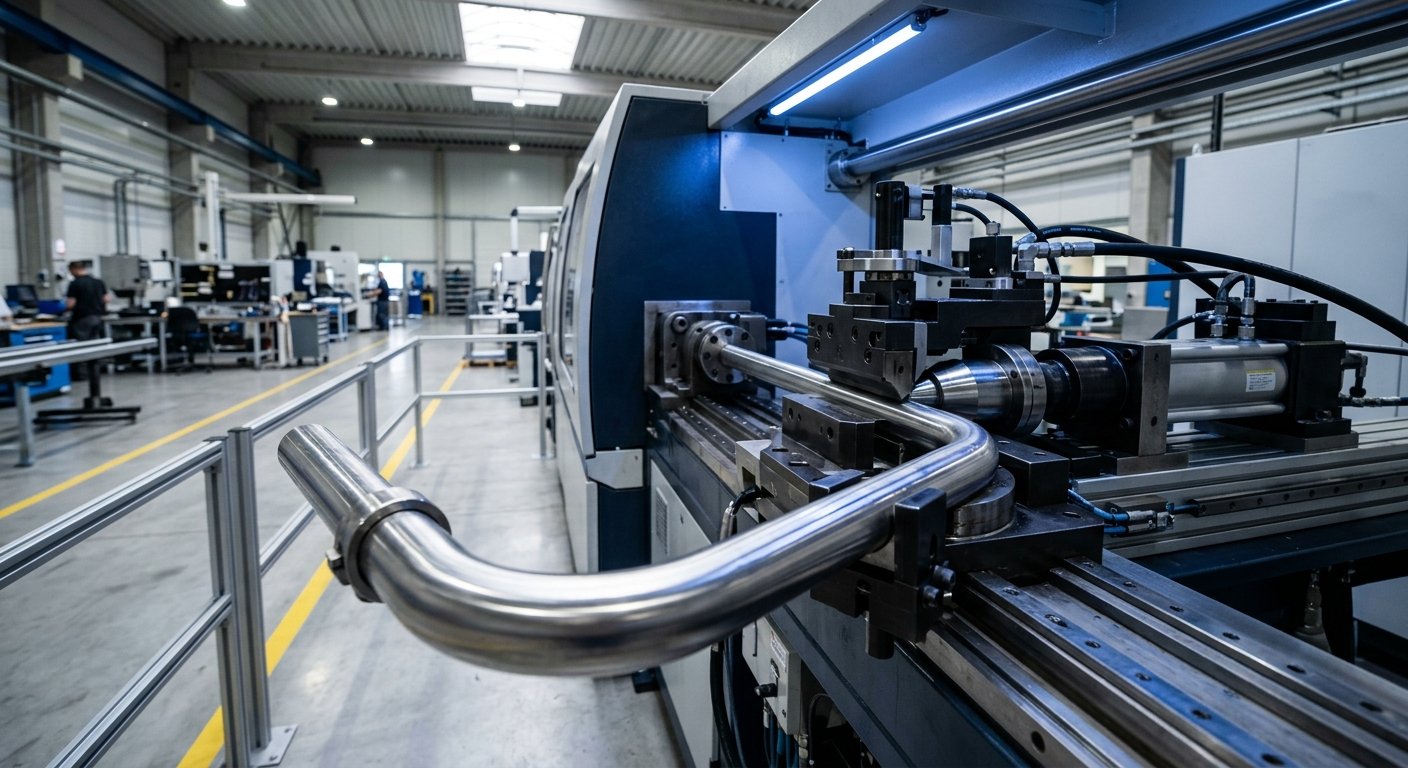
Heavy-wall pipe bending for energy infrastructure presents unique challenges that separate capable manufacturers from exceptional ones. When wall thicknesses exceed industry norms and material specifications demand aerospace-grade precision, the selection of your pipe bending machine manufacturer becomes a critical decision that impacts project timelines, safety compliance, and operational longevity.
The energy sector’s infrastructure demands in 2026 have intensified pressure on precision pipe bending manufacturers to deliver solutions that handle extreme specifications while maintaining geometric accuracy. Heavy-wall applications in oil and gas, petrochemical processing, and power generation require specialized equipment and deep metallurgical understanding that only experienced industrial pipe bending equipment manufacturers possess.
Understanding Heavy-Wall Pipe Bending Requirements
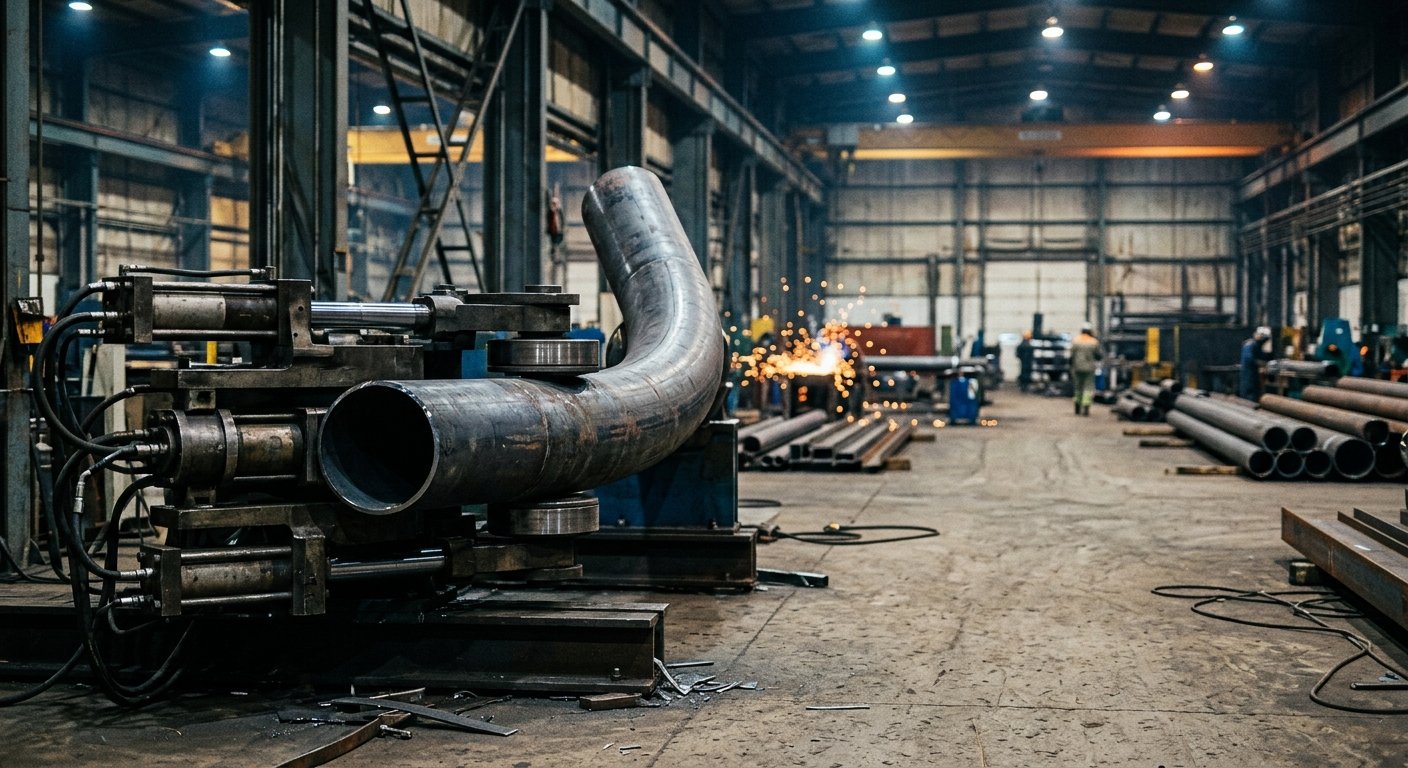
Heavy-wall pipe bending differs fundamentally from standard tube manipulation. Wall thicknesses ranging from 0.500″ to several inches require substantially different force calculations, tooling designs, and quality control protocols. The physics of bending heavy-wall material creates specific challenges including increased spring-back, potential wall thinning on the extrados, and thickening on the intrados that must be precisely controlled.
For oil and gas pipe bending applications, API 5L specifications govern material properties and dimensional tolerances. These pipes frequently utilize X52 through X80 grade steels, each presenting distinct work-hardening characteristics during the bending process. A qualified precision pipe bending manufacturer must demonstrate proven capability with these materials under actual production conditions, not theoretical scenarios.
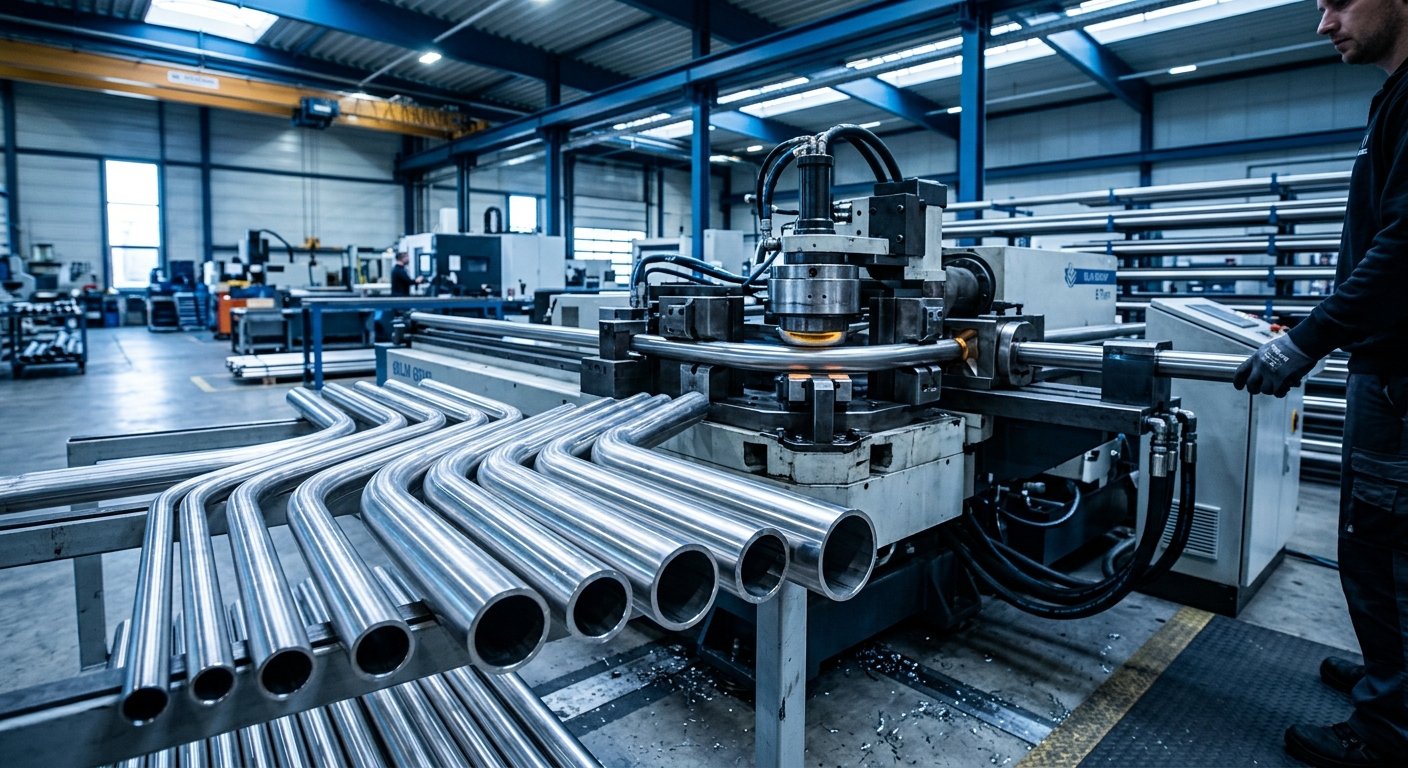
Wall thickness ratios dramatically influence bending methodology selection. Thin-wall ratios (D/t greater than 50) typically allow rotary draw bending with mandrel support. Heavy-wall applications with D/t ratios below 20 often require induction bending or specialized ram bending techniques that heat localized zones to reduce forming forces while maintaining structural integrity.
Induction Pipe Bending for Large-Diameter Infrastructure
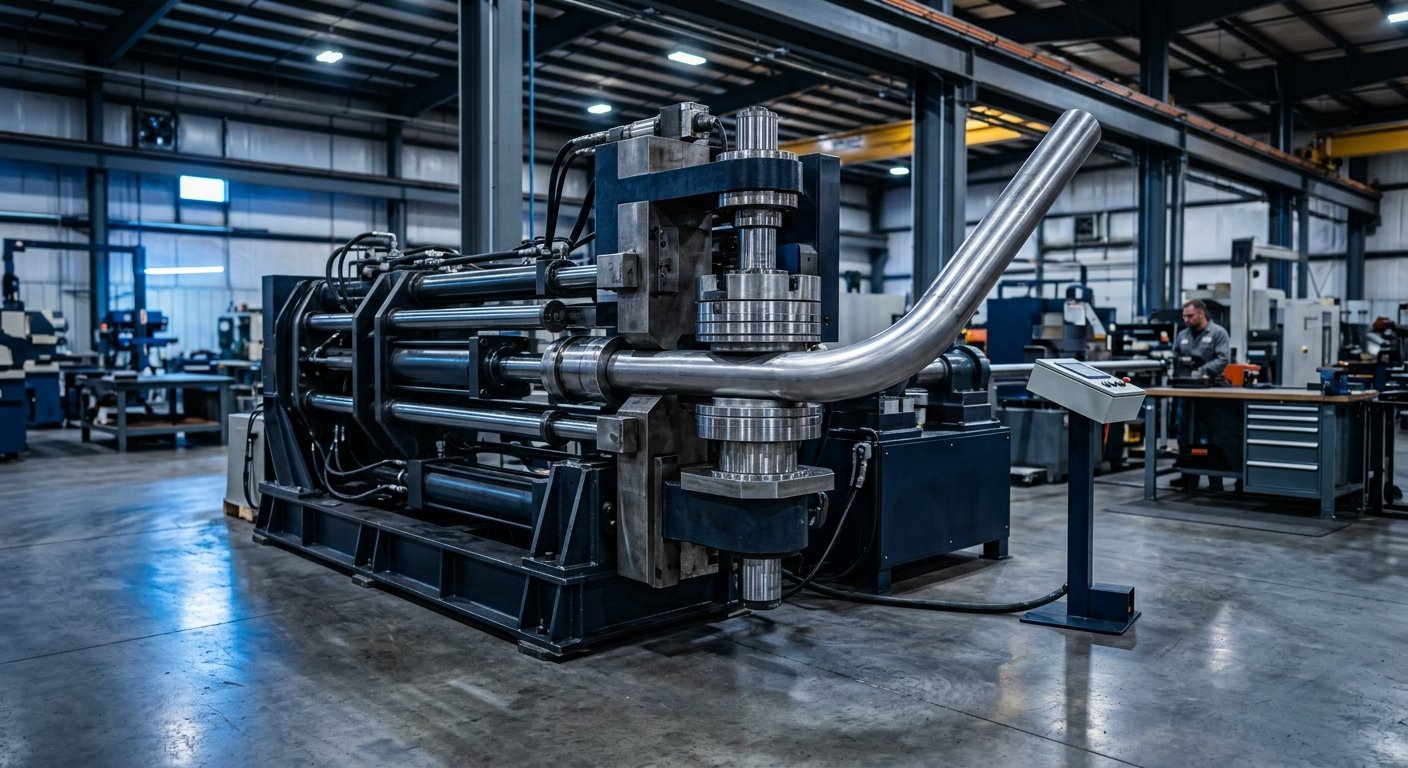
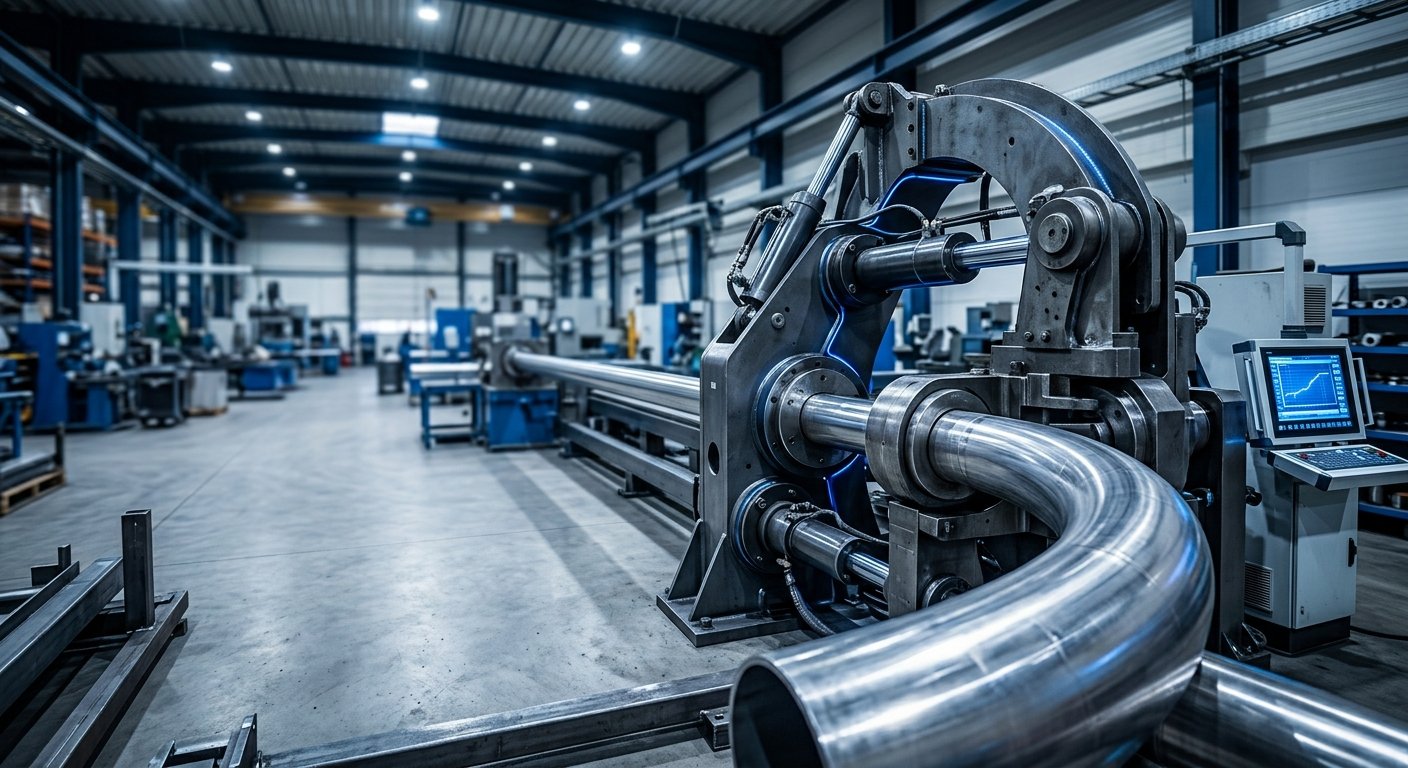
Induction pipe bending machines represent the most effective solution for large-diameter, heavy-wall energy infrastructure where traditional cold bending reaches practical limits. This process applies concentrated heat to a narrow band around the pipe circumference, typically 1-3 inches wide, while simultaneously applying bending force through precision mechanical systems.
The induction method offers distinct advantages for heavy-wall applications. Material stress remains localized, reducing overall deformation forces required. Wall thickness changes stay within acceptable tolerances specified by ASME B31.3 and B31.4 pipeline codes. Most significantly, induction bending eliminates the massive tooling investments required for cold bending large-diameter heavy-wall pipe.
Temperature control during induction bending critically affects final properties. Advanced induction pipe bending machines utilize infrared monitoring and closed-loop control systems maintaining temperatures between 1600-2100°F depending on material specification. This precision prevents grain growth while ensuring adequate plasticity for forming without introducing unacceptable residual stresses.
Custom pipe bending machines incorporating induction technology can handle pipes from 2″ through 60″ diameter with wall thicknesses exceeding 3 inches. American made pipe benders from established manufacturers like Hines Bending Systems integrate decades of induction bending expertise with modern CNC controls, delivering repeatable results across production runs.
Material Considerations for Energy Sector Applications
Material selection for heavy-wall energy infrastructure extends beyond basic strength requirements. Corrosion resistance, hydrogen embrittlement susceptibility, low-temperature toughness, and weldability all factor into specification decisions that subsequently impact bending processes.
Duplex and super-duplex stainless steels have gained prominence in offshore oil and gas applications due to superior corrosion resistance combined with high strength. These materials require careful heat management during bending to prevent excessive ferrite formation or precipitation of detrimental phases. Your pipe bending machine manufacturer must demonstrate specific experience with these challenging alloys.
Chrome-moly alloys (P11, P22, P91) dominate high-temperature petrochemical service. These materials demand post-bend heat treatment to restore toughness and relieve residual stresses. An industrial pipe bending equipment manufacturer serving energy sectors should provide integrated solutions including heat treatment capabilities or qualified partnerships with certified heat treaters.
Nickel alloys including Inconel 625 and Incoloy 825 appear in the most severe corrosive environments. Work-hardening rates for these materials exceed carbon steels significantly, requiring specialized tooling geometries and potentially elevated-temperature forming to prevent excessive tool wear and spring-back issues.
PetroPipe Bending Specialized Requirements
PetroPipe bending encompasses the full spectrum of pipeline fabrication for petroleum extraction, transportation, and processing. This specialized niche demands compliance with industry-specific codes while meeting geometric requirements that ensure proper flow characteristics and structural performance under operating pressures exceeding 2000 psi.
Dimensional tolerances for PetroPipe bending applications typically exceed general industrial standards. Ovality measurements must remain within 3% of nominal diameter. Wall thickness variations cannot exceed 12.5% from nominal specification. Center-line radius accuracy maintains ±1% tolerance on critical pipeline sections where pigging operations or inline inspection tools will operate.
Traceability requirements in petroleum infrastructure necessitate comprehensive documentation throughout the bending process. Each bend requires material certifications, bend reports documenting actual versus specified geometry, and non-destructive testing results. A precision pipe bending manufacturer serving petroleum sectors must maintain quality management systems meeting ISO 9001 and API Q1 specifications.
Surface finish preservation during bending operations protects against corrosion initiation points. Internal mandrels and external wipers must be designed to prevent scoring or gouging that creates stress concentrations. For coated pipes, custom pipe bending machines incorporate specialized tooling that accommodates coating thickness without damage during forming operations.
Evaluating Manufacturing Partners: Critical Selection Criteria
Selecting an industrial pipe bending equipment manufacturer for heavy-wall energy infrastructure requires systematic evaluation beyond standard vendor assessment. The following criteria separate competent suppliers from strategic manufacturing partners capable of supporting mission-critical applications.
Proven Track Record with Demanding Applications
Request specific case studies demonstrating successful completion of projects matching your specifications. A manufacturer claiming heavy-wall capability should provide documented examples including material specifications, wall thicknesses, diameters, bend radii, and tolerances achieved. References from NASA, military, or major energy companies indicate proven performance under scrutiny.
American made pipe benders manufactured domestically offer advantages including DFARS compliance for defense-related work, reduced supply chain vulnerabilities, and proximity for service support. Hines Bending Systems’ Michigan manufacturing heritage exemplifies this advantage, providing direct access to engineering expertise and rapid response capabilities.
Engineering Support and Custom Solutions
Standard catalog equipment rarely optimizes heavy-wall energy infrastructure applications. Your pipe bending machine manufacturer should provide application engineering support including bend simulation, tooling design, and process optimization before equipment purchase. This front-end investment prevents costly production issues and ensures first-article success.
Custom pipe bending machines tailored to specific applications deliver long-term value through increased productivity and quality consistency. Customization ranges from specialized tooling packages through complete machine designs incorporating unique loading systems, multi-axis positioning, or integrated inspection capabilities.
Metallurgical Expertise
Heavy-wall bending success depends fundamentally on understanding material behavior under forming stresses. Your manufacturing partner should employ metallurgists or materials engineers who can discuss phase transformations, work-hardening characteristics, and spring-back compensation strategies specific to your materials.
Request information about testing capabilities including tensile testing, hardness surveys, and metallographic examination. A precision pipe bending manufacturer serving critical applications maintains laboratory facilities or qualified partnerships for material verification and process validation.
Quality Systems and Documentation
Energy infrastructure applications demand rigorous quality documentation. Evaluate potential partners’ quality management systems including certifications (ISO 9001, AS9100, API Q1), inspection equipment calibration programs, and personnel qualification procedures. Request sample bend reports and material traceability documentation to assess detail levels provided.
Technology Integration and Industry 4.0 Capabilities
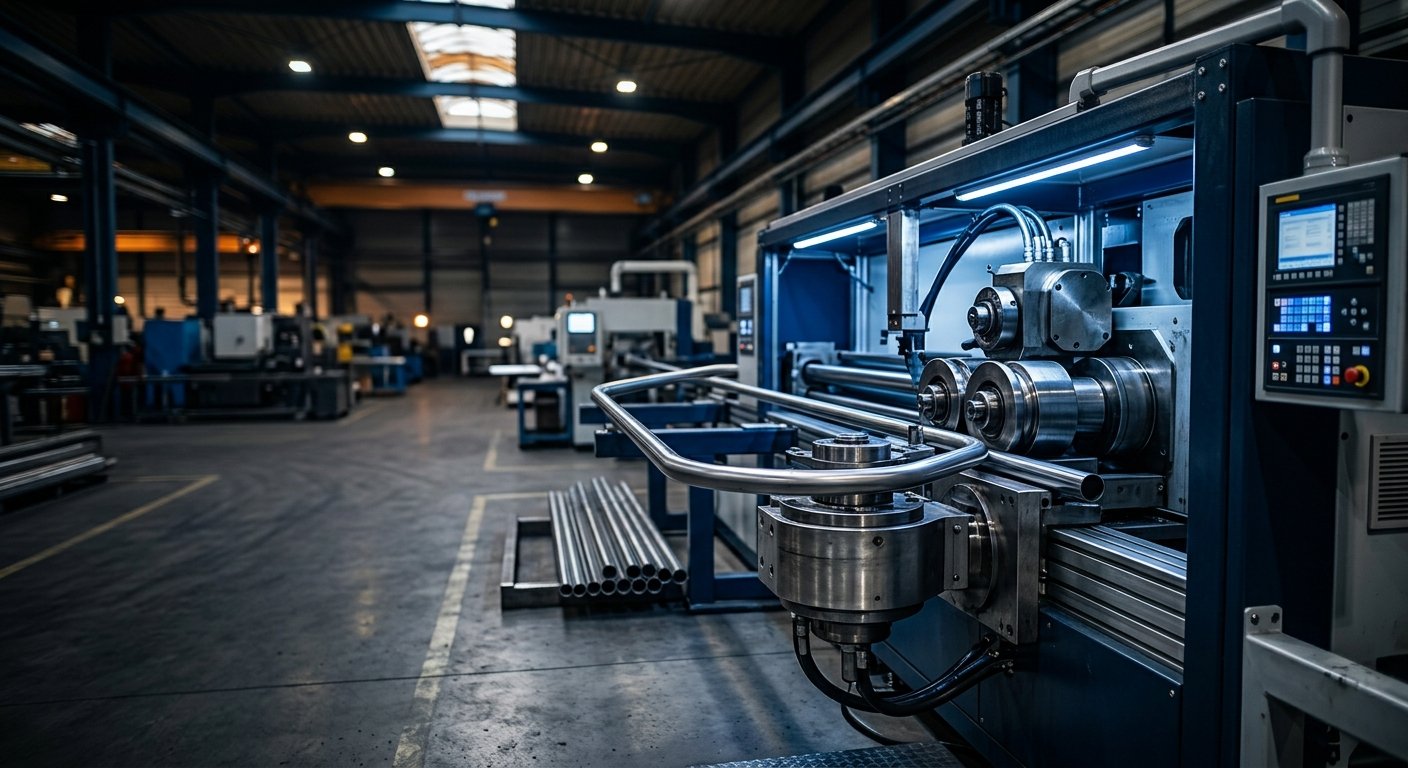
Modern industrial pipe bending equipment manufacturers increasingly integrate digital technologies that enhance productivity and quality assurance. CNC controls with parametric programming enable rapid changeovers between jobs while maintaining precision. Data logging systems capture process parameters for every bend, supporting statistical process control and continuous improvement initiatives.
Advanced induction pipe bending machines now incorporate machine learning algorithms that optimize heating profiles based on material response during forming. These systems reduce setup time and minimize trial-and-error iterations when processing new material specifications.
Remote diagnostic capabilities enable equipment manufacturers to provide real-time troubleshooting support, reducing downtime when issues arise. This connectivity proves particularly valuable for operations in remote locations common to oil and gas infrastructure projects.
Total Cost of Ownership Considerations
Equipment acquisition cost represents only a fraction of lifetime ownership expenses. Evaluate potential manufacturing partners based on comprehensive cost factors including installation support, operator training programs, preventive maintenance requirements, spare parts availability, and technical support responsiveness.
American made pipe benders typically offer superior parts availability and service response compared to imported alternatives. When production schedules depend on equipment uptime, the value of same-day parts shipping and experienced service technicians available within hours rather than days becomes readily apparent.
Energy consumption for heavy-wall bending operations significantly impacts operating costs. Induction systems generally demonstrate superior energy efficiency compared to furnace heating for localized bends. Request actual power consumption data under conditions matching your intended applications.
Future-Proofing Your Investment
Energy infrastructure investments operate for decades. Equipment selection should consider not only current requirements but anticipated future needs. Modular machine designs accommodate upgrades including additional axis controls, automated loading systems, or enhanced inspection capabilities as production volumes and quality requirements evolve.
The precision pipe bending manufacturer you select becomes a long-term partner in your operational success. Evaluate their commitment to continuous improvement, investment in research and development, and track record of supporting legacy equipment. Companies demonstrating multi-generational experience, like family-owned manufacturers that have served industrial markets since the mid-20th century, typically provide superior long-term support.
Making the Strategic Decision
Selecting a pipe bending machine manufacturer for heavy-wall energy infrastructure represents a strategic decision impacting production capabilities for years. Prioritize partners demonstrating deep technical expertise, proven performance in demanding applications, and comprehensive support infrastructure over those competing primarily on acquisition cost.
The complexity of oil and gas pipe bending, petrochemical processing pipe fabrication, and power generation infrastructure demands precision pipe bending manufacturers who understand not just the mechanics of metal forming but the broader context of code compliance, material performance, and application-specific requirements that define success in energy sectors.
Ready to discuss your heavy-wall pipe bending requirements with a manufacturer that has supported critical energy infrastructure projects for decades? Contact Hines Bending Systems to speak with application engineers who understand the unique challenges of precision pipe bending for demanding industrial applications. From custom pipe bending machines to comprehensive training and support, we deliver American-made solutions that perform when precision matters most.