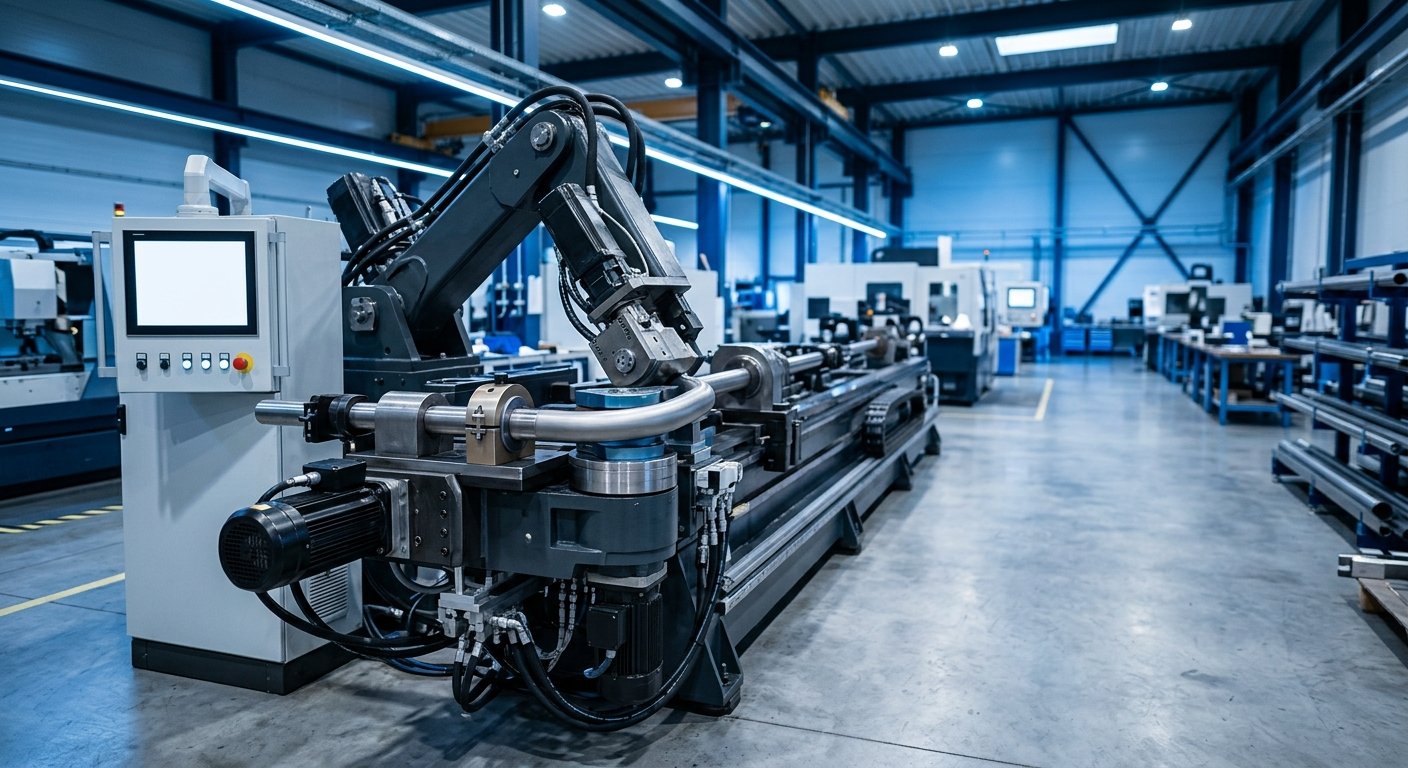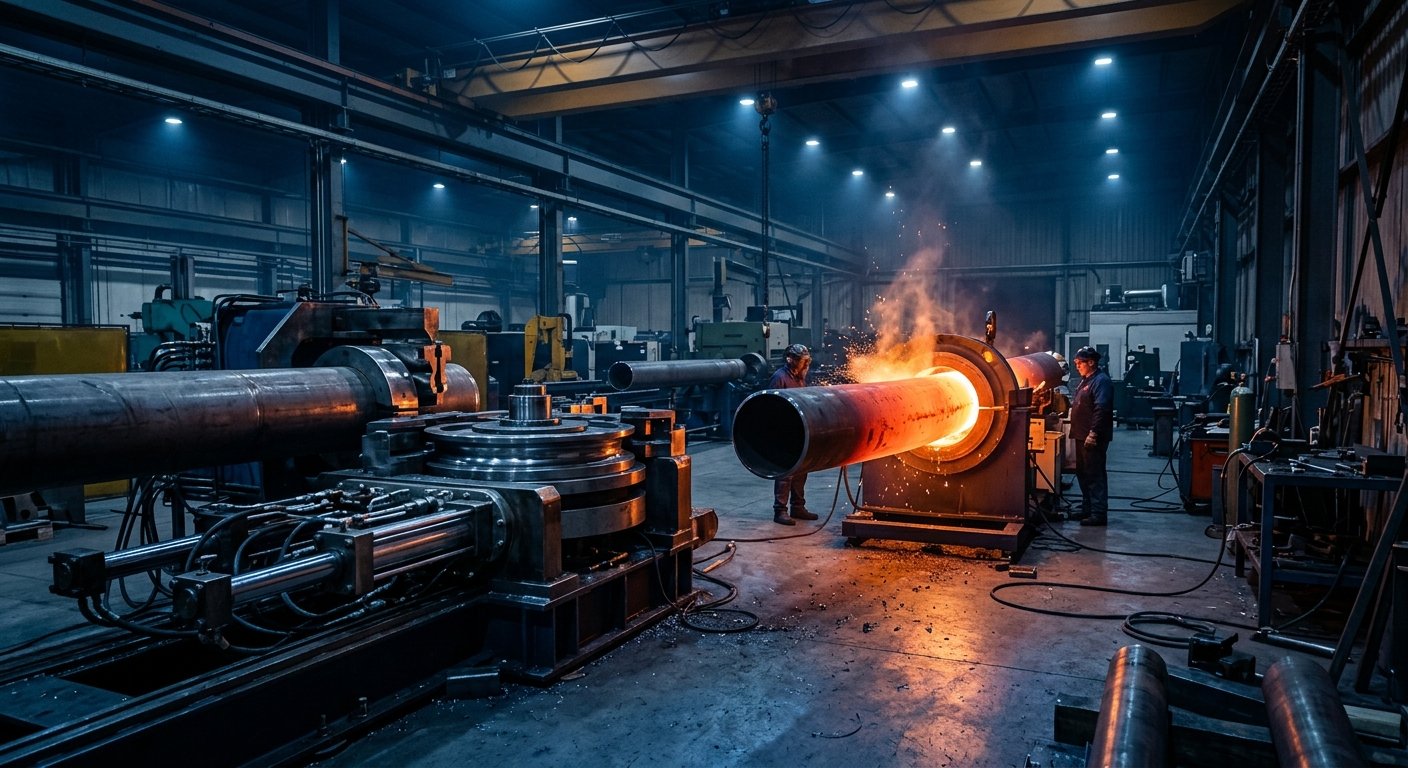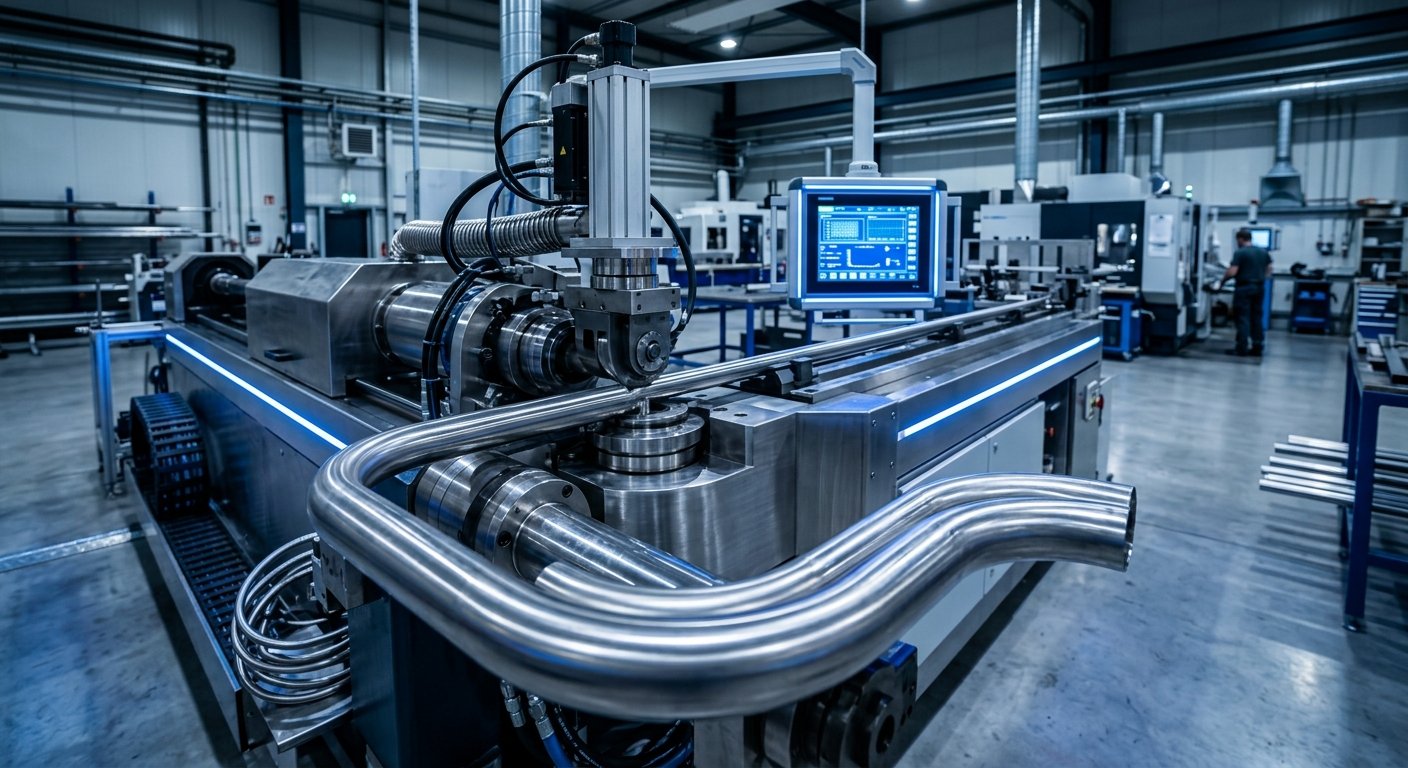
When a single faulty bend in a high-pressure hydraulic line can ground an aircraft or trigger a pipeline shutdown, quality standards aren’t paperwork—they’re engineering imperatives. In 2026, the bar for precision pipe bending has never been higher. Tightening regulatory frameworks, increasingly demanding aerospace and energy applications, and supply chain scrutiny have converged to make compliance a competitive differentiator for every pipe bending machine manufacturer serving critical industries.
This guide breaks down what today’s quality and compliance landscape looks like, what it means for the equipment you specify, and how to evaluate a precision pipe bending manufacturer against 2026 standards.
Why 2026 Compliance Requirements Have Raised the Stakes
Several forces have reshaped quality expectations for industrial pipe bending equipment manufacturers over the past few years. The Department of Defense’s ongoing push for traceability in defense supply chains, the FAA’s continued emphasis on material certifications for aerospace components, and ASME code updates affecting pressure piping systems have all tightened the requirements that end-users must meet—and by extension, the capabilities they must demand from their bending equipment.
The ASME B31.3 Process Piping Code remains the governing standard for petrochemical and refinery piping systems. Its requirements for wall thickness tolerances, ovality limits, and weld preparation geometry directly determine what a bending machine must achieve to produce code-compliant components. Similarly, aerospace manufacturers working under AS9100 Rev D quality management systems must document every step of their production process—including bending—with traceability back to raw material certifications.
For procurement specialists and engineering managers, this means the question isn’t simply “can this machine bend this pipe?” It’s “can this machine bend this pipe to a tolerance I can certify, document, and defend in an audit?”
Key Quality Parameters in Precision Pipe Bending
Understanding what precision actually means in this context helps clarify what separates a capable pipe bending machine supplier from one that falls short under demanding conditions.
Wall Thinning and Ovality Control
During bending, the outer radius of a pipe experiences tensile stress that thins the wall, while the inner radius compresses. Excessive wall thinning weakens structural integrity; excessive ovality creates sealing and fit-up problems. ASME B31.3 and aerospace standards like SAE AMS 2806 specify maximum permissible thinning and out-of-roundness values that vary by material, diameter, and pressure rating.
Mandrel bending technology is the primary method for controlling both parameters simultaneously. A properly sized mandrel—positioned precisely at the tangent point of the bend—supports the pipe internally and prevents collapse during the bend cycle. Mandrel pipe bending equipment from a capable manufacturer will allow operators to dial in mandrel positioning and pressure, producing repeatable results within tight tolerance windows across an entire production run.
Springback Compensation
All metals exhibit springback—the elastic recovery that occurs after the bending force is released. Springback magnitude varies with material grade, temper, wall thickness, and bend radius. For titanium alloys common in aerospace, springback can be substantial and inconsistent across heats of material.
Modern precision bending machines address this through programmable overbend angles stored in CNC controllers, allowing operators to compensate for known springback values by material type. On high-end equipment, closed-loop angle measurement systems can detect actual springback in real time and automatically adjust subsequent bends—a capability that becomes critical in low-volume aerospace work where scrapping expensive titanium tubing is not an option.
Bend Angle Accuracy and Repeatability
For multi-bend assemblies—common in aircraft hydraulic systems and petrochemical piping runs—cumulative angular error compounds across each bend in sequence. A 0.5-degree error per bend becomes a 2-degree total deviation across four bends, potentially rendering an assembly unusable.
The industry standard for precision aerospace tube bending typically targets ±0.1 degree per bend. Achieving this consistently requires not just capable machinery, but calibrated tooling, verified fixturing, and a documented quality process that covers setup verification at the start of each production run.
Standards Every Precision Manufacturer Should Meet
When evaluating a precision pipe bending manufacturer, the following standards and certifications provide a meaningful baseline:
- ISO 9001:2015 — Foundational quality management system applicable to all manufacturing processes, including equipment design and production
- AS9100 Rev D — Aerospace-specific extension of ISO 9001 covering risk management, configuration control, and first-article inspection requirements
- ASME B31.1 / B31.3 — Power piping and process piping codes establishing dimensional and inspection requirements for finished bent components
- ASTM material standards — Governs the mechanical properties of pipe and tube materials; bending procedures must be validated against specific ASTM grades
- MIL-SPEC requirements — Military procurement often requires equipment and processes to meet specific MIL-STD performance and documentation standards
The FAA’s Advisory Circulars also provide guidance relevant to aircraft tubing fabrication, including bend geometry requirements for hydraulic and fuel system lines that aerospace manufacturers must incorporate into their bending specifications.
What to Demand from an American Pipe Bending Equipment Manufacturer
Specifying American-made pipe benders for critical applications carries operational and compliance advantages that go beyond domestic preference. Traceability of the machine itself—its components, its software, its calibration history—is increasingly relevant as defense and aerospace primes push supply chain transparency requirements down to tooling and equipment levels.
When evaluating any industrial pipe bending equipment manufacturer, consider these criteria:
Application Engineering Depth
A manufacturer should be able to engage at the engineering level: reviewing your material specifications, bend schedules, tolerance requirements, and production volumes to recommend tooling configurations and machine specifications—not just catalog a product. This is especially important for challenging materials like Inconel, titanium, duplex stainless, or thick-wall chrome-moly commonly found in oil and gas and aerospace applications.
Custom Tooling and Configuration Capability
Standard tooling handles standard applications. When your bend radii, material properties, or geometric constraints fall outside common parameters, you need a manufacturer with in-house tooling engineering capability. Off-the-shelf solutions rarely address the specific challenges of high-pressure petrochemical piping or multi-plane aerospace assemblies without customization.
Training and Long-Term Support
A bending machine is only as accurate as the operator running it and the maintenance program supporting it. Manufacturer-provided training—covering setup procedures, tooling selection, springback compensation, and quality verification—directly affects the output quality your team can achieve. Ongoing service support, including calibration verification and preventive maintenance, protects your investment and your process certifications over the machine’s operating life.
At Hines Bending Systems, our 50 years of tube and pipe bending expertise—applied across aerospace, defense, oil and gas, energy, and petrochemical industries—means our engineering team speaks the same technical language as the engineers specifying our equipment. Our track record supplying NASA and military clients reflects the level of precision and documentation support these demanding applications require. Explore our full range of pipe bending machines and custom bending solutions engineered for critical industrial applications.
Emerging Trends Shaping 2026 Bending Quality Requirements
Several developments are influencing how quality standards will evolve through the remainder of this decade:
- Digital process records — Aerospace and defense primes increasingly require electronic quality records generated at the machine level, not just post-process inspection data. CNC systems that log bend parameters per-part are becoming expected, not optional.
- Stricter material qualification — Supply chain disruptions earlier this decade accelerated requirements for material traceability from mill cert to finished part, affecting how bending operations document the pipe stock they process.
- Tighter tolerance specifications — As downstream assembly processes become more automated, incoming component tolerances tighten. Bent tube assemblies feeding robotic installation systems must fit predictably without field adjustment.
- Energy sector expansion — LNG infrastructure buildout and hydrogen pipeline projects are generating demand for large-diameter, high-pressure pipe bending with stringent material integrity requirements under standards like ASME B31.12 for hydrogen piping.
Frequently Asked Questions
What certifications should a precision pipe bending manufacturer hold?
At minimum, look for ISO 9001:2015 certification. For aerospace applications, AS9100 Rev D is the relevant standard. Manufacturers serving defense programs may also work under NADCAP or specific MIL-SPEC requirements. Always verify that certifications apply to the specific processes and equipment relevant to your application, not just to the company’s general operations.
How does mandrel bending improve compliance with pipe bending standards?
Mandrel bending supports the pipe internally during the bend cycle, controlling wall thinning and ovality—both of which are governed by ASME B31.3 and aerospace material standards. For thin-wall tubing, high-alloy materials, or tight bend radii, mandrel bending is typically required to stay within code-compliant dimensional tolerances.
What’s the difference between tube bending and pipe bending for compliance purposes?
Tube is typically specified by outside diameter and wall thickness for precision fit-up applications. Pipe is specified by nominal pipe size and schedule. Each has different applicable standards and tolerance requirements. Both require machines calibrated and tooled specifically for the dimensional range and material being processed. Learn more about application-specific solutions on our tube bending machines page.
How should I evaluate a pipe bending machine supplier for a critical defense application?
Prioritize documented quality management systems, traceability capabilities, and application-specific engineering support. Request references from comparable defense or aerospace programs. Evaluate whether the supplier can provide first-article inspection support and whether their CNC systems generate the process records your prime contractor will require.
Can custom pipe bending equipment meet specific industry standards?
Yes—and in many cases, custom-configured equipment is the only way to reliably meet the combination of material, geometry, and tolerance requirements a specific application demands. A capable manufacturer will engineer the machine configuration, tooling, and control parameters around your compliance requirements, not ask you to adapt your process to standard equipment limitations.
Partner with a Manufacturer Who Understands Your Standards
Meeting 2026 quality and compliance requirements for precision pipe bending starts with the equipment and the expertise behind it. Hines Bending Systems combines American manufacturing precision with five decades of application-specific engineering knowledge to deliver bending solutions that perform to specification in the most demanding industrial environments.
Contact our engineering team to discuss your application requirements, tolerance specifications, and compliance needs—and find out how our equipment can support your quality program from day one.