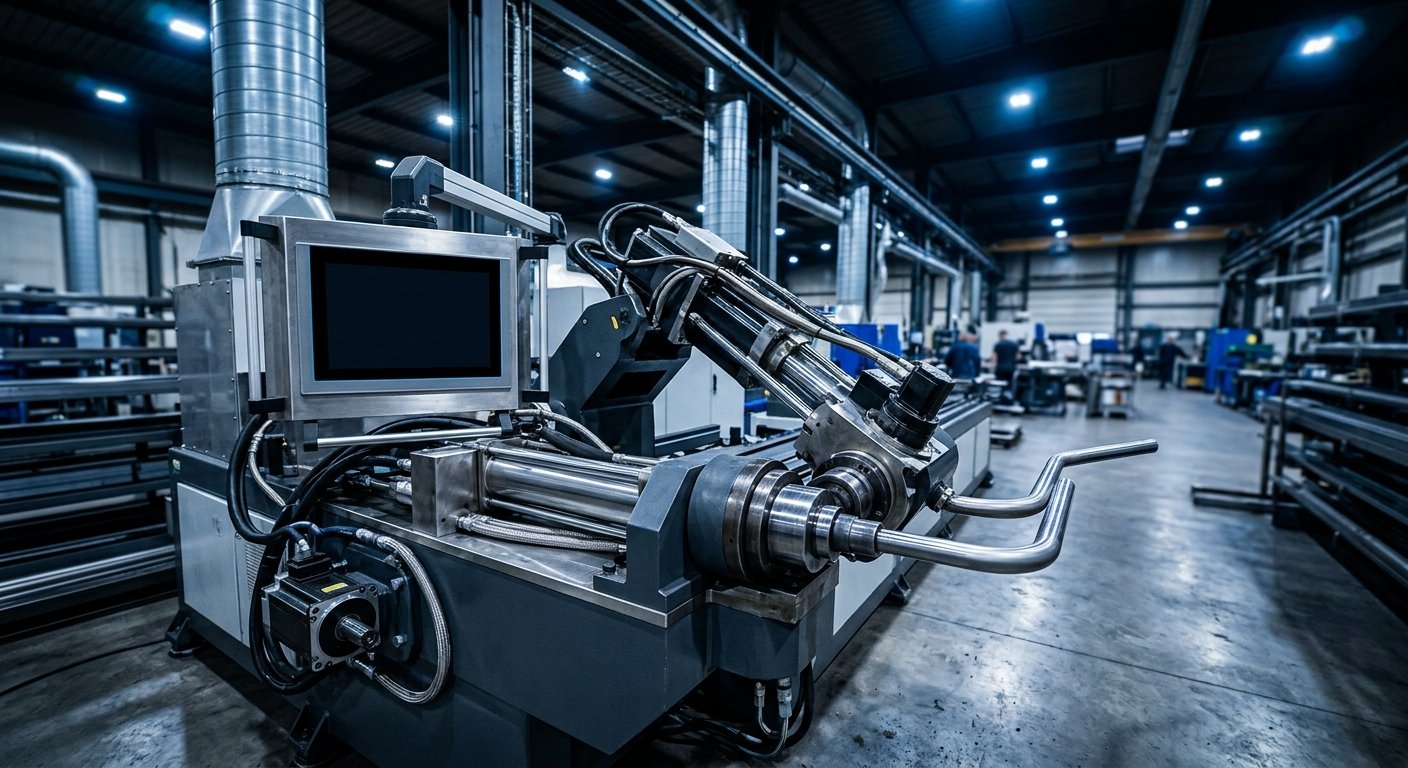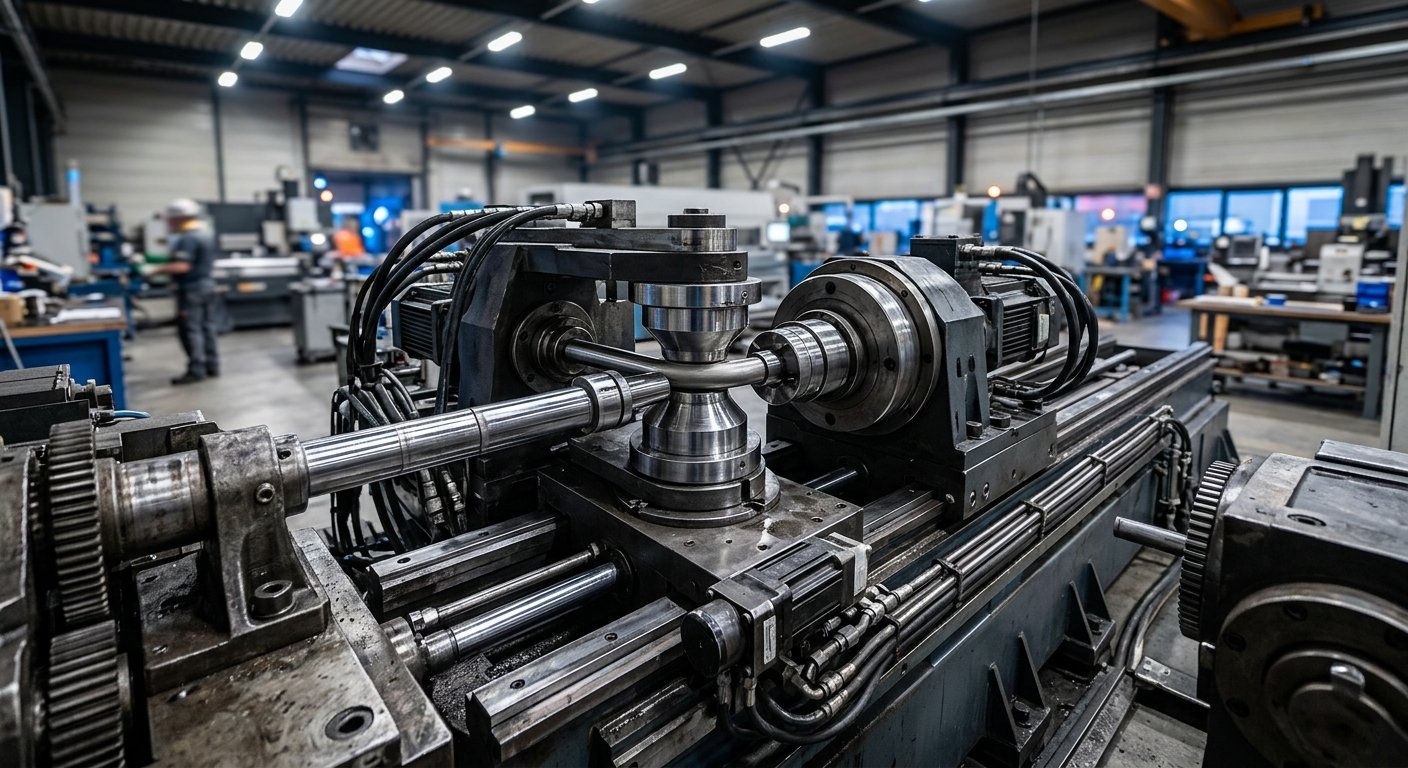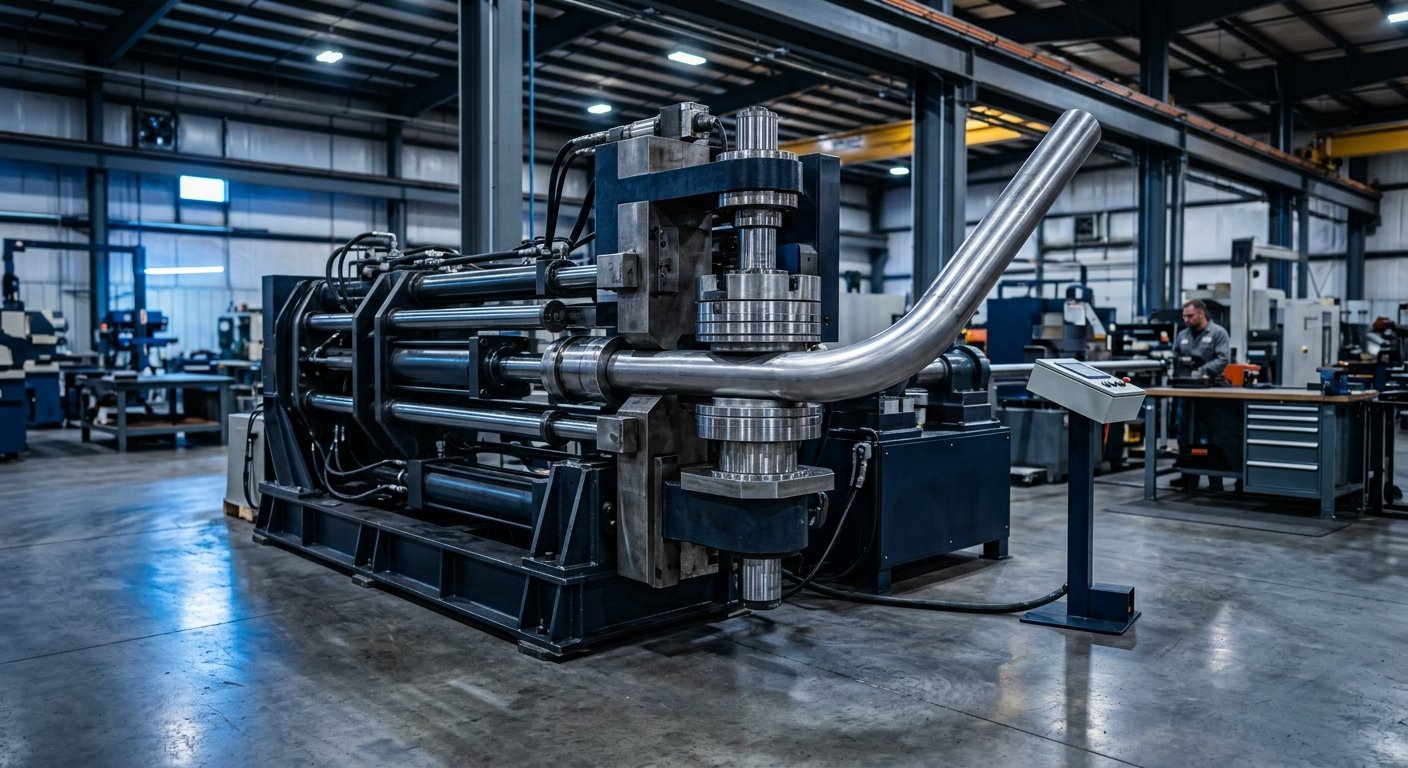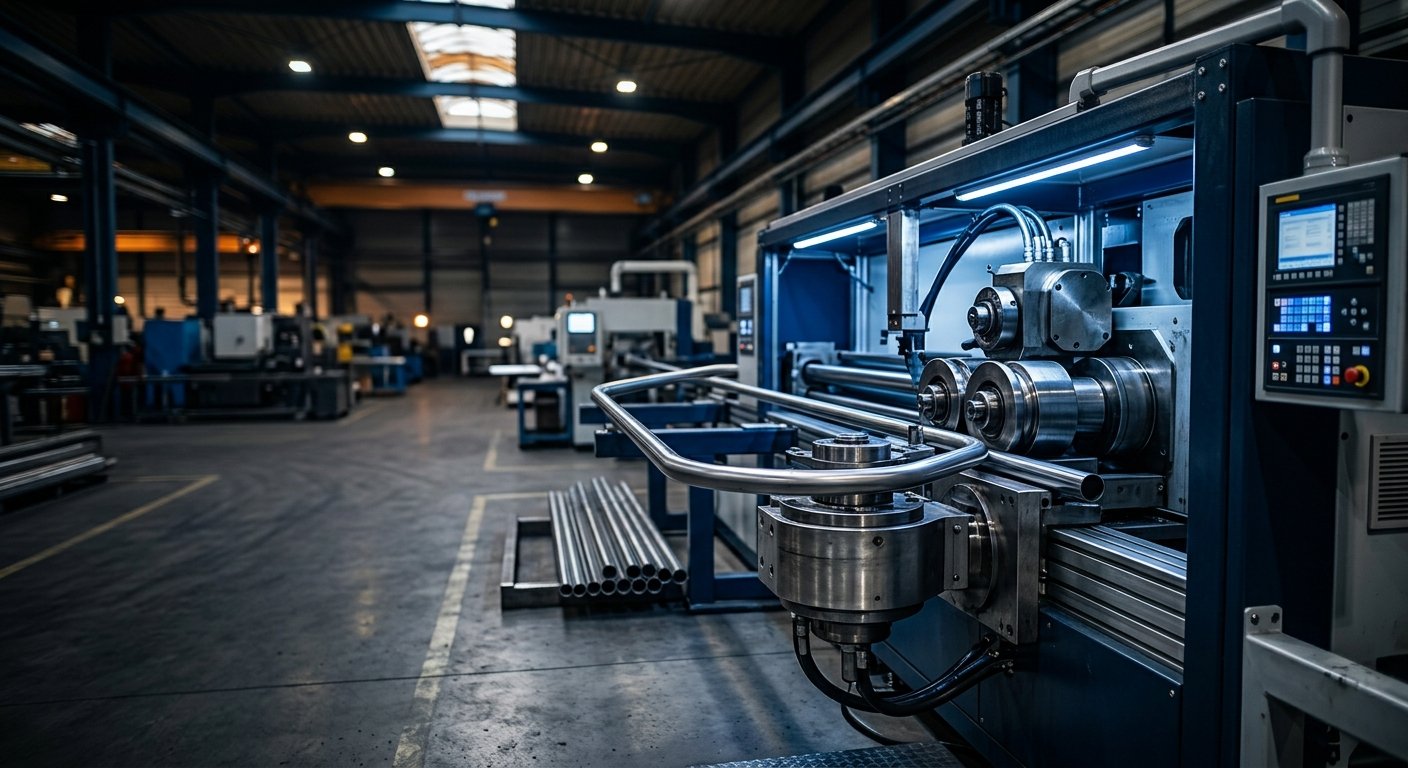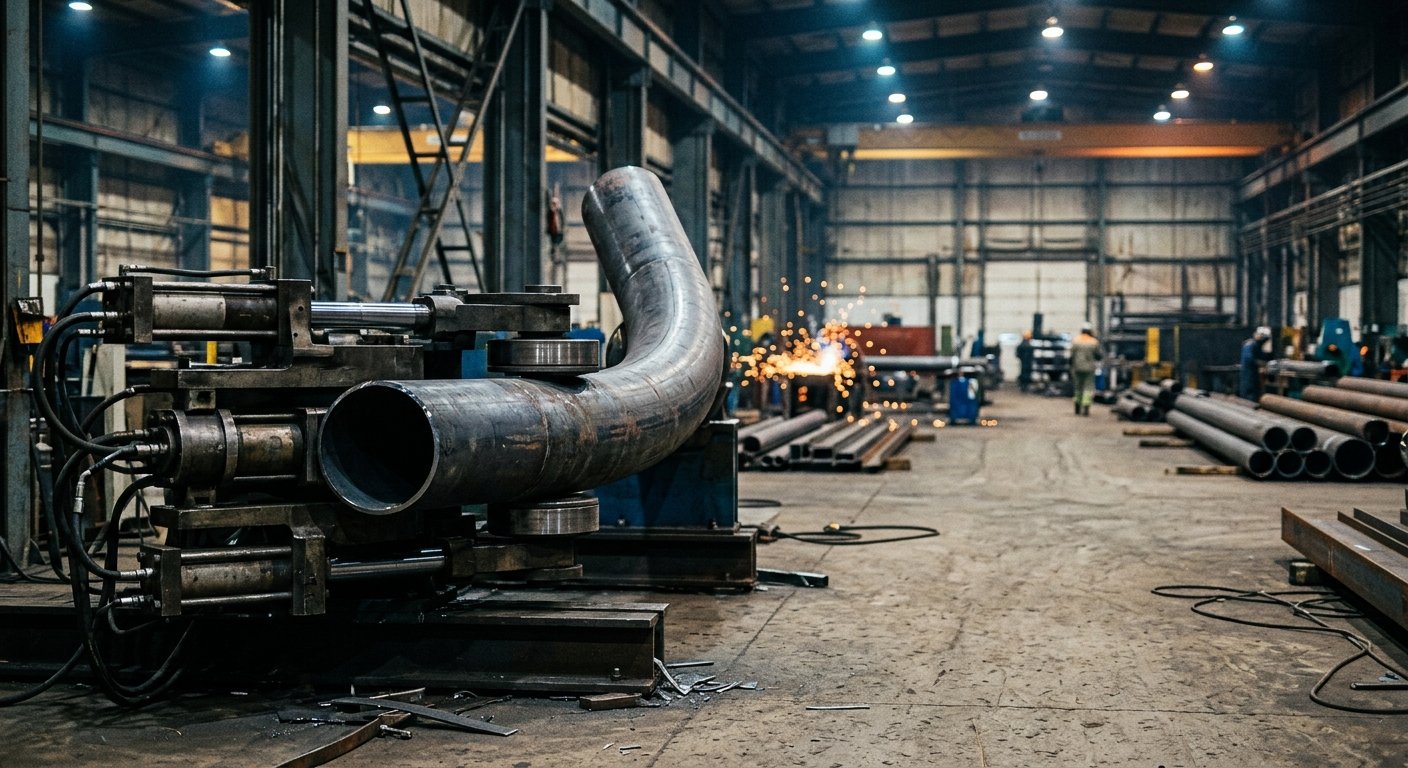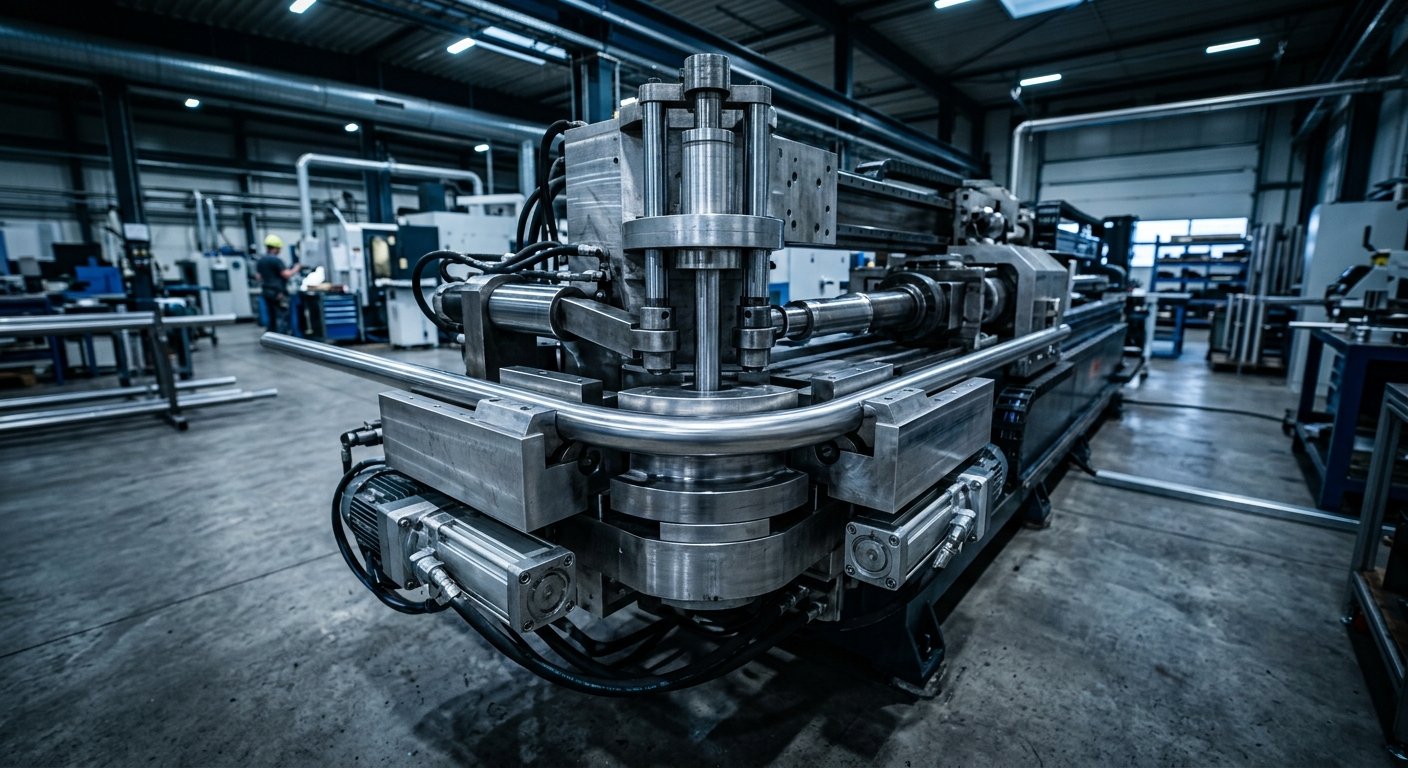
A mandrel bending machine uses an internal support — the mandrel — inserted into the tube or pipe during the bending process to prevent collapse, wrinkling, or ovality in the bore. This guide covers the critical specifications engineers and procurement specialists need to evaluate when selecting mandrel tube bending equipment for demanding aerospace, energy, oil & gas, petrochemical, or defense applications.
- Mandrel support is essential for thin-wall or tight-CLR bends where the tube would otherwise deform or collapse.
- CNC-controlled mandrel tube benders offer repeatable, programmable bending that is critical for high-tolerance aerospace and defense specifications.
- Material type, wall thickness, centerline radius (CLR), and production volume are the four variables that drive machine selection.
- Custom mandrel and tooling configurations are often necessary for exotic alloys, tight radii, or multi-plane bending sequences.
- Partnering with an experienced American equipment manufacturer ensures compliance with industry standards and access to ongoing technical support.
Why Mandrel Bending Matters in Precision Applications
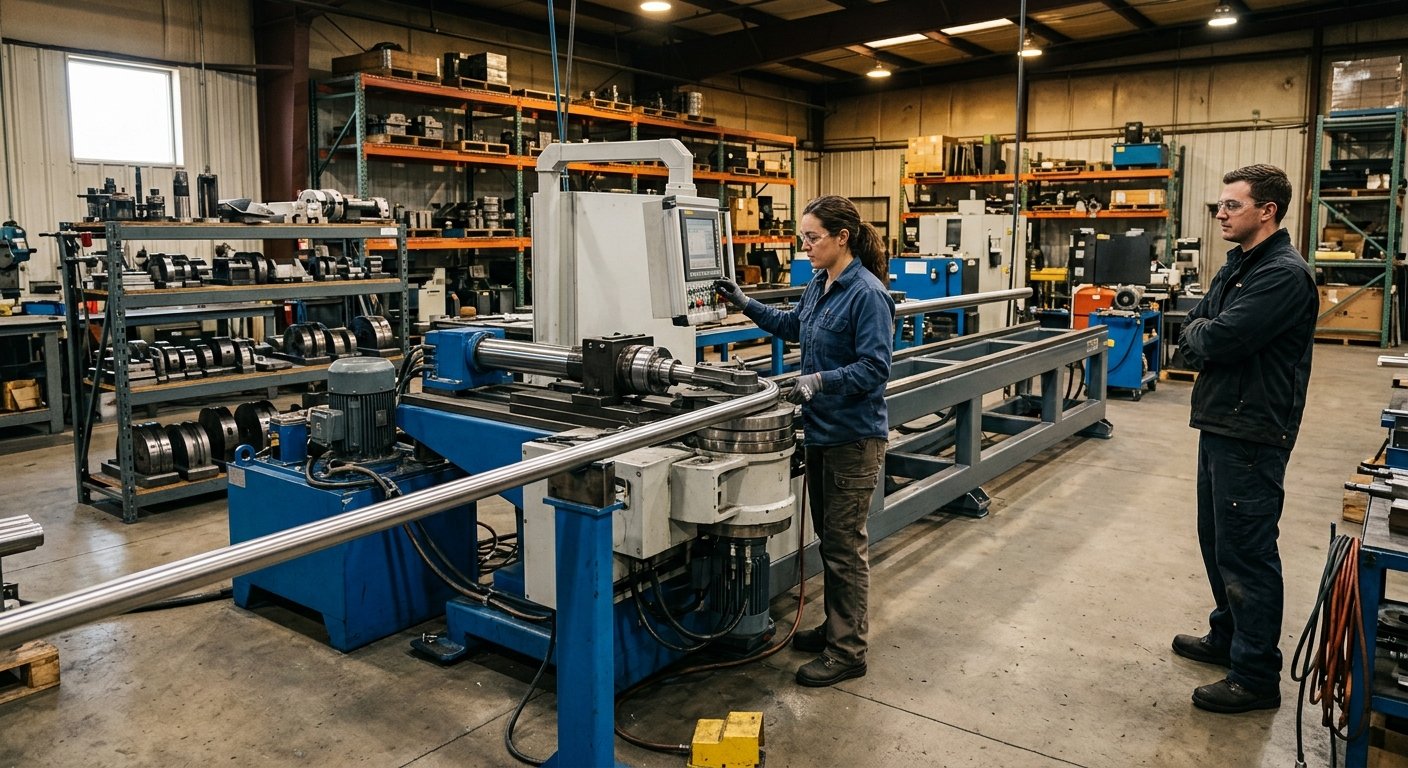
In standard rotary draw bending, a tube is clamped and pulled around a bend die. Without internal support, the tube’s inner wall buckles under compression while the outer wall thins under tension. For thin-wall tubing or tight centerline radii — common in hydraulic lines, fuel systems, and pressure instrumentation — this deformation is unacceptable.
A mandrel, typically a ball-and-shank or plug-style insert, provides internal support at the point of bending. A wiper die placed at the tangent further suppresses wrinkling on the intrados. The result is a dimensionally accurate, smooth-bore bend that meets the tolerances demanded by aerospace fabrication standards, pressure-rated piping systems, and defense hydraulic assemblies.
The ASME B31.3 Process Piping standard governs wall thickness and bend quality requirements for process plant piping, and mandrel bending is frequently the method of choice to remain within allowable thinning limits at the extrados of a bend.
The ratio of centerline radius to tube outside diameter — the CLR/OD ratio — is one of the most decisive factors in mandrel selection. Ratios tighter than 2:1 almost always demand a multi-ball mandrel and a wiper die to prevent defects. If your application pushes below 1.5:1, discuss custom tooling early in the specification process.
Key Specifications to Evaluate
Tube and Pipe Diameter Range
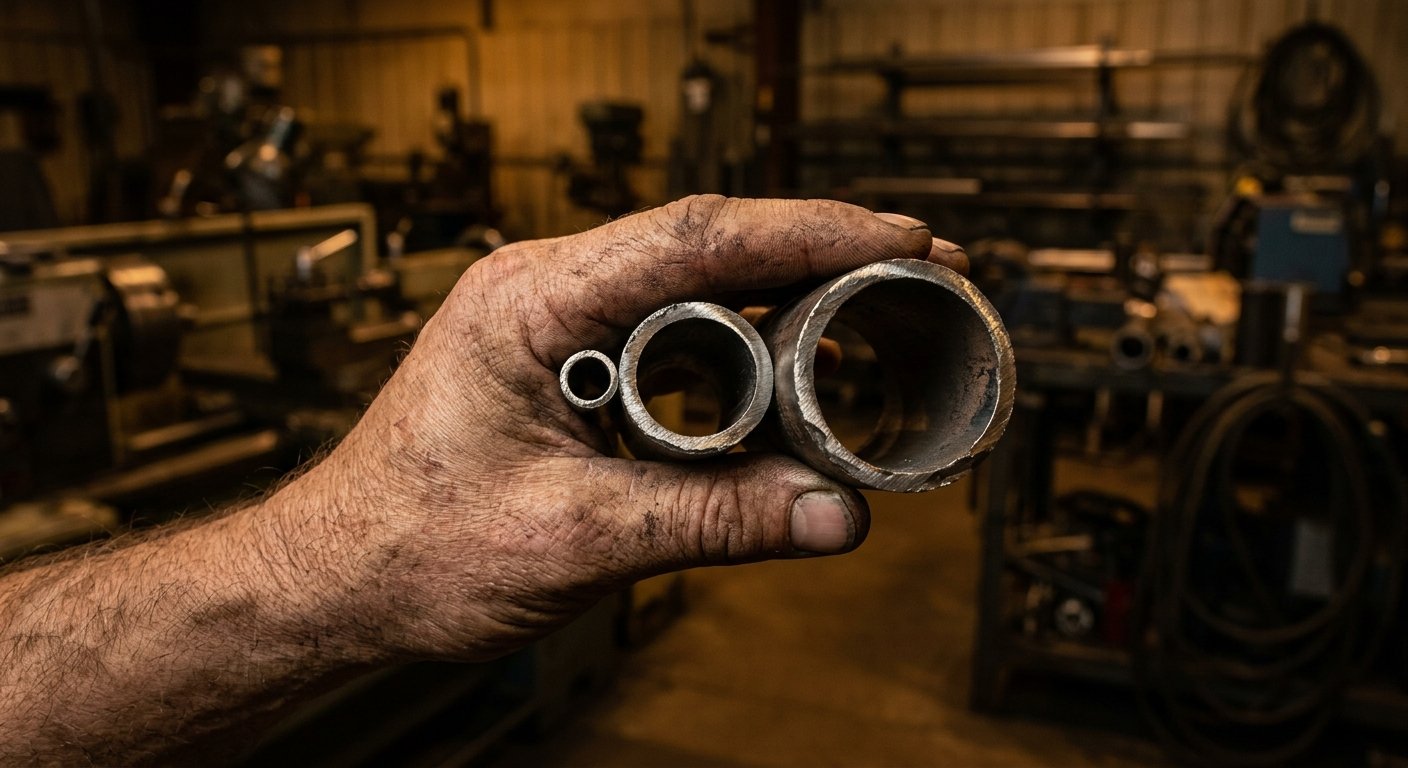
Mandrel bending machines are rated by outside diameter (OD) capacity. Entry-level machines typically handle tubing from 0.25 in. to 2 in. OD, while heavy-duty pipe benders extend to 6 in., 8 in., or beyond for structural and energy sector applications. Specify the full range of ODs your facility will process — not just your current production needs — to avoid outgrowing the equipment.
Wall Thickness and D/t Ratio
The diameter-to-wall-thickness (D/t) ratio determines how aggressively a tube will tend to deform during bending. Higher D/t values (thinner walls relative to diameter) require more precise mandrel nose positioning, closer wiper die fit, and potentially slower bend speeds. When specifying equipment, confirm that the machine’s mandrel retraction timing and axial control are tunable for your specific D/t requirements.
Material Compatibility
Stainless steel, Inconel, titanium, and duplex alloys all exhibit different springback behaviors and work-hardening rates. Titanium, widely used in aerospace hydraulic systems, requires precise mandrel lubrication, controlled bend speed, and often heat management. Confirm that the machine and tooling package have been applied to your material class before committing to a specification.
| Specification Factor | Standard Production | Precision / Aerospace |
|---|---|---|
| CLR/OD Ratio | 3:1 or greater | 1.5:1 to 2:1 (tight) |
| Mandrel Type | Plug or single-ball | Multi-ball, close-pitch |
| Control System | Manual or semi-auto | CNC multi-axis |
| Tooling Material | Steel or ductile iron | Hardened steel or specialty alloy |
| Springback Compensation | Operator adjustment | Programmed overbend / auto-correct |
CNC Control and Programmability
Modern CNC tube benders store complete part programs including bend angle, rotation (B-axis), linear feed (Y-axis), and mandrel position. For production environments running multiple part numbers, this programmability eliminates setup error and dramatically reduces scrap on first-piece qualification. For aerospace and defense, where every bend on a hydraulic or fuel line is typically documented, CNC benders also simplify process traceability.
When evaluating CNC mandrel pipe bending equipment, ask whether the control system supports automatic springback compensation, integration with external SPC data systems, and part-program storage capacity relevant to your production mix. These features separate basic machines from precision manufacturing assets.
For aerospace and defense fabricators, the CNC control is not a convenience — it is the documented evidence that every bend was made to specification.
Mandrel Types and Tooling Selection

The mandrel itself is not a single component — it is a configured assembly matched to the tube OD, wall thickness, material, and bend radius. The primary types are:
- Plug mandrel: Simple cylindrical plug; suitable for large CLR/OD ratios and heavier wall stock where ovality is less of a concern.
- Single-ball mandrel: One articulating ball beyond the plug; provides support one ball-width past the tangent, appropriate for moderate D/t ratios.
- Multi-ball mandrel: Two to five linked balls; required for thin-wall tubing and tight radii, providing continuous support through the bend arc.
- Formed mandrel: Custom-profiled; used for non-circular or complex-section extrusions in specialty aerospace applications.
Tooling wear is a real cost-of-ownership factor. Hardened mandrel balls and properly lubricated assemblies extend service life significantly. Confirm that any mandrel bending equipment dealer you work with offers direct tooling support, replacement ball sets, and engineering guidance on mandrel nose positioning — the dimension between the mandrel nose and the tangent line is one of the most critical setup variables in the entire process.
Always specify tooling as a complete system: bend die, clamp die, pressure die, wiper die, and mandrel assembly. A high-quality machine paired with worn or mismatched tooling will produce defective bends. Request a tooling review as part of your equipment procurement process.
Production Volume and Automation Considerations
Low-volume, high-mix environments — common in defense prototype work and custom petrochemical fabrication — favor machines with fast changeover capability and flexible control systems rather than hard-automation features. High-volume production lines in automotive or energy sectors benefit from automated loading, unloading, and in-process gauging integrated directly with the bender.
For facilities running both scenarios, consider machines designed with modular automation readiness: manual operation as delivered, with provisions for robotic integration when volume justifies the investment. This protects capital spend while preserving long-term scalability. Hines Bending’s custom bending solutions are engineered specifically for this kind of application-matched flexibility, from single-piece aerospace components to high-rate production programs.
Evaluating a Mandrel Tube Bending Equipment Dealer
The machine itself is only part of the procurement decision. The supplier’s technical depth, application engineering capability, and post-sale support infrastructure determine whether the equipment performs over its full service life. Key questions to ask any mandrel tube bending equipment dealer include:
- Can they provide documented performance data on your specific material and radius combination?
- Do they offer on-site installation, calibration, and operator training?
- Is tooling design and manufacture handled in-house or subcontracted?
- What is their parts availability commitment for control components and wear items?
- Do they have reference customers in your industry who can speak to long-term reliability?
Hines Bending Systems has supplied precision tube and pipe bending equipment to NASA programs and military organizations — applications where equipment failure is not an option. That track record, backed by 50 years of American manufacturing expertise, reflects the technical rigor the company brings to every customer specification. For a detailed look at the full range of available platforms, the tube bending machines and pipe bending machines pages outline specific capacities and configurations.
The ASTM E8/E8M standard for tensile testing of metallic materials is a useful reference when qualifying material lots going into precision bend programs, since mechanical properties directly affect springback prediction and mandrel sizing decisions.
Frequently Asked Questions
What is the difference between a mandrel bender and a standard rotary draw bender?
A rotary draw bender uses a bend die, clamp die, and pressure die to form a tube around a fixed radius. A mandrel bender adds an internal mandrel assembly and typically a wiper die, providing internal support at the point of deformation. This is essential for thin-wall tubing, tight centerline radii, or any application where bore integrity and ovality control are required by specification.
When do I need a multi-ball mandrel versus a single-ball or plug mandrel?
Multi-ball mandrels are necessary when the D/t ratio is high (thin walls relative to OD) or when the CLR/OD ratio is tight — generally below 2:1. In these conditions, a plug or single-ball mandrel does not extend far enough into the bend arc to prevent wrinkling or collapse on the intrados. An application engineer should calculate mandrel nose position and ball count based on your specific geometry.
How important is CNC control for mandrel tube bending in aerospace applications?
CNC control is essentially mandatory for aerospace mandrel bending. Part programs store precise bend angles, rotations, and linear feed values, eliminating operator variability and supporting first-article inspection repeatability. CNC systems also enable automatic springback compensation and process documentation — both critical for aerospace quality system requirements including AS9100 compliance.
What materials can mandrel bending machines process?
Mandrel benders are routinely used on carbon steel, stainless steel, aluminum, titanium, Inconel, duplex stainless, and copper alloys. Each material requires specific tooling, lubrication, and setup parameters. Exotic alloys like titanium and Inconel demand closer attention to springback, mandrel fit tolerances, and bend speed to achieve consistent results without surface damage.
How do I size a mandrel bending machine for my production requirements?
Start with the largest OD and tightest CLR combination in your part family — these drive mandrel capacity and machine frame requirements. Then consider wall thickness range, material types, production volume, and whether multi-stack tooling or quick-change capability is needed for part variety. Working through a formal application review with the equipment manufacturer before specifying avoids costly mismatches.
Ready to Specify Your Mandrel Bending Solution?
Tell us your application requirements and our engineering team will recommend the right equipment and tooling configuration for your production environment.

About Hines Bending Systems
Hines Bending Systems is a leading American manufacturer of precision tube and pipe bending equipment serving aerospace, energy, oil & gas, petrochemical, and defense industries. With 50 years of proven expertise and a track record of supplying NASA and military clients, Hines delivers custom bending solutions for demanding applications ranging from high-volume production to specialized one-off projects. The company combines deep technical knowledge with comprehensive support including training and service, positioning itself as a partner in customer success rather than just an equipment supplier. Visit hinesbending.com →