Specifying industrial pipe benders correctly requires evaluating bend radius-to-diameter ratios, tooling compatibility, material certifications, and total cost of ownership — not just the purchase price. This checklist guides engineering managers and procurement specialists through the critical technical and operational factors that separate purpose-built bending equipment from generic alternatives, particularly for aerospace, oil & gas, energy, and defense applications.
- Bend radius-to-diameter (CLR/OD) ratio is your first technical specification — get it wrong and no machine will produce acceptable parts.
- Tooling compatibility and material certifications must be confirmed before procurement, not after delivery.
- Total cost of ownership — including tooling, training, maintenance, and support — routinely exceeds the machine’s sticker price.
- American-manufactured equipment built to ASME and API standards simplifies compliance documentation for regulated industries.
- Purpose-built and custom-configured machines reduce scrap rates, setup time, and long-term operational headaches on demanding production programs.
Start with the Geometry: CLR, OD, and Wall Thickness
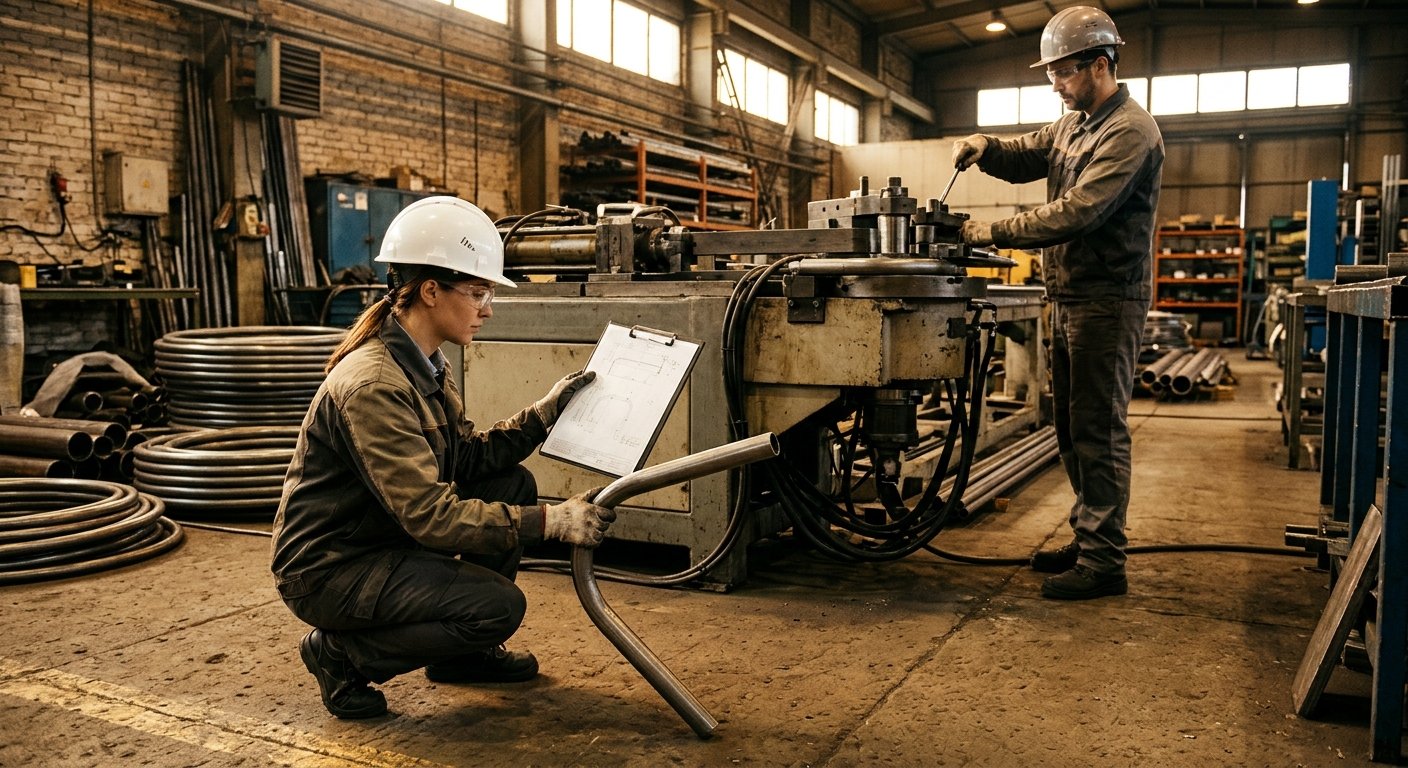
Every specification starts with geometry. The centerline radius (CLR) relative to the outside diameter (OD) of the pipe determines which bending process is even feasible for your application. A 1D bend — where the CLR equals the OD — demands mandrel support and precise tooling. A 3D or 5D bend is far more forgiving. If your drawings call for tight-radius work in thin-wall tubing, that single requirement narrows your equipment options significantly.
Wall thickness and the D/t ratio (outside diameter divided by wall thickness) determine how much internal support is needed to prevent collapse or wrinkling. For high-pressure oil and gas piping or aerospace hydraulic lines, this is a non-negotiable engineering parameter. The ASME B31.3 Process Piping standard provides specific guidance on bend radius minimums and intrados/extrados thinning limits that must inform your equipment specification before you issue an RFQ.
When reviewing candidate machines, ask each manufacturer to confirm the minimum CLR their tooling can achieve at your target OD and wall thickness — and ask to see validation data, not just catalog specifications.
Catalog CLR/OD specifications are often stated for mild steel at standard wall thicknesses. Exotic alloys, heavy walls, or thin-wall precision tubing may change the achievable minimum radius significantly. Always validate specifications against your actual material and geometry.
Bending Process Selection: Matching Technology to Application
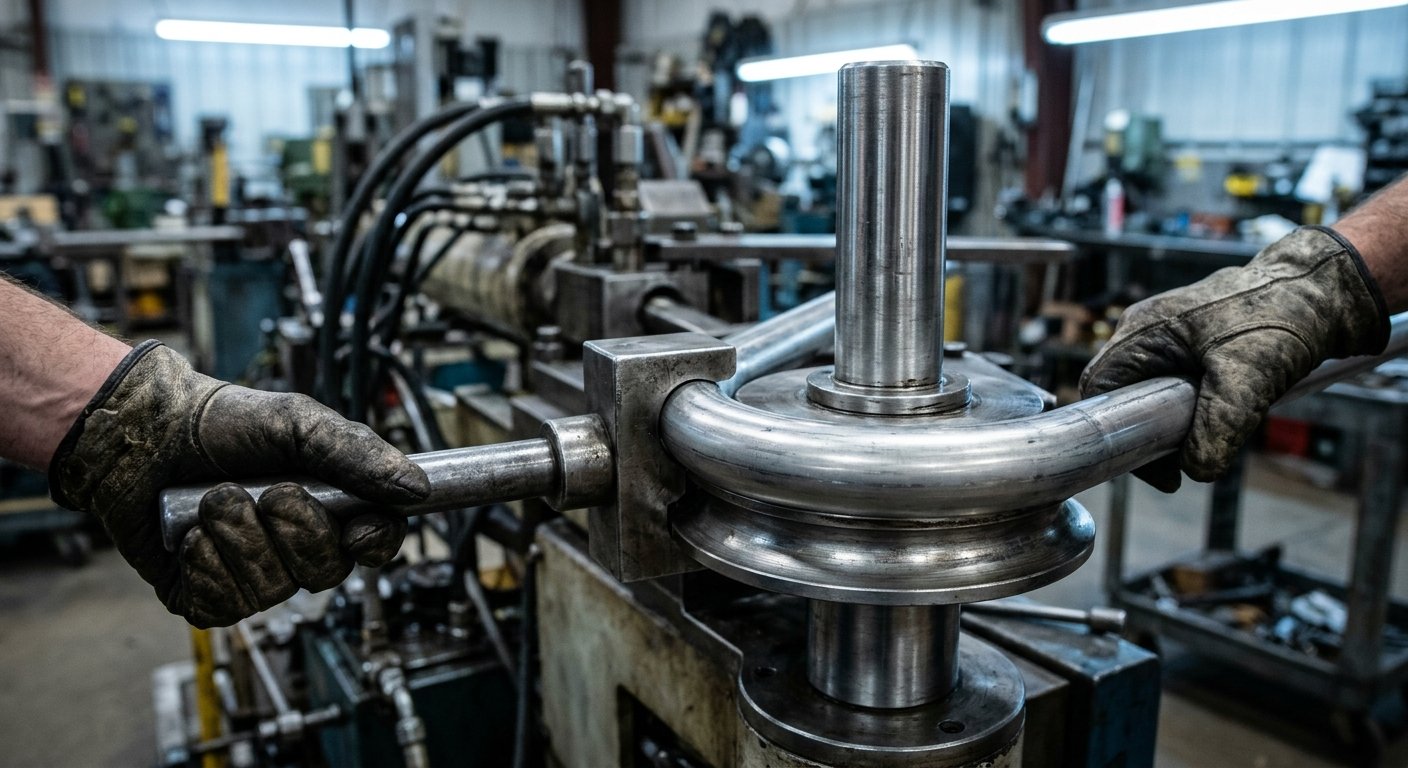
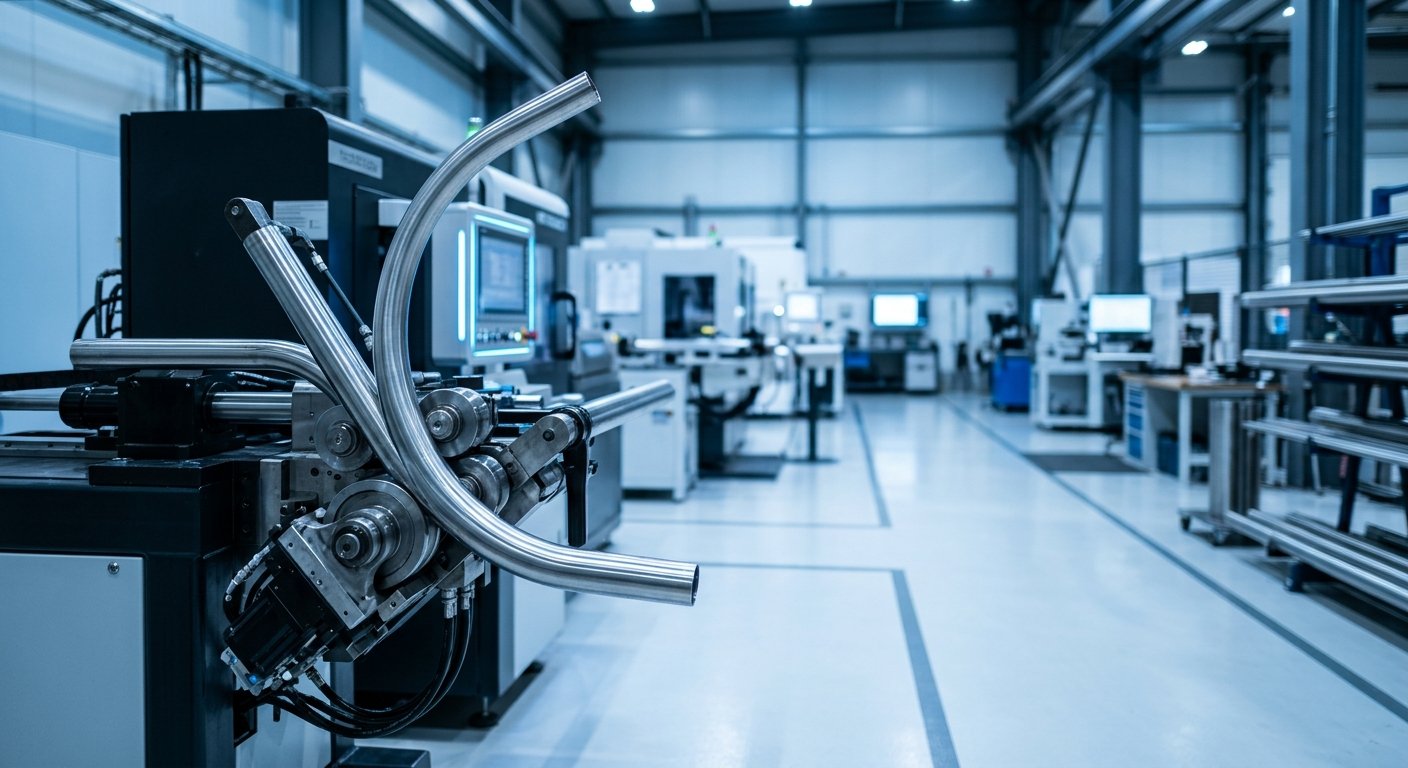
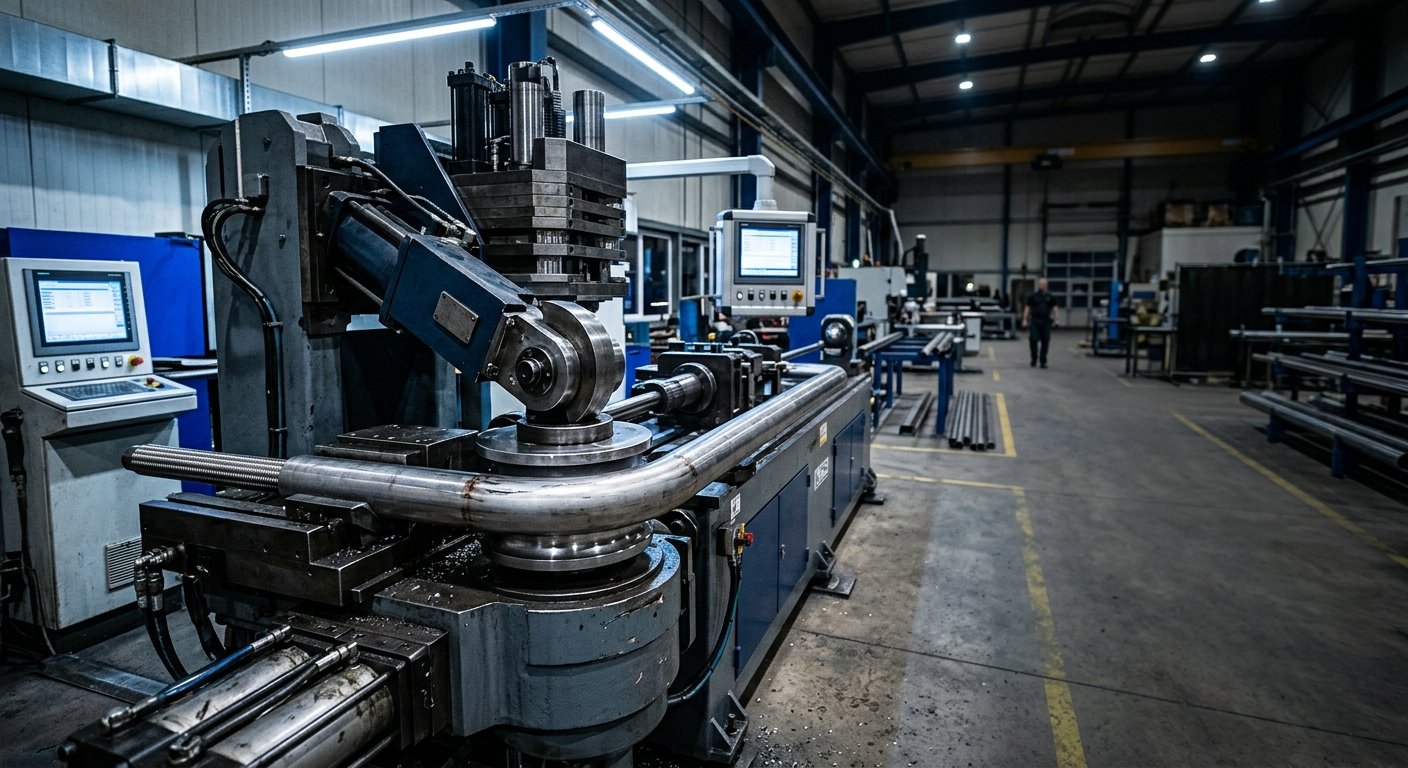
The bending method must match the application’s demands. Rotary draw bending — the workhorse of precision production — uses a fixed bend die, clamp die, pressure die, and optional mandrel to produce repeatable, controlled bends. It excels in aerospace, automotive, and defense applications where tight tolerances and surface integrity are critical.
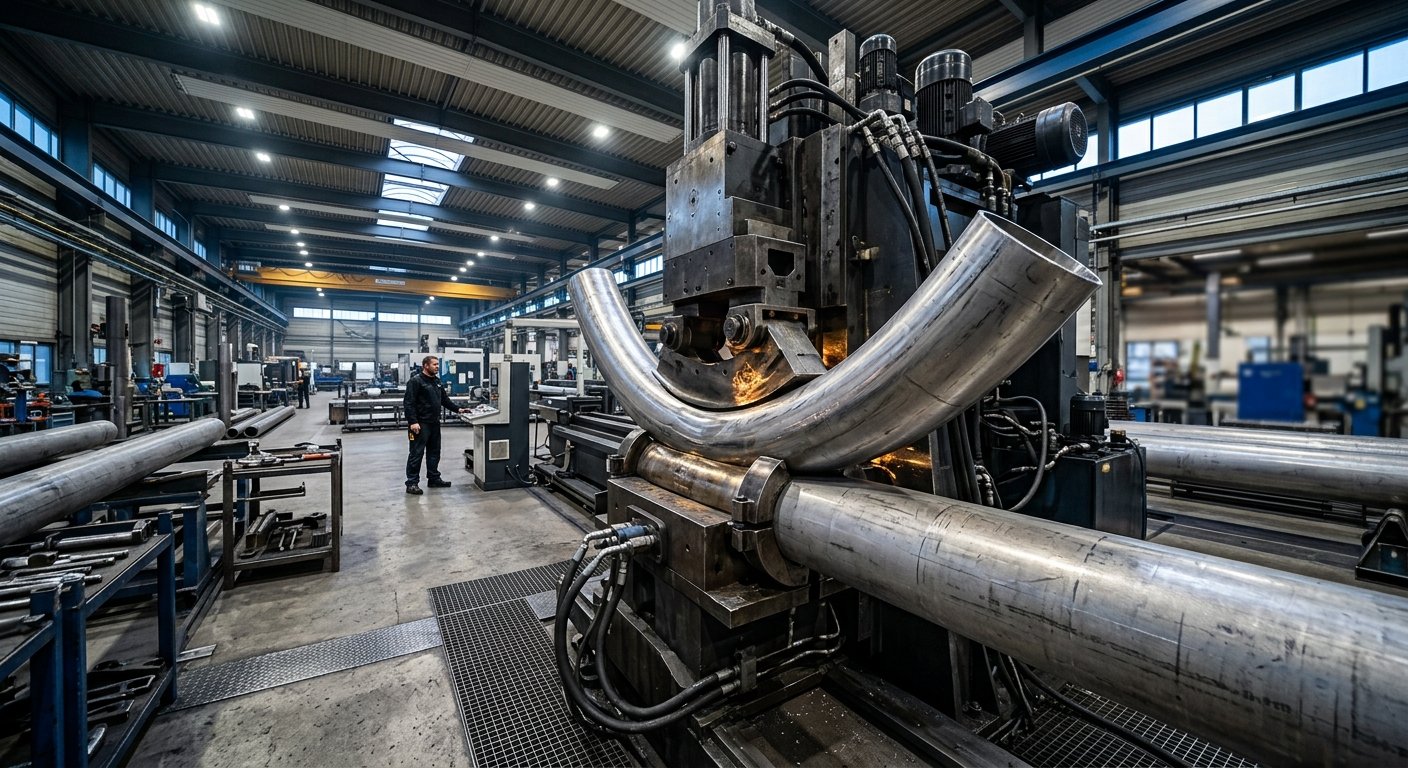
For large-diameter pipe in energy and petrochemical plants, induction bending offers distinct advantages — particularly when working with heavy-wall carbon steel or alloy pipe that would be impractical to cold-bend. Understanding the tradeoffs between these technologies early prevents costly procurement errors.
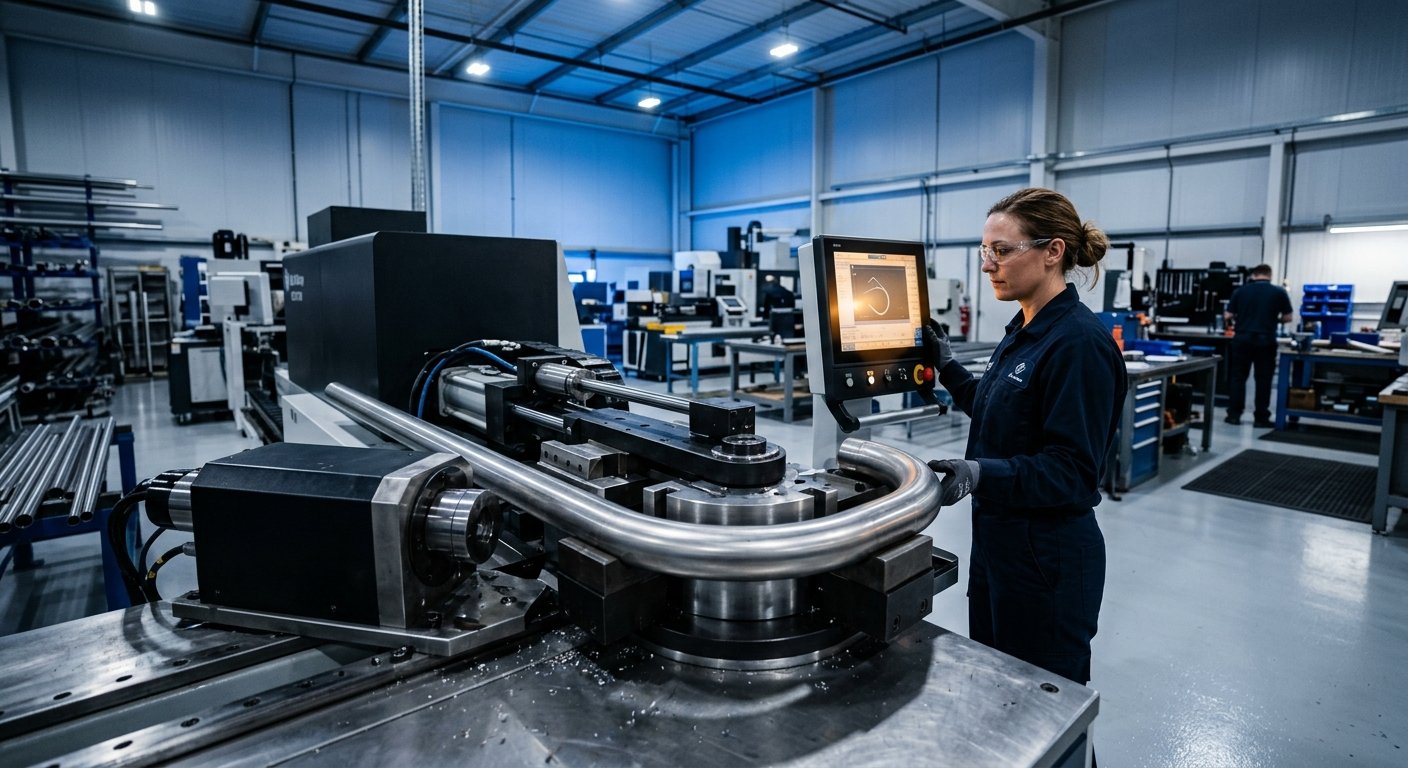
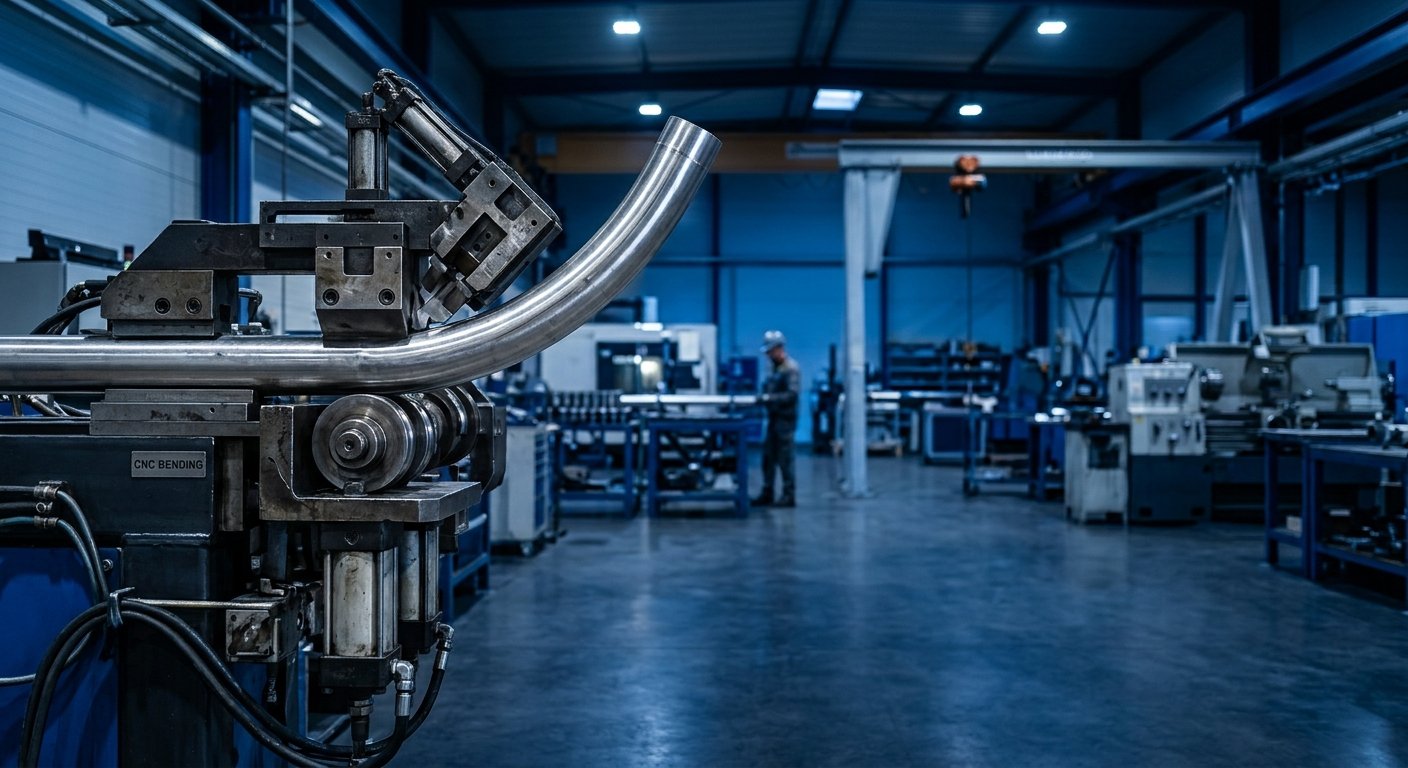
CNC-controlled pipe bending equipment adds programmable repeatability, multi-stack tooling capability, and digital documentation — features increasingly required in AS9100-certified aerospace facilities and API-compliant oil and gas fabrication shops. For demanding programs, the control system is as important as the mechanical platform. Confirm what file formats the CNC accepts, whether it integrates with your CAD/CAM environment, and how bend data is stored and retrieved.
| Criterion | Rotary Draw Bending | Induction Bending |
|---|---|---|
| Typical application | Aerospace, defense, automotive, precision tube | Large-diameter energy & petrochemical pipe |
| Radius capability | Tight radii (1D–3D typical) | Larger radii (3D–10D typical) |
| Wall thickness range | Thin to medium wall | Medium to heavy wall |
| Tolerance control | Very high with mandrel support | Good; dependent on process control |
| Tooling investment | Higher (die sets per size) | Lower per bend size |
| Material heat effect | Cold process; no heat input | Localized heating — affects metallurgy |
Tooling Compatibility and Changeover
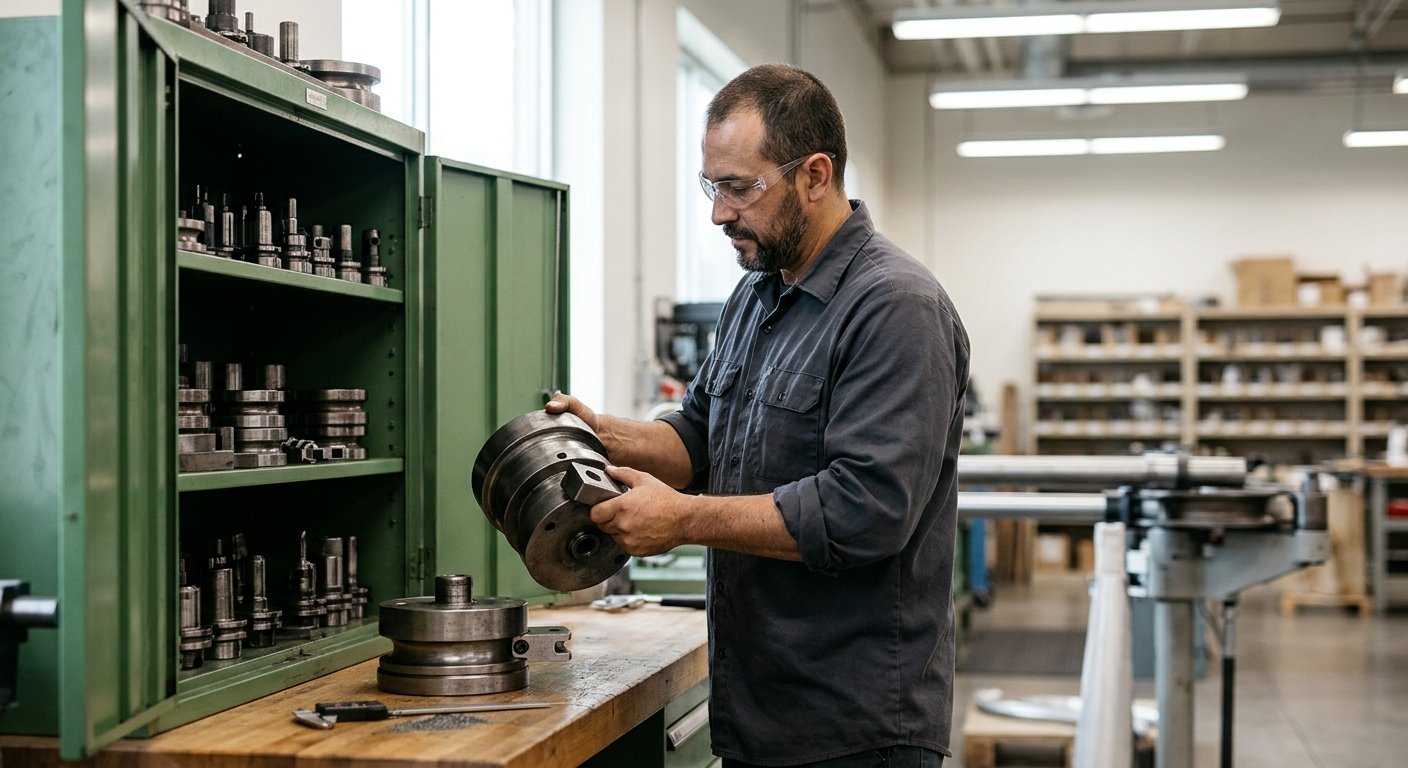
Tooling is where the real cost of pipe bending equipment accumulates over time. A machine that accepts only proprietary tooling from a single source locks you into a supply relationship that affects both lead times and long-term cost. Specify open tooling compatibility wherever possible, and document the tooling system in the purchase agreement.
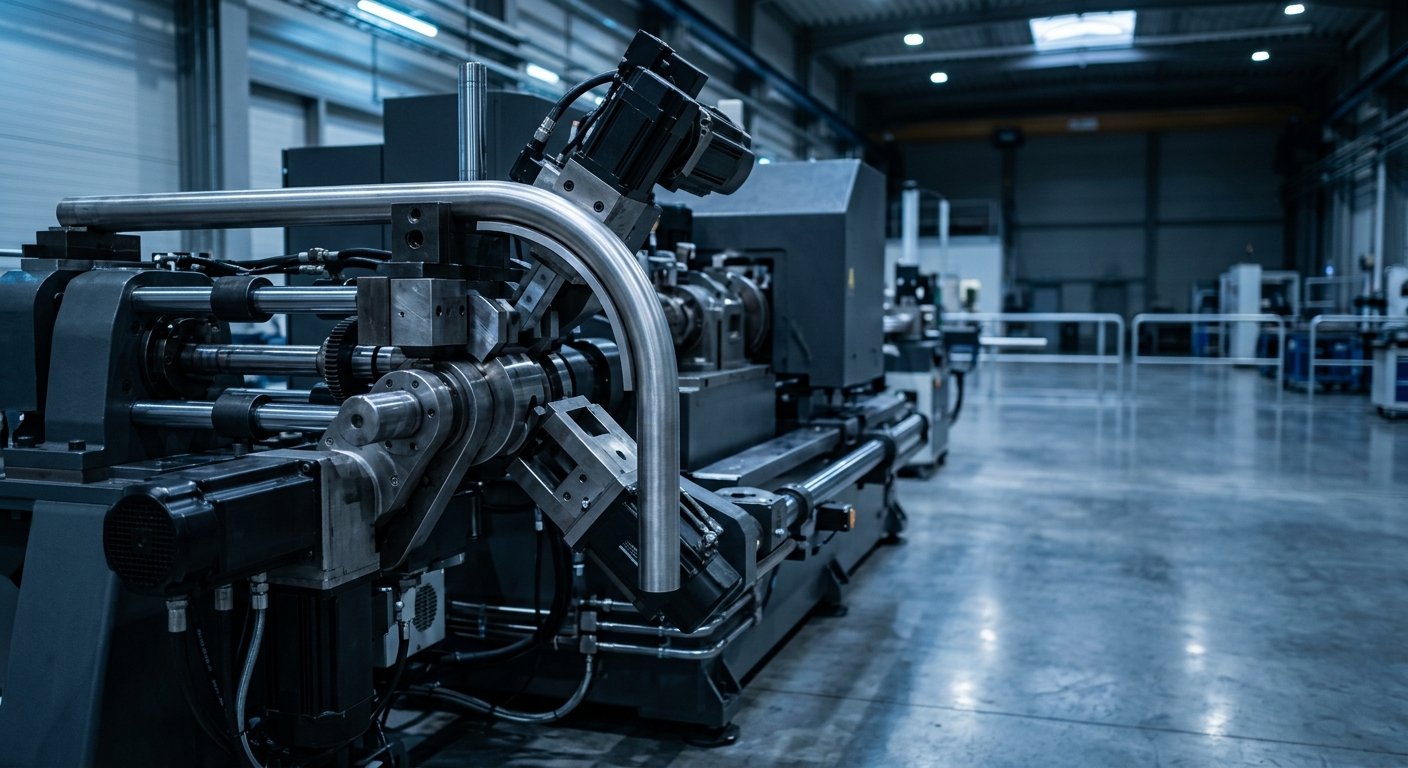
Multi-stack tooling capability — the ability to mount multiple die sets simultaneously and index between them under CNC control — dramatically reduces setup time on complex bent assemblies with multiple radii. For high-mix, lower-volume production (common in defense and aerospace), this feature often pays for itself within the first year of operation.
Procurement teams should also specify mandrel bending machine capability if tight-radius, thin-wall work is anticipated. Understanding how mandrel selection affects your bend results is essential before finalizing the equipment specification — the mandrel type, ball count, and nose radius all interact with your material and geometry requirements.
Request a tooling audit as part of any equipment quotation. Ask the manufacturer to confirm which mandrel types, wiper dies, and pressure die configurations are included with the base machine, and what the lead time is for custom-ground tooling in your specific alloy and size range.
Material Certifications and Industry Standards Compliance
In regulated industries, the machine is only as useful as the documentation that supports it. Procurement specifications for aerospace pipe bending equipment should address AS9100 quality management compatibility and whether the manufacturer can provide material traceability documentation for machine components in contact with your workpiece.
For oil and gas applications, API standards govern bend geometry tolerances and inspection requirements. The API pipe and tubular goods standards define dimensional and material requirements that your bending equipment must be capable of meeting — and your procurement specification should explicitly reference the applicable standard so all bidders respond to the same requirements.
American-manufactured equipment simplifies this compliance landscape. Machines built to domestic standards with traceable components reduce the documentation burden during audits and supplier qualification reviews. When equipment is trusted by NASA and military procurement programs — as Hines Bending’s machines have been for decades — the underlying quality systems that support those approvals translate directly into reduced qualification risk for your program.
For a deeper look at how these standards apply in practice, the article on meeting API standards in oil and gas pipe bending covers the current regulatory landscape in detail.
Total Cost of Ownership: What the Purchase Price Doesn’t Include
Purchase price is the least reliable indicator of value in industrial pipe bending equipment procurement. A machine that looks cost-effective on day one may carry hidden expenses that erode that advantage over a three-to-five year horizon. Your procurement evaluation must account for all of the following:
- Tooling inventory: Die sets, mandrels, wiper dies, and clamp inserts for every size and radius combination in your production mix.
- Installation and commissioning: Site preparation, utility connections, initial calibration, and acceptance testing.
- Operator training: Initial certification for production staff and programming personnel, plus refresher training as workforce changes occur.
- Spare parts availability: Lead times for critical wear components, and whether the manufacturer maintains domestic stock.
- Service and support: Hourly rates, travel costs, and whether remote diagnostics are available to reduce downtime.
- Software and control updates: CNC software licensing, update costs, and long-term support commitments.
Procurement teams evaluating custom bending solutions should compare total lifecycle cost, not just acquisition cost. The hidden cost comparison between new and used tube bending machines covers many of these factors in detail — particularly relevant when budget pressure drives the conversation toward refurbished equipment.
The machine that fits your application precisely will always outperform a cheaper general-purpose alternative — measured in scrap, downtime, and the true cost per acceptable bend.
Evaluating the Manufacturer as a Long-Term Partner
Specifying equipment is also specifying a relationship. The manufacturer’s ability to support your program over its full operational life — with service, tooling, training, and engineering assistance — is as important as the machine’s initial specifications. Ask every candidate manufacturer direct questions: How long have they been producing this class of equipment? Do they manufacture in the United States? Can they provide references from comparable industries and applications?
Hines Bending Systems has been designing and building precision tube and pipe bending equipment since 1975, supplying NASA, military organizations, and demanding industrial customers with American-manufactured solutions. That depth of experience means engineering support grounded in real application knowledge, not generic catalog advice. Our custom bending solutions are engineered specifically for demanding applications where off-the-shelf equipment falls short.
Before finalizing any procurement decision, review the common specification errors that even experienced teams make. The guide on critical mistakes when specifying tube bending machines addresses the most frequent and costly procurement missteps in detail.
Define geometry requirements
Document all OD, wall thickness, CLR, and bend angle combinations across your full production mix before contacting any manufacturer.
Select bending process
Match rotary draw, mandrel, or induction bending to your material, radius, and production volume requirements.
Confirm standards compliance
Identify applicable ASME, API, or AS9100 requirements and include them explicitly in your specification document.
Evaluate total cost of ownership
Build a five-year cost model including tooling, training, service, parts, and software before comparing bids.
Qualify the manufacturer
Assess production capabilities, industry references, domestic manufacturing, and long-term support commitments alongside the equipment specification.
Frequently Asked Questions
What is the minimum bend radius I should specify for thin-wall aerospace tubing?
The minimum achievable CLR depends on the OD, wall thickness, and material. For thin-wall aerospace tubing in titanium or stainless, 1.5D to 2D CLR is common with mandrel support, but achieving 1D is possible in specific configurations. Always validate against ASME or applicable aerospace standards and confirm with the machine manufacturer using your exact material and geometry — catalog minimums often reflect mild steel, not exotic alloys.
Does CNC control justify the added cost over NC bending equipment?
For high-mix production, multi-bend assemblies, or programs requiring digital documentation and traceability, CNC control typically delivers a strong return through reduced setup time, fewer operator errors, and integration with CAD/CAM workflows. For simple, single-radius, high-volume production, NC equipment may be adequate. The decision depends on your production profile, not just the machine price.
What certifications should I require from a pipe bending equipment manufacturer?
At minimum, request ISO 9001 quality management certification. For aerospace supply chains, ask whether the manufacturer’s quality system supports AS9100 customer requirements. For oil and gas equipment, confirm familiarity with API standards applicable to your piping class. Also request documentation on material traceability for tooling components and calibration records for control systems.
How do I evaluate tooling cost when comparing machines from different manufacturers?
Request a complete tooling quotation for your full production size matrix — every OD, wall thickness, and radius combination — from each bidder. Divide the total tooling cost by the number of configurations to get a per-setup cost. Also ask whether the tooling system is proprietary or open-standard, since proprietary systems create long-term supply dependency that affects both cost and lead time.
When does a custom-configured machine make more sense than a standard model?
Custom configuration is warranted when your application involves non-standard OD ranges, unusual materials, complex multi-plane bend sequences, or integration with automated handling systems. The additional upfront engineering investment in a purpose-built machine typically returns significant savings in scrap, setup time, and operator training over the machine’s operational life.
Ready to Specify the Right Bending Equipment?
Hines Bending Systems’ engineering team works directly with procurement specialists and production engineers to configure equipment that meets your exact application requirements — backed by 50 years of American manufacturing expertise and a proven record with NASA and military programs.

About Hines Bending Systems
Hines Bending Systems is a leading American manufacturer of precision tube and pipe bending equipment serving aerospace, energy, oil & gas, petrochemical, and defense industries. With 50 years of proven expertise and a track record of supplying NASA and military clients, Hines delivers custom bending solutions for demanding applications ranging from high-volume production to specialized one-off projects. The company combines deep technical knowledge with comprehensive support including training and service, positioning itself as a partner in customer success rather than just an equipment supplier. Visit hinesbending.com →