Specifying the wrong bending machine doesn’t just slow production—it can cost six figures in rework, scrap, and retrofitting before you ever hit your first production milestone. In industries like aerospace, oil & gas, and defense, where tolerances are tight and material costs are high, getting the spec right before purchase is non-negotiable.
Yet too many procurement teams still default to general-purpose machines when their application clearly demands something purpose-built. This guide walks through the critical decision points for specifying application-specific bending machines in 2026, covering material variables, production requirements, regulatory considerations, and the engineering questions that separate a successful installation from an expensive mistake.
Why Application-Specific Equipment Matters More Than Ever
Modern production environments aren’t getting simpler. Aerospace manufacturers are working with increasingly exotic alloys. Petrochemical facilities are specifying tighter bend radii on larger-diameter pipe. Defense contractors face strict traceability and documentation requirements that off-the-shelf equipment often can’t support natively.
General-purpose tube and pipe bending machines are engineered for flexibility—which means they’re often optimized for nothing in particular. An application-specific bending machine, by contrast, is designed around your material, your geometry, your production volume, and your quality requirements. The result is higher repeatability, less operator dependency, and a machine that integrates cleanly into your existing workflow.
According to the American Society of Mechanical Engineers (ASME), precision fabrication in critical applications requires not only appropriate tooling but documented process control—something far easier to achieve when the equipment itself is engineered for the specific task.
Step 1: Define the Application Before the Machine
Every correct equipment specification starts with a thorough application definition. Before evaluating any custom bending machine manufacturer, answer these foundational questions:
- Material: What alloy or material are you bending? Titanium, Inconel, stainless, carbon steel, and aluminum each behave differently under bending stress. Wall thickness and hardness directly influence tooling requirements and machine tonnage.
- Diameter and wall thickness range: Are you bending a single tube size or a family of sizes? Multi-stack tooling heads on CNC systems can handle families, but you need to define the full range upfront.
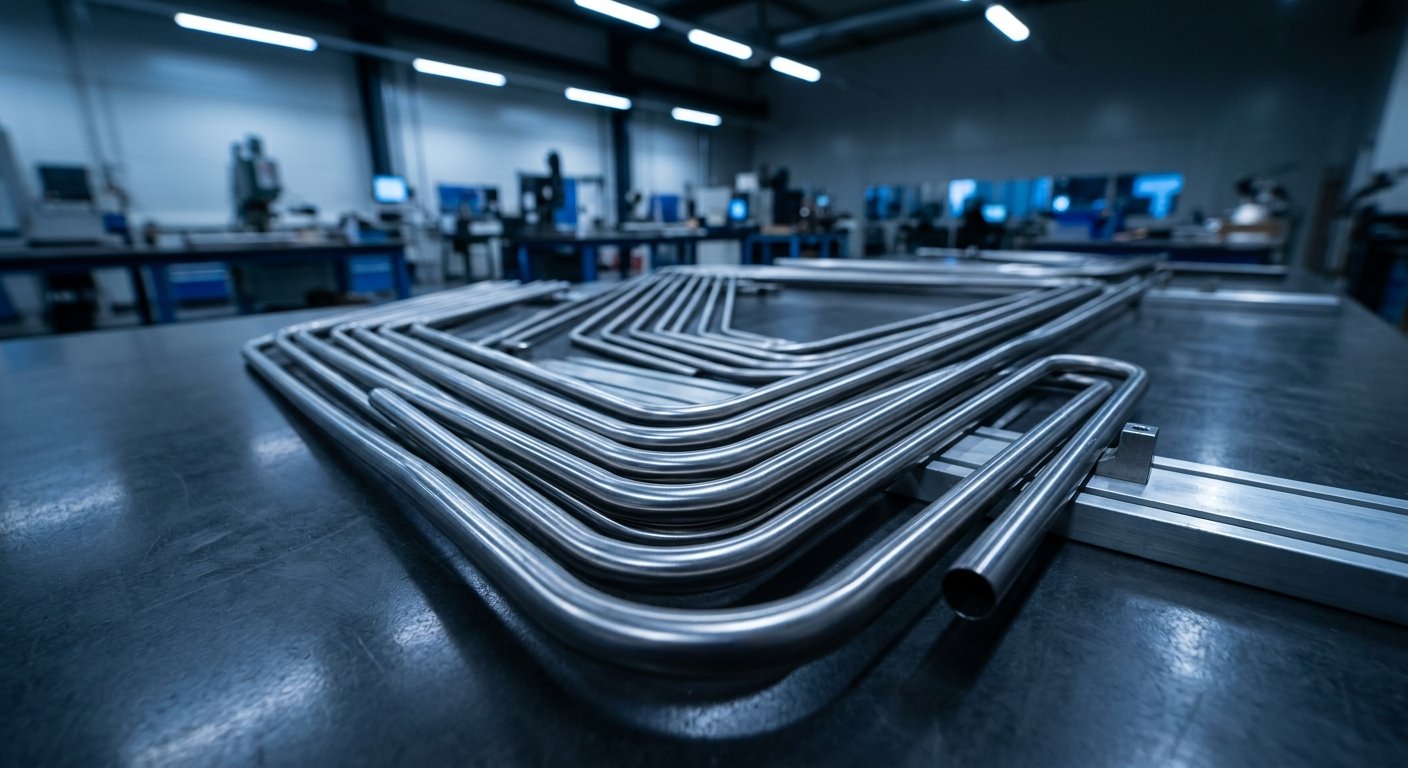
- Bend geometry: What are the tightest center-line radius (CLR) requirements? Are there compound bends, multiple planes, or closely spaced bends that require specific machine architecture?
- Production volume: High-volume production favors fully automated custom CNC bending systems with minimal changeover time. Low-volume or one-off applications may justify semi-automatic or programmable manual setups.
- Quality documentation: Does your application require first-article inspection data, SPC integration, or full traceability? This shapes software and control system requirements significantly.
Skipping this phase leads to the most common and costly specification error: buying capability you don’t need while lacking the capability you do.
Step 2: Match Machine Architecture to the Application
Rotary Draw Bending for Tight-Tolerance Work
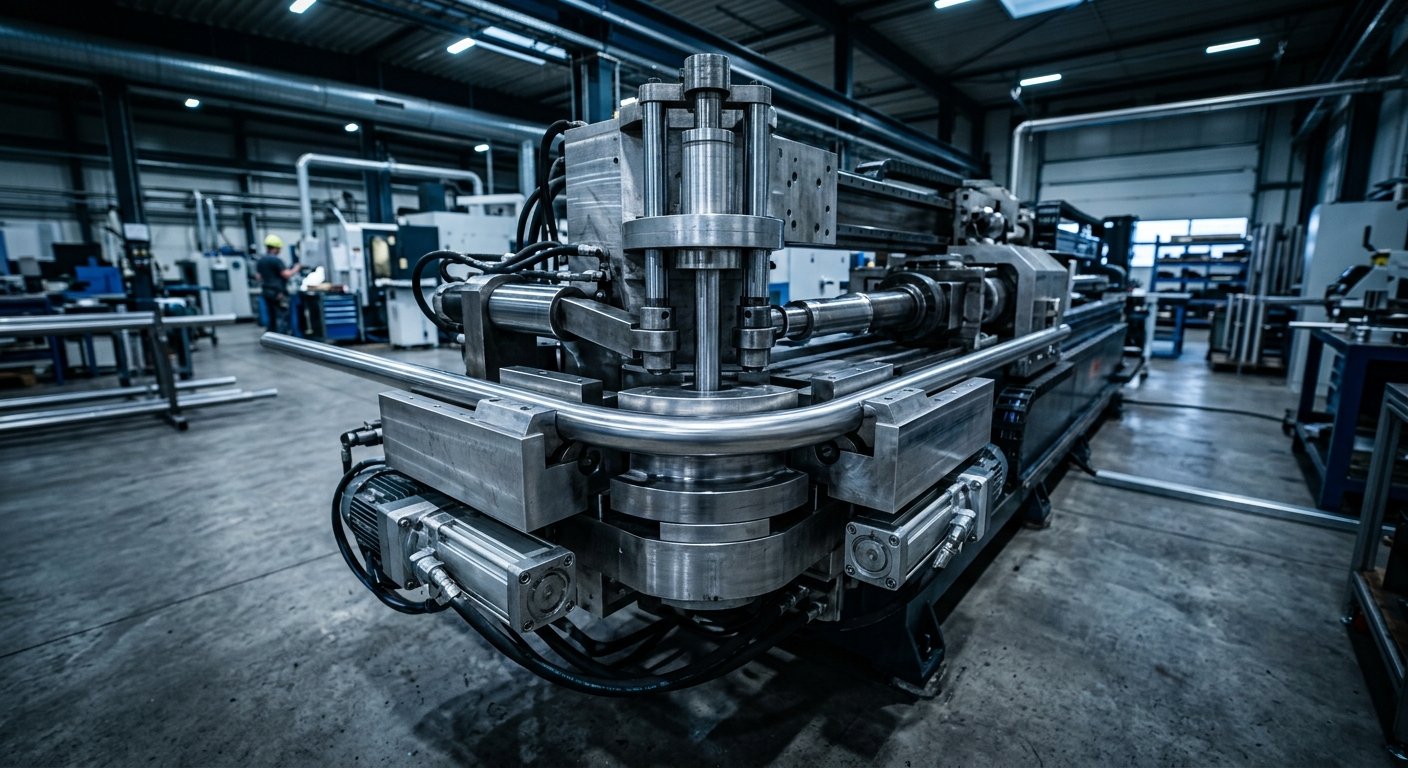
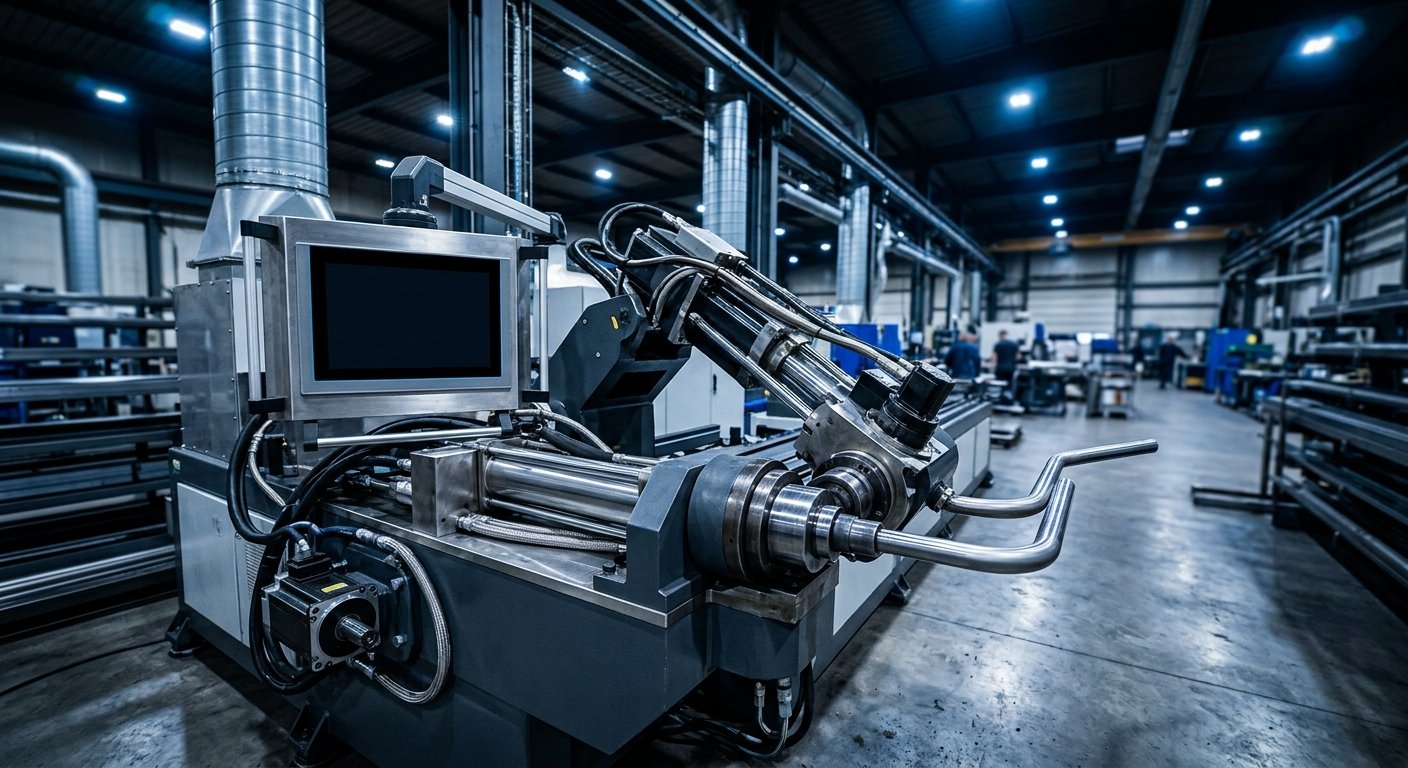
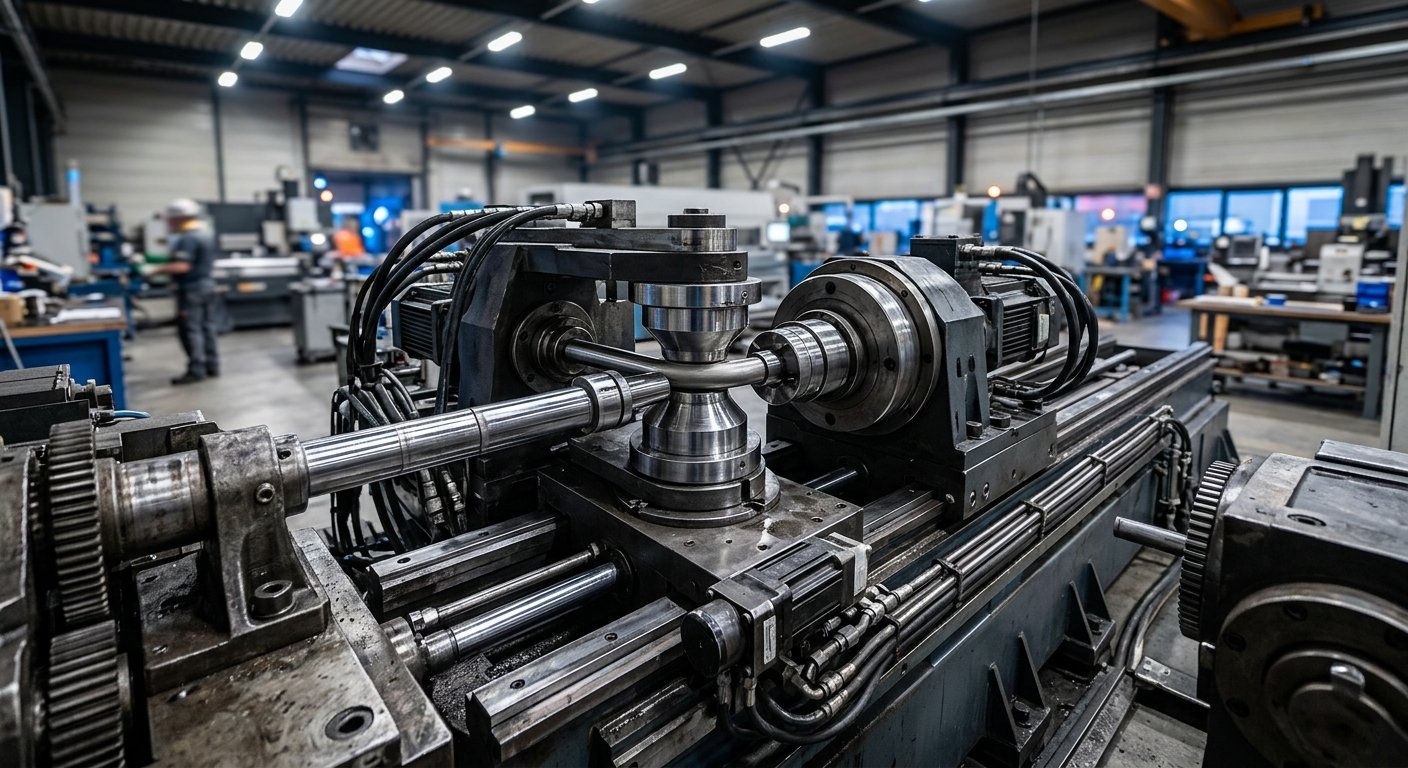
Rotary draw bending remains the standard for precision aerospace and defense tube fabrication. When you need consistent geometry across high-value parts, engineered bending solutions built around rotary draw mechanisms—with pressure dies, wiper dies, and mandrels—deliver the repeatability that critical applications demand.
Custom mandrel bending systems are particularly essential when working with thin-wall tubing where interior support is needed to prevent collapse or wrinkling. In hydraulic line fabrication for aerospace platforms, for example, mandrel selection alone can determine whether you hit print or scrap the part.
CNC Multi-Stack Systems for Production Efficiency
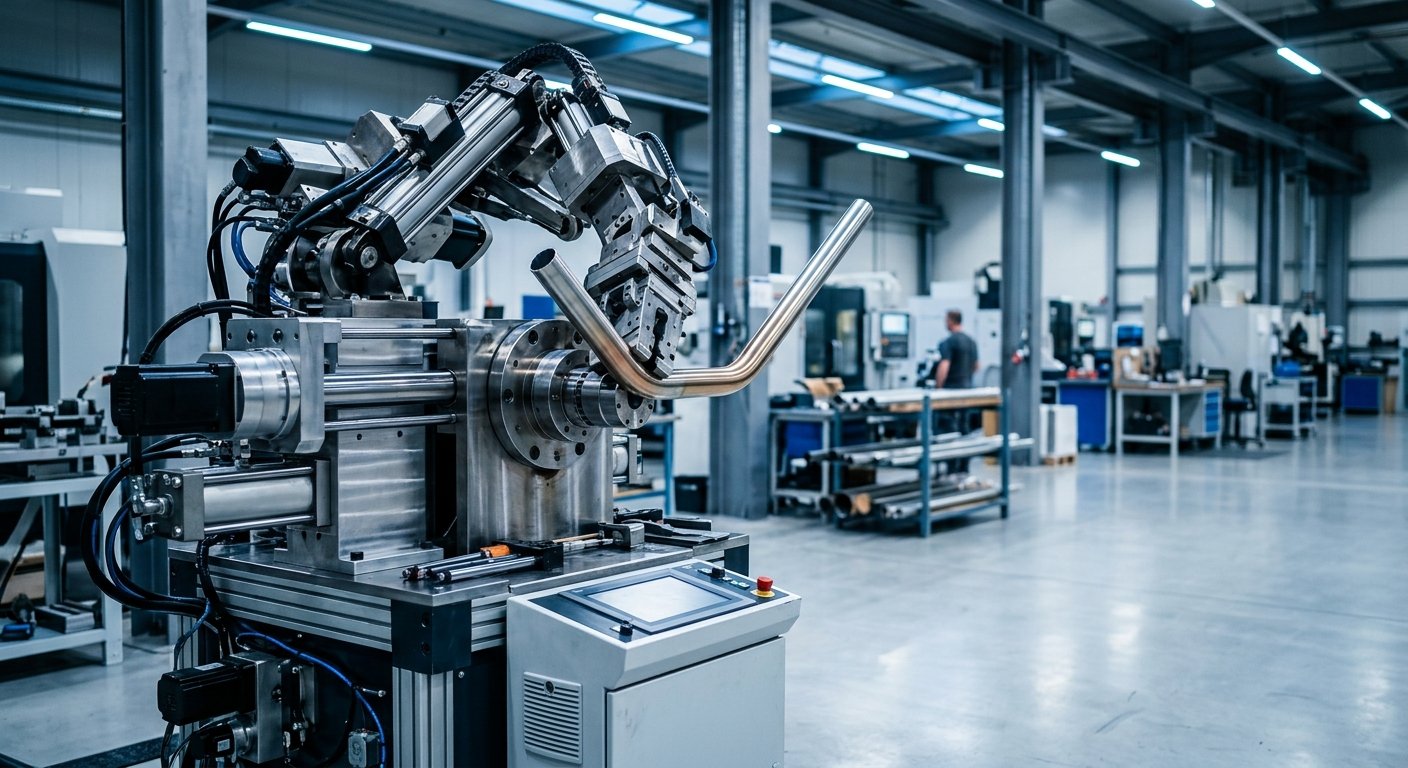
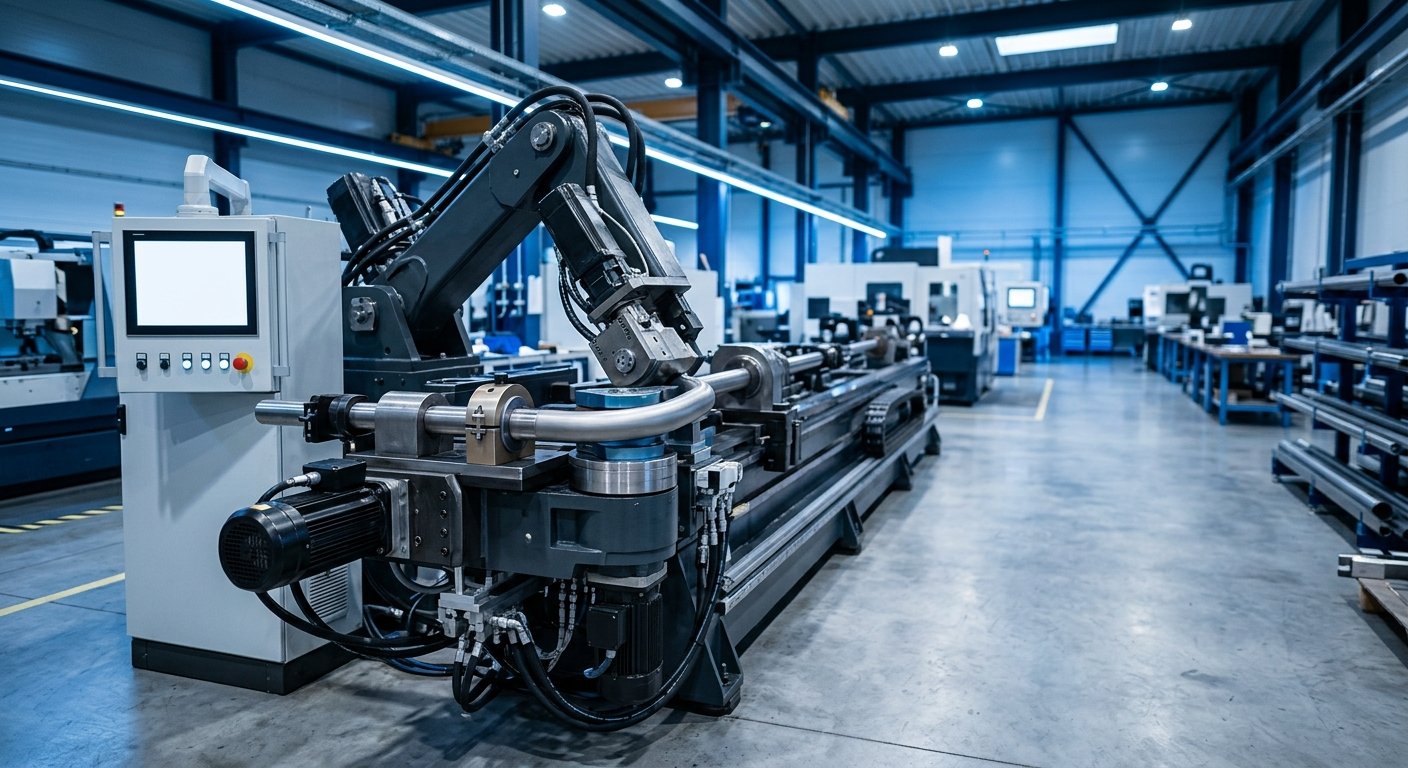
For production environments running families of tube sizes, custom CNC bending systems with multi-stack tooling heads eliminate changeover time that would otherwise consume shift capacity. A well-specified CNC system stores bend programs, monitors process variables, and can interface with upstream and downstream automation.
The key specification variables for CNC systems include:
- Number of tooling stacks required for your part family
- Maximum bend angle and rotation speed
- Control system compatibility with your plant’s existing MES or ERP environment
- Programming methodology—teach-pendant, offline CAD import, or both
Pipe Bending for Heavier-Wall Industrial Applications
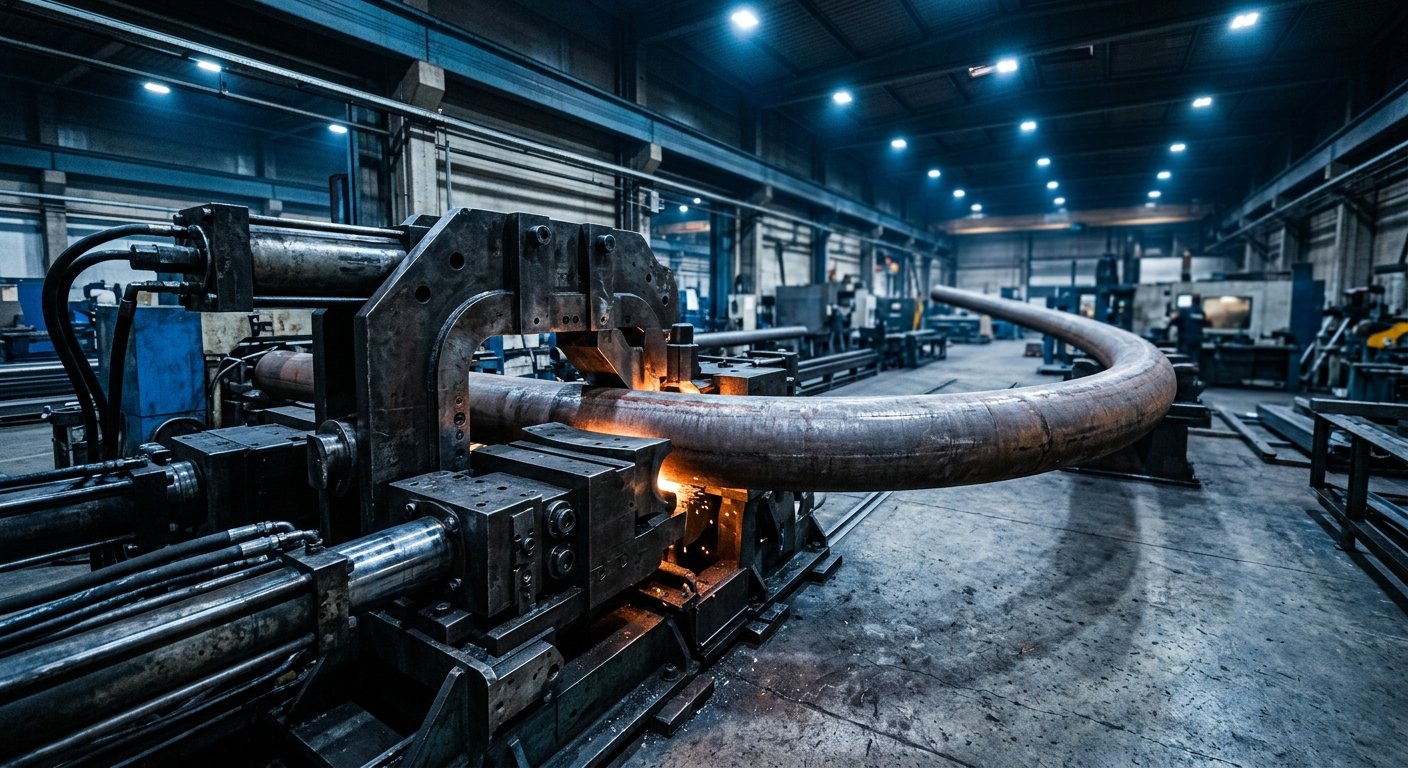
Oil & gas and petrochemical applications often involve larger diameters and heavier wall schedules than aerospace tube work. Tailored tube bending machines for these industries are typically built around higher tonnage, extended clamp and pressure die travel, and tooling that accommodates Schedule 40 through Schedule 160 pipe.
Relevant pipe bending standards from organizations like the ASME B31.3 Process Piping code specify minimum bend radii and allowable thinning for process piping—requirements that directly influence machine and tooling selection. Any specialized bending machine manufacturer serving this space should be familiar with these standards and able to demonstrate how their equipment supports compliance.
Step 3: Evaluate the Manufacturer, Not Just the Machine
The hardware is only part of the equation. In demanding applications, the relationship with your equipment supplier matters as much as the machine specs on paper.
When evaluating a custom bending machine manufacturer, consider:
- Application engineering depth: Can they review your print, simulate the bend sequence, and identify potential problem areas before the machine ships? This is where 50 years of tube and pipe bending expertise translates directly into customer value.
- Tooling design capability: Are tooling packages engineered in-house, or are they sourcing from generic catalogs? Application-specific tooling designed alongside the machine produces dramatically better results than bolt-on afterthoughts.
- Training and support infrastructure: A machine that your operators can’t run effectively isn’t an asset. Comprehensive training programs and responsive field service are critical for high-stakes production environments.
- Proven track record in your industry: Suppliers with documented experience in aerospace, defense, and energy applications—including work for NASA and military clients—bring a caliber of quality discipline that general industrial equipment suppliers often can’t match.
American-manufactured precision bending equipment also carries practical supply chain advantages in 2026. Domestic manufacturing means shorter lead times on spare parts, easier access to field service support, and no exposure to import disruptions that have affected globally sourced capital equipment over the past several years.
Step 4: Don’t Underspec the Control System
In 2026, the control system on your bending machine is as important as the mechanical platform. Modern custom CNC bending systems offer capabilities that directly affect quality, throughput, and traceability—but only if they’re specified correctly from the start.
Key control system considerations include:
- Springback compensation: Automatic angle correction based on material feedback eliminates the trial-and-error that wastes expensive material in precision applications.
- Data logging: For aerospace and defense applications, the ability to log bend parameters to a traceable record is increasingly required—not optional.
- Offline programming: CAD-to-machine programming reduces setup time and allows engineers to validate bend sequences before running first articles.
- Remote diagnostics: The ability for your equipment supplier to access machine data remotely accelerates troubleshooting and reduces downtime.
The National Institute of Standards and Technology (NIST) has emphasized digital integration in advanced manufacturing as a core driver of quality and competitiveness—a direction that well-specified CNC bending systems are already designed to support.
Common Specification Mistakes to Avoid
After working through thousands of application-specific bending machine specifications across aerospace, oil & gas, petrochemical, and defense, a few recurring mistakes stand out:
- Specifying for today’s parts only: If your product roadmap includes larger diameters or tighter radii in the next three years, spec the machine for that future state now.
- Underestimating tooling complexity: Tooling is not a commodity purchase on precision bending equipment. Underfunded tooling programs are one of the top causes of poor bend quality and excessive setup time.
- Ignoring floor space and integration constraints: A machine that can’t be physically integrated into your production cell because of floor space, loading direction, or automation interface issues creates expensive retrofitting after delivery.
- Treating training as optional: Even highly capable engineered bending solutions underperform when operators aren’t trained to use them correctly. Build training into the procurement scope, not as an afterthought.
Frequently Asked Questions
What makes a bending machine “application-specific”?
An application-specific bending machine is engineered around the requirements of a defined set of parts or production conditions—including material, diameter, bend geometry, volume, and quality documentation needs. Unlike general-purpose machines, application-specific equipment is optimized for performance in its intended use case rather than maximum flexibility across unrelated tasks.
When should I choose a custom CNC bending system over a standard machine?
Custom CNC bending systems are the right choice when you need repeatable results across multi-part families, require data logging and traceability, are running significant production volumes, or need integration with upstream and downstream automation. For low-volume or one-off work, programmable semi-automatic systems may offer a better cost-to-capability ratio.
How do I specify the right mandrel system for my application?
Mandrel selection depends on tube OD, wall thickness, material ductility, and the tightest center-line radius in your bend sequence. Custom mandrel bending systems require mandrel body diameter, nose radius, and link configuration to be matched precisely to each tube specification. Your equipment supplier’s application engineering team should validate mandrel selection before tooling is manufactured.
What industry standards govern pipe bending for oil & gas applications?
ASME B31.3 (Process Piping) and ASME B31.4 (Pipeline Transportation Systems) are the primary standards governing bend geometry, minimum wall thickness after bending, and allowable defects for process and transmission piping. Equipment and tooling must be specified to support compliance with these standards for the specific pipe schedules and materials in your application.
How long does it take to get a custom bending machine delivered?
Delivery timelines for engineered bending solutions vary based on machine complexity, tooling requirements, and control system configuration. Application-specific machines typically require more lead time than catalog equipment because they’re built to order. Engaging your equipment supplier early in the design phase—ideally before parts are finalized—allows the manufacturing timeline to align with your production launch schedule.
Specify with Confidence
Getting an application-specific bending machine spec right in 2026 is a disciplined process: define the application thoroughly, match the machine architecture to the work, evaluate suppliers on depth of expertise rather than catalog breadth, and don’t underinvest in control systems or tooling.
Hines Bending Systems brings 50 years of precision tube and pipe bending expertise to every application—from standard production requirements to the demanding, one-of-a-kind projects that serve NASA, military, and critical infrastructure clients. Whether you need custom bending solutions, precision tube bending machines, or heavy-duty pipe bending equipment, our engineering team is ready to work through your application requirements in detail.
Contact Hines Bending Systems today to discuss your application and start building the right specification from the ground up.