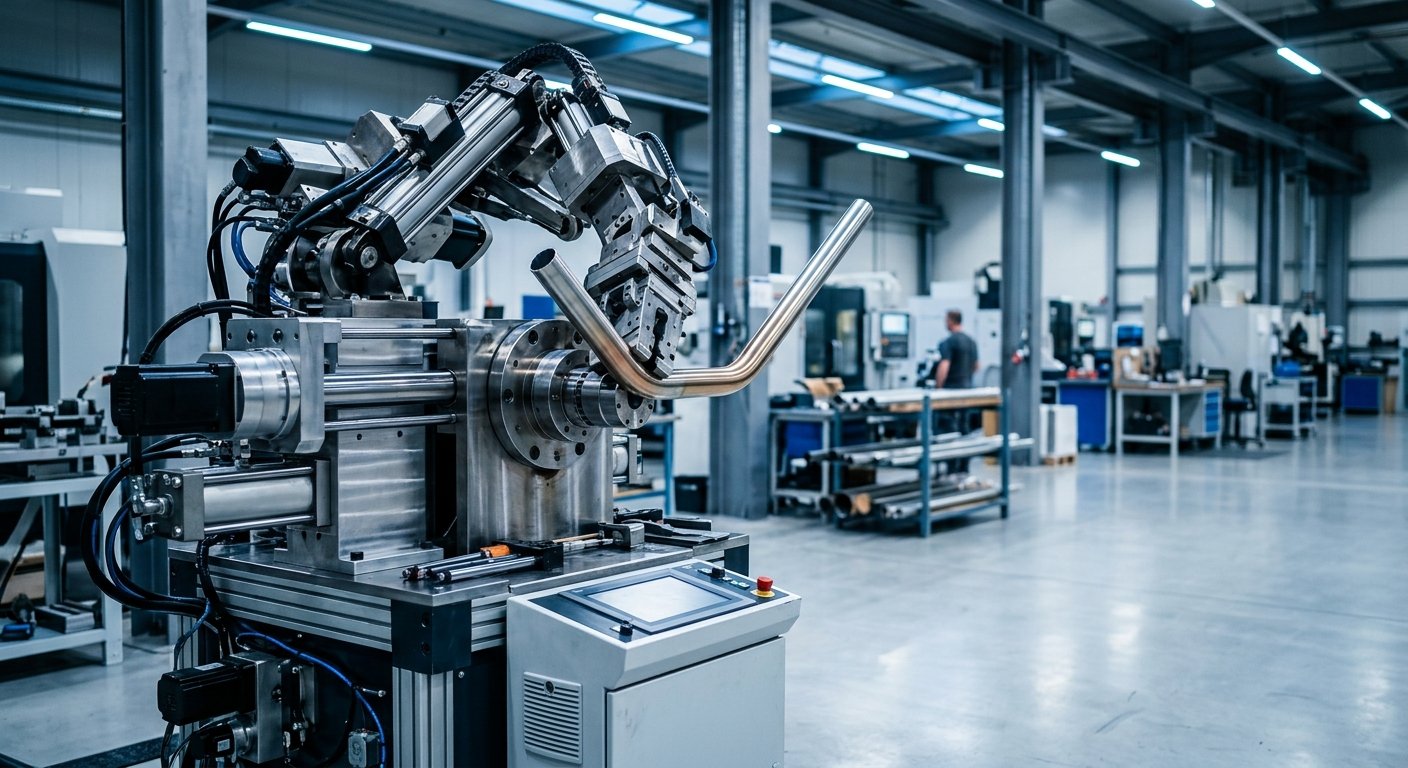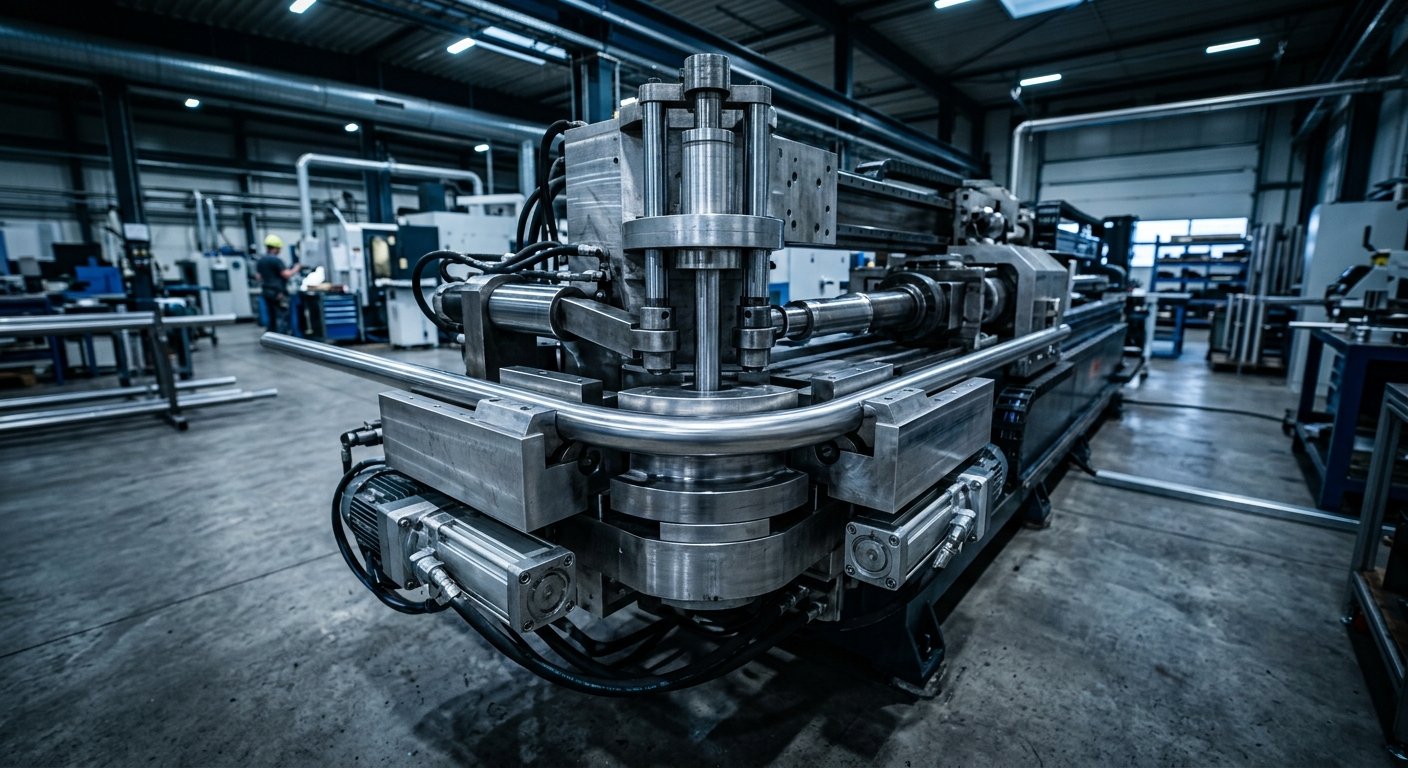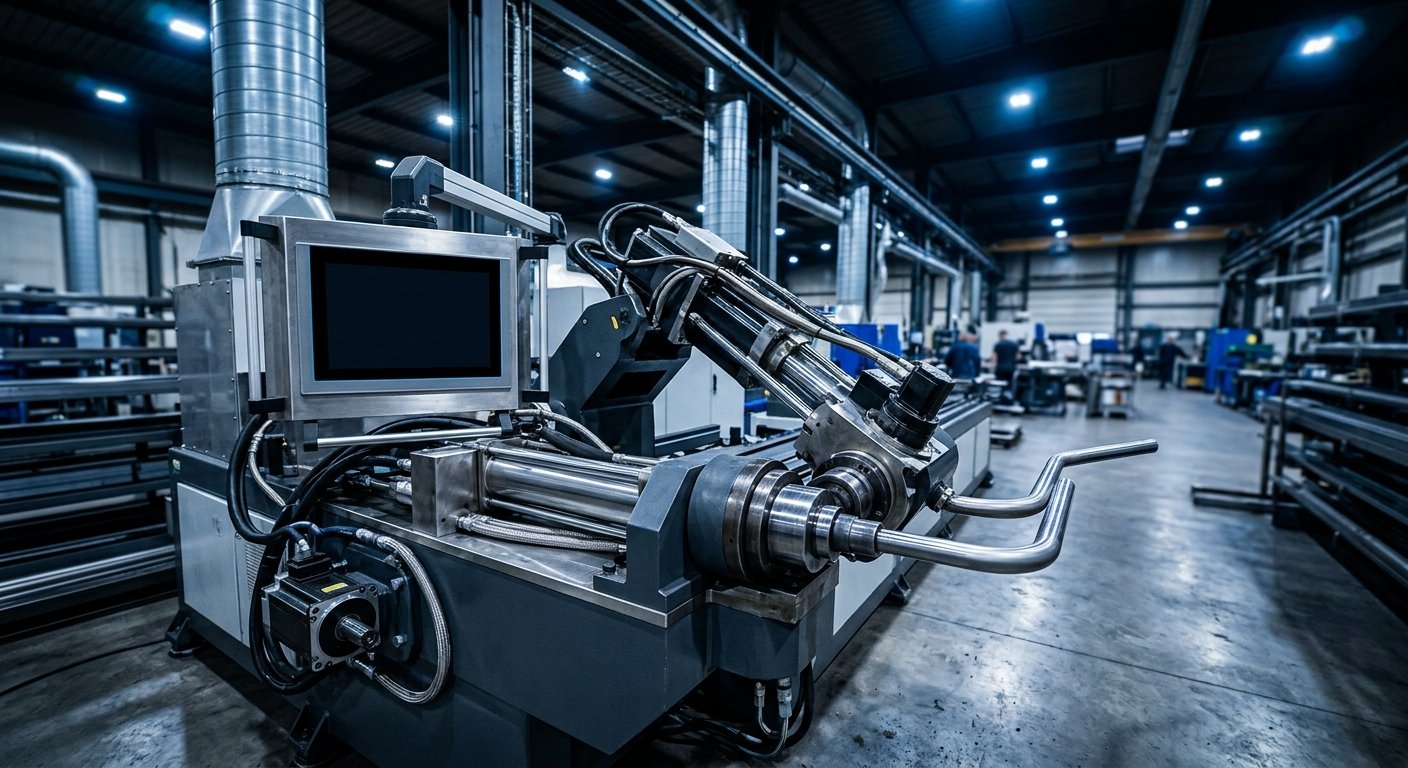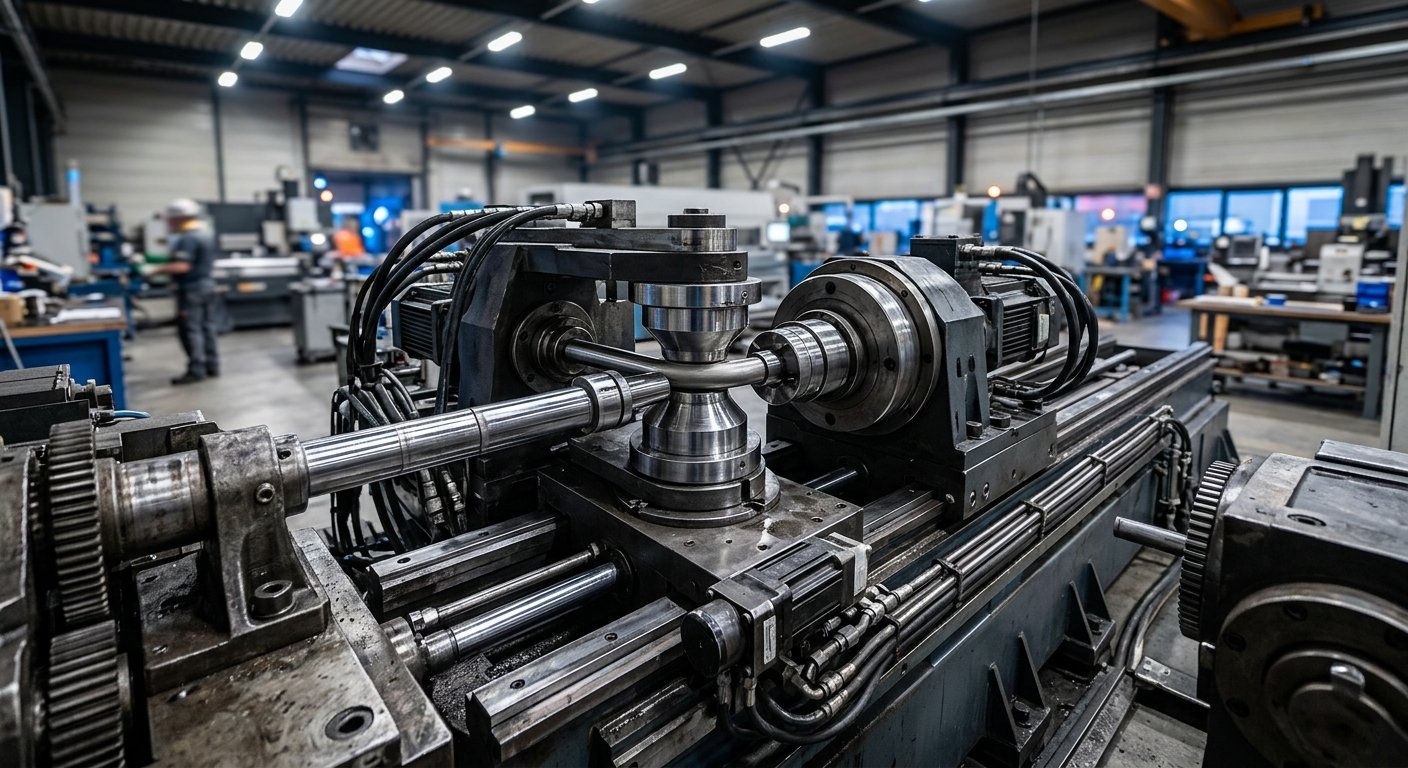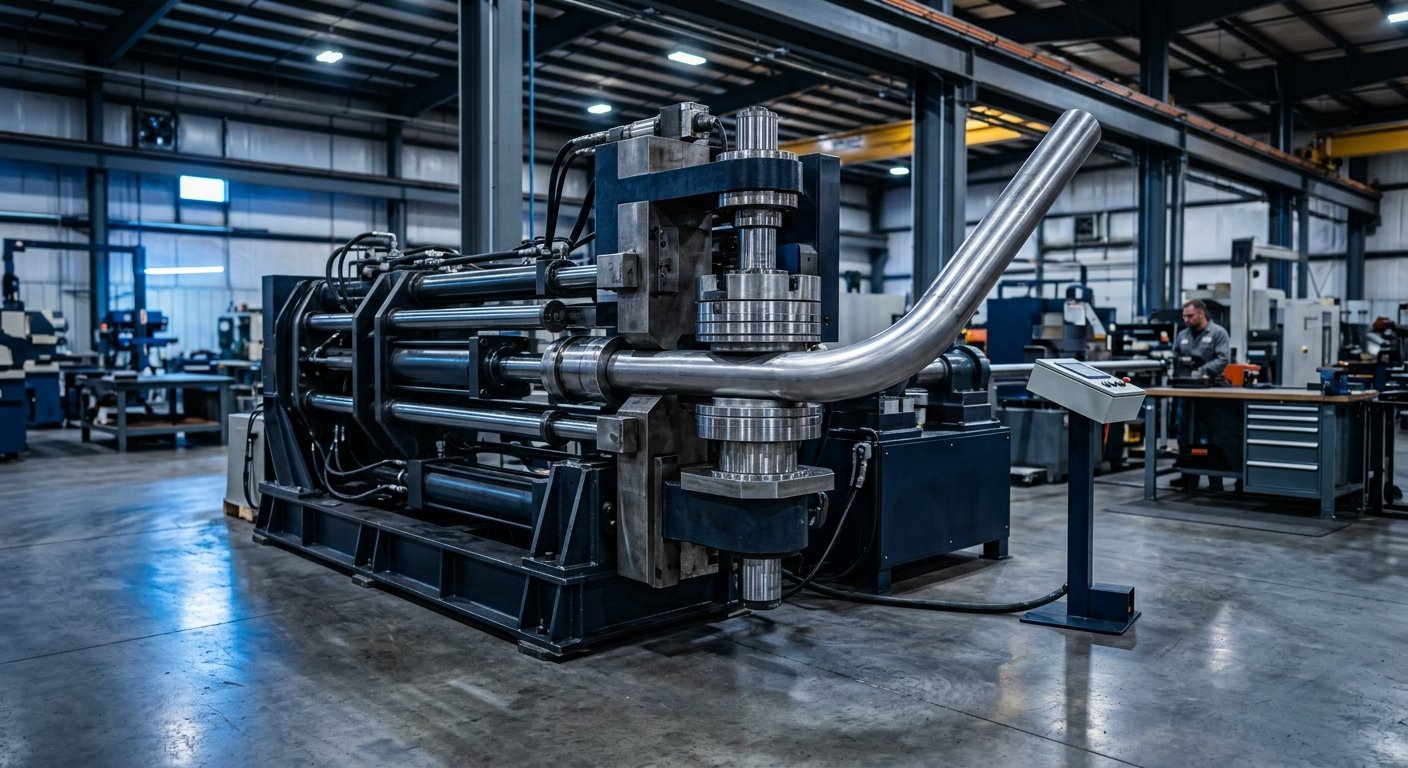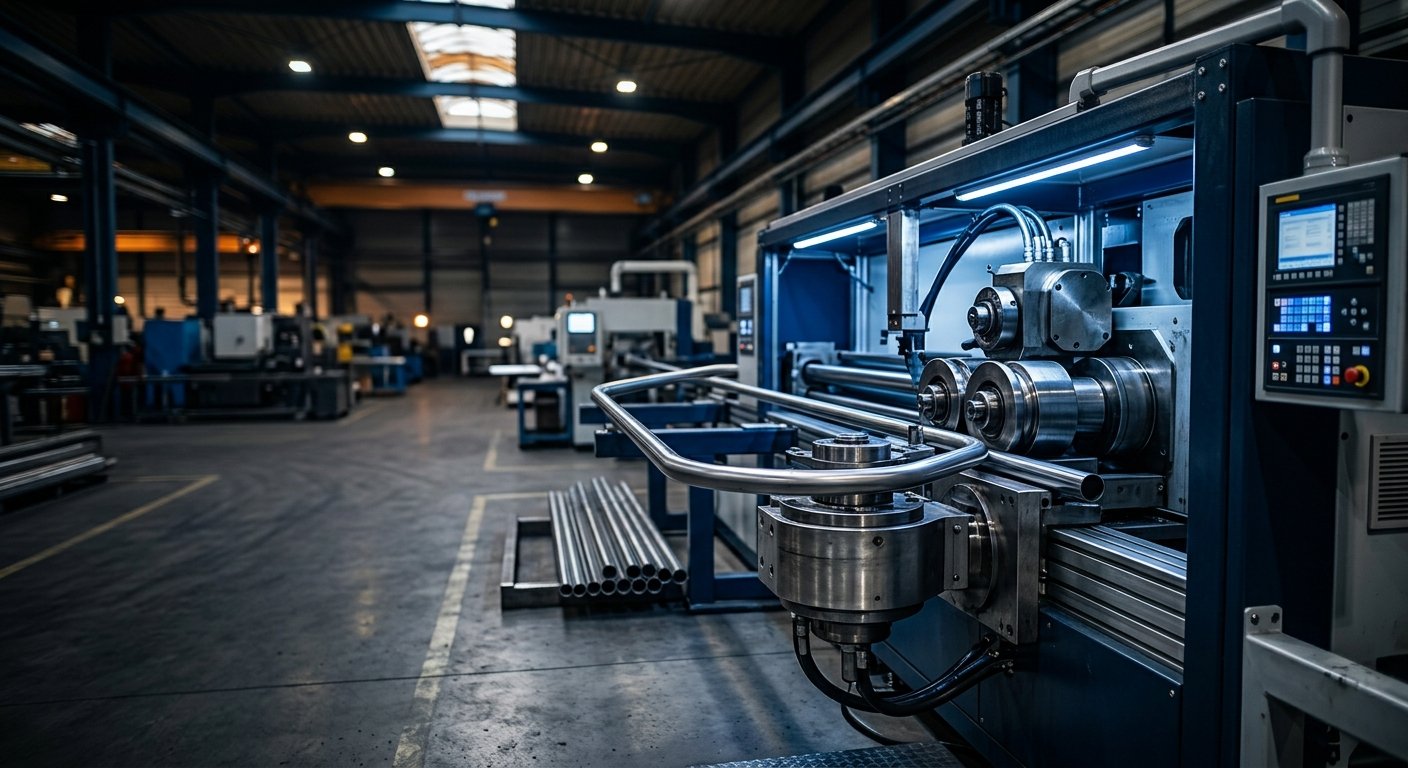
For standard applications, a reputable dealer can work. But for aerospace, defense, oil and gas, and petrochemical environments—where material tolerances, application-specific tooling, and long-term technical support are non-negotiable—buying a CNC tube bender directly from the manufacturer is the stronger decision. Manufacturers design, engineer, and build the equipment, enabling true customization and direct support across a 15- to 20-year machine lifecycle.
- Dealers are intermediaries; they cannot modify machine design or provide OEM-level engineering support.
- Direct manufacturers can customize configurations for unusual geometries, exotic materials, and tight-tolerance specifications.
- Total cost of ownership over a 15- to 20-year lifecycle—not acquisition price—is the right metric for comparison.
- Domestically manufactured equipment aligns with Buy American provisions and provides engineering accountability.
- Industries such as aerospace, defense, oil and gas, and petrochemical benefit most from manufacturer-direct purchasing.
This guide breaks down the real differences so engineering managers, production planners, and procurement specialists can make an informed decision aligned with their application requirements—whether that’s aerospace tube routing, oil and gas line systems, petrochemical installations, or defense hardware.
What Is a CNC Tube Bender Dealer?
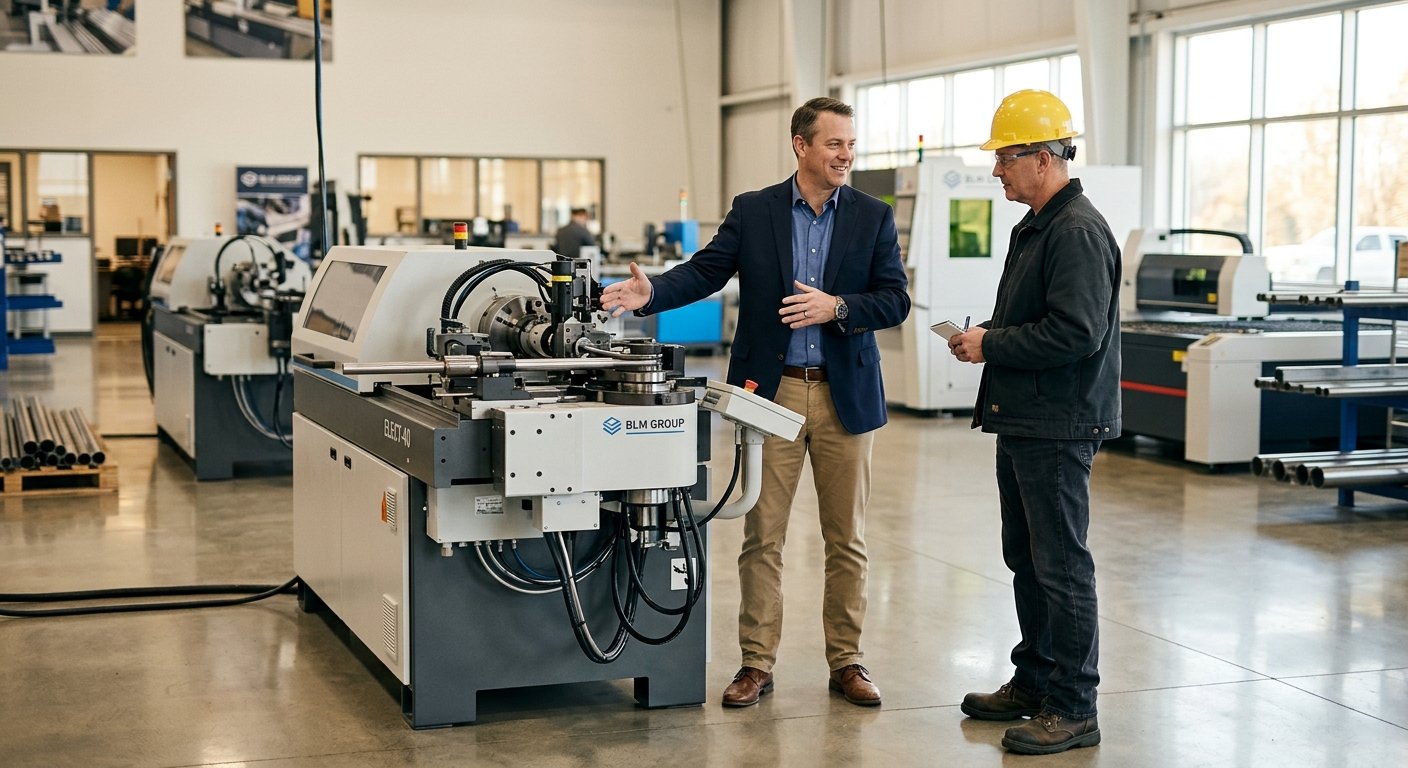
A tube bending machine dealer is a third-party reseller that purchases bending equipment from one or more manufacturers and sells it to end users. Dealers typically operate as intermediaries, handling sales transactions and sometimes offering service contracts or maintenance agreements.
Dealers range from broad-spectrum industrial equipment resellers to more specialized distributors focused on metalworking machinery. Their value proposition centers on convenience—they may carry multiple brands, offer financing arrangements, and provide regional sales support. However, their technical depth is often limited to general equipment knowledge rather than application-specific expertise.
Where Dealers Have Limitations
- No engineering authority: Dealers cannot modify machine design to fit unusual bend geometries, exotic materials, or tight-tolerance aerospace specifications.
- Parts dependency: When a dealer exits the market or loses a distribution agreement, customers may lose their primary parts and support pipeline.
- Limited technical ownership: Dealers rarely employ the engineers who designed the equipment, meaning complex troubleshooting requires escalation to the original manufacturer anyway.
- Generic configurations: Standard catalog machines may not address application-specific challenges in demanding industries like oil and gas or defense.
If a dealer exits the market or loses a distribution agreement, you may lose your primary parts and support pipeline overnight—with no direct path to the OEM. For long-lifecycle capital equipment, that risk compounds over time.
What a Pipe Bending Machine Manufacturer Offers
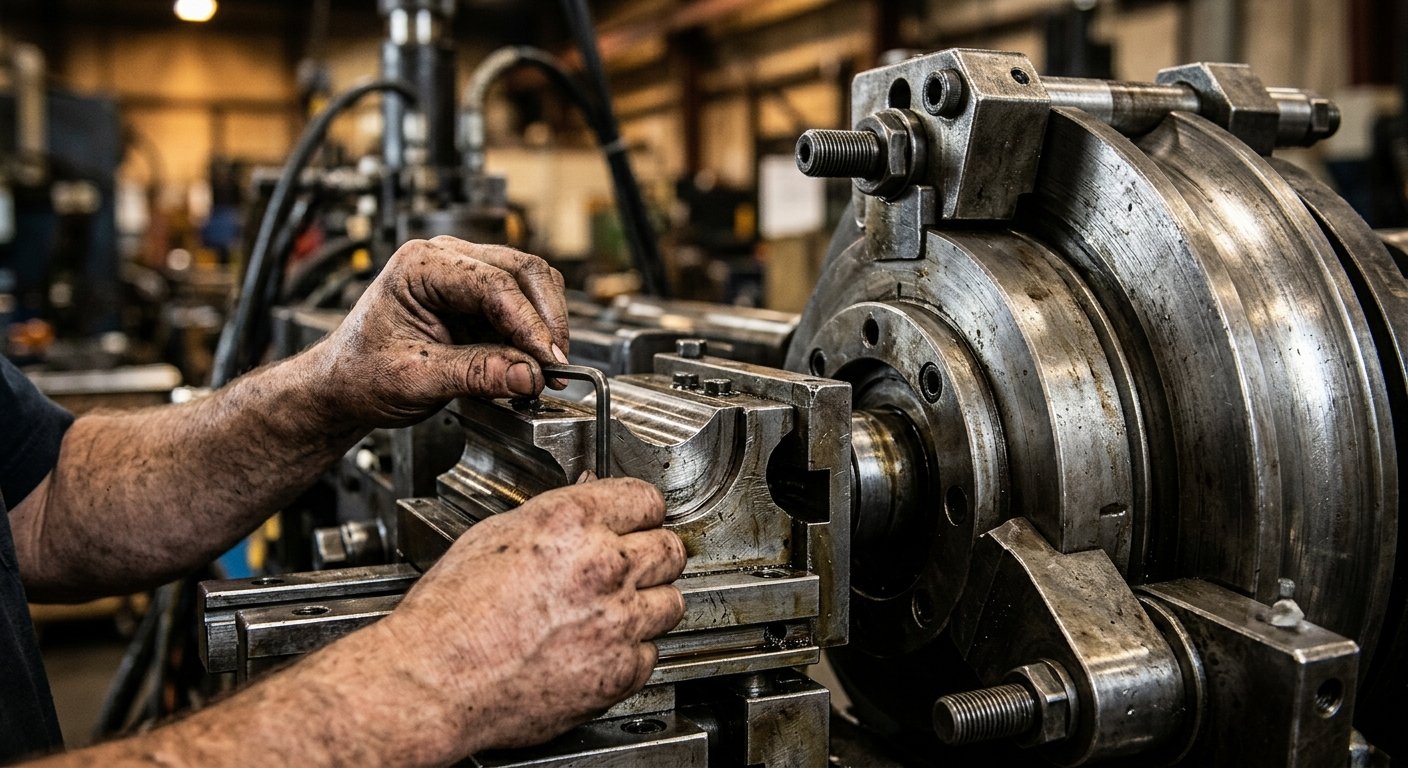
A direct pipe bending machine manufacturer designs, engineers, and builds its own equipment. Buying direct means your team works with the people who understand every aspect of the machine—from the control software and tooling geometry to the structural engineering behind the bend head and pressure die actuators.
For industrial tube bending machine sales in high-stakes applications, this distinction is critical. Aerospace hydraulic lines must meet stringent material flow and bend radius requirements. Oil and gas pipework involves heavy-wall tubing with specific ovality and wall thinning constraints. Defense programs often require traceability, documentation, and compliance with military specifications. A manufacturer can support all of these requirements; most dealers cannot.
| What to compare | Dealer | Direct Manufacturer |
|---|---|---|
| Engineering authority | General equipment knowledge only | Full design and application expertise |
| Customization | Catalog configurations only | Custom geometry, materials, CNC controls |
| Parts availability | Routed through OEM, adds friction | Direct OEM inventory and expediting |
| Technical support | Escalated to manufacturer anyway | Engineers who built the machine |
| Training | Generic or adapted methods | Built on control architecture knowledge |
| Compliance documentation | Limited | Traceability, mil-spec, Buy American |
Engineering Partnership, Not Just Equipment Sales
When a manufacturer handles the sale, engineering collaboration begins before the purchase order is signed. Your team can discuss tube material and wall thickness requirements, bend radius-to-diameter ratios and their effect on tooling selection, required tolerances and repeatability metrics, automation integration and production throughput targets, and tooling changeout frequency for multi-part production environments.
This upstream engineering conversation directly influences machine configuration—something a dealer simply cannot provide. According to the American Society of Mechanical Engineers (ASME), proper specification of bending equipment relative to material properties and application requirements is foundational to avoiding in-service failures in fluid conveyance systems. That level of specification requires engineering expertise embedded in the sales and configuration process.
Proper specification of bending equipment relative to material properties and application requirements is foundational to avoiding in-service failures in fluid conveyance systems.
Customization: The Critical Differentiator
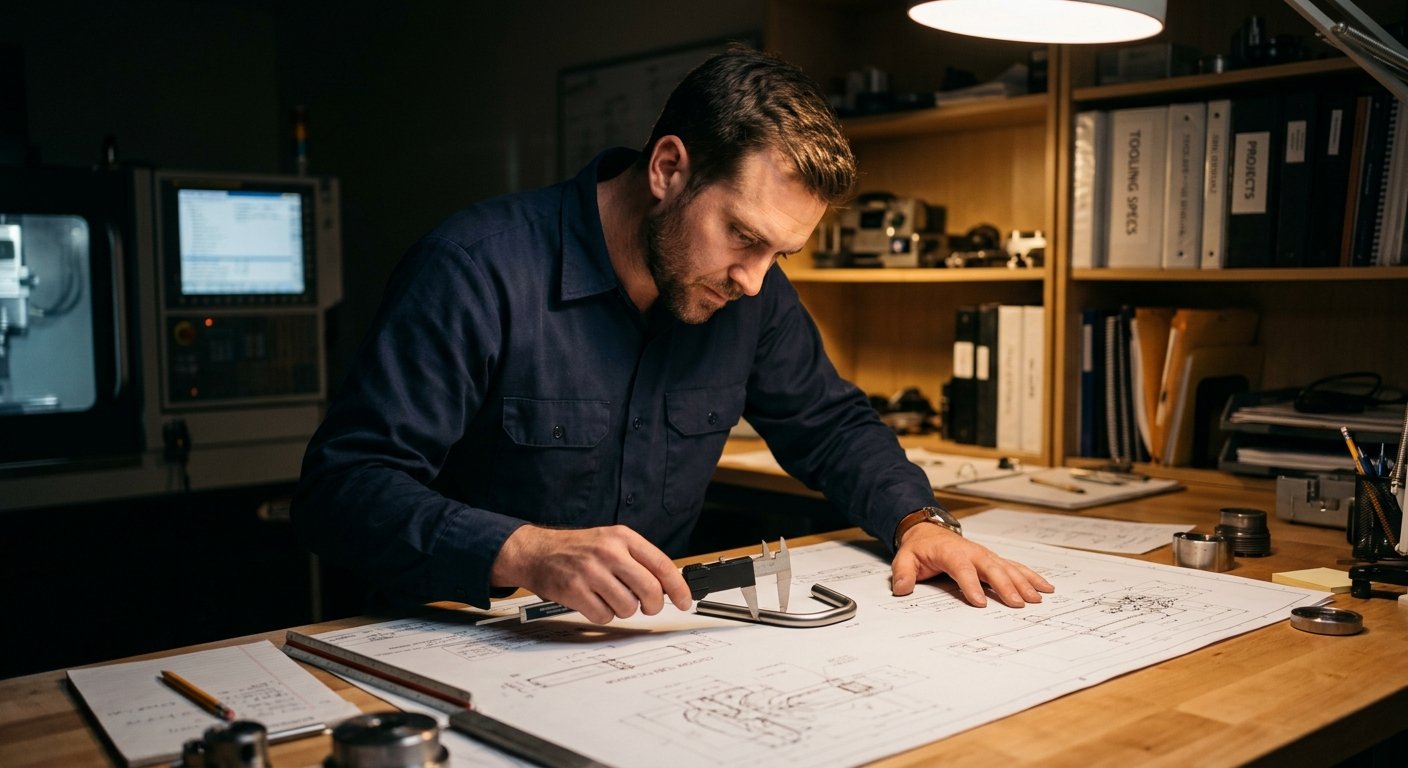
Standard catalog machines serve standard applications. But in aerospace, petrochemical, and defense manufacturing, “standard” is rarely sufficient.
A direct manufacturer can engineer custom solutions for unusual tube diameters or wall thickness combinations, multi-stack tooling for high-mix production environments, long-distance mandrel systems for thin-walled aerospace tubing, custom CNC control configurations aligned with your shop’s programming environment, and special clamping arrangements for complex bend sequences in a single setup.
Dealers selling off-the-shelf machines from a catalog simply cannot offer this level of application engineering. If your production involves any non-standard geometry, material, or throughput requirement, industrial tube bending machine sales through a manufacturer’s direct channel is almost always the better path.
Support, Training, and Long-Term Reliability
The purchase decision doesn’t end at delivery. CNC bending equipment requires operator training, periodic calibration, tooling maintenance, and occasional technical support. This is where the dealer versus manufacturer distinction becomes especially consequential over the equipment lifecycle.
Training Programs
A manufacturer’s training program is built on direct knowledge of the machine’s control architecture, tooling interface, and optimization techniques. Operators trained by the manufacturer learn the right methods, not workarounds adapted from generic machining experience. This directly impacts bend quality, tooling life, and scrap rates.
Service and Parts Availability
Direct manufacturers maintain their own parts inventory for the machines they build. When a wear component needs replacement—a mandrel ball link, a pressure die insert, a bend die segment—the manufacturer knows exactly which part number applies, what material specification it must meet, and how to expedite delivery when a production line is at risk.
Dealers, by contrast, must route parts requests through the original manufacturer anyway. This adds a layer of friction that compounds during time-sensitive situations. The National Institute of Standards and Technology’s Manufacturing Program has long emphasized that supply chain resilience—including direct access to OEM parts and technical documentation—is a core component of manufacturing reliability for defense and critical infrastructure sectors.
Before signing any purchase agreement, ask the dealer specifically: “If I need an emergency part replacement, what is the documented lead time, and does it route through the OEM?” The answer will tell you everything about your real support pipeline.
Precision Tube Bender Sales: Evaluating Total Cost of Ownership
When comparing precision tube bender sales options between dealers and manufacturers, procurement teams often focus on initial acquisition cost. That’s the wrong metric. Total cost of ownership over a 15- to 20-year equipment lifecycle includes training expenses and operator competency development, tooling costs and changeout frequency, downtime costs from parts delays or unsupported troubleshooting, machine modification costs when production requirements evolve, and calibration and compliance documentation for regulated industries.
A dealer selling a slightly lower-priced machine that lacks direct engineering support and a robust parts pipeline will frequently cost more over the machine’s life than a manufacturer-direct purchase with comprehensive support infrastructure in place from day one.
Why American Manufacturing Heritage Matters
For aerospace, military, and government-adjacent programs, domestic sourcing is often a specification requirement, not just a preference. Machines manufactured in the United States carry traceable material certifications, are subject to domestic quality standards, and align with Buy American provisions applicable to many government contracts.
Beyond compliance, American-manufactured equipment brings engineering accountability. When an issue arises with a domestically built machine, the engineering team responsible for the design is accessible, responsive, and technically capable of resolving it. That accountability is difficult to achieve through an intermediary dealer representing overseas-manufactured equipment.
The Manufacturing USA initiative continues to document the strategic importance of domestic industrial equipment production in maintaining American technological leadership in defense and advanced manufacturing sectors.
Frequently Asked Questions
Is it always better to buy a CNC tube bender directly from the manufacturer?
For standard applications with minimal customization requirements, a reputable dealer can be a viable option. However, for demanding applications in aerospace, oil and gas, petrochemical, or defense environments—where material tolerances, application-specific tooling, and long-term technical support are critical—purchasing directly from a manufacturer is generally the stronger decision.
What should I ask a tube bending machine dealer before purchasing?
Key questions include: Who manufactured this machine? Can the manufacturer provide direct technical support, or does all service route through you? Are parts stocked domestically and available directly from the OEM? Can the machine be customized to meet application-specific requirements? What training is included, and who delivers it?
How does buying from a manufacturer affect customization options?
Manufacturers can modify machine configurations before and after delivery because they designed and built the equipment. Dealers typically cannot offer engineering modifications since they don’t control the design or manufacturing process. If your application requires non-standard bending solutions, manufacturer-direct purchasing is the only path to true customization.
What industries benefit most from buying CNC tube benders direct from a manufacturer?
Aerospace, defense, oil and gas, and petrochemical industries benefit most. These sectors involve precision requirements, material traceability, application-specific tooling, and compliance documentation that demand deep engineering engagement—not just equipment delivery.
Does buying direct from a manufacturer cost more than going through a dealer?
Initial acquisition costs may vary, but total cost of ownership typically favors manufacturer-direct purchasing when factoring in training, parts availability, technical support quality, and the ability to adapt equipment as production requirements evolve. Dealer-introduced inefficiencies compound over a 15- to 20-year machine lifecycle.
Making the Right Call for Your Operation
The choice between a CNC tube bender dealer and a direct manufacturer comes down to what your production environment actually demands. If your facility processes standard diameters in non-critical applications, a dealer arrangement may serve basic needs. But if your operation serves aerospace programs, military contracts, high-pressure oil and gas systems, or any application where bend quality, material traceability, and long-term support continuity are non-negotiable, working directly with a manufacturer is the only logical choice.
Hines Bending Systems has spent 50 years designing and building precision tube and pipe bending equipment here in America, trusted by NASA, military organizations, and industrial manufacturers with demanding specifications. Our approach to tube bending machines is built on direct engineering collaboration from application review through delivery and ongoing support. Whether you need a solution for aerospace tube bending or heavy-duty pipe bending machines for industrial installations, Hines works with you as a technical partner—not just an equipment vendor.
Ready to discuss your application with the engineers who built the machine?
Contact Hines Bending Systems directly to start the conversation about the right bending solution for your operation.

About Hines Bending Systems
Hines Bending Systems is a leading American manufacturer of precision tube and pipe bending equipment serving aerospace, energy, oil & gas, petrochemical, and defense industries. With 50 years of proven expertise and a track record of supplying NASA and military clients, Hines delivers custom bending solutions for demanding applications ranging from high-volume production to specialized one-off projects. The company combines deep technical knowledge with comprehensive support including training and service, positioning itself as a partner in customer success rather than just an equipment supplier. Visit hinesbending.com →