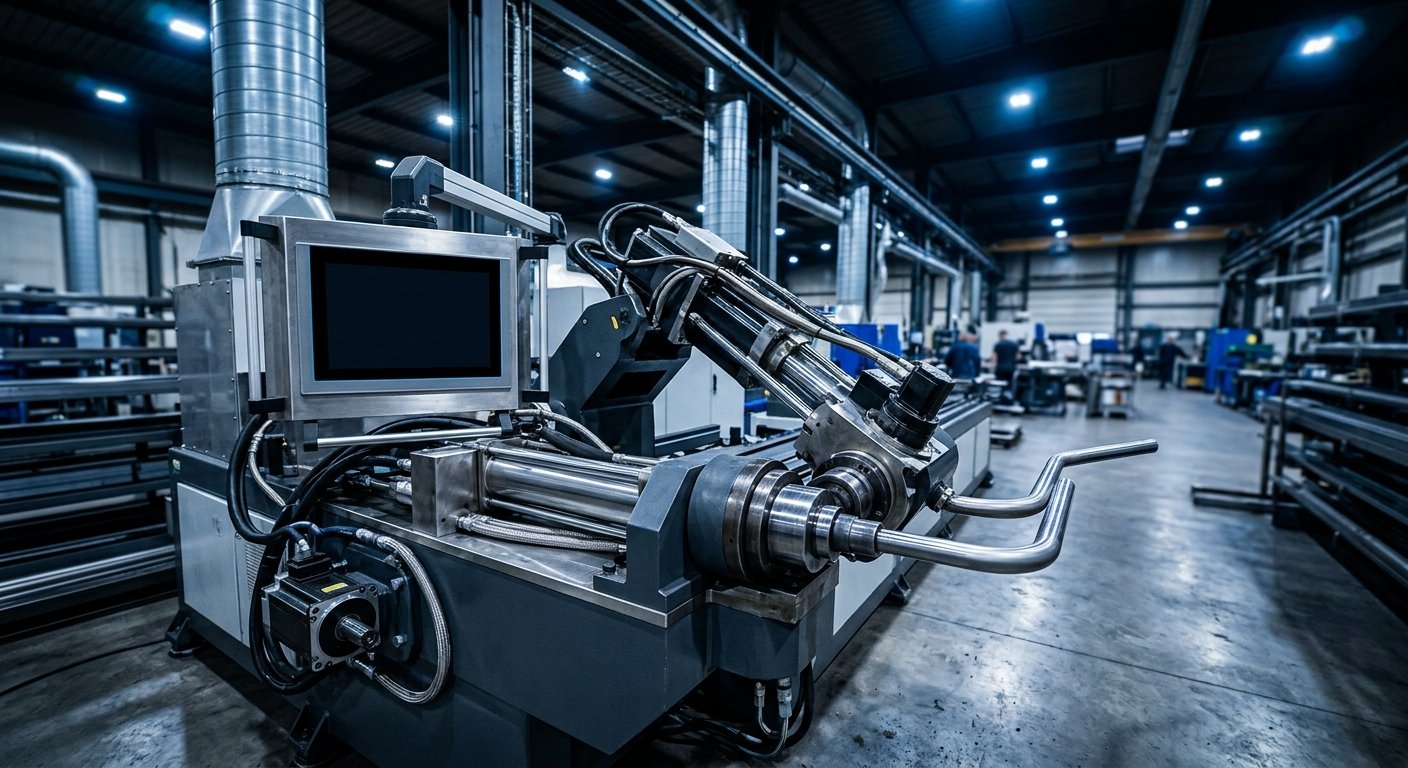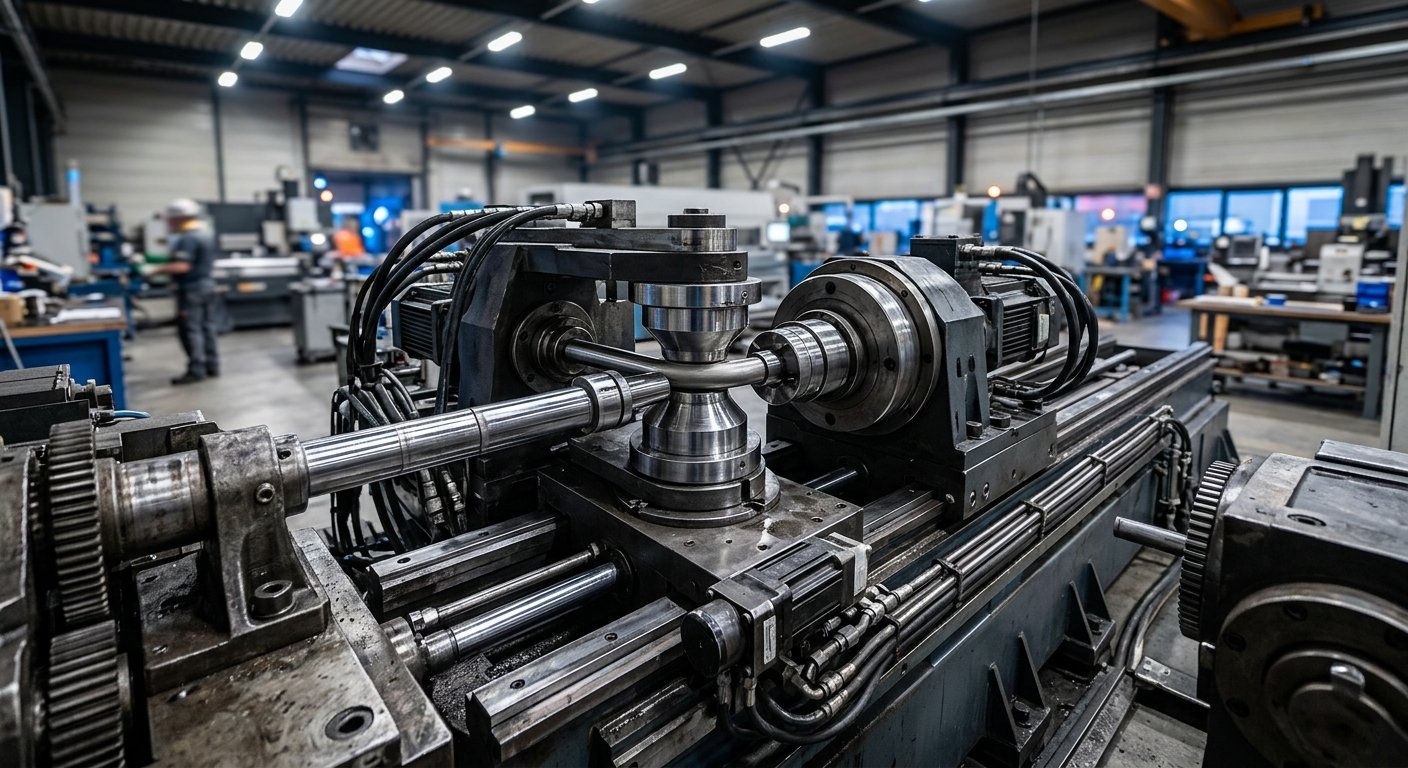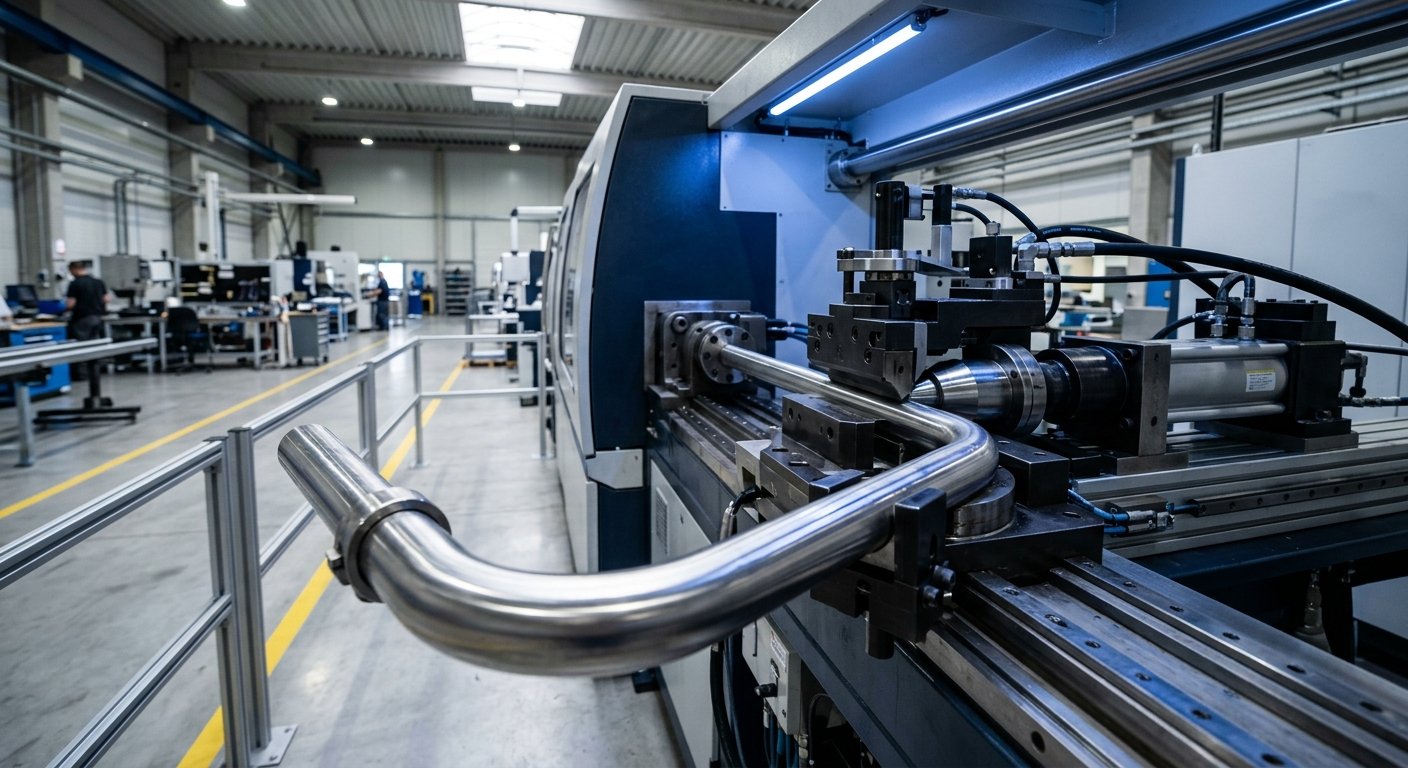
Off-the-shelf rarely cuts it when your application demands tight-radius bends in Inconel, multi-plane tube routing through a confined aerospace assembly, or high-volume throughput in a petrochemical plant where repeatability is non-negotiable. For engineers specifying bending equipment in 2026, the gap between a standard catalog machine and a purpose-built, application-specific bending machine can mean the difference between a successful production run and chronic rework costs.
This guide breaks down the core engineering considerations for custom CNC bending systems—what drives the need for customization, what specs actually matter, and how to evaluate a custom bending machine manufacturer who can deliver a solution that performs in your environment.
Why Standard Bending Equipment Falls Short in Demanding Applications
Most production tube and pipe bending equipment is engineered for common materials and geometries. That’s appropriate for broad commercial applications. But the moment your requirements push outside those parameters—exotic alloys, complex bend sequences, extreme tolerances, or unusual tube diameters—standard machines introduce compromises that compound through your production process.
Consider the variables that define a demanding application:
- Material properties: Titanium, Inconel, duplex stainless, and other high-strength alloys require precisely controlled bend force, mandrel support, and springback compensation that generic machines aren’t calibrated for.
- Geometry complexity: Multi-plane bends, tight center-line radii, or long straight sections between bends demand tooling clearance and axis travel that standard platforms often can’t accommodate.
- Tolerance requirements: Aerospace and defense applications routinely demand angular repeatability within fractions of a degree. That level of precision requires purpose-built CNC control architecture and rigid machine construction.
- Production environment: Some applications require clean-room compatibility, explosion-proof electrical systems for oil and gas environments, or integration with automated material handling systems.
Attempting to force these requirements onto a general-purpose machine typically results in excessive setup time, higher scrap rates, and shortened tooling life—all of which erode the economics of your production line.
Core Engineering Considerations for Custom Tube Bending Equipment
1. Tube and Pipe Specifications Drive Machine Architecture
The foundation of any custom CNC bending system specification starts with your material and geometry envelope. Key parameters include outside diameter range, wall thickness, minimum bend radius (expressed as a multiple of OD), and the material’s yield strength and elongation characteristics.
Wall thickness relative to OD is particularly critical. Thin-wall tubing in hard alloys is among the most demanding bending challenges, requiring mandrel support, wiper dies, and controlled pressure die advance to prevent wall thinning, wrinkling, or ovality. Your machine’s hydraulic system must deliver precise, programmable force at each stage of the bend cycle. According to ASME standards governing pipe and tube fabrication, dimensional tolerances on bent components in pressure-bearing systems are tightly defined—custom equipment configured for those tolerances from the start eliminates downstream inspection failures.
2. CNC Control Architecture and Programmability
Modern custom tube bending equipment is defined largely by its control system. The right CNC platform enables:
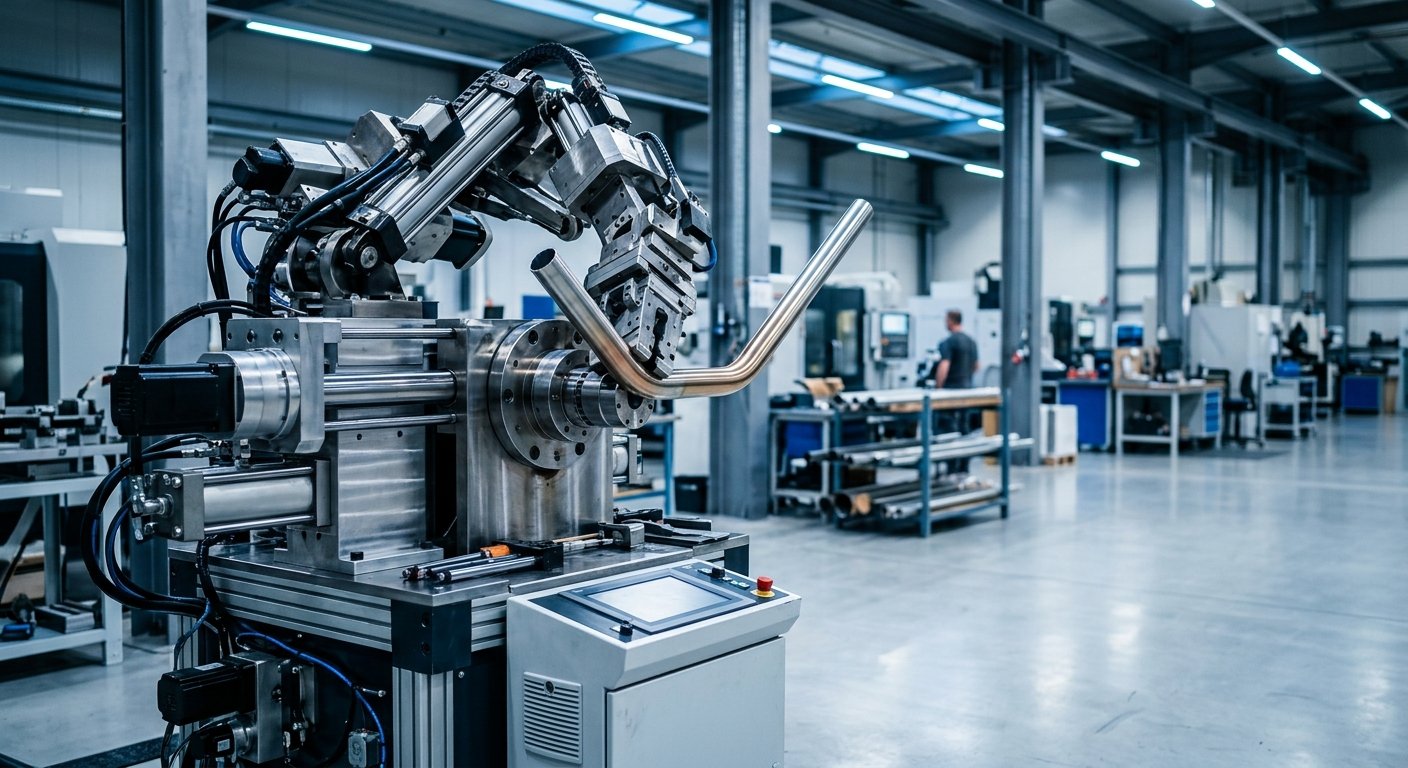
- Multi-axis synchronization (bend, clamp, pressure die, boost, mandrel extraction) with programmable timing
- Springback compensation algorithms that adapt to material batch variation
- Part program storage with rapid recall for high-mix production environments
- Real-time force and position monitoring with process data logging
- Integration with ERP and quality management systems via standard industrial protocols
For aerospace and defense customers, audit trail capability and process traceability are often contractual requirements. Your bending system’s control architecture needs to support that documentation—not as an afterthought, but as a designed-in feature.
3. Tooling Design Is Half the Solution
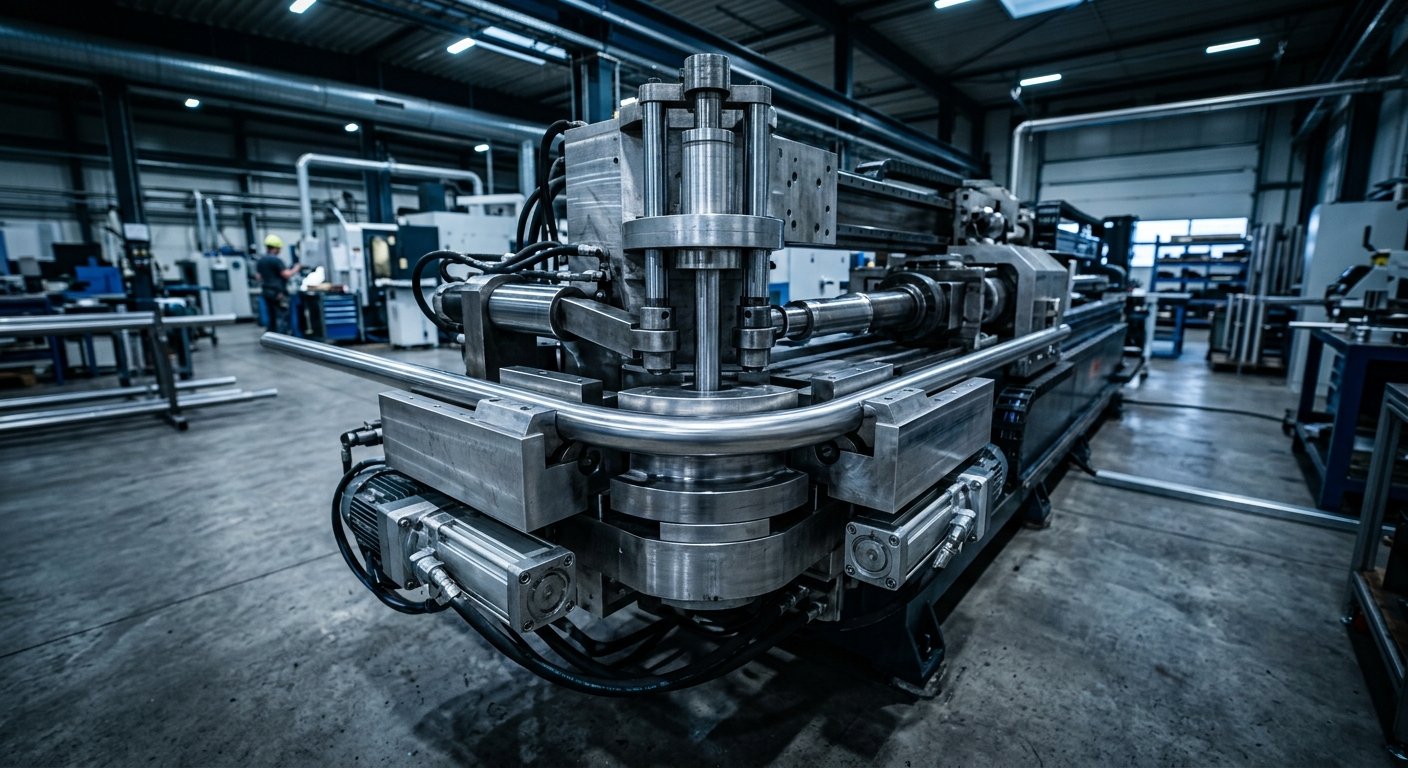
Even the most sophisticated CNC platform underperforms with poorly matched tooling. In application-specific bending machines, the bend die, clamp die, pressure die, wiper die, and mandrel are engineered as an integrated system for your specific tube geometry and material.
Key tooling considerations for demanding applications include:
- Die material selection: Tool steel, carbide-tipped inserts, or specialty alloys depending on production volume and tube material
- Mandrel design: Ball mandrel count and articulation geometry matched to your CLR-to-OD ratio
- Surface finish and lubrication provisions: Critical for minimizing galling in titanium and stainless applications
- Quick-change tooling systems: Essential for high-mix production where changeover time directly impacts capacity
At Hines Bending Systems, tooling engineering is integrated into the machine design process—not treated as a separate procurement exercise. That integration is what enables the precision our aerospace and defense customers require.
Application-Specific Bending Machines Across Industries
Aerospace
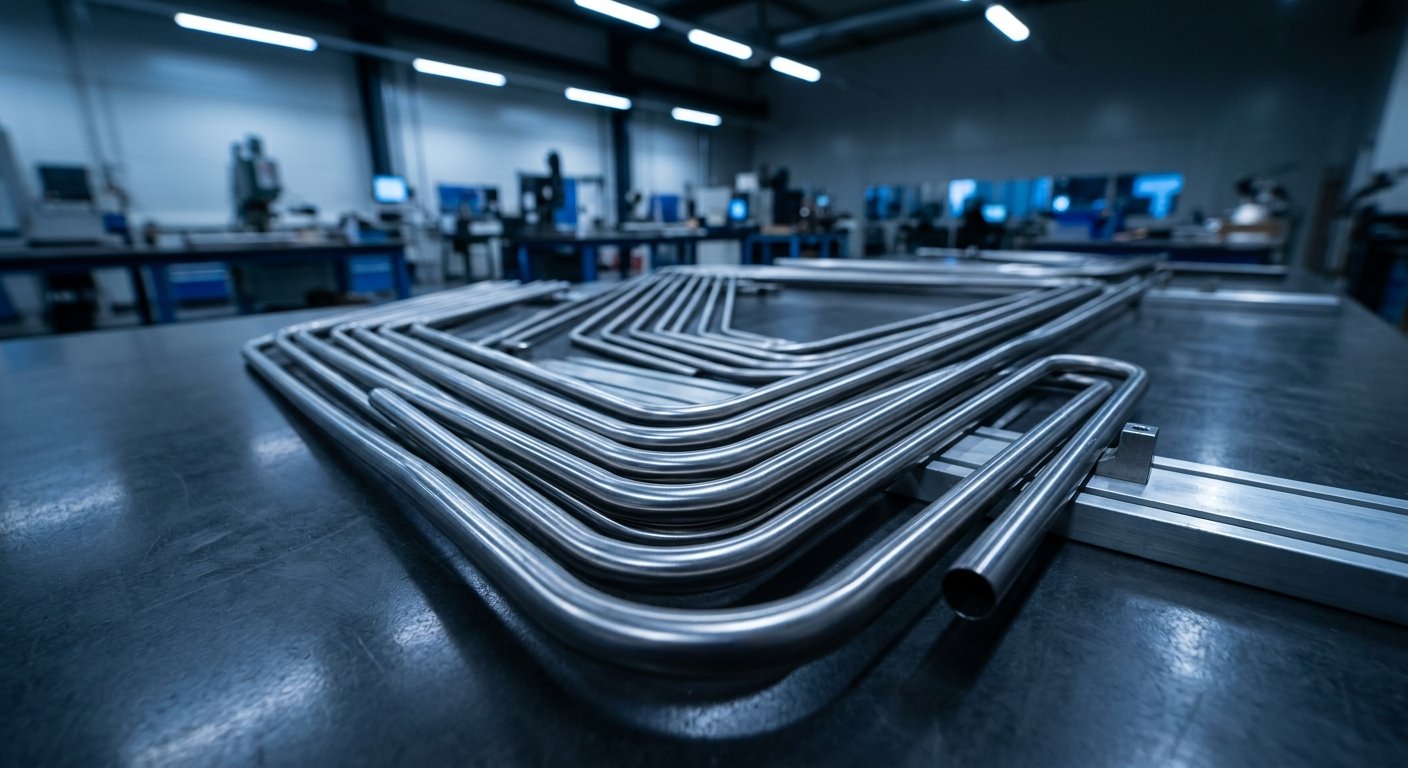
Aerospace tube bending demands the tightest tolerances in the industry. Hydraulic lines, fuel systems, environmental control ducting, and structural tubing must meet precise geometric specifications while maintaining material integrity in high-stress alloys. Custom CNC bending systems for aerospace often incorporate automated part measurement and closed-loop correction, along with full process traceability aligned with AS9100 quality management requirements.
Oil & Gas and Petrochemical
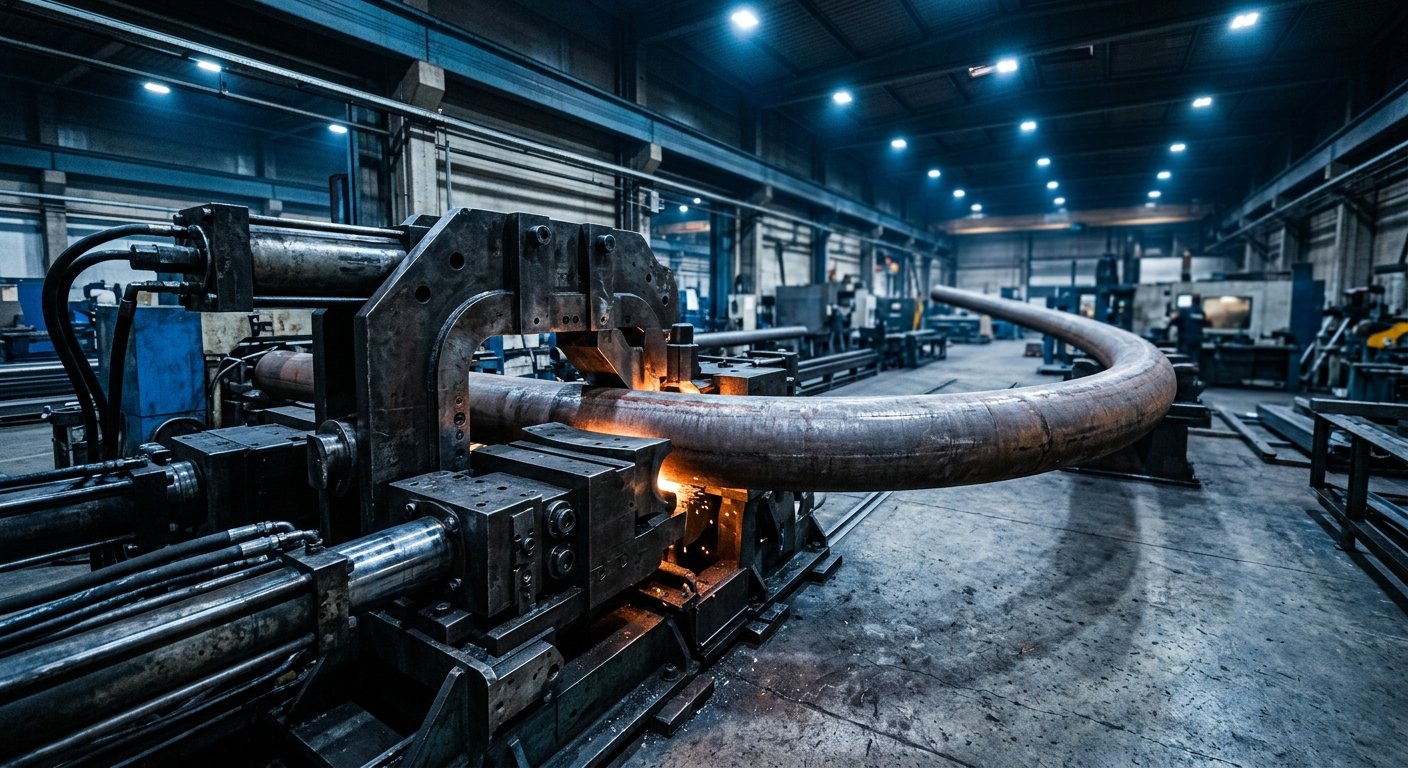
Large-diameter pipe bending for process piping, offshore platforms, and refinery infrastructure requires machines engineered for heavy-wall materials and large bend radii. These environments also impose safety requirements—electrical systems may need to meet hazardous location ratings, and process documentation must satisfy regulatory requirements. The U.S. Department of Energy emphasizes rigorous fabrication standards for energy infrastructure, reinforcing why precision bending equipment engineered for these environments matters from both a performance and compliance perspective.
Defense
Military applications span hydraulic systems for armored vehicles, aircraft fuel and environmental control systems, shipboard piping, and ground support equipment. Defense programs frequently require full material traceability, first-article inspection documentation, and bending equipment that can be qualified under MIL-SPEC requirements. Hines Bending Systems has a proven track record supplying bending solutions to military customers—equipment that meets the accountability and performance standards these programs demand.
Evaluating a Custom Bending Machine Manufacturer
Selecting an engineered bending solution provider is a different decision than purchasing standard equipment. Here’s what to evaluate beyond catalog specifications:
- Engineering depth: Does the manufacturer have in-house engineering capability to design machine architecture, controls, and tooling as an integrated system? Or do they assemble third-party components?
- Application experience: Have they built solutions for your specific industry and material set? Ask for documented examples, not just references.
- Manufacturing quality: American-manufactured precision equipment built to domestic standards provides supply chain reliability, faster service support, and alignment with domestic content requirements increasingly common in defense and energy contracts.
- Training and service capability: A custom machine is only as valuable as your team’s ability to run it effectively. Comprehensive operator and maintenance training, combined with responsive service support, are critical for maximizing uptime and production quality.
- Validation process: Does the manufacturer conduct factory acceptance testing with your actual materials before shipment? For precision applications, FAT is non-negotiable.
With 50 years of tube and pipe bending expertise, Hines Bending Systems brings the engineering depth and application experience to design solutions that perform from day one. Our custom bending solutions are engineered for your specific requirements—not adapted from a general-purpose platform.
Integration with Your Production System
Modern custom CNC bending systems don’t operate in isolation. For production planning purposes, consider how your bending system will integrate with upstream and downstream processes:
- Automated tube loading and unloading for high-volume lines
- In-line measurement and inspection systems
- Data connectivity for production monitoring and OEE tracking
- Compatibility with your facility’s power and compressed air infrastructure
The National Institute of Standards and Technology’s advanced manufacturing research consistently points to system integration as a key driver of productivity gains in precision manufacturing environments. Your bending equipment specification should account for these integration requirements from the outset.
Explore our tube bending machines and pipe bending machines to understand the range of platforms we build from, and how custom engineering extends those foundations to meet your specific requirements.
Frequently Asked Questions
What makes a CNC bending system “custom” versus standard?
A custom CNC bending system is engineered around specific application requirements—tube size range, material properties, tolerance requirements, production environment, and integration needs—rather than built to a fixed catalog specification. Customization may encompass machine structure, hydraulic system capacity, CNC control configuration, tooling design, and ancillary automation.
How do I determine if my application needs custom tube bending equipment?
If your application involves exotic alloys, tight-radius bends below 2x OD, extreme angular tolerance requirements, unusual tube diameters, hazardous location requirements, or complex integration with automated production systems, standard catalog machines will likely introduce compromises. Engaging a custom bending machine manufacturer early in the project planning phase allows for a proper requirements analysis.
What is factory acceptance testing and why does it matter?
Factory acceptance testing (FAT) is a validation process conducted at the manufacturer’s facility before shipment, where the machine is run with your actual materials and programs to verify it meets specified performance requirements. For precision applications, FAT catches configuration issues before the machine reaches your facility, reducing installation delays and qualification time.
How long does it take to develop and deliver a custom bending system?
Lead times for engineered bending solutions vary based on machine complexity, tooling requirements, and control system configuration. Simple customizations on a proven platform may require months; highly specialized systems with extensive automation integration typically require longer development cycles. Early engagement with your manufacturer allows for realistic schedule planning.
What ongoing support should I expect from a custom bending machine manufacturer?
Beyond equipment delivery, expect comprehensive operator and maintenance training, documentation packages, spare parts provisioning guidance, and responsive technical support. For custom systems, manufacturer support is particularly important because the machine is configured specifically for your application—generic third-party service is rarely adequate.
Partner with a Manufacturer Who Understands Your Application
Specifying custom CNC bending systems requires more than reviewing a technical datasheet. It demands a manufacturing partner with the engineering depth to understand your application, the production capability to build equipment that performs to specification, and the support infrastructure to keep that equipment running effectively over its service life.
Hines Bending Systems has built that capability over five decades of serving aerospace, defense, energy, and petrochemical customers—including NASA and military organizations with the most demanding requirements in the industry. If your application requires a precision bending solution engineered for your specific needs, contact Hines Bending Systems to discuss your project requirements with our engineering team.