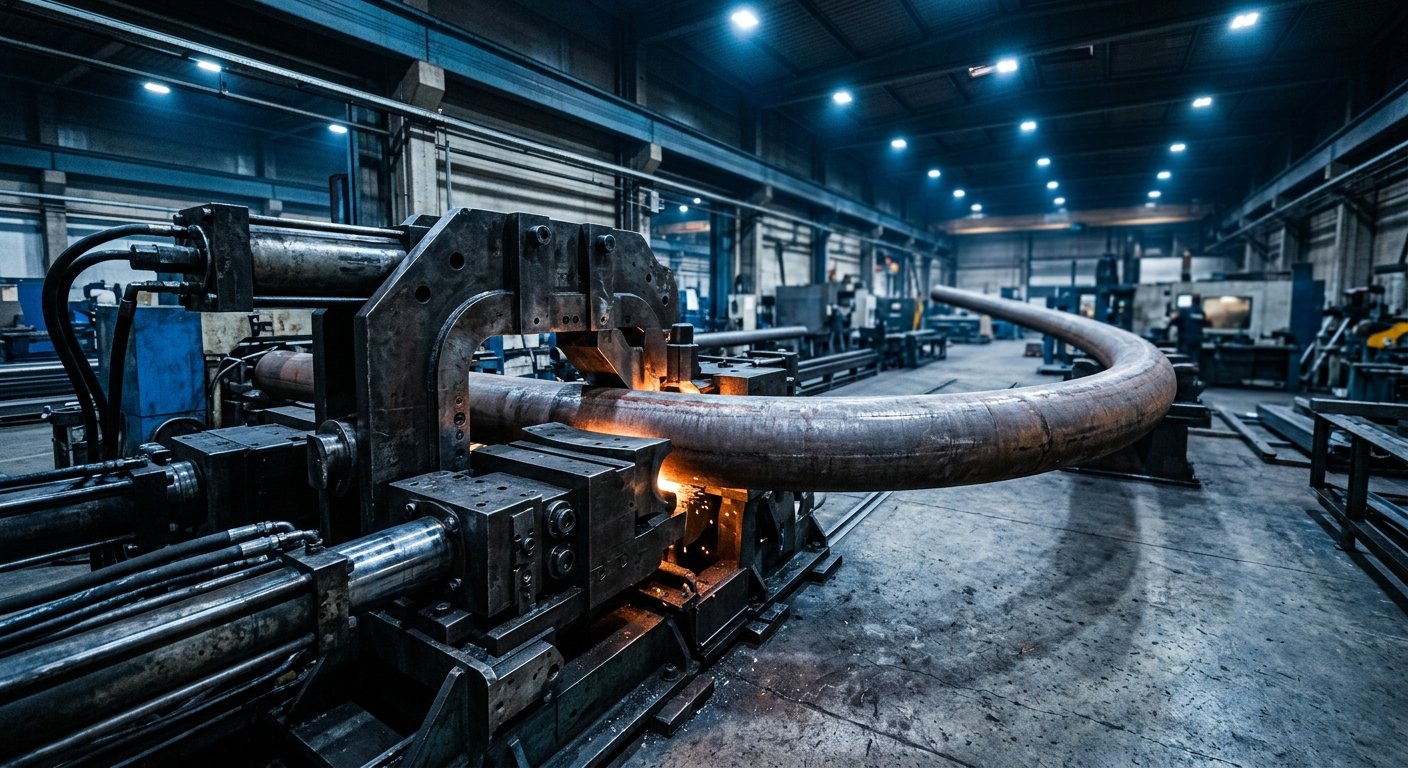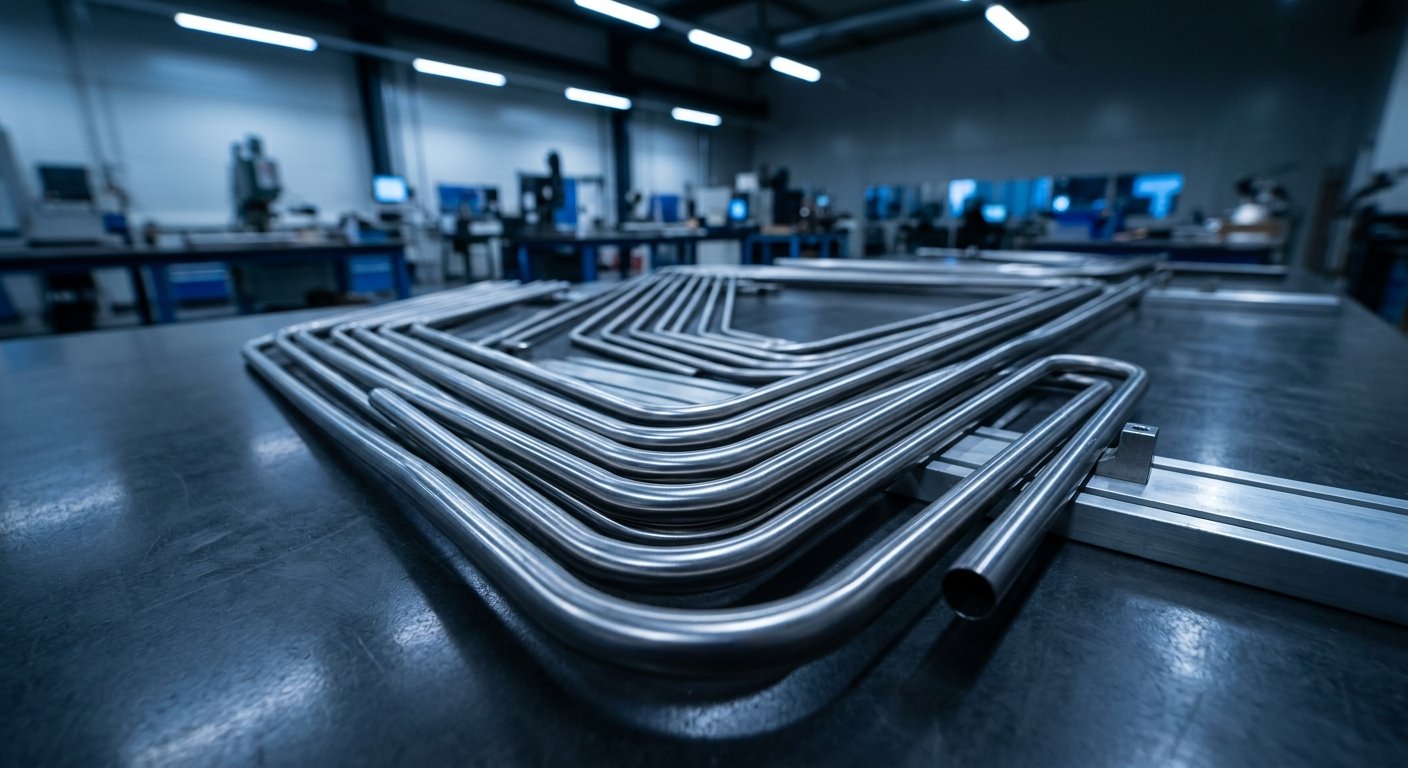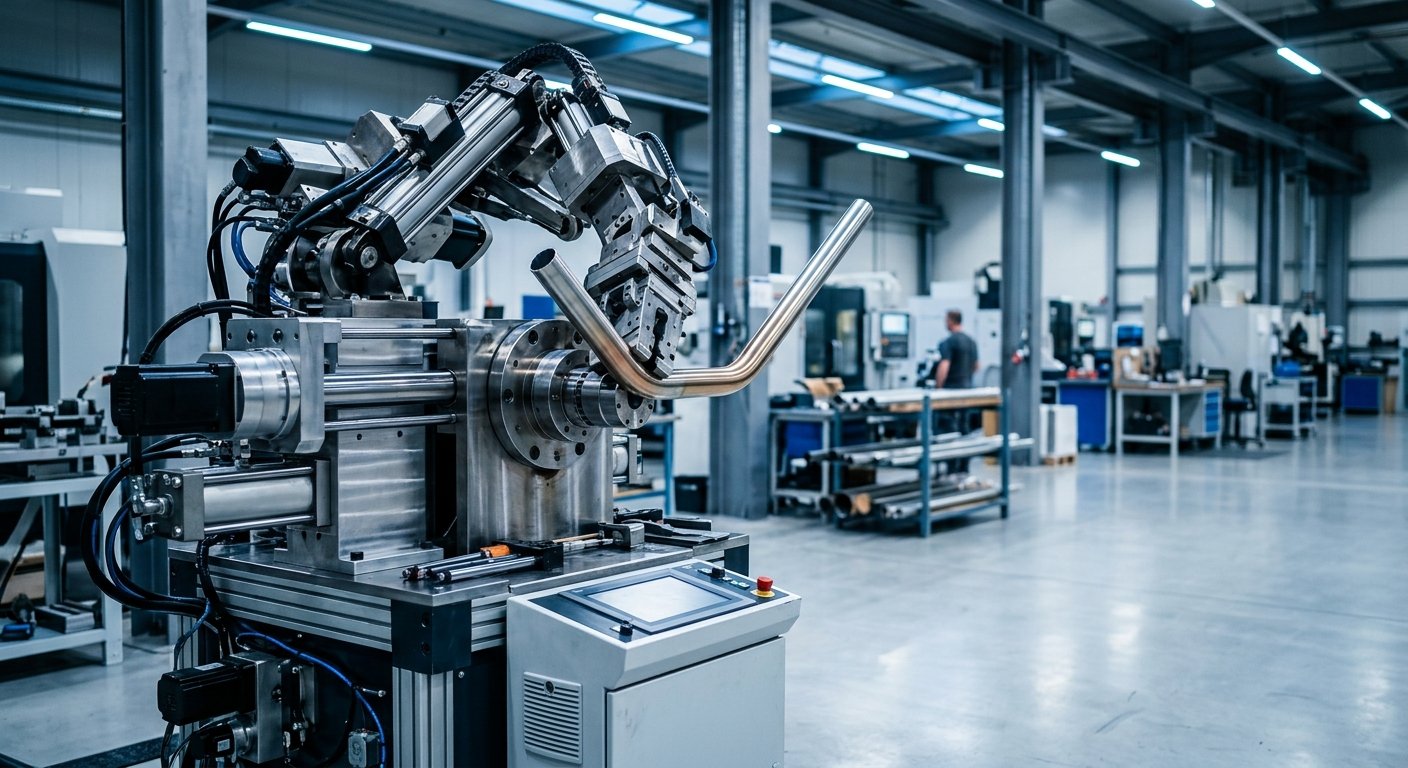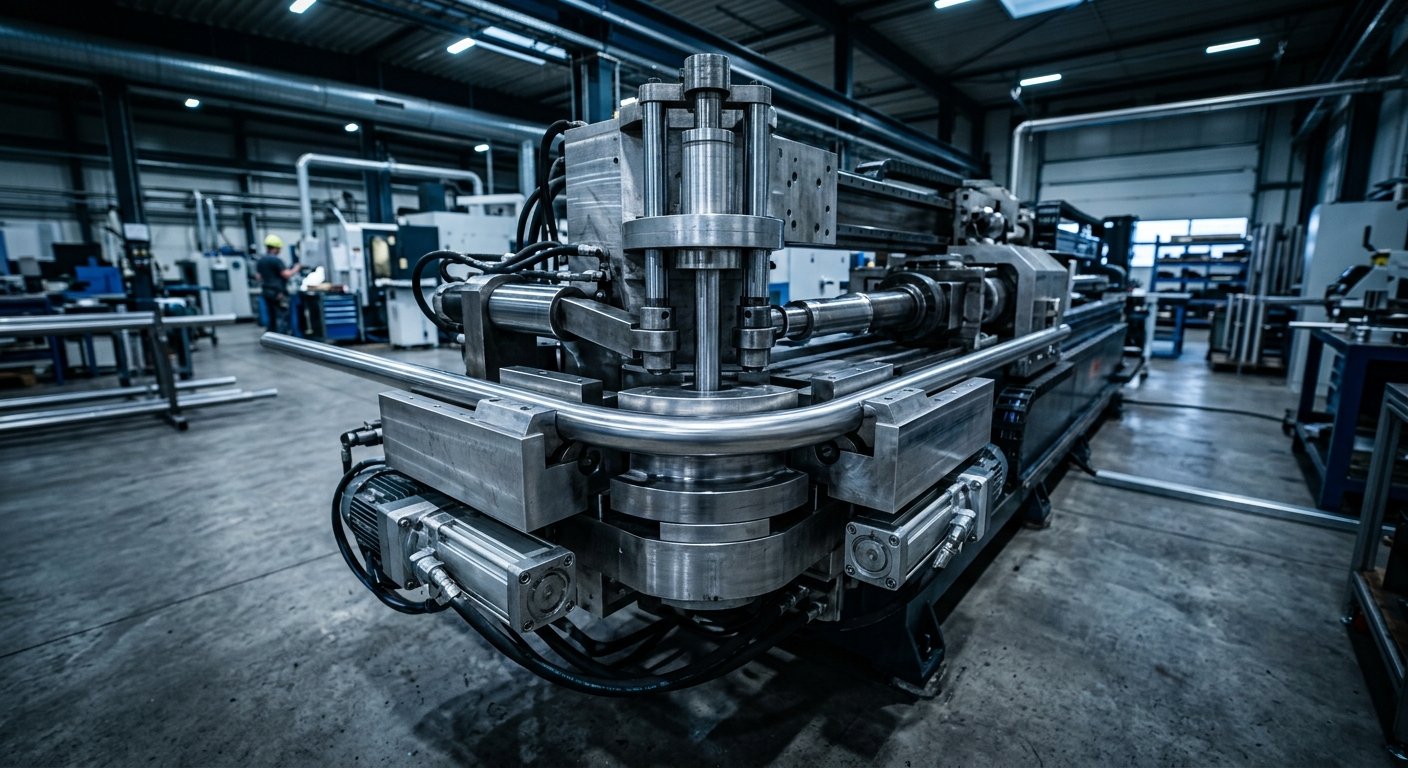
Capital equipment decisions involving custom pipe bending machines typically represent investments ranging from $150,000 to over $2 million. For engineering managers tasked with justifying these expenditures, developing a rigorous ROI calculation framework isn’t just good practice—it’s essential for securing approval and ensuring the investment delivers measurable value. This comprehensive framework addresses the financial metrics, operational considerations, and strategic factors that determine whether custom cnc bending systems will deliver acceptable returns in today’s manufacturing environment.
Understanding Total Cost of Ownership Beyond Purchase Price
The acquisition cost of industrial pipe bending equipment represents only 40-60% of the total cost of ownership over a typical 15-20 year equipment lifecycle. Engineering managers who focus exclusively on upfront capital costs often overlook significant operational expenses that dramatically impact true ROI.
Direct Operating Costs
Labor costs constitute the largest ongoing expense for most bending operations. A custom bending machine manufacturer that delivers intuitive controls and automated setup procedures can reduce cycle times by 30-45% compared to manual or semi-automatic systems. For a two-shift operation running 4,000 hours annually at a loaded labor rate of $45 per hour, this efficiency gain translates to $54,000-$81,000 in annual labor savings.
Energy consumption varies significantly across engineered bending solutions. Modern electric CNC systems typically consume 15-25 kW during operation, while older hydraulic systems may draw 35-50 kW. At industrial electricity rates averaging $0.12 per kWh in 2026, the annual energy cost difference exceeds $9,600 for continuous operations.
Material Yield and Scrap Reduction
Precision matters enormously when working with expensive aerospace alloys, stainless steel, or specialty materials. Application specific bending machines with closed-loop control systems achieve dimensional tolerances within ±0.5mm, reducing scrap rates from 8-12% on manual equipment to 2-3% on advanced systems.
Consider a facility processing $800,000 in tube and pipe material annually. Reducing scrap from 10% to 2.5% saves $60,000 per year in material costs alone. Over a ten-year period, this single factor can justify the premium for precision equipment from a custom bending machine manufacturer specializing in tight-tolerance applications.
Quantifying Productivity Improvements
Custom pipe bending machines deliver productivity gains through multiple mechanisms that compound to create substantial operational advantages.
Setup Time Reduction
Traditional manual bending operations require 45-90 minutes for tooling changes and setup adjustments. Advanced custom cnc bending systems with stored programs and quick-change tooling reduce setup times to 8-15 minutes. For facilities running small to medium batch sizes with frequent changeovers, this time savings directly increases productive capacity.
Calculate annual setup time savings using this formula: (Current Setup Time – New Setup Time) × Annual Number of Setups × Hourly Labor Rate. A facility performing 240 setups annually could recover 120-300 hours of productive time, worth $5,400-$13,500 at standard labor rates.
Cycle Time Optimization
Automated bending sequences, optimized acceleration profiles, and elimination of manual measurement steps reduce per-part cycle times. Engineering managers should document current state cycle times for representative parts across their product mix, then work with potential equipment suppliers to establish realistic cycle time projections for new equipment.
Conservative estimates suggest 25-35% cycle time improvements are achievable when transitioning from manual to fully automated systems. For high-volume production environments processing 50,000+ bends annually, these improvements directly translate to increased throughput without additional labor costs.
Capacity Expansion vs. Additional Equipment
One often-overlooked ROI factor involves capacity constraints. Many facilities considering custom pipe bending machines already operate existing equipment at 75-90% capacity. The relevant comparison isn’t just new versus old equipment—it’s new equipment versus adding a second unit of existing technology.
When existing capacity reaches 80%, manufacturers face a choice: invest in additional conventional equipment or upgrade to higher-performance engineered bending solutions. A $450,000 investment in advanced automation may deliver equivalent capacity to two $280,000 conventional machines while requiring only one operator instead of two and occupying half the floor space.
Floor space carries real costs. In modern manufacturing facilities, occupied square footage costs $85-$150 per square foot annually when accounting for rent or mortgage, utilities, insurance, and overhead allocation. A compact automated system occupying 400 square feet versus two conventional machines requiring 900 square feet saves $42,500-$75,000 annually in occupancy costs alone.
Quality-Related Financial Impact
Quality failures in tube and pipe bending operations create cascading costs that extend far beyond scrap material values. Application specific bending machines designed for critical industries like aerospace and oil & gas deliver quality consistency that prevents costly downstream problems.
Rework and Rejection Costs
Internal rework costs typically run 4-8 times the original manufacturing cost when accounting for material handling, quality inspection, documentation, and expediting. A single rejected assembly in an aerospace application might consume $2,000-$5,000 in total costs even when the base material value is only $300.
Document your current rework and rejection rates by root cause. If bending-related defects account for 40% of quality issues, and you experience $180,000 in annual quality costs, then equipment that cuts bending defects in half delivers $36,000 in annual savings from this factor alone.
Customer Returns and Warranty Claims
For manufacturers supplying OEM customers or critical applications, field failures create exponential costs. Warranty claims, customer goodwill costs, and potential contract penalties can reach 20-50 times the original part value. Industrial pipe bending equipment manufacturer partners with proven track records in demanding applications—including NASA and military contracts—provide risk mitigation worth quantifying in ROI calculations.
Strategic Value and Competitive Positioning
Some ROI factors resist precise quantification but nonetheless drive real business value. Custom cnc bending systems with advanced capabilities enable manufacturers to pursue opportunities previously beyond their technical capabilities.
Revenue Expansion Opportunities
Advanced bending capabilities open access to higher-value market segments. Aerospace suppliers command 30-60% price premiums over commodity fabricators due to their ability to meet stringent specifications and maintain comprehensive documentation. The question isn’t just “how much will this equipment cost?” but rather “what new business becomes accessible with enhanced capabilities?”
When building your ROI framework, identify specific lost opportunities from the past 18 months where inadequate equipment capabilities prevented you from winning business. Assign conservative probability estimates to capturing similar future opportunities with enhanced capabilities, then include 25-40% of this projected revenue in your ROI calculation.
Customer Retention and Relationship Strengthening
Existing customers increasingly demand shorter lead times, tighter tolerances, and enhanced traceability. Engineered bending solutions with integrated quality documentation, material traceability, and rapid response capabilities strengthen customer relationships and protect existing revenue streams.
Calculate customer lifetime value for your top accounts. If enhanced capabilities increase customer retention rates from 85% to 92% annually, the compounding effect over five years substantially impacts total revenue. Even a 2% retention improvement on $3 million in annual customer revenue equates to $60,000 in preserved revenue the first year, growing to over $300,000 cumulatively over five years.
Building Your ROI Model: Step-by-Step Framework
Effective ROI calculations for custom pipe bending machines require structured methodology that captures both quantifiable and strategic factors.
Step 1: Establish Baseline Metrics
Document current state performance across key metrics:
- Annual production volume by part family
- Current cycle times for representative parts
- Setup times and frequency
- Scrap and rework rates with root causes
- Labor hours per thousand bends
- Maintenance costs and unplanned downtime hours
- Floor space occupied
- Energy consumption
Step 2: Project Future State Performance
Work with potential equipment suppliers—particularly those with application-specific expertise in your industry—to establish realistic performance projections. Request validation through test parts, case studies from similar applications, or facility visits to existing installations.
Conservative projections build credibility with financial decision-makers. Use the lower end of performance ranges for ROI calculations, creating upside potential when actual results exceed projections.
Step 3: Quantify Annual Benefits
Calculate annual financial benefits across all relevant categories:
- Labor savings from reduced cycle times and setup times
- Material savings from reduced scrap rates
- Quality cost reductions from lower defect rates
- Energy cost savings
- Maintenance cost reductions
- Floor space savings
- Incremental revenue from new capabilities
- Avoided costs of alternative capacity expansion
Step 4: Calculate Total Investment
Comprehensive investment figures include:
- Equipment purchase price
- Installation costs including utilities, foundations, and integration
- Tooling and accessories
- Training expenses
- Production disruption during installation
- Working capital for spare parts inventory
Step 5: Determine Payback Period and ROI Metrics
Calculate simple payback period by dividing total investment by annual net benefits. Most manufacturers target 18-36 month payback periods for production equipment, though strategic capabilities may justify longer horizons.
For a complete financial picture, calculate net present value using your organization’s weighted average cost of capital, typically 8-12% for manufacturing equipment investments. Include tax benefits from depreciation using current Modified Accelerated Cost Recovery System schedules for seven-year property.
Risk Factors and Sensitivity Analysis
Robust ROI frameworks acknowledge uncertainties and test assumptions under various scenarios. Identify the three to five variables with greatest impact on ROI—typically production volume, labor rates, and material costs—then model outcomes under optimistic, expected, and conservative scenarios.
When working with a custom bending machine manufacturer offering proven technology in critical applications, technical risk decreases substantially compared to unproven suppliers or emerging technologies. This reliability carries quantifiable value through reduced implementation risk and faster time to full productivity.
Financing Considerations for 2026
Current lending conditions in 2026 favor equipment investments, with commercial equipment financing rates ranging from 6.5-9.5% depending on creditworthiness and loan structure. Many industrial pipe bending equipment manufacturers offer financing programs or partnerships with specialized equipment lenders.
Section 179 expensing provisions allow immediate deduction of up to $1,220,000 for qualified equipment placed in service during 2026, providing significant tax advantages that improve after-tax ROI by 15-25% for profitable companies.
Making the Investment Decision
Custom pipe bending machines represent strategic investments that extend beyond simple equipment replacement. The most successful implementations occur when engineering managers build comprehensive ROI frameworks that quantify operational benefits while articulating strategic value.
Start by documenting current state performance metrics, then engage qualified custom cnc bending systems suppliers with proven expertise in your specific applications. Request detailed performance projections, validation through test parts or reference visits, and comprehensive total cost of ownership analysis.
The American manufacturing renaissance continues strengthening in 2026, with reshoring initiatives and infrastructure investments driving demand for domestic production capacity. Organizations that invest strategically in advanced manufacturing capabilities position themselves to capture this growth while building sustainable competitive advantages.
Ready to develop a detailed ROI analysis for your specific application? Contact experienced engineering teams who understand both the technical requirements of precision tube and pipe bending and the financial justification process. The right equipment partner provides not just machinery, but the application expertise and analytical support that transforms capital investments into measurable business results.