Selecting the right custom tube bending equipment represents one of the most critical capital investments manufacturing operations make. With bending technology evolving rapidly and production requirements becoming increasingly complex, engineering managers face mounting pressure to specify systems that deliver precision, reliability, and return on investment. The wrong equipment decision can result in quality issues, production bottlenecks, and hundreds of thousands in wasted capital—problems that often don’t surface until equipment is already on the shop floor.
The specification process for bespoke pipe bending machines has fundamentally changed. Today’s production environments demand equipment that handles multiple materials, achieves tighter tolerances, integrates with digital manufacturing systems, and adapts to changing product requirements. This framework provides engineering managers and procurement specialists with a structured approach to defining custom CNC bending systems that meet 2026 production realities.
Foundation Requirements: Defining Your Bending Application
Before engaging with any specialized bending machine manufacturer, establish clear baseline parameters. These specifications form the technical foundation that determines equipment architecture, tooling requirements, and automation level.
Material and Dimensional Specifications
Document the complete range of materials your operation processes. Stainless steel, aluminum, titanium, Inconel, and copper alloys each impose distinct requirements on bending equipment. A machine optimized for aluminum tube bending may lack the structural rigidity needed for high-strength stainless alloys. Material specifications should include:
- Primary and secondary alloy families with specific grade callouts
- Tube diameter range (outside diameter and wall thickness)
- Material temper conditions and yield strength values
- Required elongation characteristics affecting springback compensation
- Surface finish requirements that impact mandrel and wiper die selection
Define your dimensional envelope precisely. Custom tube bending equipment designed for 0.5-inch to 2-inch diameter tubes operates on entirely different mechanical principles than systems handling 4-inch to 8-inch pipe. Wall thickness relative to diameter (D/t ratio) directly influences mandrel requirements, bend quality, and achievable centerline radii.
Geometric Complexity and Tolerance Requirements
Production parts rarely feature simple single-plane bends. Multi-plane geometries with tight spatial constraints demand sophisticated CNC control systems and precision tooling. Specify:
- Tightest centerline radius (typically expressed as multiples of diameter)
- Angular tolerance requirements (±0.5 degrees represents standard precision; ±0.25 degrees requires enhanced control)
- Positional tolerances for bend locations along tube length
- Maximum number of bends per part and spatial orientation requirements
- Compound bend requirements involving multiple rotation axes
Aerospace applications frequently require tolerances that challenge standard bending equipment capabilities. When parts must meet AS9100 quality standards, equipment specifications must address repeatability, statistical process control integration, and traceability requirements from the outset.
Production Volume and Flexibility Analysis
Production requirements dramatically influence equipment configuration. High-volume production favors dedicated systems optimized for specific part families, while job shop environments demand maximum flexibility from engineered bending solutions.
Volume-Based Equipment Architecture
Annual production volume dictates appropriate automation levels and tooling strategies. Operations producing 50,000+ parts annually benefit from fully automated systems with integrated upstream and downstream processes. Mid-volume operations (5,000-50,000 parts) typically specify semi-automated custom CNC bending systems balancing flexibility with cycle time optimization.
Low-volume, high-mix environments—common in aerospace and defense manufacturing—require different optimization. These applications prioritize quick changeover capability, extensive material handling range, and sophisticated programming interfaces that minimize setup time between disparate part geometries.
Changeover Time Requirements
Quantify acceptable changeover time between part numbers. Operations running multiple products daily need rapid tooling exchange systems and stored program libraries. Specify whether changeover occurs:
- Within shifts (requiring 15-minute or faster changeover)
- Between shifts (allowing 30-60 minute changeover windows)
- Weekly or less frequently (permitting more complex tooling reconfiguration)
Modern bespoke pipe bending machines incorporate quick-change tooling systems reducing changeover from hours to minutes. However, these systems add cost and complexity that may not justify themselves in dedicated production environments.
Technology Selection: Rotary Draw vs. Alternative Methods
Rotary draw bending dominates precision tube fabrication, but alternative technologies merit consideration for specific applications. Understanding technological trade-offs prevents specification of over-engineered or inadequate solutions.
Rotary Draw Bending Systems
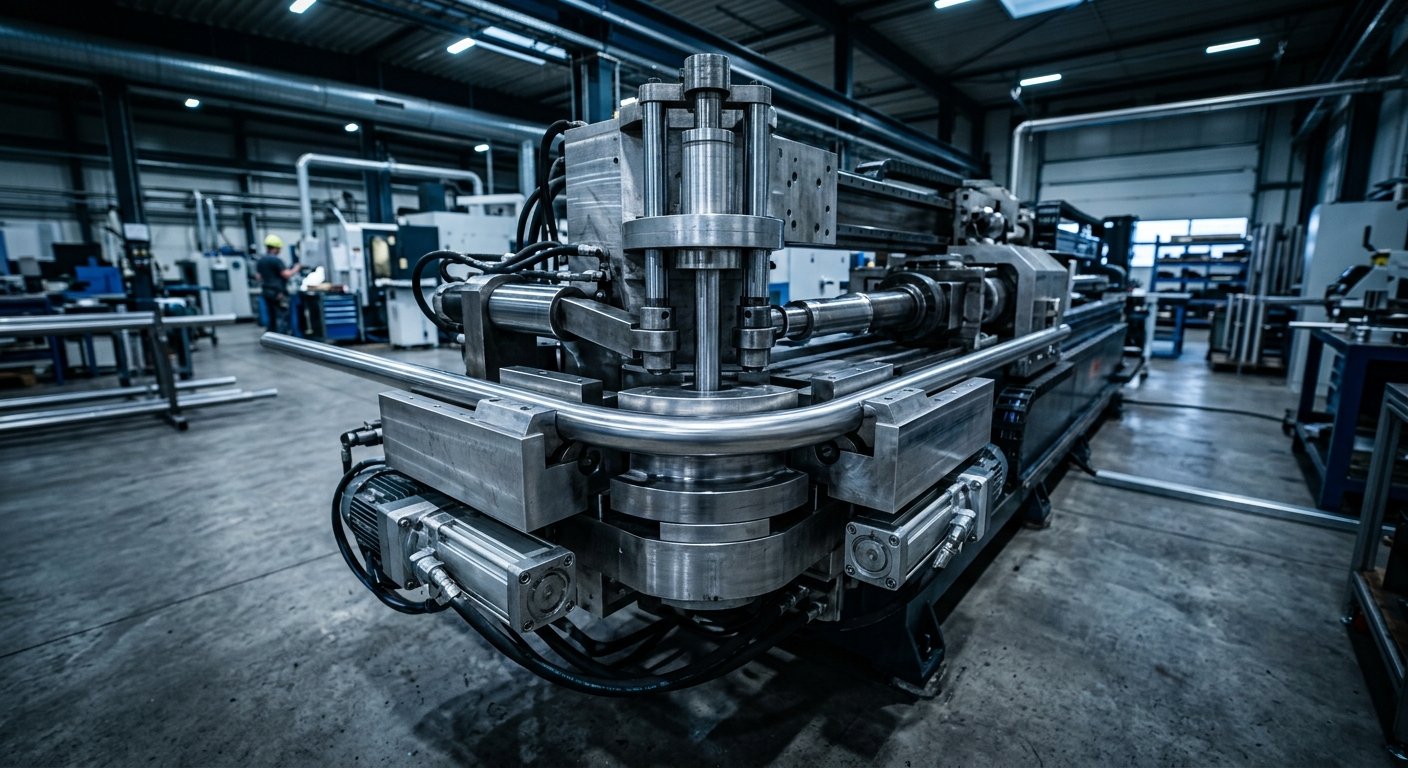
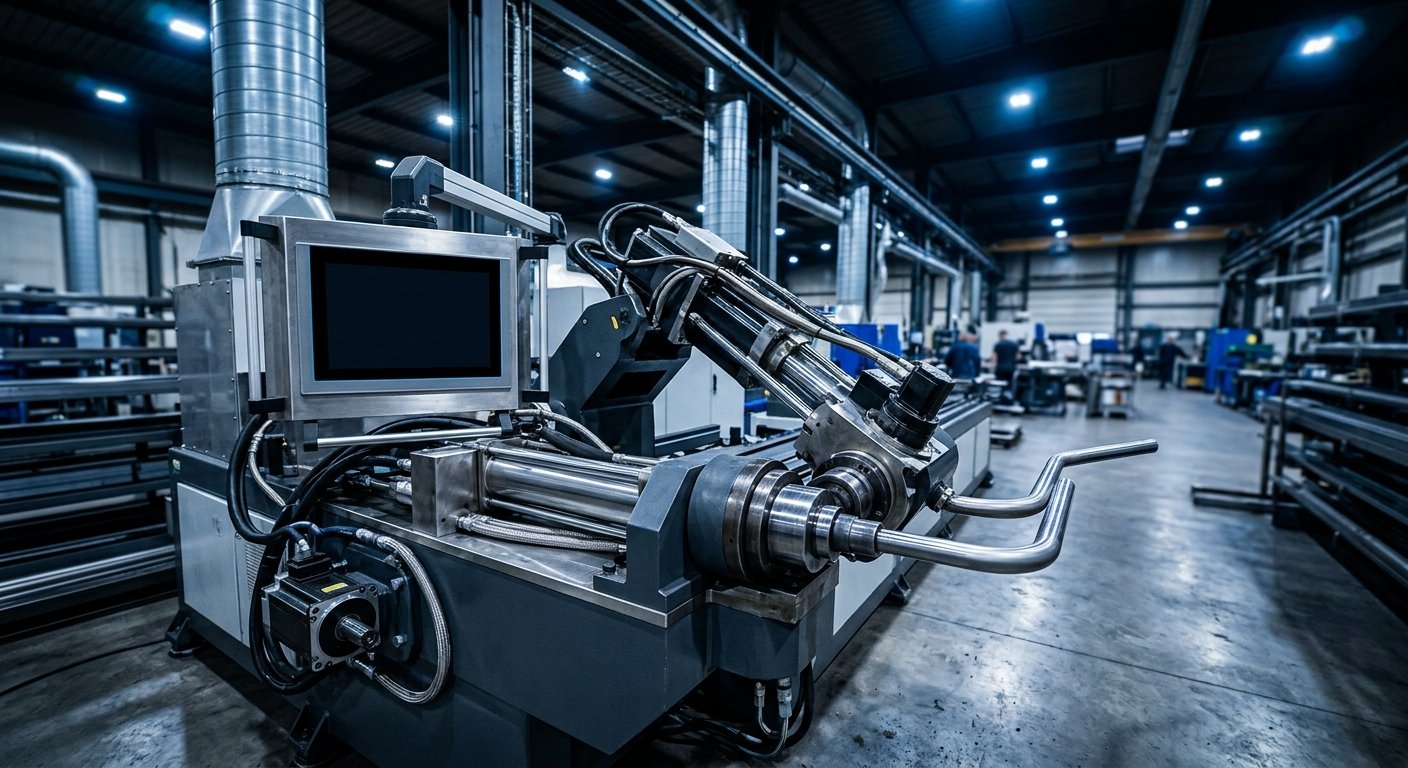
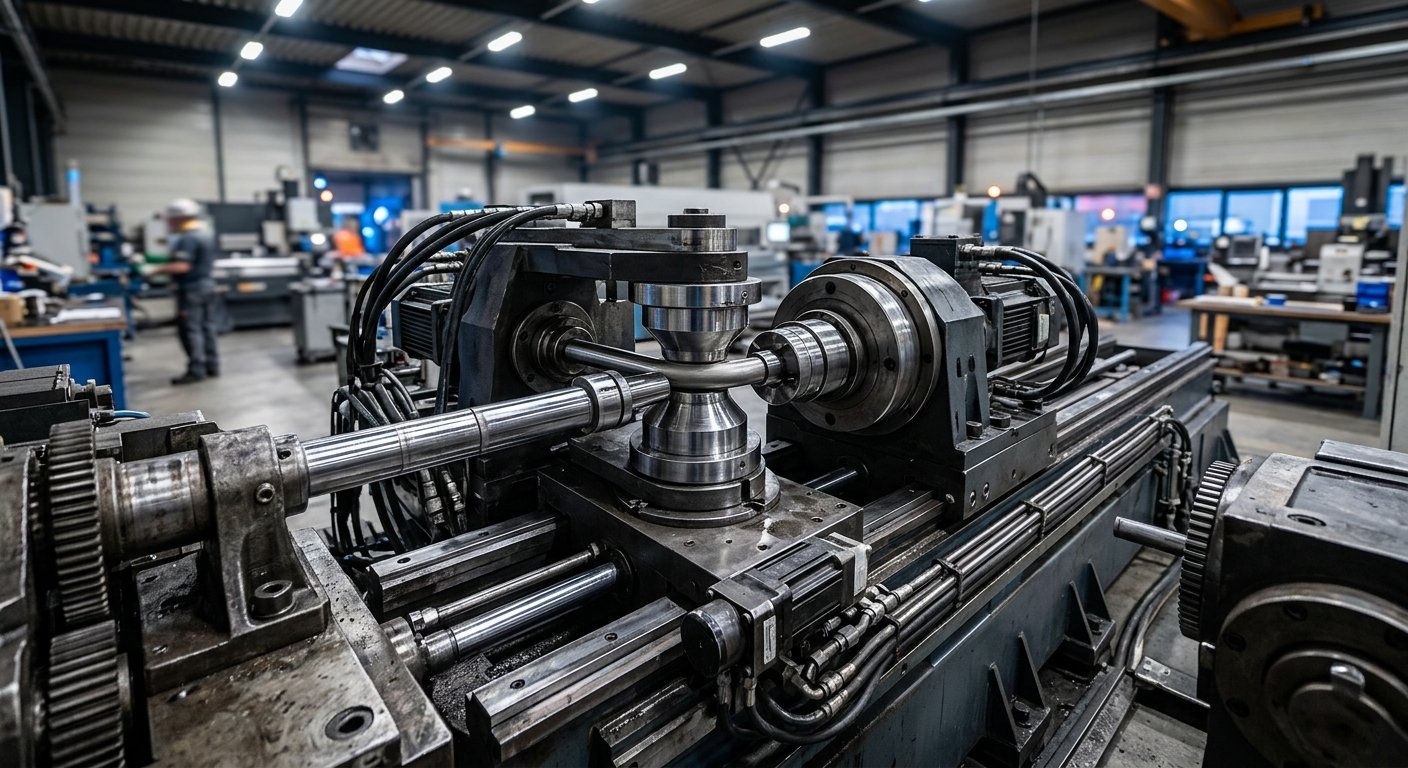
Rotary draw represents the standard for precision applications requiring tight radii, thin-wall tubes, and excellent surface finish. The technology uses a bend die, clamp die, pressure die, mandrel, and wiper die working in coordination to form tubes without collapse, flattening, or wrinkling.
When specifying custom rotary draw equipment, address mandrel requirements explicitly. Tubes with D/t ratios exceeding 25:1 typically require internal mandrel support. Mandrel style—plug, ball, form, or cable—depends on material, radius, and quality requirements. Premium applications may specify multi-ball mandrels with independent ball selection based on specific bend geometry.
Complementary and Alternative Technologies
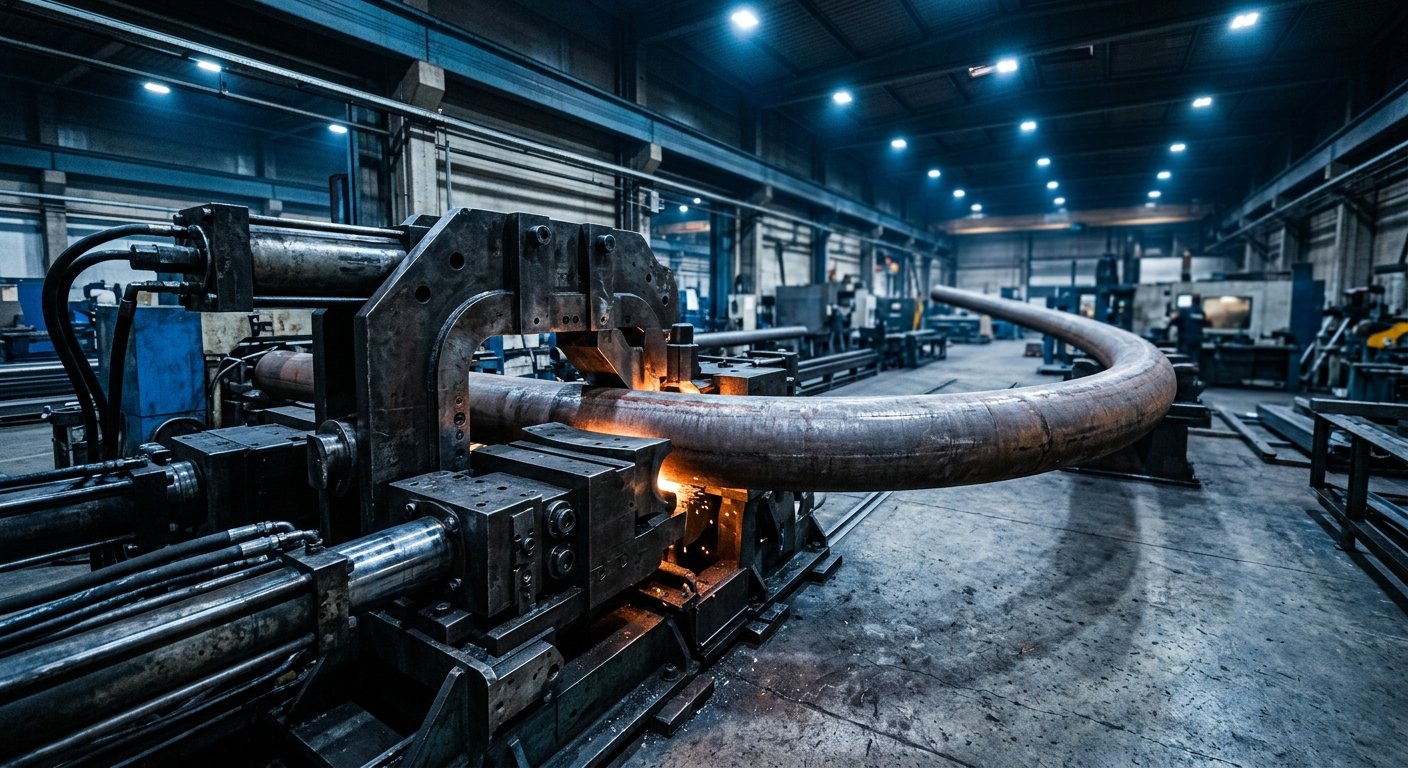
Compression bending suits larger-diameter, heavier-wall applications where rotary draw becomes mechanically impractical. Roll bending creates large-radius curves economically. Induction bending handles very large pipe diameters. Each technology occupies specific application niches.
Some operations benefit from hybrid equipment combining multiple bending methods on integrated platforms. Oil and gas fabrication facilities, for example, might specify systems incorporating both rotary draw for smaller instrumentation tubing and compression bending for structural pipe.
Control Systems and Digital Integration
Equipment specifications must address control architecture, programming interfaces, and integration with broader digital manufacturing ecosystems. The control system represents the intelligence layer differentiating basic custom tube bending equipment from sophisticated production solutions.
CNC Capabilities and Programming
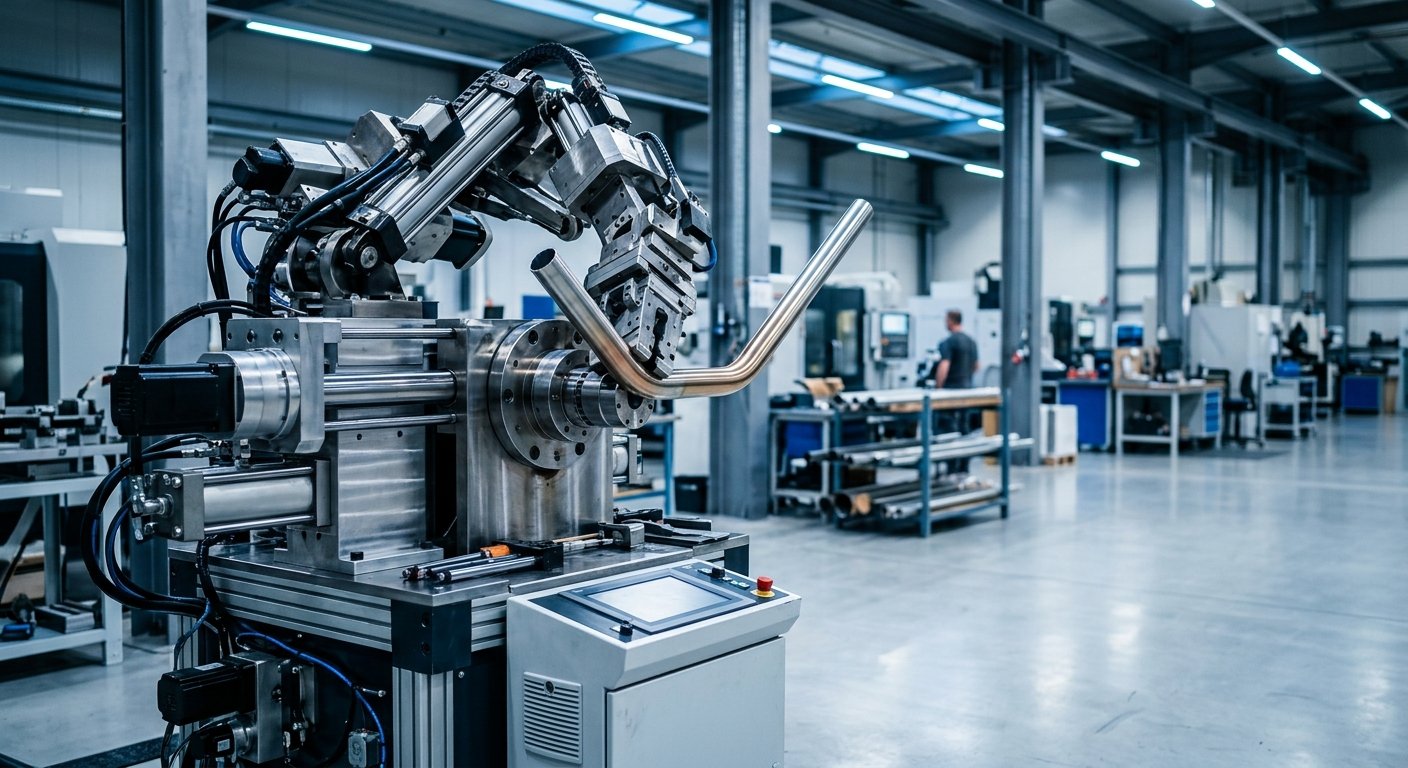
Modern custom CNC bending systems utilize multi-axis servo control managing bend angle, rotation, carriage position, and auxiliary functions simultaneously. Specify control requirements including:
- Number of controlled axes (minimum 3-axis; complex parts may require 7+ axes)
- Resolution and repeatability specifications for each axis
- Programming methodology (teach mode, manual entry, CAD/CAM integration)
- Springback compensation algorithms and material library capabilities
- In-process measurement and adaptive control requirements
Advanced systems accept STEP files directly from design software, automatically generating bend sequences and optimizing process parameters. This capability dramatically reduces programming time for complex geometries while minimizing operator error.
Industry 4.0 Integration Requirements
Specify data connectivity requirements early in the equipment selection process. Modern manufacturing environments expect seamless integration with:
- ERP systems for production scheduling and material tracking
- Quality management systems capturing process parameters and measurement data
- Predictive maintenance platforms monitoring equipment health
- Digital twin environments for process simulation and optimization
OPC-UA connectivity has emerged as the industrial standard for machine-to-machine communication. Equipment specifications should mandate OPC-UA compliance along with specific data points required for your manufacturing execution system.
Quality Assurance and Process Validation
Engineered bending solutions for critical applications must incorporate quality validation capabilities. Aerospace, defense, and petrochemical applications operate under strict traceability requirements that equipment must support.
In-Process Measurement Systems
Specify whether quality validation occurs in-process or post-process. In-process measurement systems integrate directly with bending equipment, capturing dimensional data during the bend cycle. These systems enable:
- Real-time process adjustment based on measured deviations
- 100% inspection without cycle time penalties
- Immediate identification of process drift or tooling wear
- Statistical process control with automated alarming
Vision systems, laser profilers, and contact measurement probes each offer distinct advantages. Vision systems excel at complex geometry validation, while laser profilers provide high-resolution cross-sectional data for ovality and wall thinning analysis.
Documentation and Traceability
Critical applications require comprehensive process documentation. Specify data capture requirements including bend angles, rotation positions, carriage movements, and time stamps for each operation. AS9100 and ISO 9001 compliance often mandates equipment capability to generate certificates of conformance with traceable process parameters.
Working with Specialized Bending Machine Manufacturers
Equipment specification represents only half the selection equation. Manufacturing success depends equally on the specialized bending machine manufacturer’s capability to translate specifications into reliable production equipment backed by comprehensive support.
Domestic Manufacturing Advantages
American-manufactured equipment offers distinct advantages for operations prioritizing responsiveness, customization depth, and long-term support. Domestic manufacturers provide direct engineering access during specification development, ensuring equipment design addresses actual production requirements rather than forcing applications into standard configurations.
For operations serving aerospace, defense, or energy sectors, American manufacturing heritage carries additional weight. Equipment built to exacting standards by manufacturers with proven track records supporting NASA, military, and critical infrastructure applications demonstrates capability handling demanding specifications.
Custom Solution Development Process
Engage manufacturers early in the specification process. Leading specialized bending machine manufacturers assign application engineers who analyze part geometries, production requirements, and integration needs before proposing equipment configurations. This consultative approach often reveals optimization opportunities not apparent during internal specification development.
Request demonstration bends using your actual materials and geometries. Physical validation eliminates uncertainty about equipment capability and reveals potential process challenges before capital commitment. Reputable manufacturers maintain application development centers specifically for this purpose.
Total Cost of Ownership Considerations
Equipment purchase price represents only one component of total cost. Comprehensive specification frameworks address lifecycle costs including installation, training, maintenance, tooling, and eventual upgrade paths.
Tooling Strategy and Costs
Tooling costs frequently equal 20-40% of base equipment investment. Specify tooling package scope explicitly, including complete sets for initial production parts plus spare critical components. Address tooling standardization to minimize inventory requirements across multiple product families.
Training and Ongoing Support
Operator and maintenance training directly impacts production efficiency and equipment longevity. Specify comprehensive training programs including classroom instruction, hands-on operation, programming, troubleshooting, and preventive maintenance procedures. Equipment documentation quality varies dramatically between manufacturers; insist on detailed maintenance manuals, electrical schematics, and replacement parts documentation.
Moving Forward with Equipment Specification
Successful custom tube bending equipment specifications balance technical requirements with practical manufacturing realities. The framework outlined here provides structure for capturing requirements comprehensively while maintaining flexibility for manufacturer input and optimization.
Engineering managers should document specifications formally, using this framework to ensure all critical parameters receive appropriate attention. Well-defined specifications accelerate the selection process, improve quote comparability between manufacturers, and establish clear performance expectations that protect capital investments.
When specifications demand precision, reliability, and American manufacturing quality, partnering with experienced specialists makes the difference between adequate equipment and optimized production solutions. Hines Bending Systems has engineered custom bending solutions for the most demanding applications in aerospace, defense, and energy sectors for decades. Our engineering team works directly with production managers to translate complex requirements into reliable, precise bending equipment built in the United States and backed by comprehensive support. Contact our application engineering team to discuss your specific bending requirements and discover how custom-engineered solutions can optimize your production capabilities.