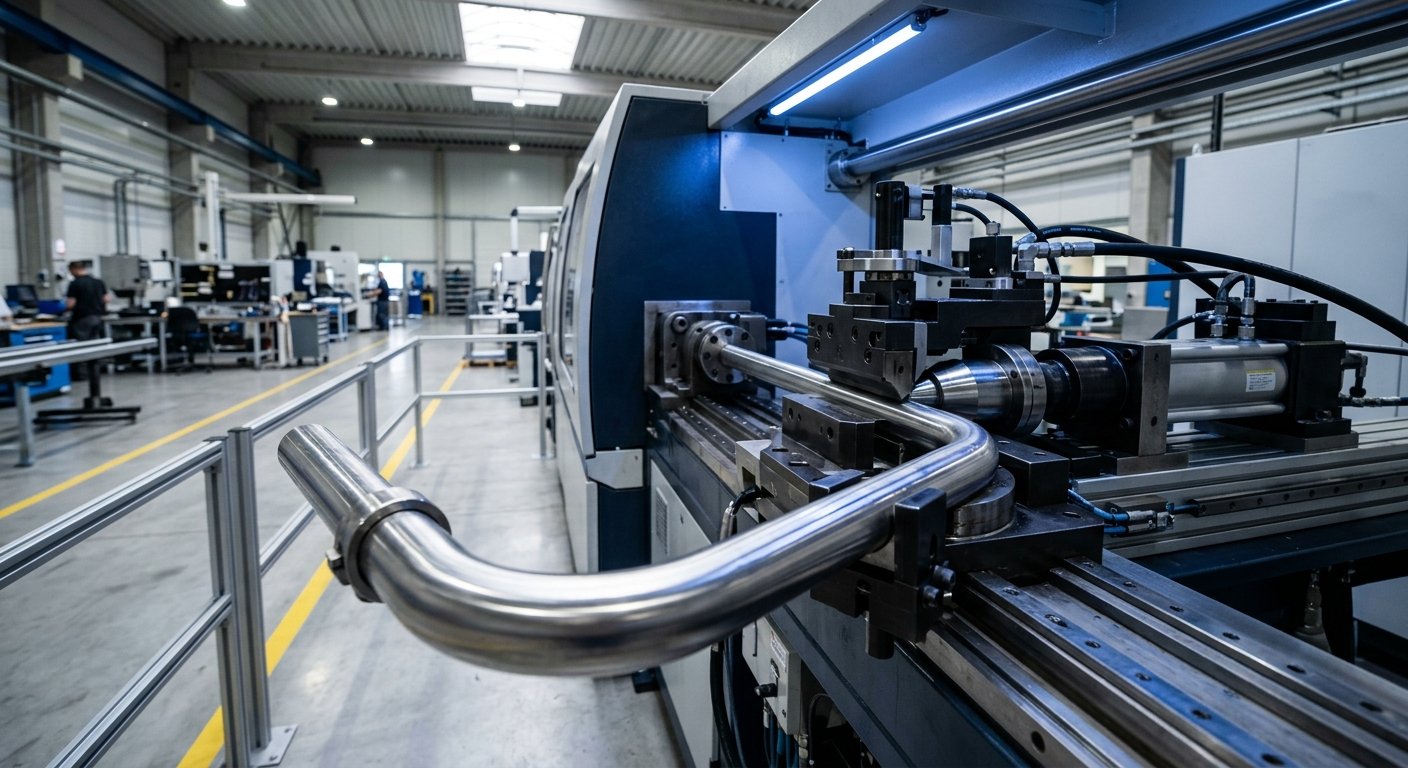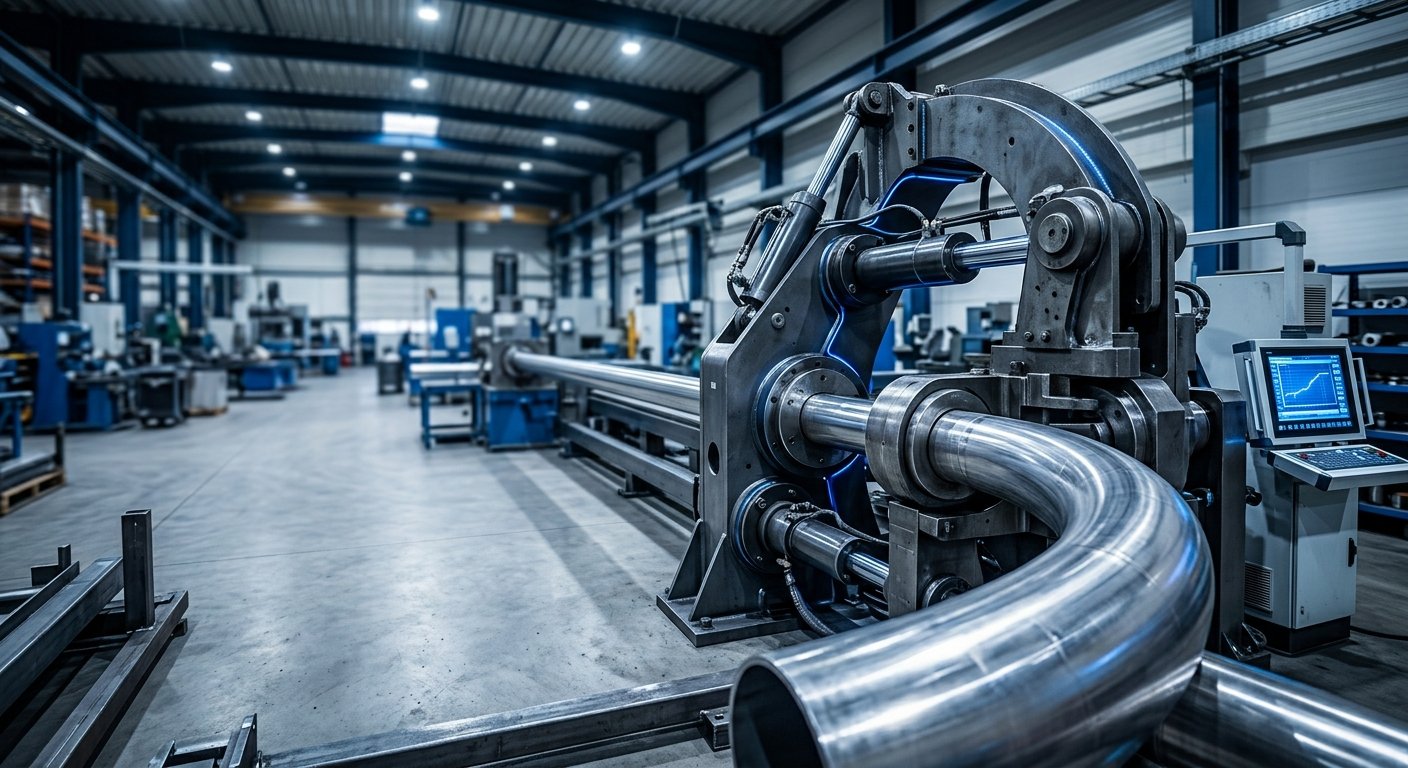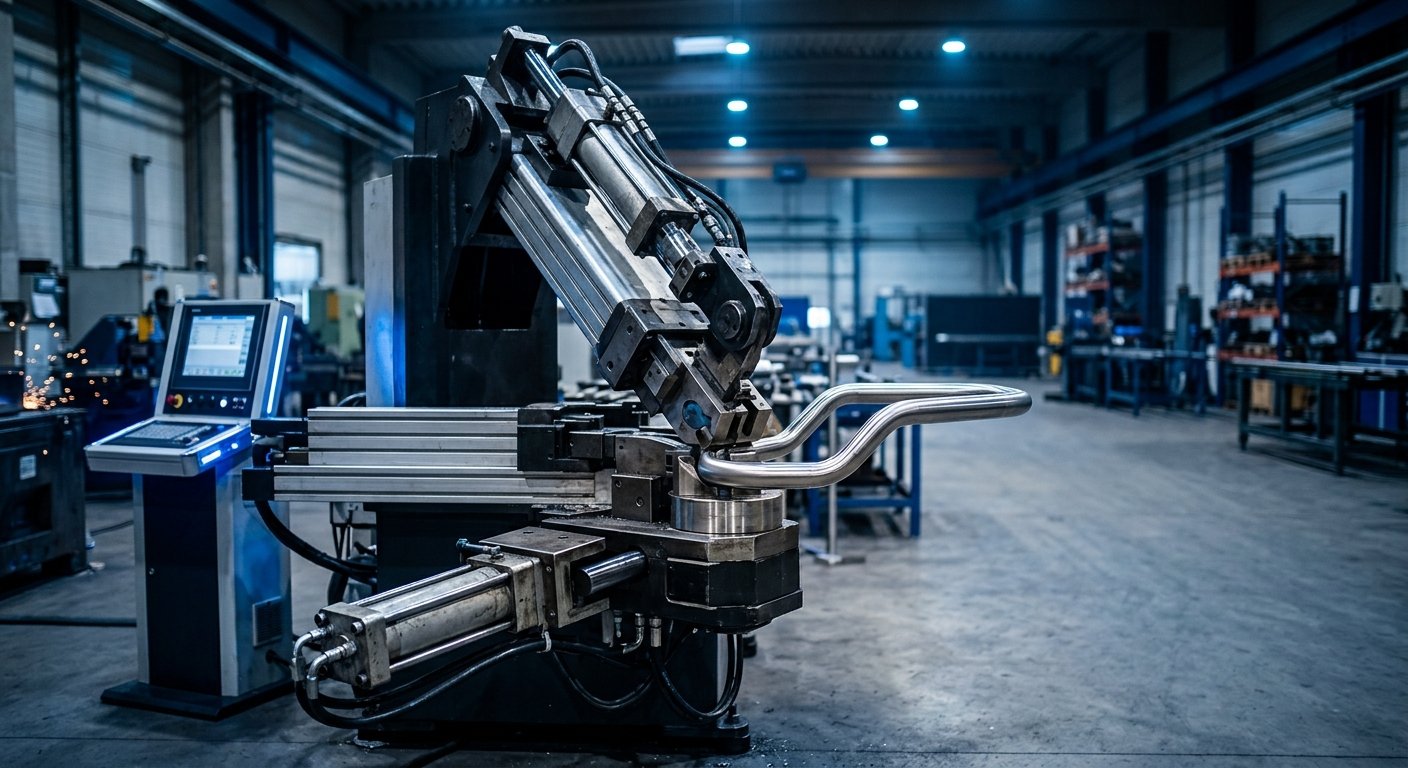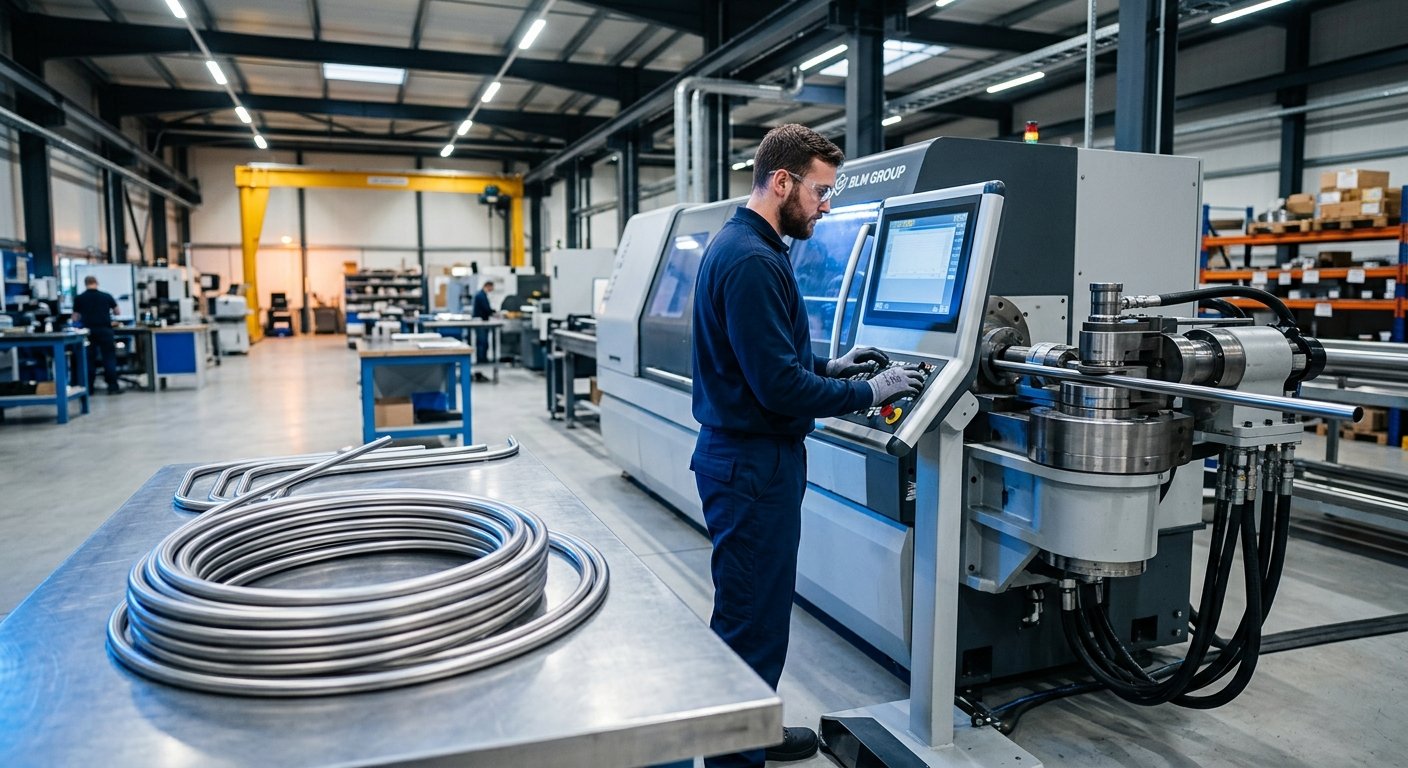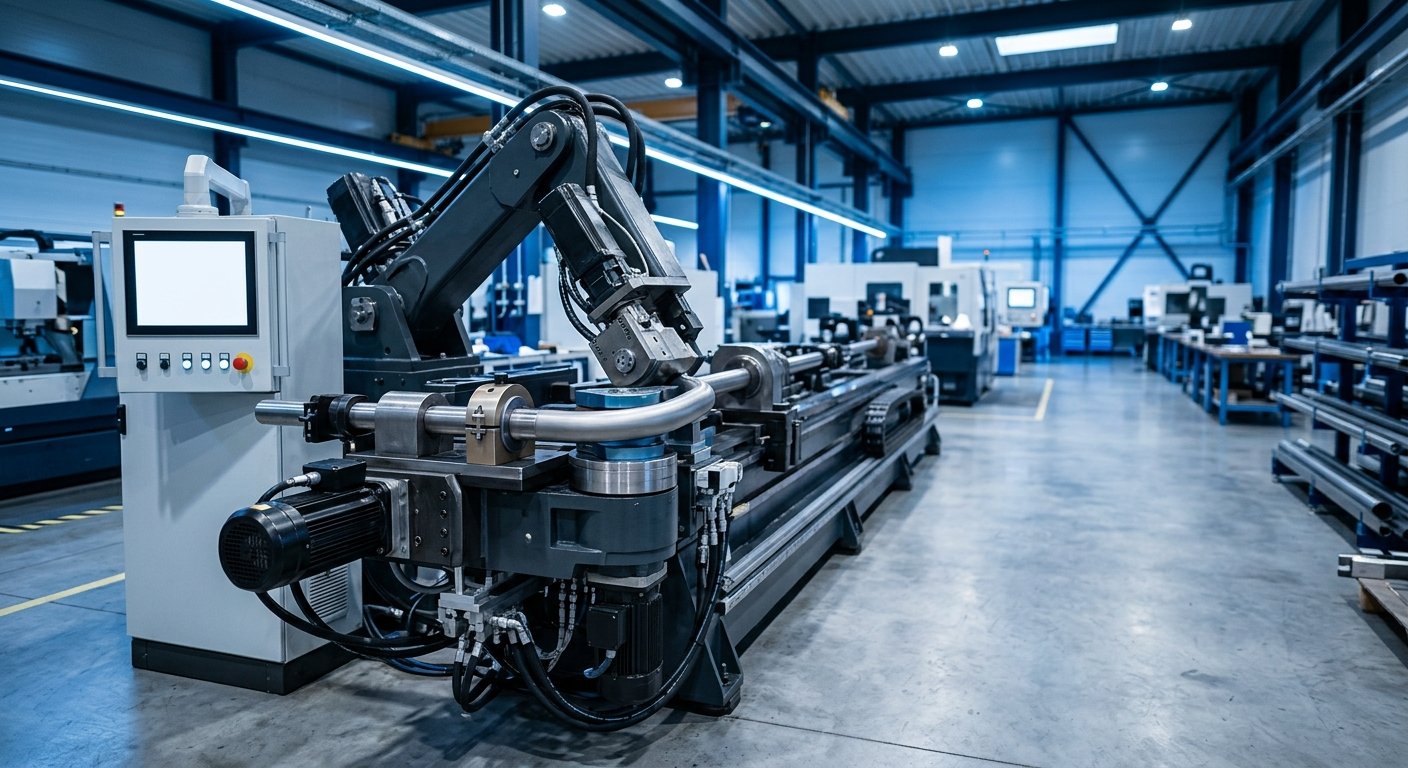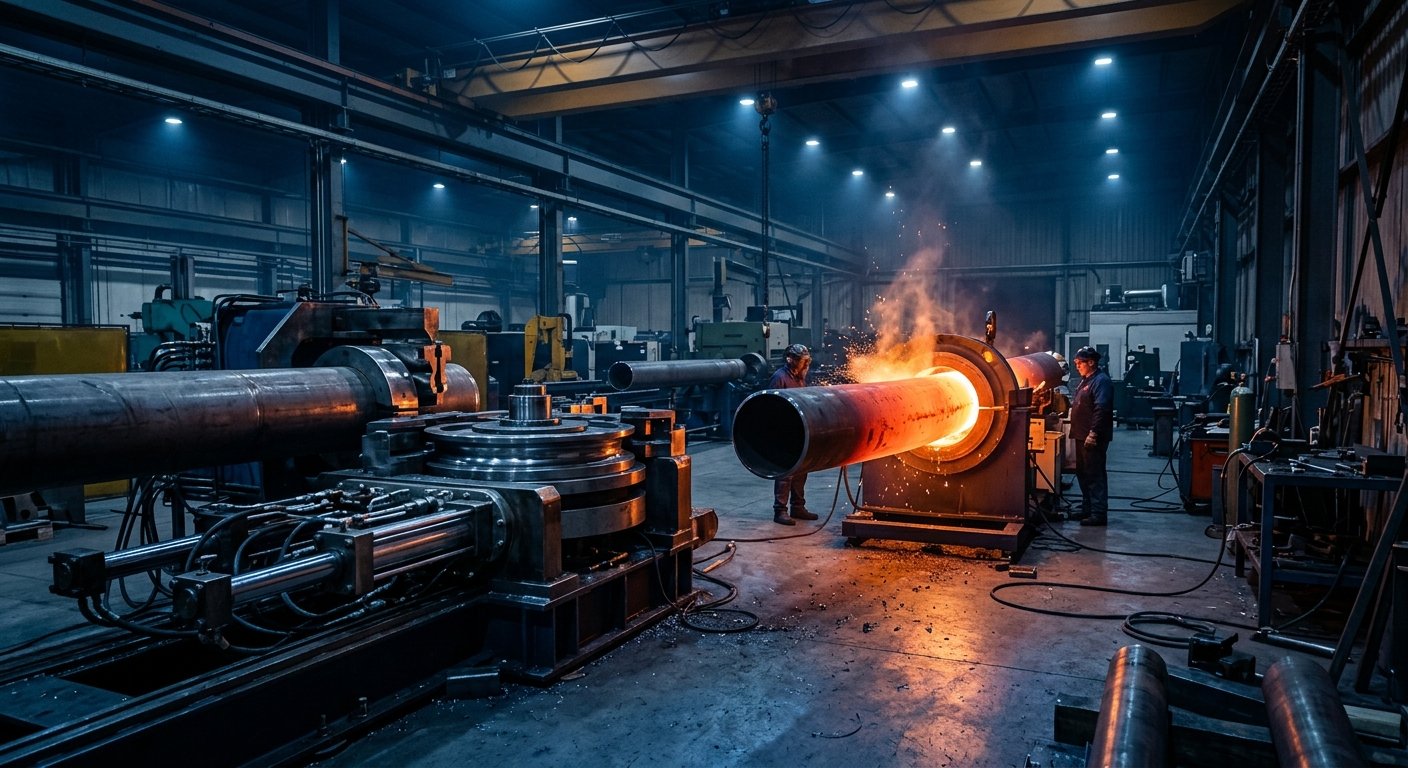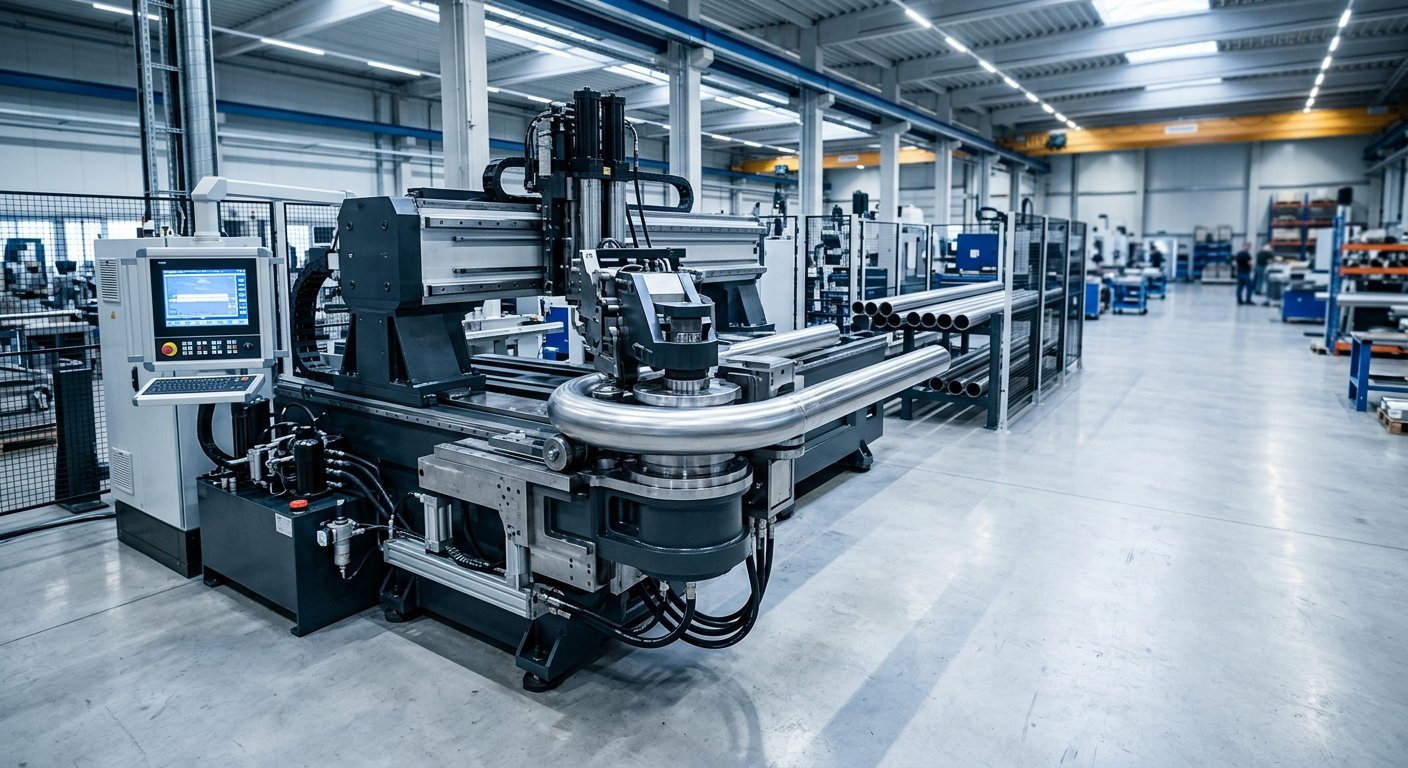
Selecting the wrong CNC pipe bender manufacturer costs more than the purchase price. Downtime, rework, scrapped material, and missed production schedules compound quickly—especially in industries where tolerances are measured in thousandths of an inch and delivery delays carry contractual penalties. With the North American precision tube and pipe bending equipment market continuing to tighten in 2026, procurement specialists and engineering managers face sharper pressure to get equipment specifications right the first time.
This guide cuts through the noise. Whether you’re specifying equipment for a high-volume oil and gas production line or a specialized aerospace fabrication cell, the criteria for evaluating an industrial pipe bending equipment manufacturer are more nuanced than catalog comparisons suggest.
Why Manufacturer Selection Matters More Than Machine Specs Alone
Engineers often focus on bend radius, CLR ratios, and degree-of-bend capacity when evaluating CNC pipe benders. Those specifications matter, but they only tell part of the story. The manufacturer behind the machine determines long-term performance, parts availability, software support, and application-specific capability.
A CNC pipe bender rated for a 4-inch OD tube may meet your specification on paper but underperform on wall thickness-to-diameter ratios common in high-pressure petrochemical work. The difference between a machine that handles the job reliably and one that produces inconsistent results often comes down to how well the manufacturer understood your application before the design was finalized.
This is especially critical in industries where components must meet ASME B31.3 process piping standards or aerospace material and process specifications. Equipment that wasn’t engineered with those requirements in mind creates compliance risk from the moment it enters your facility.
Key Criteria for Evaluating a CNC Pipe Bender Manufacturer
1. Application-Specific Engineering Depth
Generic bending machinery works for generic applications. Aerospace hydraulic lines, defense system tubing, and high-pressure oil and gas piping are not generic applications. Ask prospective manufacturers whether they have documented experience bending the specific alloys and wall thicknesses your work requires—Inconel, titanium, duplex stainless, and thick-wall carbon steel all behave differently under CNC mandrel bending conditions.
A precision pipe bending manufacturer with real application depth will ask you about your material specs, bend radii, required tolerances, and downstream inspection requirements before quoting. If they skip those questions, that’s a meaningful signal.
2. CNC Control Sophistication and Integration Capability
Modern production environments increasingly require bending machines that communicate with MES platforms, ERP systems, and quality inspection workflows. Evaluate whether the manufacturer’s CNC controls support:
- Multi-stack and compound bend programming
- Springback compensation and auto-correction
- Data logging for traceability and quality documentation
- Compatibility with DXF and STEP file imports from CAD platforms
- Integration with coordinate measuring equipment outputs
In 2026, bending machines that operate as isolated islands in a production cell are increasingly inefficient. Your manufacturer should be able to articulate how their controls architecture supports connected manufacturing.
3. Custom Solution Capability
Production requirements don’t always fit standard catalog configurations. End-forming, tube loading automation, multi-radius tooling, and specialty clamping configurations may all be required depending on your application. Evaluate whether the manufacturer builds custom systems in-house or subcontracts that work—the answer affects both lead time and accountability when problems arise.
American-made pipe benders from manufacturers with full in-house engineering teams tend to offer more responsive customization support than distributors of imported equipment with limited design authority over the underlying machine.
4. Tooling Quality and Availability
The machine is only as precise as its tooling. Wiper dies, pressure dies, bend dies, and mandrels must be engineered specifically for your material and bend geometry. Ask manufacturers about their tooling lead times, material specifications for the tooling itself, and how they handle replacement and reconditioning. Tooling that wears prematurely or isn’t matched properly to the workpiece material is a persistent source of quality problems and production interruptions.
5. Training and Post-Sale Support Infrastructure
Even well-engineered equipment requires skilled operators and informed maintenance personnel to perform consistently. Evaluate what the manufacturer provides in terms of:
- Operator and programmer training—on-site or at the manufacturer’s facility
- Preventive maintenance documentation and schedules
- Remote diagnostics capability
- Parts inventory and availability commitments
- Field service technician coverage in your region
A manufacturer who disappears after delivery is a liability, not a partner. Support infrastructure separates manufacturers who are invested in your operational success from those who are focused solely on completing the transaction.
Industry-Specific Considerations in 2026
Aerospace and Defense
Aerospace tube bending demands the tightest tolerances and the most rigorous material traceability. CNC benders for aerospace applications typically need to handle small-diameter, thin-wall tubing in titanium and high-temperature alloys with consistent repeatability across production runs. Defense procurement adds qualification requirements and documentation layers that not every manufacturer is equipped to support.
Equipment trusted by NASA and military programs has been proven under exactly these conditions—meeting standards that commercial applications rarely approach. When specifying for aerospace or defense work, ask manufacturers directly about their track record in those programs.
Oil, Gas, and Petrochemical
Thick-wall pipe in carbon steel, stainless, and duplex alloys characterizes much of the bending work in oil, gas, and petrochemical facilities. Machines in these environments face demanding duty cycles and need to maintain accuracy over high production volumes. Compliance with ASME and API standards is non-negotiable, and many operators require material certifications and dimensional inspection documentation for each bend lot.
According to the ASME B31.3 Process Piping standard, bends in process piping must meet specific requirements for wall thinning, ovality, and weld seam positioning—specifications that directly affect how bending equipment must be configured and tooled for compliant production.
Energy and Industrial Applications
Power generation and broader industrial fabrication environments often require a mix of tube and pipe bending capabilities across a wider range of diameters and materials. Flexibility in machine configuration—right-hand and left-hand bending, multiple radius capability, and quick tooling changeovers—becomes a priority. The U.S. Department of Energy’s Advanced Manufacturing Office continues to emphasize precision fabrication efficiency as a priority area for American industrial competitiveness, making capable bending equipment a strategic investment rather than a pure capital expenditure.
American Manufacturing: Why Origin Still Matters
In 2026, supply chain resilience has moved from a boardroom talking point to an operational reality. Procurement teams that relied on overseas equipment have encountered extended lead times for parts and service, limited customization responsiveness, and challenging warranty and support experiences. American-made pipe benders offer measurable advantages in this environment:
- Domestic parts inventory and shorter replenishment lead times
- Direct access to the engineering team that designed the machine
- Compliance documentation aligned with U.S. standards from the outset
- Support relationships built on long-term partnership, not transactional one-off sales
Buy American provisions in defense and federally funded infrastructure contracts also increasingly influence equipment sourcing decisions. Understanding country-of-manufacture documentation requirements before selecting a vendor avoids compliance complications downstream.
Evaluating New vs. Used CNC Pipe Bending Equipment
Budget constraints and project timelines sometimes make pre-owned equipment the practical choice. When that’s the case, sourcing used equipment directly from the original manufacturer—or through a manufacturer-vetted channel—provides important assurances about machine history, control software version, and available upgrade paths. Refurbished machines from a reputable manufacturer can deliver strong performance at reduced capital outlay, provided the mechanical and control systems have been properly reconditioned.
Explore used pipe bending equipment options if capital budget is a constraint, but apply the same application-fit evaluation criteria you would to a new machine purchase.
Frequently Asked Questions
What distinguishes a precision pipe bending manufacturer from a general equipment supplier?
A precision pipe bending manufacturer engineers equipment specifically for controlled, repeatable bending within tight dimensional tolerances. They design tooling matched to specific materials and geometries, provide application engineering support, and build machines capable of meeting industry standards like ASME B31.3 or aerospace material specifications. General equipment suppliers typically offer commodity machines with limited application customization or technical support depth.
How do I know if a CNC pipe bender manufacturer can handle my specific alloy requirements?
Ask for documented application experience with your specific alloy and wall thickness. A qualified manufacturer should be able to discuss springback behavior, minimum bend radius constraints, mandrel requirements, and tooling material selection for your material. If they can’t engage at that level of detail, they likely haven’t solved that problem before at production scale.
What certifications or standards should a pipe bending machine manufacturer meet?
Look for manufacturers whose equipment supports compliance with the standards governing your industry—ASME B31.3 for process piping, AS9100 for aerospace quality management, and applicable API standards for oil and gas applications. The machine itself isn’t typically certified to these standards, but it must be capable of producing bends that meet them, and the manufacturer should understand the requirements well enough to configure equipment accordingly.
Should I buy directly from the manufacturer or through a distributor?
For precision industrial applications, buying directly from the manufacturer is generally preferable. Direct relationships give you access to engineering support, application-specific customization, and clearer accountability for post-sale service. Distributors can be appropriate for commodity equipment, but for demanding aerospace, defense, or petrochemical applications, the manufacturer relationship adds significant value.
What should I expect in terms of operator training when purchasing new bending equipment?
A serious CNC pipe bender manufacturer will provide structured training covering machine operation, CNC programming for your specific control platform, tooling setup and adjustment, and basic maintenance procedures. Training should be tailored to your application—not a generic overview. On-site training at your facility using your actual tooling and materials is the most effective format for production readiness.
Making the Right Call
Selecting the right CNC pipe bender manufacturer requires looking past brochure specifications to evaluate application engineering capability, support infrastructure, manufacturing origin, and documented performance in demanding industries. The equipment that performs consistently in aerospace, defense, oil and gas, and petrochemical environments was built by manufacturers who understood those applications deeply before the first component was machined.
Hines Bending Systems brings 50 years of precision tube and pipe bending expertise, American manufacturing heritage, and a proven track record serving NASA, military, and industrial clients across the most demanding applications in the field. Whether you need a standard production bender or a fully custom solution, our engineering team is equipped to help you specify the right system. Review our full range of pipe bending machines and tube bending machines, or contact us directly to discuss your application requirements with an experienced Hines engineer.