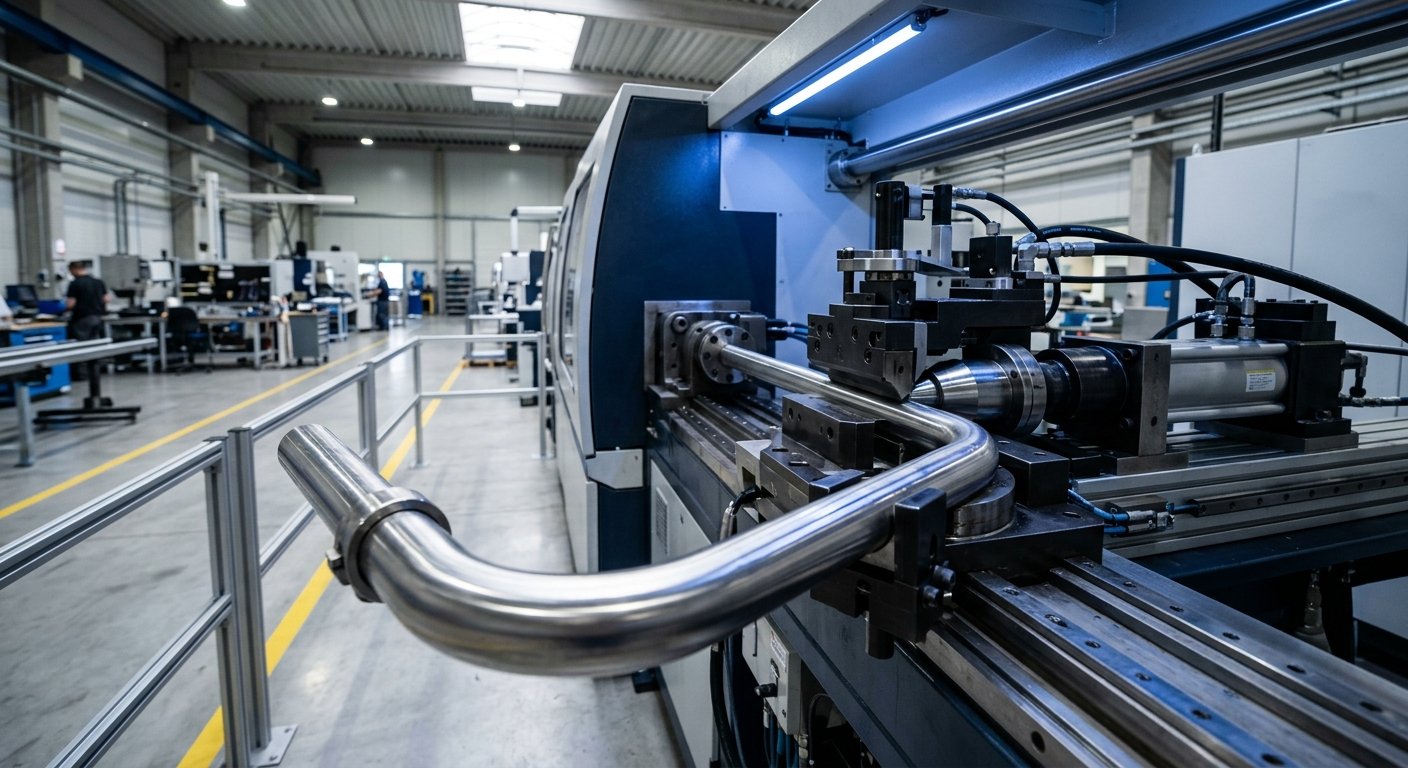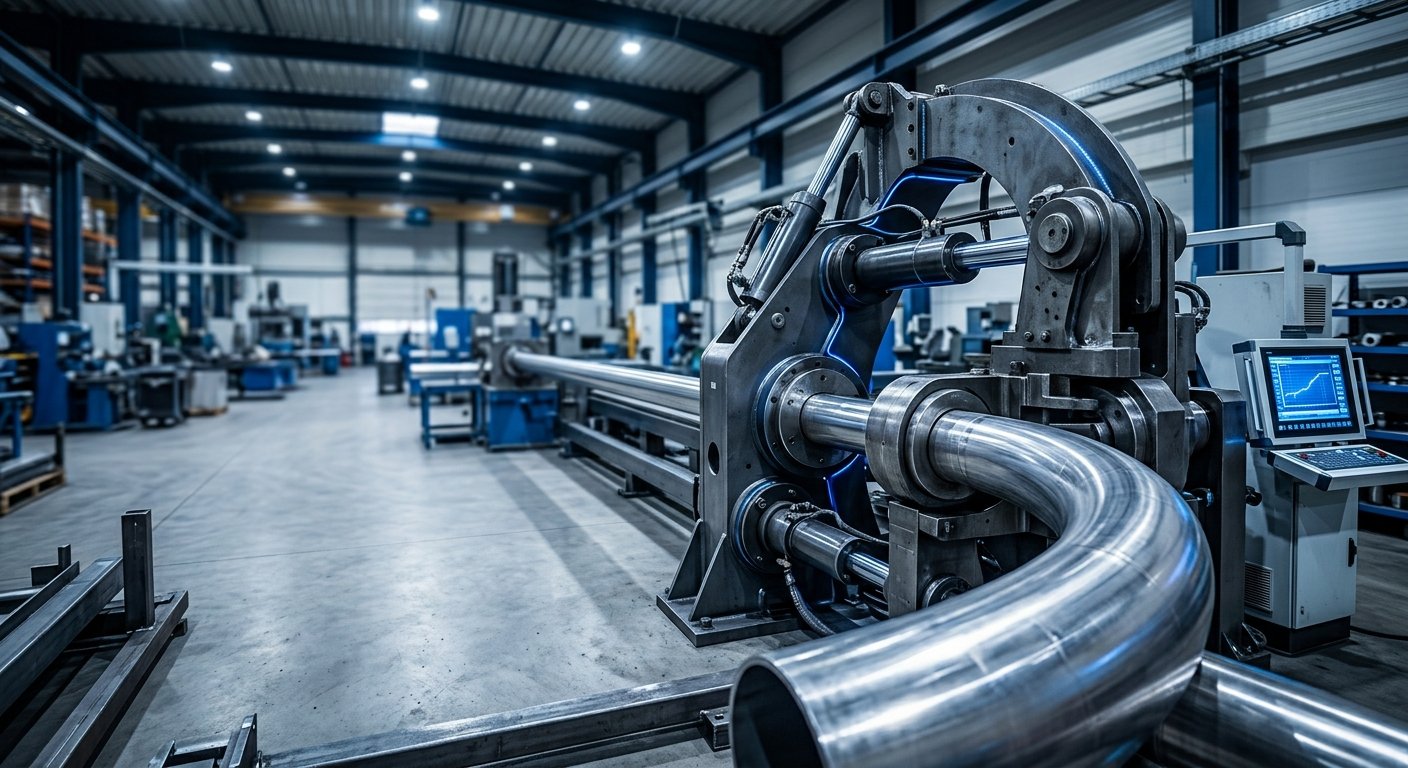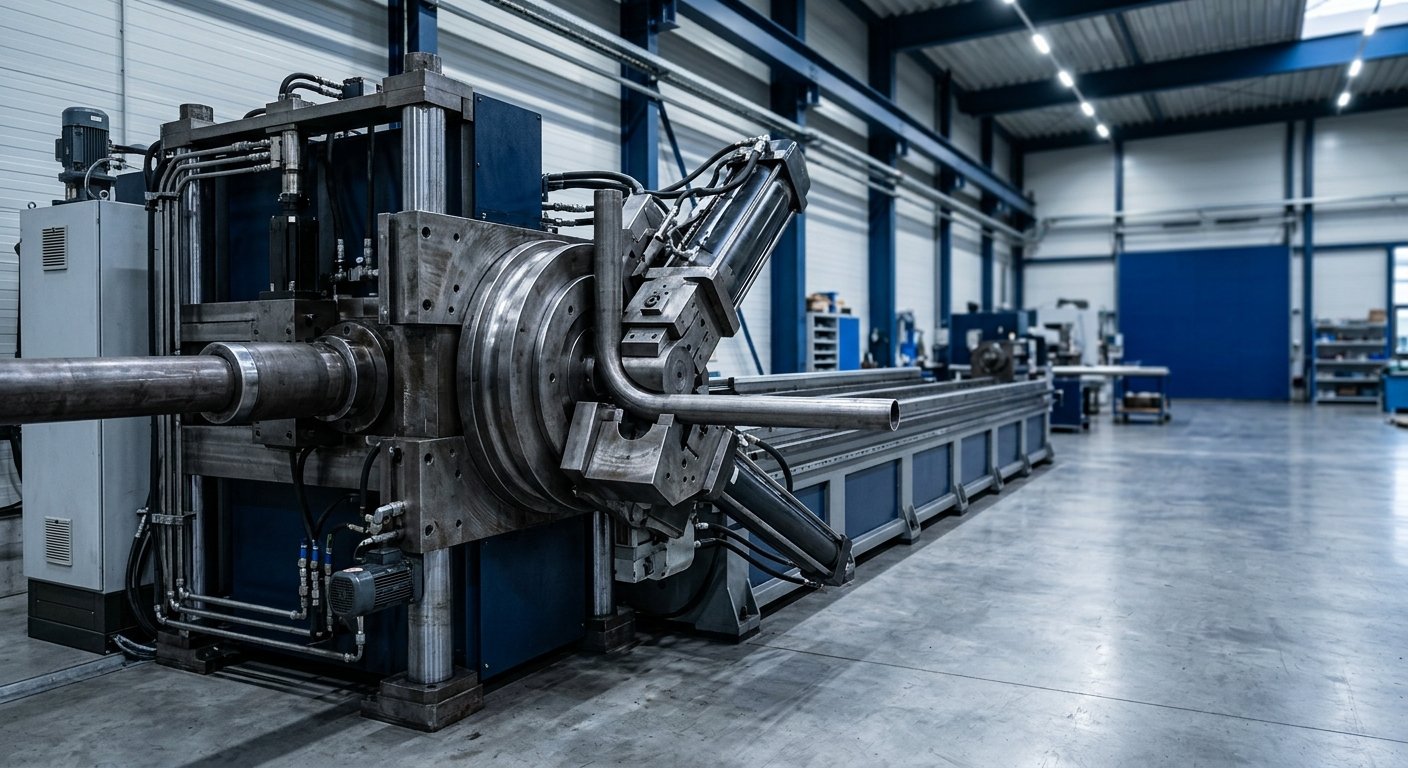
Capital equipment budgets remain under pressure across industrial sectors in 2026. For engineering managers and procurement specialists evaluating bending equipment, rebuilt and reconditioned pipe bending machines represent a serious procurement option—not a compromise. But the quality gap between a properly refurbished machine and one that’s simply cleaned up and resold is significant, and understanding that difference is what separates a smart capital investment from an expensive mistake.
This guide covers everything technical decision-makers need to evaluate rebuilt pipe bending machines, from what reconditioning actually involves to how pre-owned CNC tube benders perform in demanding aerospace, oil & gas, and petrochemical applications.
What “Rebuilt” Actually Means in Pipe Bending Equipment
The terminology in the used industrial pipe bender market is inconsistently applied. “Rebuilt,” “reconditioned,” “refurbished,” and “remanufactured” are often used interchangeably by sellers, but they describe very different levels of restoration.
- Remanufactured: The machine is disassembled to bare components, all wear parts are replaced to OEM specifications, and the unit is reassembled and tested to perform like new equipment. This is the highest standard.
- Rebuilt: Major systems—hydraulics, drive systems, control packages—are overhauled and replaced as needed. Structural components are inspected and repaired. The machine should meet original performance specifications.
- Reconditioned: A thorough mechanical inspection with repair or replacement of worn components, but typically without full disassembly. Suitable for machines with lower operating hours and minimal wear.
- Refurbished: Often the lowest tier—cosmetic work, basic functionality checks, and limited component replacement. Buyer should proceed with caution without detailed documentation.
When evaluating used mandrel pipe benders or pre-owned CNC tube benders, always request documentation specifying exactly which components were replaced, what testing was performed, and what warranty coverage applies.
Key Systems to Evaluate in Any Rebuilt Machine
Hydraulic Systems
Hydraulic integrity is non-negotiable in industrial pipe bending equipment. Seals, cylinders, pump assemblies, and control valves degrade with use and are primary failure points. In a properly rebuilt machine, the hydraulic system should be flushed completely, seals replaced throughout, and the pump tested under load. Request pressure test documentation and cycle counts on rebuilt cylinders.
CNC Control Systems
Pre-owned CNC tube benders are only as good as their control packages. Older PLCs or proprietary control systems may lack replacement parts availability, creating long-term support risk. When evaluating reconditioned bending machines, confirm whether the control system has been upgraded to a current platform with available support. Modern CNC controls offer significantly better repeatability, data logging, and integration capabilities—making a control upgrade during reconditioning a worthwhile investment.
Tooling and Mandrel Components
Bend tooling—dies, mandrels, wiper dies, pressure dies, and clamp dies—wears in application-specific patterns. A machine rebuilt for general resale may include tooling sized for common tube diameters that don’t match your application. Tooling is often sold separately from rebuilt machines, and purpose-built tooling for tight-radius or thin-wall applications represents a significant additional cost. Factor this into your total acquisition cost analysis.
Structural Integrity
The machine frame and bending head should be inspected for stress cracks, worn pivot points, and dimensional accuracy. A tube bending machine distributor with proper reconditioning infrastructure will have machine tool inspection capabilities to verify that the bending head geometry remains within specification. Frame fatigue is a less visible but critical factor, particularly in machines that have run high-volume production cycles.
Application Considerations: Not Every Rebuilt Machine Fits Every Job
The fit between a rebuilt machine’s capabilities and your specific application requirements determines whether the purchase creates value or creates problems. Industries like aerospace, defense, and petrochemical impose strict dimensional tolerances and material traceability requirements that not every reconditioned machine can support.
Aerospace and Defense Applications
Aerospace tube bending often involves tight-radius bends in titanium, Inconel, or stainless steel with wall thickness tolerances measured in thousandths of an inch. The Federal Aviation Administration and defense procurement standards require documented process capability—meaning your bending equipment must demonstrably produce consistent results within specification, with traceability. A rebuilt machine entering an aerospace environment needs thorough qualification testing and should come from a source with deep application knowledge in the sector.
Oil & Gas and Petrochemical Applications
Heavy-wall pipe bending for oil and gas infrastructure involves different demands—larger diameter ranges, heavier wall thicknesses, and materials selected for corrosion resistance. The American Society of Mechanical Engineers (ASME) publishes pressure piping codes that govern bend geometry and process requirements in these applications. Rebuilt industrial pipe benders entering oil & gas service should be evaluated for tonnage capacity, minimum bend radius capability, and compatibility with mandrel tooling appropriate for the pipe schedules in use.
High-Volume Production vs. Custom Applications
A reconditioned bending machine destined for high-volume production needs a different evaluation than one acquired for low-volume, custom work. High-cycle applications demand proven mechanical durability and well-documented maintenance history. Custom applications may prioritize flexibility, CNC programmability, and tooling changeout speed over raw cycle rates.
Total Cost of Ownership: Beyond the Purchase Price
The acquisition price of used pipe benders for sale is only one component of total cost of ownership (TCO). Buyers who optimize purely on purchase price frequently discover that downstream costs—installation, tooling, requalification, maintenance, and downtime—erode the apparent savings.
A realistic TCO analysis for rebuilt pipe bending machines should include:
- Application-specific tooling sets (mandrels, dies, pressure die assemblies)
- Installation and commissioning costs
- Operator and programmer training
- Control system upgrade costs if the existing control is obsolete
- Warranty coverage and expected maintenance costs in years one through three
- Parts availability for the specific machine model
- Production qualification and first-article inspection costs in regulated industries
A machine that costs 40% less to acquire but requires $50,000 in tooling and a control upgrade before it can run your application is not the bargain it appeared to be. Rigorous TCO analysis consistently outperforms purchase-price-only procurement decisions.
Sourcing Rebuilt Equipment: What to Look For in a Supplier
The credibility of the source matters as much as the condition of the machine. An industrial pipe bending equipment manufacturer with in-house reconditioning capability has advantages that general used equipment dealers cannot match: direct knowledge of the original design, access to OEM replacement parts, and application expertise to ensure the rebuilt machine is properly configured for its intended use.
When evaluating a tube bending machine distributor or precision pipe bending manufacturer offering rebuilt equipment, ask:
- Was reconditioning performed in-house or outsourced?
- What documentation exists for replaced components?
- Was the machine tested under load with production tooling?
- What warranty is offered, and what does it specifically cover?
- Is application engineering support available post-purchase?
- Are spare parts available for this model, and for how long?
Fifty years of tube and pipe bending expertise means understanding not just how machines are built, but how they perform across the lifecycle—what wears, what fails, and what a rebuilt machine needs to perform reliably in demanding production environments. That application knowledge is what separates a qualified reconditioning source from a reseller.
New vs. Rebuilt: Making the Right Decision
Rebuilt pipe bending machines make sense in specific scenarios: budget constraints are genuine, timeline requirements favor available inventory over lead time for new equipment, and the application requirements fall within the rebuilt machine’s demonstrated capabilities. They are not the right choice when an application demands capabilities beyond what the rebuilt machine can deliver, when parts availability is a long-term concern, or when the cost of qualification and tooling eliminates the economic advantage.
For applications at the precision end of the spectrum—aerospace structures, defense systems, critical energy infrastructure—new equipment with full OEM support, current control architecture, and application-specific configuration often delivers better long-term value. The decision should be driven by engineering requirements and documented TCO analysis, not acquisition price alone. Explore custom bending solutions or review options across pipe bending machines and tube bending machines to compare new equipment specifications against rebuilt alternatives for your application.
Frequently Asked Questions
What is the difference between a rebuilt and a refurbished pipe bending machine?
A rebuilt machine has undergone overhaul of major mechanical and hydraulic systems to restore it to original performance specifications, with documented component replacement. A refurbished machine typically involves cosmetic work and basic repairs with less comprehensive restoration. Always request documentation detailing exactly what work was performed before purchasing either type.
Can reconditioned bending machines meet aerospace tolerance requirements?
Yes, under the right conditions. The machine must be properly qualified for the application, demonstrate capable process repeatability, and come from a source with aerospace application expertise. The reconditioning quality, control system accuracy, and tooling precision must all meet the requirements of the specific aerospace standard governing the parts being produced.
What should I ask about parts availability when buying a pre-owned CNC tube bender?
Ask the seller specifically which components have known obsolescence issues, whether the OEM still supports the control system with parts and software updates, and what the realistic availability window is for hydraulic and mechanical wear components. Machines with obsolete control systems present the highest long-term risk, even when mechanically sound.
How do I evaluate the hydraulic system on a used industrial pipe bender?
Request documentation of hydraulic system flush, seal replacement throughout, and pressure testing under load. Any rebuilt machine offered without this documentation should be viewed as a refurbished unit at best. Visible hydraulic leaks, soft cylinder response, or inconsistent pressure under load are disqualifying indicators during inspection.
Is it worth upgrading the CNC control on a rebuilt machine?
Often yes. A modern CNC control platform improves repeatability, enables better data logging for quality documentation, and ensures long-term parts and software support. The cost of a control upgrade during reconditioning is typically lower than retrofitting later, and the operational benefits in precision and programmability frequently justify the investment—particularly in regulated industries.
Ready to Find the Right Bending Solution?
Whether you’re evaluating rebuilt pipe bending machines for a specific production need or comparing them against new equipment options, the right decision starts with a detailed technical conversation. Hines Bending Systems brings 50 years of precision bending expertise, American manufacturing credentials, and a track record with NASA and military clients to every equipment discussion. Contact Hines Bending Systems to discuss your application requirements and determine which solution—new or reconditioned—delivers the best performance and value for your operation.