Procurement cycles for capital equipment have compressed significantly in 2026, yet the cost of specifying the wrong mandrel pipe bending equipment has never been higher. Rework, scrapped tube stock, and production downtime in aerospace or oil and gas environments can translate to six-figure losses before anyone reaches for a root-cause analysis form. This guide cuts through the noise so engineering managers, production planners, and procurement specialists can source mandrel bending machines with confidence—covering selection criteria, application-specific requirements, and what separates a capable equipment partner from a transactional vendor.
What Is Mandrel Pipe Bending and Why Does It Matter?
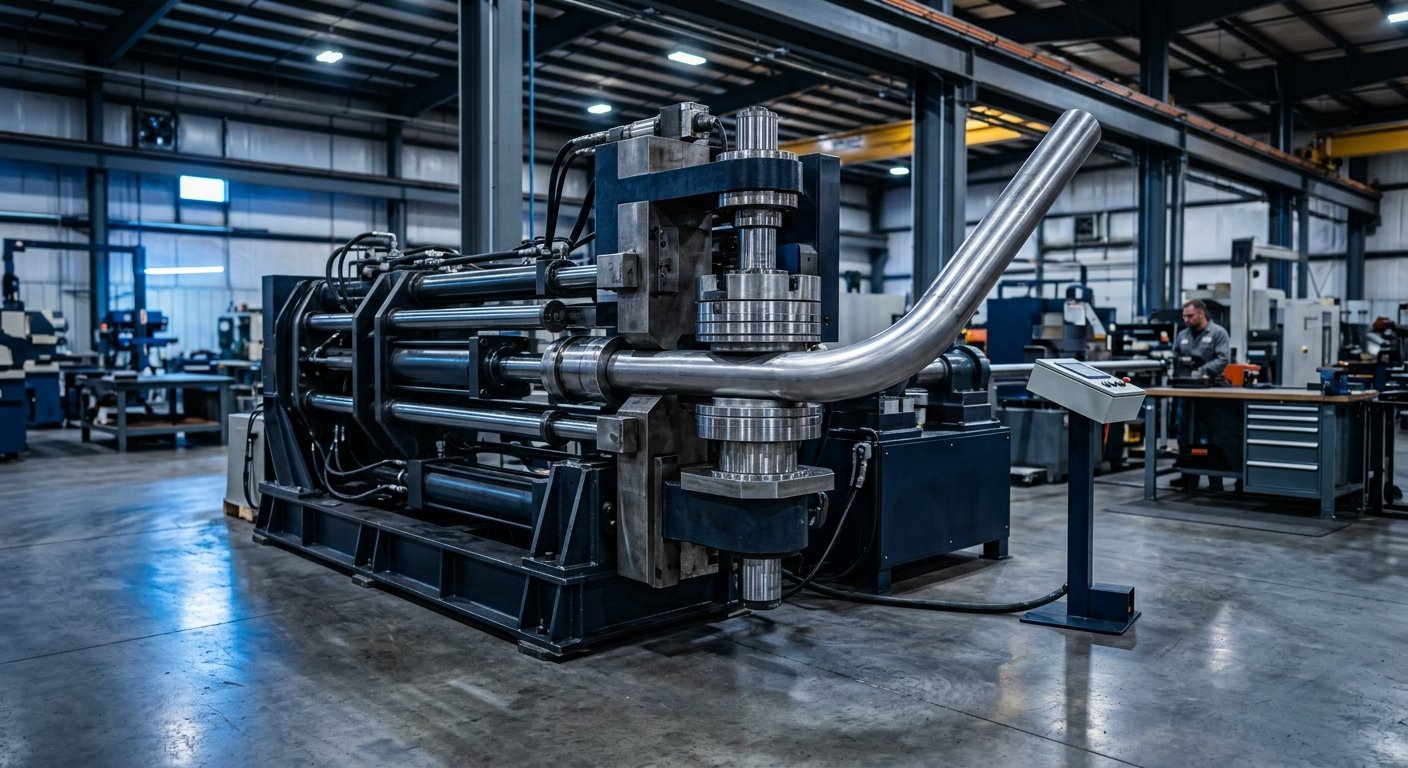
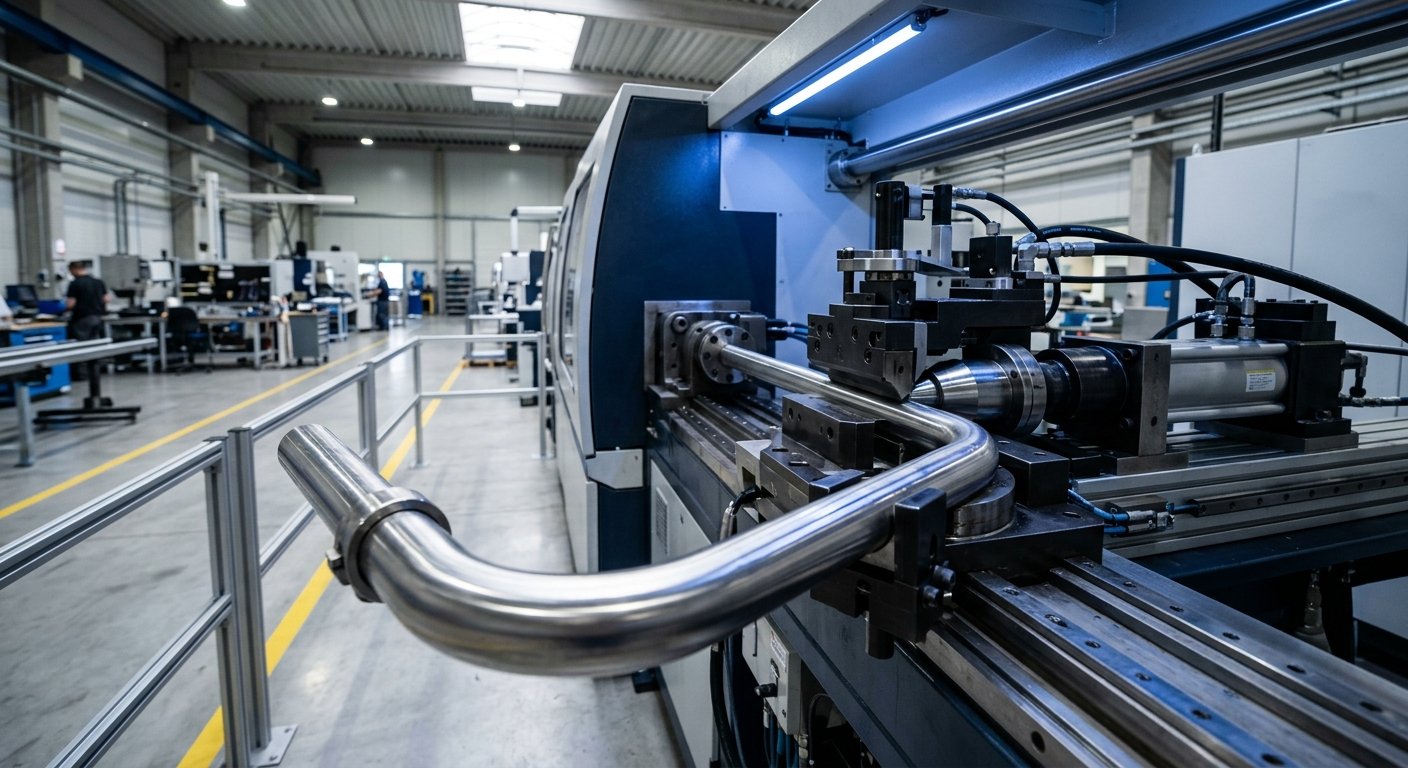
Mandrel bending is a precision forming process in which an internal mandrel—typically a linked ball-and-shank assembly—supports the tube or pipe wall from the inside during the bending cycle. This internal support prevents ovality, wrinkling, and wall thinning that would otherwise compromise structural integrity and flow characteristics. For industries where a failed tube assembly can mean a grounded aircraft, a ruptured hydraulic line, or a compromised pressure vessel, mandrel bending is not optional—it is the engineering baseline.
The mandrel works in concert with the wiper die, pressure die, clamp die, and bend die to control every variable acting on the material during the bend. When all tooling is correctly engineered for a specific tube OD, wall thickness, material, and centerline radius (CLR), the result is a repeatable, high-integrity bend that meets tight dimensional tolerances. According to ASME standards governing pressure piping systems, dimensional consistency in bent tube assemblies is a codified requirement in many industrial applications—not simply a quality preference.
Key Selection Criteria for Mandrel Bending Equipment in 2026
Capacity and CLR Range
The single most common sourcing mistake is purchasing capacity that barely covers today’s production requirements with no margin for future work. Specify mandrel pipe bending equipment against your most demanding application—tightest CLR, largest OD, heaviest wall—rather than your average job. Equipment that operates at the edge of its rated capacity degrades faster, produces less consistent results, and drives up tooling costs.
Key capacity parameters to define before approaching any mandrel tube bending equipment dealer include:
- Maximum tube OD and wall thickness (DOT, schedule, or custom spec)
- Minimum centerline radius as a multiple of OD (1D, 1.5D, 2D, etc.)
- Material type and yield strength (aluminum, stainless, Inconel, titanium, carbon steel)
- Multi-plane bend requirements and part length between bends
- Production volume—single-piece custom work vs. high-volume runs
CNC Control and Repeatability
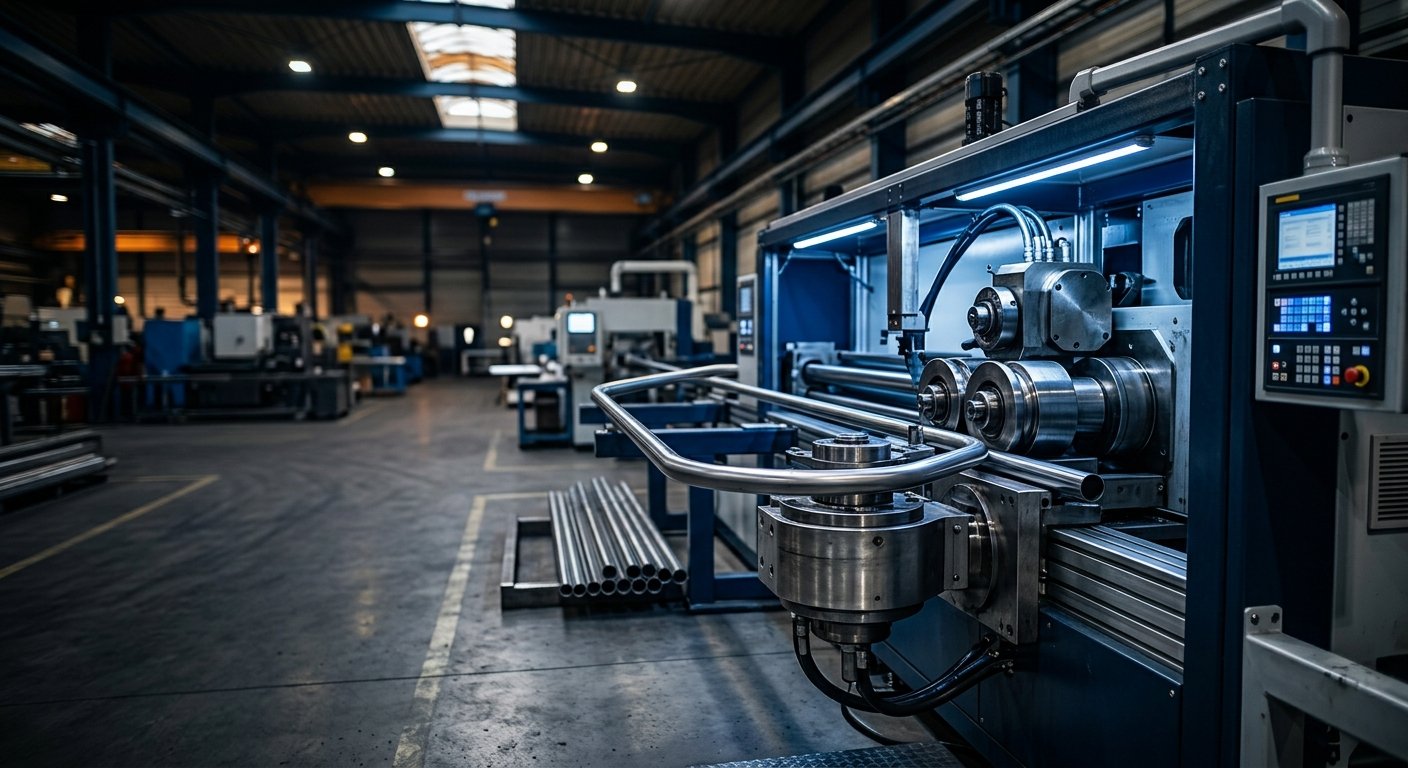
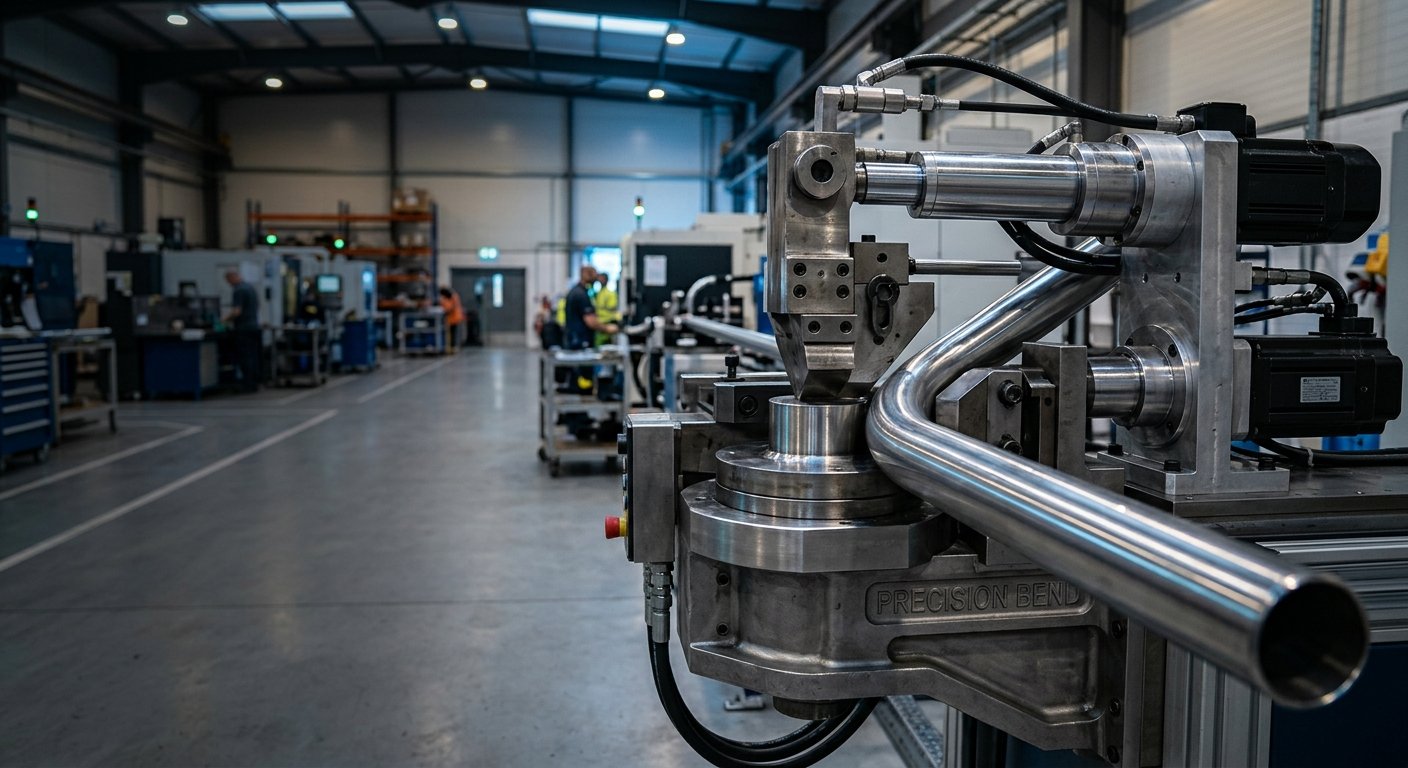
Modern CNC mandrel bending machines store complete bend programs that control bend angle, rotation, linear feed, and boost pressure simultaneously. For aerospace tube bending machine applications, where a single part number may contain eight or more bends in three-dimensional space, CNC control is non-negotiable. Look for systems with closed-loop feedback on bend angle, not just open-loop positioning, as springback compensation becomes critical when bending titanium or high-strength alloys common in defense and aerospace.
Tooling Integration and Change-Over Time
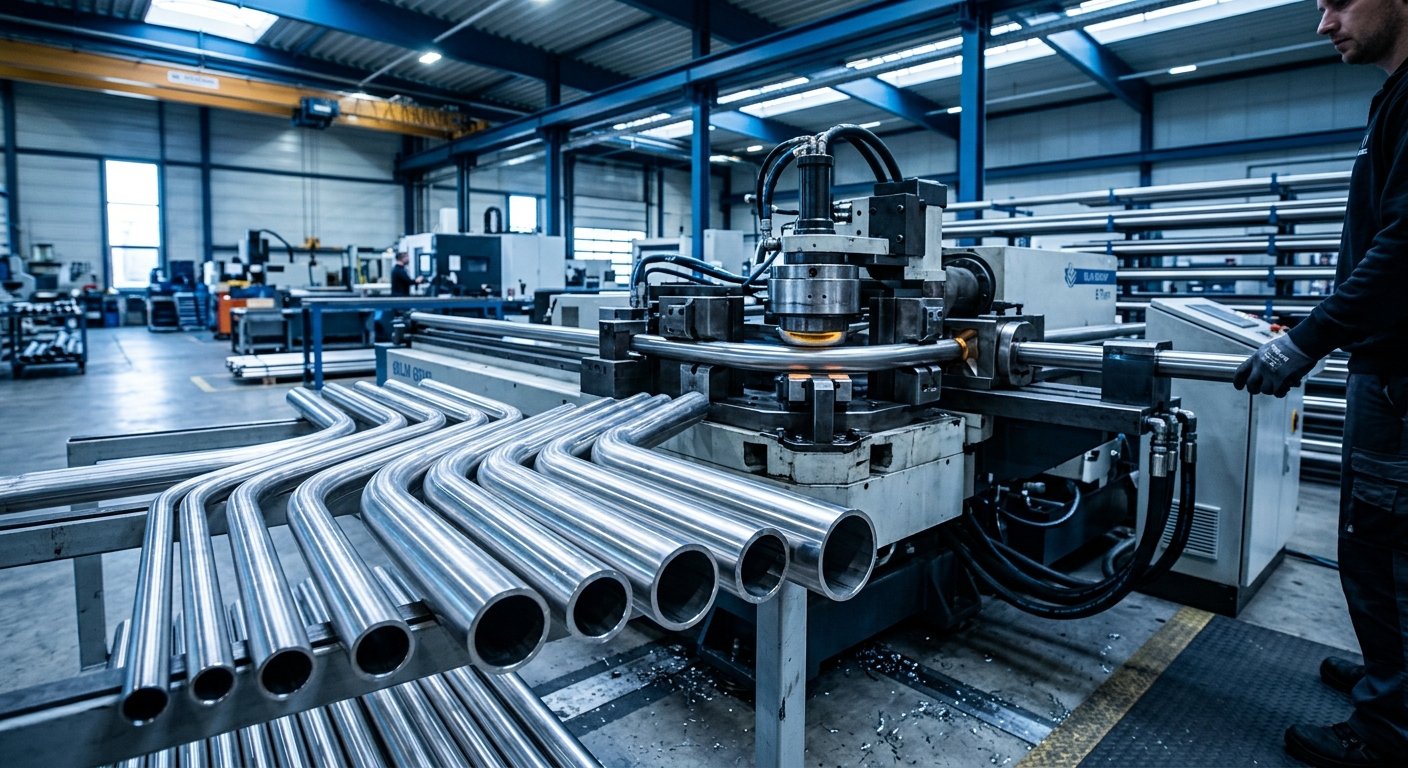
A precision pipe bending manufacturer with genuine custom solution capabilities will engineer tooling as part of the complete system, not as an afterthought. Tooling that is purpose-built for your specific tube-to-die interface reduces setup time, improves first-article acceptance rates, and extends tooling life. For job shops or contract manufacturers handling multiple part families, quick-change tooling packages can reduce changeover from hours to minutes—a meaningful throughput advantage.
Application-Specific Requirements by Industry
Aerospace and Defense
Aerospace tube bending demands the tightest tolerances of any industrial application. Hydraulic, fuel, bleed air, and pneumatic lines must bend consistently to ±0.25° or better on angle, with wall thinning controlled to within specification minimums defined by programs like AS9100 quality management systems. The FAA’s advisory circulars on aircraft materials and fabrication methods reinforce why bending process control—not just inspection—is the standard of care in certified manufacturing environments.
Defense applications introduce additional requirements: traceability documentation, material certifications, and in many cases compliance with ITAR regulations governing production processes and equipment use. Working with an industrial pipe bending equipment manufacturer that has a proven track record supplying aerospace and defense clients—such as NASA and military organizations—provides an auditable record that procurement officers and quality teams can point to during customer or regulatory audits.
Oil, Gas, and Petrochemical
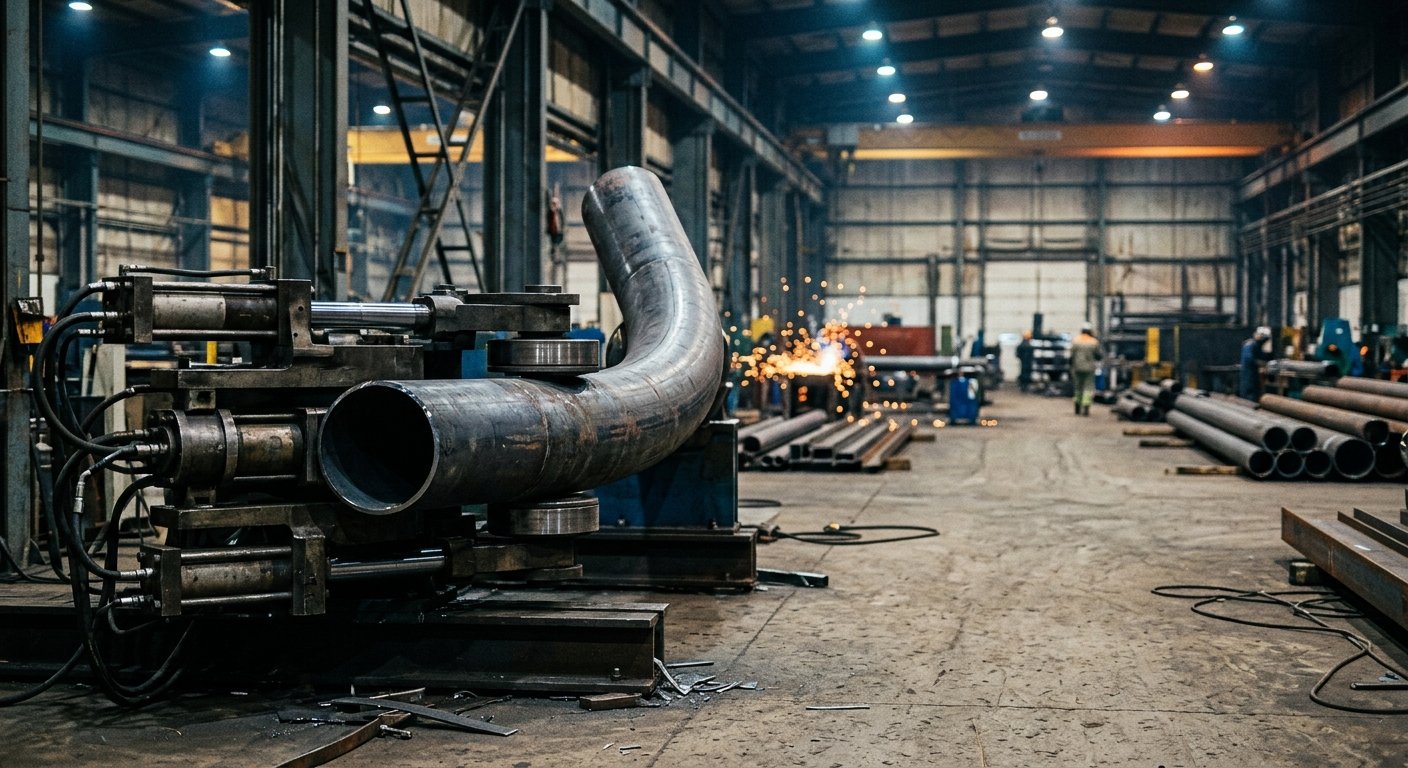
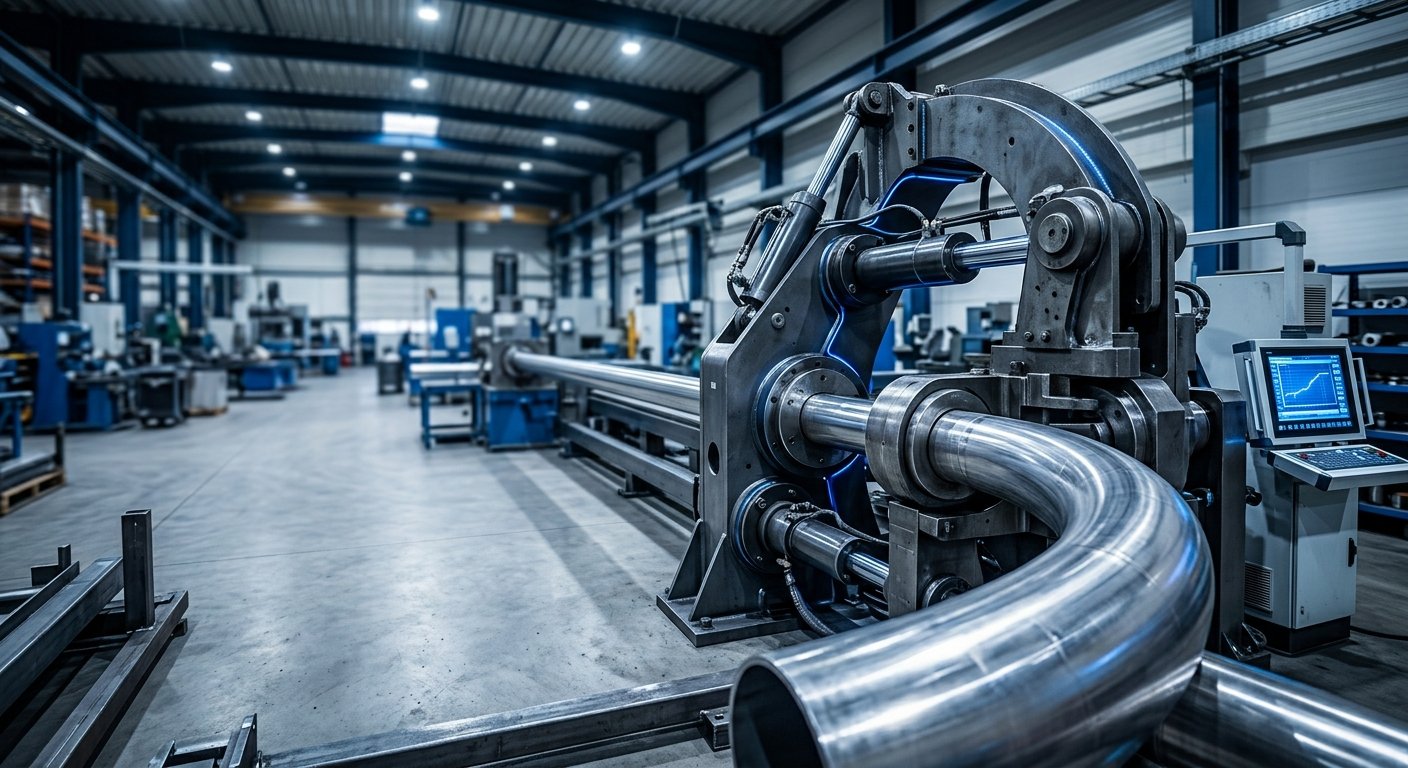
Oil and gas pipe bending operates at the opposite end of the size spectrum from aerospace. Large-diameter pipe in carbon steel, duplex stainless, or high-alloy grades must be bent to precise geometry for manifold systems, subsea installations, and refinery piping networks. Wall thickness in these applications is often substantial, meaning the bending machine must generate significant hydraulic force while maintaining control over material springback and cross-section ovality.
Petrochemical plants frequently require tube and pipe assemblies that must pass radiographic or ultrasonic inspection after bending. Any wall thinning, cracking, or ovality that exceeds code limits—typically governed by ASME B31.3 for process piping—results in rejection and costly rework. Selecting custom mandrel bending systems designed for your exact pipe schedule and material grade is the most reliable way to clear these inspection requirements on first-article submissions.
Energy Sector
Power generation—including LNG infrastructure and hydrogen distribution systems gaining investment in 2026—presents unique bending challenges. Thin-wall stainless and duplex alloy tubing used in heat exchangers and process lines requires precise mandrel fit to prevent collapse, while larger header pipe bending demands machines with robust structural frames that minimize deflection under load. The energy sector’s increasing focus on hydrogen-compatible materials adds another layer of specification complexity that equipment selection must account for upfront.
New vs. Used Mandrel Bending Equipment: Making the Right Call
Budget pressure sometimes drives procurement teams toward used equipment before they have fully evaluated the tradeoffs. Used mandrel bending machines can represent genuine value—particularly well-maintained CNC systems from reputable industrial pipe bending equipment manufacturers—but the evaluation process must be rigorous. Key questions for any used equipment consideration include:
- What is the actual cycle count, and does the machine have maintenance records?
- Is the CNC control system still supported by the manufacturer with available parts?
- Can the seller provide tooling documentation and previously run programs?
- What reconditioning has been performed, and by whom?
Hines Bending Systems maintains an inventory of used pipe benders that have been evaluated and represent known-condition options for buyers working within capital budget constraints. This is a meaningfully different proposition from an unknown-history purchase through an equipment auction.
For production environments with tight tolerance requirements or new material introductions, new equipment with current CNC architecture and a full manufacturer warranty is typically the lower-risk path. The amortized cost difference between new and used often narrows considerably when you account for downtime risk, retrofitting costs, and the absence of manufacturer support on obsolete control platforms.
What to Look for in a Mandrel Tube Bending Equipment Dealer
The equipment itself is only part of the sourcing decision. The partner behind it—whether described as a manufacturer, tube bending machine distributor, or dealer—determines how well the machine performs over its working life. Evaluate potential partners against these criteria:
- Engineering depth: Can they review your part drawings and recommend the correct machine configuration, or do they simply quote catalog models?
- Tooling capability: Do they manufacture or engineer application-specific tooling in-house?
- Training and commissioning: Is operator and maintenance training included, and is it conducted on your specific machine configuration?
- Domestic support: For American made pipe benders, is service and parts support based in the U.S. with reasonable response times?
- Reference clients: Can the manufacturer demonstrate relevant experience in your industry—aerospace, oil and gas, defense?
Hines Bending Systems brings 50 years of tube and pipe bending expertise to every application, with tube bending machines and pipe bending machines engineered for demanding industrial environments. That depth of experience, combined with a client list that includes NASA and military programs, provides a credible baseline when evaluating fit for precision-critical applications.
Frequently Asked Questions
What is the difference between mandrel bending and rotary draw bending?
Rotary draw bending is the broader process category—tube is clamped to a bend die and drawn around it as the die rotates. Mandrel bending is a subset of rotary draw bending in which an internal mandrel is inserted into the tube to support the wall during the bend. Not all rotary draw applications require a mandrel; thin-wall or tight-CLR bends in demanding materials almost always do.
What materials can be bent with mandrel bending equipment?
Mandrel bending equipment handles a wide range of materials including carbon steel, stainless steel grades (304, 316, duplex), aluminum alloys, titanium, Inconel, and copper alloys. Material selection drives tooling design, bend speed, lubrication strategy, and springback compensation settings. Application requirements should always be reviewed with the equipment manufacturer to ensure the machine and tooling are correctly specified for the material.
How do I determine the right machine size for my application?
Machine sizing is driven by your largest tube OD, heaviest wall thickness, tightest centerline radius, and material yield strength. Provide these parameters—along with production volume requirements and part complexity—to the manufacturer’s engineering team. Attempting to size equipment from catalog specifications alone without application review frequently results in under-specified machines.
Are American-manufactured pipe benders worth the price premium over imports?
For regulated industries like aerospace and defense, domestic manufacture provides supply chain traceability, ITAR compliance simplification, and domestic service support that import alternatives cannot match. The total cost of ownership over a machine’s working life—including support costs, downtime risk, and parts availability—typically favors domestically manufactured equipment for demanding production environments.
What training and support should I expect when purchasing mandrel bending equipment?
A capable manufacturer should provide commissioning support at installation, operator training on machine controls and tooling changeover, maintenance training for your technical staff, and accessible parts and service support post-installation. Application-specific training—how to set up your specific part programs and tooling—is more valuable than generic machine operation instruction.
Ready to Specify the Right System?
Sourcing mandrel pipe bending equipment is a capital decision with long operational consequences. Getting the specification right—machine capacity, CNC architecture, tooling design, and partner capability—before signing a purchase order is far less expensive than correcting a mismatch after delivery. Hines Bending Systems engineers are available to review your application requirements and recommend solutions built on five decades of proven American manufacturing expertise. Contact the Hines team to start a technical conversation about your mandrel bending application.