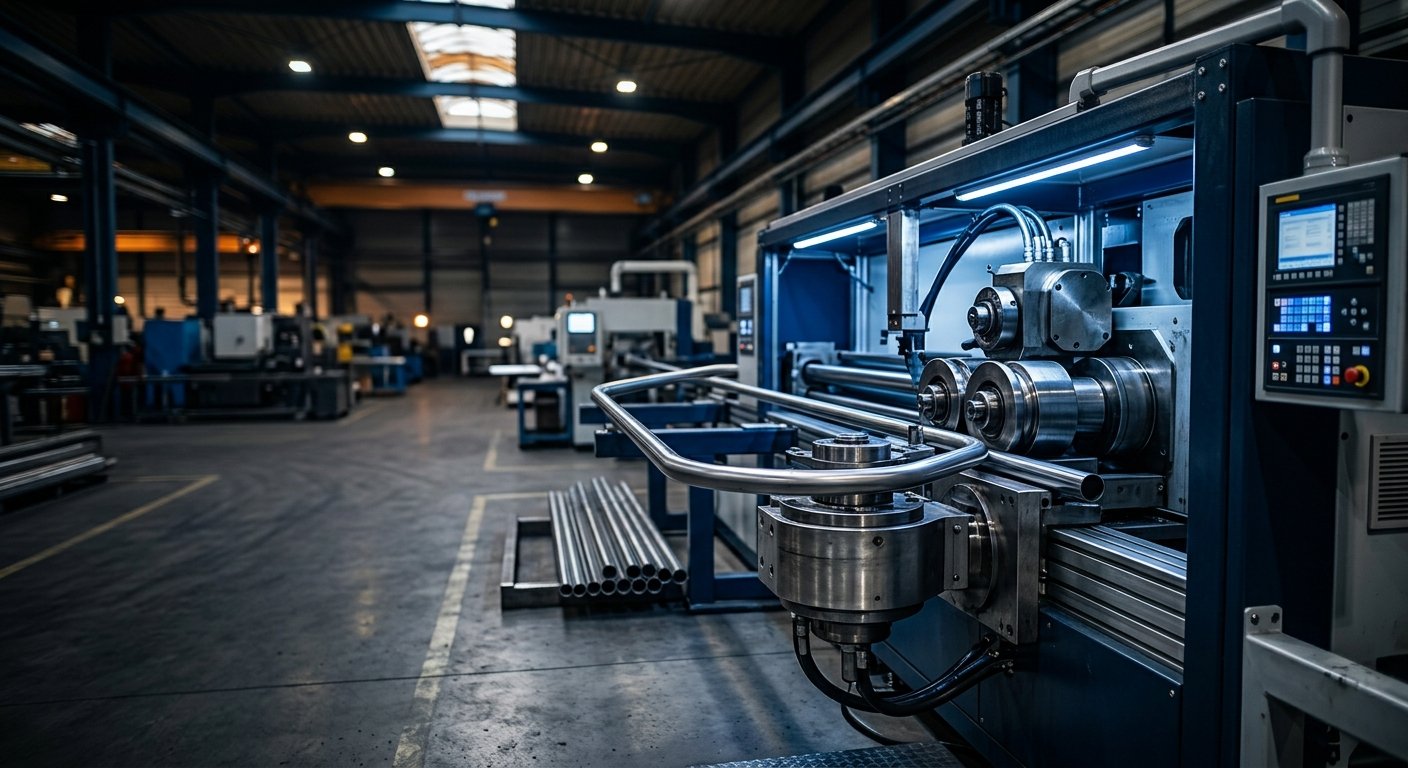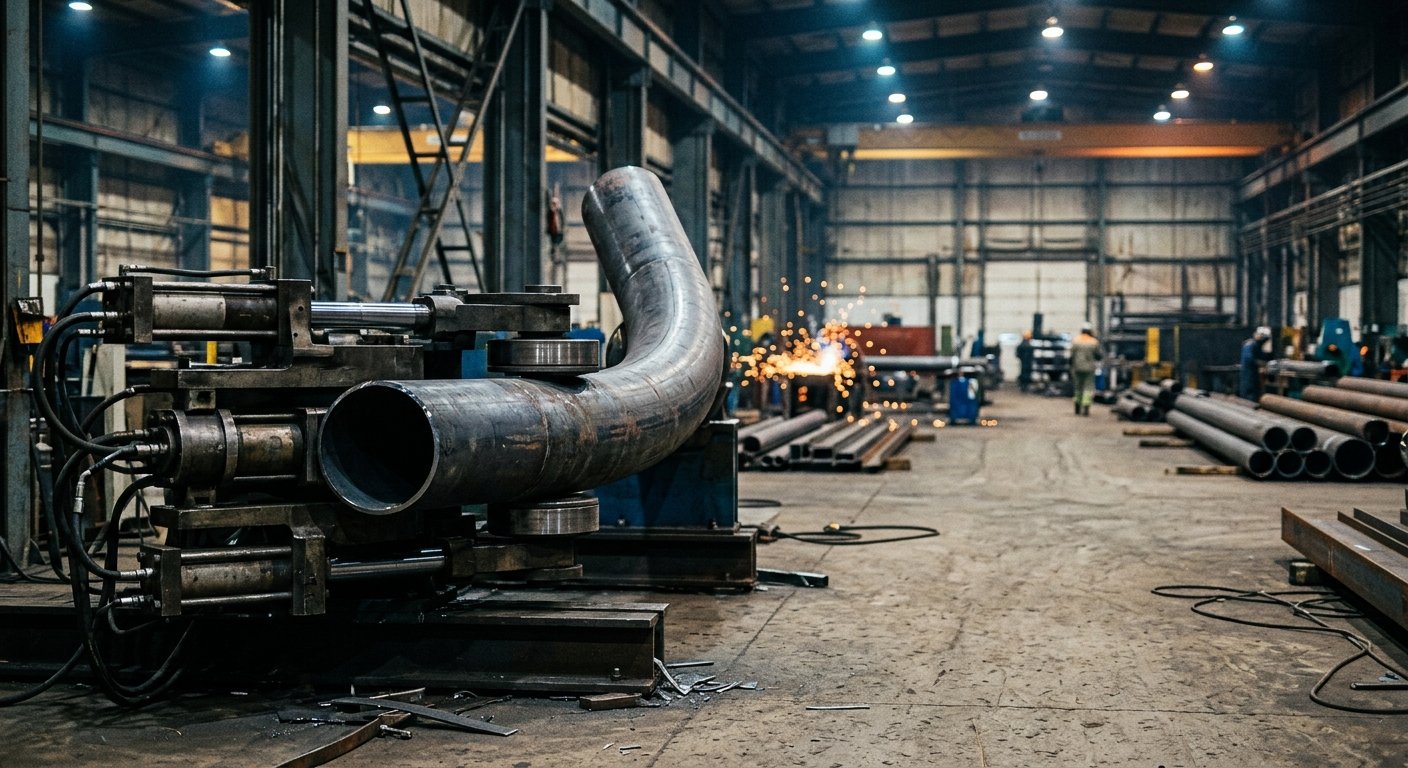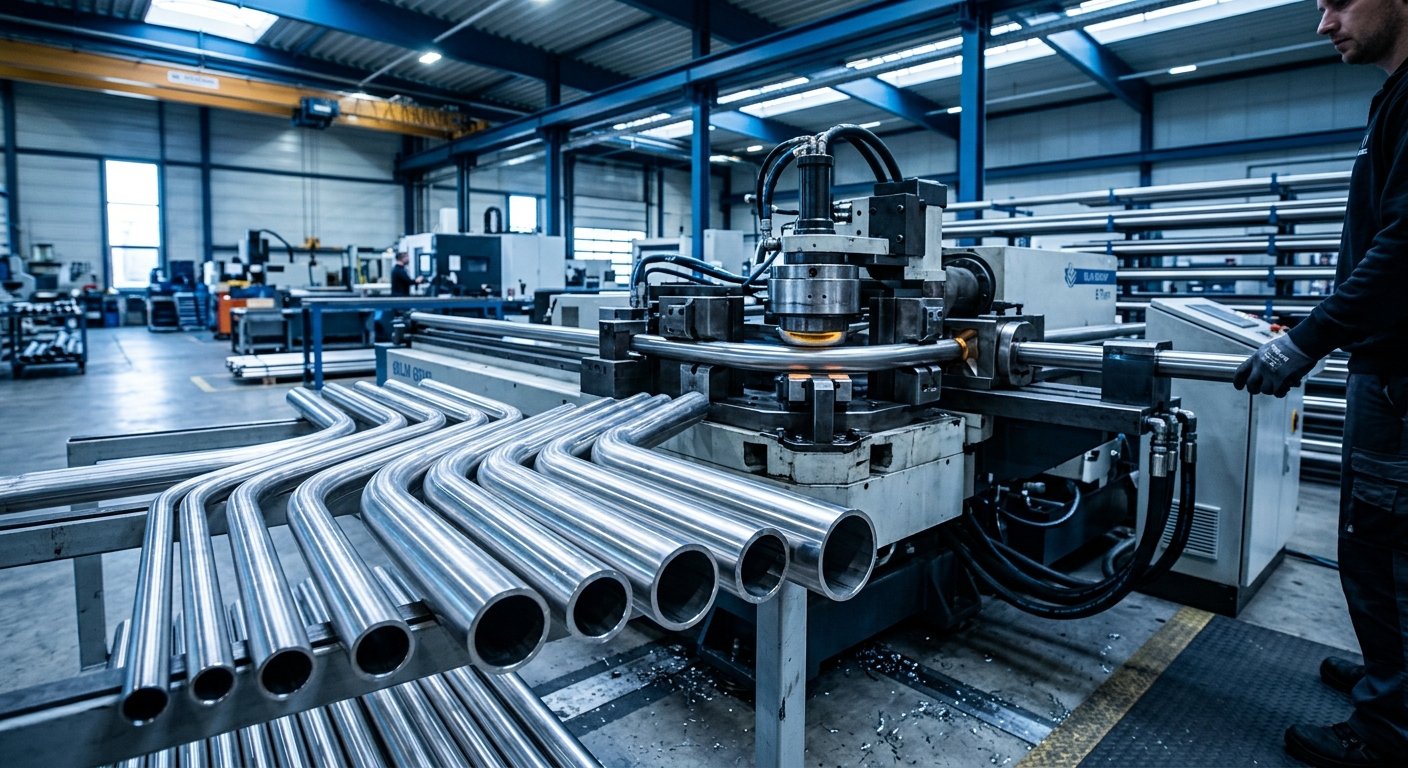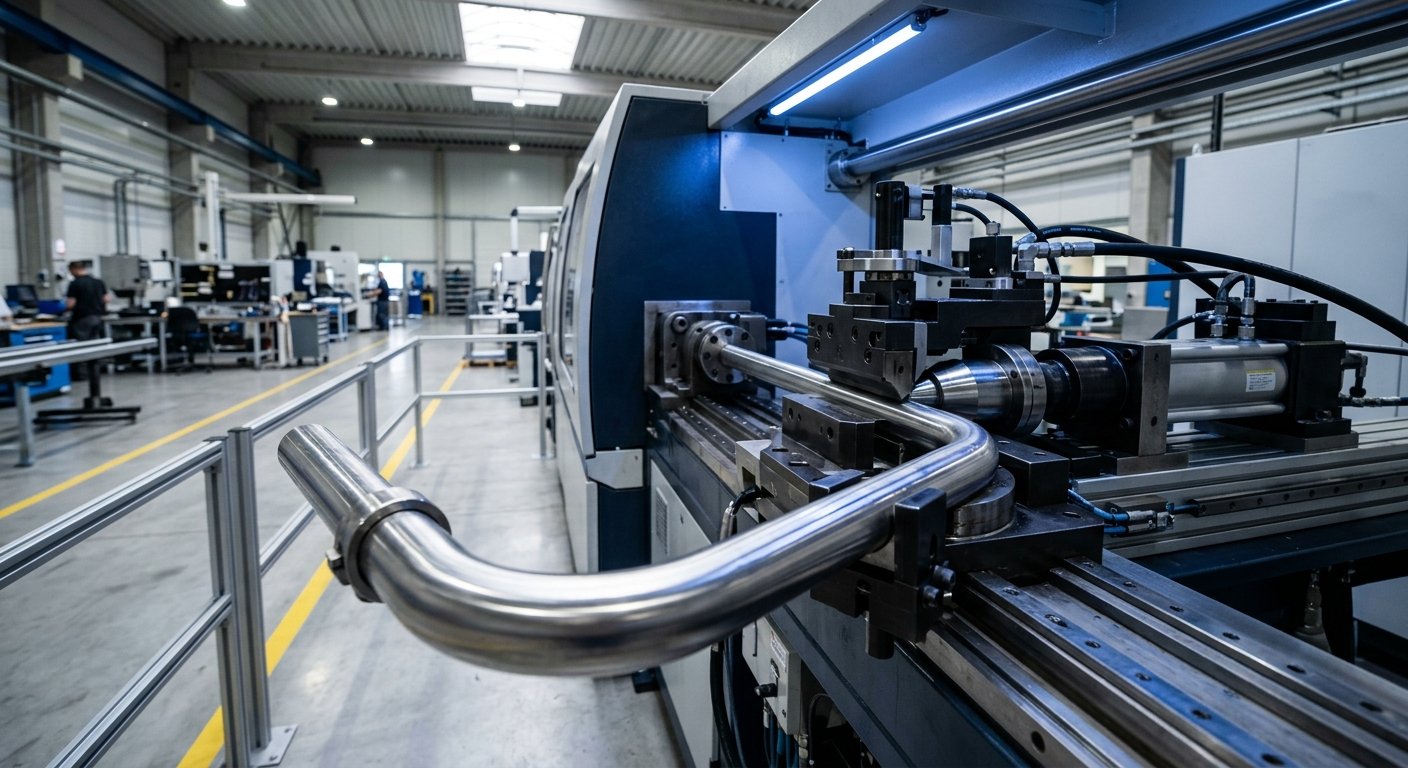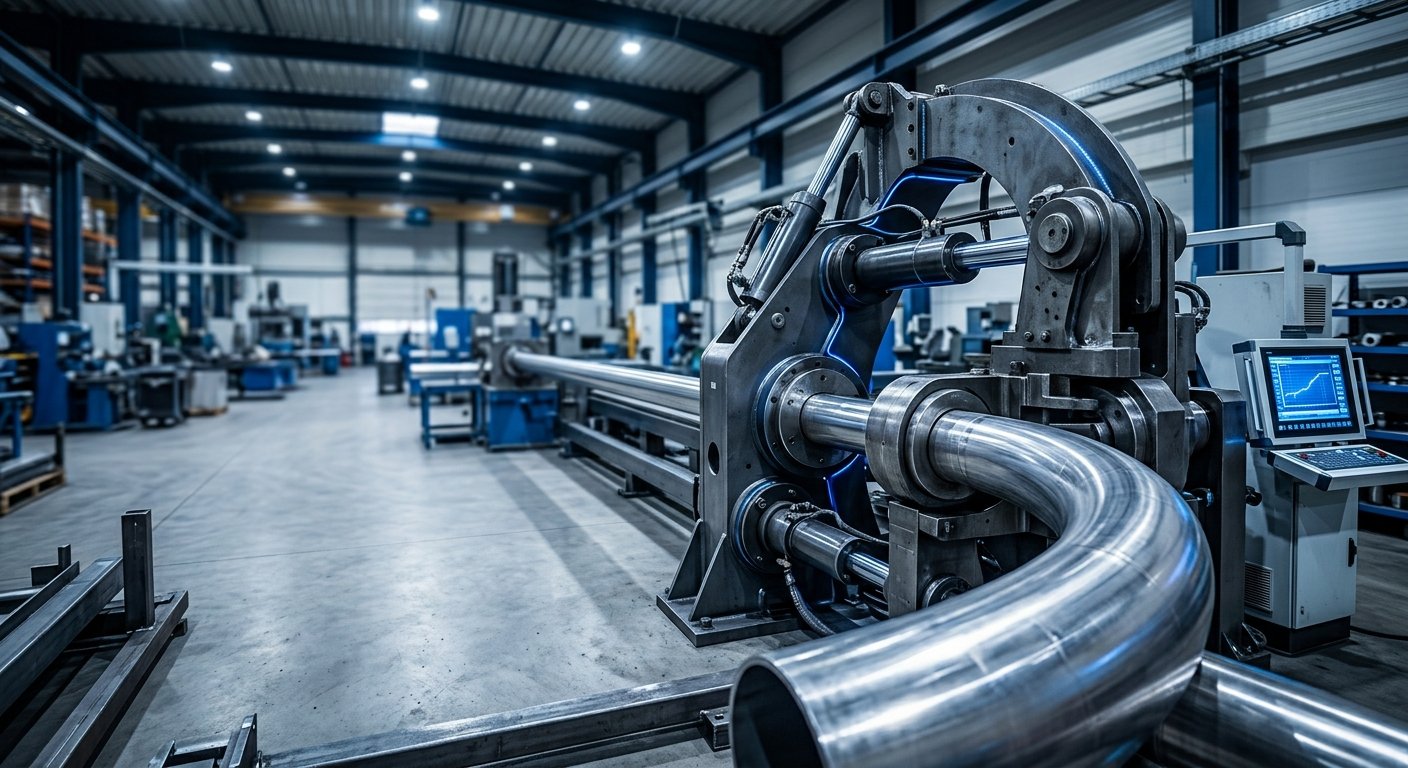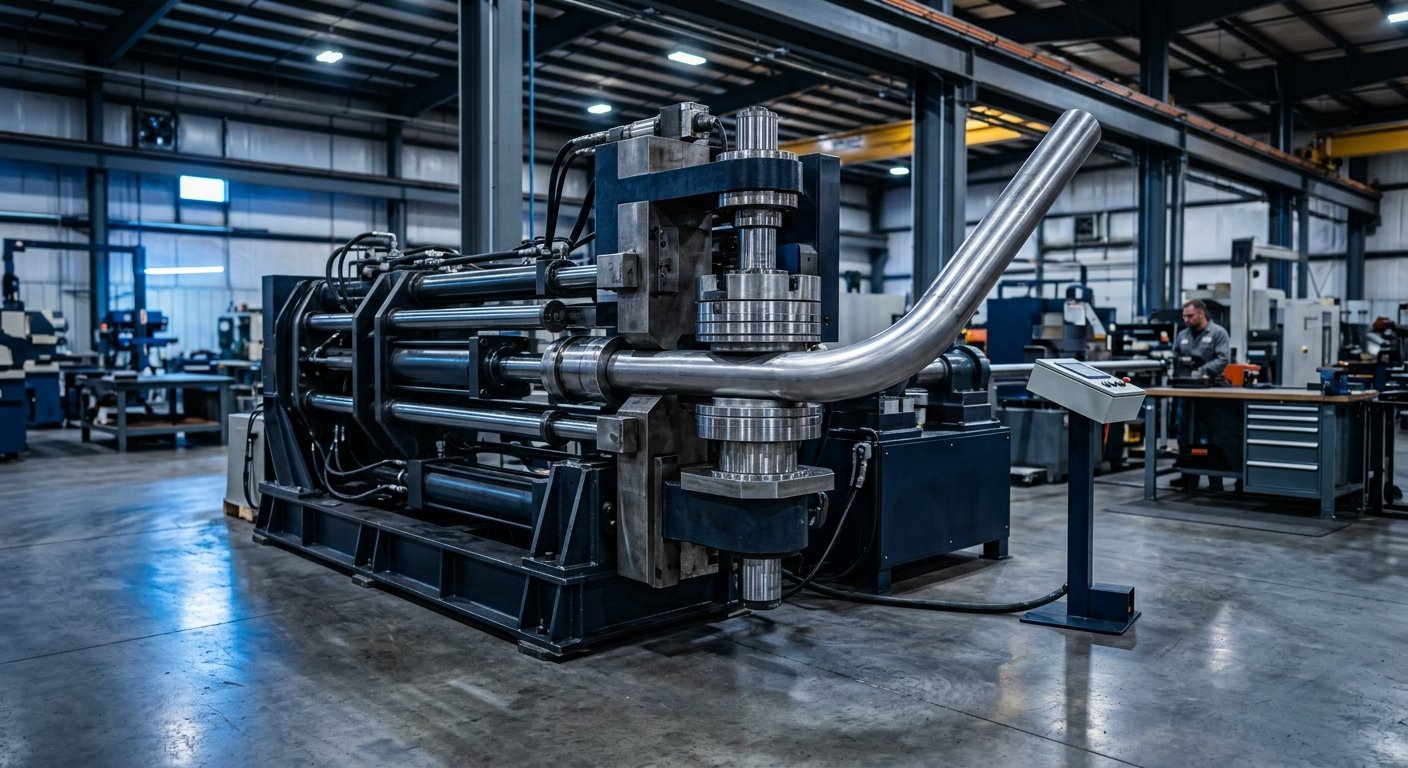
American-made pipe benders differ from imported alternatives in four measurable ways: compliance with ASME and OSHA standards, custom engineering capability for aerospace and defense tolerances, domestic supply chain traceability, and direct long-term technical support. For procurement managers in aerospace, defense, oil and gas, and petrochemical industries, these differences carry direct engineering and financial consequences over a machine’s 15-to-20-year service life.
- American pipe benders are built to ASME, OSHA, and industry-specific standards that are baseline requirements, not optional, in aerospace, defense, and energy applications.
- Domestic manufacturers can develop fully custom machines and tooling—bend dies, mandrels, pressure dies—matched to specific materials, radii, and wall thicknesses.
- A bending machine may serve a production line for 15 to 20 years; domestic parts availability and traceability matter increasingly as the machine ages.
- Total cost of ownership—including downtime, failed bends, and re-qualification costs—often favors American-made equipment over lower-priced imports.
- Used equipment from reputable American manufacturers can provide proven precision capability at reduced capital outlay.
The Engineering Standard Behind American Manufacturing
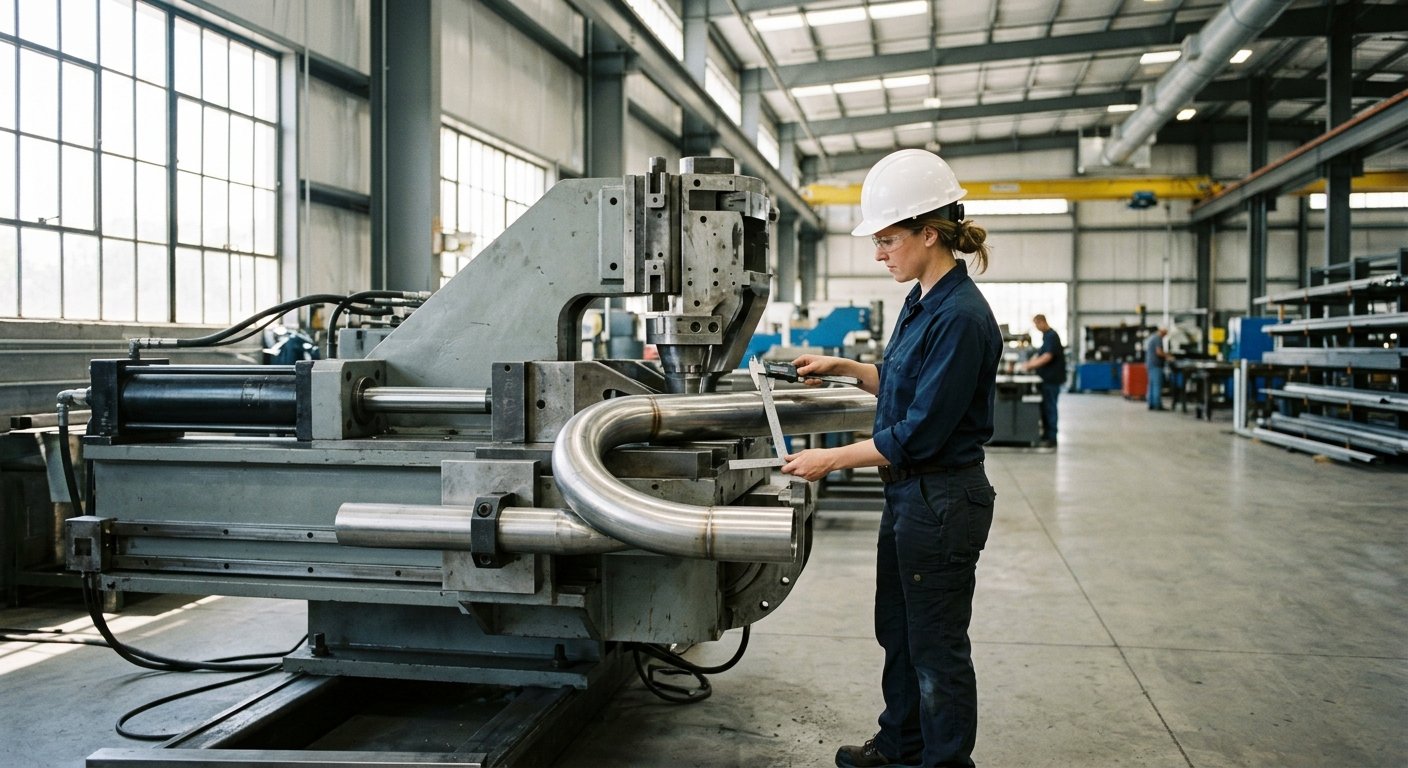
Domestic pipe bending machine manufacturers operate within a regulatory and standards environment that directly shapes product quality. Equipment produced in the United States is routinely designed to comply with ASME standards, OSHA safety requirements, and industry-specific certifications that govern aerospace, defense, and energy applications. These aren’t optional frameworks—they’re baseline expectations baked into the design and fabrication process.
What this means practically is tighter dimensional tolerances, traceable material certifications, and documented quality management processes. When aerospace engineers specify a pipe bending machine for a flight-critical application, they need confidence that the machine itself was built to a known and verifiable standard. American manufacturers operating in this space maintain that documentation chain as a core competency, not an afterthought.
The National Institute of Standards and Technology (NIST) continues to set measurement and standards benchmarks that domestic manufacturers reference throughout their production processes. That foundational commitment to precision metrology is embedded in how serious American pipe bending equipment is designed, calibrated, and validated before it ships.
The ASME B31.3 Process Piping standard governs what qualifies a bent pipe assembly for high-stakes applications. Meeting those requirements demands training and documentation that must come from the equipment manufacturer—not a third-party service provider unfamiliar with the machine’s design intent.
Custom Engineering Capability at the Core
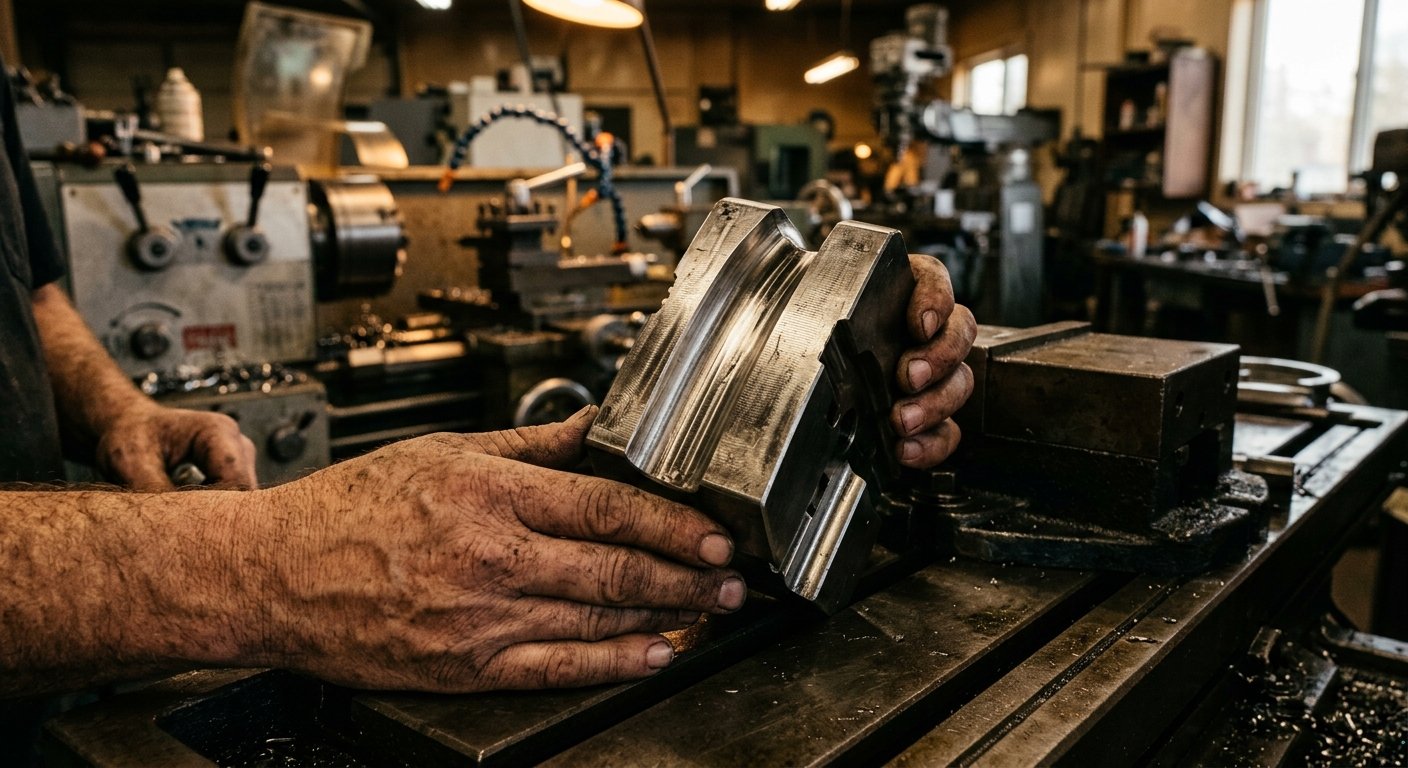
One of the clearest differentiators between domestic and offshore pipe bending equipment is custom solution capability. High-volume commodity bending may tolerate a catalog machine, but the reality of aerospace, petrochemical, and defense applications is that standard configurations rarely fit without compromise.
American pipe bending machine manufacturers with deep engineering teams can develop custom pipe bending machines configured to specific bend radii, tube diameters, wall thicknesses, material types, and production cycle requirements. This isn’t a minor feature—it’s the difference between equipment that forces process adaptation and equipment that solves the actual production problem.
Consider a petrochemical plant routing high-pressure stainless lines through tight structural envelopes. Or a defense prime contractor bending titanium hydraulic tubing to exact aerospace tolerances. These applications demand engineering collaboration from the equipment manufacturer, not just order fulfillment. Domestic manufacturers with specialized expertise can engage at the application engineering level, working through material springback calculations, tooling geometry, and mandrel design before a machine is ever built.
Equipment that forces process adaptation is not solving the actual production problem—custom engineering is the difference.
Application-Specific Tooling and Configuration
Custom engineering extends beyond the machine frame itself. Precision tooling—bend dies, clamp dies, pressure dies, and mandrels—must be matched to the specific material and geometry being bent. American industrial pipe bending equipment manufacturers with in-house tooling capabilities can develop, test, and refine these components as part of an integrated solution. This closed-loop approach between machine design and tooling design is difficult to replicate across long international supply chains.
Supply Chain Integrity and Lead Time Control
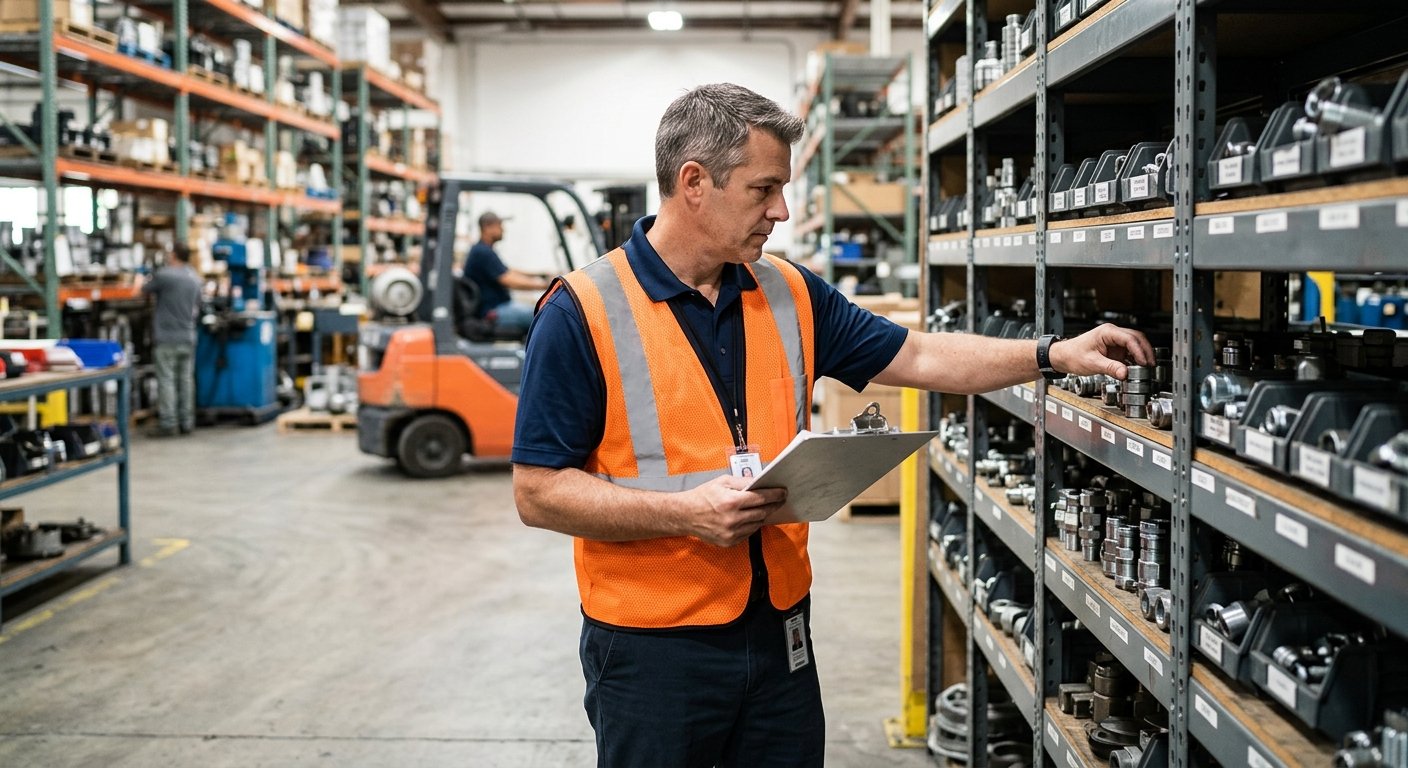
The post-2020 era exposed significant vulnerabilities in globally extended supply chains. For capital equipment buyers in aerospace and energy, delivery predictability isn’t just a convenience—it directly affects project schedules, contract obligations, and production ramp timelines.
Domestic industrial pipe bending equipment manufacturers control more of their supply chain by sourcing components within American manufacturing networks. This reduces exposure to international logistics disruptions, tariff variability, and the quality inconsistencies that can appear when critical subcomponents cross multiple international tiers before final assembly.
American-made pipe benders also offer a clearer path for spare parts availability and lead time predictability over the machine’s service life. A bending machine may serve a production line for 15 to 20 years. When a critical component needs replacement at year 12, the ability to source that part domestically—with traceability—matters enormously to production uptime.
Technical Support and Workforce Development
Purchasing precision bending equipment is the beginning of a relationship, not a transaction endpoint. What happens after delivery—installation, commissioning, operator training, process optimization, and ongoing technical support—determines whether that equipment actually delivers the value it promised.
American pipe bending machine manufacturers with established domestic operations can provide direct, responsive support from engineers who know the equipment at a design level. When a production engineer is working through a challenging bend sequence on thin-wall tubing and needs process guidance at 7 AM before a production run, proximity and shared language matter.
Installation & Commissioning
The manufacturer’s engineering team brings the machine online, verifying dimensional accuracy and control calibration against documented specifications before production begins.
Operator Training
Comprehensive training programs delivered by the equipment manufacturer give operators and process engineers the depth needed to run precision bending operations consistently.
Process Optimization
Application engineers work with production teams on material springback, tooling geometry, and cycle parameters—especially critical for thin-wall or exotic alloy applications.
Ongoing Technical Support
Domestic support means direct access to engineers who know the machine at a design level, reducing resolution time when production challenges arise.
This is especially critical in aerospace and defense environments where process consistency must be documented and demonstrable for quality audits.
Proven Performance in Demanding Industries
American-made precision pipe bending equipment has an earned track record in the most demanding application environments in the world. NASA and military organizations require bending equipment that performs to exacting standards under full quality management system scrutiny. Meeting those requirements isn’t a one-time achievement—it demands sustained engineering capability, consistent manufacturing quality, and the ability to support specialized programs with application-specific solutions.
That history of performance in high-stakes environments translates directly to industrial buyers in oil and gas, petrochemical, and energy applications. Equipment that qualifies for aerospace and defense work carries with it validated engineering methodology and a demonstrated ability to solve difficult bending challenges across materials including stainless steel, titanium, Inconel, and other high-strength alloys common in demanding service environments.
For engineers evaluating tube bending machines for critical applications, this documented performance history provides a meaningful risk mitigation factor that catalog specifications alone cannot convey.
American precision pipe bending equipment serves aerospace, defense, oil and gas, petrochemical, energy, and automotive industries—any application requiring consistent bend accuracy, material traceability, and compliance with rigorous quality standards.
Total Cost of Ownership vs. Purchase Price
Procurement decisions driven primarily by initial purchase price often underestimate the total cost of ownership over a machine’s operational life. American-made pipe benders, engineered to higher build standards with quality components and full documentation, typically deliver lower maintenance frequency, better parts availability, and longer productive service lives.
| Cost Factor | American-Made Equipment | Offshore Equipment |
|---|---|---|
| Standards compliance documentation | Maintained as core competency | Variable; may require third-party verification |
| Spare parts availability | Domestic sourcing, predictable lead times | International logistics; tariff exposure |
| Technical support access | Direct from design engineers, shared time zone | Remote; potential translation and time-zone gaps |
| Custom engineering capability | In-house application engineering teams | Limited; catalog configurations predominate |
| Re-qualification risk | Lower; documented continuity of supply | Higher when equipment or supplier changes |
Factor in the cost of downtime when offshore equipment requires hard-to-source parts or remote technical support that doesn’t translate across time zones and technical specifications. Factor in the cost of failed bends when machine accuracy degrades and process controls are insufficient to detect it. Factor in the cost of re-qualification when equipment changes disrupt aerospace or defense program continuity. These are real costs that appear in production budgets and project schedules, even when they’re invisible at the purchase decision stage.
Organizations evaluating capital equipment acquisitions should also consider the availability of used pipe bending equipment from reputable American manufacturers—a viable path to proven precision capability at reduced capital outlay, particularly when project timing or budget cycles require flexibility.
Frequently Asked Questions
What makes American-made pipe benders different from imported equipment?
American-made pipe benders are typically designed and built to domestic engineering standards, including ASME and industry-specific requirements for aerospace, defense, and energy applications. They offer greater supply chain traceability, stronger custom engineering support, and more accessible long-term service and parts availability compared to imported alternatives.
Can American pipe bending machine manufacturers build custom configurations?
Yes. Established domestic manufacturers with in-house engineering teams can develop custom pipe bending machines configured to specific material types, bend radii, tube diameters, wall thicknesses, and production cycle requirements. Custom tooling—bend dies, mandrels, pressure dies—is often developed as part of the integrated solution.
What industries are best served by precision American-made bending equipment?
American precision pipe bending equipment serves aerospace, defense, oil and gas, petrochemical, energy, and automotive industries—any application requiring consistent bend accuracy, material traceability, and compliance with rigorous quality standards. Aerospace and defense applications in particular benefit from the documentation and qualification capability that established domestic manufacturers provide.
How does American manufacturing quality affect long-term maintenance?
Equipment built to higher manufacturing standards typically requires less unplanned maintenance, retains dimensional accuracy longer, and has better documented specifications for service procedures. Domestic manufacturers offer more predictable spare parts availability and direct technical support, which reduces downtime risk over the machine’s operational life.
Is used American-made bending equipment a viable option for demanding applications?
For many applications, yes. Used equipment from reputable American manufacturers can provide proven precision capability at reduced capital cost. Key evaluation criteria include machine condition, available documentation, tooling compatibility, and whether the original manufacturer can provide service support and parts for that specific model.
Conclusion: The Right Equipment From the Right Source
For engineering managers and procurement specialists in aerospace, energy, defense, and petrochemical industries, the decision to specify American-made pipe bending equipment is grounded in measurable factors: engineering standards compliance, custom solution capability, supply chain integrity, total cost of ownership, and the long-term support infrastructure that keeps critical production lines running.
With 50 years of precision bending expertise and a proven track record supplying NASA and military clients, Hines Bending Systems delivers American-manufactured bending solutions built for the demands of real industrial applications. Whether the requirement is high-volume production or a specialized one-off project, Hines brings both the engineering depth and application knowledge to develop the right solution.
Discuss Your Application With Hines Bending Systems
Contact Hines to review your pipe and tube bending requirements and find out how American-made precision equipment can solve your most demanding production challenges.

About Hines Bending Systems
Hines Bending Systems is a leading American manufacturer of precision tube and pipe bending equipment serving aerospace, energy, oil & gas, petrochemical, and defense industries. With 50 years of proven expertise and a track record of supplying NASA and military clients, Hines delivers custom bending solutions for demanding applications ranging from high-volume production to specialized one-off projects. The company combines deep technical knowledge with comprehensive support including training and service, positioning itself as a partner in customer success rather than just an equipment supplier. Visit hinesbending.com →