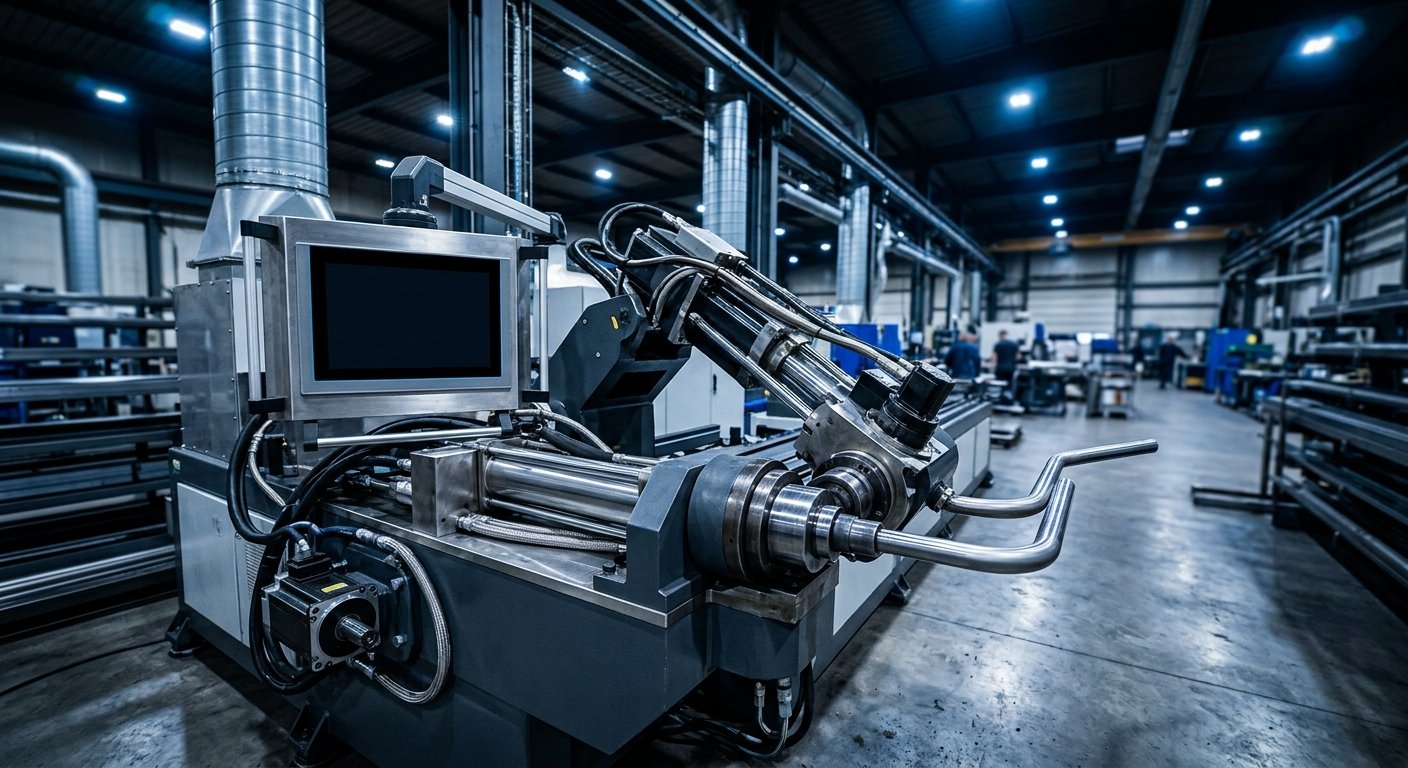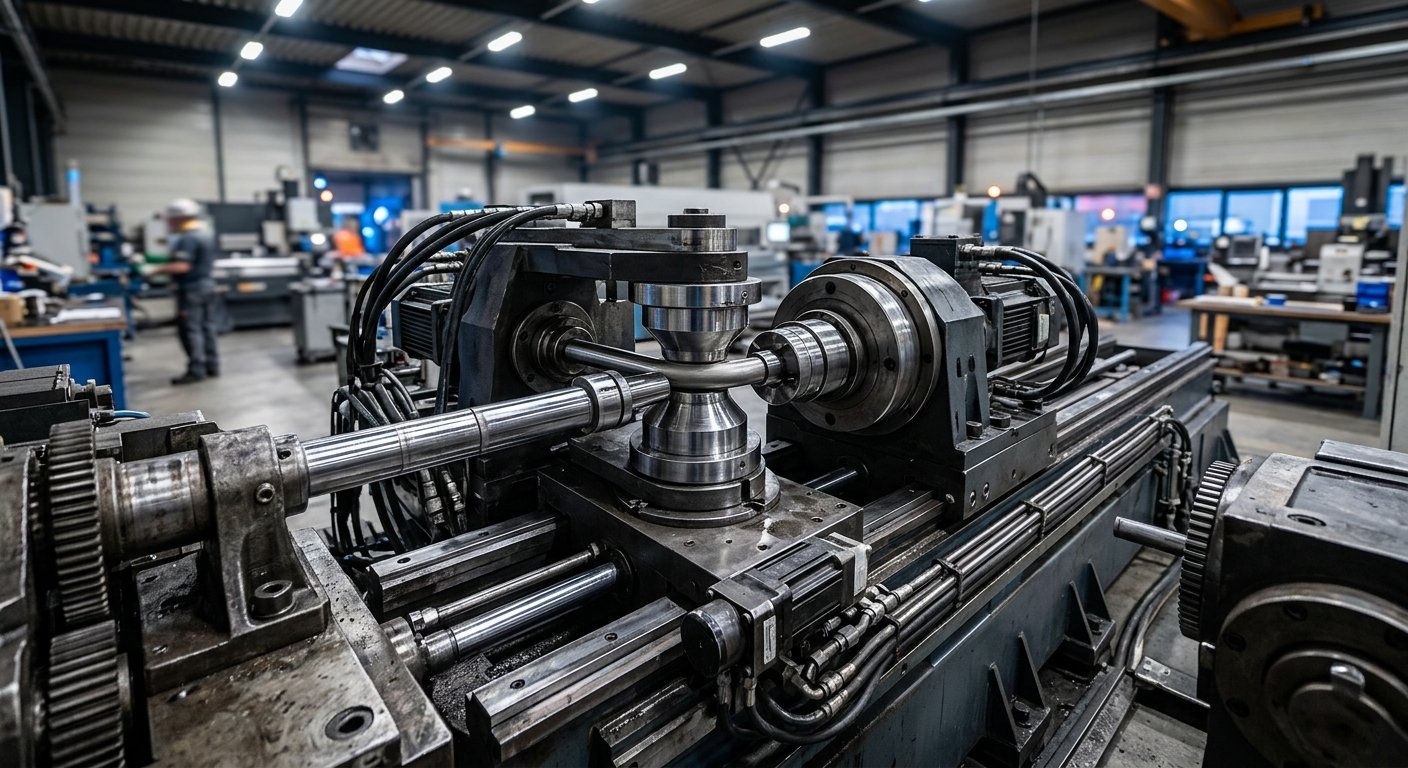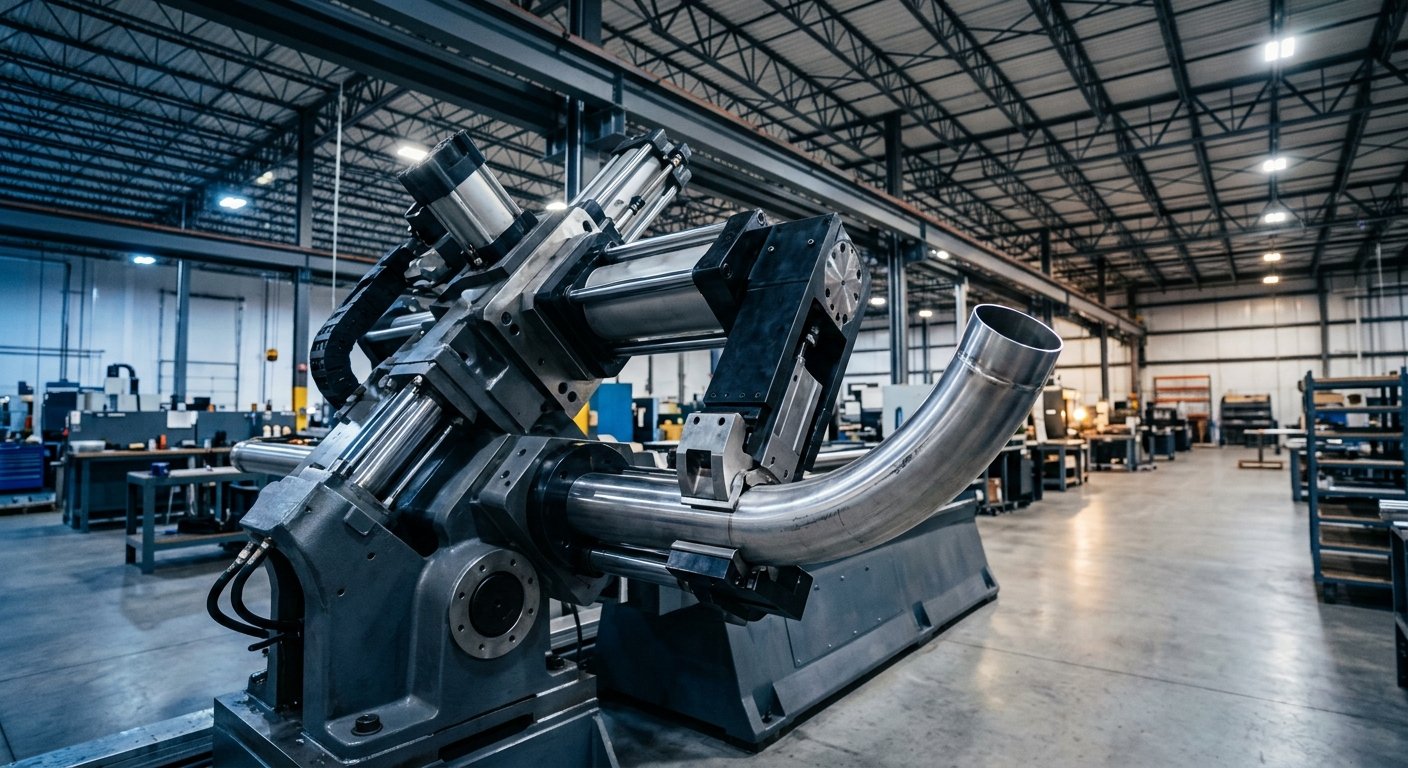
Procurement specialists sourcing precision bending equipment today face a market shaped by reshoring momentum, tighter aerospace tolerances, and supply chain lessons learned the hard way over the past several years. One question comes up consistently in engineering and procurement conversations: does it still make sense to source an industrial pipe bender from a domestic manufacturer rather than an overseas supplier? For applications in aerospace, oil & gas, defense, and petrochemical work, the answer increasingly points toward American-made equipment—and the reasons go well beyond patriotism.
This breakdown examines the state of industrial pipe bender manufacturing in the USA in 2026, what distinguishes domestic producers, and how engineering teams can identify the right pipe bending machine supplier for their specific application demands.
The Current State of American Pipe Bending Manufacturing
Domestic manufacturing of precision bending equipment has strengthened considerably since the supply chain disruptions of the early 2020s. According to data tracked by the U.S. Census Bureau’s manufacturing sector reports, investment in American industrial machinery production has been on a sustained upward trend, reflecting both policy incentives and genuine market demand for domestically sourced capital equipment.
For buyers in regulated industries—aerospace, defense, and energy infrastructure in particular—domestic sourcing provides more than supply chain security. It provides traceability. When a component must meet ASME, ASTM, or MIL-spec requirements, having direct access to the manufacturer’s engineering team for documentation, calibration records, and compliance support is a significant operational advantage.
American-made pipe benders from established manufacturers carry a different value proposition than imported commodity equipment. The engineering depth behind the machine, the availability of application-specific customization, and the quality of post-sale support all differentiate proven domestic producers from lower-cost alternatives that may struggle to meet the dimensional repeatability required in critical applications.
What Sets Industrial-Grade American Pipe Benders Apart
Precision Engineering for Demanding Materials
Not all pipe bending is equal. Bending Schedule 80 carbon steel for a construction application is a fundamentally different challenge than bending Inconel tubing for a jet engine nacelle or titanium hydraulic lines for a defense platform. American pipe bending machine manufacturers focused on aerospace, energy, and defense applications engineer their machines around these demanding material realities.
Key performance factors that matter in high-stakes applications include:
- Bend angle repeatability — critical for multi-plane assemblies where cumulative error compounds across multiple bends
- Wall thinning control — essential when working with thin-wall tubing in aerospace and hydraulic applications
- Ovality management — particularly important for fluid flow applications where cross-section deviation affects pressure calculations
- Springback compensation — must be precisely managed for hard alloys like titanium, stainless steel, and nickel alloys
- Tooling quality and compatibility — American manufacturers can more readily offer application-matched tooling packages and custom tooling development
Customization Capability
Off-the-shelf equipment rarely fits every application without compromise. Serious industrial pipe bending equipment manufacturers offer genuine engineering collaboration—not just a catalog. Whether the requirement is a machine configured for high-volume CNC production of a single part family or a custom solution for one-off fabrication of large-diameter pipe in a petrochemical plant, the ability to engineer to the application rather than forcing the application into a standard machine specification separates capable manufacturers from commodity suppliers.
This customization capability is where decades of application experience become tangible. A manufacturer that has solved bending challenges across aerospace hydraulic systems, subsea pipeline components, and military vehicle fuel systems brings a problem-solving foundation that a newer or generalist supplier simply cannot replicate.
Application-Specific Considerations by Industry
Aerospace
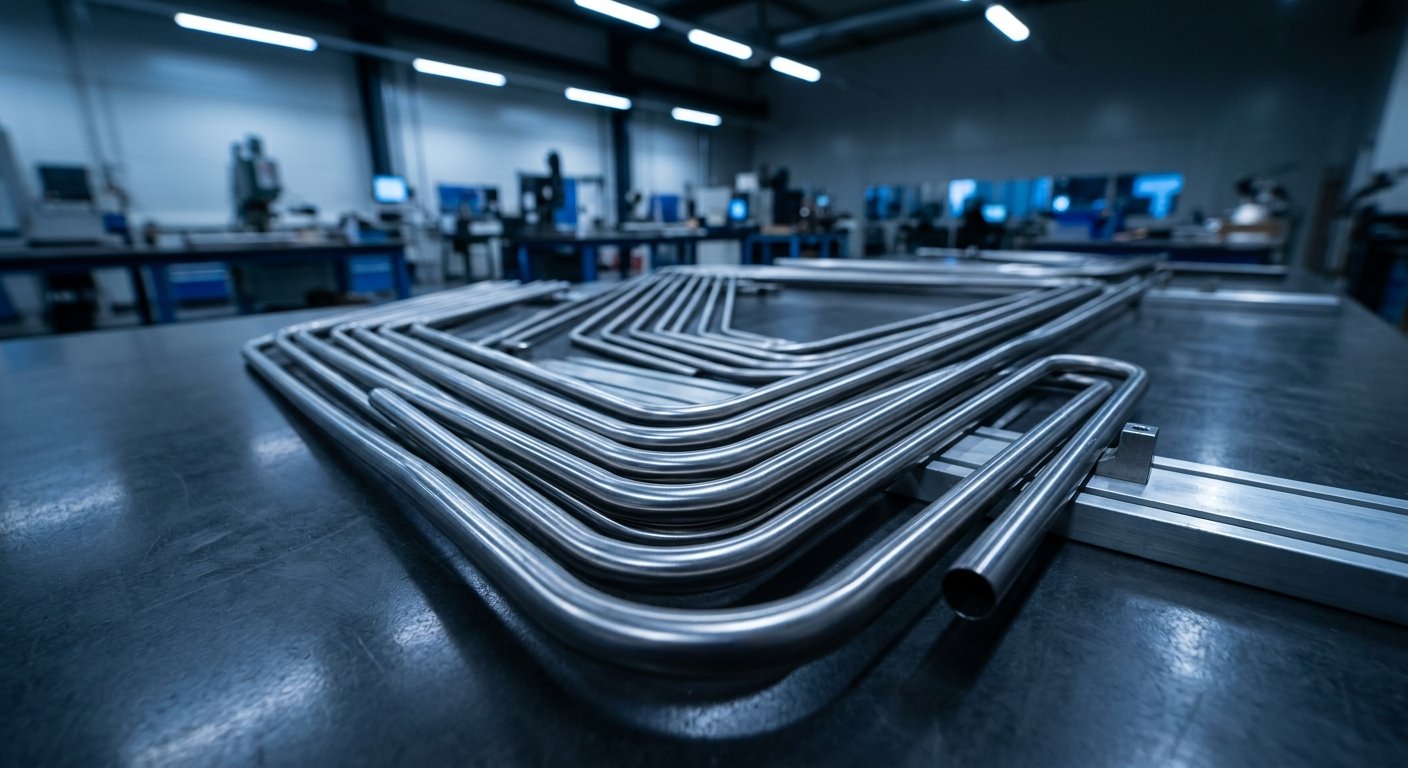
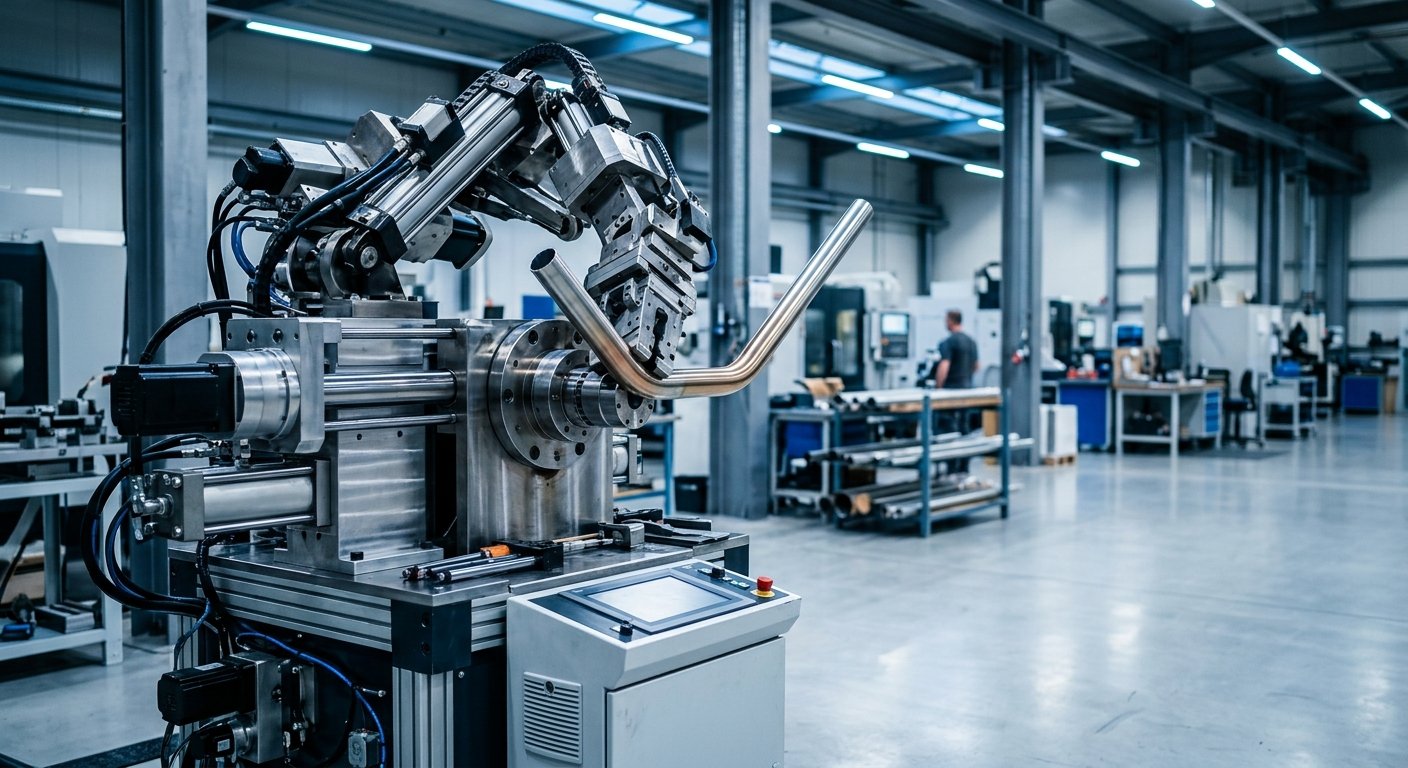
Aerospace tube and pipe bending is arguably the most demanding discipline in the field. The FAA’s airworthiness standards and aerospace OEM quality requirements demand bends that are dimensionally precise, free from surface defects, and fully traceable through documented processes. CNC-controlled mandrel bending machines with servo-electric drives are increasingly the standard for flight-critical applications, providing programmable repeatability and data logging capability to satisfy quality documentation requirements.
Material diversity in aerospace is also significant. The same production floor may need to bend aluminum alloy, titanium, Inconel, and CRES stainless steel. Equipment versatility, supported by properly engineered tooling for each material, is essential.
Oil & Gas and Petrochemical
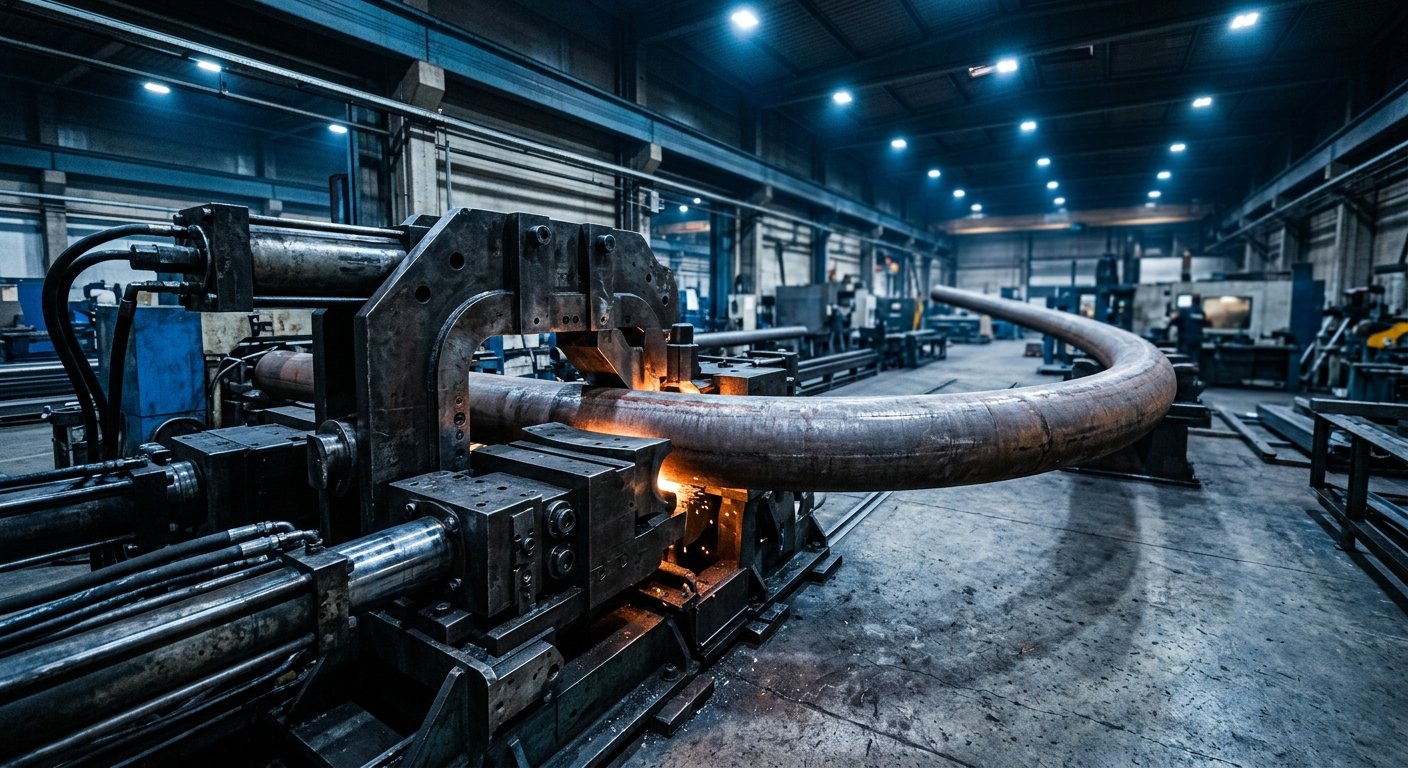
In upstream and midstream oil & gas applications, pipe bending equipment must handle heavier wall thicknesses and larger diameters than are typical in aerospace work. Induction bending for large-diameter line pipe, cold bending for smaller process piping, and mandrel bending for hydraulic control lines each represent distinct equipment requirements. Petrochemical facilities often work with exotic alloys that resist corrosive process environments, requiring bending machines with the force capacity and tooling precision to handle these materials without introducing defects.
Traceability and compliance documentation matter here too. Process piping in refineries and chemical plants must meet ASME B31.3 standards, and the qualification of bending procedures often depends on the precision and control capabilities of the equipment used.
Defense
Defense applications span an enormous range—from small-diameter hydraulic tubing in aircraft to heavy structural pipe in naval vessels. Military procurement standards impose strict requirements on equipment and process qualification. Working with a domestic pipe bending machine manufacturer that already has a track record with military programs significantly simplifies the qualification pathway and provides confidence in the manufacturer’s understanding of defense-specific documentation and compliance requirements.
Evaluating a Pipe Bending Machine Supplier
For engineering managers and procurement specialists evaluating suppliers, the following criteria deserve serious weight:
- Application experience — Has the manufacturer solved problems in your specific industry? Can they provide references or case examples?
- Engineering support — Will their team engage technically with your application requirements, or simply quote from a catalog?
- Custom capability — Can they design and build a machine configured to your exact requirements, including custom tooling?
- Training and service — What does post-installation support look like? Is training available for operators and maintenance personnel?
- Parts availability — Domestic manufacturers typically offer faster parts availability and service response than overseas suppliers, which matters when production downtime has real cost implications.
- Quality documentation — Can the manufacturer provide the quality records, calibration certifications, and compliance documentation your application requires?
American manufacturers competing in the precision segment of this market typically earn their position through sustained performance on exactly these dimensions. Price competition with commodity imports is a different game; the value proposition for serious industrial applications is built on capability, reliability, and support depth.
Hines Bending Systems: American-Made Precision Equipment
Hines Bending Systems has operated as a leading American manufacturer of precision tube and pipe bending equipment for 50 years. With a customer base that includes NASA and military clients operating at the highest standards of precision and documentation, Hines’ equipment and engineering capabilities have been validated in the most demanding applications in American industry.
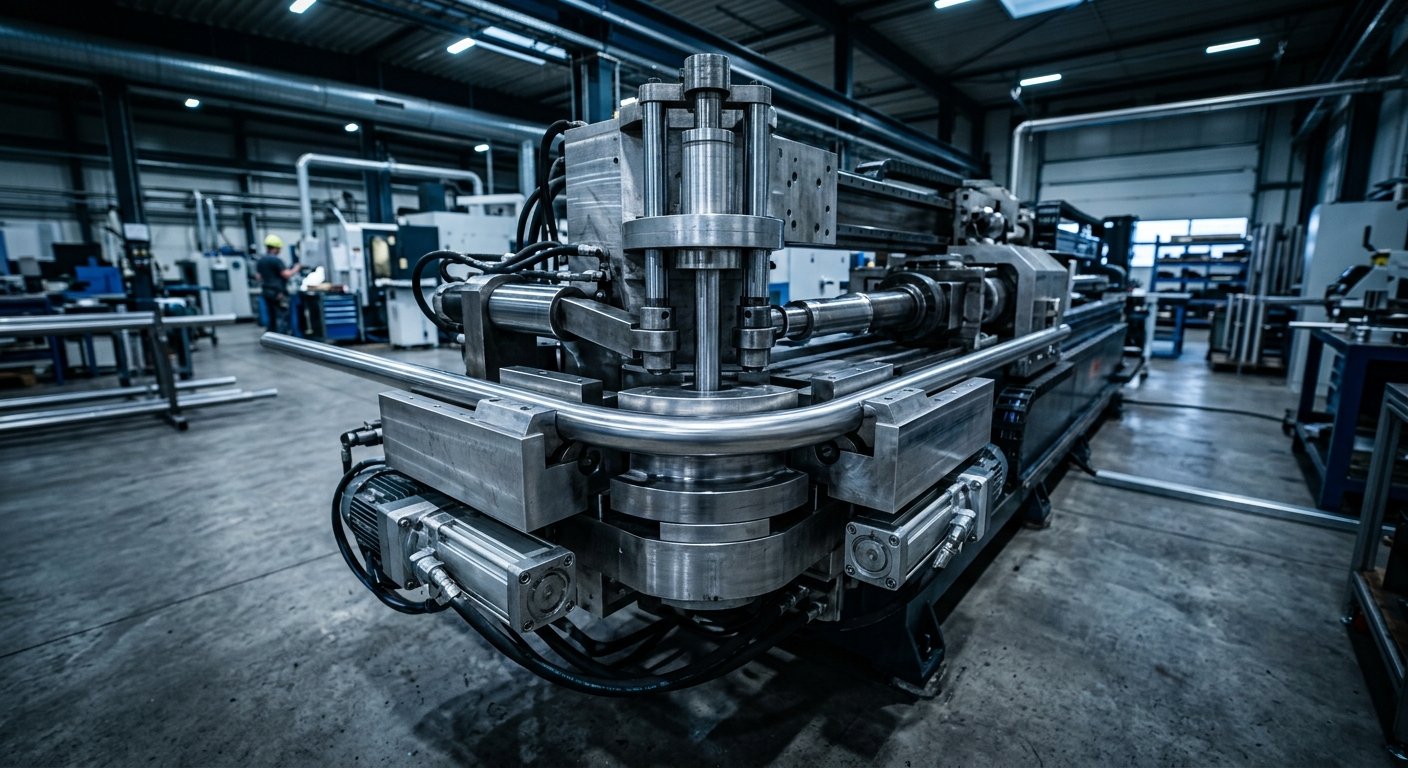
From production-volume CNC tube bending machines engineered for aerospace manufacturing environments to heavy-duty pipe bending machines configured for energy and petrochemical applications, Hines designs and builds equipment to application-specific requirements. Custom configurations, tooling development, comprehensive operator and maintenance training, and ongoing service support are integrated parts of the Hines customer relationship—not add-on afterthoughts.
For organizations evaluating both new and pre-owned equipment options, Hines also maintains inventory of used pipe bending equipment that has been serviced to production-ready condition.
Frequently Asked Questions
What industries are best served by American industrial pipe bender manufacturers?
American pipe bending machine manufacturers with precision capabilities are particularly well-suited for aerospace, defense, oil & gas, petrochemical, and energy applications. These industries demand dimensional accuracy, material traceability, compliance documentation, and application engineering support that established domestic manufacturers are well-positioned to provide.
What is the difference between tube bending and pipe bending machines?
Tube bending machines are typically designed for smaller-diameter, tighter-tolerance work—common in aerospace hydraulic systems, instrumentation lines, and fuel systems. Pipe bending machines generally handle larger diameters and heavier wall thicknesses typical of process piping, structural applications, and oil & gas infrastructure. Some manufacturers, including Hines, produce equipment across both categories.
Why does sourcing from a domestic pipe bending machine manufacturer matter for defense and aerospace work?
For defense and aerospace applications, domestic sourcing supports compliance with government acquisition preferences, simplifies security and export control considerations, and provides direct access to engineering support for qualification documentation. Manufacturers with existing track records on military and aerospace programs bring established processes for meeting program-specific requirements.
What should I look for when evaluating a pipe bending equipment supplier for custom applications?
Key factors include demonstrated experience in your industry, genuine engineering collaboration capability (not just catalog sales), custom machine and tooling development resources, comprehensive training programs, domestic parts and service availability, and documented quality systems that support your application’s compliance requirements.
Is used pipe bending equipment a viable option for industrial applications?
Properly refurbished used equipment from a reputable manufacturer can be a cost-effective solution for many applications, particularly when the machine has been returned to production-ready specification with documented service history. Sourcing used equipment through the original manufacturer provides the best assurance of machine condition and ongoing support capability.
Conclusion
In 2026, the case for sourcing precision bending equipment from an established American industrial pipe bender manufacturer is stronger than it has been in decades. Between reshoring momentum, tighter application requirements in aerospace and defense, and the ongoing operational value of domestic engineering support, buyers in demanding industries have compelling reasons to look to proven domestic producers rather than commodity imports.
For engineering teams and procurement specialists working on applications that require genuine precision, application-specific engineering, and comprehensive support, Hines Bending Systems offers 50 years of American manufacturing expertise and a proven track record with the most demanding customers in U.S. industry. Contact Hines Bending Systems to discuss your specific application requirements and find the right bending solution for your operation.