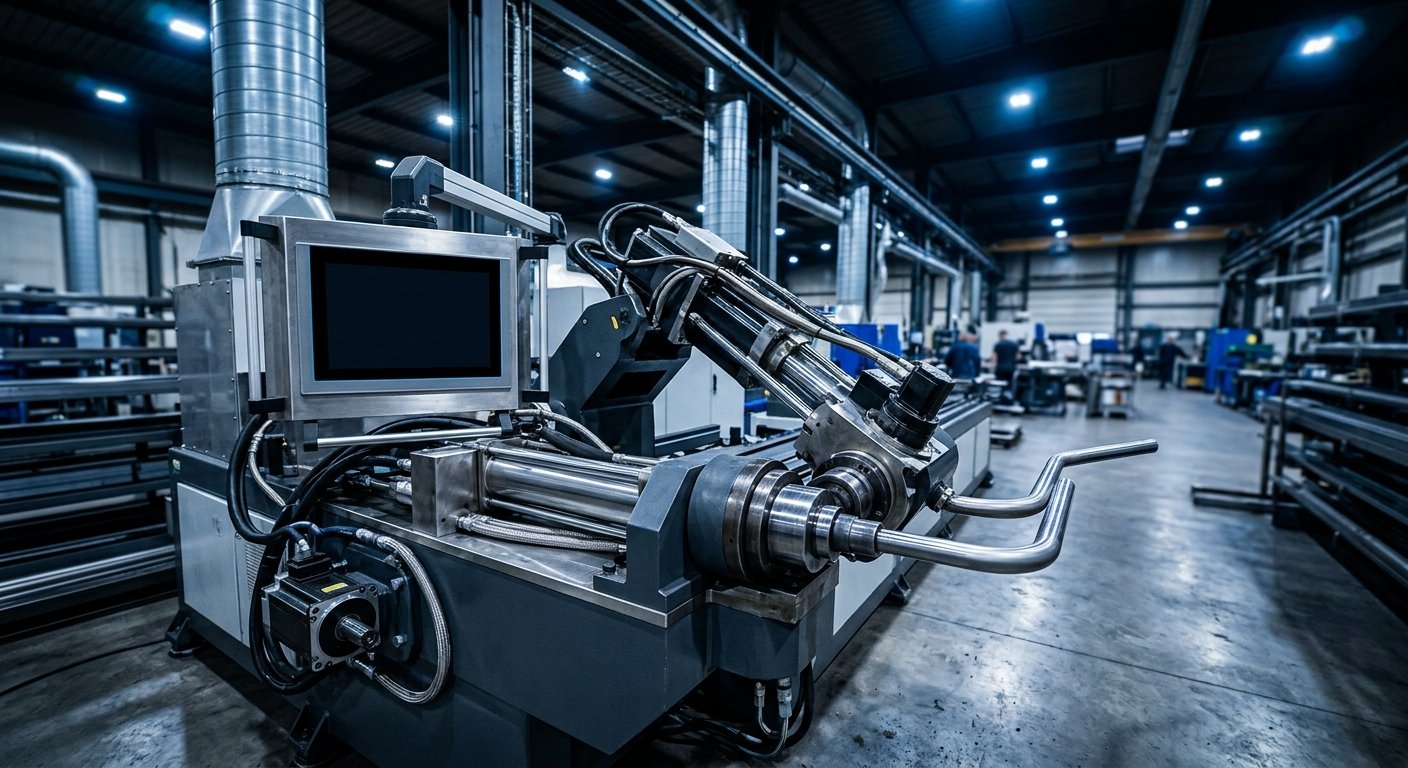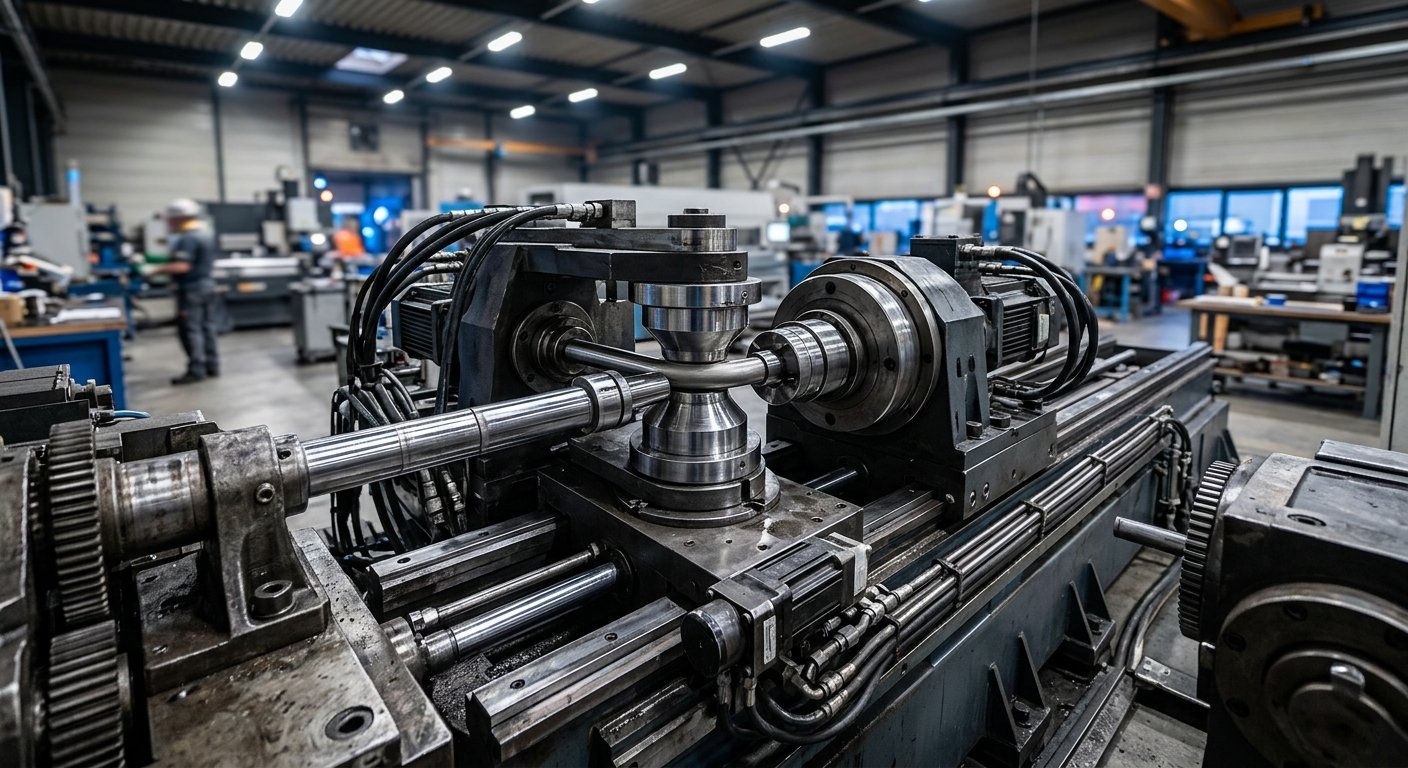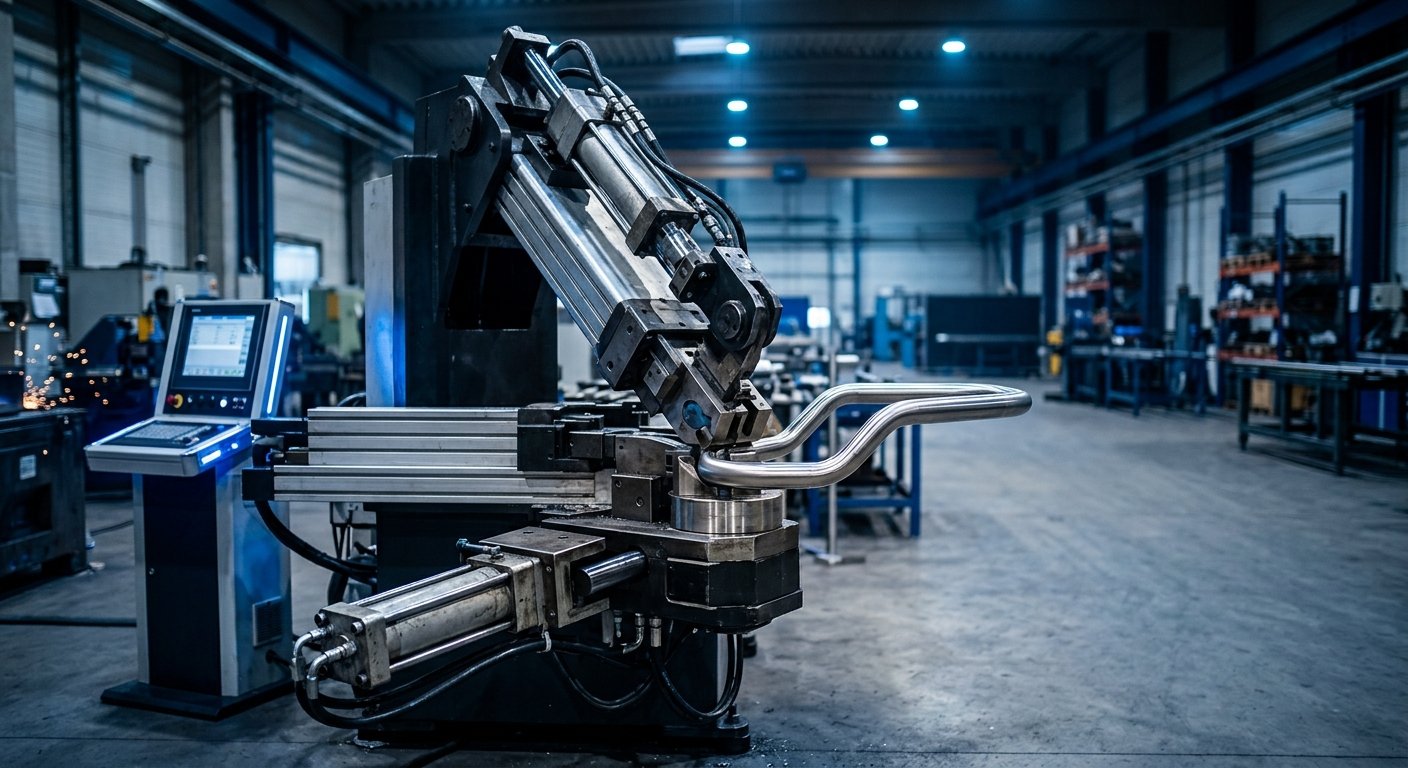
Choosing between an NC (numerical control) and CNC (computer numerical control) tube bender is one of the most consequential equipment decisions a production engineer or procurement manager will make. Get it right, and you have a machine precisely matched to your production demands, material types, and quality requirements. Get it wrong, and you’re fighting inefficiency, scrap rates, and operator frustration for the life of the equipment.
This isn’t a question with a universal answer. Both NC tube benders and CNC tube benders deliver real value in the right context. The key is understanding exactly what separates them—technically, operationally, and economically—so you can make a confident, application-specific decision.
How NC and CNC Tube Benders Actually Differ
The terminology is straightforward, but the practical implications run deep.
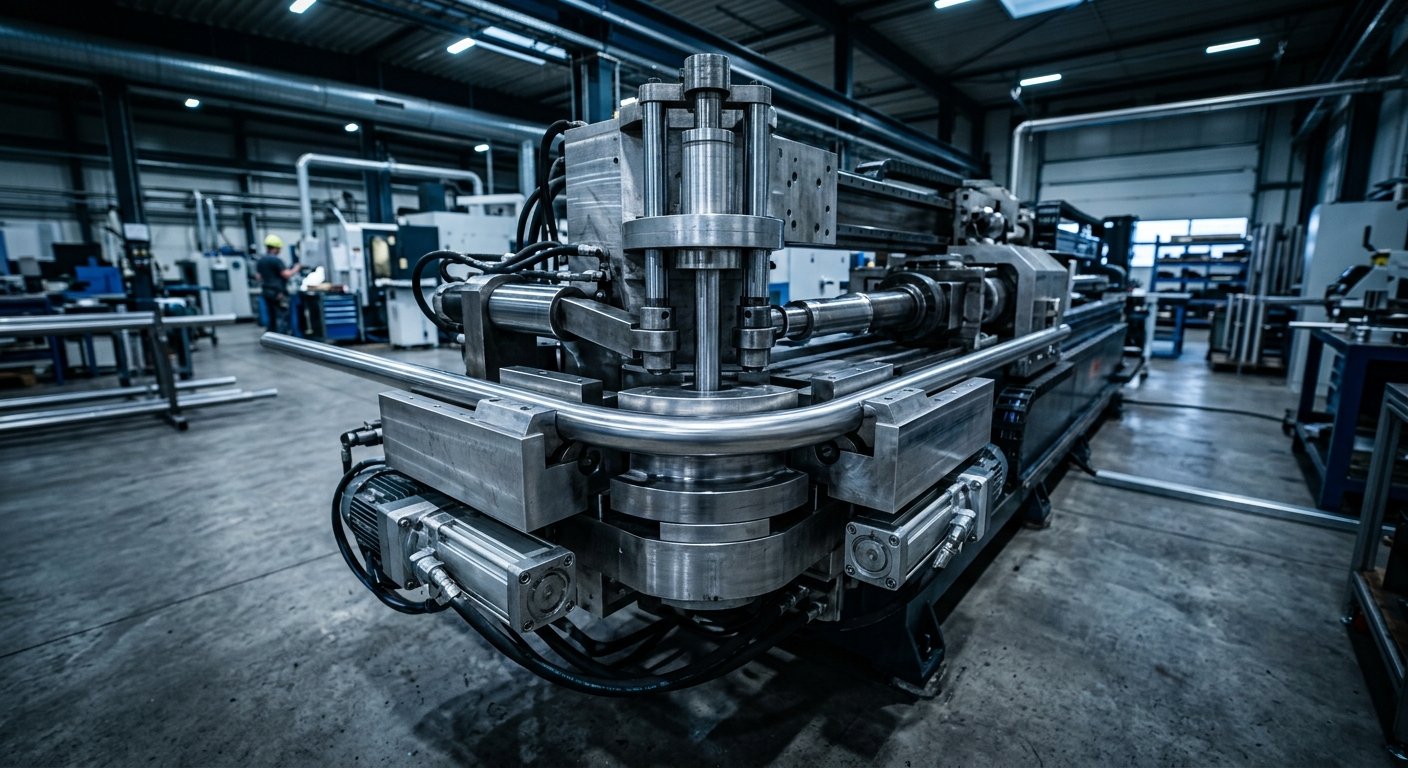
NC tube benders use numerical control to automate specific bending parameters—bend angle, pressure die force, and booster advance—but they require manual setup and operator input for each new part or job change. The machine executes controlled bends with repeatability, but the operator plays a larger role in managing transitions and adjustments.
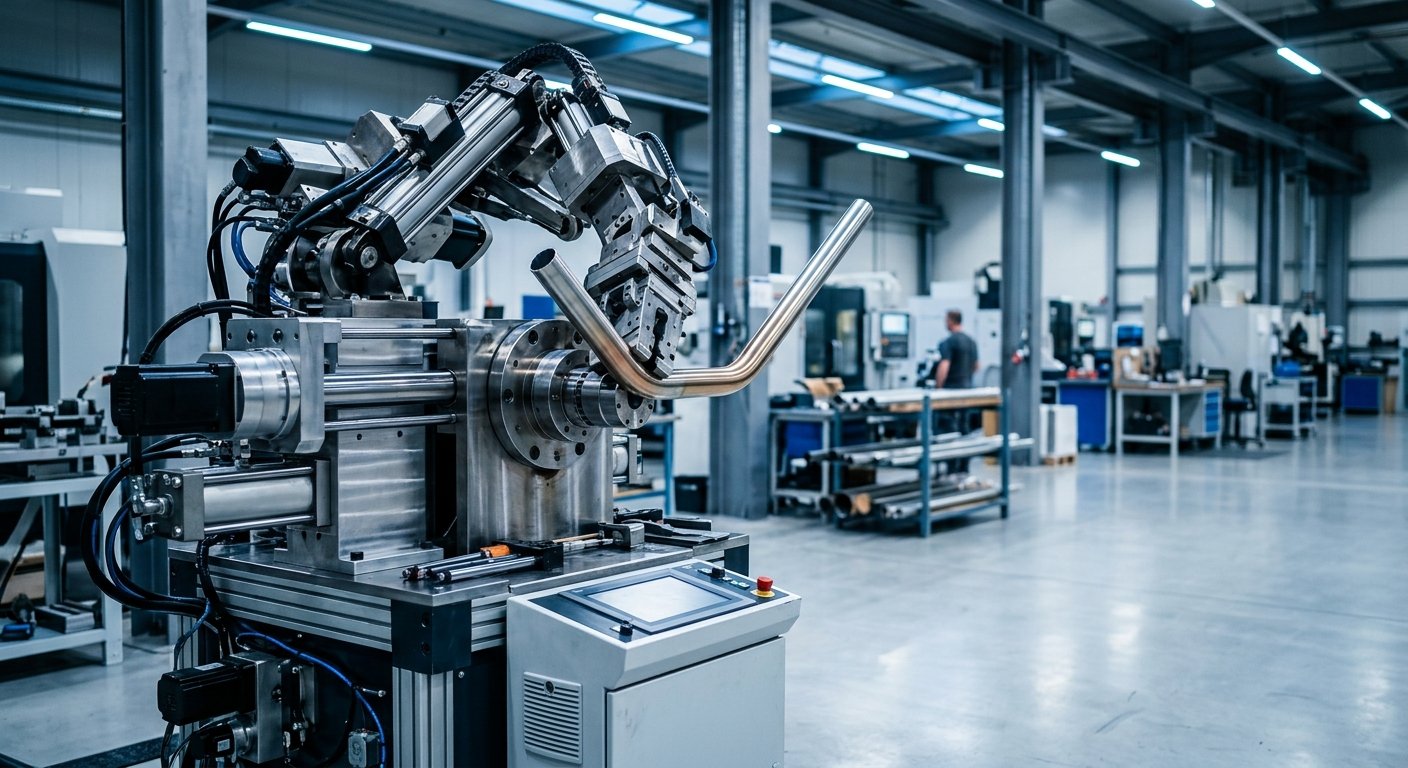
CNC tube benders integrate a dedicated computer controller that stores complete part programs, automates multi-plane bending sequences, controls all axes simultaneously, and manages everything from feed length to rotation between bends. Once a part program is validated, a CNC machine can reproduce that part consistently across an entire production run with minimal operator intervention.
The distinction becomes especially significant when you’re bending complex geometries—multi-bend assemblies with tight centerline radii, exotic alloys that require precise control of springback compensation, or aerospace components where every bend must fall within a narrow dimensional tolerance window.
When NC Tube Benders Are the Right Tool
NC machines remain a strong choice across a range of industrial applications, particularly where production volumes are moderate, geometries are relatively simple, and skilled operators are available. Here’s where NC tube benders genuinely shine:
- Low-to-medium volume production: When you’re running smaller batches or job shop work, the NC platform offers solid repeatability without the higher capital investment of a full CNC system.
- Single-plane or limited-bend-count parts: If your parts involve one to three bends in a single plane, an NC machine handles the work efficiently.
- Experienced operator environments: Shops with highly skilled bending operators can leverage NC equipment effectively, compensating for the machine’s lower automation level through operator expertise.
- Budget-constrained procurement: For operations where capital allocation is a priority constraint, NC tube benders deliver reliable performance at a lower initial equipment cost.
- Prototyping and custom one-off work: Where programming flexibility matters less than hands-on control, NC machines give experienced operators more direct command over the bending process.
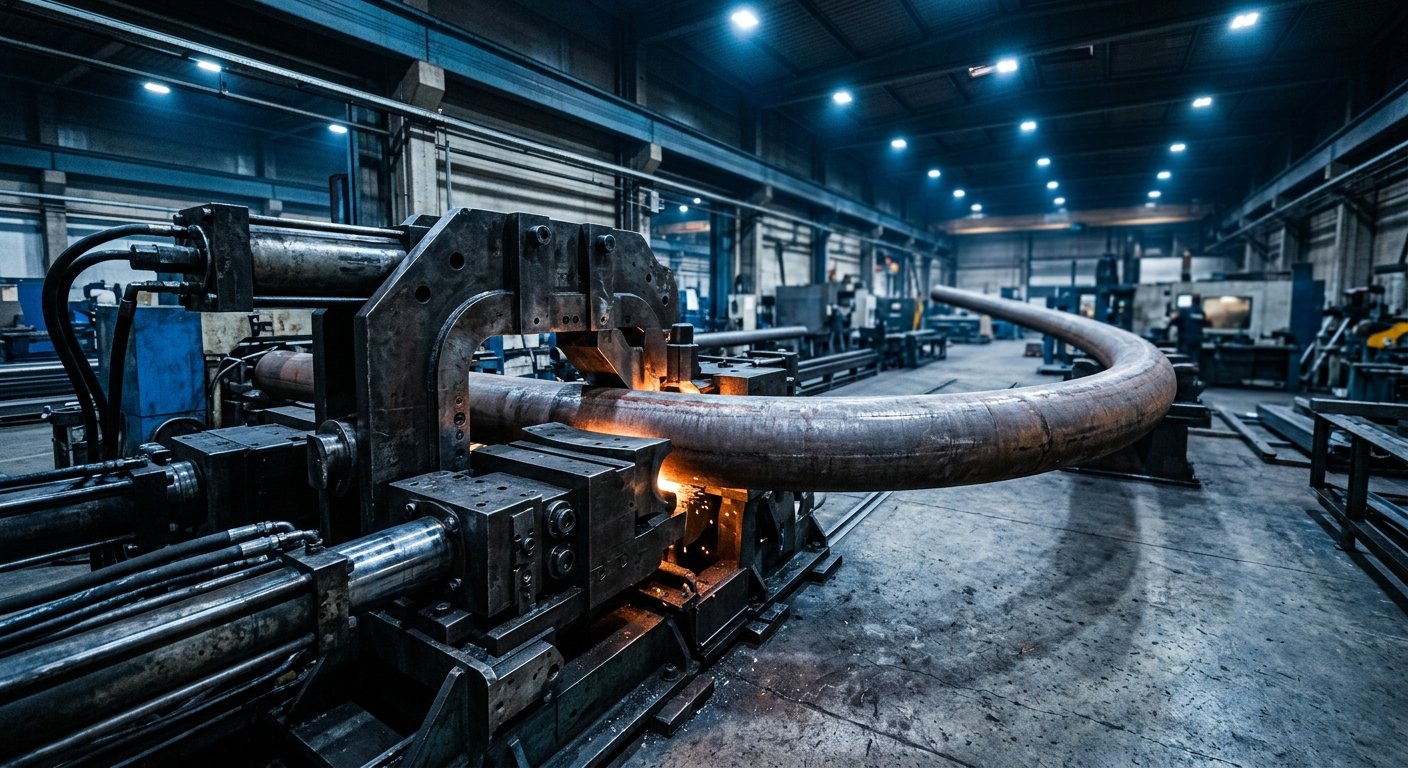
In oil & gas field fabrication, energy plant maintenance shops, and construction pipe work, NC tube benders continue to perform essential roles where the bending geometry isn’t highly complex and throughput demands don’t require full automation.
When CNC Tube Benders Become Essential
Certain applications don’t just prefer CNC precision tube bending—they require it. If your production environment includes any of the following, a CNC tube bender is likely the correct specification:
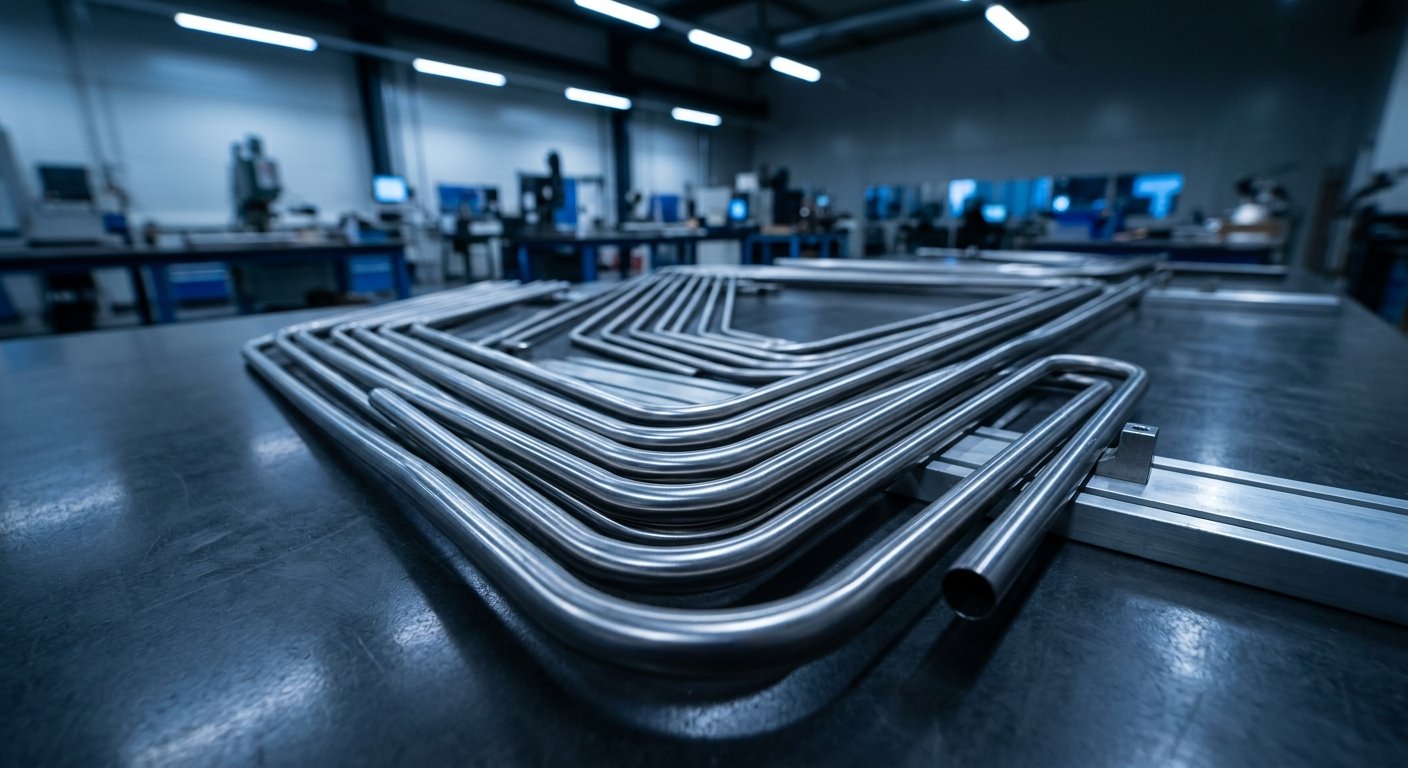
- Complex multi-plane assemblies: Aerospace hydraulic lines, fuel system tubing, and defense equipment often require bends in multiple planes with precise rotation between them. Only a CNC system can reliably execute these sequences without manual repositioning errors.
- High-volume production: CNC part programs eliminate setup variation between operators and shifts. Once validated, the program reproduces the part identically across thousands of cycles.
- Tight dimensional tolerances: Aerospace and defense components routinely require bend angle tolerances of ±0.5° or tighter. CNC systems with real-time angle correction and springback compensation achieve this level of precision consistently.
- Exotic materials: Titanium, Inconel, stainless steel, and duplex alloys used in petrochemical and aerospace applications require controlled, repeatable parameter management that CNC systems provide.
- Documentation and traceability: CNC controllers generate production data, program logs, and bend records that support AS9100 and other quality management systems. For aerospace and defense procurement, this traceability is often non-negotiable.
- Reduced scrap and setup time: The ability to store and recall validated part programs dramatically reduces material waste during changeovers—a significant advantage when working with expensive tubing materials.
According to the Society of Manufacturing Engineers, automation-driven process control is consistently identified as a primary driver of quality improvement in precision metal forming applications. CNC tube benders deliver exactly this kind of closed-loop control.
Technical Factors That Should Drive Your Decision
Part Complexity and Bend Count
If your typical part has more than three bends or requires rotation between planes, CNC is the practical choice. Multi-bend, multi-plane parts processed on NC equipment depend entirely on operator skill for rotation accuracy—a significant source of variation.
Material Sensitivity
Springback behavior varies significantly across materials and wall thicknesses. CNC systems can store material-specific springback corrections within part programs, applying them automatically. NC operators must manage this manually, introducing potential inconsistency.
Production Volume and Mix
High-mix, low-volume environments still benefit from CNC when parts are complex. High-volume, single-part production amplifies CNC’s consistency advantage across the entire run. NC equipment fits best in lower-volume settings with simpler geometries.
Quality System Requirements
If you supply to aerospace or defense customers, AS9100 certification and NADCAP compliance expectations will likely require documented process control that CNC systems support more naturally. The International Aerospace Quality Group’s AS9100 standard emphasizes process consistency and traceability—both strengths of CNC-controlled bending systems.
Operator Skill and Availability
CNC tube benders reduce dependency on individual operator skill for bend execution. In today’s manufacturing environment, where experienced tube bending operators are increasingly difficult to hire and retain, CNC automation provides a meaningful operational buffer.
The Role of Custom Configuration
Neither NC nor CNC tube benders exist in a fixed, off-the-shelf configuration for demanding industrial applications. Tube size range, bend radius capability, mandrel requirements, pressure die selection, and booster configuration all vary based on application. A system designed for 2-inch aerospace hydraulic tubing in titanium looks very different from a machine configured for 6-inch carbon steel pipe in an energy application.
This is where custom engineering makes the difference. The right machine isn’t just NC or CNC—it’s the right NC or CNC system, configured for your specific tube sizes, materials, radii, and production environment. With 50 years of precision tube and pipe bending expertise, Hines Bending Systems designs and builds custom solutions for exactly these kinds of demanding specifications. Our tube bending machines are engineered for real-world industrial requirements, not generic production assumptions.
The American Society for Testing and Materials (ASTM) publishes material standards that directly affect tooling and parameter selection for aerospace and industrial tubing—another reason that machine configuration must be matched to your specific material specifications.
Frequently Asked Questions
What is the main practical difference between an NC and CNC tube bender?
An NC tube bender automates specific bending parameters but requires more manual operator input for setup and multi-bend sequences. A CNC tube bender stores complete part programs, automates all axes simultaneously, and can execute complex multi-plane bending sequences with consistent repeatability and minimal operator intervention during production.
Is a CNC tube bender always better than an NC tube bender?
No. CNC tube benders are the superior choice for complex geometries, high-volume production, exotic materials, and applications requiring strict traceability. However, NC tube benders are a practical, cost-effective choice for simpler parts, lower volumes, and environments with experienced operators. The right machine depends on your specific application requirements.
Can CNC tube benders handle aerospace-grade materials like titanium and Inconel?
Yes. CNC tube benders are specifically well-suited to aerospace-grade materials because they allow precise control of all bending parameters, including material-specific springback compensation. Proper tooling selection and machine configuration are essential when working with challenging alloys—this is where application-specific engineering expertise matters significantly.
How does a CNC tube bender support quality documentation requirements?
CNC controllers generate production logs, part program records, and bend data that support quality management systems including AS9100. This documentation capability is often required by aerospace and defense customers and makes first-article inspection and ongoing process verification more straightforward.
Should I consider used equipment when evaluating NC vs. CNC options?
Used equipment can be a viable path for either NC or CNC tube benders, particularly when capital budgets are constrained. The critical factors are machine condition, available service support, and whether the equipment can be configured for your specific application. Hines Bending’s used pipe benders offer a practical option for operations seeking proven performance with careful attention to machine history and capability.
Making the Right Call for Your Operation
The NC vs. CNC decision ultimately comes down to three converging factors: part complexity, production volume, and quality system requirements. For straightforward bending work at moderate volumes with experienced operators, NC tube benders deliver reliable, cost-effective performance. For complex, multi-plane assemblies, demanding materials, high-volume production, or quality-critical applications in aerospace, defense, or petrochemical environments, CNC tube benders are the appropriate specification.
For operations working in aerospace applications specifically, understanding the full scope of precision requirements is essential—our aerospace tube bending capabilities page provides detailed guidance on what these demanding applications require from bending equipment and tooling.
Hines Bending Systems has engineered precision tube and pipe bending solutions for NASA, military organizations, and industrial customers across the most demanding applications in American manufacturing for 50 years. Whether you’re specifying an NC or CNC system, our engineering team works directly with you to define the right configuration for your materials, geometries, and production requirements.
Ready to determine which tube bending system fits your application? Contact Hines Bending Systems to speak with an application engineer who can evaluate your specific requirements and recommend the right solution.